 Author:
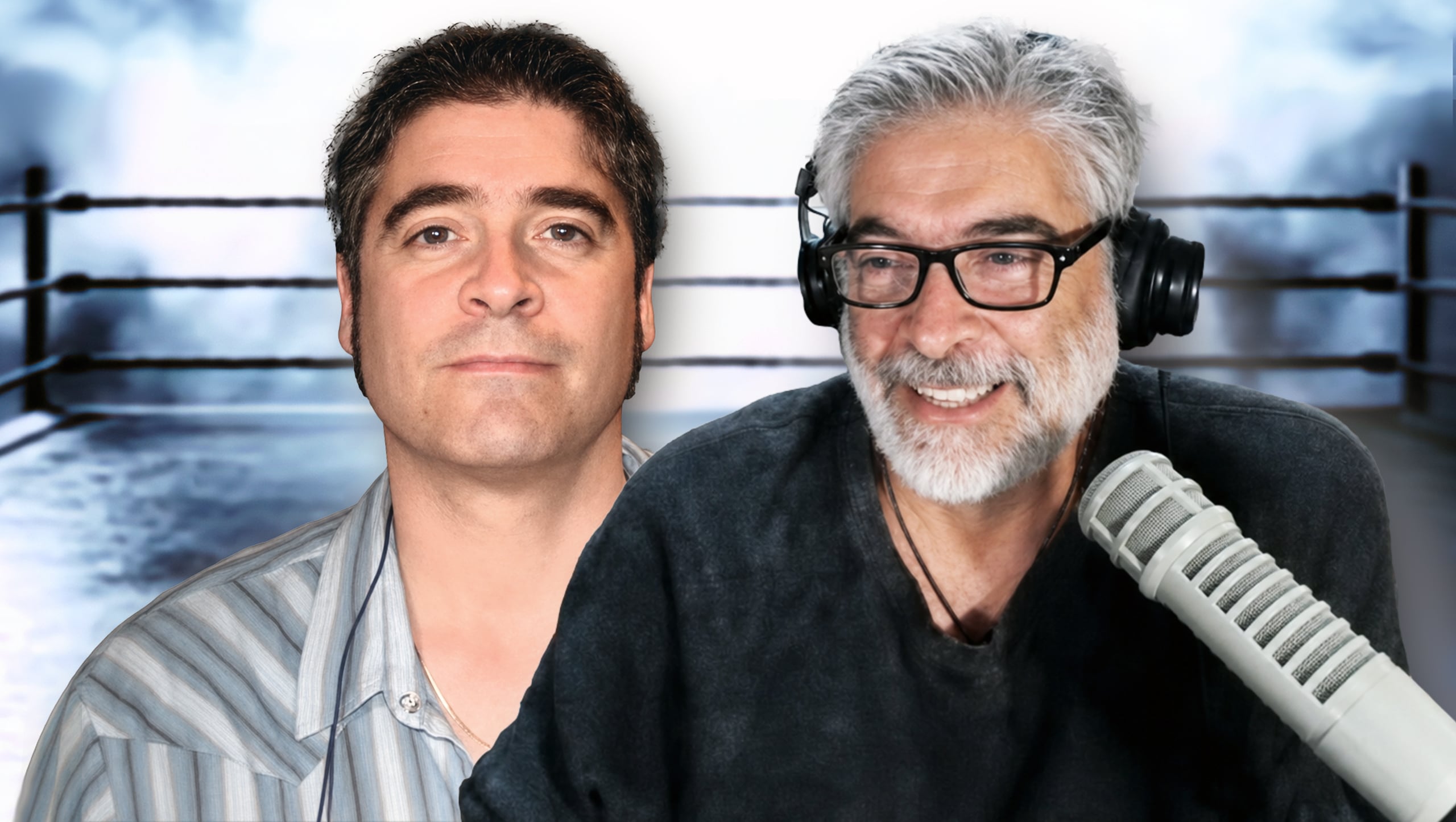
 When Vince McMahon told him those three words, Vince Russo knew it was over. The man who helped build the Attitude Era, the writer behind some of the most talked-about television in professional wrestling history, walked away from the biggest company in the business. Not over money, not over creative differences, but for something far more important. This is his story: in his own words.
Growing Up Italian: How a Sicilian Grandfather Shaped Vince Russo
Vincent James Russo was not always a controversial figure in professional wrestling. Growing up in Farmingville, New York, he came from an Italian family. Russo, speaking with the Wrestling and Everything: Coast to Coast podcast team of Buddy Sotello, Dr. Mike Lano, and me, Evan Ginzburg, looked back fondly on his youth.
“I had a Sicilian grandfather who was my idol, who was a man’s man. Old school, about as Sicilian as you can get.”
Attending Indiana State University, Russo served as editor-in-chief of the school newspaper, The Shield. He graduated in 1983 with a degree in journalism. An avid pro wrestling fan, he was weaned on the WWWF.
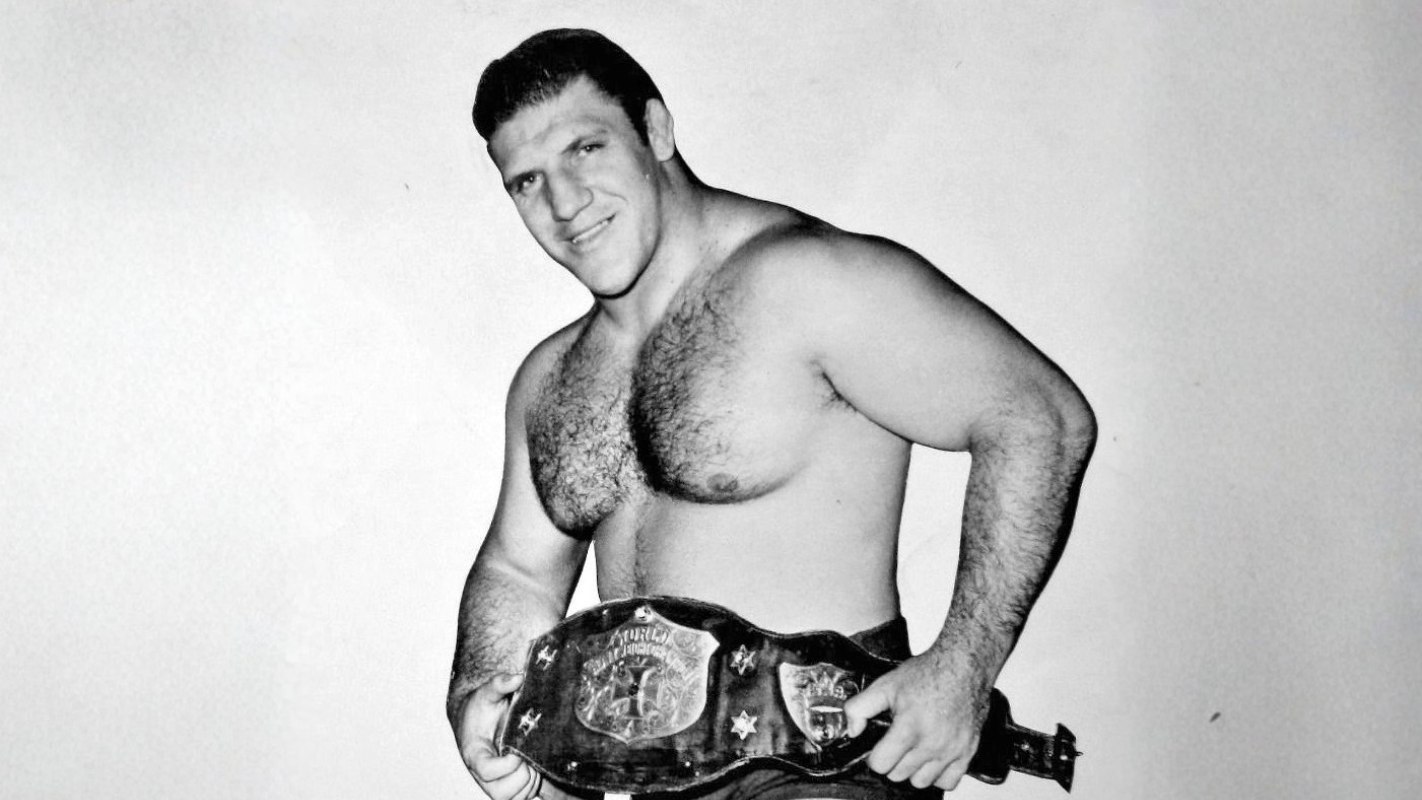
“I grew up on Bruno [Sammartino] and ‘The Big Three.’ God bless ‘The Big Three’: Lou Albano, Freddie Blassie, and The Grand Wizard, still my favorites to this day. The Valiants. I saw Spiros Arion shoving Chief Jay Strongbow’s ceremonial headdress down his gullet, down his throat. I’ve seen it all.”
From Video Stores to Vince McMahon’s Office: How Russo Got In
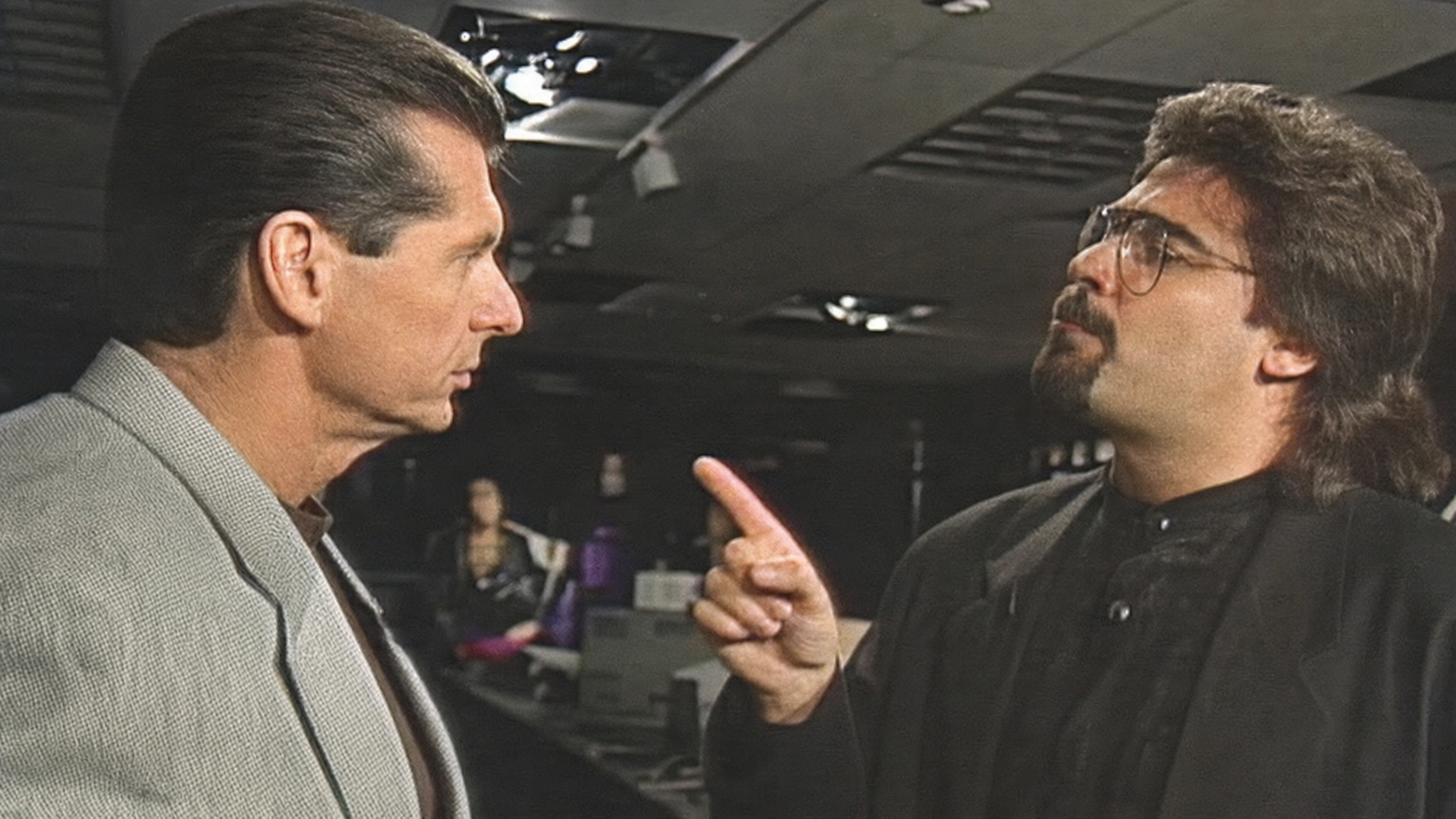
Vince Russo owned two video stores on Long Island. He also hosted his own local radio show, Vicious Vincent’s World of Wrestling, from 1992 to 1993, which aired on Sunday nights on WGBB in Freeport. Vince remembers those long-ago days.
“I had two mom-and-pop video stores on Long Island. This is before Blockbuster. I loved it. I would’ve been working at my video stores to this day if it were not for Blockbuster. They did to me what they did to a lot of mom-and-pops. We couldn’t compete with them. They literally put my two stores out of business. So, I had to look for another job, quite frankly.”
“I was always a fan of wrestling,” Russo continued. “I never considered myself a wrestling mark. I was a fan of the entertainment of wrestling, and I just thought it might be cool to get into the wrestling business. That’s pretty much it.
“It was never on my radar. It was never the plan. People need to understand I didn’t have this hope and dream of getting into the wrestling business. Seriously, my video stores were going out of business. I thought wrestling would be cool. I thought it would be fun.
“Bro, I’m working at PC Richards and Son. I got a college degree. So, I’m running out of money at WGBB. I need a job. I’ve got small kids. That’s when I wrote Linda [McMahon] the letter.
“I didn’t know Linda oversaw the WWF Magazine. I had no idea that was under her jurisdiction. I just wrote her a letter saying, ‘Listen, my name is Vince Russo. This is what I’m doing.’ I literally said, ‘I’m running out of money to fund my show. Any opportunity…’ And then, I got a call from Linda, and they offered me a job as a freelance writer.
“I don’t know if you guys remember the name: Edward Schutte? Ed was the editor of the magazine. I was freelancing. I was getting $150 a story to go to Poughkeepsie and interview Shawn Michaels. That’s what I was getting. So, I never planned on this. I didn’t have these dreams and aspirations, ‘Oh, one day I’m gonna be writing wrestling.’ That wasn’t even on my radar.”
Russo joined the WWF as a freelance magazine writer in 1992, worked his way up to editor by 1994 under the pen name Vic Venom, and was promoted to the creative team in 1996 as McMahon sought to change the television product during WCW’s dominant 83-week run over the WWF in the Monday Night Wars. By early 1997, Russo had been elevated to head writer, with his first official episode of Raw in that role airing on December 15, 1997. The rest is history.
“I’ll be honest, the day Vince McMahon anointed me, I thought I was going up to his office to be fired. I really did. I thought that’s why I was being summoned up there. And then when he kind of dropped that bombshell in front of everybody, they were all in that room, and I was the most shocked person in the room. Because, as I said, it was never a plan of mine. I was doing Vicious Vincent on WGBB, paying $500 for two hours.
“That’s why I’m just a firm believer of things happening for a reason. I ask God to this very day, ‘Why on earth did you put me in this business?'”
Enjoying this story? Own it forever.
No ads. No interruptions. Download the full story as a beautifully formatted PDF at just $0.99.
Get My Copy — $0.99The Attitude Era Philosophy: Russo Explains His “No Half Pregnant” Rule
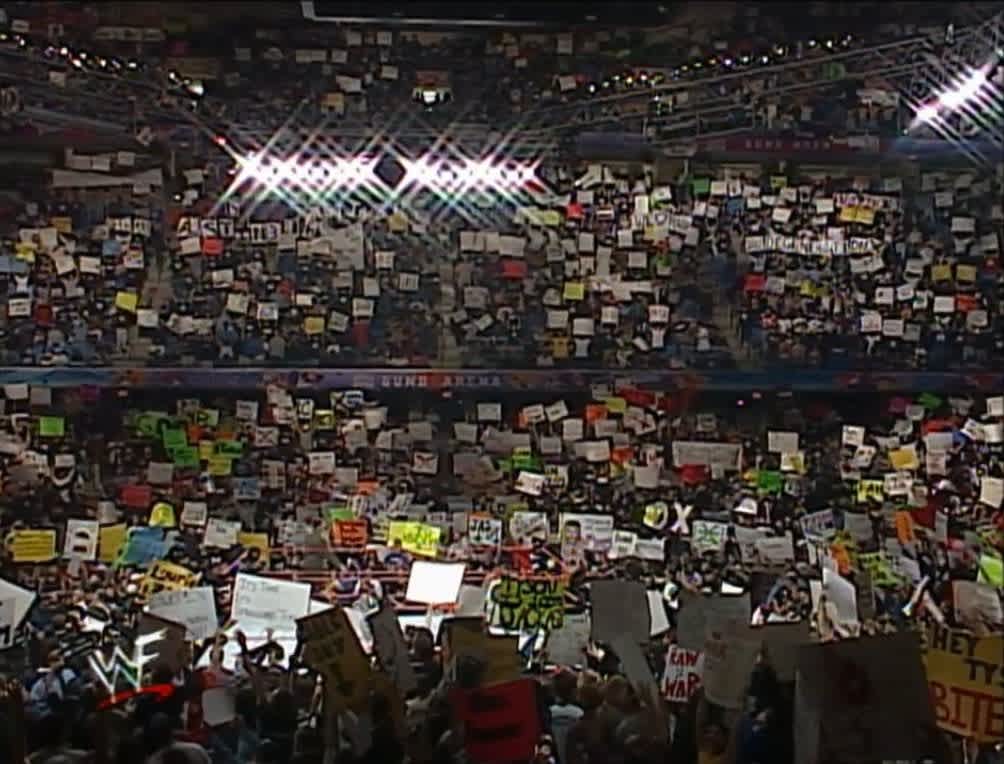
Vince Russo’s role in the wildly successful WWF Attitude Era has been chronicled, debated, and examined endlessly for over a quarter century.
Russo contributed bold, boundary-pushing storylines, raising the dramatic stakes with edgier characters, adult themes, and a harder edge than the WWF had ever put on television. Often referred to as “Crash TV,” there was a Jerry Springer Show feel to the proceedings.
Here, in his own words, was Russo’s booking philosophy:
“One of the things when I started writing was that wrestling had a tendency to always repeat things. They would do angles over and over again. And I told myself as a wrestling fan, ‘We’ve seen it. We’ve done that.’ I always challenged myself to come up with something new, something they had never seen before. I’d rather come up with something new and have it fail than repeat something that, as a wrestling fan, I’ve seen a million times before. And that’s what I did with wrestling. I just tried to create a lot of angles, a lot of characters that you never saw before.
“Is that controversial? I don’t think so. I wasn’t controversial; they made me controversial. I don’t think I changed the fundamentals of professional wrestling. I don’t think I changed what was really important. But that was my challenge. I did not want to write things that had already been done to death.
“I would say the most fun I had was probably with two guys: Val Venis and Goldust. Because with those characters, there were just no limitations, especially Dustin, especially that Goldust character. Way ahead of its time. Just no restrictions.
“Vince McMahon always taught me when I was writing, ‘You can’t be half pregnant.’ So you either go all the way with it or you don’t go with it at all.”
Russo also readily acknowledges his creative partner Ed Ferrara, who was then a consultant at USA Network.
“I will always say Russo-Ferrara, Russo-Ferrara, Russo-Ferrara till the day I die. I will always give Ed the utmost credit. But I also respect Ed’s wishes because he does not want to be involved in the wrestling business at all anymore. And I respect him for that. But we still keep in touch to this day. We were a great team. We meshed together. We gelled together great.”
In the two years after Vince Russo’s promotion to head writer, Raw surpassed WCW’s Nitro in the all-important head-to-head ratings. Whether you loved the wild Attitude Era or did not appreciate its excesses, nobody can deny that Vince Russo helped change WWE’s fortunes at a critical moment in the company’s history.
But success came with a price. As the WWF’s ratings dominance grew, so did the workload. When McMahon launched SmackDown as a second weekly television show in 1999, the demands on Russo became relentless. He was writing two full programs, producing pay-per-views, and barely coming up for air, all while his family was waiting for a husband and father who was never quite there. Something had to give.
“Hire a Nanny”: The Moment Vince Russo Chose His Family Over the WWF
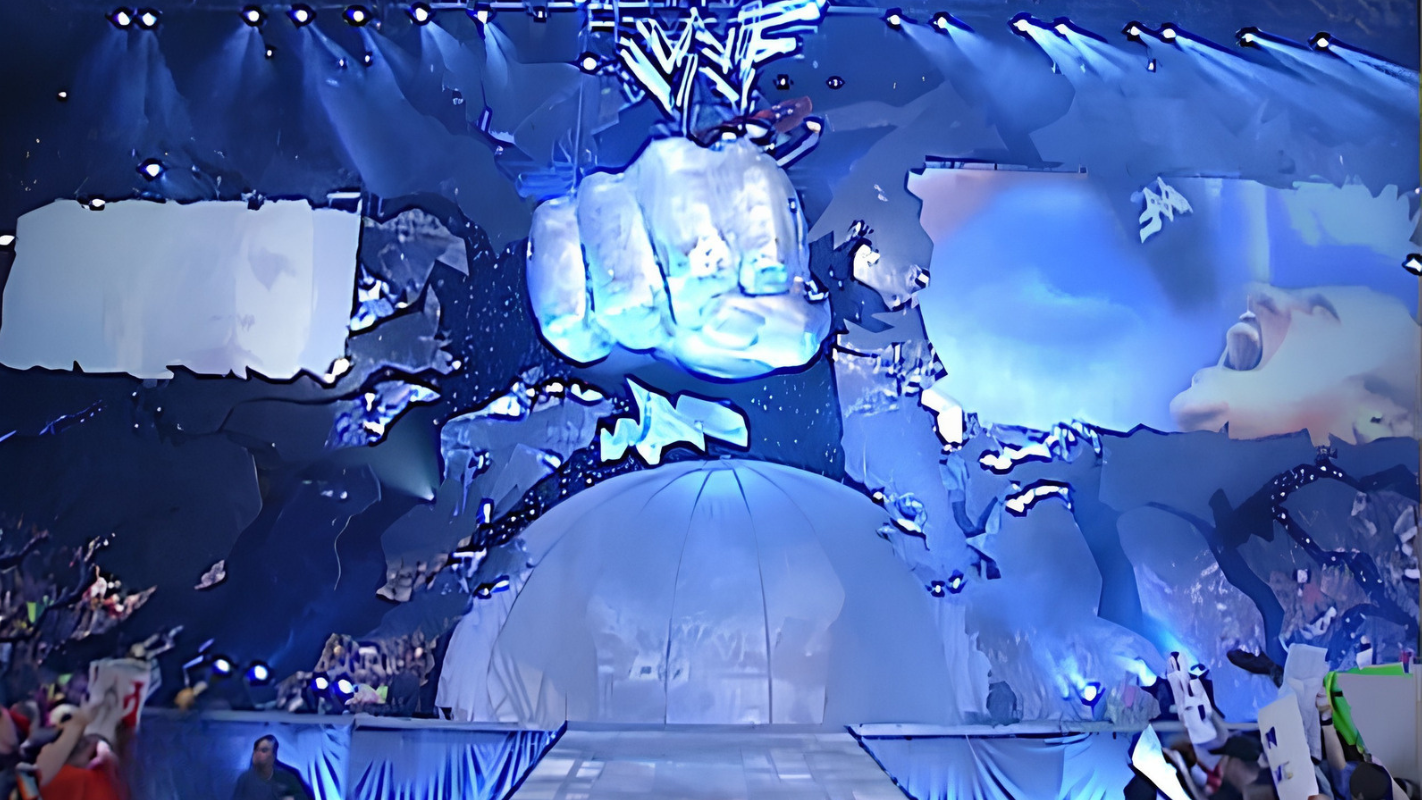
In October 1999, Vince Russo was replaced by Chris Kreski as WWF head writer after Russo departed the company. Russo looked back at the very moment within all of this that changed his life.
“The wisdom I would’ve given my younger self was this: this is not more important than my family. And that’s why I am so happy Vince gave me that wake-up call in 1999.
“When he added SmackDown to our plate, I was working 24/7. I just wanted to be able to relocate my wife to her hometown so she could be around family because I was working so much.
“And McMahon looked me in the eye and said, ‘Vince, I don’t know what the problem is. You make enough money to hire a nanny.’ McMahon had no idea he was talking to a very proud Italian husband and father, and there was no way in the world his company was going to be more important than my family.
“And even though WCW did not go the way I wanted it to, I do not regret for one second leaving Vince McMahon after he made that comment, and I thank him for it because it really woke me up.”
With his WWF chapter closed, Russo signed with World Championship Wrestling in October 1999, joining the company that had spent years dominating the ratings he had just helped flip. It was a new challenge, a new promotion, and, as it turned out, an entirely new set of problems.
Love Pro Wrestling Stories? Add us as a Preferred Source on Google so our stories always show up first for you. It only takes one click.
Add Us on GoogleWhy Vince Russo on the One Person He Could Not Forgive
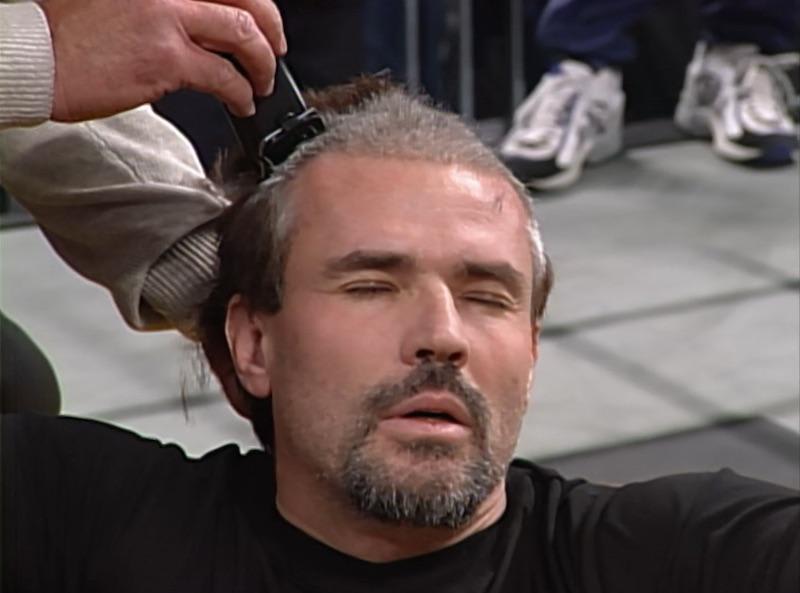
Vince Russo cites a variety of issues with his year-and-a-half WCW run, including ongoing difficulties with Eric Bischoff.
“I am a Christian guy. I really don’t hate anybody. The person who probably comes the closest to that is Eric Bischoff. Here’s the problem. I am a very logical, factual guy, and I always try to put myself in the other person’s shoes. So you have to understand the history between Eric and me.
“I was working with Bruce Prichard and others on the booking side in the WWF. Bill Watts got me more involved. This is the time when they’re doing Barf, Freddie Joe Floyd, Mantaur. It was horrible. I literally called my friends at WCW, Double J [Jeff Jarrett] and Kevin Nash, and I’m like, ‘Guys, you gotta get me in there.’
“This is when they were doing the nWo. So you have to understand: during the 83 weeks when they were kicking the WWE’s ***, Eric Bischoff called me. I had a conversation with him, and I basically said, ‘I would love to be a part of what you’re doing there.’ Eric Bischoff never took me up on it. So, after that, what happened? Vince McMahon made me the head of creative, and we flipped the switch, and the Attitude Era was born. And all of a sudden, not only were we kicking WCW’s ***, but Eric lost his job. You want to add insult to injury? Now I go over to WCW and take over Eric’s creative role.
“So, without even knowing me, without ever having a real conversation with me, it’s pretty clear and reasonable to understand, based on the history and the facts, that he didn’t like me. And the first time I ever met him, when Brad Siegel (Turner/Time Warner programming executive) made me meet him for lunch, a secret lunch where I didn’t even know who I was meeting, it was clear to me that the guy did not like me.
“And I’m gonna be honest with you, and this is why I have no sympathy whatsoever in my book towards Eric Bischoff. None. Because when I was working with him at WCW, when I was working with him at TNA, Eric Bischoff made the decision that he was just going to be a jerk to me. And he always was. He made that decision based on the history. I have no problem being honest about it. And for that, he is the guy I like the least out of everybody I ever worked with.”
With hundreds of amazing Pro Wrestling Stories to dive into, where do you start? Get the inside scoop, join our exclusive community of wrestling fans! Receive 10 hand-picked stories curated just for YOU, exclusive weekly content, and an instant welcome gift when you sign up today!
Goldberg, the Road Warriors, and the Problem with Booking Legends Past Their Prime
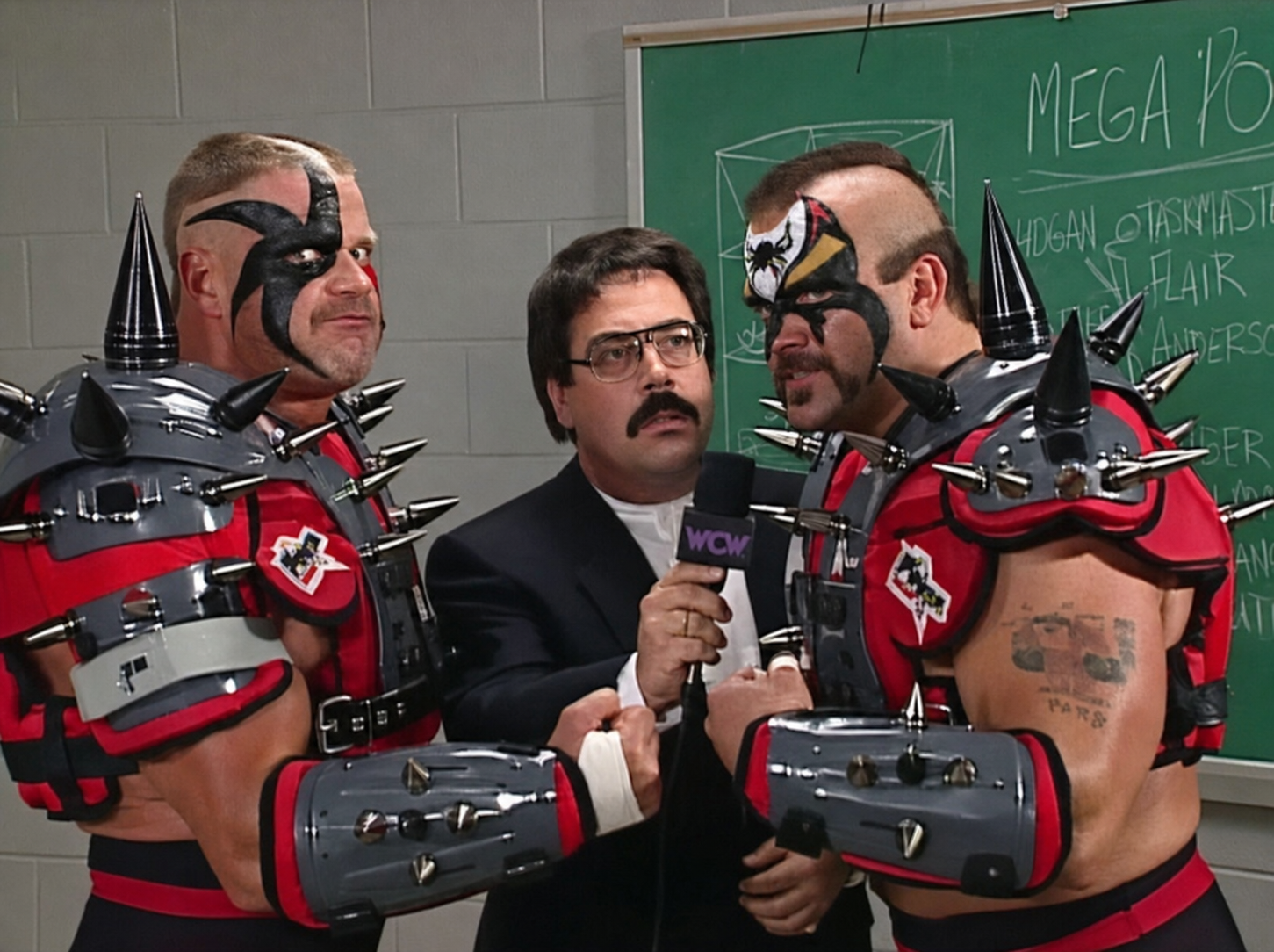
The tension with Eric Bischoff was not the only obstacle Vince Russo faced in WCW. Beyond the politics, he also found himself inheriting a roster full of legends, and the creative challenge that came with that was one he never quite solved.
“It’s very difficult to write for someone when you start working with a legend who has done everything.
“I had that problem with Bill Goldberg. When I went to WCW, the streak was over. How are you ever going to top that? There was nothing I could have written, other than Bill turning heel, to top the streak. And Bill didn’t want to turn heel, so that turned into a big problem.
“And then, guys like the Road Warriors. All of a sudden it’s 2000, and you’re booking for Animal and Hawk, it’s like, what haven’t these guys done? It’s so hard to book for somebody who had such a stellar career because, usually, I inherited them after they peaked, and you’re never really going to be able to top what they did in their prime. That’s very difficult.”
AOL Time Warner bought out Vince Russo’s contract shortly after the WCW buyout in May 2001. The run was over, but not before one moment that would follow Russo for the rest of his career.
Real Autographs. Only Few Remain.
These are hand-signed originals sold directly by Pro Wrestling Stories. Once they sell out, they are gone for good.
Own a Piece of Wrestling History
-

Larry Zbyszko Signed 8×10 Photo Autograph 2
$40.00 Add to cart -
Johnny Rodz Signed WWF 8×10 Photo Autograph (pictured with The Grand Wizard)
$30.00 Add to cart -
The Tonga Kid (Sam Fatu) Signed WWF 8×10 Photo Autograph
$35.00 Add to cart -
Johnny Rodz Signed WWF 8×10 Photo Autograph (pictured with Captain Lou Albano)
$30.00 Add to cart -
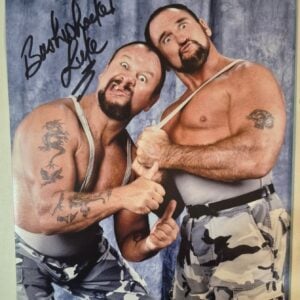
Bushwhacker Luke Signed WWF 8×10 Photo Autograph
$30.00 Add to cart -
Larry Zbyszko Signed WCW 8×10 Photo Autograph
$40.00 Add to cart -
“Greg the Hammer” Valentine Signed WWF 8×10 Photo Autograph
$45.00 Add to cart -
Sunny (Tammy Lynn Sytch) Signed WWF 8×10 Glamour Photo Autograph
$35.00 Add to cart -
Baby Doll (Nickla Roberts) Signed 8×10 Photo Autograph (pictured with Ric Flair)
$35.00 Add to cart -
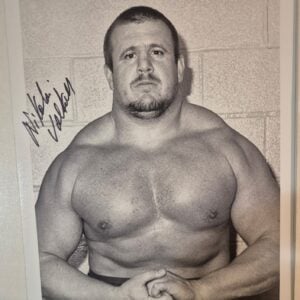
Nikolai Volkoff Signed WWF 8×10 Photo Autograph (Deceased Legend)
$45.00 Add to cart -
Brutus the Barber Beefcake Signed WWF 8×10 Photo Autograph 2
$35.00 Add to cart -
Sabu Signed WWF 8×10 Photo Autograph (Deceased Legend)
$55.00 Add to cart -
Bushwhacker Luke Signed WWF 8×10 Photo Autograph (of The Bushwhackers)
$30.00 Add to cart -
Nikolai Volkoff & Boris Zhukov Signed WWF “The Bolsheviks” 8×10 Photo Autograph (Deceased Legend)
$60.00 Add to cart -
Fred Ottman Signed WCW 8×10 Photo Autograph (The Shockmaster)
$35.00 Add to cart -
Bushwhacker Luke Signed WWF 8×10 Photo Autograph (The Bushwhackers)
$30.00 Add to cart -
Ken Patera Signed WWF 8×10 Photo Autograph
$35.00 Add to cart -
Ron Simmons Signed WWE 8×10 Photo Autograph
$40.00 Add to cart -
Leaping Lanny Poffo Signed WWF Frisbee Pose 8×10 Photo Autograph (Deceased Legend)
$45.00 Add to cart -
Steve Keirn Signed WWF 8×10 Photo Autograph (Skinner)
$30.00 Add to cart -
Sunny (Tammy Lynn Sytch) Signed WWF 8×10 Photo Autograph (WWE Hall of Fame)
$35.00 Add to cart -
Barry Windham Signed 8×10 Photo Autograph
$40.00 Add to cart -
Fred Ottman Signed WWF 8×10 Photo Autograph (Typhoon)
$35.00 Add to cart -
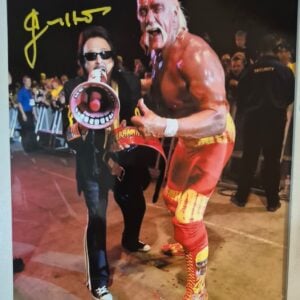
Jimmy Hart Signed WWF 8×10 Photo Autograph (pictured with Hulk Hogan)
$35.00 Add to cart -
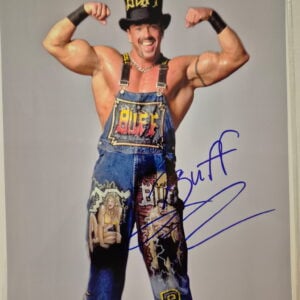
Marcus “Buff” Bagwell Signed WCW 8×10 Photo Autograph
$30.00 Add to cart -
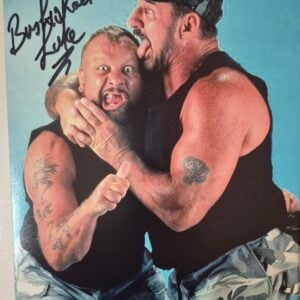
Bushwhacker Luke Signed WWF 8×10 Photo Autograph (with Bushwhackers Butch)
$30.00 Add to cart -
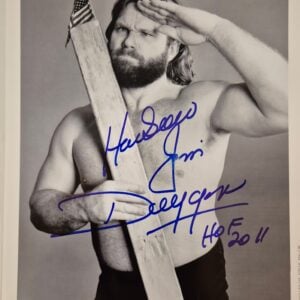
“Hacksaw” Jim Duggan Signed WWF 8×10 Photo Autograph
$40.00 Add to cart -
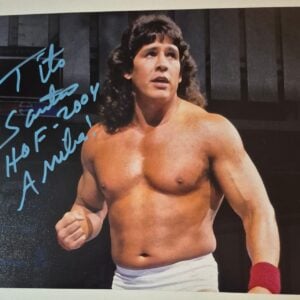
Tito Santana Signed WWF 8×10 Photo Autograph
$35.00 Add to cart -
Nikolai Volkoff Signed WWF 8×10 Photo Autograph 2 (Deceased Legend)
$45.00 Add to cart -
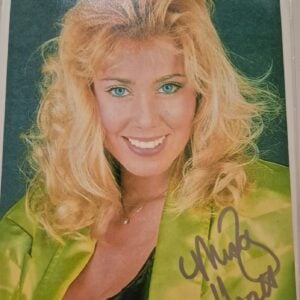
Missy Hyatt Signed 8×10 Photo Autograph
$35.00 Add to cart -
Bushwhacker Luke Signed WWF 8×10 Photo Autograph (pictured with Bushwhacker Butch)
$30.00 Add to cart -
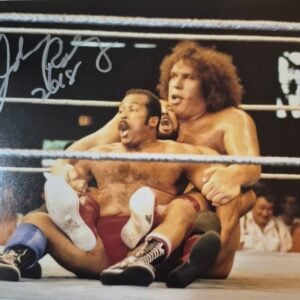
Johnny Rodz Signed WWF 8×10 Photo (wrestling Andre the Giant)
$30.00 Add to cart -
Johnny Rodz Signed WWF 8×10 Photo Autograph
$30.00 Add to cart -
Butcher Paul Vachon Signed WWF 8×10 Photo Autograph (Deceased Legend)
$45.00 Add to cart -
D’Lo Brown Signed WWF 8×10 Photo Autograph
$30.00 Add to cart -
Sunny (Tammy Lynn Sytch) Signed WWF 8×10 Photo Autograph
$35.00 Add to cart -
Leaping Lanny Poffo Signed WWF 8×10 Photo Autograph (Deceased Legend)
$45.00 Add to cart -
Hornswoggle (Dylan Postl) Signed WWE 8×10 Photo Autograph
$30.00 Add to cart -
Leaping Lanny Poffo Signed WWF Turnbuckle Pose 8×10 Photo Autograph (Deceased Legend)
$45.00 Add to cart -
Johnny Rodz Signed WWF 8×10 Photo Autograph (wrestling Tony Atlas)
$30.00 Add to cart -
Sunny (Tammy Lynn Sytch) Signed 8×10 Photo Autograph
$35.00 Add to cart -
Koko B. Ware Signed WWF 8×10 Photo Autograph
$45.00 Add to cart -
Jerry “The King” Lawler Signed WWE 8×10 Photo Autograph 2
$50.00 Add to cart -
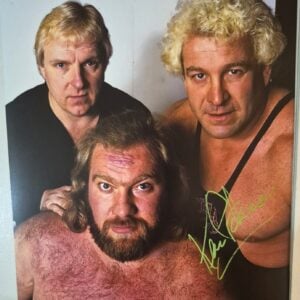
Ken Patera Signed WWF 8×10 Photo Autograph (pictured with Bobby Heenan & John Studd)
$35.00 Add to cart -
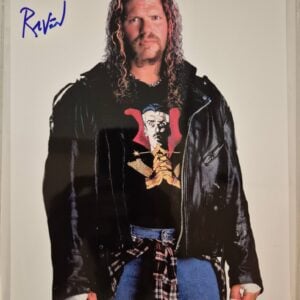
Raven Signed 8×10 Photo Autograph
$35.00 Add to cart -
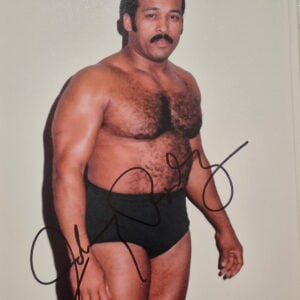
Johnny Rodz Signed WWF 8×10 Photo Autograph
$30.00 Add to cart -
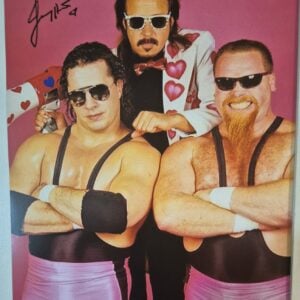
Jimmy Hart Signed WWF 8×10 Photo Autograph (pictured with Bret Hart & Jim Neidhart)
$35.00 Add to cart -
Kevin Sullivan Signed 8×10 Photo Autograph (Deceased Legend)
$45.00 Add to cart -
Jerry “The King” Lawler Signed 8×10 Photo Autograph
$50.00 Add to cart -
Brutus the Barber Beefcake Signed WWF 8×10 Photo Autograph (with Ultimate Warrior)
$35.00 Add to cart -
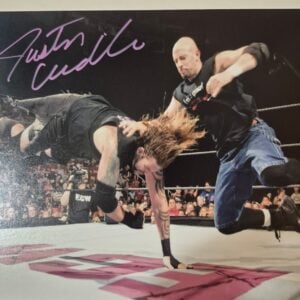
Justin Credible Signed 8×10 Photo Autograph
$30.00 Add to cart -
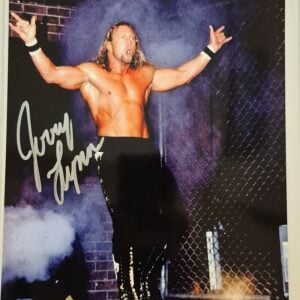
Jerry Lynn Signed 8×10 Photo Autograph
$35.00 Add to cart -
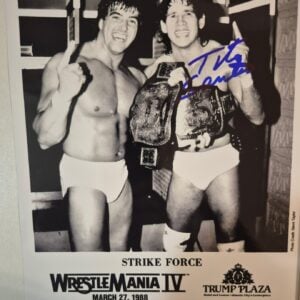
Tito Santana Signed WWF 8×10 Photo Autograph (Strike Force)
$35.00 Add to cart -
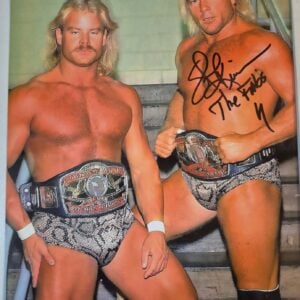
Steve Keirn Signed WWF 8×10 Photo Autograph (Fabulous Ones)
$30.00 Add to cart -
Justin Credible Signed 8×10 Photo Autograph 2
$30.00 Add to cart
The Real Story Behind David Arquette Winning the WCW Championship
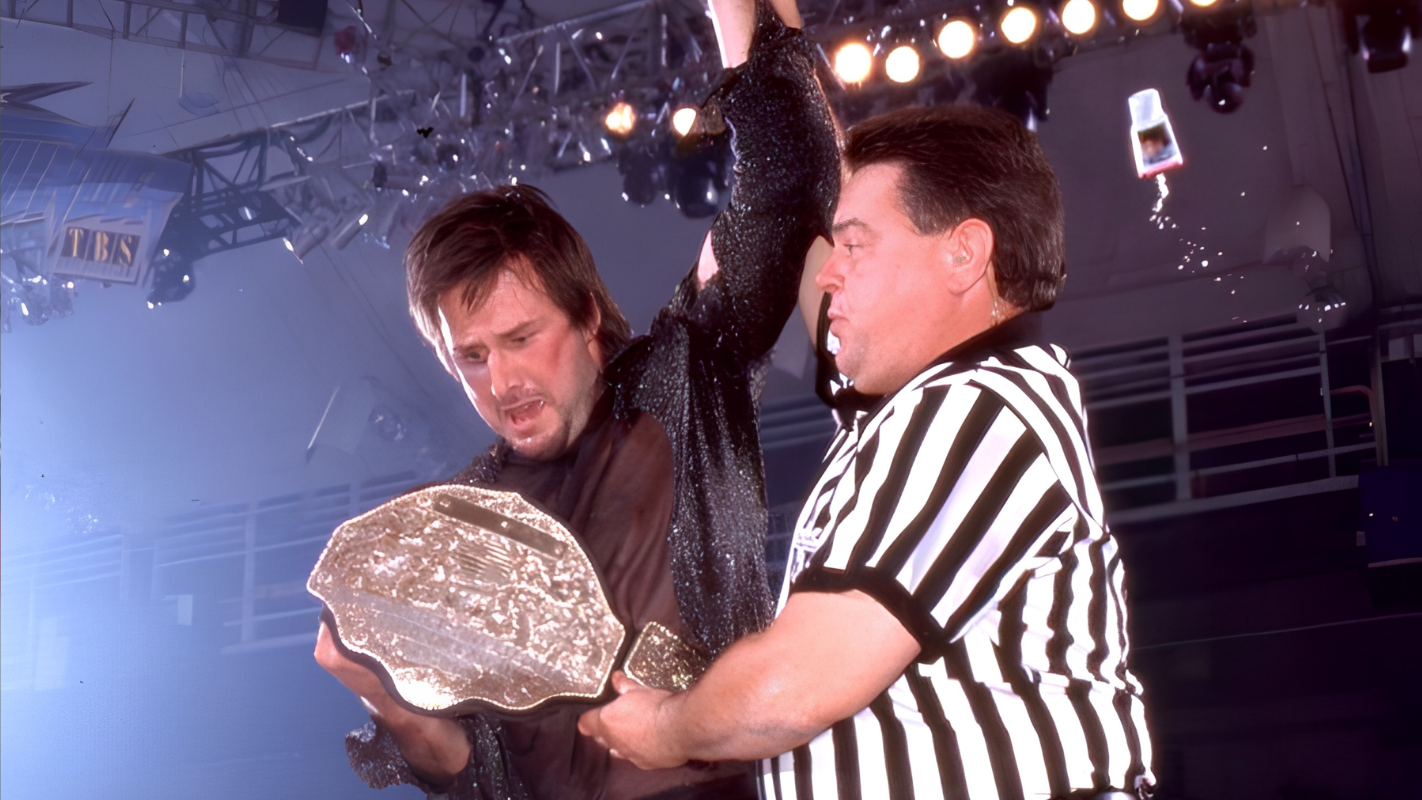
Vince Russo drew significant criticism when actor David Arquette became WCW Champion. He tells his side of the story here.
“So, we had the match booked. I think it was Diamond Dallas Page and Arquette against Double J and Eric Bischoff in a tag match. Page was going over. We had the production meeting, and everybody cleared the room.
“Tony Schiavone comes up to me, and he says, ‘Vince…’ It’s the old ‘What if?’ in wrestling, and he said to me, ‘What if David Arquette went over?’ And bro, I have to be honest with you, I was taken aback because me, Vince Russo, with all the crazy schemes I’ve ever come up with, that was never a thought in my mind.
“So, what I did was call everybody back into the room. Everybody. Agents, Eric, everybody. And I said, ‘Listen, this is what Tony suggested. What do you guys think?’ Everybody in that room was on board. Everybody. Because you have to remember, David Arquette did not pin a wrestler. He pinned Eric Bischoff. It was a fluke. It was a slip on a banana peel.”
Even David Arquette himself expressed concern to Russo about the angle.
“The next day, Arquette was like, ‘I don’t want this freaking title. Are you kidding me? This is the kiss of death. I don’t want this title.'”
The morning after, however, the story took on a life of its own.
“The very next morning, we were on the cover of USA Today. And at the time, man, we really needed a publicity stunt. I think it accomplished that. Not only that, his wife, Courteney Cox, was doing a movie at the time. He brought the WCW Championship belt to the set. So now we’ve got Kurt Russell with the belt. We’ve got Kevin Costner with the belt. We could have never paid for that. Arquette was doing the late-night shows and bringing the belt on those shows. The publicity that gave us, we could have never paid for.
“Again, to the pure wrestling fans who have convinced themselves that this is real, I might as well have shot somebody in the head. But I’ll be the first to say, 1,000%, it was a publicity stunt that was very needed at the time, and I think it paid off.”
When WCW folded in 2001, Russo eventually found his way to a new wrestling home: Total Nonstop Action, a fledgling promotion out of Nashville that was betting on young, hungry talent to build something new. For a time, it looked like it might actually work.
How Hulk Hogan and Eric Bischoff Derailed Russo’s Plan to Build TNA Around AJ Styles
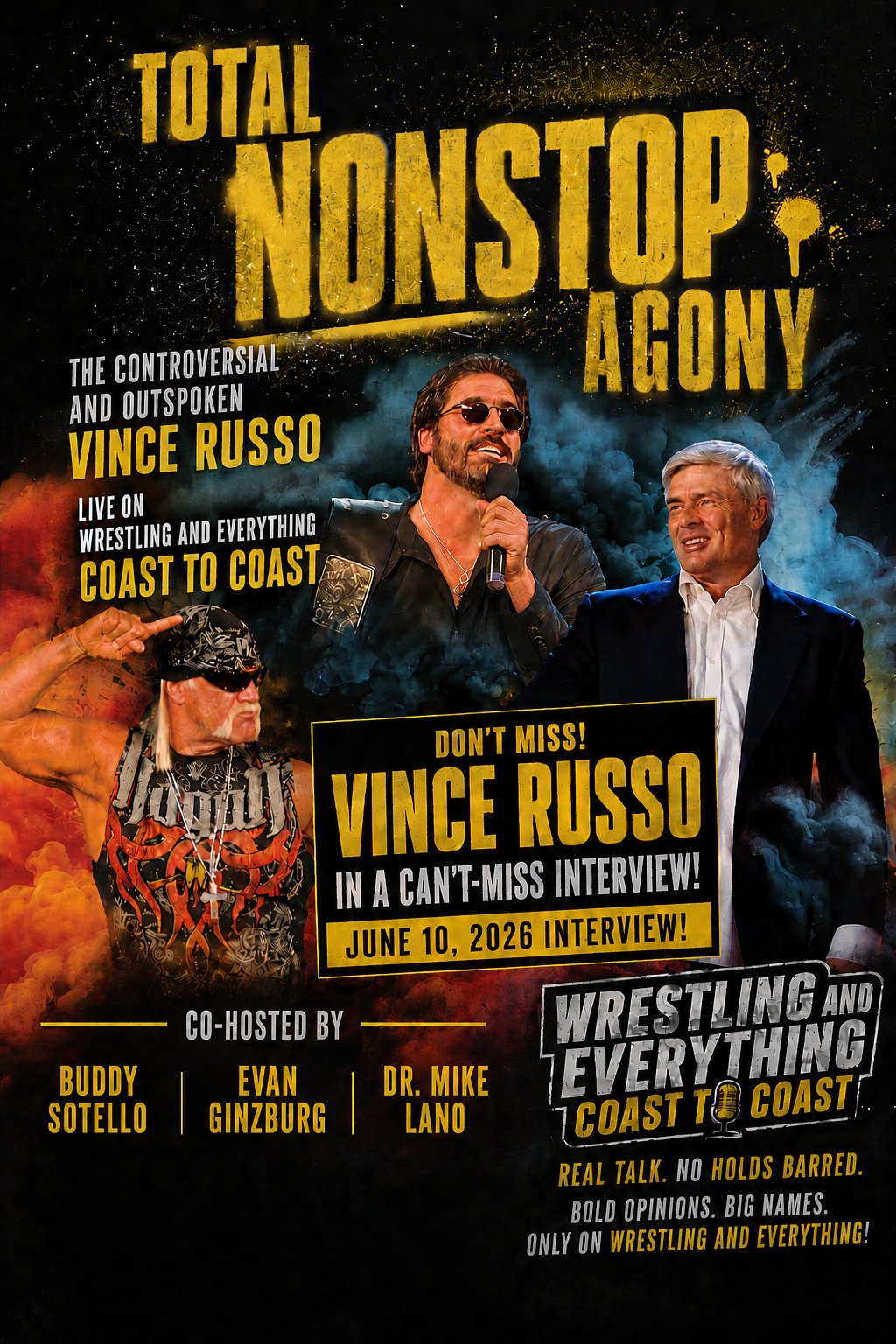
Vince Russo’s new book is titled Total Nonstop Agony: The Rise and Fall of TNA. Obviously, he did not have the smoothest experience there. While saving some of the juiciest details for the book itself, here is some of what he shared about his TNA writing run.
Vince detailed his experience with Jeff Jarrett.
“Jeff was really the head of creative. I wrote the shows and pitched everything to Jeff. Jeff was pretty much like Vince McMahon in my relationship with the writing process. But at the end of the day, it was Jeff’s company.
And you guys all know, and this is not a Jeff Jarrett thing, this is a wrestler thing: Jeff Jarrett had himself on top of the promotion. Much like Dusty Rhodes, much like Verne Gagne, that’s the nature of the beast. And I don’t blame Jeff for that one bit because Jeff had an interest in the company. Jeff’s philosophy was, ‘Nobody’s heart and soul is in this company more than I am. Nobody’s gonna work harder and perform at the level I’m gonna perform.’ So, Jeff carried the belt for many years, and I totally get it.
“One of the first things I did was put the belt on AJ Styles. At that time, we really wanted to build the company on its youth. Samoa Joe, AJ Styles, and the Motor City Machine Guns were very young back then. That was my plan. But little did I know that while I was going in this direction, Dixie Carter was having conversations with Eric Bischoff and Hulk Hogan without my knowledge.
“Next thing I know, they’re brought in, and we turn around and go right back to the veterans and all the people they brought in. So, I literally had maybe three months where I was really trying to transition over to the youth of that company.
“I’m going to be candid, frank, and honest as I always am. The day Eric walked through the door, it became total nonstop agony without a shadow of a doubt. The company changed on a dime, and it was never, ever the same.”
Baseball, the Beatles, and Woodstock: The Vince Russo Most Fans Never See
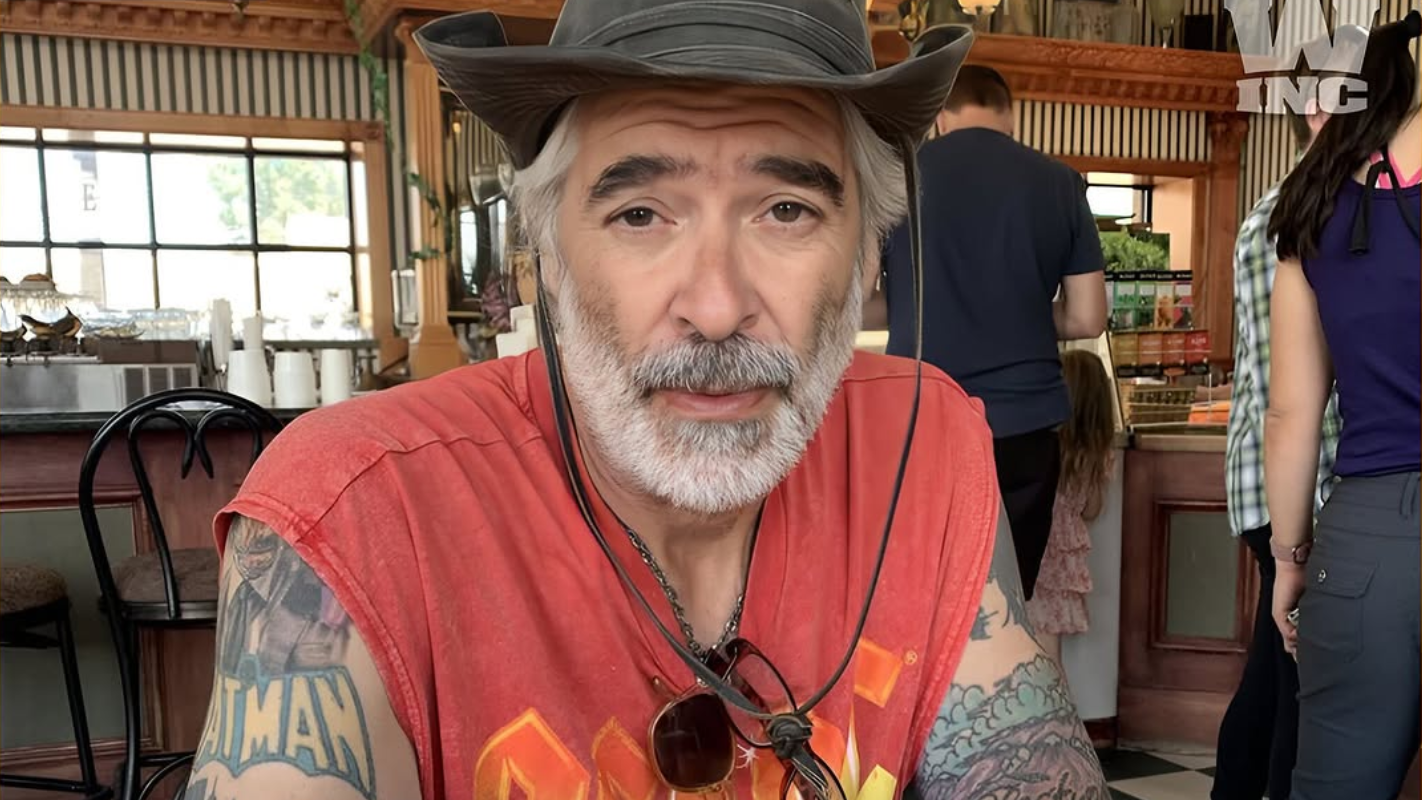
Fans are well familiar with Vince Russo, the wrestling writer and personality. But just who is this husband of forty-plus years, father, and grandfather, and what are his passions outside the ring? Vince Russo himself describes them here.
“One thing I probably get consumed by more than anything else, and it’s been a 20-year habit now, is fantasy baseball. You cannot beat me in fantasy baseball. There it is. I’m addicted to it. I wait until 1:00 in the morning for the waiver wire to open.
“Everybody assumes I’m a Yankee fan, and then I’m like, ‘No, I’m a Giants fan.’ It blows my mind that the majority of people don’t know that the Giants played in New York. My dad was one of those guys who loved the Giants, went to the Polo Grounds, ran through the streets when Bobby Thomson hit the homer, and hated the freaking Dodgers. So my father was one of the very few who, when they moved to the West Coast in ’58, remained very loyal to the Giants. Of course, I was raised a Giants fan.
“I really became a baseball fan in ’69 because, living on Long Island, and the Miracle Mets, people think everybody’s talking about the Knicks now. You have no idea how it was in ’69 when the Mets came out of nowhere. I think the Cubs had an eight-game lead. That’s when I really started loving baseball, and my beloved Giants. I got to see McCovey, Marichal, Mays. I got to see all the greats play.
“I’ll never forget, it was my end days at WCW, and we were in San Francisco. Right after the taping at the Cow Palace, we were going on a tour of Australia. My Giants were in the playoffs. And they were playing the Mets at home the day we were supposed to leave. I had WCW up to here at that point. I said, ‘Screw it. I’m not going to Australia.’ And I turned around and went to the Giants playoff games.
“I also have about 4,500 albums. I was born in ’61, but I really wish I were older in the ’60s. I love Woodstock, hippies, and Janis (Joplin). I love all of that stuff.
“And my wife and I love going thrift shopping. I love finding little bargains and little treasures. I’m a Beatles guy through and through. I’ve got the Beatles tattooed on my body, and I have been into them since probably I was twelve.
“It’s funny because my wife and I bought an Airbnb in Saugerties, New York, minutes from Woodstock. I just got back from Woodstock, bro, and it’s so awesome because the townspeople there still dress the same way. And Saugerties is only about an hour and a half from Cooperstown and about 20 minutes from Woodstock. It’s still the hippie lifestyle, and bro, I love the old stuff.”
Eight Million Lost Viewers: Why Vince Russo Believes Wrestling Destroyed Itself
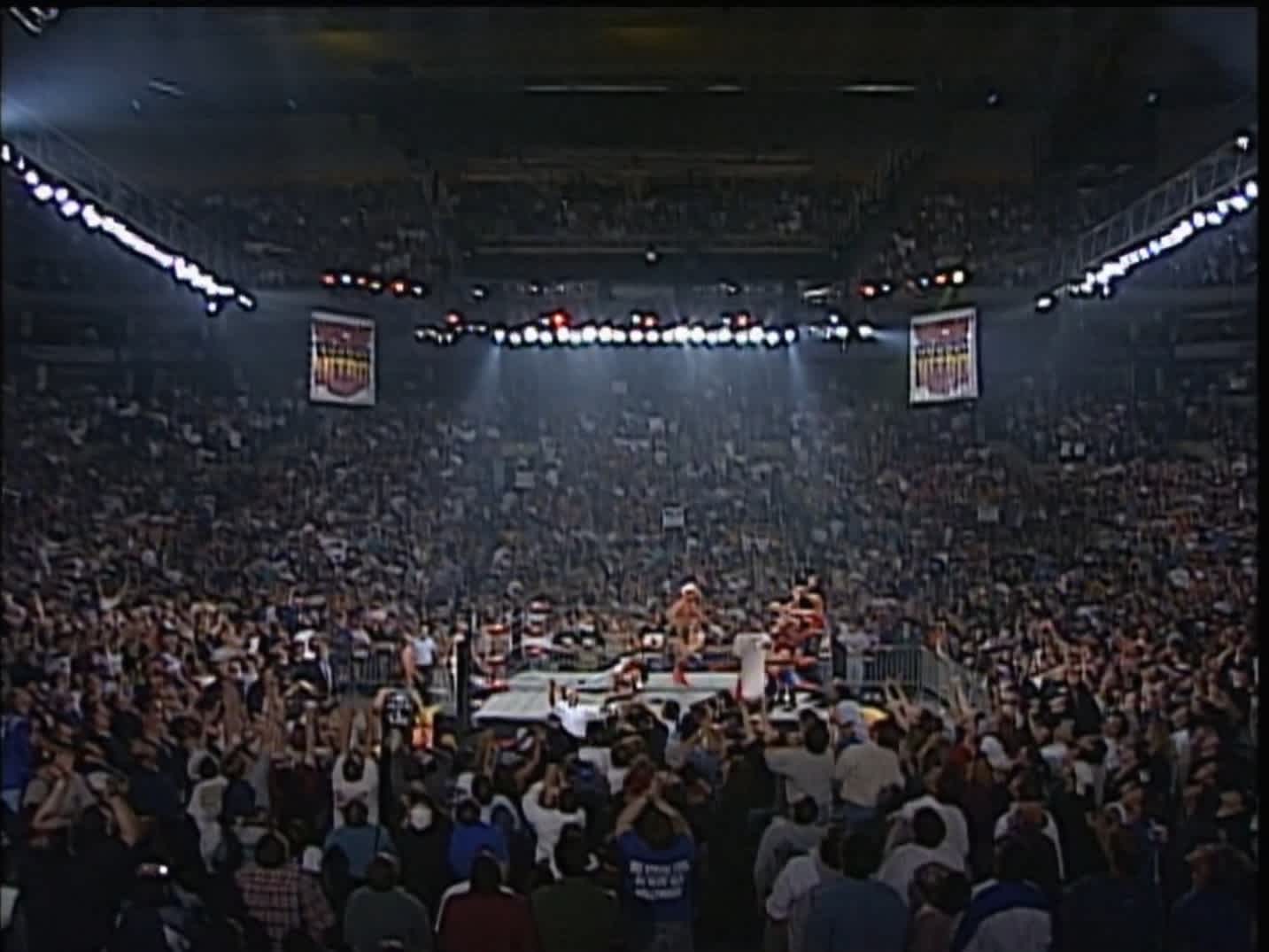
Vince Russo is frank in his criticism of modern wrestling.
“There is no enjoyment for me whatsoever in mainstream professional wrestling. None, zero. I write now for JCW (Juggalo Championship Wrestling), and that’s great. It’s a great crew. I work with Violent J of ICP (Insane Clown Posse), and I enjoy that relationship. I’m good at it. Guys, I’m still writing wrestling shows today, and I could sit down at this very computer and within two to three hours, you’ve got a complete wrestling show. No committees, no sitting around boardrooms. It’s me and the computer. Two to three hours, you’ve got a hell of a wrestling show. It was just a gift I was given, and I don’t know why God made the decision to put me in this business. It was never a plan. It just organically happened.
“But when we’re talking about WWE and AEW and mainstream wrestling, I could not give one iota about anything going on in professional wrestling today.”
Russo elaborated, “There is a huge difference between writing a wrestling show and booking a wrestling show. It’s two completely different things. And to me, when you’re on television, it needs to be a television show, because you want to open that up to as many people as possible, whether they’re a wrestling fan or not. And what that means is characters and storylines. Not every storyline around a belt and a champion and ‘you’re afraid of me, and I’m afraid of you.’ I’m talking about real characters, real stories, real television. That’s what’s lacking in wrestling today. It is nonexistent.
“You guys want to hear a statistic that will blow you away? During the Monday Night Wars between Nitro and WWE, one night, there were a combined 10 million viewers. The number of viewers for the first week of June 2026 on Netflix was 2 million worldwide. Over a week.
“Where are those eight million viewers that used to watch professional wrestling? You ran them off. You ran them off because you’ve taken the entertainment out of it. You’ve taken characters out of it. You’ve taken storylines. So what do you have now? You’ve got your fans that are going to watch every single week.
“There has been no WWE growth. There has been no AEW growth, and I’m not talking about the amount of money they’re making. If you’re charging $5,000 for a ticket, you’re gonna make a lot of money. That’s not what I’m talking about. They are catering to an audience they already have, and you know why? Because it’s easy. The hardest thing in the world is to get new viewers and new eyeballs.
“Guys, when you look at these numbers, what’s the first thing you’re going hear? ‘The Knicks were on. It’s the Stanley Cup. They stream now.’ Do you know the simplest thing Vince McMahon told me? ‘If it’s good, they’ll watch it.’ Vince didn’t care what else was on. He didn’t want to hear Monday Night Football. He didn’t want to hear anything.
“When I look at the wrestling we grew up on, and I look at today’s stuff, I think about what Lou Albano would think about wrestling today. What would a Bruno Sammartino fan think about what wrestling has become? And when I think about that, it just makes me very sad. It really does.
“I say, unless somebody dug up John Lennon and George Harrison, that is the only thing I would pay that kind of money to see. When I look at these ticket prices and wrestling fans paying for them, I just think they’re out of their minds. I just think they’re absolutely out of their minds. We talk about baseball, man. I remember when my father took me to my first game at Shea Stadium, and the pitching matchup was Tom Seaver against Juan Marichal. Tommy Agee led off the bottom of the 10th with a solo homer. I bring that up because the box seats at Shea Stadium were $4. And now, different world. I look at these prices, and I’m like, people have just lost their minds.”
“I Would Never Do It Again”: Vince Russo’s Most Honest Answer Yet
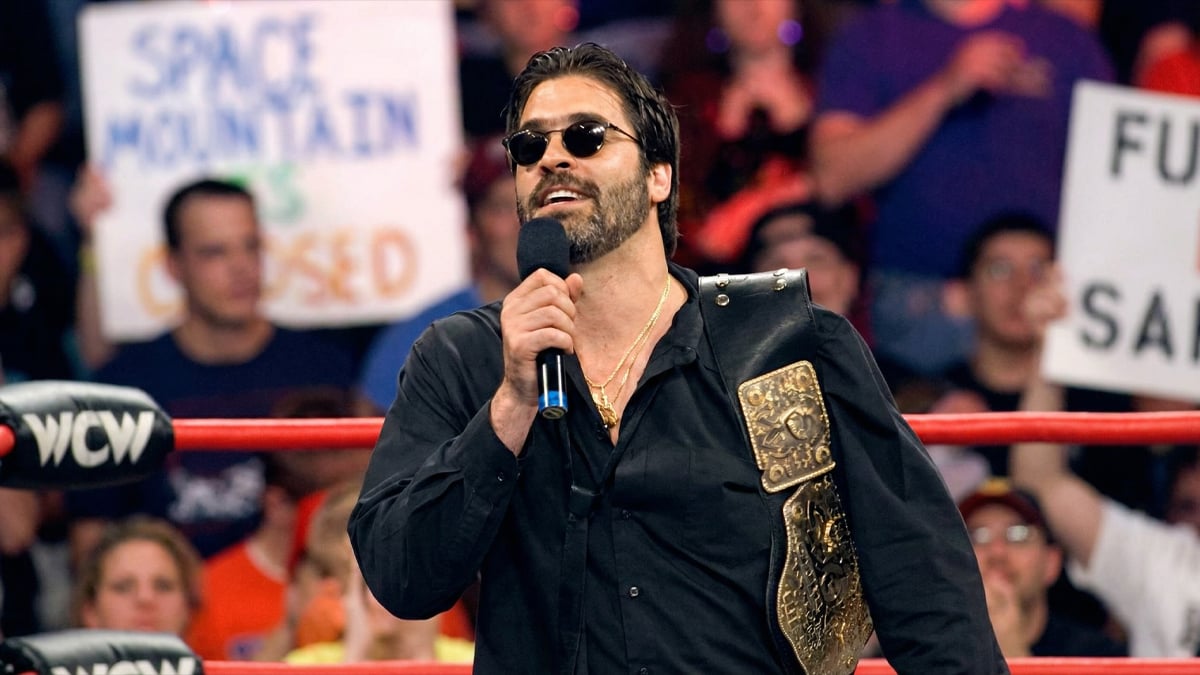
In the documentary 350 Days, Bret Hart, Superstar Billy Graham, and a group of legends are asked whether they would do it all over again. One by one, they all surprisingly answer yes.
But when I posed the very same question to Vince Russo, he did not hesitate to answer differently. Russo was quite honest and frank about the pain the wrestling business has caused him.
“I’m always honest. I would never do it again. If I had the choice to do it over, I would have never gotten into the wrestling business.
“And again, people need to understand I didn’t have this hope and dream of getting into the wrestling business. I needed a job. Seriously, my video stores were going out of business. I thought wrestling would be fun. But when you’re in it, I think a part of my success was that I never lost my fans’ perspective. I never allowed myself to live in the wrestling bubble.
“I always remained a fan, and I think that was much to my benefit. But being a fan and having that perspective, then when you get in it, and you see the underbelly of the wrestling business, I was probably in the business for less than a year when I came to the realization that you cannot be a good guy and exist in the wrestling business. You just can’t, because you’re swimming with sharks. And if you go in there as a nice guy, always trying to do the right thing, you are going to get eaten alive.
“Listen, I worked for CBS. I worked for some big companies in my life. Nothing compared to the wrestling bubble or the wrestling business.
“If I had to do it all over again, I would never have gotten into it.”
The Real Reason the Hardcore Wrestling Audience Never Forgave Vince Russo
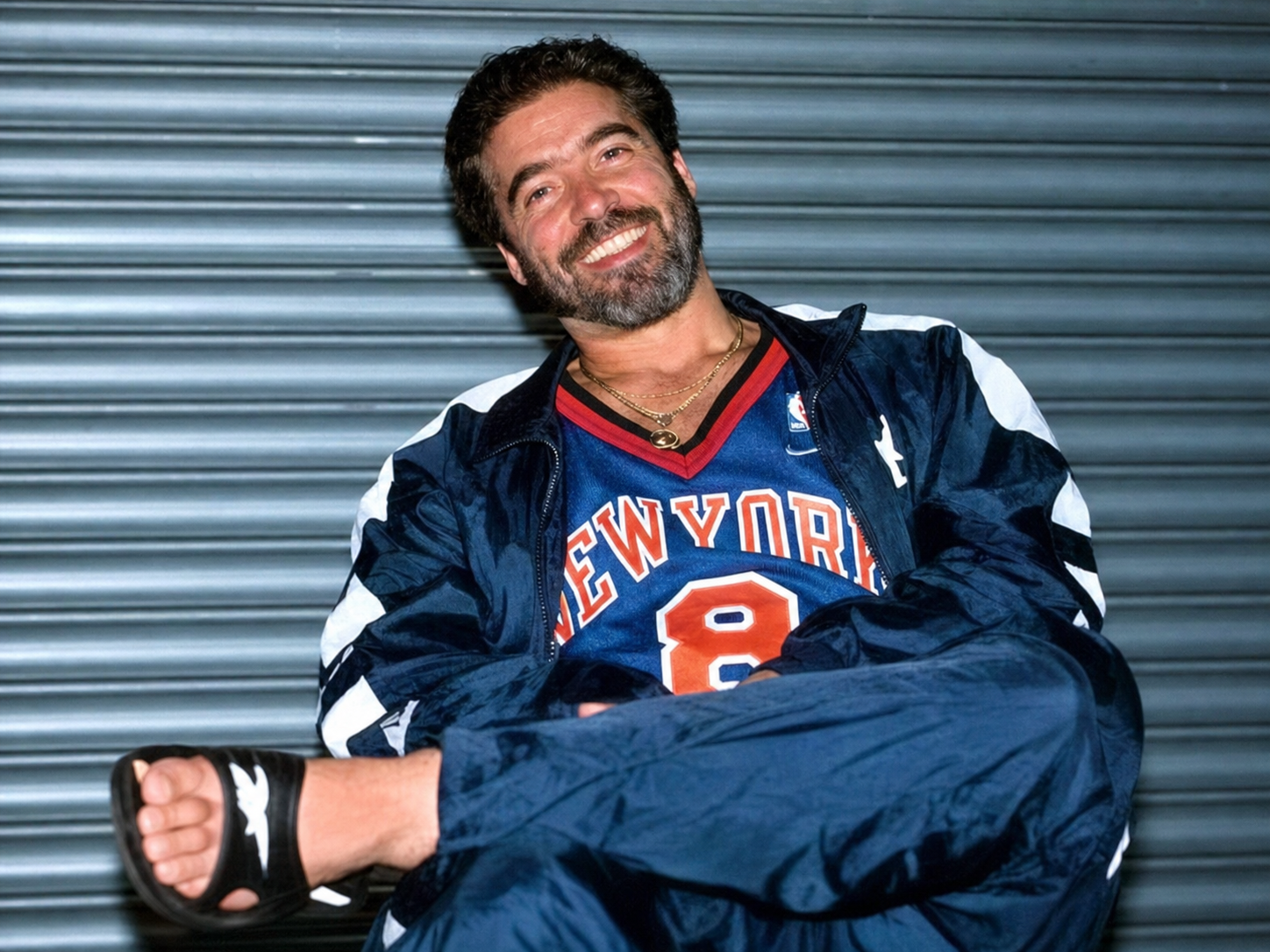
To this day, Vince Russo remains a lightning rod. Impressed by his warmth and honesty throughout the interview, I asked him straight out: “Why do they hate you?”
He was quite frank in his response.
“Here’s what it is. I just told you ten million people used to watch; now two million people watch. We’ve lost eight million people. Those eight million people were casual wrestling fans, television viewers. Those people were my people. These were fans of the Attitude Era, not having a clue who wrote the thing. They were fans of that. This audience is not on social media. They’re not on wrestling websites. They don’t know who Dave Meltzer is. They were casual wrestling fans who watched wrestling when it was really cool.
“People hate me because my style was sports entertainment. That was my style. It was not professional wrestling. And guys, guess what? Who did I get that from? I got that from Vince Sr. I got that from the WWWF when I was a kid and I saw all the outrageous things that Vince Sr. was doing. Vince Sr. wasn’t relying on wrestling: George ‘The Animal’ Steele? Like, seriously, bro, that’s where I got it from. I was always more of an entertainment guy than a wrestling guy, and that hardcore audience will forever hate me because of that. That’s really the answer.”
You Cannot Write Pro Wrestling History Without the Name Vince Russo
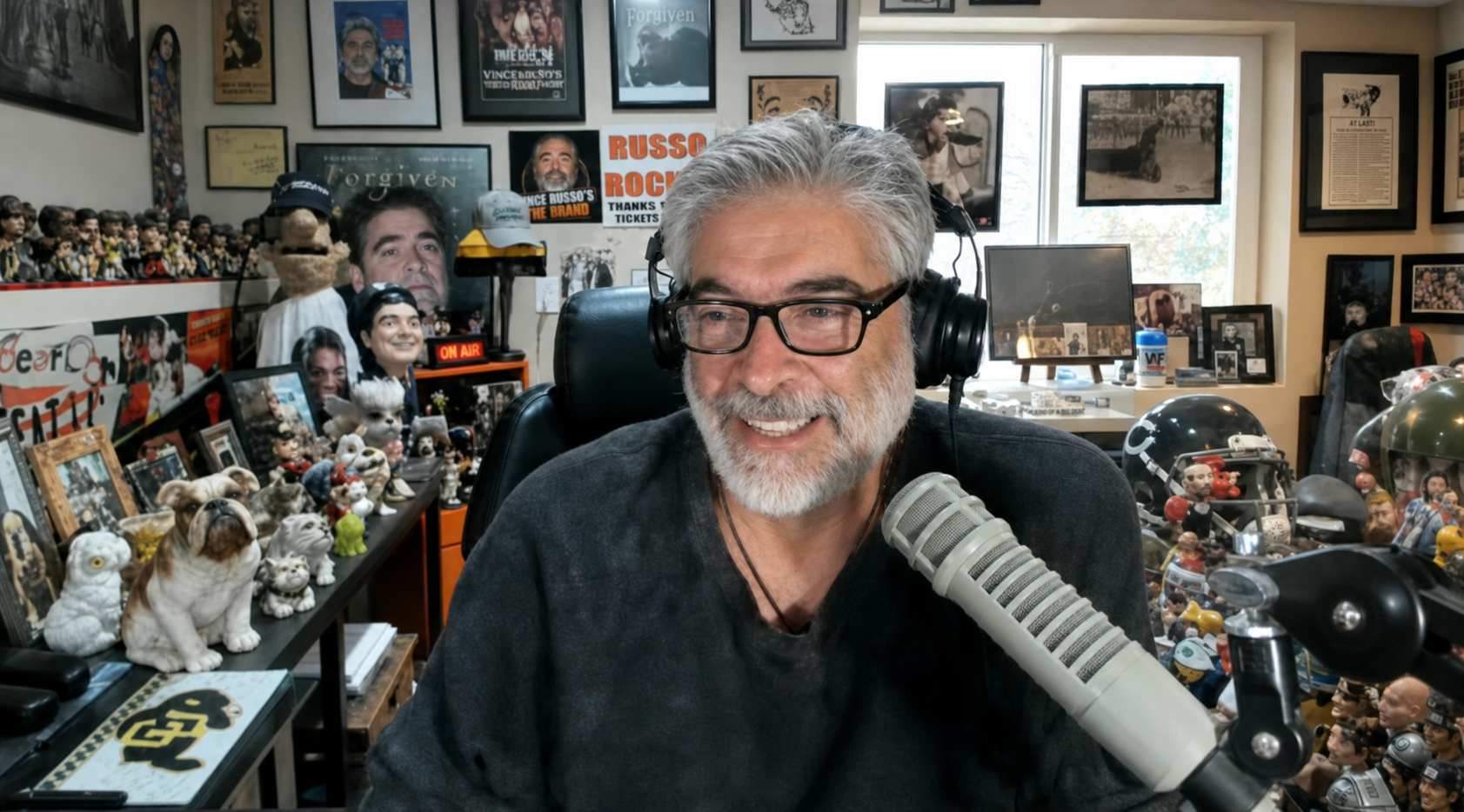
Vince Russo changed wrestling forever, and we will always debate the merits of those changes. We are nonetheless pleased to have provided some insight into the man behind the wrestling persona and to offer him some long-overdue roses. For you cannot write the history of pro wrestling without one Vincent James Russo.
Pick up Vince’s new book Total Nonstop Agony: The Rise and Fall of TNA (releasing July 14, 2026, with autographed copies available at russosbrand.com), and follow him on X, Instagram, Facebook, YouTube, and Twitch, with multiple daily shows starting at $4.95 a month on Patreon.
Wrestling and Everything: Coast to Coast, Episode 322, featuring Vince Russo, aired June 10, 2026, hosted and engineered by Buddy Sotello, Esq., and co-hosted by Dr. Mike Lano and Evan Ginzburg. Watch the full interview below:

These stories may also interest you:
- Vince Russo and Ed Ferrara’s 3 Months of Power in WCW
- Inside TNA’s 20-Year Fight for Wrestling Glory
- Val Venis and the Time WWE Filmed Two Adult Film Stars
Download PDF Version
Get the complete article as a formatted PDF for offline reading.