 Author:
 In June 1996, Ahmed Johnson became the first Black wrestler to hold the WWF Intercontinental Championship. Within weeks, he was hospitalized, and the title was gone. It was the first of several setbacks that transformed one of WWE’s fastest rises into one of its enduring what-if stories.
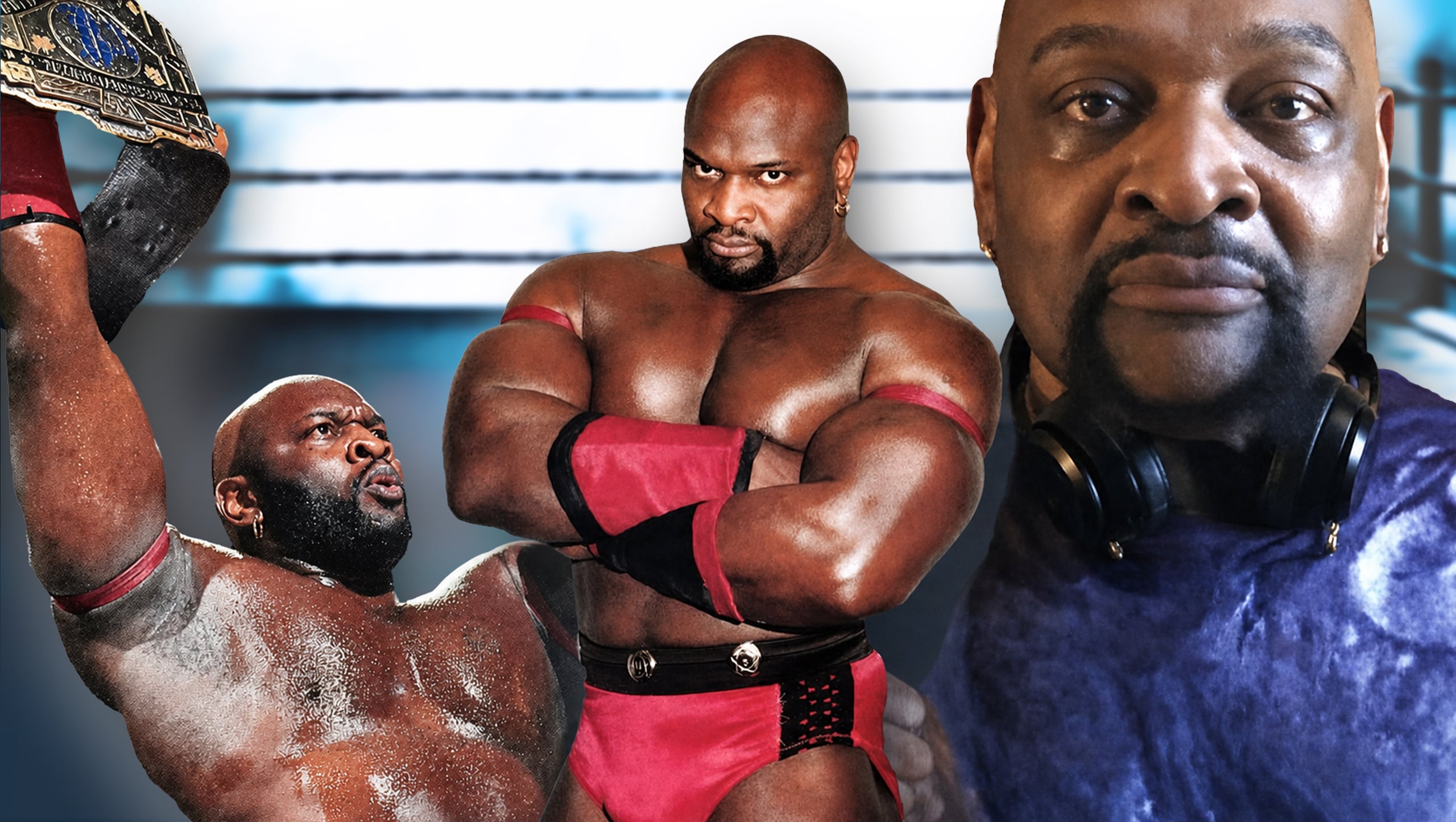
Ahmed Johnson: A “Blank Canvas” Arrives in the WWF
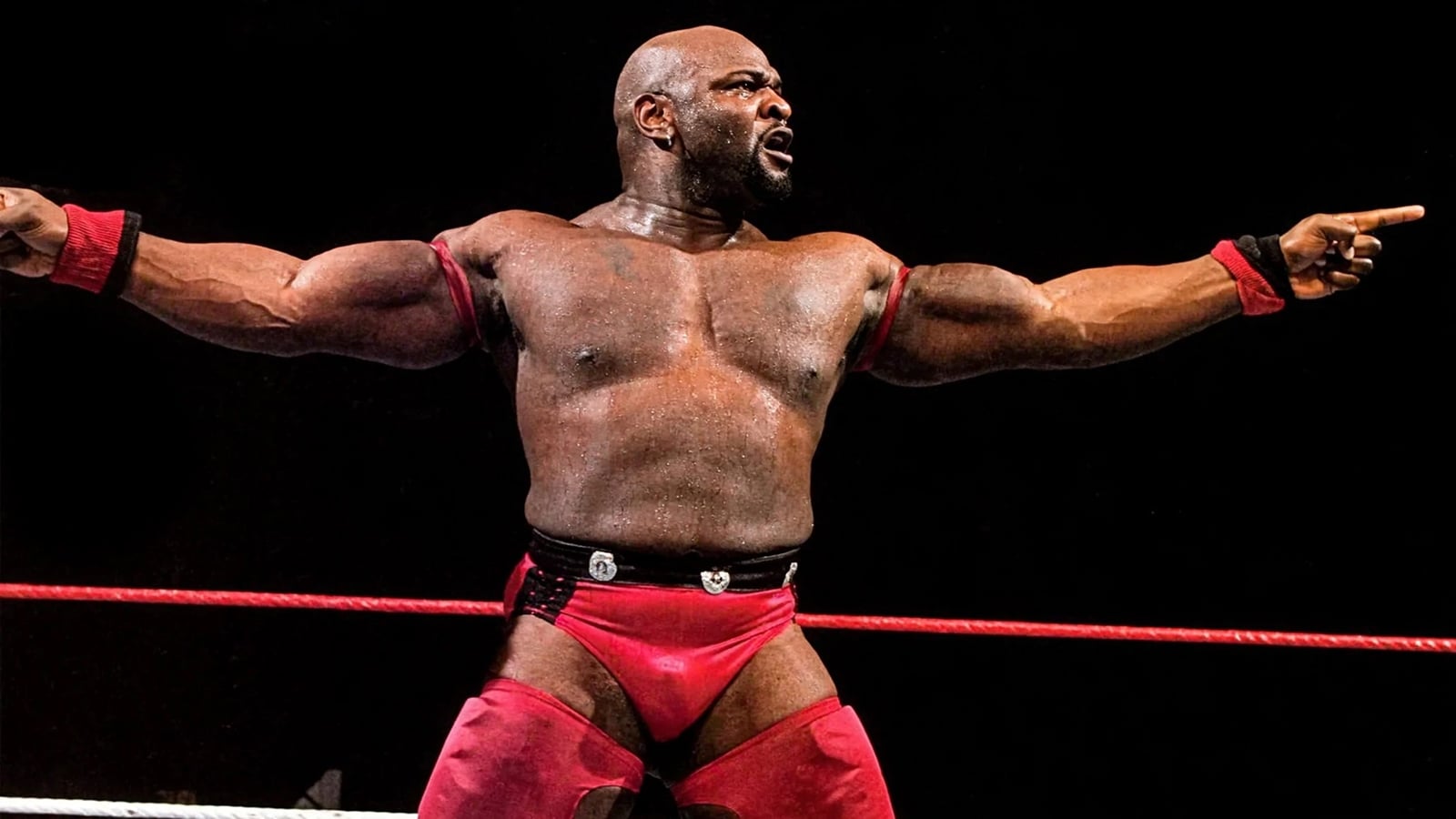
The ascent of some professional wrestlers can seem inevitable and, sometimes, arguably unstoppable. For Ahmed Johnson, much of it was tied to what was happening in the World Wrestling Federation when he arrived.
In the mid-1990s, the WWF was searching for its next generation of stars. The company had established names capable of carrying the present, but it needed performers who could convince an audience there was something more to look forward to tomorrow.
Ahmed Johnson was born Tony Norris, and it was under that name that Bruce Prichard first noticed him. Looking back on Johnson’s arrival on his podcast Something to Wrestle, Prichard described him as a performer with “animal charisma” and recalled his first impression in blunt terms: “I saw him on TV… he was a big, impressive son of a *****. The man had a great look.”
He continued, “But Tony really didn’t come on our radar until Michael Hayes came aboard. Hayes, I think, had worked with Tony in Dallas a little bit and was singing his praises and saying, ‘This is a guy that we should take a look at.'”
Prichard added that Johnson’s limited national exposure before signing meant the company had a “clean slate” to work with. There was no previous nationally known character for the WWF to overcome.
Johnson’s first documented WWF appearance came at a Houston house show on July 15, 1995, when he wrestled under his real name, Tony Norris. His first appearance under the Ahmed Johnson name came in an untelevised match at In Your House 3 on September 24, 1995. His televised debut followed on the October 23 episode of Monday Night Raw.
Within months, the relatively unknown Norris had been transformed into Ahmed Johnson, one of the company’s most heavily promoted new performers.
Johnson was also older than most fans realized. Born on June 6, 1963, in Kokomo, Indiana, he was around 32 when he debuted for the WWF in 1995.
Speaking to the BDSIR Network in 2013, later reported by Bleacher Report, Johnson admitted he lied about his age when he signed: “I was already in my thirties when I went to WWF. I lied. I was not born in 1972, or ’69, or whatever the internet says. I was born in 1963. I was already on my way to being an old man.”
But before getting ahead of the story, it helps to step back and examine the background of the man who became Ahmed Johnson.
Football, the Military, and a Difficult Childhood
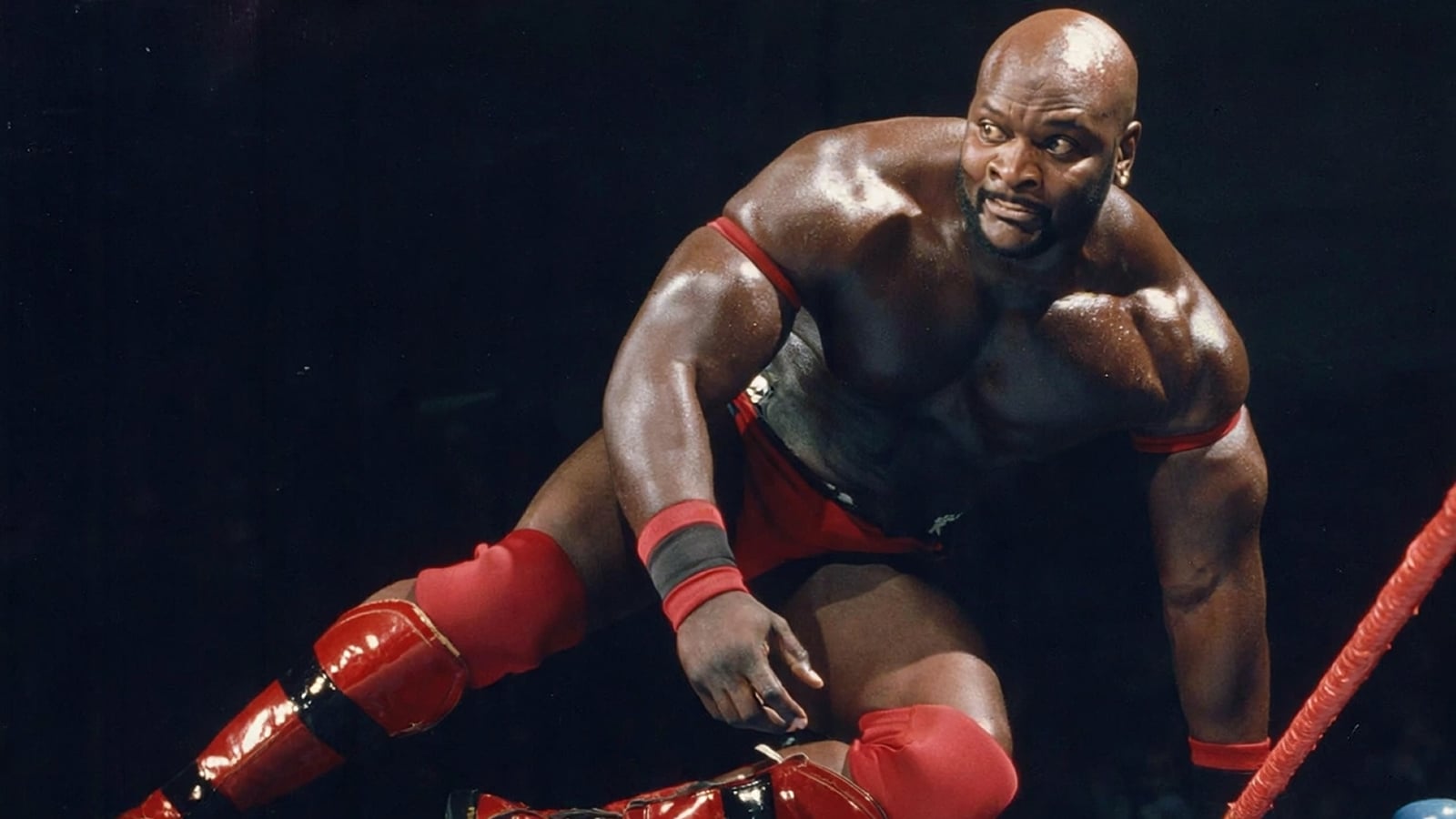
Before audiences knew him as Ahmed Johnson, Tony Norris was an athlete whose early life had already taken several difficult turns.
In a 2006 HighspotsTV interview, Johnson described growing up between Indiana and Florida.
“Home life wasn’t the best. It was very abusive. Very abusive father, and it was all really a living hell. It is what it was.”
Johnson was one of eight children and recalled trying to intervene when his father harmed his mother, only to be beaten himself.
His teenage years took him toward the streets before another path opened. Johnson told HighspotsTV that he joined the Bloods, the same street gang whose affiliates included Death Row Records co-founder Suge Knight, at age 13. By coincidence, he later played Knight himself in the 2001 TV movie Too Legit: The MC Hammer Story. He eventually left that life behind, entering the military and pursuing football.
The military remained a point of pride. “That’s one of the highlight moments of my life,” Johnson said. “I graduated as the most esteemed undergraduate out of 2,000 soldiers, top of the class. It was bittersweet, though, cause the other guys had family there for the ceremony, and I didn’t even know I’d won it until the general announced it.”
Football then became the foundation that attracted wrestling promoters. Prichard recalled, “He’s a high school athlete, finds his way to the University of Tennessee, he’s playing football there, and it’s been reported that he was a member of the Dallas Cowboys for the 1991 season.”
Johnson has likewise claimed that he spent time with the Cowboys. However, Prichard and co-host Conrad Thompson acknowledged that they could not independently substantiate the story, and no readily available official regular-season record confirms that Johnson appeared for the team.
Enjoying this story? Own it forever.
No ads. No interruptions. Download the full story as a beautifully formatted PDF at just $0.99.
Get My Copy — $0.99Training To Be a Pro Wrestler in Houston and the Call That Changed His Life
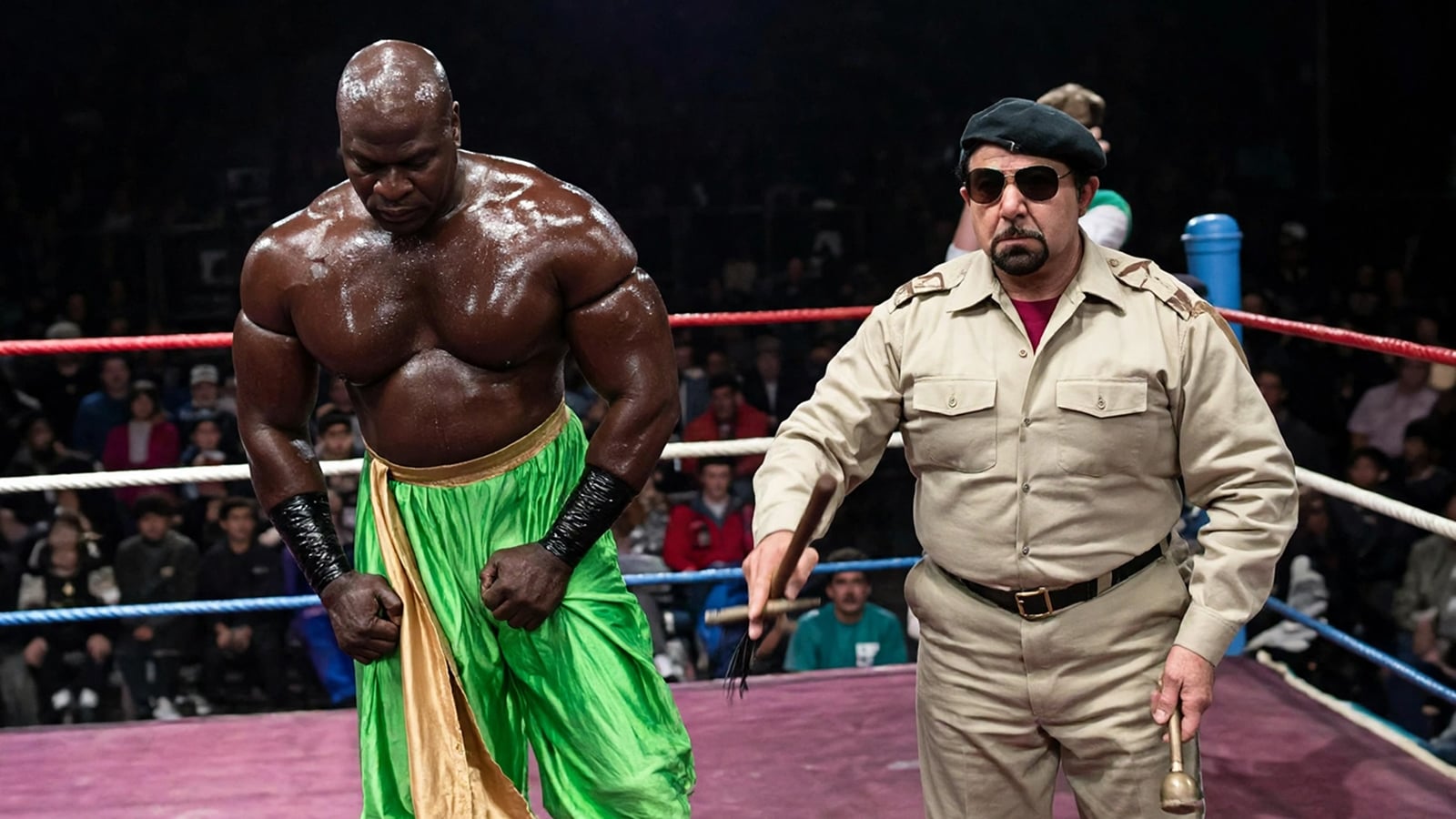
Ahmed Johnson’s path into professional wrestling training took an unusually varied turn after his time in the U.S. Army. Johnson worked as a lion tamer under trainer Dave McMillan at Circus World in Florida, helping handle lions, tigers, panthers, and leopards before being drawn toward professional wrestling by the potential money involved.
Ahmed Johnson’s wrestling training began in Houston under Scott Casey, Ivan Putski, and Skandor Akbar. Booker T and Stevie Ray were among the other future stars emerging from the Houston wrestling scene around that period.
In a Title Match Wrestling interview, Johnson remembered, “Stevie Ray, Booker T, and I all did it together. We all went to a school in Houston. Ivan Putski was teaching along with Joe Blanchard, and we all joined at the same time.”
Before he ever trained, Johnson said he worked as a child sweeping the arena floor after wrestling matches at the Mid-South Coliseum in Memphis.
Some later observers assumed Johnson had not been much of a wrestling fan and had simply fallen into the business after his football ambitions ended. Yet when asked whether he had been a wrestling fan growing up, he enthusiastically acknowledged, “Yeah, I was. Dick the Bruiser and Crusher, all of them. I was also a big fan of Mad Dog Buzz Sawyer. I thought he was the best. I don’t know why. I just loved his attitude. He and Rick Steiner.”
Johnson worked as Moadib in the Global Wrestling Federation before catching the WWF’s attention, largely through Michael “P.S.” Hayes. Johnson has recalled receiving as little as $20 for some of his early appearances.
According to Johnson’s account on Going Ringside, the WWF’s call came directly to his home, and he initially assumed it was a prank. The following morning, a UPS delivery arrived with tickets to Stamford, Connecticut.
“I was like, what? This is next level for me,” he admitted.
That call marked the start of his transformation into Ahmed Johnson. Prichard remembered that everything about the character was built with intent, including Johnson’s finishing move, the Pearl River Plunge.
The name tied the move to Johnson’s billed hometown of Pearl River, Mississippi. The name, the look, and the presentation all pointed toward the same idea: the WWF believed it had found someone it could build around.
Ahmed Johnson Becomes WWE’s First Black Intercontinental Champion
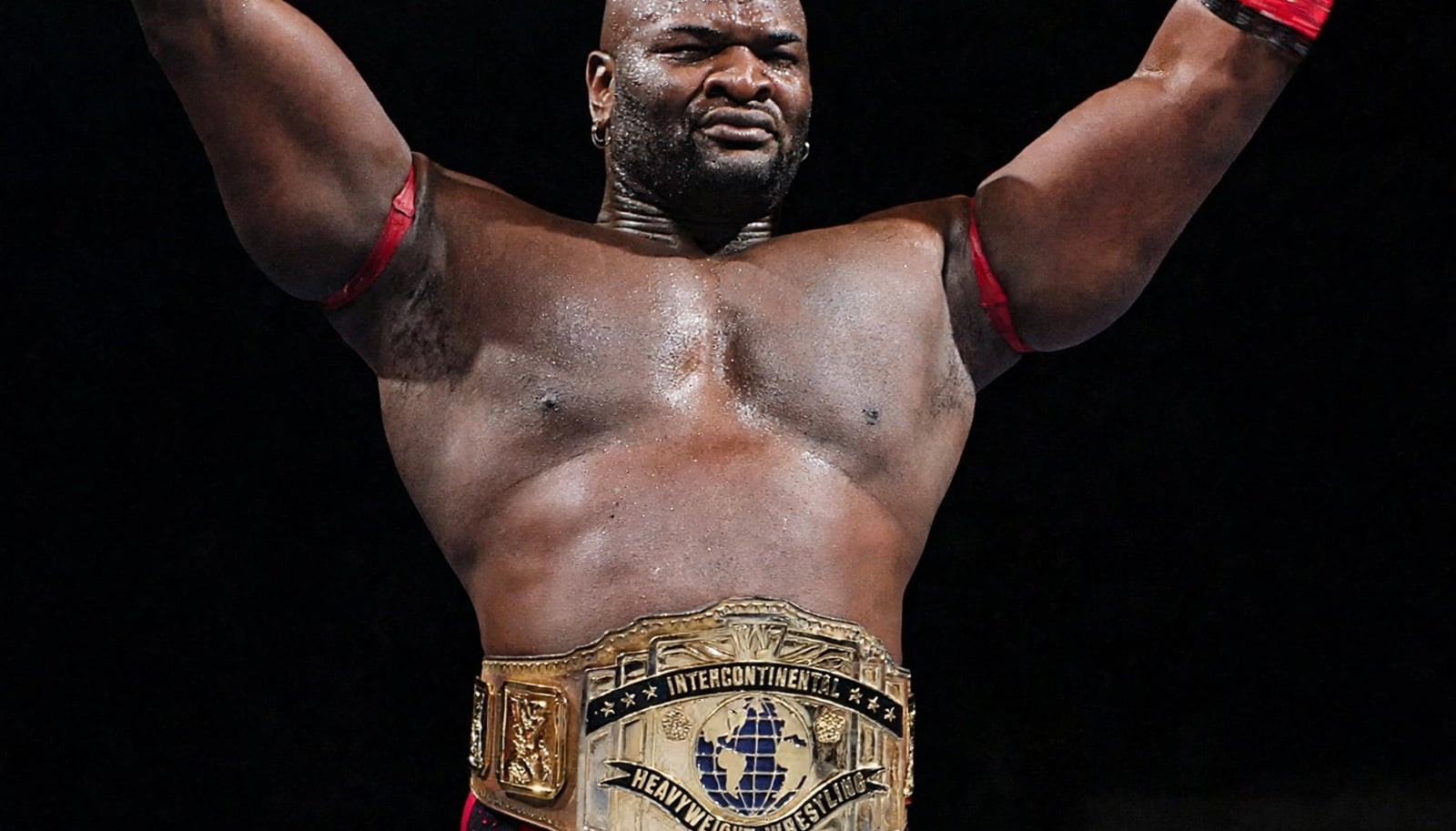
Ahmed Johnson’s early programs in the then-WWF included matches against established performers such as Jeff Jarrett, Vader, and Goldust. In May 1996, he also won the WWF’s inaugural Kuwait Cup tournament.
His breakthrough came at King of the Ring on June 23, 1996, when Johnson defeated Goldust for the Intercontinental Championship, making him the first Black wrestler to hold the title.
Speaking on the Wrestling With Legends podcast on May 6, 2023, Johnson connected the title win to the sense of accomplishment he had experienced in the military:
“Brother, it was an honor then, and getting the Intercontinental Belt was the same honor to me. It felt great. But I tell you, it was some sadness there, too, because I think about people like Junkyard Dog, Bobo Brazil, Ernie Ladd, people that should have held that title before me and didn’t get it because of the color of their skin.”
Johnson also recalled the crowd’s reaction: “They embraced me big time as Intercontinental champion. They popped for me. They cheered.”
The achievement did not insulate him from discrimination. Johnson later recalled receiving hate mail and finding a racial slur painted on his car during the period surrounding his title reign.
Bruce Prichard noted that Goldust was deliberately chosen as an opponent for Ahmed Johnson because Dustin Rhodes was established enough to help Johnson develop while the program still delivered compelling television.
Reflecting on the title win, Prichard added that it was the first step toward a point where he could envision Johnson eventually becoming WWF Champion.
By year’s end, Johnson was ranked fifth in Pro Wrestling Illustrated’s annual PWI 500 and was named the magazine’s Most Improved Wrestler of 1996. For a wrestler who had arrived on national television only months earlier, the speed of that rise was extraordinary.
That momentum, however, would not carry into the fall. The reign ended in August 1996 when Johnson was forced to vacate the title, but not by losing in the ring.
Love Pro Wrestling Stories? Add us as a Preferred Source on Google so our stories always show up first for you. It only takes one click.
Add Us on GoogleThe Debut That Went Wrong: A Costly Night for Ahmed Johnson
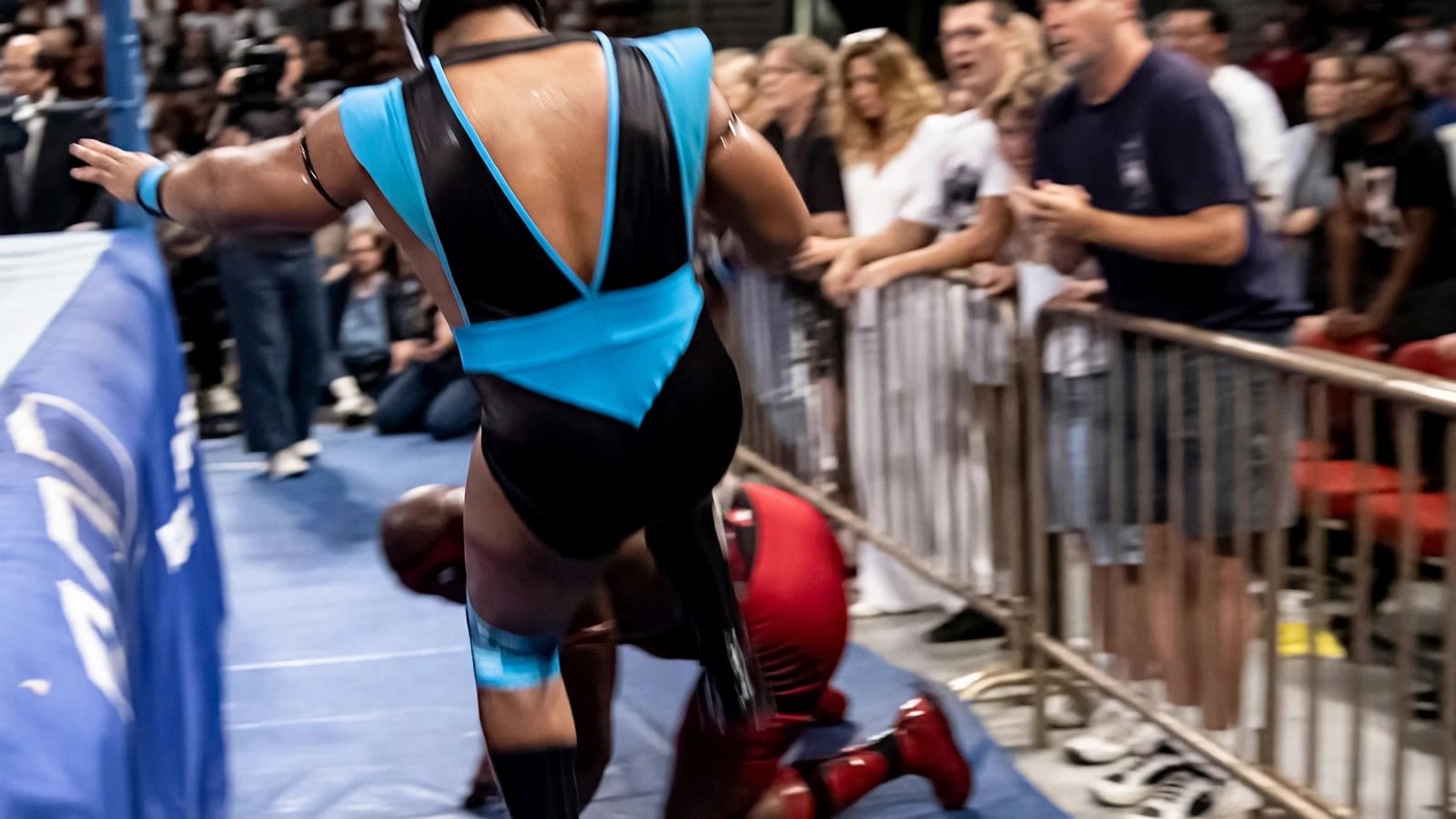
On the July 22, 1996 episode of Monday Night Raw, Ahmed Johnson and WWF Champion Shawn Michaels challenged the Smoking Gunns for the WWF Tag Team Championship. The match was followed by the debut of Ron Simmons as Faarooq, who attacked Johnson.
A kick intended to establish the new character’s dominance struck Johnson in the abdomen. Bruce Prichard described what happened as an accident:
“A kick inadvertently landed wrong and hurt Ahmed, and hurt him good. So it was very unfortunate, but that one was just an accident, wrong place, wrong time, wrong kick in the wrong spot.”
Johnson initially believed he was simply sore. Doctors later determined that he had suffered a serious kidney injury that required hospitalization and surgery.
Because the injury was internal, Prichard explained that the WWF could not establish a reliable timetable for Johnson’s return. He was forced to vacate the Intercontinental Championship.
“We had to wait and see how he healed up,” Prichard added.
Johnson has described the injury as a lasting physical burden. He has also described a later moment of retaliation during the Chicago Street Fight at WrestleMania 13 as a “receipt” rather than the continuation of a lasting grudge, claiming the spot injured Simmons’s ribs.
In a September 2025 Straight Talk Wrestling interview, Johnson revealed that Simmons eventually approached him at a convention, apologized, and shook his hand:
“We just kind of buried that whole thing underneath the carpet. Although I still have problems with my kidneys today. I’m still on kidney medication for where he kicked me at.”
“After that, we became real good friends,” Johnson reflected.
With hundreds of amazing Pro Wrestling Stories to dive into, where do you start? Get the inside scoop, join our exclusive community of wrestling fans! Receive 10 hand-picked stories curated just for YOU, exclusive weekly content, and an instant welcome gift when you sign up today!
The Nation of Domination and a Lost WWF Title Match
Ahmed Johnson’s 1996 kidney injury was not the only major interruption to his career.
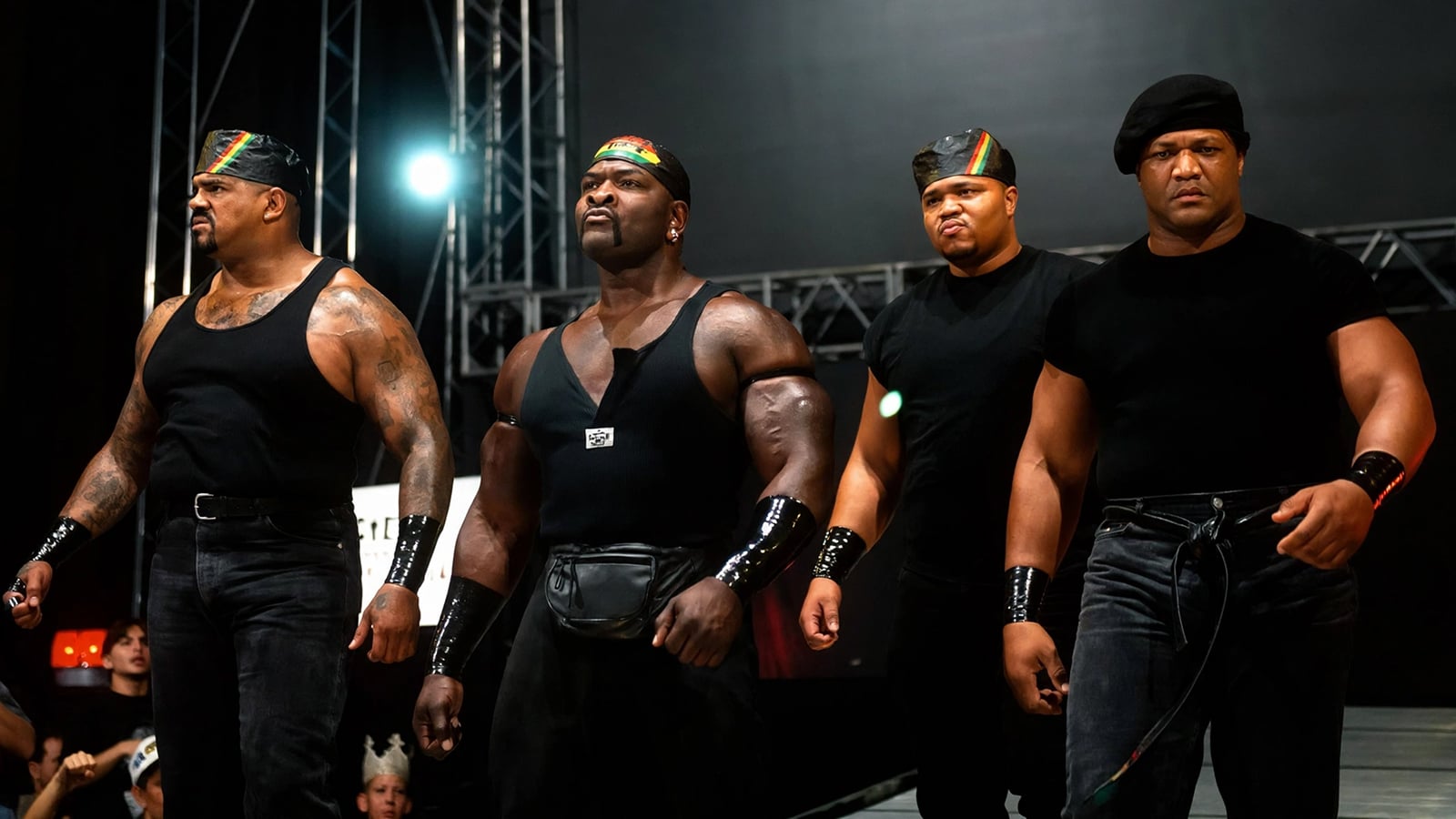
After recovering, he returned to his feud with Faarooq and the newly formed Nation of Domination. The group made its pay-per-view debut at Survivor Series on November 17, 1996, supporting Faarooq in his match against Jimmy Snuka.
Johnson defeated Faarooq by disqualification at the Royal Rumble in January 1997 after the Nation interfered. Two days later, Johnson and The Undertaker defeated Faarooq and Crush on the live Friday Night’s Main Event special.
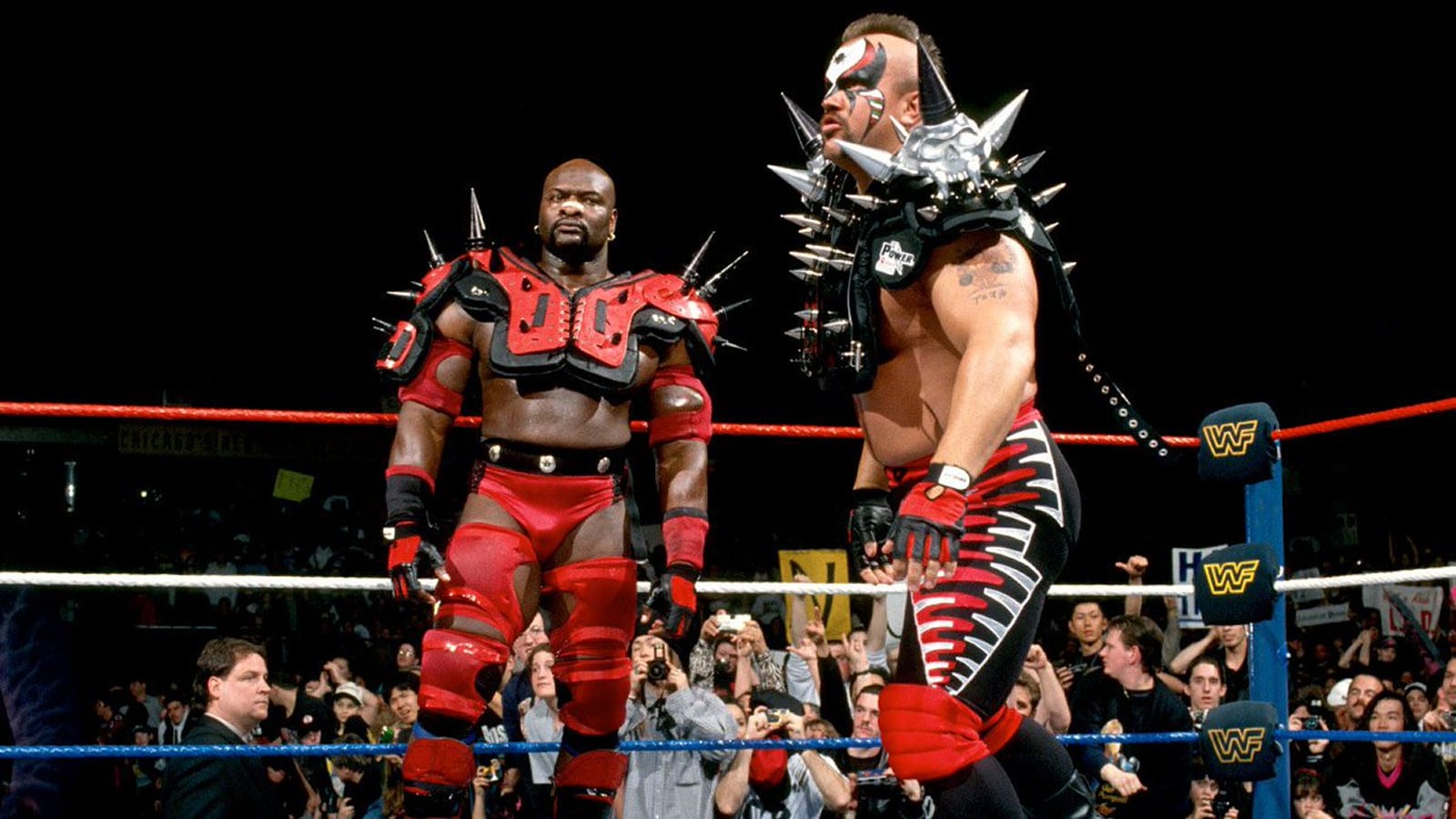
At WrestleMania 13 on March 23, 1997, Johnson teamed with the Legion of Doom to defeat the Nation of Domination in a Chicago Street Fight.
The physical risk surrounding Johnson’s work continued to surface even in victory. Wolfie D, who was part of the Nation of Domination’s ringside contingent during the match, recalled the moment on the Unscripted with Dr. Chris and SK Nation podcast:
“You remember the WrestleMania thing where Animal had Jamie on his shoulders? I was on those shoulders. Animal comes off with the double clothesline, right? Animal knew how to do it, boom. Ahmed did not know how to do that, and I landed on my head, man.”
Wolfie D added that he was not seriously hurt: “No, I didn’t get concussed or anything, but it was just like, Jesus, dude, come on.”
The feud took an unexpected turn on the June 16, 1997, episode of Raw, when Johnson turned on The Undertaker and joined the Nation of Domination alongside Faarooq, Kama Mustafa, and D’Lo Brown.
The angle was building toward a WWF Championship match between Johnson and The Undertaker at In Your House: Canadian Stampede on July 6, 1997. A legitimate hand injury forced Johnson out of the match, and Vader took his place against The Undertaker.
Johnson has since said he believed he was going to win the championship that night. In an interview with Gregory Iron on the Iron-On Wrestling podcast, Johnson admitted:
“I think I was. I think I was. I don’t know, I can’t say for 100%. But the way they were building it up, I think it was going to be for the Nation and me, and it fell through.”
Johnson also confirmed the heel turn was Vince McMahon‘s decision. “Vince made the decision, I believe, for me to turn. I think it was a good one, because we had so much heat with each other.”
Missing the Canadian Stampede title opportunity marked the beginning of the end for Johnson’s time in the Nation, which closed out almost as quickly as it began. When he returned in August 1997, the group attacked and expelled him, and Rocky Maivia, the future Dwayne “The Rock” Johnson, soon took his place.
Johnson has attributed his removal to a creative decision by McMahon, recalling being told the group looked “too indestructible” walking to the ring:
“I was watching you guys walk down the ramp. There’s nobody that’s going to believe that you guys can be beaten by anybody, so therefore, I’m going to take you out, and you can go back to fighting the Nation.”
By the fall of 1997, the WWF Championship opportunity Johnson believed had been within reach never returned. The accumulated physical toll left him in a considerably different position from the one he had occupied as Intercontinental Champion the previous year, and the questions about his run in the Nation would soon extend into a broader conversation about his standing backstage.
Real Autographs. Only Few Remain.
These are hand-signed originals sold directly by Pro Wrestling Stories. Once they sell out, they are gone for good.
Own a Piece of Wrestling History
-

Justin Credible Signed 8×10 Photo Autograph
$30.00 Add to cart -
Missy Hyatt Signed 8×10 Photo Autograph
$35.00 Add to cart -
Sunny (Tammy Lynn Sytch) Signed 8×10 Photo Autograph
$35.00 Add to cart -
Sunny (Tammy Lynn Sytch) Signed WWF 8×10 Glamour Photo Autograph
$35.00 Add to cart -
Fred Ottman Signed WWF 8×10 Photo Autograph (Typhoon)
$35.00 Add to cart -
Vince Russo Signed 8×10 Photo Autograph
$35.00 Add to cart -
Brutus the Barber Beefcake Signed WWF 8×10 Photo Autograph (with Ultimate Warrior)
$35.00 Add to cart -
Leaping Lanny Poffo Signed WWF 8×10 Photo Autograph (Deceased Legend)
$45.00 Add to cart -
Barry Windham Signed 8×10 Photo Autograph
$40.00 Add to cart -
Larry Zbyszko Signed 8×10 Photo Autograph 2
$40.00 Add to cart -
Nikolai Volkoff Signed WWF 8×10 Photo Autograph (Deceased Legend)
$45.00 Add to cart -
Leaping Lanny Poffo Signed WWF Turnbuckle Pose 8×10 Photo Autograph (Deceased Legend)
$45.00 Add to cart -
Justin Credible Signed 8×10 Photo Autograph 2
$30.00 Add to cart -
Tito Santana Signed WWF 8×10 Photo Autograph (Strike Force)
$35.00 Add to cart -
The Tonga Kid (Sam Fatu) Signed WWF 8×10 Photo Autograph
$35.00 Add to cart -
Fred Ottman Signed WCW 8×10 Photo Autograph (The Shockmaster)
$35.00 Add to cart -
Steve Keirn Signed WWF 8×10 Photo Autograph (Fabulous Ones)
$30.00 Add to cart -
Marcus “Buff” Bagwell Signed WCW 8×10 Photo Autograph
$30.00 Add to cart -
Johnny Rodz Signed WWF 8×10 Photo Autograph
$30.00 Add to cart -
Johnny Rodz Signed WWF 8×10 Photo Autograph (pictured with The Grand Wizard)
$30.00 Add to cart -
Jimmy Hart Signed WWF 8×10 Photo Autograph (pictured with Hulk Hogan)
$35.00 Add to cart -
Leaping Lanny Poffo Signed WWF Frisbee Pose 8×10 Photo Autograph (Deceased Legend)
$45.00 Add to cart -
Nikolai Volkoff Signed WWF 8×10 Photo Autograph 2 (Deceased Legend)
$45.00 Add to cart -
Jimmy Hart Signed WWF 8×10 Photo Autograph (pictured with Bret Hart & Jim Neidhart)
$35.00 Add to cart -
Sunny (Tammy Lynn Sytch) Signed WWF 8×10 Photo Autograph
$35.00 Add to cart -
Koko B. Ware Signed WWF 8×10 Photo Autograph
$45.00 Add to cart -
Johnny Rodz Signed WWF 8×10 Photo (wrestling Andre the Giant)
$30.00 Add to cart -
Bushwhacker Luke Signed WWF 8×10 Photo Autograph (pictured with Bushwhacker Butch)
$30.00 Add to cart -
Ken Patera Signed WWF 8×10 Photo Autograph (pictured with Bobby Heenan & John Studd)
$35.00 Add to cart -
Jerry “The King” Lawler Signed 8×10 Photo Autograph
$50.00 Add to cart -
Johnny Rodz Signed WWF 8×10 Photo Autograph (pictured with Captain Lou Albano)
$30.00 Add to cart -
Ken Patera Signed WWF 8×10 Photo Autograph
$35.00 Add to cart -
Sunny (Tammy Lynn Sytch) Signed WWF 8×10 Photo Autograph (WWE Hall of Fame)
$35.00 Add to cart -
Raven Signed 8×10 Photo Autograph
$35.00 Add to cart -
Kevin Sullivan Signed 8×10 Photo Autograph (Deceased Legend)
$45.00 Add to cart -
Johnny Rodz Signed WWF 8×10 Photo Autograph
$30.00 Add to cart -
Sabu Signed WWF 8×10 Photo Autograph (Deceased Legend)
$55.00 Add to cart -
Steve Keirn Signed WWF 8×10 Photo Autograph (Skinner)
$30.00 Add to cart -
“Greg the Hammer” Valentine Signed WWF 8×10 Photo Autograph
$45.00 Add to cart -
Hornswoggle (Dylan Postl) Signed WWE 8×10 Photo Autograph
$30.00 Add to cart -
Jerry “The King” Lawler Signed WWE 8×10 Photo Autograph 2
$50.00 Add to cart -
Bushwhacker Luke Signed WWF 8×10 Photo Autograph (of The Bushwhackers)
$30.00 Add to cart -
Baby Doll (Nickla Roberts) Signed 8×10 Photo Autograph (pictured with Ric Flair)
$35.00 Add to cart -
“Hacksaw” Jim Duggan Signed WWF 8×10 Photo Autograph
$40.00 Add to cart -
D’Lo Brown Signed WWF 8×10 Photo Autograph
$30.00 Add to cart -
Brutus the Barber Beefcake Signed WWF 8×10 Photo Autograph 2
$35.00 Add to cart -
Larry Zbyszko Signed WCW 8×10 Photo Autograph
$40.00 Add to cart -
Butcher Paul Vachon Signed WWF 8×10 Photo Autograph (Deceased Legend)
$45.00 Add to cart -
Bushwhacker Luke Signed WWF 8×10 Photo Autograph (The Bushwhackers)
$30.00 Add to cart -
Johnny Rodz Signed WWF 8×10 Photo Autograph (wrestling Tony Atlas)
$30.00 Add to cart -
Jerry Lynn Signed 8×10 Photo Autograph
$35.00 Add to cart -
Bushwhacker Luke Signed WWF 8×10 Photo Autograph (with Bushwhackers Butch)
$30.00 Add to cart -
Nikolai Volkoff & Boris Zhukov Signed WWF “The Bolsheviks” 8×10 Photo Autograph (Deceased Legend)
$60.00 Add to cart -
Tito Santana Signed WWF 8×10 Photo Autograph
$35.00 Add to cart -
Bushwhacker Luke Signed WWF 8×10 Photo Autograph
$30.00 Add to cart
Ahmed Johnson’s Complicated Backstage Reputation
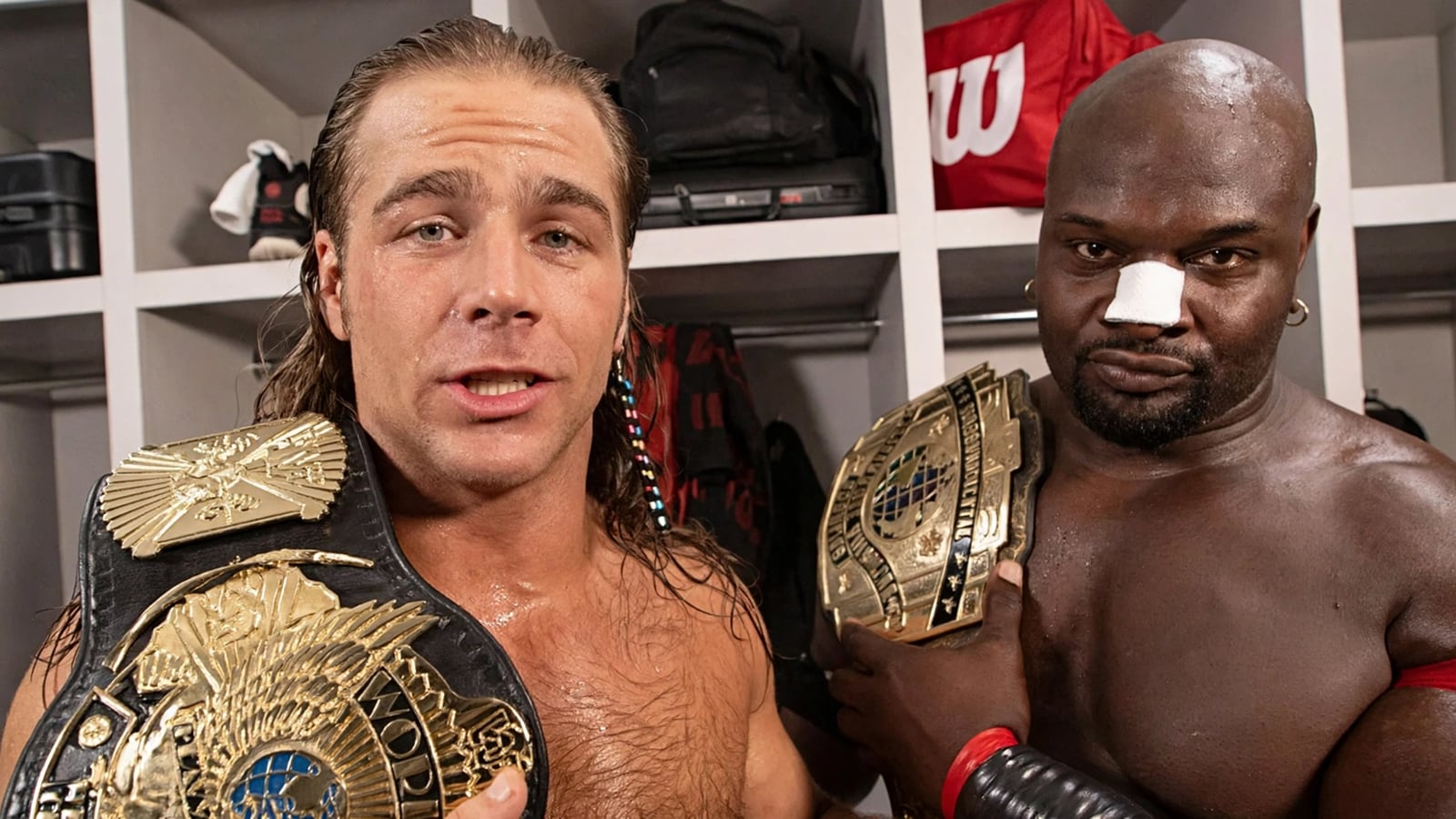
Ahmed Johnson’s backstage reputation became one of the more persistent threads of his WWF run.
The Godfather (Charles Wright), a Nation of Domination member during the same period, offered one of the more pointed assessments on Stories with Brisco and Bradshaw, saying he became friends with everybody in the group “except Ahmed Johnson.”
The Godfather recalled Johnson going to Gerald Brisco near the end of his run with the group and declaring, “I’m’a be the black Stone Cold, I’m gonna be a black Stone Cold,” a reference to Steve Austin’s anti-authority character.
Brisco confirmed the exchange, saying, “That’s exactly right. I remember that very clearly. I mean, look at the guy; he had the physical tools,” before suggesting Johnson never developed the instincts to match his physique inside the ring.
Bradshaw (JBL), who co-hosted the episode, added that Ron Simmons tried to mentor Johnson but that Johnson would not listen, and that Simmons eventually asked Vince McMahon to have Johnson written out of the group, “jumped” and removed, an account that lines up with the version of the Nation exit Johnson himself has described.
Bruce Prichard offered a broader view of the reputation surrounding Johnson, acknowledging that some wrestlers did not feel safe working with him. Several colleagues blamed him for injuries or near misses, and Johnson could feel isolated as a result.
“I think that there was a point where Ahmed might have felt that it was the world against him sometimes,” Prichard noted.
Johnson’s combination of tremendous strength, explosiveness and limited experience could make his offense difficult for an opponent to anticipate. The injuries and awkward landings attributed to him, from Wolfie D’s WrestleMania mishap to the broader concerns voiced by The Godfather and Bradshaw, strengthened a reputation that followed him long after his WWF run ended.
Prichard also offered a counterpoint. When the WWF brought Johnson back in early 1998 to train with Dory Funk Jr. and Tom Prichard, he remembered an entirely different attitude. Johnson approached the sessions with a “teach me” mindset, and Prichard called him “a joy to be around all week.”
Johnson’s reputation was likely shaped by several overlapping pressures: a rapid push, relative inexperience, an unusually physical style, tension with colleagues, and repeated injuries affecting both him and some of his opponents.
Whatever combination carried the most weight, the result was the end of his rise in the WWF and the gradual conclusion of his national professional wrestling career.
Injuries and the End of Ahmed Johnson’s WWF Run
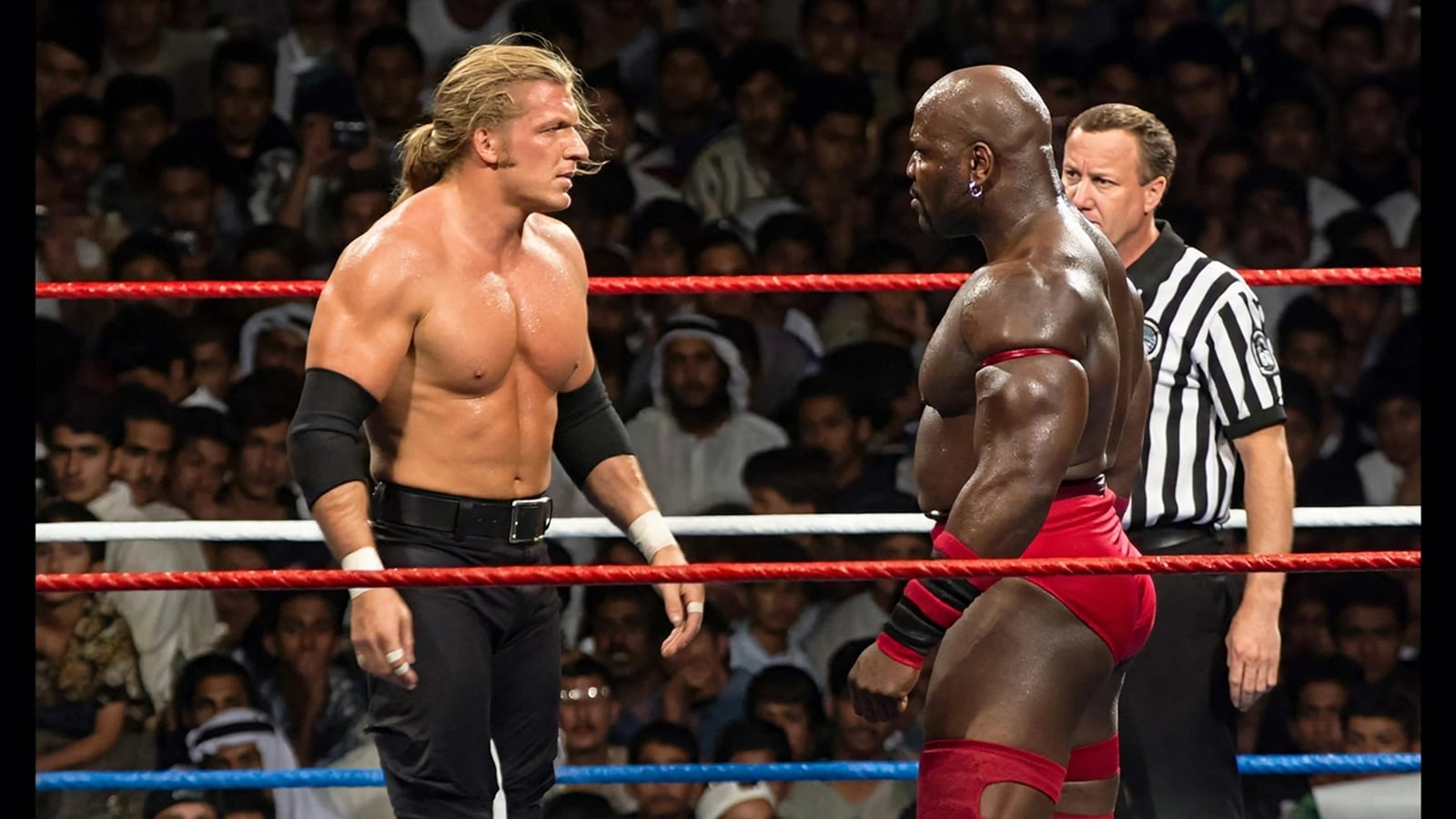
By early 1998, repeated injuries had permanently reshaped Ahmed Johnson’s trajectory.
Johnson returned to pay-per-view action at the 1998 Royal Rumble but received a noticeably quieter response than he had during the height of his push. He entered at No. 20, was credited with no eliminations, and was then removed by Nation of Domination members Mark Henry and D’Lo Brown.
Bruce Prichard, reflecting on the period, noted that the company eventually had to weigh how much longer it could keep investing in a push that was repeatedly interrupted.
“You have to make decisions, and you’ve got to move on,” Prichard admitted.
Johnson’s final WWF pay-per-view appearance came at No Way Out of Texas on February 15, 1998. He teamed with Ken Shamrock, Chainz, and Skull & 8-Ball to defeat the Nation of Domination.
His departure followed soon afterward, but the reason remains disputed.
One account held that Johnson was instructed to lose to Kurrgan and left the building after objecting to the planned finish. Johnson has offered a different and more detailed explanation.
According to Johnson, the WWF proposed an angle in which members of the Truth Commission would place a rope around his neck and drag him from the ring. Johnson believed the imagery would evoke a lynching and refused to participate.
“The thing with the Truth Commission was, what they wanted to do, they wanted him to hang me from a rope. You know how lynching is a very sore subject with black people? They wanted to hang me from a rope. That just wouldn’t happen with me, brother. I’ll do any other angle, but the rope? No,” Johnson said on the Ten Count podcast.
He has also revealed that his sister was dying from cancer at the time, and that she was a fan who would have seen the segment air.
“I didn’t want her to be in her last minutes watching me get beat up. She was a big fan, and then she passed a day or two after I left. So she would have had to see me get beaten up and hung from a rope before she passed. That was not an image I was trying to put out, not for her, not for the black kids out there, not for anybody. That is going too far,” Johnson recalled.
Johnson remembered telling Vince McMahon he needed to leave for Florida without fully explaining the family emergency. His sister died soon afterward.
Johnson has also cited racism backstage as a broader factor in his decision to leave, pointing specifically to some of his fellow performers rather than management.
“I think racism did play its part in it, but not from Vince, from Shawn Michaels, and some of the other boys. I mean, like they did that thing with DX when Bret Hart and the Hart Foundation and the Nation of Domination were getting into it, and they wrote all that stuff on the wall that was pushing it for me, and I couldn’t have done that,” Johnson said.
His WWF run was over before its third anniversary.
Ahmed Johnson Joins WCW as Big T
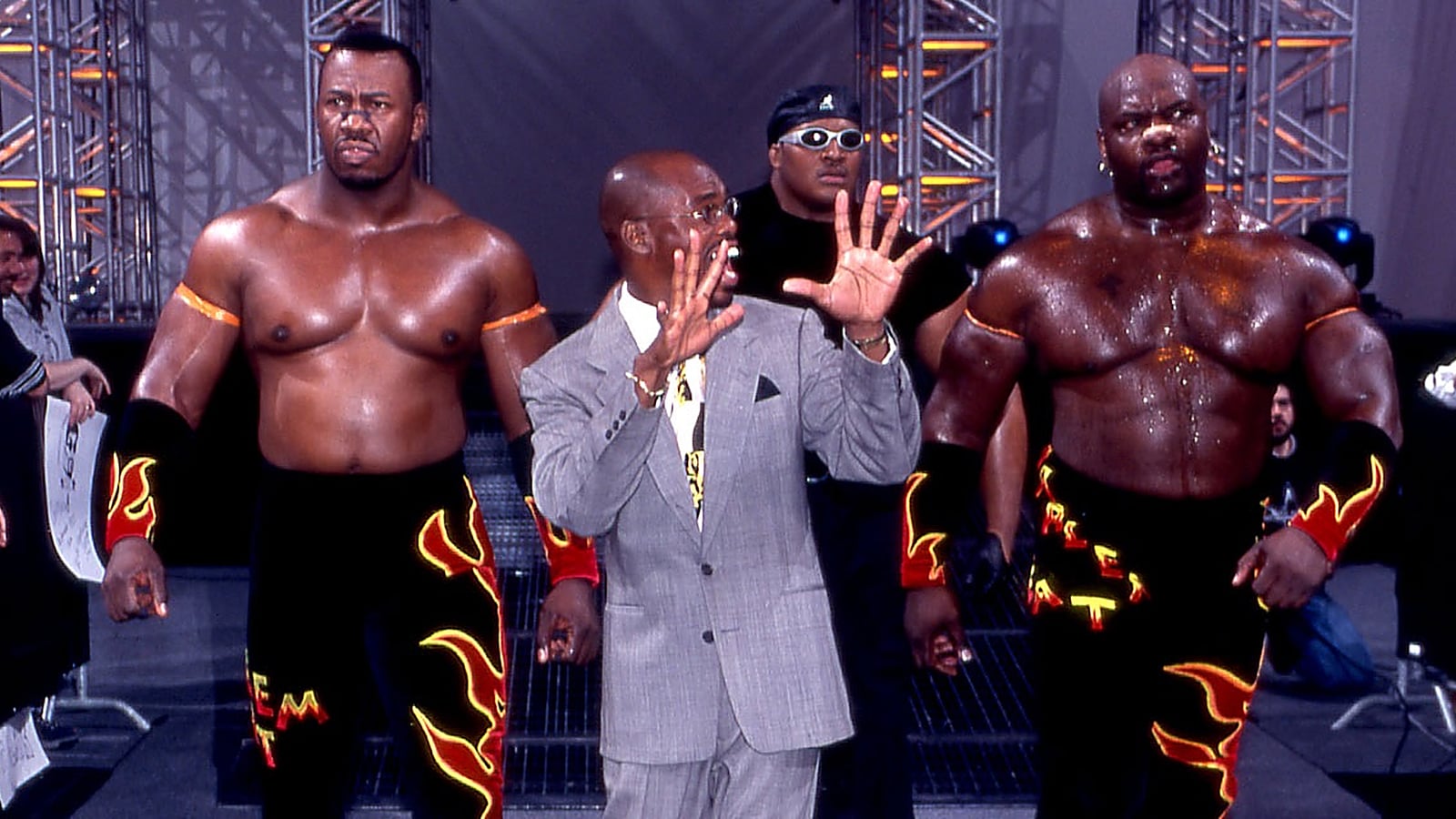
After his WWF run concluded, Ahmed Johnson remained outside the national spotlight throughout 1999. The following year, he resurfaced in WCW as Big T, teaming with Stevie Ray in Harlem Heat 2000.
Johnson’s move to WCW came through a personal connection rather than an active pursuit of a comeback. In an interview on the Developmentally Speaking podcast, Johnson recalled that Stevie Ray called him directly to ask him to return as his tag team partner, and that he initially turned the offer down.
Stevie Ray called me one day and was like, ‘I need you to come tag with me and be my tag team partner.’ And I was like, ‘Nah.’
Johnson said he reconsidered only after WCW writer Vince Russo also reached out, and the two men met with him in person before he agreed to sign: “But then Vince Russo called me, and I was like, ‘Okay, they both called me.’ We went out to eat, and from that point I decided, ‘Alright, I’m going to give it a shot.'”
By his own admission, Johnson was not physically prepared for a return. He later told the same podcast that he was “out of shape” and “not really ready to go.”
Johnson debuted at Souled Out on January 16, 2000, interfering in a match between Booker T and Stevie Ray. He aligned with Stevie Ray, J. Biggs, and Cash as Harlem Heat 2000 under the name Big T.
The storyline placed Johnson and Stevie Ray against Booker T over the rights to the letter “T.” At SuperBrawl 2000, Johnson defeated Booker with extensive outside interference, temporarily forcing Booker to compete without the “T” in his name.
Harlem Heat 2000 later entered the tournament for the vacant WCW World Tag Team Championship at Spring Stampede on April 16, 2000. Contrary to some later summaries, the team did not reach the semifinals. Shane Douglas and Buff Bagwell eliminated Stevie Ray and Big T in the opening round, with Douglas pinning Stevie Ray after a match lasting less than three minutes.
Johnson’s WCW run ended within months. His conditioning drew criticism inside and outside the company, and his own later admission that he was not prepared for the comeback supports at least part of that assessment. The run had neither the momentum nor the presentation of his WWF peak.
Speaking on the Monte & The Pharaoh podcast, Johnson claimed Booker T had tried to talk Stevie Ray out of bringing him into WCW.
“He was not [happy]. He was trying to talk Stevie out of bringing me up. He didn’t want me in WCW.”
Johnson said his decision to sign came down to loyalty to Stevie Ray rather than any broader career strategy: “I couldn’t tell Stevie no, man. We’d been through too much together.”
What Happened to Ahmed Johnson After Wrestling?
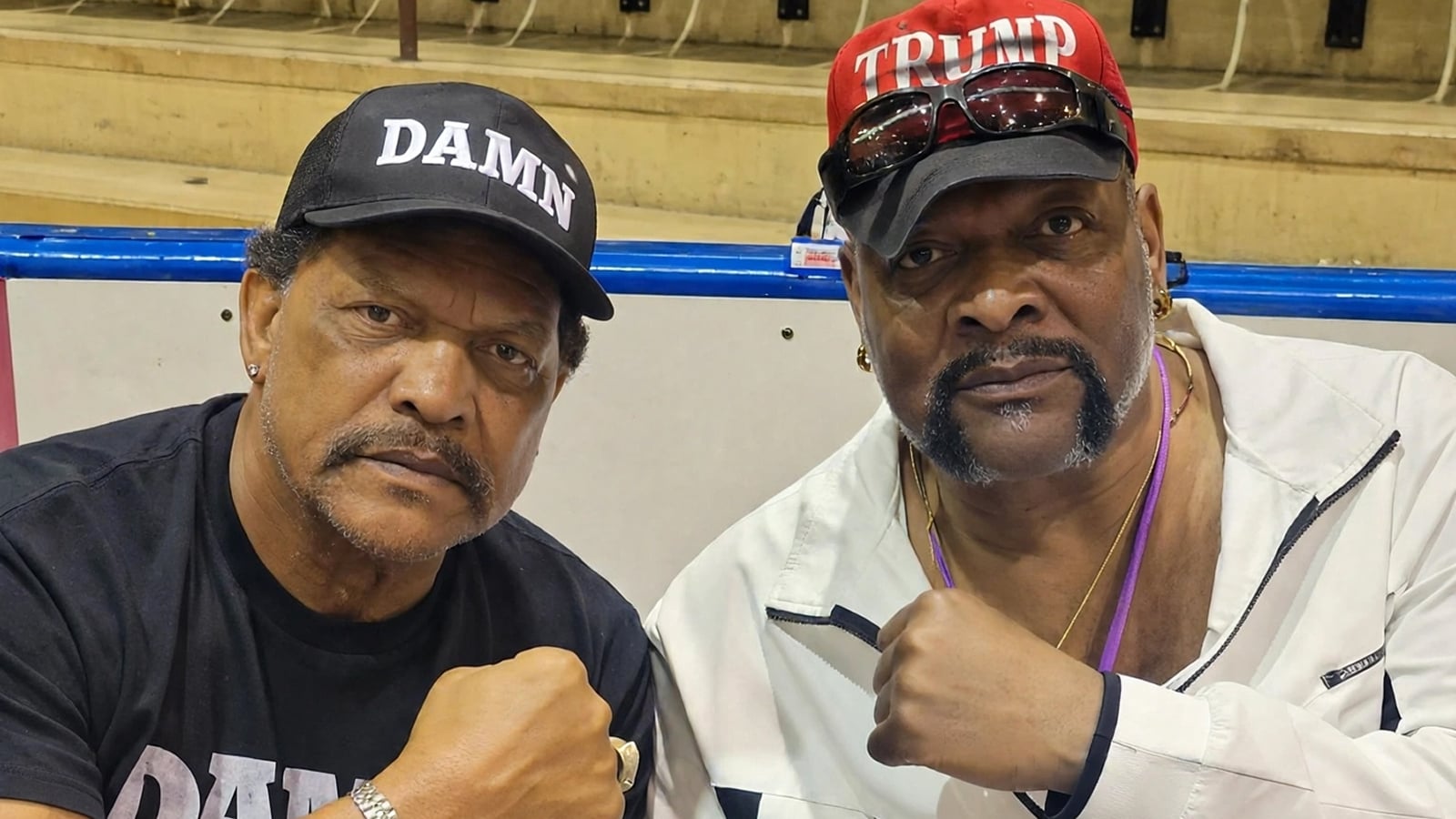
After WCW, Ahmed Johnson made occasional independent appearances before wrestling his final documented match in 2003. He later studied criminology at Huston-Tillotson University.
In the years since, Ahmed Johnson has built a life centered on family. Asked on the Going Ringside podcast in 2023 what life looked like away from wrestling, Johnson said simply: “It’s all family life now.”
He has also returned to the convention circuit. On the Cheap Heat Productions Wrestling Podcast in 2024, he joked about the modest crowd he initially drew at WrestleCon before being invited back. Johnson described how promoters have responded after meeting him in person:
“I’ve met that I’ve been nothing but a gentleman. Even the promoters that promote the events that I go to, they always call me back because they say they can’t believe how gentle I am.”
On the WWE New Generation Podcast, in May 2025, Johnson reflected on his place in the WWF’s mid-1990s business environment, when established stars like Hulk Hogan, Randy Savage and The Ultimate Warrior had departed.
“Me, along with a couple of other people, helped bring it up again,” Johnson noted.
He also recalled the pressure attached to the period’s main-event matches: “Especially when you had, you know, when you were in main event matches, you really felt the pressure big time.
The Weight of What Ahmed Johnson Broke, and What Broke Him
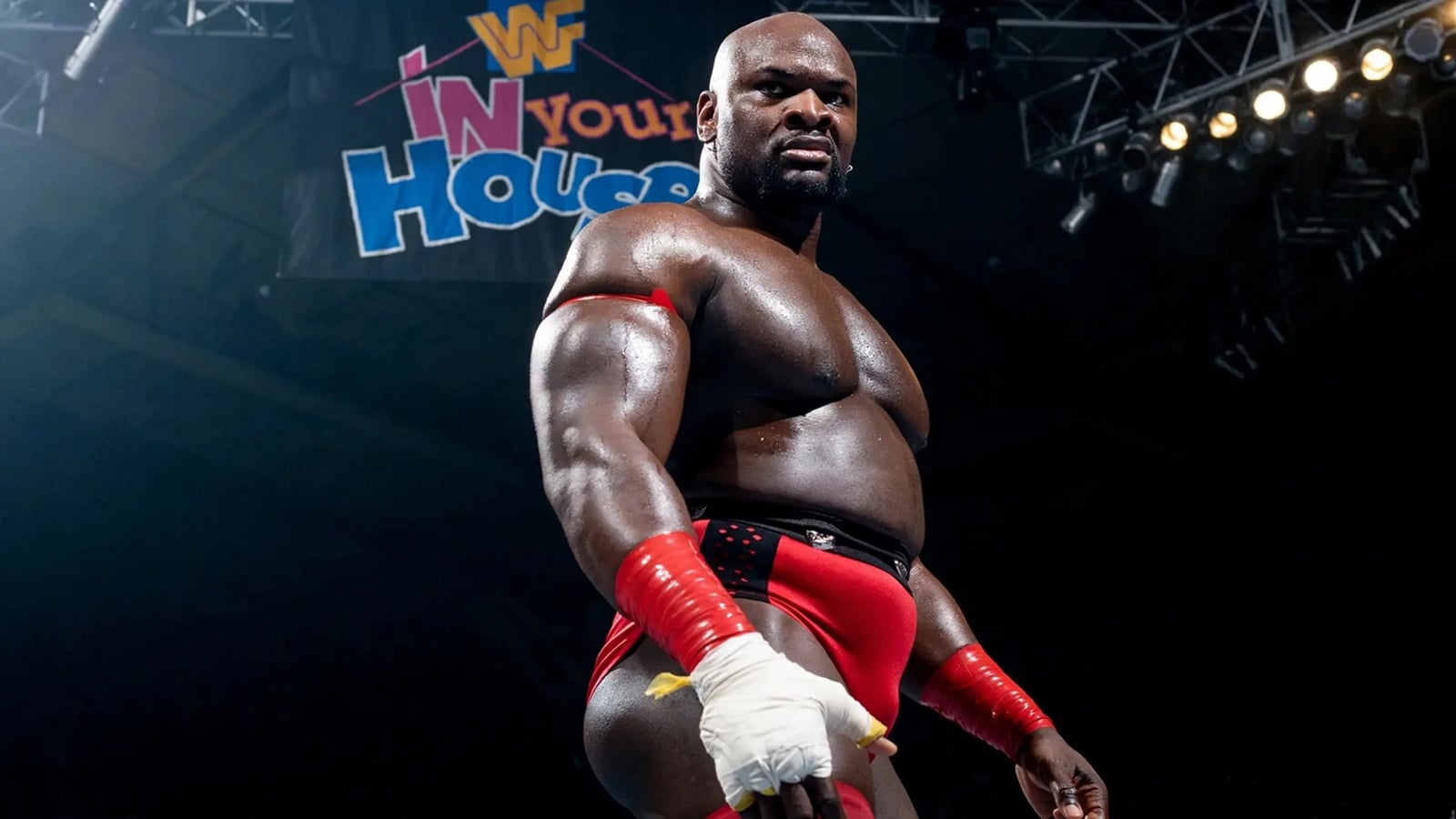
Ahmed Johnson’s WWF run lasted less than three years. No title reign, injury, or backstage dispute changes what he became the moment he pinned Goldust: the first Black wrestler in WWE company history to hold the Intercontinental Championship.
That achievement carried weight beyond a single match. Johnson himself connected it to Junkyard Dog, Bobo Brazil, and Ernie Ladd, men he believed should have worn that title before him and never got the chance because of the color of their skin. He also lived the other side of that history, absorbing hate mail and a vandalized car during the same weeks he was drawing some of the loudest pops of his career.
The injuries that followed were not incidental to his story; they were the story. A kidney rupture ended his championship reign without a single opponent ever beating him for it. A knee injury pulled him out of a match he believed was building toward the WWF Championship. Each setback arrived just as momentum was building, and each one forced the company to abandon plans it had built specifically around him.
Johnson’s limitations were real, and so were the concerns some of his peers voiced about working with him. An honest account of his career holds both truths at once: a performer whose inexperience and physical style created real risk in the ring, and a performer whose potential was significant enough that Bruce Prichard could still picture him carrying the WWF Championship. Neither fact cancels out the other.
Decades on, Johnson still meets the fans who watched that rise in real time. He never became the sustained main-event star the WWF once envisioned, and the company itself moved on to build that future around other performers, including the man who briefly replaced him in the Nation of Domination. But the moment that mattered most was never in question. On June 23, 1996, in Milwaukee, Ahmed Johnson made history that no subsequent injury, release, or disputed account of his exit could take back.
These stories may also interest you:
- Gang Wars: How Factions Changed Wrestling in 1997
- 1997 WWE Riot: Fans Rage Out of Control at House Show
- Ron Simmons: Untold Tale Behind Becoming WCW Champion
Download PDF Version
Get the complete article as a formatted PDF for offline reading.