Author:
 During a televised tag match in Buffalo in the early 1960s, Bob Nandor crashed through a folding table, then immediately jumped back into the action. It was still ringside furniture, not a planned prop, but the accident offered an early glimpse of what was coming. Over the next four decades, table spots evolved into finishes, crash pads, and, at times, a professional wrestler’s most unforgiving opponent. These are the fifteen moments that moved the table from the edge of the ring to the center of the show.
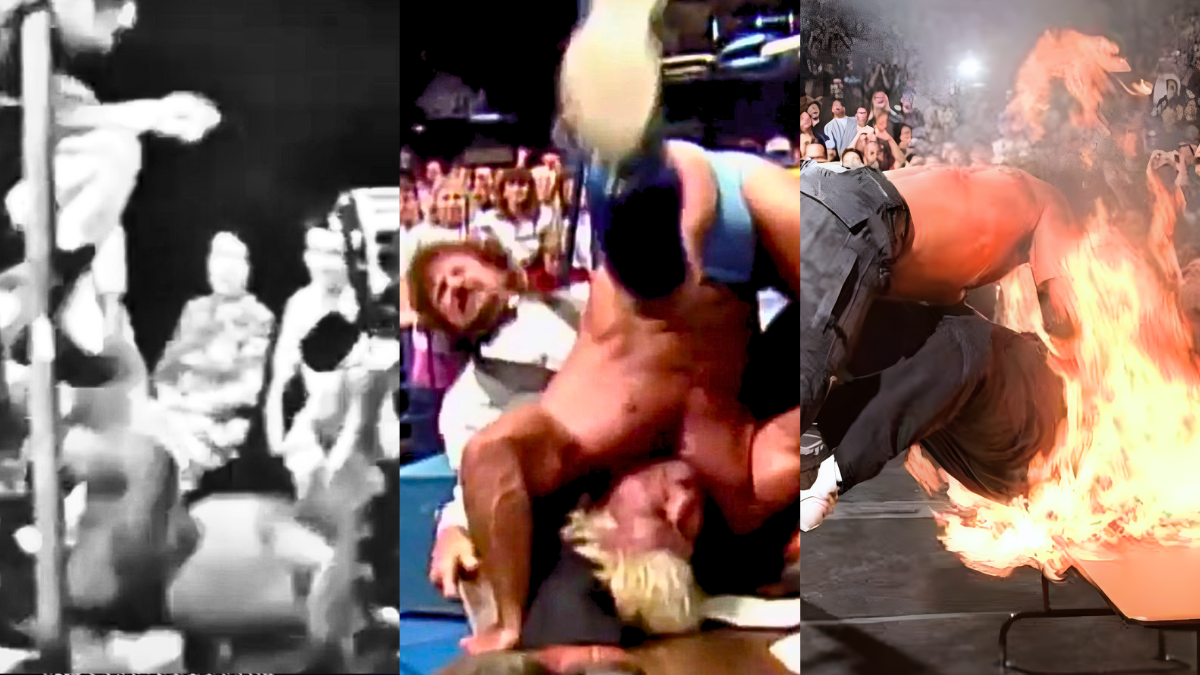
What Pro Wrestling Tables Are Really Made Of
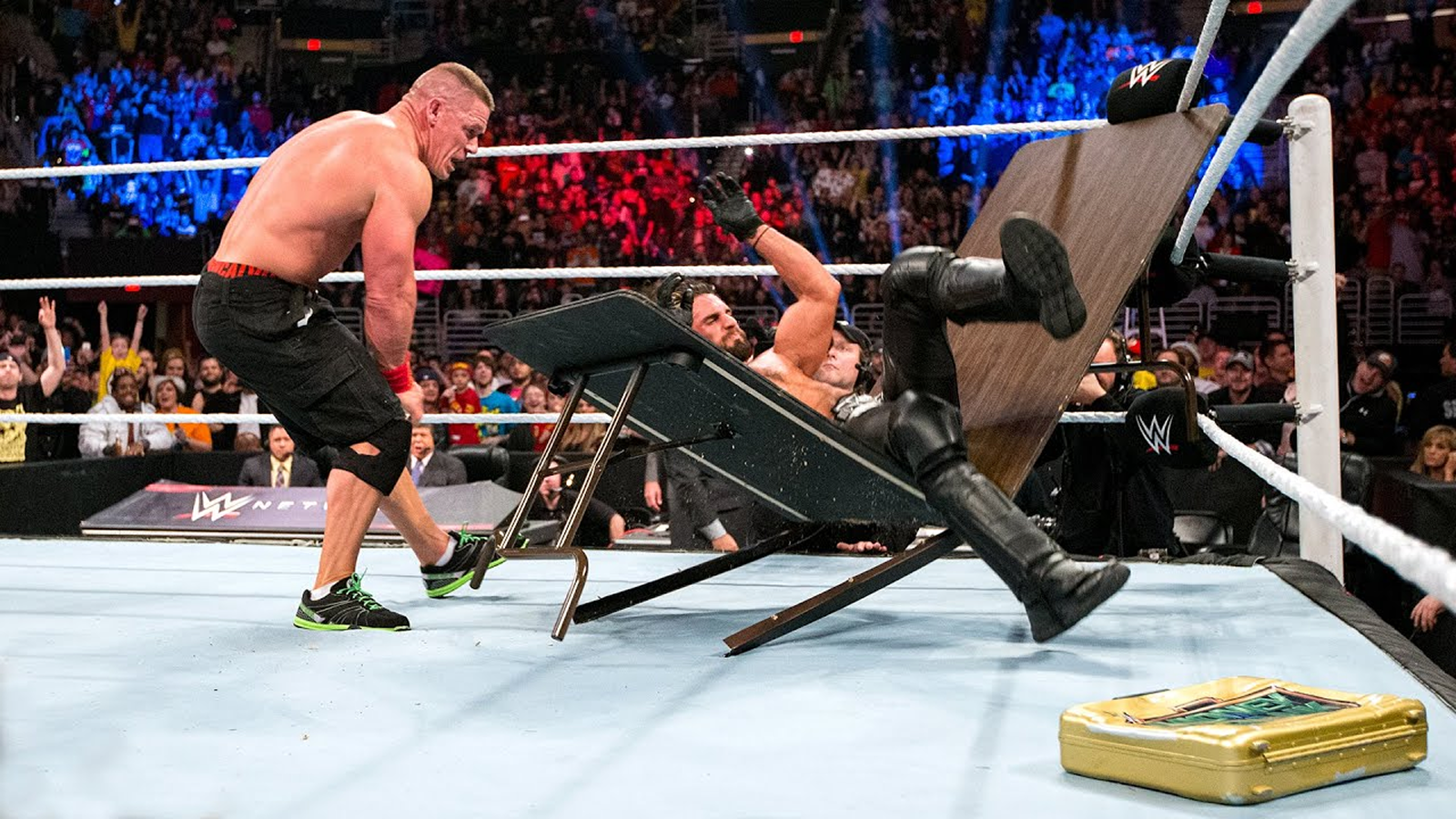
Wood. That’s right, there is usually no hidden cushion waiting inside. For the most part, professional wrestling promotions use real folding tables, although their construction and preparation can vary considerably.
Table construction varies by promotion and event. Some companies use thicker, less forgiving wooden tops, while others use folding tables with lighter composite or plywood surfaces over metal frames. Whatever the design, the frame, hardware, and break pattern can make each landing unpredictable.
Some tables are weakened or prepared before a show, but that does not make the landing painless or predictable. A wrestler can miss the center, catch the metal frame, land at an awkward angle, or discover, at the worst possible moment, that the table has no intention of cooperating.
In other words, do not start planning PATIO-MANIA in the backyard. These remain dangerous stunts performed by trained professionals.
1. The Tolos Brothers vs. Bob Nandor & Chet Wallick (1960s): The First Televised Table Spot?
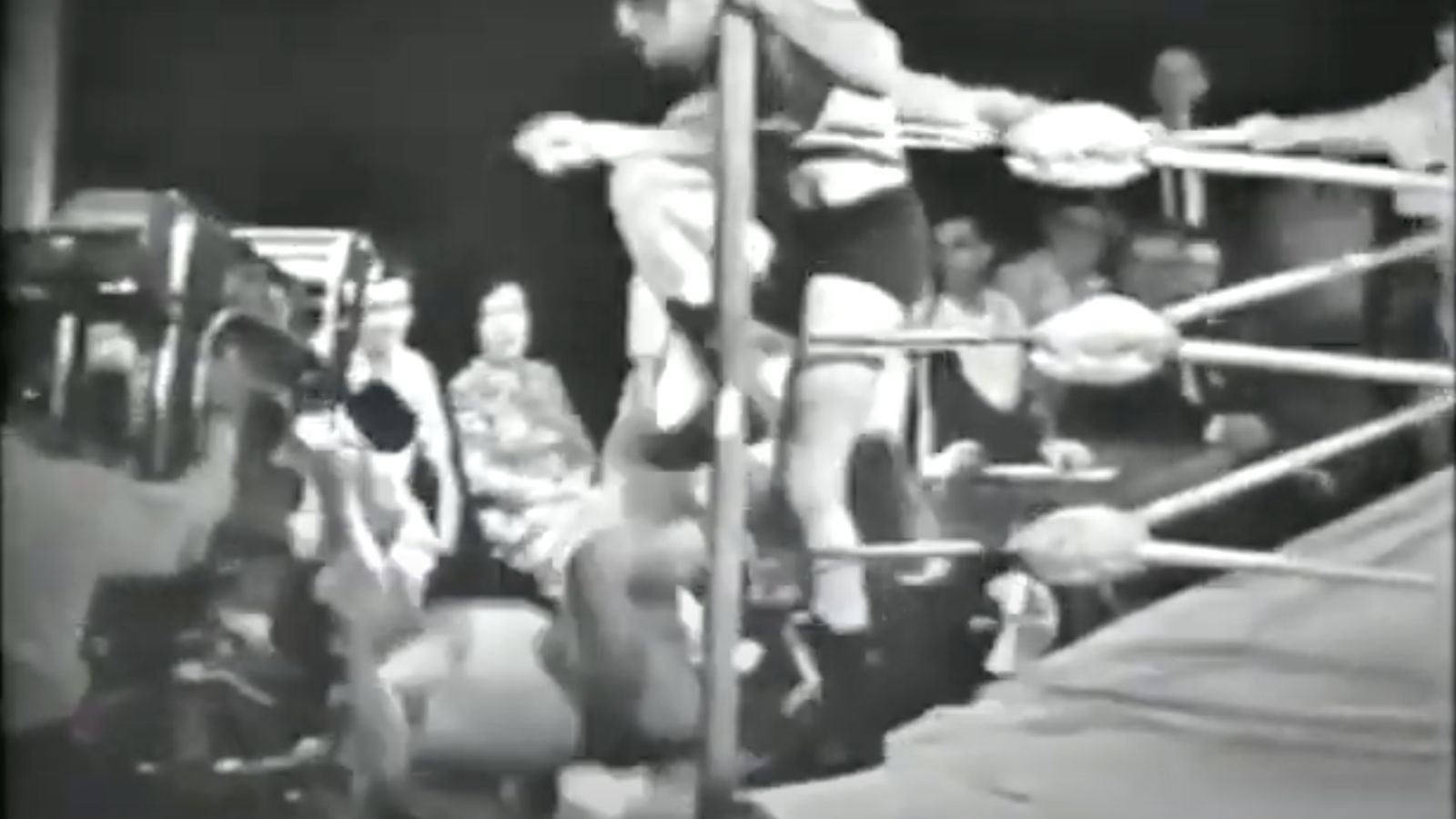
Pinpointing the first table break in professional wrestling is nearly impossible. Wrestlers and ringside furniture had been colliding long before every match was filmed, cataloged, and uploaded for future generations to examine frame by frame.
One of the earliest surviving televised examples comes from Buffalo, New York, sometime in the early 1960s. Chris and John Tolos faced Bob Nandor and Chet Wallick in a two-out-of-three falls tag match filmed for local television.
Toward the end of the bout, those dastardly Tolos brothers trapped Nandor in their corner. Nandor rolled onto a folding table beside the ring, and the brothers continued stomping him until the tabletop collapsed.
The break appears to have been accidental. Nandor did not pause to sell the destruction and instead leaped back to his feet, apparently more concerned with finishing the match than appreciating his contribution to furniture-based wrestling history.
Amid the chaos, commentator Bill Mazer exclaimed, "Oh, I think they broke the table! The table is all gone! My microphone is broken!" The moment can be heard approximately ten minutes into the surviving Buffalo television footage.
The Tolos brothers eventually won, leaving behind a broken table, a damaged microphone, and a tantalizing candidate for the earliest televised table spot still available to watch.

Enjoying this story? Own it forever.
No ads. No interruptions. Download the full story as a beautifully formatted PDF at just $0.99.
Get My Copy — $0.992. Randy Savage and Lanny Poffo vs. The Rock ‘n’ Roll Express (1984): Table Spot That Set a New Standard
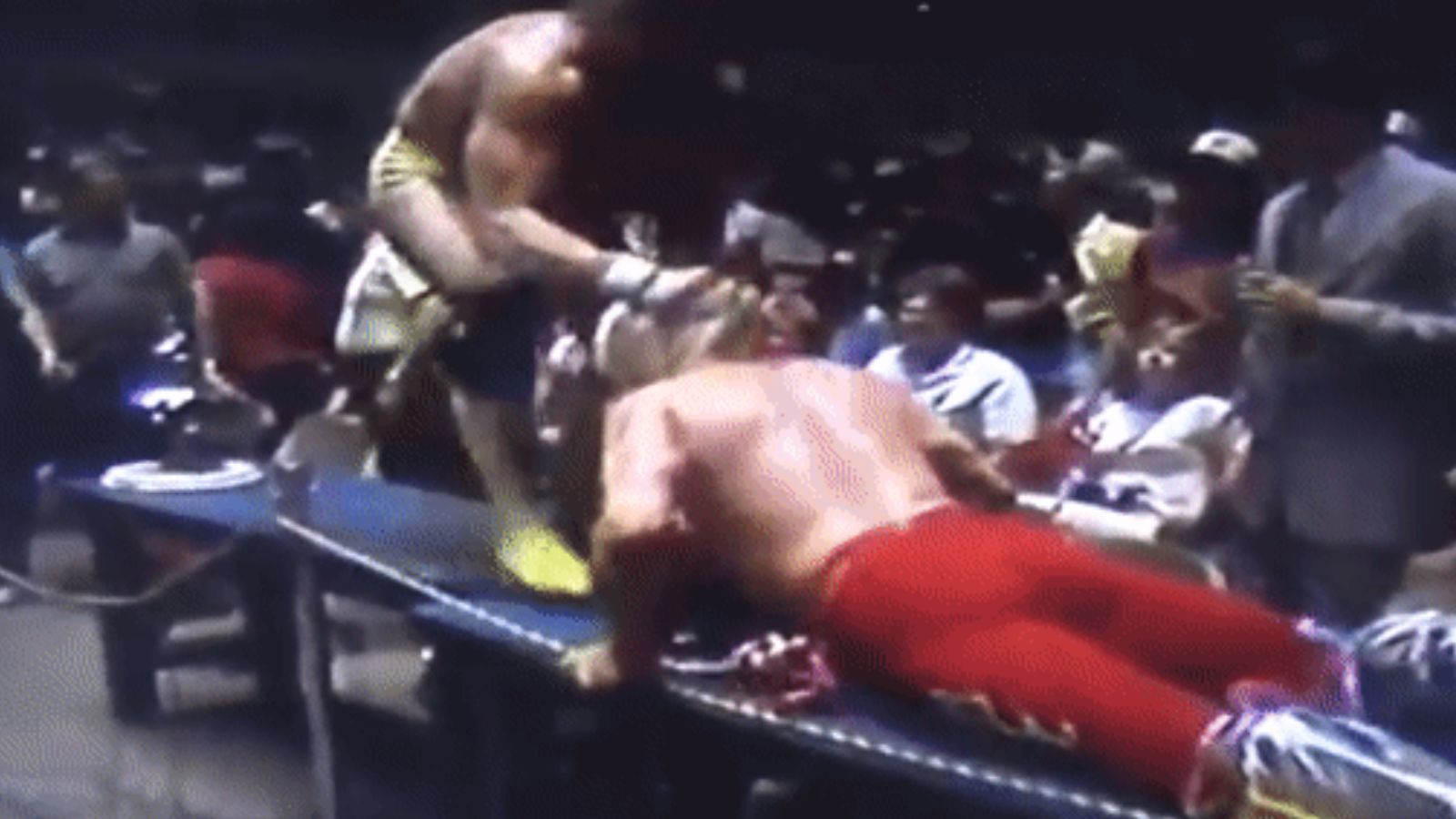
The next table spot was unquestionably deliberate. On June 25, 1984, Randy Savage and Lanny Poffo faced Ricky Morton and Robert Gibson of the Rock ’n’ Roll Express at the Mid-South Coliseum in Memphis, Tennessee.
The match ended by disqualification after Robert Gibson went over the top rope, but the lasting image came during the post-match commotion. Savage positioned Morton on the timekeeper’s table and delivered a piledriver through it.
Watch Randy Savage piledrive Ricky Morton through the table:

During an episode of The Genius Cast, Lanny Poffo reflected on what it meant to share the match with two celebrated opponents: "Ricky Morton and Robert Gibson, two of the all-time greats. Let’s say no more about that. I was proud to be in that match. I’m proud the fans remember it, I’m happy it’s on YouTube, and I’m proud that both of them got into the WWE Hall of Fame. They are two very important people in the wrestling business."
When the co-host, Pro Wrestling Stories founder JP Zarka, asked how the wrestlers prepared for such an unusual stunt, Poffo joked that his own role was wonderfully uncomplicated: "It’s very easy. All you do is grab the tag team rope and watch in amazement as my brother grabs Ricky Morton and puts him through a table."
Poffo then emphasized the trust behind the stunt: "This is taking things to a new level. They take a chance, that’s what they do, they take a chance."
"My brother did not hurt Ricky Morton, and he did not hurt himself. Randy never hurt anybody, and Ricky Morton trusted him. They just did it, and they did it well. It was a calculated risk."
In an era when a broken ringside table was still unusual, the visual gave the rivalry a memorable escalation without requiring the table to become an official match stipulation.

3. Harley Race & Jim Duggan’s Backstage Brawl (1987 Slammy Awards): An Early WWF Table Spot
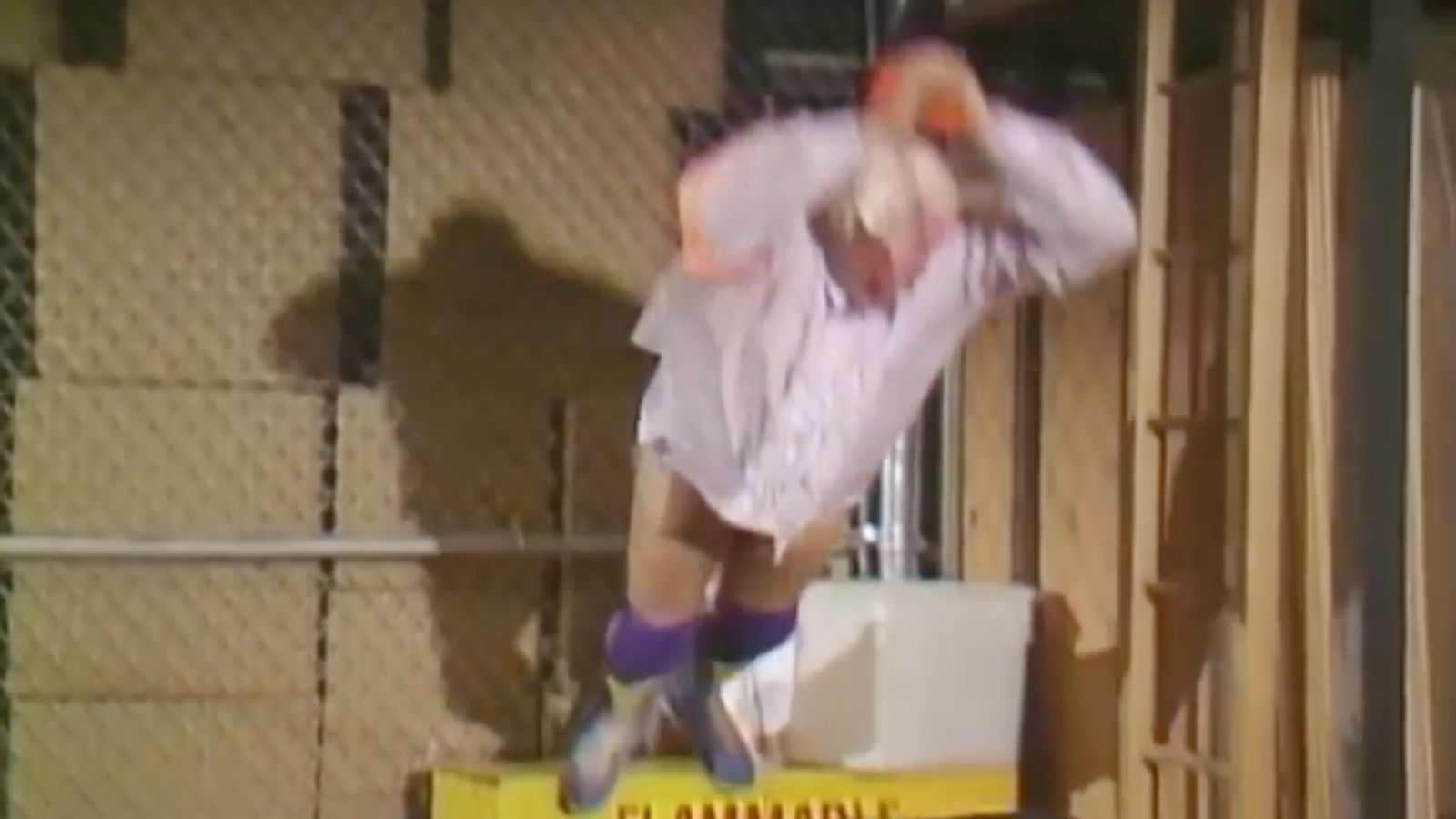
At the 1987 Slammy Awards, Hacksaw Jim Duggan presented the award for Best Ring Attire. This was appropriate because few men carried a two-by-four with the sartorial confidence of Duggan, who attended in a tuxedo T-shirt and even added a bow tie to his trusty plank.
The winner was King Harley Race, whose regal robes were more elaborate than Duggan’s formalwear. Since Race and Duggan were feuding, the ceremony quickly deteriorated into a confrontation that continued in filmed backstage segments throughout the show.
The backstage portion had been recorded in advance, allowing the wrestlers to brawl through an assortment of increasingly ridiculous props. A live chicken and an enormous fish earned most of the attention, but a table produced the sequence that matters here.
With Duggan stretched across it, Race climbed onto nearby scaffolding and launched himself downward. Duggan moved, and Race went through the table instead.

Rather than confidently declaring this the first table spot in WWF history, it is safer to describe it as one of the company’s earliest surviving planned examples. Either way, it proved that Race was already willing to test the structural integrity of ringside furniture before a far more painful encounter the following year.
Speaking to the experience years later, Duggan reflected on his working relationship with Race.
“I had a great relationship with Harley Race, man, and he’s another one of the old, true old school guys that really saw the progression of wrestling from high school gyms and National Guard armories to these huge events that they became. But Harley and I, we enjoyed working together. We got along real well.”
Love Pro Wrestling Stories? Add us as a Preferred Source on Google so our stories always show up first for you. It only takes one click.
Add Us on Google4. Harley Race vs. Hulk Hogan (Saturday Night’s Main Event, March 12, 1988): A Brutal Table Dive
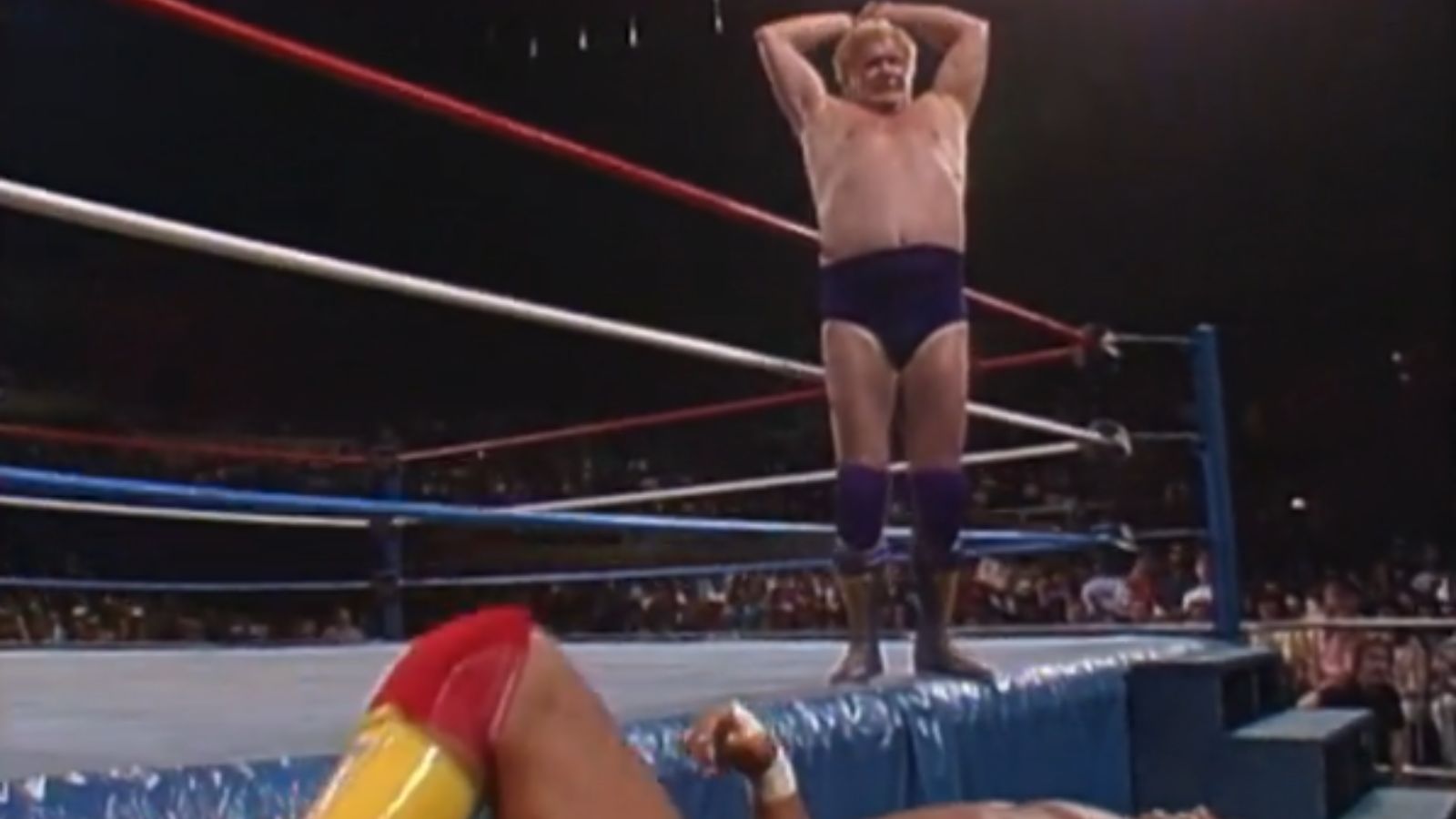
Next comes one of the many examples of King Harley Race being one of the toughest men in the business.
On March 7, 1988, Race faced Hulk Hogan at Nashville Municipal Auditorium. The match aired five days later as the main event of Saturday Night’s Main Event.
Race laid Hogan across a ringside table and attempted a diving headbutt from the apron. Hogan moved, leaving Race to crash through the table stomach-first.
This time, the metal frame did not politely fold away. Race later recalled that the steel band around the table’s edge recoiled into his abdomen. The impact caused a hernia, but Race finished the match and continued wrestling, including an appearance in the battle royal at WrestleMania IV on March 27.
The injury eventually required surgery and an extended absence. Race did return to the ring, so the familiar claim that the spot immediately ended his career overstates what happened. It did, however, provide an enduring warning that a table breaking is not necessarily the most dangerous possible outcome.

With hundreds of amazing Pro Wrestling Stories to dive into, where do you start? Get the inside scoop, join our exclusive community of wrestling fans! Receive 10 hand-picked stories curated just for YOU, exclusive weekly content, and an instant welcome gift when you sign up today!
5. Terry Funk vs. Ric Flair (WrestleWar ’89): The Table That Would Not Break
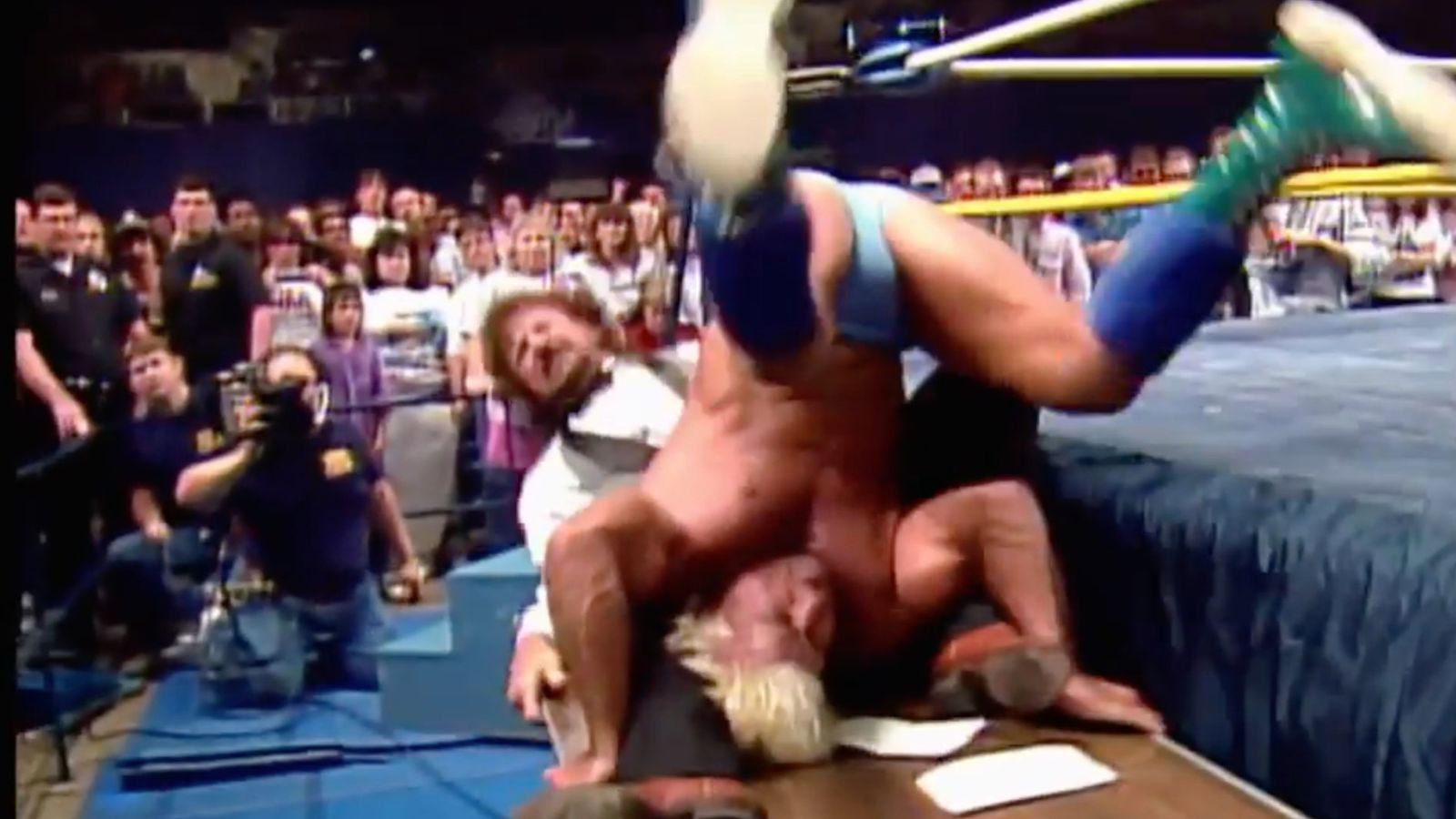
On May 7, 1989, Ric Flair and Ricky Steamboat completed their celebrated championship trilogy at WrestleWar ’89 inside Nashville Municipal Auditorium.
Because the match could go to a one-hour draw, Pat O’Connor, Lou Thesz, and a tuxedo-clad Terry Funk served as ringside judges. No novelty T-shirt for The Funkster.
Flair regained the NWA World Heavyweight Championship, then Funk approached and asked for a title match. Flair declined, explaining that Funk had been away from active competition. That rejection transformed Funk’s apparently cheerful congratulations into a post-match beating.
Funk took Flair to the judges’ table and delivered a piledriver on top of it. Unlike the modern folding tables fans expect to explode on contact, this one barely cooperated.

Years later, Conrad Thompson raised the moment with Flair during an episode of the To Be the Man podcast. Flair remembered just how uncooperative the table had been: "This one definitely wasn’t ready for TV. Terry weighed at that time 250, and I was probably 240, and we didn’t break the table, but we nearly broke my neck. You know, Terry shrugs, ‘Didn’t quite go the way I wanted to, Ric.’"
Funk’s stunt did not produce a satisfying shower of splinters, but the table’s refusal to break made the assault appear even nastier and launched Flair and Funk’s memorable 1989 rivalry.
Real Autographs. Only Few Remain.
These are hand-signed originals sold directly by Pro Wrestling Stories. Once they sell out, they are gone for good.
Own a Piece of Wrestling History
-

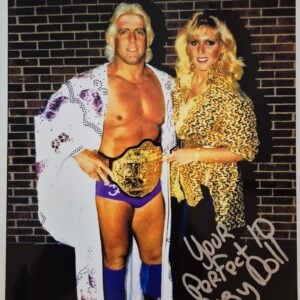
Baby Doll (Nickla Roberts) Signed 8×10 Photo Autograph (pictured with Ric Flair)
$35.00 Add to cart -
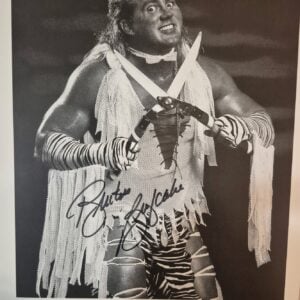
Brutus the Barber Beefcake Signed WWF 8×10 Photo Autograph 2
$35.00 Add to cart -
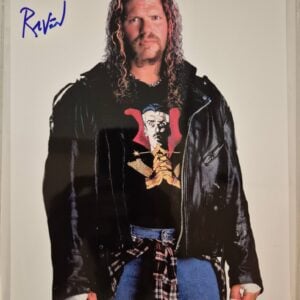
Raven Signed 8×10 Photo Autograph
$35.00 Add to cart -
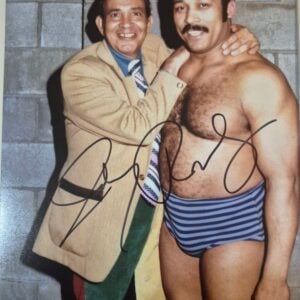
Johnny Rodz Signed WWF 8×10 Photo Autograph (pictured with The Grand Wizard)
$30.00 Add to cart -
Justin Credible Signed 8×10 Photo Autograph 2
$30.00 Add to cart -
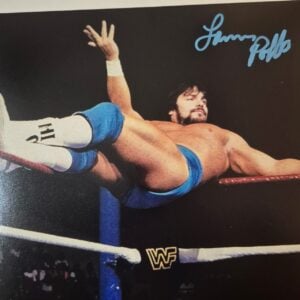
Leaping Lanny Poffo Signed WWF Frisbee Pose 8×10 Photo Autograph (Deceased Legend)
$45.00 Add to cart -
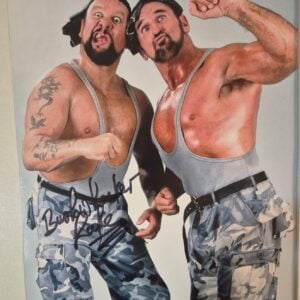
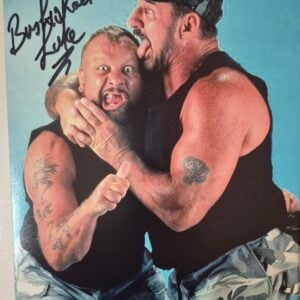
Bushwhacker Luke Signed WWF 8×10 Photo Autograph (pictured with Bushwhacker Butch)
$30.00 Add to cart -
Ken Patera Signed WWF 8×10 Photo Autograph
$35.00 Add to cart -
Jerry “The King” Lawler Signed 8×10 Photo Autograph
$50.00 Add to cart -
Tito Santana Signed WWF 8×10 Photo Autograph (Strike Force)
$35.00 Add to cart -
Larry Zbyszko Signed 8×10 Photo Autograph 2
$40.00 Add to cart -
Barry Windham Signed 8×10 Photo Autograph
$40.00 Add to cart -
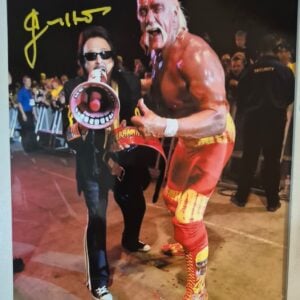
Jimmy Hart Signed WWF 8×10 Photo Autograph (pictured with Hulk Hogan)
$35.00 Add to cart -
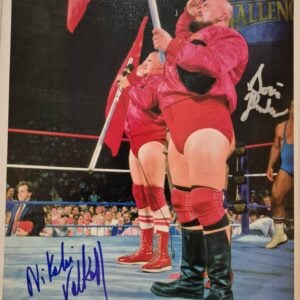
Nikolai Volkoff & Boris Zhukov Signed WWF “The Bolsheviks” 8×10 Photo Autograph (Deceased Legend)
$60.00 Add to cart -
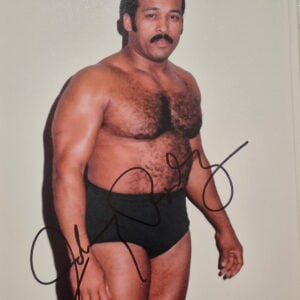
Johnny Rodz Signed WWF 8×10 Photo Autograph
$30.00 Add to cart -
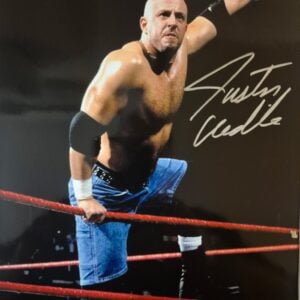
Justin Credible Signed 8×10 Photo Autograph
$30.00 Add to cart -
Hornswoggle (Dylan Postl) Signed WWE 8×10 Photo Autograph
$30.00 Add to cart -
Johnny Rodz Signed WWF 8×10 Photo (wrestling Andre the Giant)
$30.00 Add to cart -
Kevin Sullivan Signed 8×10 Photo Autograph (Deceased Legend)
$45.00 Add to cart -
Jerry “The King” Lawler Signed WWE 8×10 Photo Autograph 2
$50.00 Add to cart -
The Tonga Kid (Sam Fatu) Signed WWF 8×10 Photo Autograph
$35.00 Add to cart -
Johnny Rodz Signed WWF 8×10 Photo Autograph (pictured with Captain Lou Albano)
$30.00 Add to cart -
Leaping Lanny Poffo Signed WWF 8×10 Photo Autograph (Deceased Legend)
$45.00 Add to cart -
Bushwhacker Luke Signed WWF 8×10 Photo Autograph (of The Bushwhackers)
$30.00 Add to cart -
D’Lo Brown Signed WWF 8×10 Photo Autograph
$30.00 Add to cart -
Brutus the Barber Beefcake Signed WWF 8×10 Photo Autograph (with Ultimate Warrior)
$35.00 Add to cart -
Larry Zbyszko Signed WCW 8×10 Photo Autograph
$40.00 Add to cart -
Tito Santana Signed WWF 8×10 Photo Autograph
$35.00 Add to cart -
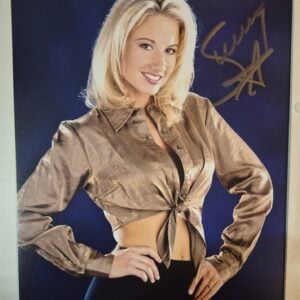
Sunny (Tammy Lynn Sytch) Signed 8×10 Photo Autograph
$35.00 Add to cart -
Bushwhacker Luke Signed WWF 8×10 Photo Autograph (The Bushwhackers)
$30.00 Add to cart -
Bushwhacker Luke Signed WWF 8×10 Photo Autograph (with Bushwhackers Butch)
$30.00 Add to cart -
Leaping Lanny Poffo Signed WWF Turnbuckle Pose 8×10 Photo Autograph (Deceased Legend)
$45.00 Add to cart -
Vince Russo Signed 8×10 Photo Autograph
$35.00 Add to cart -
Ron Simmons Signed WWE 8×10 Photo Autograph
$40.00 Add to cart -
Sunny (Tammy Lynn Sytch) Signed WWF 8×10 Glamour Photo Autograph
$35.00 Add to cart -
“Hacksaw” Jim Duggan Signed WWF 8×10 Photo Autograph
$40.00 Add to cart -
Marcus “Buff” Bagwell Signed WCW 8×10 Photo Autograph
$30.00 Add to cart -
Fred Ottman Signed WCW 8×10 Photo Autograph (The Shockmaster)
$35.00 Add to cart -
Nikolai Volkoff Signed WWF 8×10 Photo Autograph (Deceased Legend)
$45.00 Add to cart -
Missy Hyatt Signed 8×10 Photo Autograph
$35.00 Add to cart -
Jimmy Hart Signed WWF 8×10 Photo Autograph (pictured with Bret Hart & Jim Neidhart)
$35.00 Add to cart -
Sunny (Tammy Lynn Sytch) Signed WWF 8×10 Photo Autograph
$35.00 Add to cart -
Butcher Paul Vachon Signed WWF 8×10 Photo Autograph (Deceased Legend)
$45.00 Add to cart -
Johnny Rodz Signed WWF 8×10 Photo Autograph (wrestling Tony Atlas)
$30.00 Add to cart -
Sunny (Tammy Lynn Sytch) Signed WWF 8×10 Photo Autograph (WWE Hall of Fame)
$35.00 Add to cart -
Nikolai Volkoff Signed WWF 8×10 Photo Autograph 2 (Deceased Legend)
$45.00 Add to cart -
Koko B. Ware Signed WWF 8×10 Photo Autograph
$45.00 Add to cart -
Bushwhacker Luke Signed WWF 8×10 Photo Autograph
$30.00 Add to cart -
Steve Keirn Signed WWF 8×10 Photo Autograph (Skinner)
$30.00 Add to cart -
Jerry Lynn Signed 8×10 Photo Autograph
$35.00 Add to cart -
Johnny Rodz Signed WWF 8×10 Photo Autograph
$30.00 Add to cart -
“Greg the Hammer” Valentine Signed WWF 8×10 Photo Autograph
$45.00 Add to cart -
Steve Keirn Signed WWF 8×10 Photo Autograph (Fabulous Ones)
$30.00 Add to cart -
Fred Ottman Signed WWF 8×10 Photo Autograph (Typhoon)
$35.00 Add to cart -
Ken Patera Signed WWF 8×10 Photo Autograph (pictured with Bobby Heenan & John Studd)
$35.00 Add to cart
6. Sabu Turns Tables Into Unlikely Crash Pads (Early 1990s)
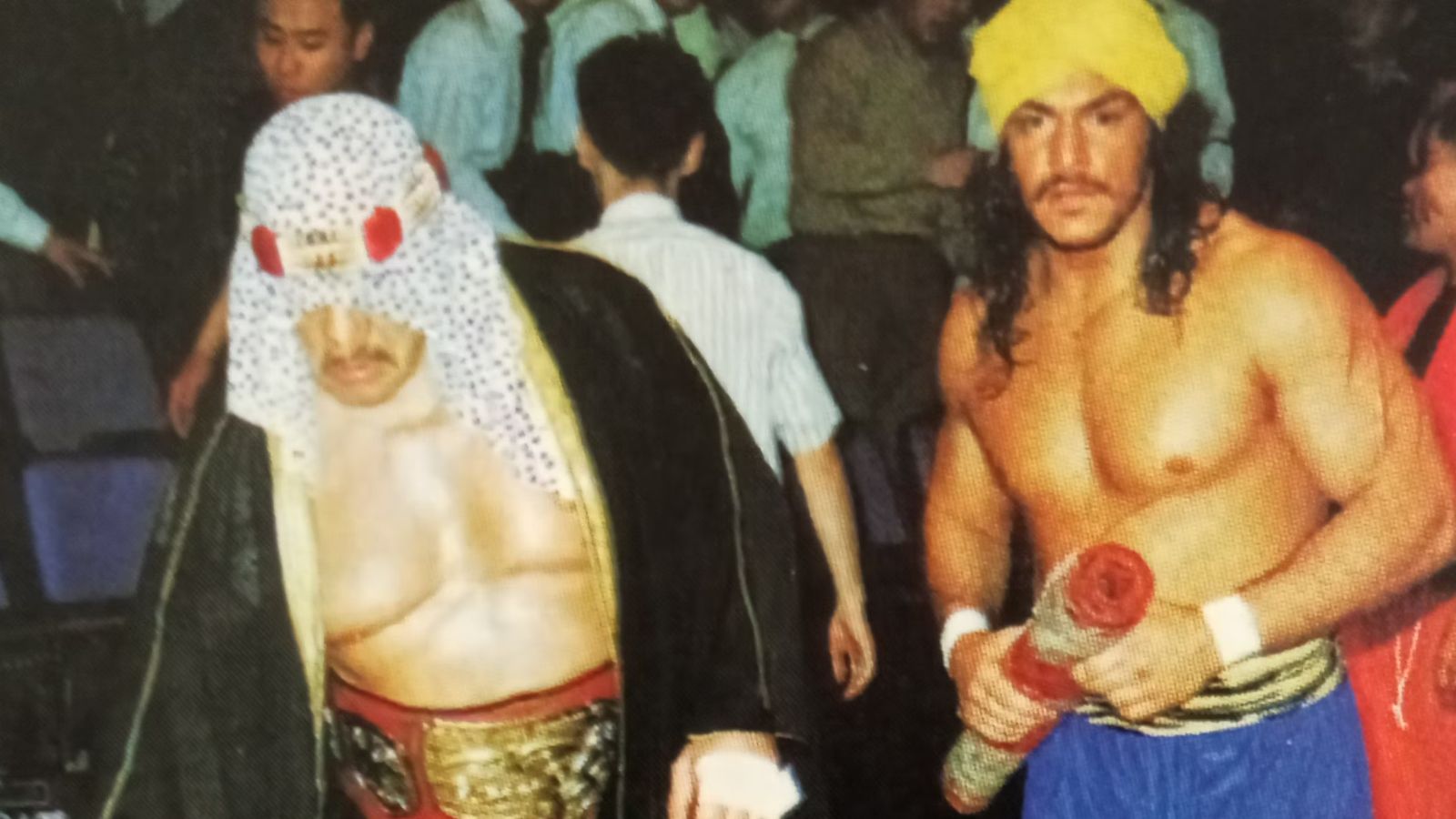
Sabu earned his famously wordy nickname by treating personal safety as more of a loose suggestion than a binding rule.
During the early 1990s, he competed in Japan alongside his uncle and trainer, The Sheik. Promotions such as Frontier Martial-Arts Wrestling exposed Sabu to matches involving barbed wire, fire, and other forms of hardcore chicanery. Against that background, an ordinary wooden table must have seemed practically welcoming.
Sabu developed a reputation for diving onto opponents positioned across tables. If nobody happened to be available, he sometimes sent himself through one anyway.
Watch Sabu demonstrate his unusual relationship with tables:

His logic was not quite as reckless as it appeared. During an appearance on The Monte and Pharaoh Pro Wrestling Broadcast, Sabu reasoned that a table could absorb part of a fall that otherwise ended on concrete: "Why do you think I use a table? It breaks my fall. If I didn’t use a table, I’d smack on the floor and bounce off the cement. I don’t want that. I’d rather bounce on a table that breaks my fall. Everybody thinks that when you hit a table it hurts more than the floor. It doesn’t."
"The more it gives, the easier it is," Sabu continued.
He also clarified that he did not always want tables prepared in advance: "In the beginning, I never gimmicked tables. But sometimes, they were gimmicked without my request, and they’d fall before I wound up using them."
Sabu preferred furniture sturdy enough to support him until the moment of impact: "I like a hard table. The harder a table is, the more it breaks my fall. Now, if it doesn’t break at all, then it kicks my ass."
Sabu’s remarkable life and career would establish him as one of the performers most closely associated with the modern table spot.
7. ECW Double Tables (February 4, 1995): Sabu and the Tazmaniac vs. Public Enemy
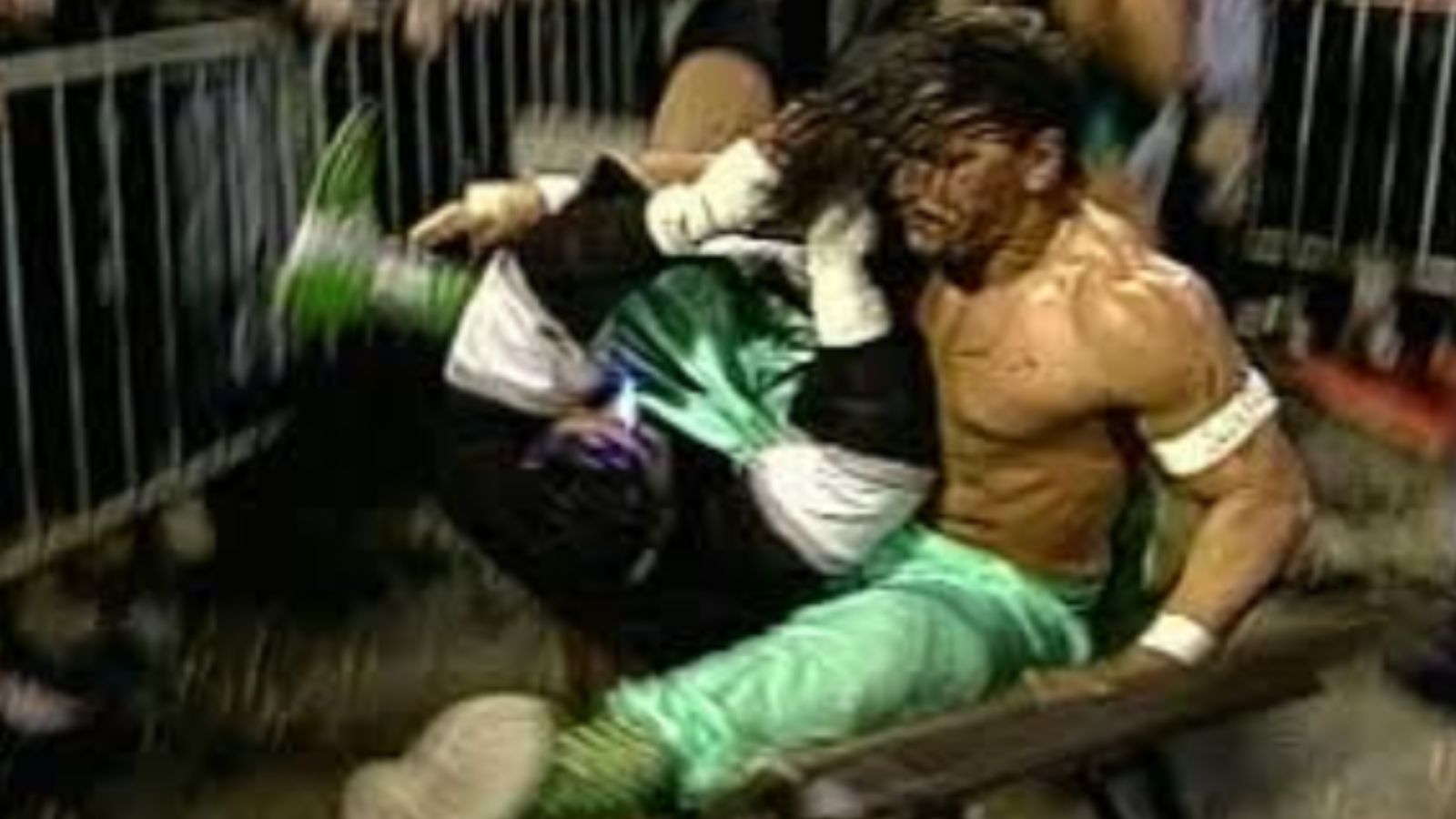
Sabu returned to the United States and debuted for Eastern Championship Wrestling in October 1993. His high-speed style and willingness to use tables suited the Philadelphia promotion’s increasingly unruly identity.
By August 1994, Shane Douglas had discarded the NWA World Heavyweight Championship belt after winning a tournament at the ECW Arena. The promotion soon completed its transition from Eastern Championship Wrestling to Extreme Championship Wrestling.
That summer, Sabu joined forces with the Tazmaniac, later known simply as Taz. Their pursuit of ECW World Tag Team Champions Rocco Rock and Johnny Grunge of the Public Enemy led to Double Tables on February 4, 1995.
The main event made furniture part of the rules rather than an improvised addition. Both members of a team had to go through tables before that team could lose.
The Tazmaniac and Johnny Grunge went through the same table and were counted as eliminated. Rocco Rock later put Sabu through another table, but the referee did not see it. Sabu then sent Rock through a table at ringside to win the match and the ECW World Tag Team Championship.
Double Tables was an early documented example of a promotion building the entire stipulation, event name, and finish around the table itself.

8. Public Enemy Brings Flaming Tables to ECW (October 1995)
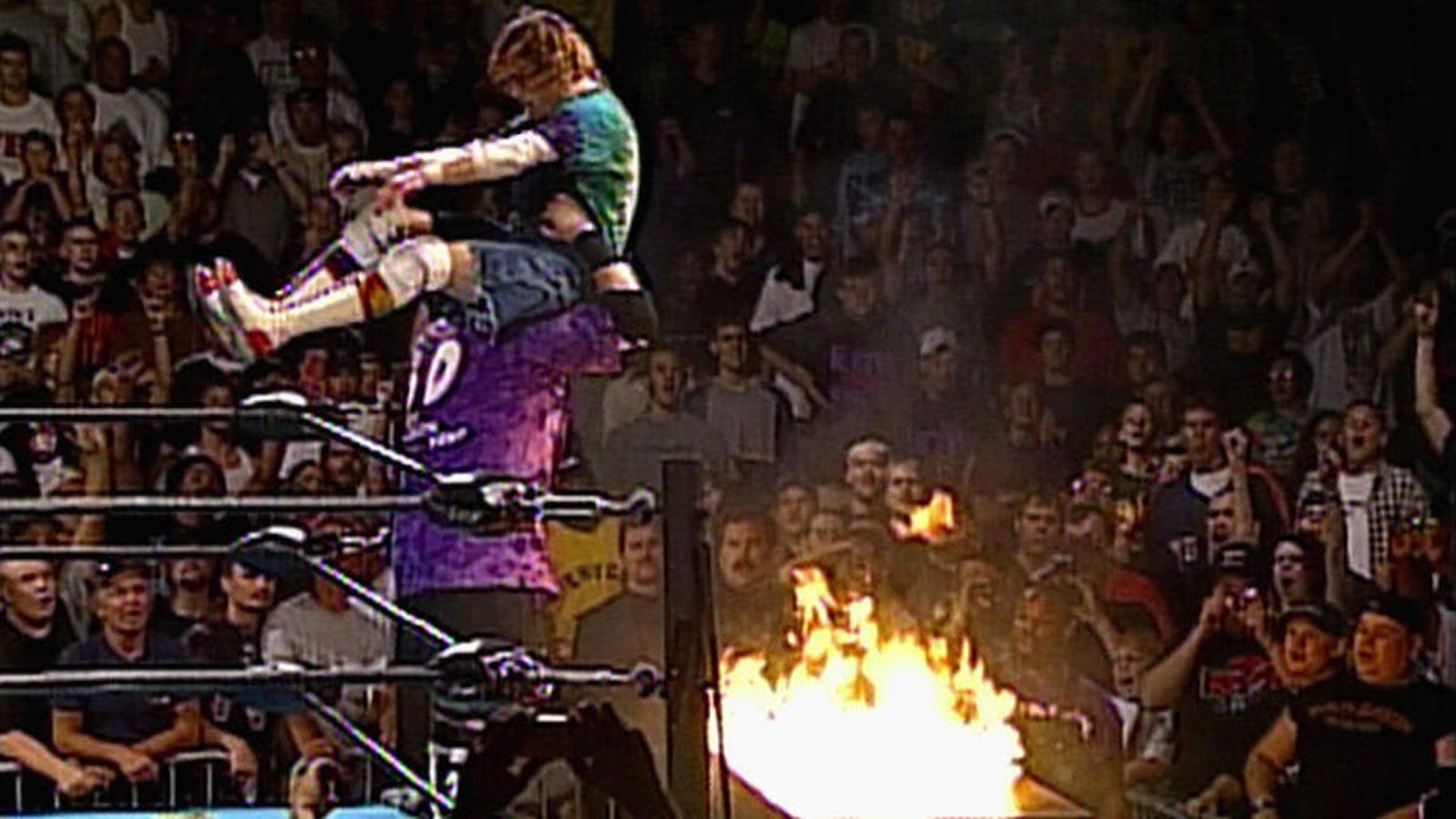
Once ordinary tables became familiar in ECW, escalation was inevitable. One of the earliest documented burning-table finishes took place at South Philly Jam on October 7, 1995, and aired on the October 24 episode of ECW Hardcore TV.
The Public Enemy faced ECW Tag Team Champions Raven and Stevie Richards and the Gangstas, New Jack and Mustafa Saed, in a three-way dance. After eliminating the Gangstas, Rocco Rock and Johnny Grunge turned their attention to Richards.
They placed him across two stacked tables and lit the lower one. Rock then launched into a moonsault, driving Richards through the structure and winning the ECW World Tag Team Championship.
The Dudley Boyz later made burning tables another part of ECW’s visual vocabulary. These stunts were dramatic, but they introduced variables that even the most carefully prepared wooden table could not control.

9. Bret Hart Takes the WWF Announce Table Spot Mainstream (November 19, 1995)
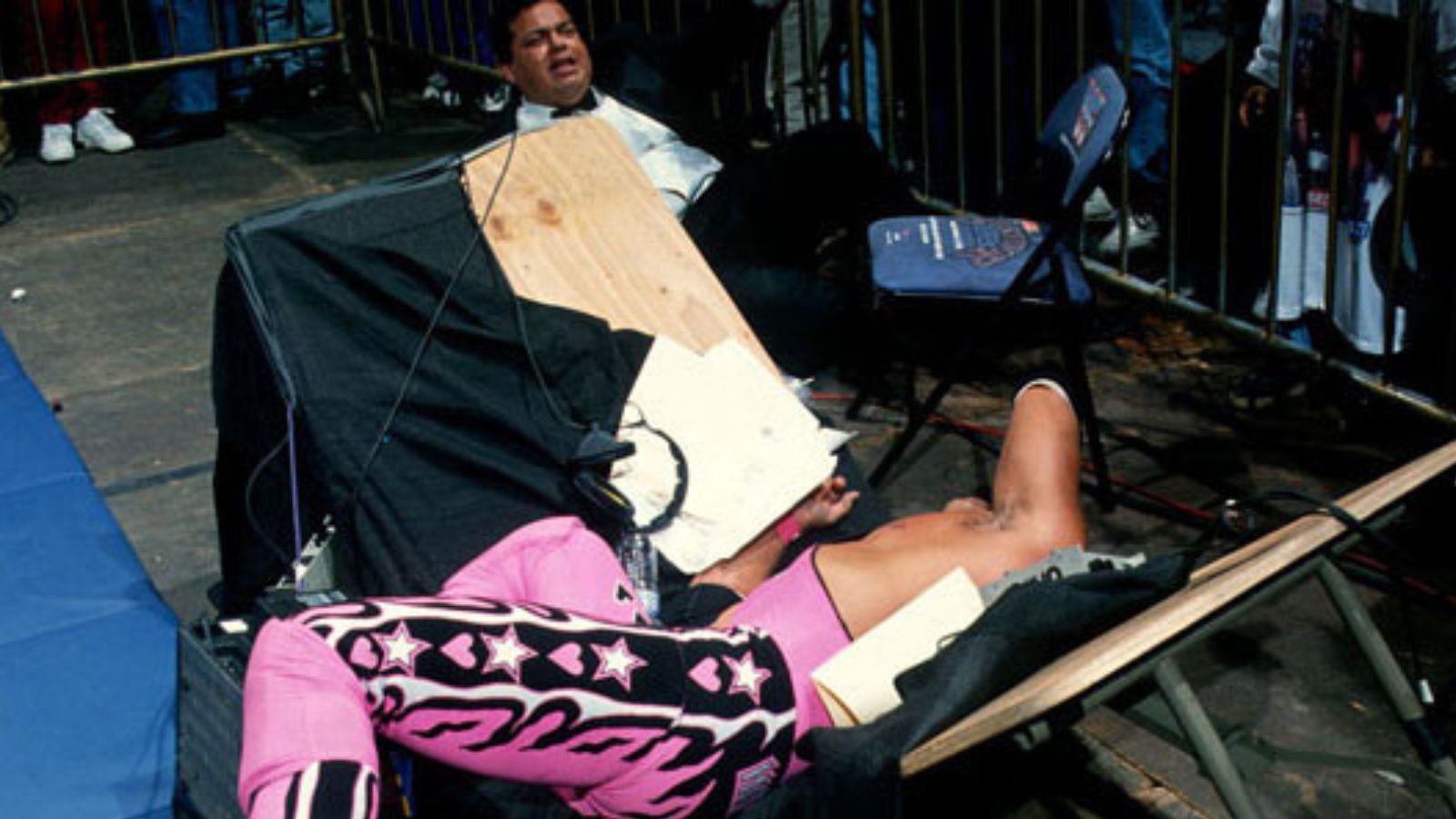
On November 19, 1995, Bret Hart challenged Diesel for the WWF Championship at Survivor Series inside the USAir Arena in Landover, Maryland.
The match carried a no-disqualification stipulation. With Hart standing on the apron, Diesel charged and knocked him backward through the WWF announce table at ringside.
Today, removing the monitors from an announce desk is practically an international signal that somebody is about to have a miserable evening. In 1995, the visual remained uncommon enough to become the match’s defining moment.
Hart eventually played possum and caught Diesel in a small package to win his third WWF Championship. During an appearance on the Sharpshooter podcast, Hart recalled pitching the sequence to Vince McMahon.
"It was my finish, the table spot. I said to Vince that if we went through the table in a suspenseful way, where no one knew I was going to crash through it and push me backward through it, it would stun everybody. It would actually mean something, and people would really believe that I really was hurt."
Hart remembered the audience’s reaction before detailing why the supposedly prepared table proved so unforgiving: "There was a moment of complete shock. Especially back then. Now you see people go through tables all the time. Trust me, nobody goes through tables like the one I went through. That table was solid."
He then revealed how its preparation had backfired: "They actually gimmicked that table. They glued it back together and reinforced it with a piece of wood underneath. That table was indestructible when I went crashing through it. It was such a stiff table."
The stunt is widely credited as the first planned WWF announce-table break. More importantly, it demonstrated how a single table spot could become a major dramatic beat in a conventional championship match.

10. Public Enemy Brings ECW’s Tables to WCW Nitro (January 15, 1996)
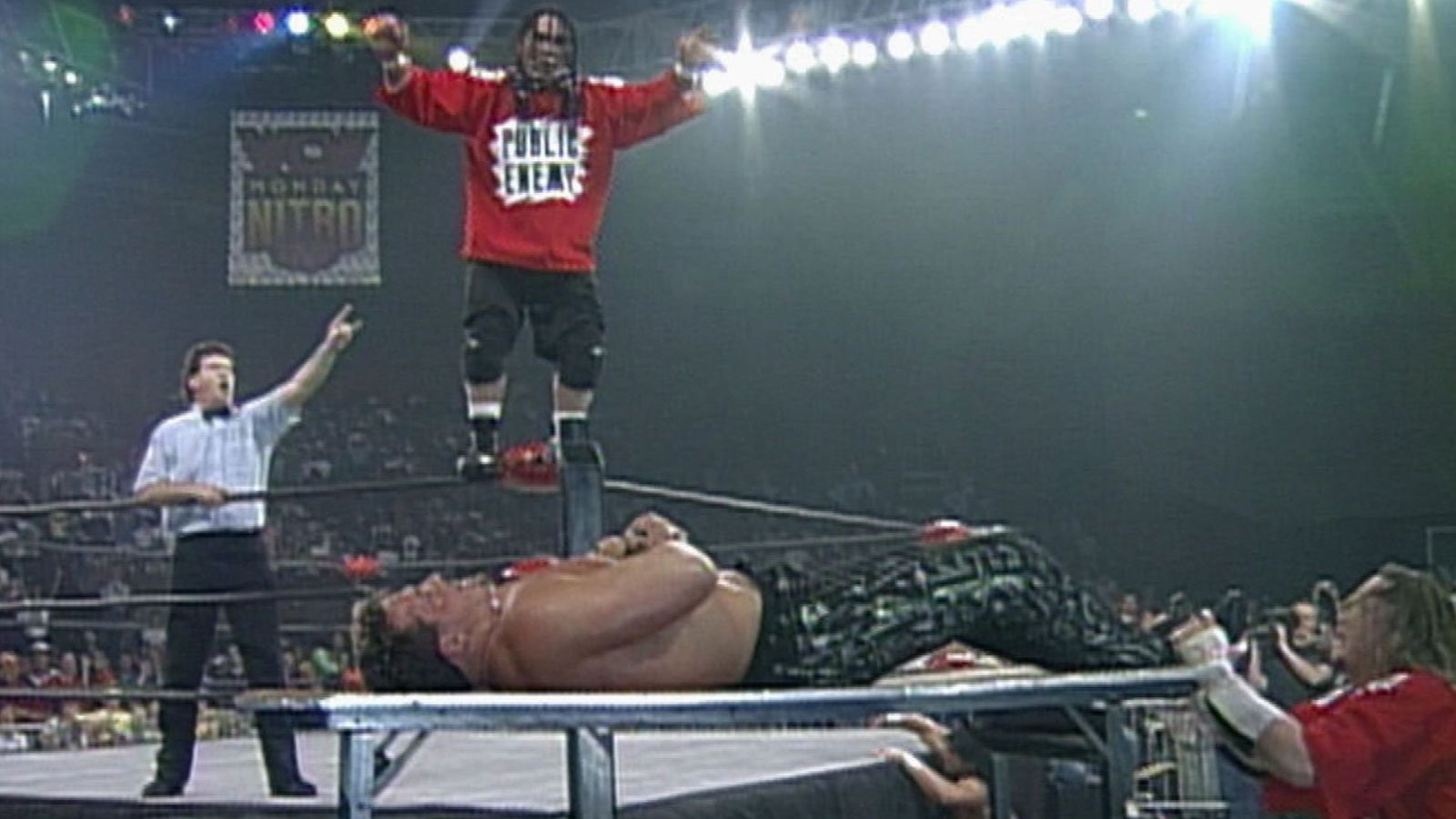
As ECW’s reputation grew, its wrestlers and ideas started appearing on larger stages. Public Enemy made its WCW debut on the January 15, 1996, episode of Monday Nitro at the James L. Knight Center in Miami.
Rocco Rock and Johnny Grunge faced Marcus Bagwell and Scotty Riggs, the American Males. Yes, the team whose theme song could repeat its title often enough to qualify as psychological warfare.
Public Enemy won after Johnny Grunge struck Bagwell with an object. The newcomers then placed Bagwell across two tables at ringside, allowing Rocco Rock to dive from the top rope and drive him through them.
The modern ECW-style table spot had reached live prime-time wrestling. WCW viewers who had never entered the ECW Arena could now see Public Enemy’s calling card without leaving their living rooms.

11. Brian Lee Falls Through Tables at ECW High Incident (October 26, 1996)
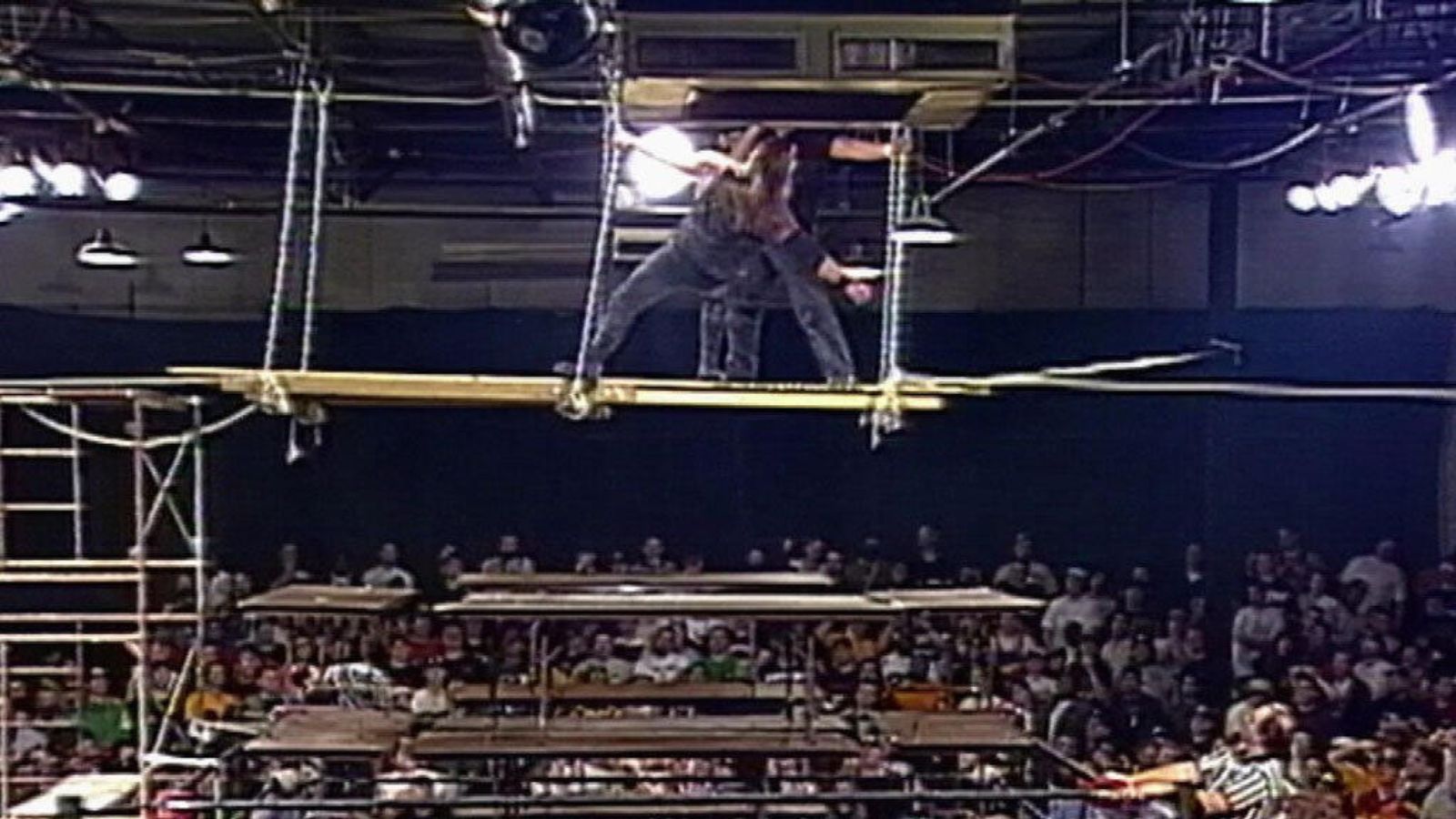
With WCW borrowing from ECW’s furniture catalog, ECW had to keep raising the stakes. At High Incident on October 26, 1996, Tommy Dreamer faced "Prime Time" Brian Lee in a scaffold match at the ECW Arena.
The stipulation followed months of Lee chokeslamming Dreamer through tables, including stacks placed beneath the arena balcony. Their feud therefore required a conclusion involving greater height and a deeply unreasonable quantity of wood.
Multiple tables were stacked inside the ring beneath a scaffold constructed by the Sandman. Dreamer and Lee fought high above them until Dreamer knocked Lee from the platform and through the wooden structure below.
Dreamer later recounted the hazards of the match during an interview with the Pro Wrestling Torch: "The Scaffold Match back in the day was pretty crazy for three reasons. One, Sandman made it. Two, I’m scared of heights. Three, Brian Lee choked me with the electrical power cable from the entire building, and after the match, the guy told us that he was not sure how we were not electrocuted to death on the top of that scaffold."
Dreamer added one final detail that did little to make the arrangement sound safer: "The scaffold swayed. I’ve done a lot of crazy things."
Apparently, falling from a scaffold through a small forest of tables was only one item on the evening’s safety checklist.

12. Mankind Falls From Hell in a Cell Through a Table (June 28, 1998)
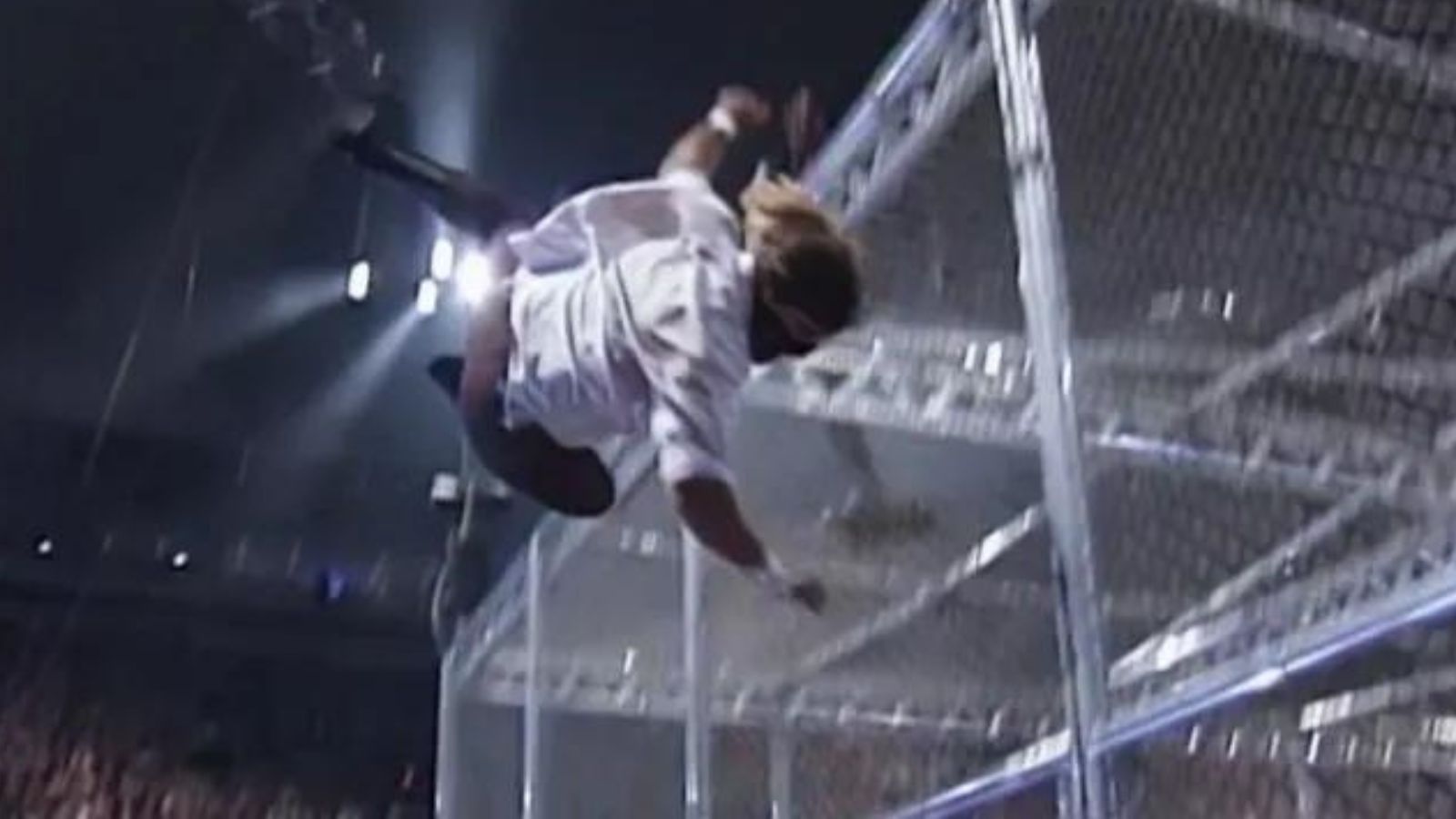
What remains to be said about Mankind against the Undertaker at King of the Ring 1998 that has not already been said?
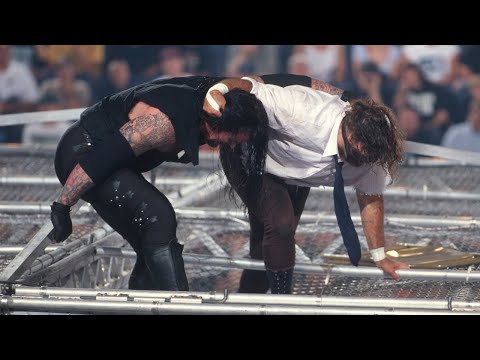
The match belongs here because it produced what may be the most famous table spot in professional wrestling. On June 28, 1998, at Pittsburgh Civic Arena, the Undertaker threw Mankind from the roof of Hell in a Cell and through the Spanish announce table below.
The planned fall was only the first catastrophe. After Mankind returned to the roof, the Undertaker chokeslammed him, and a section of the Cell gave way. Foley plunged into the ring, where a chair followed and struck him in the face.
On his Foley Is Pod podcast, Foley described proposing the first fall on the day of the show: "It was only during the course of the day that I said, ‘Hey, how about you throw me off the top of that thing?’"
Foley then recalled trying to make the idea sound less dangerous than it clearly was: "I tried to downplay it as being a big deal. Vince was like, ‘I don’t know if I like that, Mick.’ I said, ‘If I told you I was gonna drop an elbow, and Taker was going to move, you’d let me do that, right?’"
As Foley remembered it, that comparison helped McMahon accept the proposal: "So I’m going with a positive. I don’t know if positive reinforcement’s the right term for it, but I’m laying it out as if it’s not a big deal when it clearly was. He was like, ‘I guess so.’ I said it’d be the same bump, which it absolutely was not. So I kind of threw that into the mix; at least, this is my recollection of it, the day of."
The announce table helped define the image, but it did not turn the fall into a safe one. Foley suffered multiple injuries and completed the match, cementing the sequence as both a celebrated wrestling visual and a lasting warning about the risks involved.
You can read more about wrestling’s most infamous match here.
13. The Hardy Boyz Win the WWF’s First Tables Match (January 23, 2000)
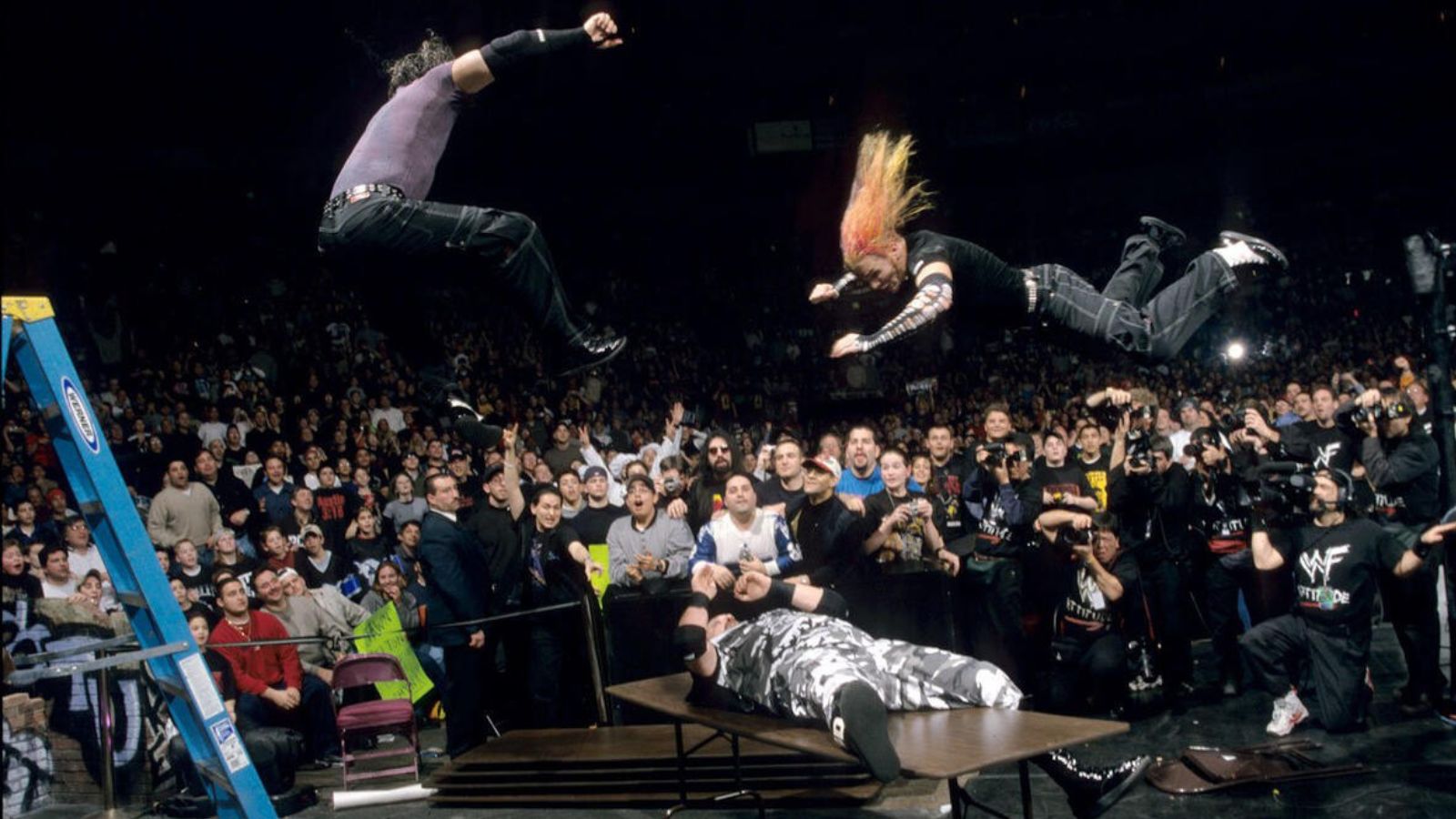
Royal Rumble 2000 took place at Madison Square Garden on January 23. The card included Tazz’s WWF debut, Triple H and Cactus Jack’s street fight, and the company’s first advertised tag team tables match.
The Hardy Boyz faced the Dudley Boyz under rules requiring both members of a team to go through tables before the match could end. The format provided an ideal showcase for two teams whose rivalry would help define the WWF tag division.
Matt and Jeff Hardy combined to put Bubba Ray through a table, but the Dudleys answered by sending Matt through another. That left Jeff Hardy and D-Von as the remaining eligible participants.
The action moved into the Madison Square Garden entrance area, where Bubba fell from a balcony through stacked tables. Matt then placed D-Von across another table, and Jeff delivered a Swanton Bomb from the balcony to secure the victory.
During an episode of The Extreme Life of Matt Hardy, Matt recalled that Vince McMahon wanted the victorious babyface team back inside the ring with its arms raised: "Vince McMahon was adamant, adamant that he wanted his babyface team that just secured this new big victory in Madison Square Garden, this iconic venue, he wanted us in the ring with our hands raised. He said, ‘That’s the most important thing. You have to be in the ring with your hands raised.’"
Matt contrasted his attention to timing with his brother’s instinctive approach: "Jeff now, my brother, he just feels things. He doesn’t give a s–t about structure. He’s not good with time. That was never his gimmick. The gimmick with time was mine."
That difference became important once Jeff completed the final dive: "We’re out here, we’re already battling the clock to get this match in, and after Jeff goes through Devon to win the match, we’re down there and we get a hit from someone telling us the time, ‘20 seconds, get in the ring! Vince says get in the ring!’ Jeff is still in the mode, totally selling. I picked his a** up, I drug him over as he’s down selling, I dumped him over the barricade."
Jeff had just launched himself from a balcony, but television time waits for no Hardy.

14. Dudley Boyz Popularize Table Spots: How Bubba Ray and D-Von Turned "D-Von, Get the Tables!" Into Legend
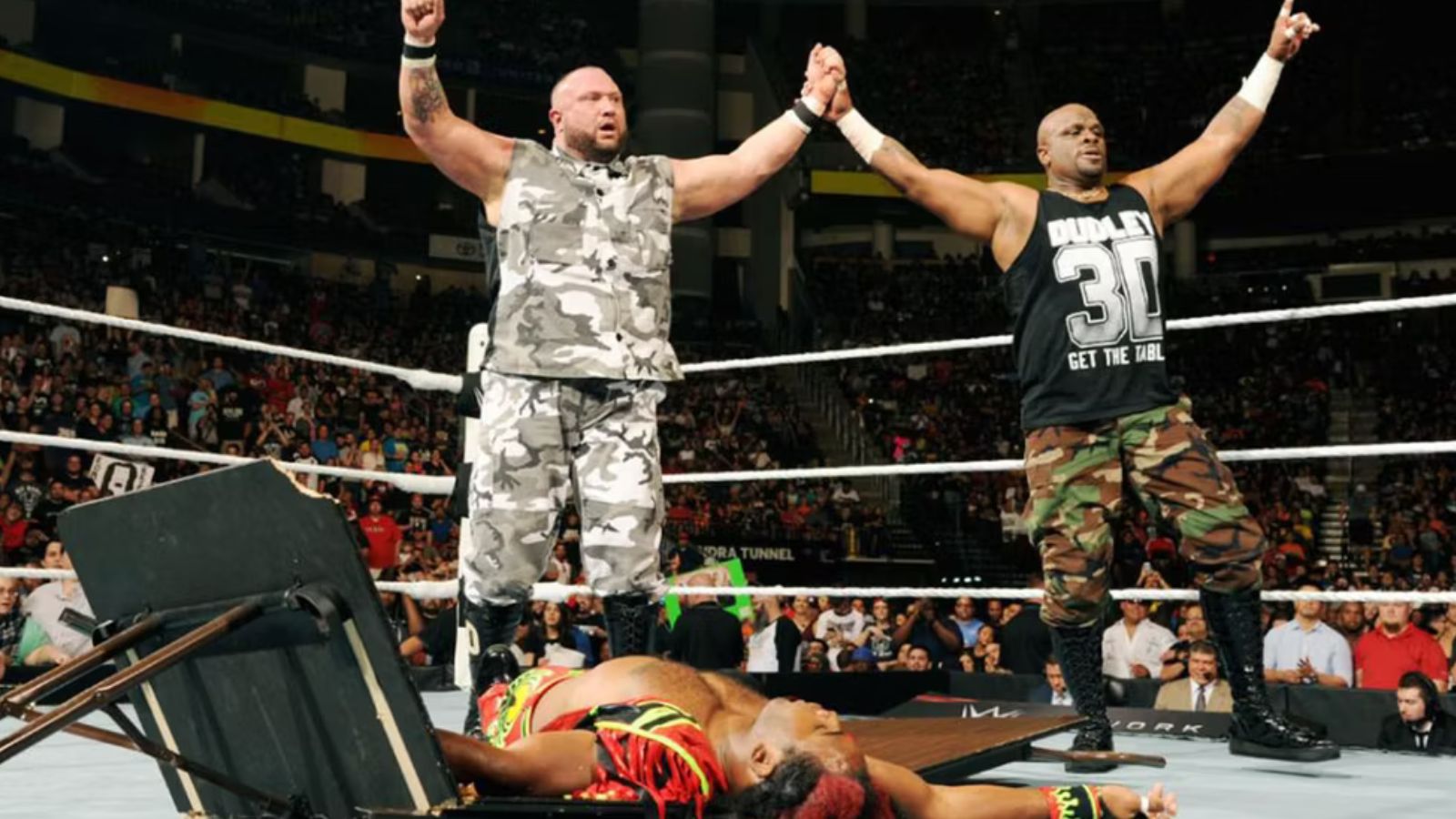
Bubba Ray and D-Von Dudley used plenty of tables in ECW, but then again, so did nearly everyone with access to the building.
The team’s exclusive association with furniture developed after it joined the WWF in 1999. During an appearance on Talk Is Jericho, Bubba explained that the pairing of the Dudleys and tables emerged almost by accident: "It was happenstance that it happened with WWE. In ECW, we never were the table guys. We never did ‘D-Von, get the tables.’ We were involved in the real violent matches, where tables were included, but it was invented here in WWF by mistake."
D-Von then recalled how a forgotten cue started the process: "We started putting the girls, like Terri Runnels, through the tables. The tables and the Dudleys were becoming as one, so to speak. But then what happened was, we were doing something in the ring, I was supposed to go out and get the tables, and I legitimately forgot. He went, ‘D-Von, get the tables!’ I went, ‘Aw, shit,’ and I went to get the tables. He said, ‘D-Von, you got to remember to get the tables,’ and I said, ‘OK, my fault.’"
When Bubba repeated the instruction the following night, D-Von did not immediately recognize its potential: "So the next night, we go to do it again, and I remember. He goes, ‘D-Von, get the tables!’ And I say, ‘I know! Stop telling me! I got it!’ Now I’m getting mad, and he did it again a couple of times. I remember telling him, ‘Bubba, stop telling me to get the tables. I know my spot. Just leave me alone, I’ll go.’"
Eventually, Bubba noticed that audiences were responding to the exchange. D-Von remembered their conversation: "It finally came to him. He said, ‘D-Von, I think people are catching on.’ I go, ‘What do you mean?’ He goes, ‘You know, saying, D-Von, get the tables.’ I go, ‘It’ll never get over.’"
D-Von acknowledged that his prediction did not age particularly well: "He goes, ‘Let’s try!’ And I go, ‘Yeah, I know, but it will never get over.’ And sure enough, here we are today. I hate to say this, but a lot of what this man says, he’s actually a really smart guy."
"D-Von, get the tables!" transformed an ordinary ringside reminder into a call-and-response ritual. From that point forward, seeing Bubba spread his arms and call for D-Von became as much a part of the Dudleys’ presentation as the 3D.
15. Edge Spears Mick Foley Through a Burning Table (April 2, 2006)
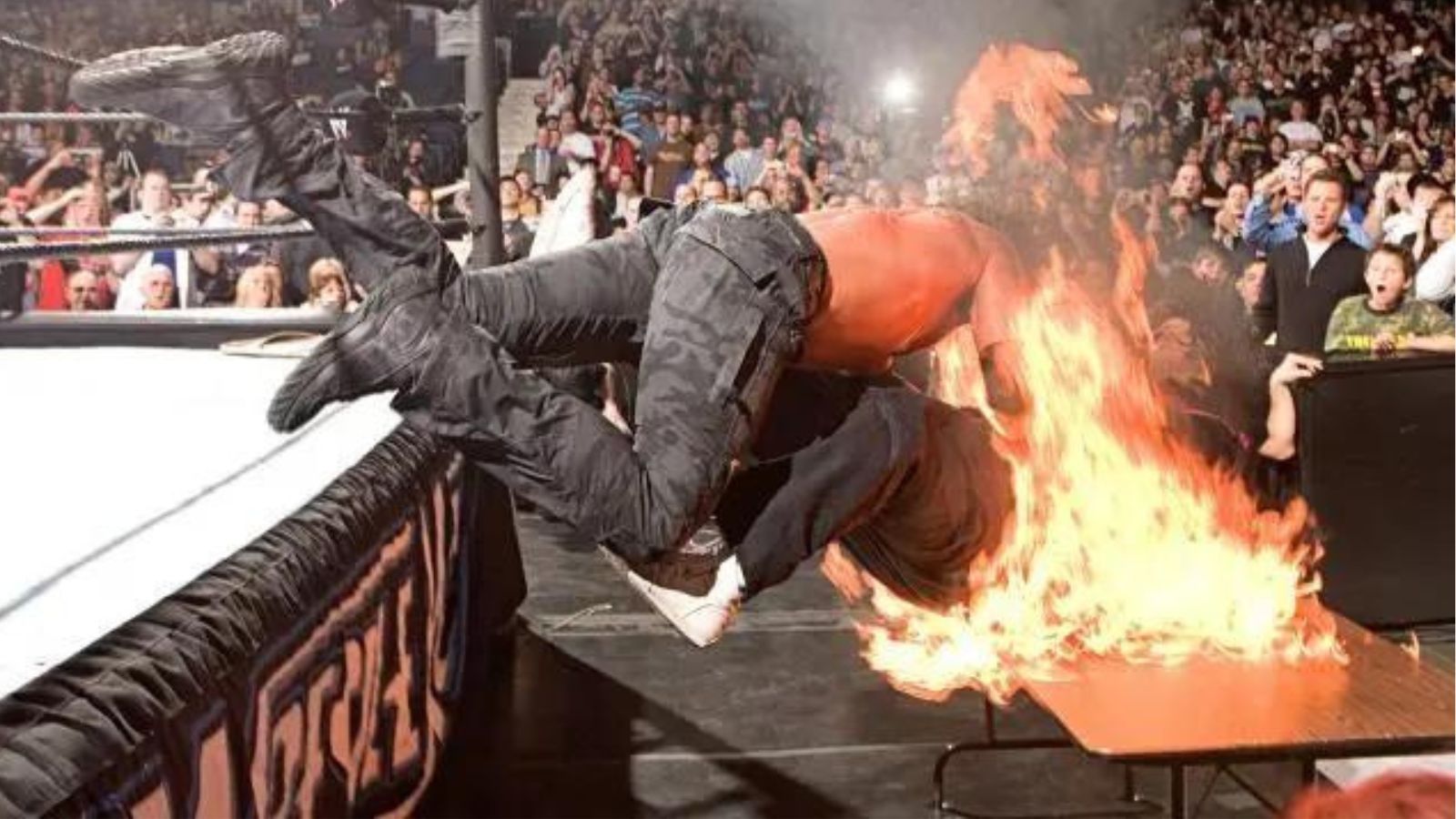
Burning tables became much rarer on major North American wrestling shows after the original ECW closed. There is an excellent reason for this: adding an open flame to an already dangerous stunt creates several fresh ways for the plan to unravel.
One notable exception occurred at WrestleMania 22 on April 2, 2006, inside the Allstate Arena in Rosemont, Illinois. During his hardcore match against Edge, Mick Foley stood on the apron while Lita set a table alight at ringside.
Edge charged and speared Foley through the ropes and into the burning table. The impact gave Edge the pinfall and provided Foley with the major WrestleMania moment he had long wanted.
During an Inside the Ropes interview, Edge recalled realizing midway through his run that Foley had several layers of clothing while he had no shirt: "When I really understood the position I put myself in was when I was running back at Mick, and I said, ‘Oh, shit. I don’t have a shirt on. I’m diving face-first into this thing! He’s going through it on his back, and he has 18 layers of clothes on!’"
The protective gel offered little reassurance by that point. Edge remembered, "They put this flame-retardant gel on us, which was washed off in, like, two minutes. We had sweated it off."
With no opportunity to reconsider, Edge tucked his head and committed to the spear: "So I dove through, and I was like, ‘Right, I’m just gonna tuck my head into Mick’s big old belly and hope for the best.’ But I wrapped my arms around him, so it burnt my arms. Singed all the hair off my arms and my hands, and singed a big chunk of hair off my head."
Once he rolled away, Edge could immediately see and smell the consequences: "I rolled off, and I just saw my body smoking. I tried to sell it as shock, but I could smell myself burning. I thought, ‘I think I’m OK, because I can think that I think I’m OK.’"
The table broke exactly as intended, which did not make the fire attached to it any friendlier.

Modern Era Table Carnage (2000s–2020s): Tables Still Define Hard-Hitting Climaxes
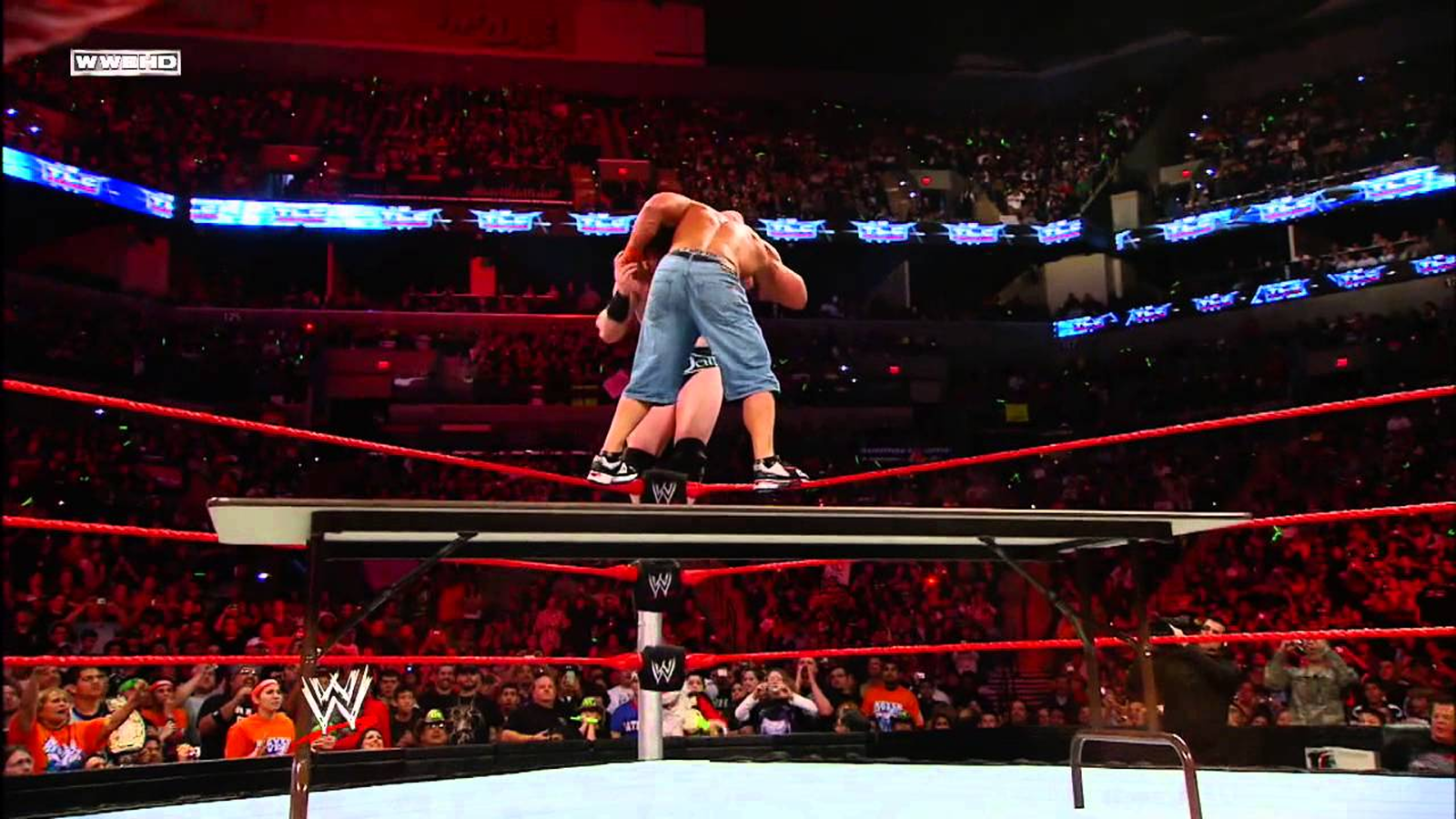
As the Dudley Boyz kept the gimmick alive, table matches continued to evolve with changing wrestling styles, audience expectations, and company storytelling.
In the years after the Ruthless Aggression era, promotions used tables less as a novelty and more as part of a match’s narrative and athletic climax. WWE, TNA, AEW, and independent promotions all continued using table spots and full table matches as key components of hardcore storytelling, often as climactic moments in long-running feuds.
One of the standout table matches of the modern era was Sheamus’s breakout moment at WWE TLC 2009, where he defeated John Cena in a classic singles Tables Match, winning his first WWE Championship and instantly being launched into the main event scene.
Over in TNA, stars like Bully Ray, Abyss, and Rhyno carried on the hardcore legacy, incorporating tables into some of the promotion’s wildest brawls. Matches like Team 3D vs. Beer Money Inc. and Hardcore War encounters kept the table match relevant, often mixing in other weapons and elevated platforms for extra danger.
TNA’s willingness to let matches spill outside the ring allowed for more creative uses of the table, such as balcony dives, flaming tables, and stacked spots that rivaled anything from ECW’s heyday.
With the launch of AEW in 2019, a fresh wave of table carnage arrived. Wrestlers like The Young Bucks, Darby Allin, and Sammy Guevara brought their daredevil styles to the table, literally, frequently incorporating brutal table bumps in both sanctioned matches and chaotic brawls.
Women had already made the table-match format their own. At WWE TLC 2010, Natalya and Beth Phoenix defeated LayCool in WWE’s first Divas tag team tables match. Eight years later, Natalya defeated Ruby Riott in a singles tables match at TLC 2018.
On the independent scene, wrestlers such as Masha Slamovich and LuFisto continued carrying tables into hardcore matches, extending the stipulation across promotions and divisions. The table had become an equal-opportunity stage for physical storytelling.
Pro wrestlers continue to find creative ways to use, destroy, and weaponize the humble table, making it not just a nostalgic callback but a living, splintered symbol of pro wrestling’s endless reinvention.
Why We Love Table Spots: How Tables Became a Time-Honored Staple for Unforgettable Wrestling Moments
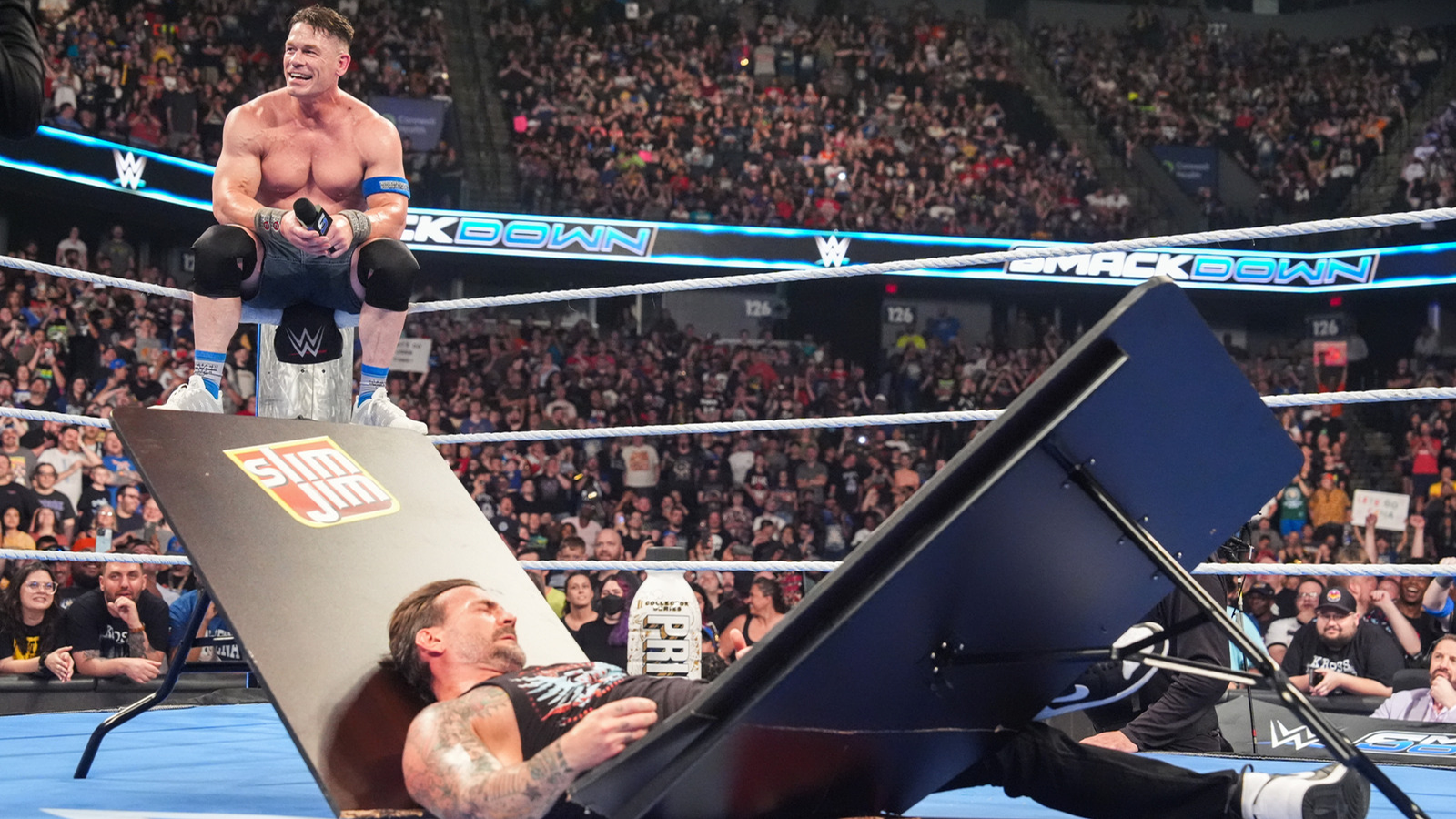
The table spot did not have one inventor or a single moment of creation. Its development was gradual, from ringside accidents and territory-era stunts to Sabu’s improvised crash pads, ECW’s match stipulations, and the Dudley Boyz’s audience-participation ritual.
Each stage added something. Randy Savage showed how a table could intensify an angle. Harley Race demonstrated the consequences when the frame struck back. Terry Funk made a table central to a major turn, Sabu made it part of a wrestling style, Bret Hart brought the announce-table break into a WWF championship match, and Mick Foley carried the visual to an almost unimaginable height.
Tables now serve as finishes, set pieces, and giant wooden punctuation marks. Their arrival at ringside changes the audience’s expectations before anybody has even touched one.
That is why the chant endures. Somewhere beneath the ring sits a folding table, minding its own business and waiting for a wrestler to decide that furniture has had it too easy.
These stories may also interest you:
- Permanent Scars: Tales of Life-Altering Wrestling Matches
- Wrestling Match Types Used Once in WWE But Never Again
- 10 Pro Wrestling Matches That Turned Into Real Fights!
Download PDF Version
Get the complete article as a formatted PDF for offline reading.