 Author:
 Before his face appeared on a t-shirt alongside Billy Idol’s, before Adam Sandler watched a DVD reel and said “I picked you,” before he invented an alien for Star Trek: Enterprise and rode motorcycles onto the set of Hell’s Kitchen, Al Burke was doing what he always did: going out in front of thousands of people and making somebody else look like a million dollars. He did it for 37 years in a professional wrestling ring, and then he walked out of that ring and into Hollywood and just kept right on going. By the time the Cauliflower Alley Club put him in the company of Judo Gene LeBell and Rowdy Roddy Piper with a Reel Award, Burke had more screen credits than both of them combined. This is the story nobody told you about a man from Minneapolis, Minnesota, who was everywhere you looked and almost nowhere in the record books.
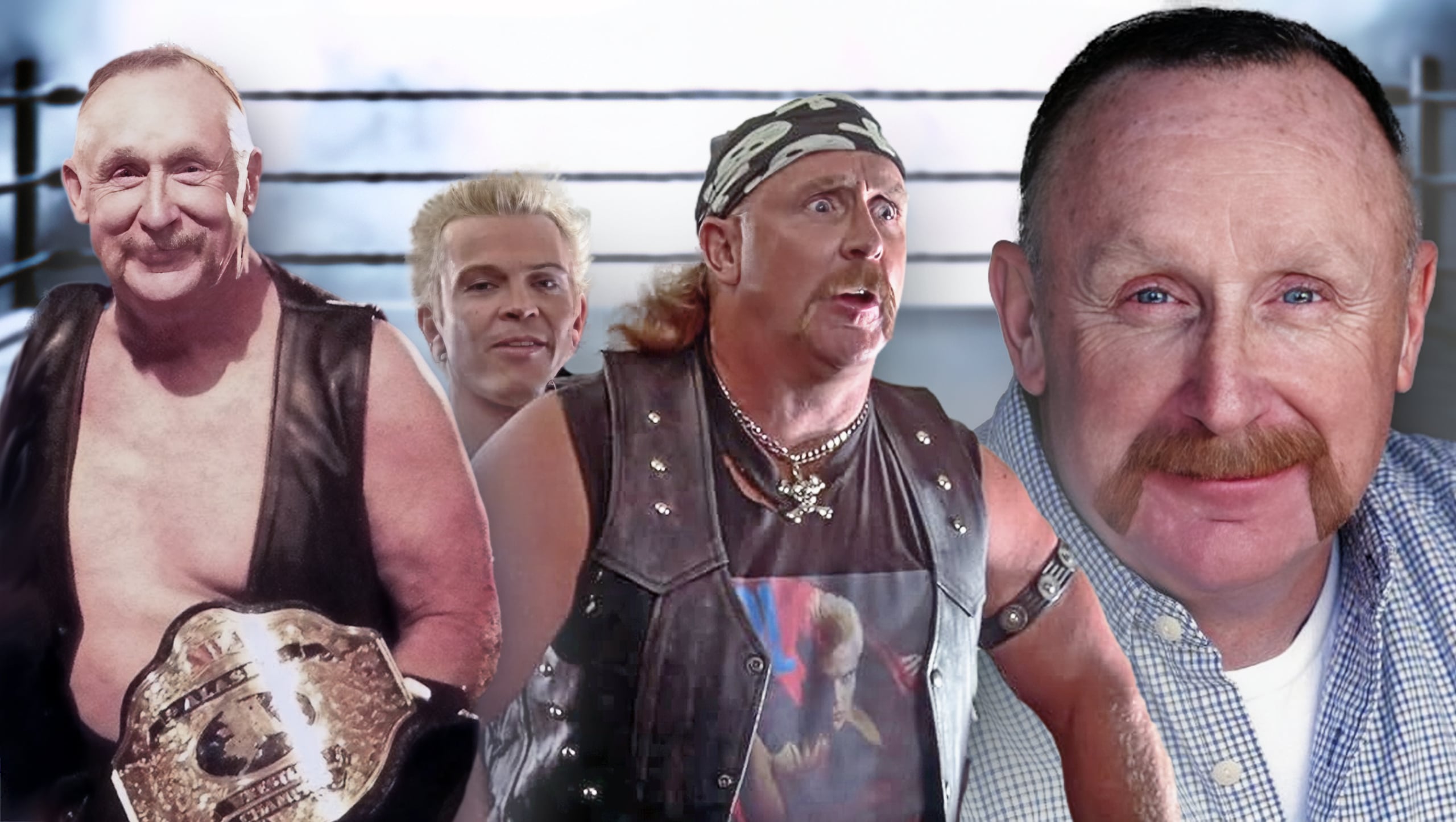
Jim Phillips, author of this article and one of the great wrestling historians here at Pro Wrestling Stories, is in the challenge of his life after being paralyzed on January 21st, 2023. Learn his story and how you can help him reach his goal of taking his first steps again!
Al “Mr. Outrageous” Burke: A Troubled Youth in Minneapolis and the Road to the Ring
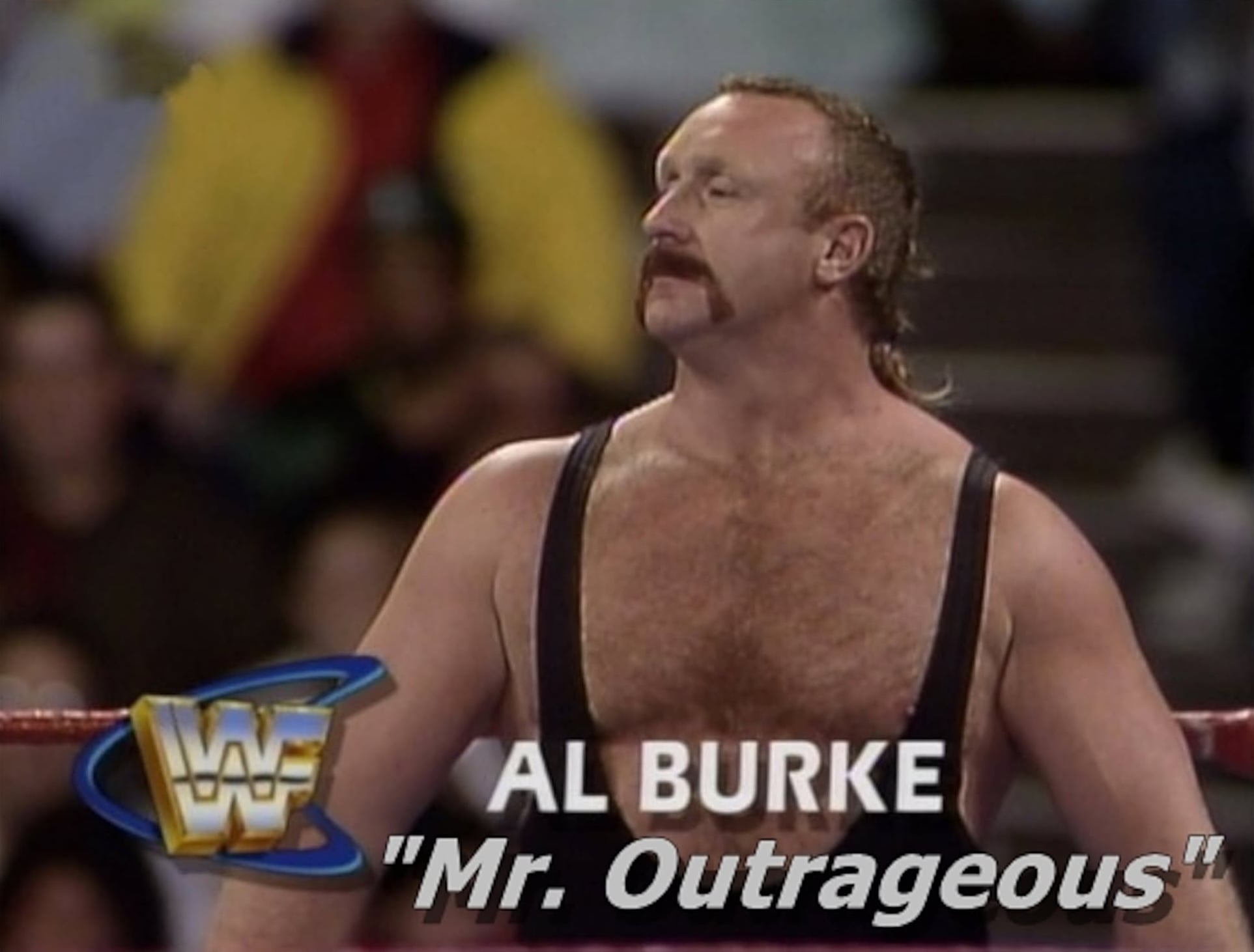
Allen Burke was born on September 25, 1954, and grew up in the Minneapolis area of Minnesota. The future Mr. Outrageous has described his younger years plainly, and with a certain dark humor that runs through everything he says.
“Hey, this is Al ‘Mr. Outrageous’ Burke,” he told me when we sat down for our conversation for Pro Wrestling Stories. “I did 37 years as a pro wrestler. I’ve also done about 35 years now as an actor in Hollywood. But before that, I grew up in the Minneapolis area of Minnesota. A troubled youth, shall we say. And then it turned out my dad became a cop, so I was even worse.”
His father’s career in law enforcement, rather than instilling order into a restless kid, seemed to add a layer of rebellion to an already combustible temperament. Sports offered some structure. Burke played baseball in his early school years and later threw himself into football, where speed became his primary asset.
“I was always pretty dang fast,” he said. “So my main job was always being a fullback in football, or a linebacker, ’cause I could cover a lot of those guys. Very few people could beat me at speed.”
His heart, though, was never fully in it. His parents’ troubled marriage ended in divorce during his teenage years, a period he describes with candor as simply not easy. Sports helped some. But the real outlet was still to come.
Golden Gloves, Karate, and the Bare-Knuckle Underground
After high school, Al Burke found his competitive instincts needed a proper arena. Friends were competing in Golden Gloves boxing, and Burke figured he could hold his own. He was right.
“I ended up winning the Minneapolis Championship a few years,” he said. “And then I lost in the Upper Midwest, which was the next tournament that goes off to nationals. And I always lost to the guy who went on that trip. I was losing to the better people, but I was also learning.” He acknowledges the gap between competing locally and competing at that next level, but he frames it not as defeat but as education. Still, even boxing did not hold him fully.
From boxing, Burke moved into karate and then into bare-knuckle underground fighting, a gritty circuit where the learning curve could leave a mark. That sequence of combat sports, from organized boxing to controlled martial arts to the anything-goes underground, gave him a foundation in real contact that very few performers who walked into a professional wrestling ring could claim. By the time he was ready to consider the squared circle, he had already been hit, and hit hard, in enough contexts that almost nothing in the business would rattle him.
The Meeting That Changed Everything: Hulk Hogan in Minneapolis
The route into professional wrestling, for Burke, was not a lifelong dream. It was, in his own words, a reluctant give-in after years of listening to his friends talk about how good the life was. Those friends had the contact.
“Friends of mine took me over to Hulk Hogan’s apartment,” Burke explained, “and his apartment then was where the Mall of America is now. So all that got torn down.” At that time, Hogan was still working Japan and the American Wrestling Association, several years before his jump to the World Wrestling Federation would change the entire landscape of professional wrestling. “He told me, or told all of us, where to go to school, how to train, all that kind of stuff.”
Burke was not impressed, at least not at the time. His friends were buzzing. He walked away thinking it was, in his assessment, a ridiculous idea. He spent the next couple of years listening to those same friends describe how much fun they were having, how easy the schedule was, how the nights were long, and how the pay was real. Eventually, the stories wore him down. He gave in.
“Eddie Sharkey had the big camp there in the Minneapolis area,” Burke said, “and his trainer was a good friend of mine that was at that meeting with Hulk Hogan.” That trainer was Dan Rgnonti, who was part of the Terminators tag team group and had since become Eddie’s head trainer.
The challenge: Eddie did not have a ring. He trained students on mats, and Renati was not willing to do it that way. So they looked around for a proper setup, and found their way to a ring overseen by a local figure in Minneapolis wrestling, Jim Mitchell, known in American Wrestling Association circles as the Iron Duke, a referee whose permanently altered hand gave him an unmistakable appearance. Burke got his training, and he got his start.
Breaking Into Professional Wrestling: The Minnesota Independents and the IWA Circuit
Al Burke threw himself into the independent wrestling circuit across Minnesota, Wisconsin, and the broader Midwest, working towns and learning his craft the only way the business has ever allowed: by doing it in front of real crowds. He built a record, earned a reputation as a dependable hand, and accumulated a handful of championship reigns along the way. By the time his next big opportunity came along, he was ready for it.
That opportunity arrived in the form of Tom Shade, a promoter operating out of Denver who picked Burke up for an eight-year run with his International Wrestling Association. It was, in Burke’s telling, the closest thing to a big break he had before his World Wrestling Federation years.
“We all worked for Tom Shady Shade there.” The nickname tells you something about how the boys viewed Shade. Nobody trusted him. But he ran a circuit, and the circuit provided work.
Warren Bianchi, 60-Minute Wars, and the Education of a Road Warrior
Working for Shade was a physical education all by itself. Burke’s regular opponent on that circuit was Warren Bianchi, known as the Party Animal, and the matches between them carried a particular kind of intensity that Shade had engineered for reasons of his own.
“Every night I worked, I worked with Party Animal, Warren Bianchi,” Burke recalled. “We would have to do a 60 time limit match, that at fifty-nine minutes and fifty-five seconds I would just be getting pinned when Tom would go over, knock the papers off the timekeeper table, and ring the bell to save the night.”
He was working, effectively, an hour-long match every night. The stamina required was considerable. “Now, luckily, I was young. I was able to do it. Built up good stamina.”
Shade demanded action, not hold-heavy stalling. Burke obliged, and the extended matches became a kind of involuntary conditioning program. He left the IWA in far better physical shape than he had arrived, which positioned him well for what came next. The IWA’s run after his departure included a tour stop at Guantanamo Bay, Cuba, of all places, followed by engagements through South and Central America. Burke misses that run slightly, though his time had come to move on. He had bigger doors to knock on.
Iron Sheik, Honky Tonk Man, and the Road With Colonel DeBeers
One of the genuine pleasures of Al Burke’s time on the road was the company he kept in the vehicle. Because he had strong Minnesota connections and knew virtually everyone coming out of that territory, Burke became a trusted driver for names that the smaller operations were booking as attractions.
“The funny part is Denise was always in the owner’s van of the IWA back then, Tom Shade,” Burke said. “And she wasn’t allowed to ride with me, ’cause I had all the names. But I had Iron Sheik, Honky Tonk Man, Ricky Rude. I had some of the biggest names in the business riding in my vehicle with me.”
The Denise in question is Denise Nelson Nyah Kennedy, known to wrestling fans as Satin Doll, a manager billed for decades as the Queen of Heels, a career that traces back to 1987. She happens to be a mutual friend of mine, and I reached out to her directly for this piece, since she rode plenty of those same Tom Shade miles alongside Burke back in the day.
She remembered those early runs clearly when she spoke with Pro Wrestling Stories for this article. “When we started out, Al had this big ol’ Suburban,” Denise remembered. “He’d pick ’em up and then drive ’em and drop ’em off at the airport and then go on his way with whoever he was bringing with him from either California or Wisconsin. The ones that didn’t have like rental cars and stuff. In our promotion, the home group from Colorado, we had our own van that we traveled in.” Burke’s Suburban, it turned out, carried a passenger list most promoters would have killed for.”
Among the most regular passengers was Ed Wiskowski, better known to wrestling fans as Colonel DeBeers, the controversial pro-apartheid character who became one of the American Wrestling Association’s most despised villains throughout his run there from 1985 onward. DeBeers, who passed away on January 22, 2025, at the age of 80, traveled thousands of miles with Burke, and the memory of those road conversations clearly sits with him.
B. Brian Blair, also a passenger on those runs, reportedly called Burke the best road man in the business. That reputation for reliability and professionalism would carry through everything Burke did, in wrestling and in Hollywood alike.
The Military Base Shows and the Promoter Who Took the Money
One of the more instructive chapters in Al Burke’s road career involved the effort to bring professional wrestling to military audiences across the United States. Burke had a connection at Ellsworth Air Force Base in Rapid City, South Dakota, and he worked with Tom Shade to set up what should have been a reliable stream of military base dates for the IWA.
The initial attempt went badly, through no fault of Burke’s. He had made specific promises to the military contact about the quality of the card, assuring them of a genuine mix of recognizable names and solid undercard talent.
A third party involved in setting up the show took the concept, ran it independently, kept all the money, and delivered none of what had been promised. Burke confronted the situation directly during a battle royal when the man in question found himself in the ring with him. Burke pressed him overhead and threw him over the top rope, onto the floor, in a way that left no ambiguity about how he felt about the situation.
Then he did the professional thing. He went to the military contact, explained what had happened, apologized for the confusion, and offered the real version of what he had originally promised. They accepted.
Tom Shade ran military base shows across the United States for approximately five years after that, a run that included a first-ever stop at Guantanamo Bay, Cuba, followed by tours through Central and South America. Burke was not present for those later adventures, having moved on from Shade’s operation at that point. He does allow himself a small moment of wistfulness about the Guantanamo show. That is one road story he did not get to add to the collection.
Denise remembered that stretch as well: “I think that was the first year that we were locally just wrestling in Colorado specifically without going out of state until Tom finally got the military contract through Al. Our first out of town tour was to Wyoming, and then after that it just blew up, and we were traveling all over the United States. Al went from just worker to actually being road manager when Tom stopped traveling on the road. We were all over the place. We went as far east as Wisconsin, as far north as Washington State, and as far south as Texas.”
Enjoying this story? Own it forever.
No ads. No interruptions. Download the full story as a beautifully formatted PDF at just $0.99.
Get My Copy — $0.99The Closest Al Burke Got to the AWA: Walking In a Month Too Late
By the time Al Burke was ready to make his move toward the American Wrestling Association, he had multiple championships on his resume and years of road experience behind him. He walked into the AWA office in Minneapolis and made his case. The man behind the desk that day was someone he knew well, and the meeting stands as one of the more darkly funny moments in his career.
“I walked in, and Eric Bischoff, he had moved up in the AWA, but he wasn’t totally in charge or anything yet,” Burke said. “And I walked in, and I says, ‘I’m ready. I think it’s time for me to get a push.’ And he goes, ‘Oh, bad news. The doors are closing next month for the AWA.'”
Burke and Bischoff knew each other from their time taking karate together back in Minnesota, which made the moment equal parts comfortable and surreal. Burke took the news without drama. “I didn’t hurt my ego or anything. They’re fools, not because of me. I just went on and continued my career.”
The American Wrestling Association closed permanently in 1991, its final months representing the collapse of one of professional wrestling’s most storied regional promotions. Burke had simply arrived one month too late to be part of it.
Five Years in the WWF: TV Tapings, a Locker Room Education, and Making Stars Look Good
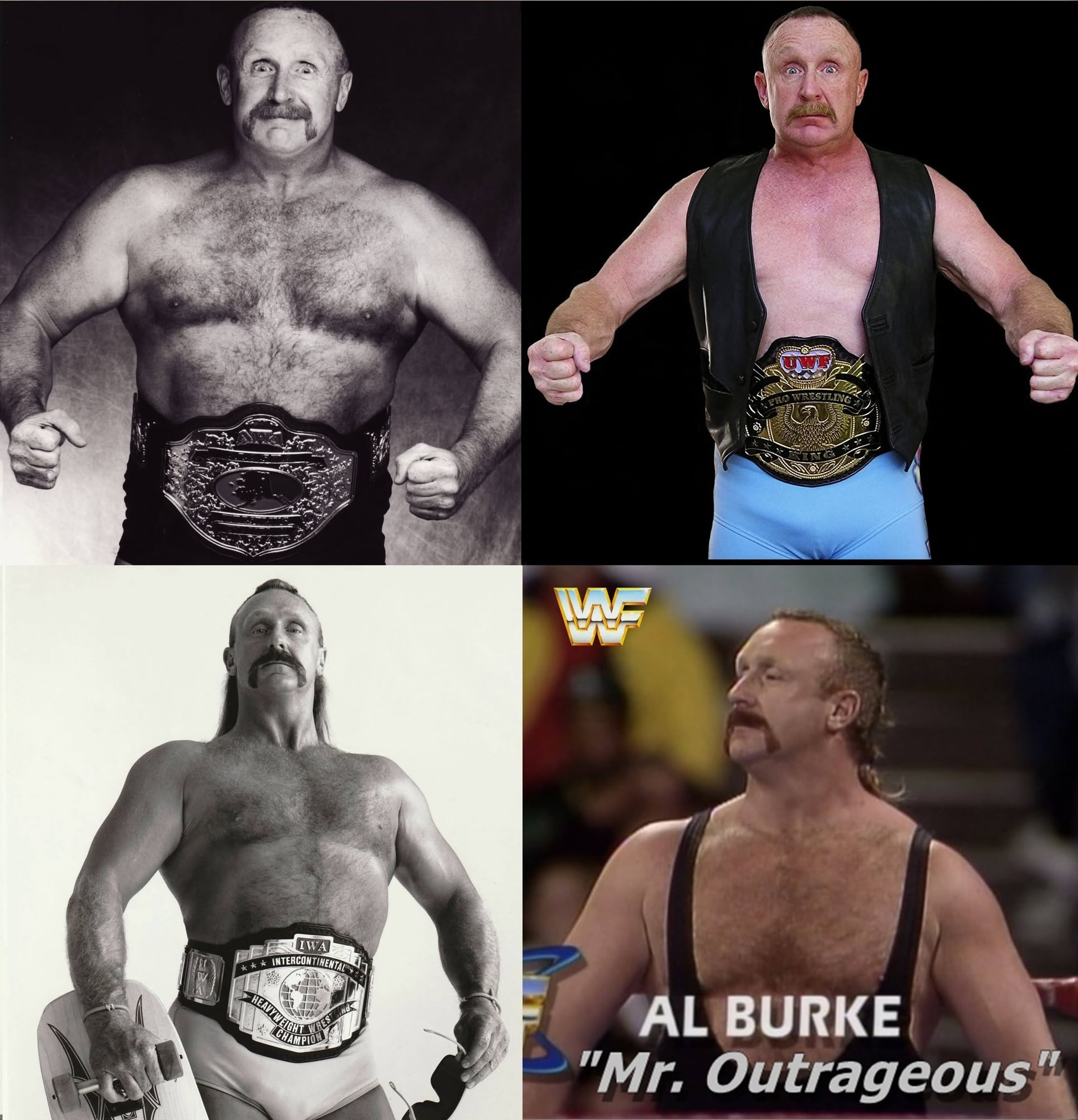
Al Burke made his World Wrestling Federation debut in 1988, working television tapings as enhancement talent, the men the industry sometimes calls jobbers, a term Burke wears without apology or embarrassment. His WWF run lasted until 1993, a five-year stretch that put him across the ring from some of the most significant names of professional wrestling’s golden era.
According to verified records, Burke competed against the likes of Jim Duggan, Jake Roberts, Andre the Giant, Bret Hart, Shawn Michaels, The Ultimate Warrior, Dusty Rhodes, the Legion of Doom, and Bob Backlund during his time with the company.
He worked television tapings primarily out of Minnesota before also working tapings in California. His connection came through Tom Stone, known in the business as Tom “Rocky” Stone, out of Milwaukee. Stone needed bodies for the WWF tapings, and Burke had the Minneapolis roster knowledge to deliver them.
“Tom would call me up and I think at one point I had to bring 20 guys out of Minnesota,” Burke recalled, “and I was reaching the bottom of the barrel at the time.” That reach occasionally produced memorable moments, including one night when a wrestler who was not large enough to work wandered around looking lost, prompting a now-legendary exchange with a cribbage-playing, wine-sipping Andre the Giant, who had little sympathy for the man’s predicament.
"He was a referee, wasn’t a big guy, but I was like, ‘Hey, I need bodies,’" Burke said. "The guy was just walking around backstage kind of mopey. Andre was sitting there playing his cribbage, had his bottle of wine, and goes, ‘Hey kid, what’s your problem?’ The guy told him, ‘They told me I’m too small and I can’t work.’ Andre says, ‘You got paid, didn’t ya?’ The guy goes, ‘Yeah.’ Andre says, ‘Good. Now get me some ice for my wine here, boy.’"
The Body-Up Program and Getting Bigger for Vince McMahon
Al Burke arrived at the WWF at approximately 225 pounds, just around six feet tall, a fair-sized man with a combat sports background. He was fit. But the WWF of the late 1980s had a particular standard, and someone in the organization made it clear to Burke where he stood.
“One day a guy comes over, he points at my chest and actually taps my chest and goes, ‘That gets bigger or you go home,'” Burke recalled. The solution was pointed out immediately, with a nod toward someone standing by the wall. Burke followed the advice, embarking on what became a nine-month program of incline bench press seven days a week, twice a day.
“I was exhausted,” he said. “And one day in a bad mood, I go, ‘Hey, don’t I get a day off or something?’ They go, ‘Shut up. You think farmers get a day off? Just shut up and lift.'”
He reached 315 pounds on the bench press clean, through lifting alone, before beginning a two-year period using performance-enhancing substances that took his lifts further. He reached numbers in the 500-pound range on the bench press. The side effects on his temperament were, as he frames it, significant. “My personality sucked, so I had to get off.” He has been candid about that period and its consequences, noting that there are things he did during that time that could and should have resulted in legal trouble, but somehow did not. When he talks about it, there is no romanticizing. He is grateful he came out the other side.
Working the Colossal Connection: Andre the Giant and Haku as WWF Tag Champions
One of Al Burke’s more vivid memories from his WWF years involves working with Andre the Giant and Haku when they held the World Wrestling Federation Tag Team Championship as the team known as the Colossal Connection. That title reign ran from December 13, 1989, through WrestleMania VI on April 1, 1990, when Demolition defeated them in Toronto to reclaim the gold.
Burke had already worked a match earlier in the evening on the night in question. When the call came that they needed his body for the tag match, the directive was simple and specific: do not tag in.
“I went with a really good friend of mine from Minnesota,” Burke said. “So he comes over to tag me, and I hold my hand out and then brush my hair back.” His partner, left with no tag, took the fall. The crowd reacted accordingly, furious at Burke’s cowardice. Burke was perfectly content. “I’m like, ‘Thank you. Thank you. You just paid my truck payment. Thank you.'”
It is the essence of the enhancement talent mindset: go out, serve the story, create heat, get paid, go home. Nobody in the building knew his name. He did not need them to.
The Night Ultimate Warrior Almost Dislocated His Shoulder
Not every night in the World Wrestling Federation ran smoothly. Burke’s memory of working The Ultimate Warrior is one that requires no embellishment.
Warrior was in the middle of a program with Rick Rude at the time, and Rude and Burke knew each other well, both having come out of the Minnesota area. Burke went out, did his job, and came back to find Rude waiting for him with a one-sentence verdict on the evening.
“At one point he almost ripped my shoulder out of the socket,” Burke said. “He didn’t, but that’s how hard he pulled me to give me an Irish whip into the opposite turnbuckle.”
The signature Warrior finish at that time involved pressing the opponent overhead, dropping them behind him, running the ropes, delivering a big splash, then throwing them out of the ring, running and jumping out after them, pressing them over his shoulder again, and running back to the locker room with the opponent still draped across him. All of that while Burke could barely draw breath.
“Rick Rude walks over to me,” Burke expressed, “and he’s, ‘Dude, that was just all wrong.’ I’m like, ‘Hey, brother, I’m just here to do my job.'” Rude had more pointed words for Warrior’s ring work, though Burke frames the whole memory without bitterness. Warrior drew money, Vince McMahon had made a choice, and the machine ran the way it was built to run. Burke had no argument with any of that. He just would have appreciated a shoulder that stayed in its socket.
A Locker Room Code of Honor: The Incident With the Thief
Not every story from the WWF years is about the matches. The locker room culture of that era carried its own code, and Burke has never forgotten one incident that tested it.
During a taping, the roster cleared the locker room, and someone went through a fellow worker’s wallet, cleaning it out. Burke had been the second-to-last person to leave and knew who the last one in the room was. He called the man out in front of everyone, loud and direct, with a notable assist from someone who happened to walk over at that moment and ask if everything was all right. Burke explained precisely what was happening and why.
“I always say, you play ribs on me, do whatever,” Burke said. “I will never go into your bag, and I expect you to never go into my bag.” That code, he says, never wavered. Not in wrestling, not in Hollywood. It is a line that defines the difference, in his mind, between a rib and a genuine violation of the trust the locker room is built on. The two things are not remotely the same.
Curt Hennig’s Guitar String: A Rib Al Burke Witnessed
Al Burke did not work in the American Wrestling Association, so he has no Curt Hennig AWA stories to tell. But he was present in the World Wrestling Federation for one of Hennig’s more elaborate and fondly remembered pieces of mischief, and the telling of it captures something essential about who Hennig was.
Hennig strung a monofilament fishing line, invisible in any lighting, from Honky Tonk Man’s guitar across a hallway of roughly 30 feet in a WWF arena. The floors in those buildings were almost universally concrete. He then directed a young Shane McMahon, who Burke estimates was around ten or twelve years old at the time, to run across the hallway to someone waving at him from the other end. The moment Shane’s stride was full, Hennig pulled the line, the guitar swept off its perch, and the sound of an instrument hitting a concrete floor filled the corridor. Honky Tonk Man completed the rib by reacting with theatrical outrage, sending a panicked young Shane running in the other direction.
“When everybody’s quiet and you hear this guitar hitting the concrete,” Burke said, “it’s ‘Oh my God, Honky Tonk’s gonna get you. You better get out of here.'”
Burke notes that many of the boys who had similar fun with Shane McMahon during those years found themselves answering for it when Shane rose to a position of authority within the company. Burke tells the story with warmth. Hennig, like so many from that era, left the business too soon, passing away in 2003. Burke has since become friends with Hennig’s widow and his son, and they sit together at his table at wrestling reunions each year.
The Night Bad News Brown Quieted a Room
The World Wrestling Federation locker room of that era was a place where reputations were established and maintained not by what you said but by what you had demonstrably done. Burke carries one memory from those years that he tells with visible respect: a backstage flashpoint between Dynamite Kid of the British Bulldogs and the Rougeau brothers that has since become one of the most talked-about real-life incidents of the WWF’s Golden Era.
Dynamite Kid was on the receiving end of a beating in the locker room from the Rougeau brothers, part of the long running backstage feud between the British Bulldogs and the Fabulous Rougeaus that spilled beyond the ring and into real life. Al Burke was physically present for that incident, one of many wrestlers in the room watching the confrontation play out when Bad News Brown finally stepped in.
“Bad News Brown steps up, walks up to him and goes, ‘That’s enough, boys,'” Burke recalled. Then Brown turned, slowly, and delivered the same message one more time, at a lower register and with considerably more finality. The room stopped. The beating ended. Nobody tested what would have happened next.
Burke tells the story not to relitigate old grievances but to illustrate a truth about that environment. “I don’t care how big, how bad, how strong, whatever. Everybody there is there for a reason. And most of all are freaking bad***es.”
The lesson is straightforward: in a room full of professional wrestlers, the hierarchy of toughness is real, and Bad News Brown occupied a particular place in it that most people had sense enough not to test.
Love Pro Wrestling Stories? Add us as a Preferred Source on Google so our stories always show up first for you. It only takes one click.
Add Us on GoogleTed DiBiase, Luna Vachon, and the Nod That Meant Everything
Among Al Burke’s more pointed stories from the WWF years is a memory that speaks to the unofficial social geography of the locker room, where names that drew occupied one stratum and everyone else occupied another, and very little traffic moved between them.
Burke was sitting in a dark room during a taping with Mike McGuirk, Sherri Martel, and Luna Vachon. Ted DiBiase walked in. Up until that moment, DiBiase had never so much as acknowledged Burke’s existence. He greeted each person in the room by name, said what he needed to say, and then, before leaving, caught Burke’s eye and gave a single nod.
“I’m thinking, ‘Holy ****, he nodded at me. That’s the most I’ve ever gotten out of this guy,'” Burke said.
Years later, Burke had a proper conversation with DiBiase at a wrestling reunion event and met his wife. The two became genuinely friendly. Burke was there when DiBiase stood in front of a room full of wrestling people and delivered a line that struck him as something close to universal in that business: “Thank God my wife waited for me to grow up.” Burke sat with that one for a while. He understood exactly what DiBiase was describing.
With hundreds of amazing Pro Wrestling Stories to dive into, where do you start? Get the inside scoop, join our exclusive community of wrestling fans! Receive 10 hand-picked stories curated just for YOU, exclusive weekly content, and an instant welcome gift when you sign up today!
After the WWF: The Universal Wrestling Federation and Dr. Feelgood
When Al Burke’s World Wrestling Federation run concluded in 1993, the next chapter came quickly. Herb Abrams’s Universal Wrestling Federation signed him, and he worked for the promotion through 1994 under the character name Dr. Feelgood.
His UWF work included an appearance at the UWF Blackjack Brawl, where he appeared with Missy Hyatt as his valet, challenging for the vacant SportsChannel Television Championship against Sunny Beach.
The Abrams promotion, always operating in turbulent financial waters, folded not long after, and Burke moved on to the independent circuit and eventually to the California acting community that would become his second career.
The UWF experience illustrated something Burke had absorbed across his entire career in wrestling. Every promotion, every run, every character was a layer of experience, another relationship built, another lesson learned about what the business required and how to survive its irregular rhythms. The men who made it long-term were not necessarily the ones with the most natural talent. They were the ones who kept showing up, stayed professional, and built reputations that preceded their phone calls. Burke was that man in wrestling. He became that man in Hollywood as well.
Real Autographs. Only Few Remain.
These are hand-signed originals sold directly by Pro Wrestling Stories. Once they sell out, they are gone for good.
Own a Piece of Wrestling History
-

Steve Keirn Signed WWF 8×10 Photo Autograph (Skinner)
$30.00 Add to cart -
Koko B. Ware Signed WWF 8×10 Photo Autograph
$45.00 Add to cart -
“Greg the Hammer” Valentine Signed WWF 8×10 Photo Autograph
$45.00 Add to cart -
Hornswoggle (Dylan Postl) Signed WWE 8×10 Photo Autograph
$30.00 Add to cart -
Justin Credible Signed 8×10 Photo Autograph
$30.00 Add to cart -
Larry Zbyszko Signed WCW 8×10 Photo Autograph
$40.00 Add to cart -
Ken Patera Signed WWF 8×10 Photo Autograph (pictured with Bobby Heenan & John Studd)
$35.00 Add to cart -
Sunny (Tammy Lynn Sytch) Signed WWF 8×10 Glamour Photo Autograph
$35.00 Add to cart -
Sunny (Tammy Lynn Sytch) Signed WWF 8×10 Photo Autograph
$35.00 Add to cart -
Vince Russo Signed 8×10 Photo Autograph
$35.00 Add to cart -
Fred Ottman Signed WCW 8×10 Photo Autograph (The Shockmaster)
$35.00 Add to cart -
Nikolai Volkoff Signed WWF 8×10 Photo Autograph 2 (Deceased Legend)
$45.00 Add to cart -
Bushwhacker Luke Signed WWF 8×10 Photo Autograph (The Bushwhackers)
$30.00 Add to cart -
Jimmy Hart Signed WWF 8×10 Photo Autograph (pictured with Bret Hart & Jim Neidhart)
$35.00 Add to cart -
Johnny Rodz Signed WWF 8×10 Photo Autograph (wrestling Tony Atlas)
$30.00 Add to cart -
Sabu Signed WWF 8×10 Photo Autograph (Deceased Legend)
$55.00 Add to cart -
Butcher Paul Vachon Signed WWF 8×10 Photo Autograph (Deceased Legend)
$45.00 Add to cart -
Nikolai Volkoff Signed WWF 8×10 Photo Autograph (Deceased Legend)
$45.00 Add to cart -
Jimmy Hart Signed WWF 8×10 Photo Autograph (pictured with Hulk Hogan)
$35.00 Add to cart -
Larry Zbyszko Signed 8×10 Photo Autograph 2
$40.00 Add to cart -
Tito Santana Signed WWF 8×10 Photo Autograph
$35.00 Add to cart -
Ken Patera Signed WWF 8×10 Photo Autograph
$35.00 Add to cart -
Brutus the Barber Beefcake Signed WWF 8×10 Photo Autograph (with Ultimate Warrior)
$35.00 Add to cart -
Sunny (Tammy Lynn Sytch) Signed 8×10 Photo Autograph
$35.00 Add to cart -
Brutus the Barber Beefcake Signed WWF 8×10 Photo Autograph 2
$35.00 Add to cart -
The Tonga Kid (Sam Fatu) Signed WWF 8×10 Photo Autograph
$35.00 Add to cart -
Nikolai Volkoff & Boris Zhukov Signed WWF “The Bolsheviks” 8×10 Photo Autograph (Deceased Legend)
$60.00 Add to cart -
Bushwhacker Luke Signed WWF 8×10 Photo Autograph (with Bushwhackers Butch)
$30.00 Add to cart -
Ron Simmons Signed WWE 8×10 Photo Autograph
$40.00 Add to cart -
Justin Credible Signed 8×10 Photo Autograph 2
$30.00 Add to cart -
Tito Santana Signed WWF 8×10 Photo Autograph (Strike Force)
$35.00 Add to cart -
Jerry Lynn Signed 8×10 Photo Autograph
$35.00 Add to cart -
Sunny (Tammy Lynn Sytch) Signed WWF 8×10 Photo Autograph (WWE Hall of Fame)
$35.00 Add to cart -
Jerry “The King” Lawler Signed 8×10 Photo Autograph
$50.00 Add to cart -
Bushwhacker Luke Signed WWF 8×10 Photo Autograph (pictured with Bushwhacker Butch)
$30.00 Add to cart -
Bushwhacker Luke Signed WWF 8×10 Photo Autograph
$30.00 Add to cart -
Raven Signed 8×10 Photo Autograph
$35.00 Add to cart -
Johnny Rodz Signed WWF 8×10 Photo Autograph (pictured with Captain Lou Albano)
$30.00 Add to cart -
D’Lo Brown Signed WWF 8×10 Photo Autograph
$30.00 Add to cart -
Bushwhacker Luke Signed WWF 8×10 Photo Autograph (of The Bushwhackers)
$30.00 Add to cart -
Leaping Lanny Poffo Signed WWF Frisbee Pose 8×10 Photo Autograph (Deceased Legend)
$45.00 Add to cart -
Johnny Rodz Signed WWF 8×10 Photo Autograph (pictured with The Grand Wizard)
$30.00 Add to cart -
“Hacksaw” Jim Duggan Signed WWF 8×10 Photo Autograph
$40.00 Add to cart -
Johnny Rodz Signed WWF 8×10 Photo (wrestling Andre the Giant)
$30.00 Add to cart -
Kevin Sullivan Signed 8×10 Photo Autograph (Deceased Legend)
$45.00 Add to cart -
Marcus “Buff” Bagwell Signed WCW 8×10 Photo Autograph
$30.00 Add to cart -
Johnny Rodz Signed WWF 8×10 Photo Autograph
$30.00 Add to cart -
Leaping Lanny Poffo Signed WWF 8×10 Photo Autograph (Deceased Legend)
$45.00 Add to cart -
Jerry “The King” Lawler Signed WWE 8×10 Photo Autograph 2
$50.00 Add to cart -
Barry Windham Signed 8×10 Photo Autograph
$40.00 Add to cart -
Johnny Rodz Signed WWF 8×10 Photo Autograph
$30.00 Add to cart -
Baby Doll (Nickla Roberts) Signed 8×10 Photo Autograph (pictured with Ric Flair)
$35.00 Add to cart -
Leaping Lanny Poffo Signed WWF Turnbuckle Pose 8×10 Photo Autograph (Deceased Legend)
$45.00 Add to cart -
Fred Ottman Signed WWF 8×10 Photo Autograph (Typhoon)
$35.00 Add to cart -
Steve Keirn Signed WWF 8×10 Photo Autograph (Fabulous Ones)
$30.00 Add to cart
Hollywood Comes Calling: From Low-Budget Lucha Libre Films to a Major Studio
The move into acting happened the same way the move into wrestling had happened: not because Al Burke was chasing it, but because an opportunity landed in front of him through someone he already knew.
A promoter Burke knew in Los Angeles also worked as a stunt coordinator, and he called with a part in a low-budget film that required someone who could handle himself physically. The role involved playing a character named Tex, a villain operating in East Los Angeles, and it required Burke to work extended fight sequences with Lucha Libre wrestlers.
“I even took like a backdrop onto the asphalt,” Burke said. “That’s what we did.”
The film was not a studio production, and it was not going to change anyone’s life, but it gave Burke the bug. Within days of completing it, he had an agent.
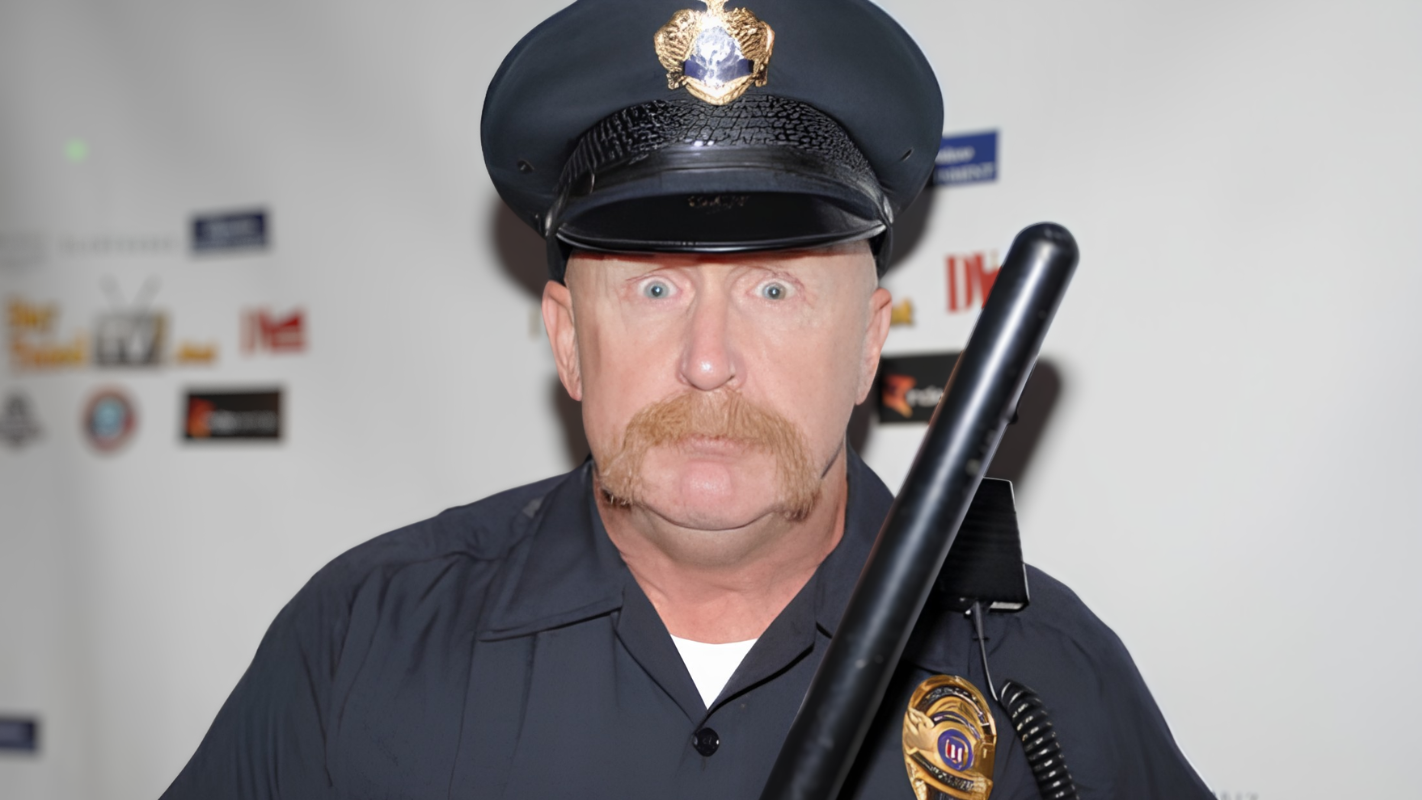
That agent set him up with auditions, and the wrestling background, the physicality, the sheer presence of the man, opened doors quickly. Burke was cast in police roles with particular consistency, a pattern his agent had anticipated from the beginning.
“He says, ‘I want you to get new pictures, and I see you as a police officer,'” Burke recalled. “‘I want a real tough-looking cop, but I also want a fun, donut-eating cop.'”
Burke went and shot new pictures, tucking his long wrestling ponytail up under a hat to manage the look. The formula worked. By his own estimate, he has played police officers in well over 1,000 roles across his acting career, a figure that seems almost impossible until you start looking at an IMDb filmography that stretches across decades with new entries appearing nearly every year.
The Wedding Singer: Adam Sandler, Billy Idol, and the Scene on the Plane
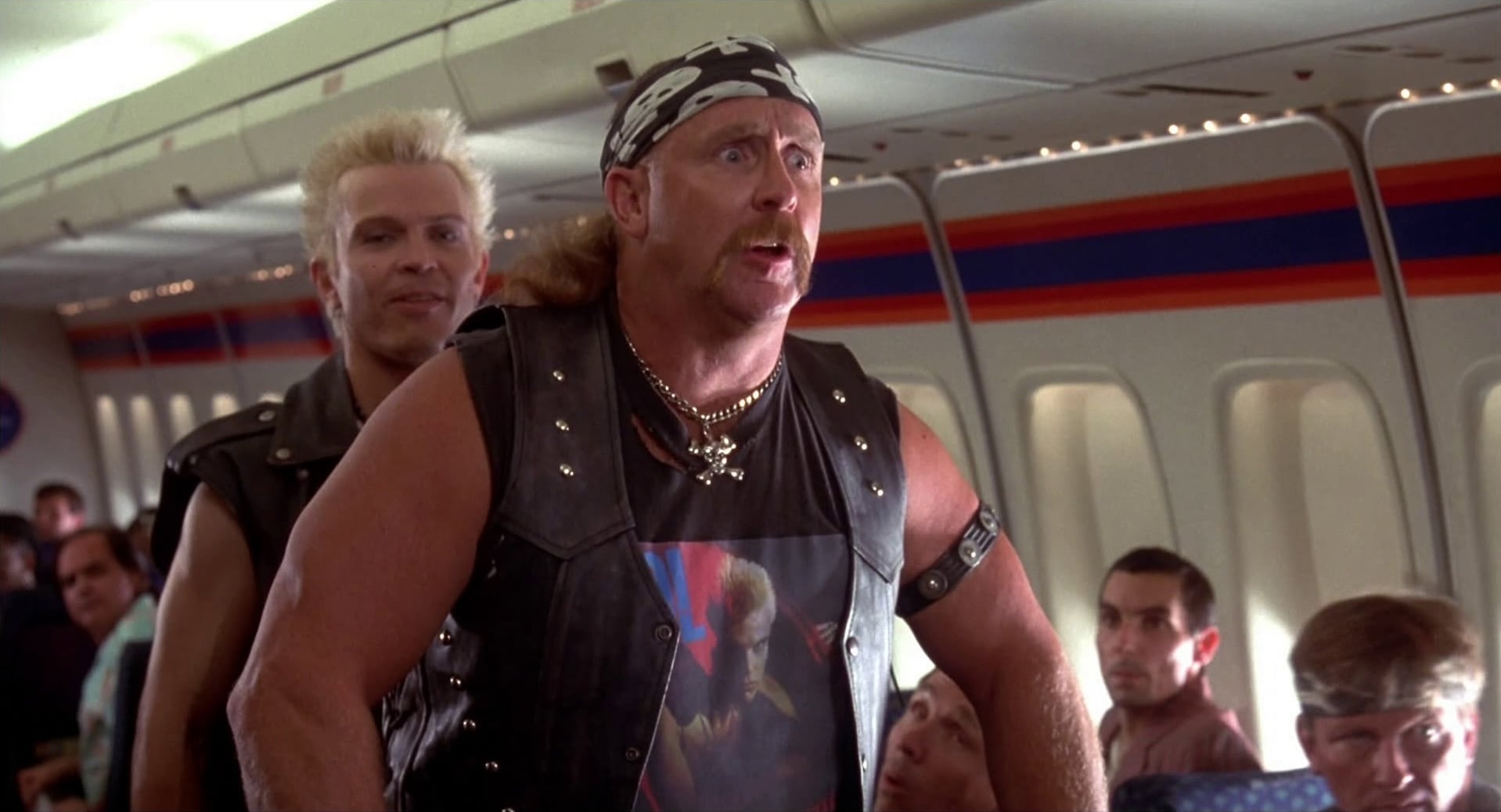
The call that changed everything came through an agent Al Burke was having trouble with at the time. The agent’s boss, not the agent himself, turned out to be the connection.
Burke auditioned, impressed the casting director enough to earn a callback, and then waited 28 days before hearing anything. When the call finally came, the news arrived with a courier that same night, dropping a script on his doorstep for a shoot beginning in two or three days.
“I’m reading the thing and it’s, ‘God, this is such a chick flick,'” Burke admitted. “Then I realize, ‘Oh, this is Adam Sandler and Drew Barrymore. Oh, this might be okay.'”
He showed up on set, walked onto the airplane set, and Adam Sandler turned to Billy Idol and said, “Hey, Billy, there’s your bodyguard.” Burke understood in that moment that something was happening that did not happen very often.
In The Wedding Singer, released in 1998, Burke plays the character Lennox, whose decisive physical intervention on a commercial flight gives Sandler’s character Robbie the opening he needs to reach Drew Barrymore’s character Julia. The moment Burke’s character acts, the story resolves.
His was not a supporting role in any passive sense. The film’s ending required exactly what he brought to it, and Sandler, who selected Burke personally after watching his demo reel, told him as much at the wrap party.
“I watched your reel and I picked you. You’re really funny,” Sandler told him.
Burke’s response was characteristically direct: “Dude, I’m not funny. You’re funny. I am not funny.” Sandler was not persuaded.
The wrap party itself became one of Al Burke’s most treasured memories of the whole experience. Billy Idol brought his full band and played a private concert for approximately 50 people. Burke stood arm’s length from a corner speaker for the entire set.
Adam Sandler, it turned out, was not simply a comedian who played guitar occasionally. He was a genuine musician, and Burke, standing close enough to hear every note clearly, found himself genuinely moved. He had not known Sandler’s work before the shoot, having quickly rented Happy Gilmore in preparation, but the performance at that wrap party filled in the picture entirely.
The film landed, and Burke’s face landed with it. He was made into a t-shirt alongside Billy Idol. VH1’s Where Are They Now? featured the scene repeatedly, and every broadcast generated a residual payment. Checks from The Wedding Singer have arrived every 13 weeks since the film’s release, some representing hundreds of dollars, some thousands, for nearly 30 years. Burke has described it, with perfect understatement, as a fun run.
The Heel Who Couldn’t Stay a Heel: Fans Rewrote His Character
For 25 years in professional wrestling, Al Burke was a heel. He built that heat carefully, maintained it diligently, and took pride in generating genuine dislike from crowds who were paying to see him fail. Then The Wedding Singer came out.
“The fans instantly changed me to a baby,” he said, referring to the babyface reaction he began receiving. “I tried my hardest to not go there, and they wouldn’t take it. They kept me as a heel.”
Crowds who recognized him from the film simply would not allow it. The character on the plane was too likable, the timing too perfect, the delivery too good. Burke had spent a quarter century convincing crowds to hate him, and one scene on a commercial aircraft with Adam Sandler and Billy Idol undid all of it.
He did not seem to mind much, in the end. The recognition that followed was real, and it translated directly into acting work that continued to multiply. The heel could not survive the movie. The movie, however, has survived everything else.
The Eminem Connection: Appearing Twice in Music Videos
Al Burke’s music video resume is, by any reasonable standard, extraordinary. He estimates he has appeared in somewhere between 700 and 900 music videos over his career, an almost incomprehensible volume of work in a format where most actors would consider a handful of appearances a noteworthy credit. Most of those appearances never reach the IMDb database, which tracks only a portion of the work he has actually done.
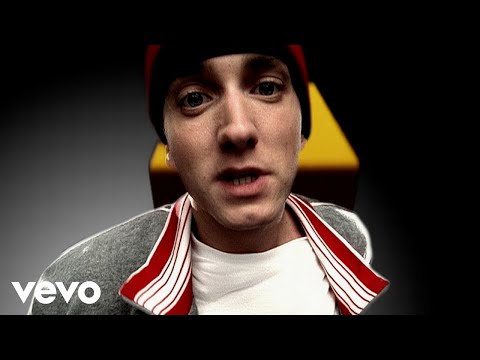
Among the more recognized names in that catalog is Eminem. Burke is credited in the official video for “Without Me” (2002), directed by Joseph Kahn, appearing in the kind of fast-cut, character-driven shots that defined that era of hip hop video production. He recalls working with Eminem a second time as well, one of many occasions when his size, his look, and his willingness to play a heavy made him the go-to choice for directors who needed a memorable face in the background.
His music video work represents, in some ways, the most free-form part of his Hollywood career, a space where his size, his physicality, his comfort in front of cameras, and his complete absence of self-consciousness made him useful in ways that were almost infinitely variable. He has seen perhaps a third of the videos he has appeared in, he estimates. The rest exist somewhere out in the world, playing on screens he has never watched.
Star Trek: Enterprise and the Comic-Con Circuit
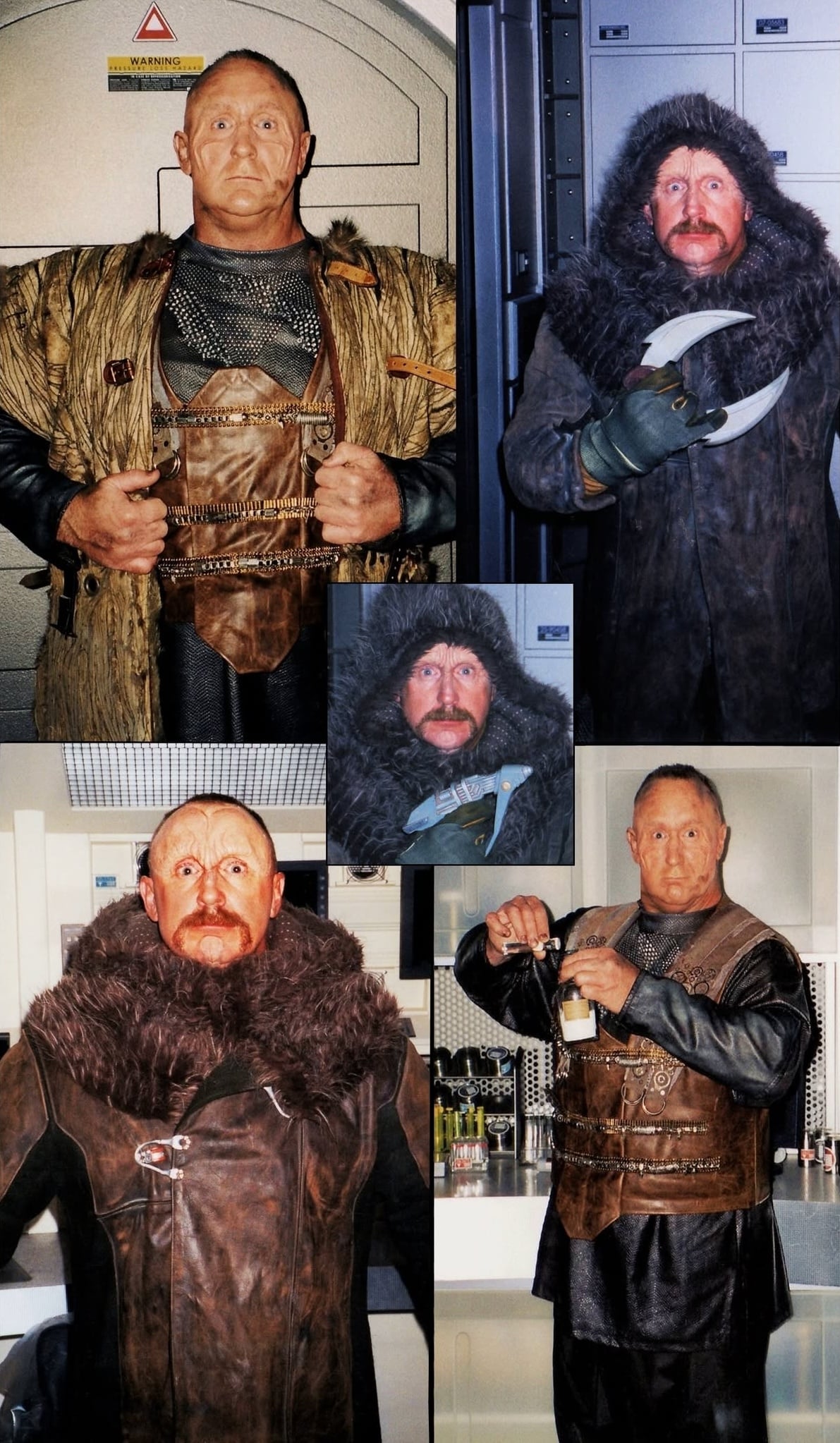
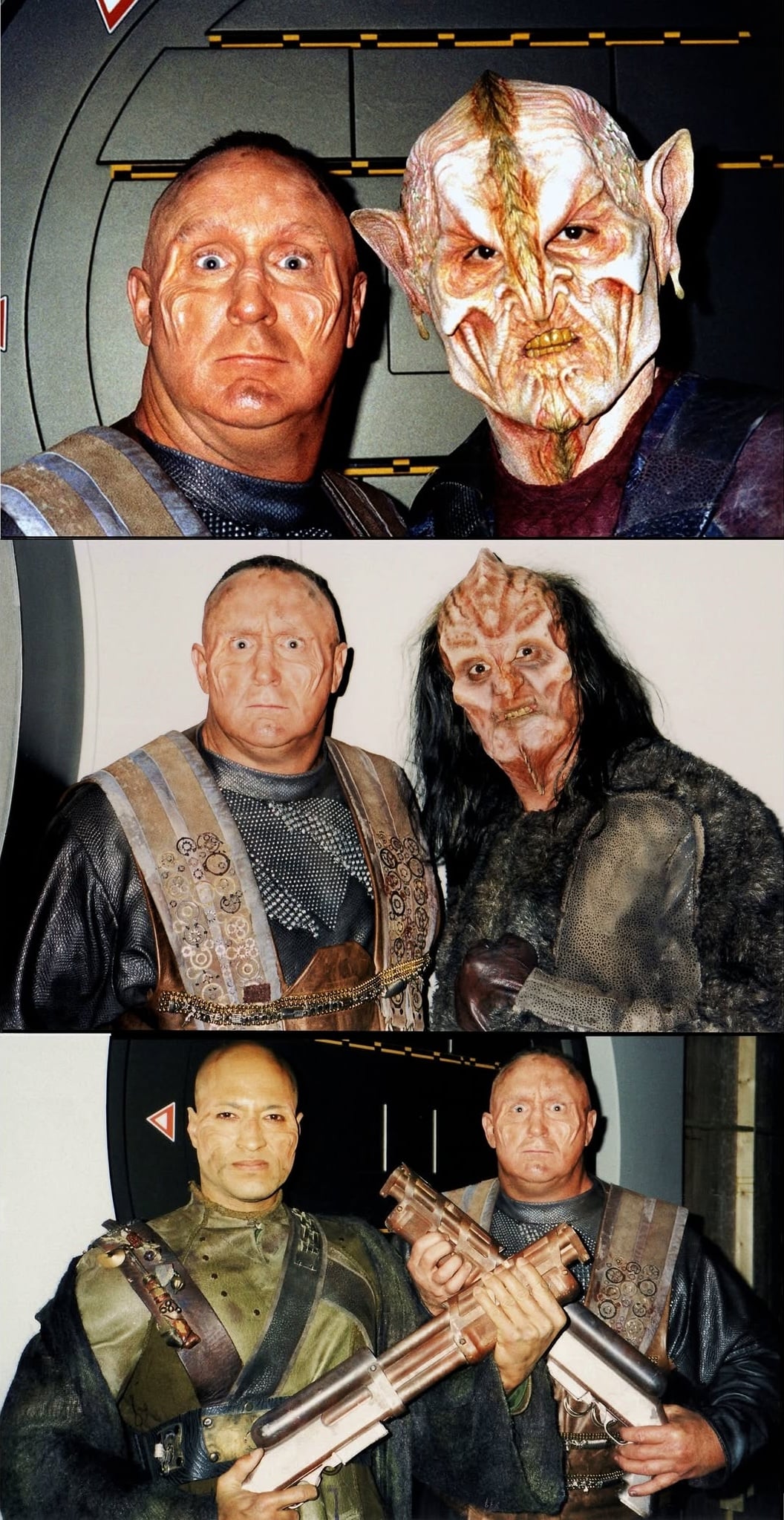
A friend passed along a tip about Star Trek: Enterprise, the UPN series that ran from 2001 to 2005, casting aliens for its production. Burke made the call. The response from the casting coordinator was less than enthusiastic, filled with the kind of hesitation that suggested she wasn’t sure he was right for it. He booked the job immediately.
Several months later, they called again. The difference in the second call was the opening line: “We need you to be creative. We’re inventing a new alien, and we want you to be it.”
“What bigger pat on the back can that be?” Burke expressed.
He appeared in two episodes of the series, a show he is quick to note was not among the franchise’s finest hours, while also being quick to note that a paycheck is a paycheck and that he grew up watching the original series with William Shatner and Leonard Nimoy. Getting to be part of the Star Trek universe at any level meant something.
The Star Trek appearances produced an unexpected dividend years later. Burke did what he usually does on a set: wander around with a camera and photograph himself in various locations, including the sick bay set, where he posed with a beaker and a test tube as if conducting alien experiments. He also photographed himself with three different prop weapons from the production. When he began working the Comic-Con circuit, those photographs became genuine collectible material, the kind of documentation that fans of the franchise value highly.
He had attended five or six conventions at the time of our conversation and was actively pursuing a Trekkie-specific convention where the weapon photographs and his on-screen appearances would carry particular significance.
The Punky Character, the Clown Motel Films, and Building a Horror Franchise
Among the more distinctive threads in Al Burke’s acting career is his recurring character Punky, a horror franchise figure who appears in the Clown Motel film series. The role has required genuine creative collaboration, including three different masks made by a special effects artist who has worked with Burke across multiple productions.
“The first one was actually a two-piece mask,” Burke explained, “but they had so much trouble gluing it around my mustache and stuff that didn’t work. So then we did two pullover masks, and I have actually have both of those masks in my possession, with the whole Punky outfit.”
The character’s presence in the franchise grew from careful negotiation with the filmmakers over intellectual property rights, making sure no one would face legal exposure for using Punky in their productions. Those conversations paid off. Burke appeared in Clown Motel 3 and was preparing to film his fourth installment at the time of our conversation.
The horror genre has proven a natural fit. The physicality that made Burke a useful villain in dozens of other productions translates well to a format where menace needs to read immediately without lengthy explanation. Punky reads immediately.
Stunt Work, Weapons Mastery, and the Halt That a Tragedy Brought
Beyond acting, Al Burke built a parallel career in stunt work that accumulated approximately 50 credits of its own, a number he notes exceeds what most working actors ever achieve on the performance side. His stunt work has included precision driving in police vehicles, a specialty that requires maintaining a clean driver’s license as an absolute professional requirement. He does not drink and drive, he says, because losing that license could eliminate the majority of his annual income in a given year. That is a concrete professional calculation that cuts through any temptation decisively.
He also developed expertise as a weapons master, the film and television industry’s term for the specialist responsible for the safe handling, storage, and use of prop and functional firearms on set. That work came to a halt following the tragic on-set death of cinematographer Halyna Hutchins in New Mexico in October 2021 during the production of Rust. Burke, like others in the weapons community, had strong views about what had gone wrong and why it should not have happened under proper California-standard protocols. He has reduced his weapons work significantly since that incident, maintaining his collection but declining most requests. The risk calculus shifted in a way he was not willing to ignore.
Gordon Ramsay, King of Queens, and Staying on the Screen for Decades
Al Burke’s television career runs through decades of American prime-time programming, touching properties across virtually every network and genre.
His appearance on Hell’s Kitchen in 2016 as a precision rider, escorting an armored vehicle containing high-end steaks to the kitchen, resulted in a brief but genuine interaction with Gordon Ramsay, who came to the green room to thank the riders personally. Burke’s main disappointment was that the catering on set, provided by an outside contractor, was not Ramsay’s own cooking. He has since done children’s episodes of cooking competitions as well, which presented the opportunity to taste and judge young competitors’ dishes, a considerably more pleasant assignment.
His time on The King of Queens was part of a period when he deliberately built credits through whatever means were available, using agencies that specialized in placing actors in background and featured roles across the major productions filming in Los Angeles at any given time.
The Wild West Chronicles in 2021 gave him two episodes as a wild man, a role that allowed him to deploy his full Western wardrobe, which includes a complete period-appropriate outfit, multiple holsters, and a variety of period prop pieces. He has appeared in Alabama police recreation segments for documentary programming, working alongside the actual officer whose incident was being recreated and receiving technical direction from the man who had lived it.
He appeared in a Tim Robbins-connected wrestling project in 2023 and has work he cannot yet discuss under active production at the time of our conversation, including a film called Unbelievable in which he plays a deputy sheriff dealing with the consequences of roughing up the sheriff’s brother.
The through-line across all of it is the philosophy he articulated to me with the kind of directness that comes from having actually applied it over decades.
“I learned from a director and he made a statement: ‘He hasn’t worked since I worked with him last, so that shows me he’s not a working actor.'”
Burke took that in and made a decision. He would take every job, paid or not. Student films, commercial work, one-line appearances, featured roles, stunt driving, weapons work, music videos he might never see. All of it. Because a working actor keeps working, and the IMDb page that fills up over years is the most persuasive audition tape that exists.
The Philosophy of the Hustle: Wrestling and Hollywood Run the Same Engine
Al Burke conducts seminars on how to build a sustainable career in the entertainment industry, and the central lesson he delivers comes directly from his parallel experience in professional wrestling. The two worlds run on the same fuel, and the people who do not understand that tend not to last in either of them.
“Do you understand that there’s people all over the world watching what we do, and they wish they could do it just one time, and we can do it every day if we choose?” Burke asks his seminar audiences. “How fortunate are we? We are very blessed.”
He is equally direct about the failure mode he has watched derail careers in both industries. In wrestling, it was the performer who sat by the phone waiting for Vince McMahon to call, convinced that the next gimmick was good enough that the call was inevitable. In Hollywood, it was the actor who booked one decent credit and then sat back expecting the momentum to sustain itself without additional effort.
“Dude, you’re gonna sit there forever, ’cause he ain’t calling you.” The insight applies with equal force in both directions. You find the work. You build the relationships. You take the job that does not pay because the filmmaker who offered it comes back years later when they have a budget, and they come back specifically to you because you showed up when it did not benefit you to do so.
The through-line between his wrestling career and his Hollywood career is not natural ability, though Burke had that in abundance. It is the understanding that showing up, being reliable, building a reputation as the person who does what they say they will do, and staying ready for the call is the actual work. The performances are just the proof.
The Cauliflower Alley Club, the Reel Award, and What It Means to Make People Look Good
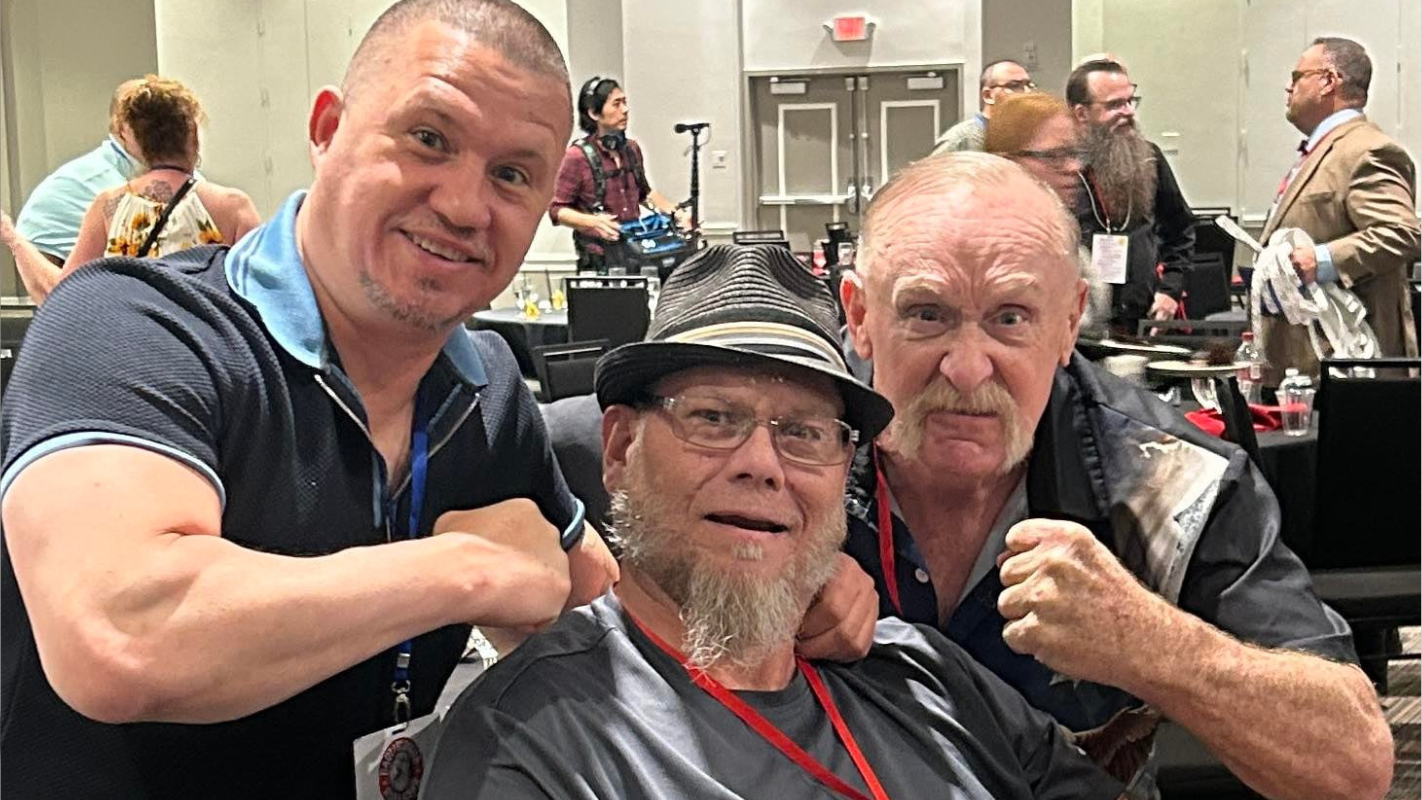
The Cauliflower Alley Club is an annual gathering in Las Vegas that brings together wrestlers, boxers, and stunt performers from across the history of the business, a reunion built around honoring the people who did the work rather than only the people who became household names. Its Reel Award recognizes professional wrestlers whose contributions to film and television have been exceptional. Burke received the award, and the context in which it was presented carries considerable weight for anyone who follows both industries.
“Friends of mine came to me and says, ‘You’ve done a lot in Hollywood,'” Burke recalled. “‘You realize that, of all the past recipients of the Reel Award from the CAC, the number one person is Judo Gene LeBell?’ And Judo Gene had what was it, 180 credits on there. Number two was Rowdy Roddy Piper, and Hot Rod had 150 parts. And they come to me and go, ‘You’ve got more than both of them. So that’s why we’re gonna put you in there.'”
Burke’s reaction was genuine surprise. He had not been tracking the numbers in any competitive sense. He had simply been working. When the reality landed, it carried the weight of the company he was now in. Judo Gene LeBell was one of the most legitimate combat sports figures the wrestling business ever produced, a man whose credentials in judo and submission fighting ran far deeper than any persona. Roddy Piper was among the most naturally gifted performers of his or any generation in professional wrestling. Both had made serious impressions in Hollywood. Burke had made more of them.
The reunion is also where the business settles its old debts of memory. Colonel DeBeers made his final appearance there knowing his time was short, showing up specifically to say his goodbyes to people he had traveled thousands of miles with. Dusty Rhodes was expected at one reunion Burke was looking forward to, matches on his mind, old times to revisit, but Dusty passed away in June 2015 before that reunion happened.
“I had some good matches with Dusty,” Burke said. “I was looking forward to seeing him again. And before it came around, Dusty passed away. I’m like, ‘God dang it.'” It is why Burke never treats the annual trip as optional. If you miss it, somebody you want to see one more time might not be there the next time around.
He drives his own car, chooses his own table, stocks his own food and beverages, and makes the trip regardless of what the reunion’s official organization decides to charge for the privilege of a reserved seat.
The Last Conversation With Roddy Piper
One of Al Burke’s most quietly moving memories involves the last time he spoke to Roddy Piper, approximately a week or ten days before Piper died in July 2015.
“We were talking about the business,” Burke said. “I go, ‘Hey, dude, I was just a jobber.’ He goes, ‘No.’ He goes, ‘You were the guy that came out and made us look good. So thank you for that.'” Burke thanked him. They said goodbye. And then Piper was gone.
That exchange sits at the heart of what Burke has spent his career believing about the work of enhancement talent in professional wrestling. The word “jobber” carries a weight that some men find unbearable. Burke has never found it so. He has done seminars on exactly this point, telling people who want to complain about the label that they are looking at it wrong.
“I’m out there, I’m making a living. I paid for my wrestling school in the first year of working for the WWF.” The work was real. The contribution was real. Roddy Piper knew it, and he said so.
My friend Bill Pierce carries the same attitude, and I have written about his journey in these pages as well. These men who worked underneath the names, who took the falls that made the stars look unstoppable, are the ones who genuinely understood what the business required. Anyone who spent time in a World Wrestling Federation locker room in that era and came out the other side with those memories has something that no amount of revisionism can take from them.
Al Burke Today: Still Working, Still Moving, and Heading to Las Vegas
Al Burke is, by his own description, retired. He collects his SAG pension and his Social Security, and those two income streams cover his bills without requiring him to accept work he does not want. The work he does take now is purely for the enjoyment of it, and the money from those jobs goes directly into discretionary spending, including the annual trip to Las Vegas for the Cauliflower Alley Club.
“I don’t need to work this hard anymore,” he said. “And I’m retired now, so I’ve got my SAG pension and I’ve got my Social Security, and I can pay all my bills with that. I’ve got no problems. So I don’t need to do anything else. I just love to do it.”
The film Unbelievable has him playing a deputy sheriff who must account for his actions to the sheriff whose brother he roughed up. He has other projects he cannot discuss yet. He still receives residual checks from The Wedding Singer, arriving four times a year, continuing a run that began in 1998 and shows no sign of stopping. The franchise has outlasted his wrestling career, his wrestling school, and several entire generations of professional wrestlers who came up around him.
I asked him if he watches his own work much. He acknowledged that many times he cannot find it, particularly the music video appearances, of which he estimates he has personally seen perhaps a third. The rest are out there in the world, playing on screens in living rooms and on phones and in the background of bars and restaurants, and Al Burke is in them, doing what he has always done, making other people look good.
That is the business, on both sides of the curtain. Wrestling and Hollywood run on the same engine. You learn the game, you put in the work, you build the relationships, and you stay ready for the call. Burke has been taking those calls for 37 years on one side of the entertainment business and 35 on the other. The man Adam Sandler personally selected to stand behind him on a commercial aircraft alongside Billy Idol understood something that most people in both industries spend careers trying to figure out. Show up. Do the work. Be the best road man in the business.
The rest, as Burke has demonstrated across a career that now spans the better part of a century of combined entertainment experience, has a way of taking care of itself.
Thank you, Al, for sitting down with us for this conversation. Until next time, brothers and sisters. And always remember: our wrestling history is gold!
These stories may also interest you:
- Chris Michaels (Bill Pierce): The WWF ‘Jobber’ Who Kept Going
- Mr. Olympia Unmasked: Secret Story of Jerry Stubbs
- Wrestling’s Bloodline: Sam Fatu on Family, Tragedy, and Legacy
Download PDF Version
Get the complete article as a formatted PDF for offline reading.