Author:
 Turn on professional wrestling in the early 1950s, and you might see a 42-inch champion balancing on his head or four little people wrestlers threatening to steal the show from the heavyweights. Their athletic skill, comic timing, and sharply drawn characters made them an attraction promoters wanted from Chicago and New York to California. But the biggest stars were only part of the story. Behind them was a constantly traveling cast of cowboys, farmers, foreign villains, and performers with Hollywood connections. These 21 wrestlers helped shape wrestling’s first television boom, and some of their most remarkable stories unfolded far from the ring.
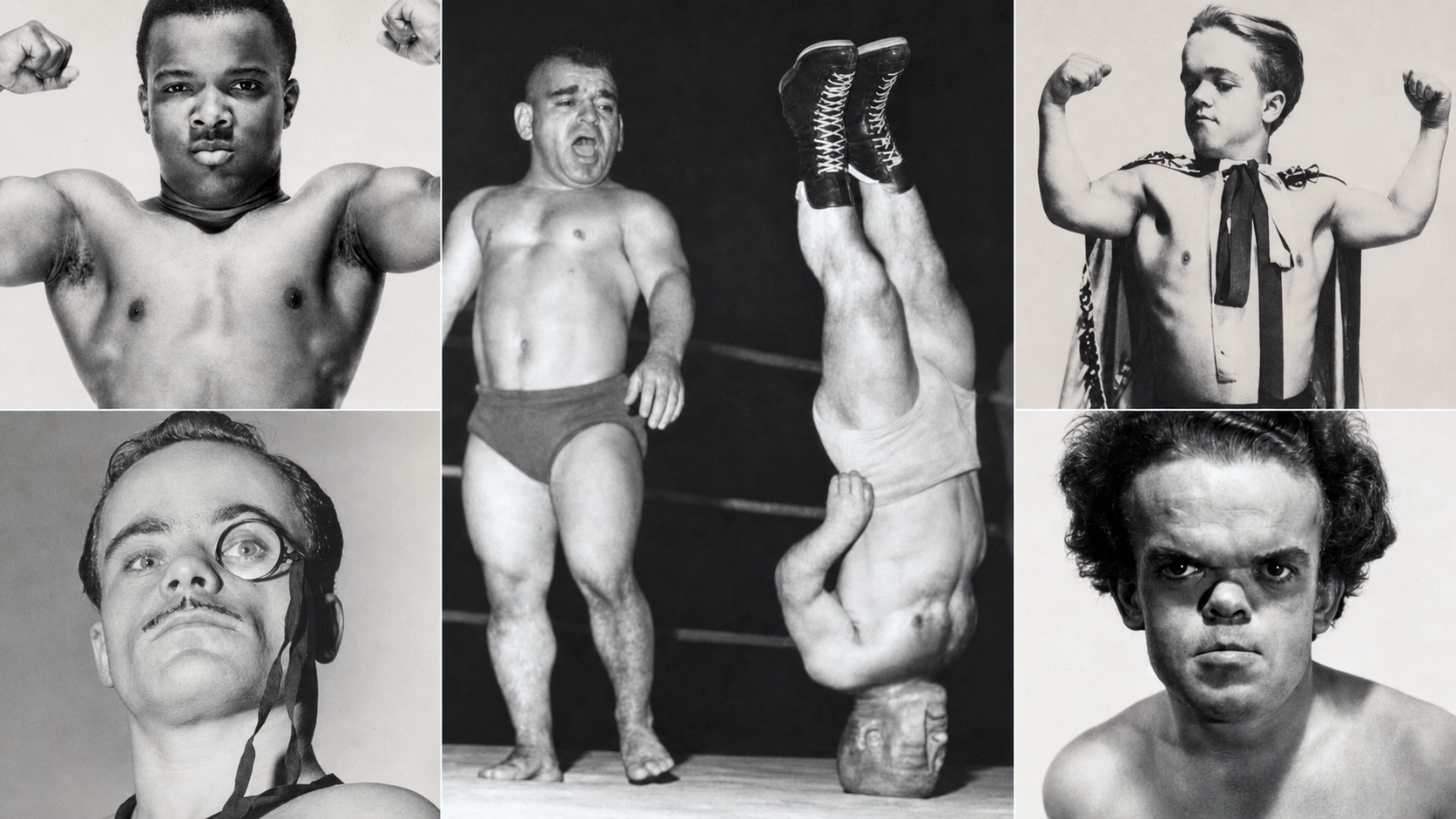
A Note on Language: These performers were historically billed as “midget wrestlers,” terminology that survives in championship names, match records, and contemporary reporting. Today, many people with dwarfism prefer “little people” or simply their names. This article uses period terminology when discussing historical billing and titles, such as the NWA World Midget’s Championship, and uses “little people” elsewhere.
How Television Built the Little People Wrestling Circuit
As television expanded professional wrestling’s audience in the late 1940s, Jack Britton helped build a touring operation that brought little people wrestlers to promoters across North America. A wrestler himself during the 1940s, Britton became a central figure behind the scenes, recruiting performers and keeping them moving from one territory to the next.
Born Gabriel Acocella, Britton wrestled under an Irish ring name before becoming a promoter and road agent. He worked with Harry Light and Bert Ruby, whose Detroit office had television exposure and connections within the expanding National Wrestling Alliance. Operating between Detroit and Montreal, Britton helped recruit, train, and book the wrestlers who made the circuit work.
His son, future wrestler and promoter Gino Brito, later recalled that his father had as many as two dozen performers in the stable. The younger Brito helped shuttle groups between cities. One booking might take them to Vince McMahon Sr.’s New York territory; another could send them to Philadelphia, Minneapolis, Chicago, or somewhere in Canada. That constant movement put the performers on prominent cards while allowing promoters to present them as a special attraction from one market to the next.
Sid Feder’s Wrestling Fan’s Book, first published in 1952, observed that little people wrestlers had already gotten “into the act” and were offering “performances which were on a par with their normal-size counterparts.” Their appeal went beyond comedy. These were wrestlers who understood holds, timing, pacing, and how to work a crowd.
Newspaper publicity credited Sky Low Low with winning a tournament featuring 30 little people wrestlers in Paris in 1949. The event’s details and any official NWA sanction remain unconfirmed, but the surviving title history establishes that he was already being billed as world champion in the United States and Canada by February 1950.
The touring attraction did not depend on establishing a local championship in every territory. In Texas and elsewhere, these wrestlers could appear as special guests without a local belt at stake. World championship billing traveled with the performers, and different groups sometimes recognized different champions. Their value to a promoter came from the match and its personalities as much as any title.
At the heart of the circuit was a quartet that gave promoters a ready-made attraction: two villains against two fan favorites, blending athletic skill with well-timed comedy. Their bookings took them to Chicago, New York, Philadelphia, California, and throughout Canada. They were on the road almost constantly, and their stories are where this list begins.
1. Sky Low Low: The Champion Who Balanced on His Head
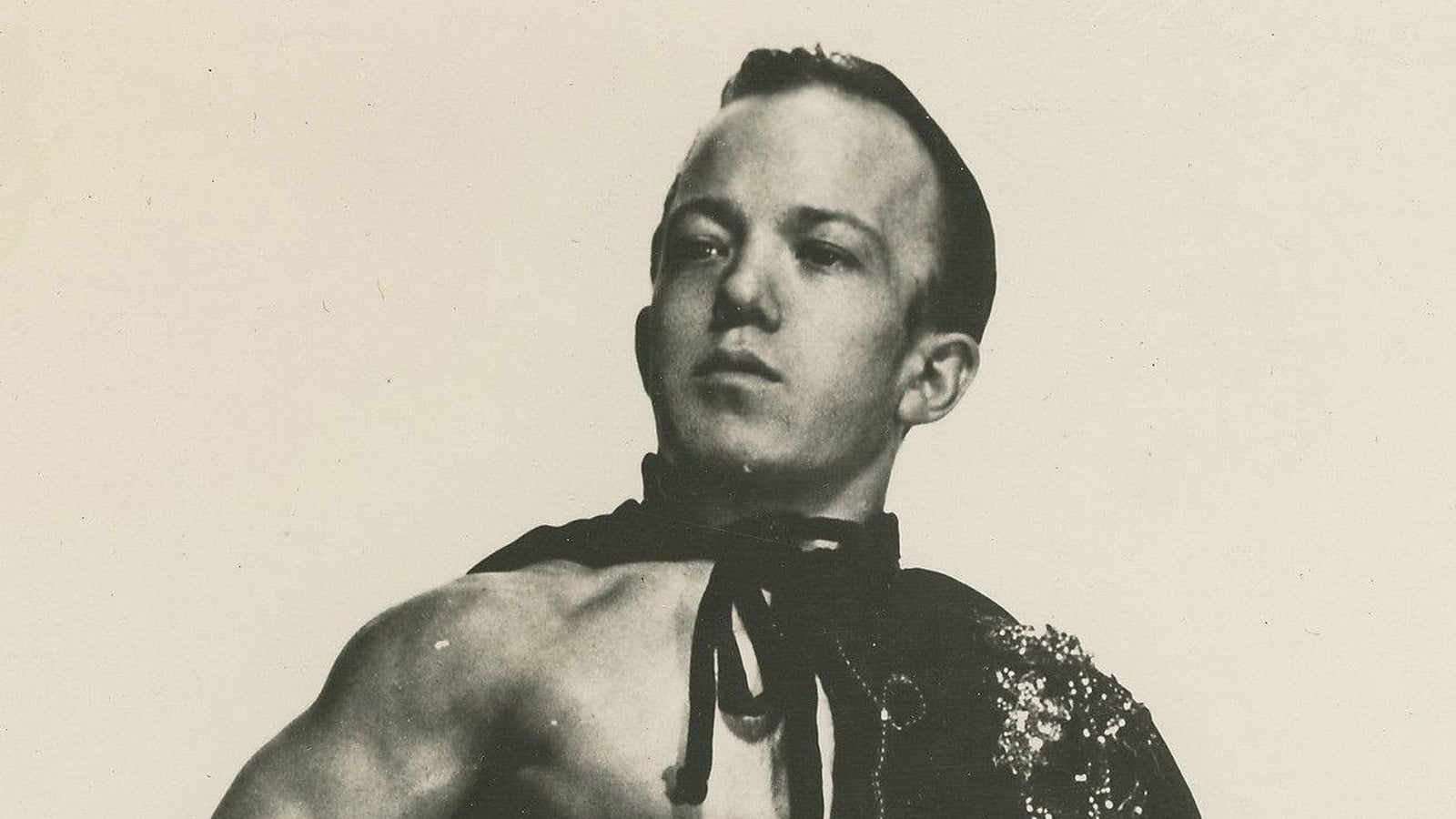
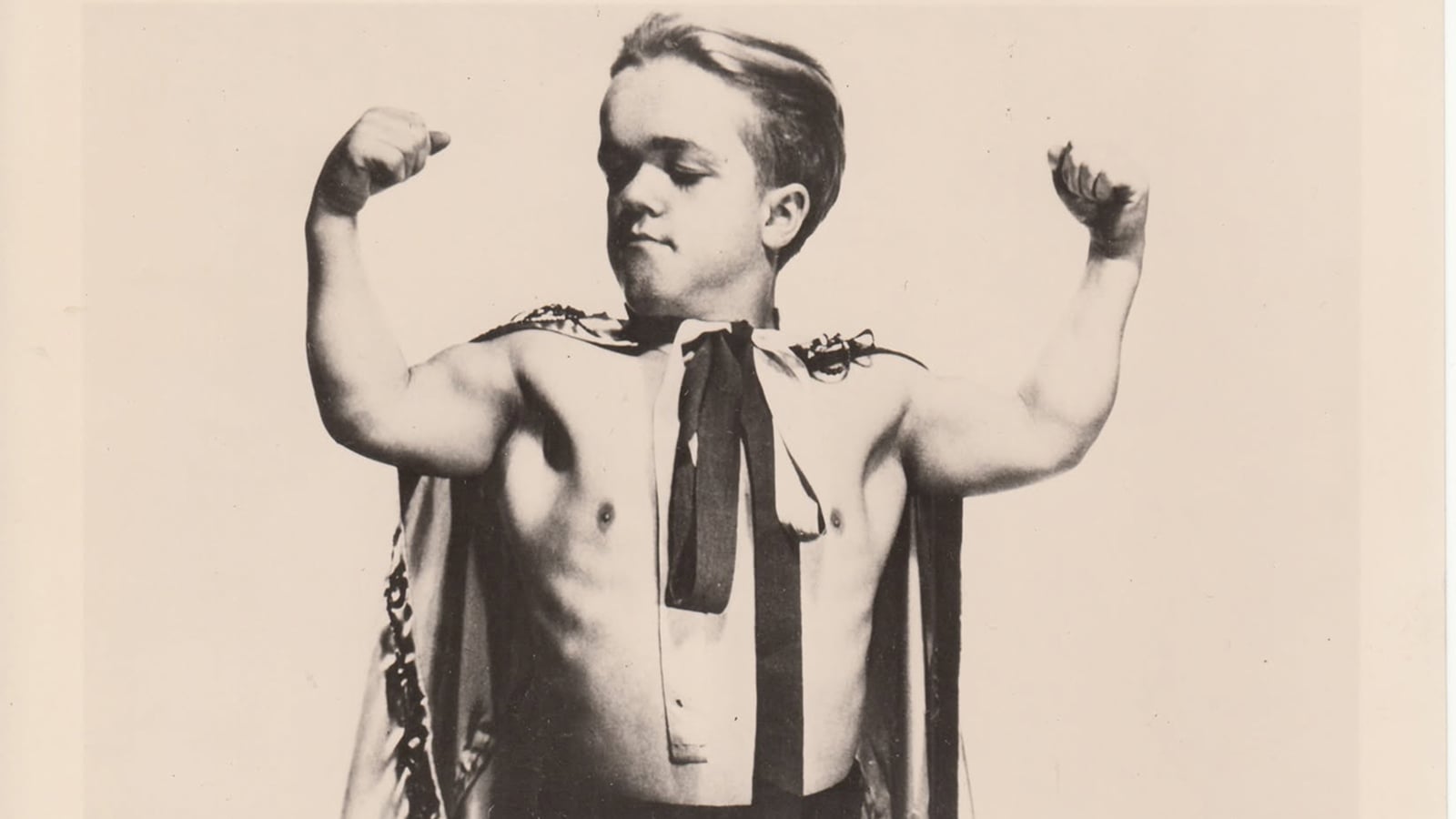
Few names became more closely associated with little people wrestling than Sky Low Low. Born Marcel Gauthier on July 21, 1928, in Montreal, Canada, he stood about 42 inches tall and was billed near 86 pounds. His name reversed that of Sky Hi Lee, one of the tallest wrestlers working at the time, giving audiences a joke they could understand before the bell.
Sky Low Low worked as a villain and held versions of the world championship several times. The disputed 1949 tournament story became part of his championship billing, while newspapers in the United States and Canada were already advertising him as champion by February 1950. In a business where separate touring groups could recognize separate titleholders, he became one of the belt’s most recognizable representatives.
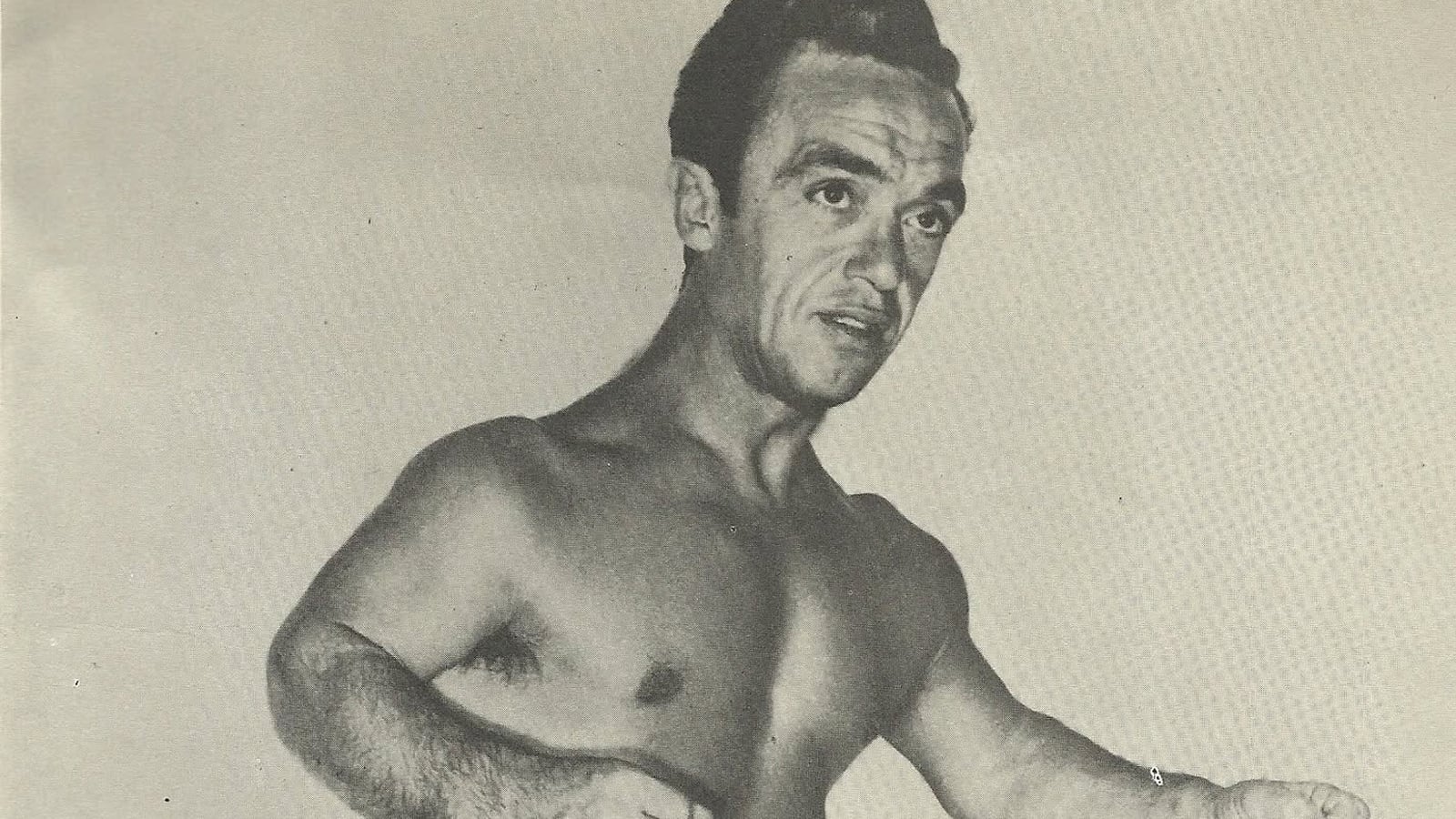
He backed up that billing with a fine dropkick and a remarkable balancing act: standing directly on top of his head without using his hands. A photograph of the maneuver, shown in the featured image above, circulated in wrestling magazines. The image may also have appeared in Life, although that appearance remains unconfirmed. The image captured his appeal in a single frame: athletic, unusual, and immediately memorable.
Another promotional hook was his standing offer of $100 to any little person wrestler who could defeat him in a two-out-of-three-falls match. Sky Low Low remained active long after the original 1950s boom, working into the 1980s. He passed away on November 6, 1998, at age 70 and entered the Professional Wrestling Hall of Fame in 2002.
Enjoying this story? Own it forever.
No ads. No interruptions. Download the full story as a beautifully formatted PDF at just $0.99.
Get My Copy — $0.992. Little Beaver: A Four-Foot Version of Don Eagle
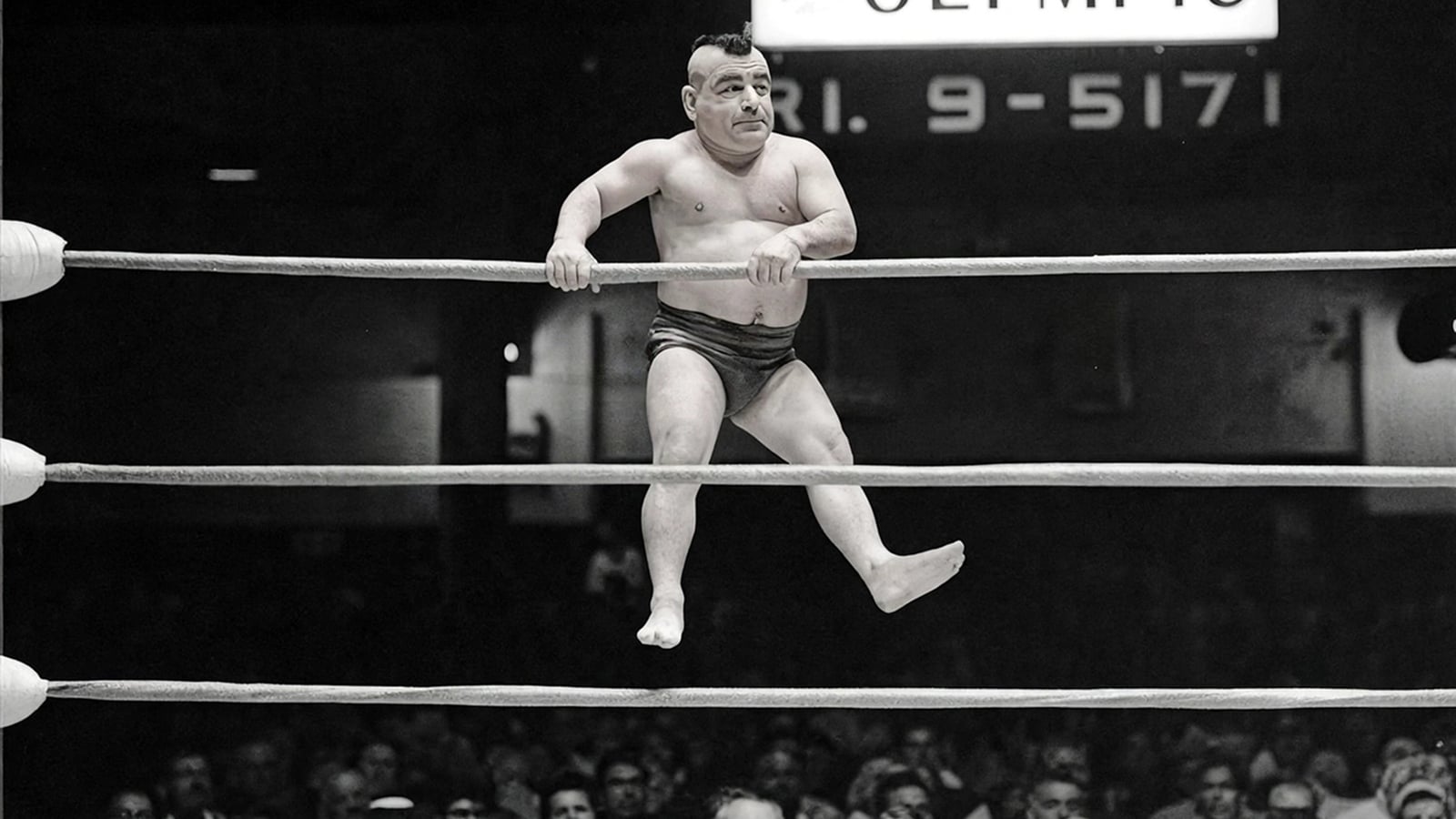
With his feathered presentation, quick movement, and fan-favorite role, Little Beaver brought to mind a four-foot version of Chief Don Eagle. The resemblance was in the character and its appeal, not a claim that he copied Eagle move for move.
Born Lionel Giroux on January 14, 1934, in Quebec, Little Beaver began wrestling in 1949 at age 15. Billed at roughly 4 feet 4 inches and 60 pounds, he performed a Native American character and combined acrobatics with fast, well-timed comedy.
He became a natural opponent for Sky Low Low. Later accounts report that the pair could command as much as 15 percent of a live gate, although that should not be read as a standard arrangement at every booking. Gino Brito offered a more personal glimpse of Beaver’s success, recalling in Sports Illustrated that he earned six figures and drove a Ford Thunderbird in his prime.
Little Beaver was also recognized as world champion at different points and wrestled for nearly four decades. He entered the Professional Wrestling Hall of Fame in 2003 and the NWA Hall of Fame in 2012. He passed away from chronic emphysema on December 4, 1995, at age 61.
3. Lord Littlebrook: The English Aristocrat With Circus Timing
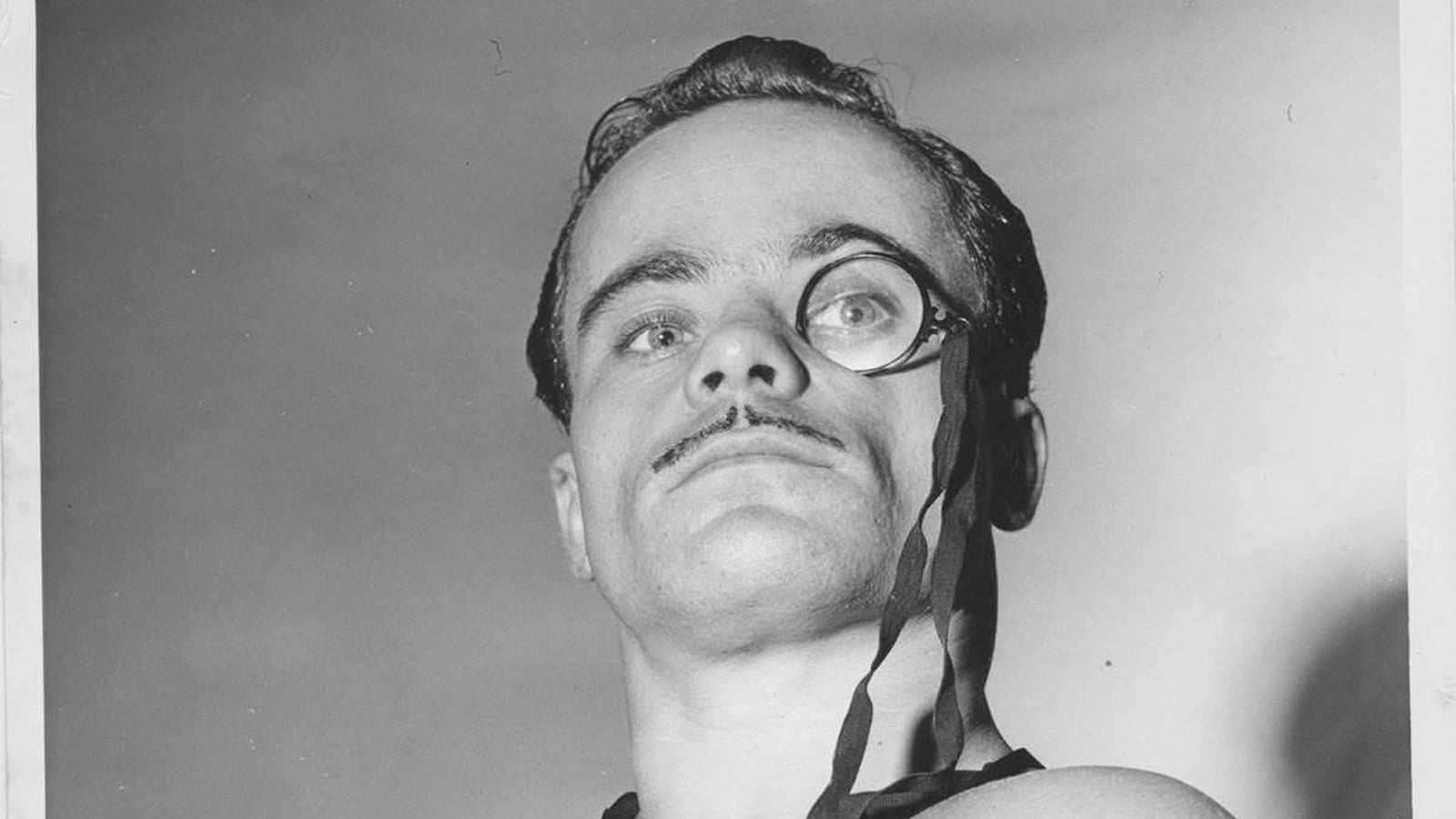
Lord Littlebrook’s aristocratic character concealed a working-class upbringing and years of circus experience. Born Eric Henry Edward Tovey on January 3, 1929, in England, he joined the circus at 14 and performed as an acrobatic clown. When the circus closed during an American tour, a friend suggested professional wrestling. Tovey turned his balance, timing, and physical comedy into a long second career.
Accounts of his debut name either Major Tom Thumb or Irish Jackie as his first opponent. Littlebrook soon became a fixture on the traveling circuit, carrying his English-lord persona into territories far beyond his adopted American home.
He worked in New York, Georgia Championship Wrestling, and many other territories, and was billed as world champion from the 1960s onward. His circus training gave him the physical control to make comedy look effortless while keeping pace with the wrestling around it.
In later years, Littlebrook became one of the division’s most influential teachers. From a base in St. Joseph, Missouri, he trained little people and full-sized wrestlers, including Little Tokyo, Colonel DeBeers, Butch Reed, and Betty Niccoli.
Lord Littlebrook entered the Professional Wrestling Hall of Fame in 2004. He passed away on September 9, 2016, at age 87.
Love Pro Wrestling Stories? Add us as a Preferred Source on Google so our stories always show up first for you. It only takes one click.
Add Us on Google4. Fuzzy Cupid: The Other Bad Guy in the Famous Quartet
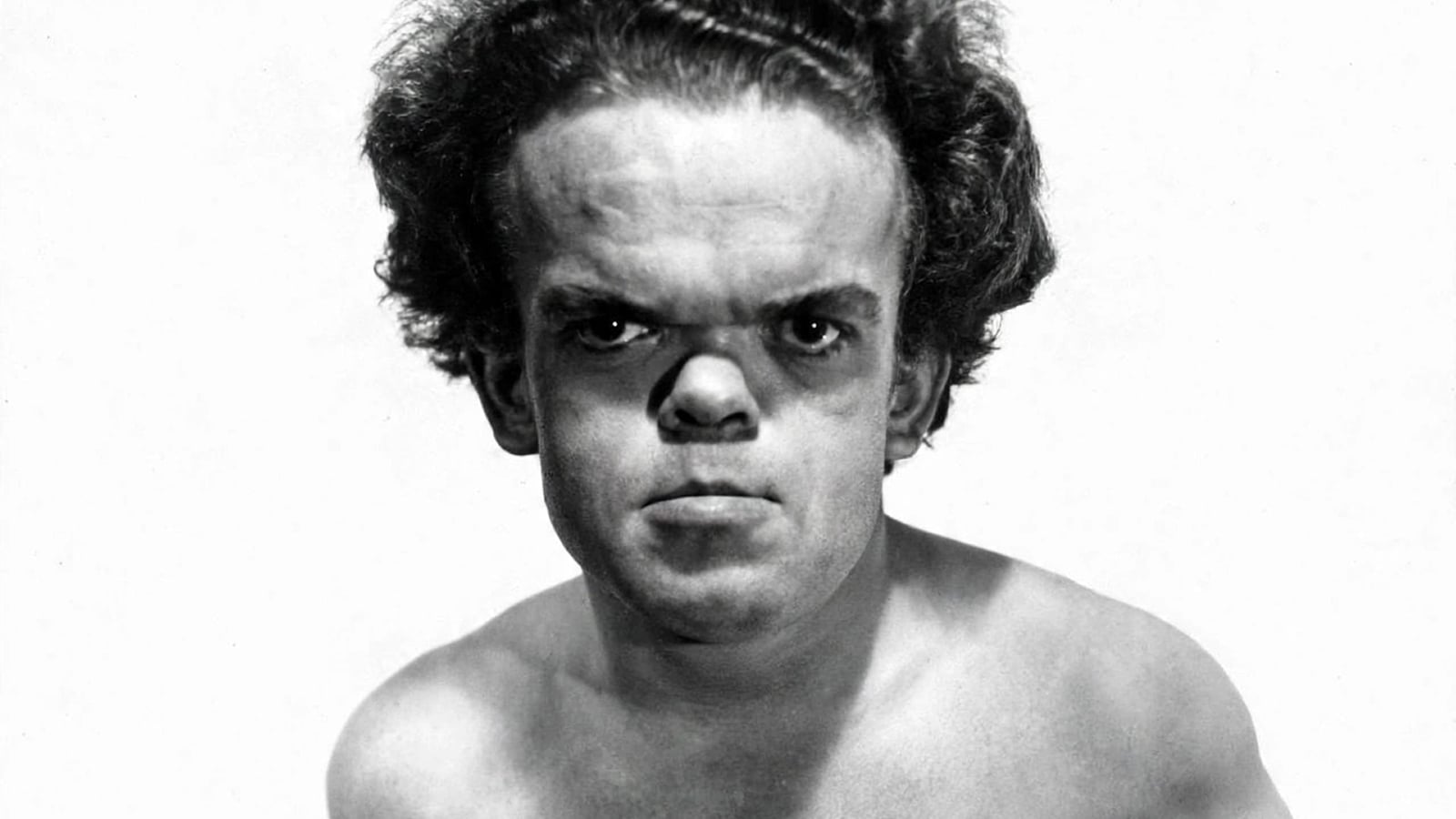
Fuzzy Cupid was the other bad guy in the famous quartet. Pairing him with Sky Low Low against Little Beaver and Lord Littlebrook gave promoters a ready-made tag match: two clear villains, two popular favorites, and four performers who understood how to bring the audience along.
Born Leon Stap on September 24, 1928, in Newport, Rhode Island, Cupid decided to enter wrestling after seeing a little people match in Galveston, Texas. On a promoter’s advice, he went to Detroit and trained with Jack Britton and Bert Ruby. He was working professionally by the early 1950s.
Cupid toured Ontario with the other core stars and later appeared for the World Wide Wrestling Federation. His villain role could produce genuine hostility. A 1959 profile in Man’s Magazine by Stanley Weston reported that Stap endured a fractured vertebra and a four-inch blade wound as a result of encounters with hostile fans.
The same profile described a difficult childhood. A paralytic illness reportedly kept Stap hospitalized for six years and delayed his entry into public school until age 17. Before wrestling, he had played Grumpy in a touring production of Snow White.
Fuzzy Cupid died on April 26, 1979, at age 50, reportedly following an undisclosed illness. Behind the mischievous ring character was a performer whose experience extended well beyond the ropes.
With hundreds of amazing Pro Wrestling Stories to dive into, where do you start? Get the inside scoop, join our exclusive community of wrestling fans! Receive 10 hand-picked stories curated just for YOU, exclusive weekly content, and an instant welcome gift when you sign up today!
5. Pee Wee James: Jack Britton’s Montreal Pioneer
Pee Wee James was present near the beginning of Jack Britton’s touring enterprise. Born Raymond Sabourin in Montreal, he entered professional wrestling in 1948 at age 15. He initially worked under his real name and appeared for Larry Kasaboski’s Northland Wrestling Enterprises across eastern and northern Ontario as early as 1949.
Lord Littlebrook later named James, Tiny Roe, Sky Low Low, and Major Tom Thumb among the first little people wrestlers to gain wide recognition. James worked as a villain, but friends and family remembered a warm personality away from the ring. A 1962 profile called him the comedian of the troupe, noting his bow-legged strut, red beard later in life, and occasional tenor singing.
James toured Canada, the United States, Japan, and Mexico. He married Rita Labrosse in 1965, and they remained together for 43 years.
After two decades in the business, James retired in 1968. Accumulated injuries took their toll, and spinal problems later required him to use a wheelchair. He passed away in Ottawa on September 16, 2008, at age 75.
Real Autographs. Only Few Remain.
These are hand-signed originals sold directly by Pro Wrestling Stories. Once they sell out, they are gone for good.
Own a Piece of Wrestling History
-

Fred Ottman Signed WWF 8×10 Photo Autograph (Typhoon)
$35.00 Add to cart -
Tito Santana Signed WWF 8×10 Photo Autograph
$35.00 Add to cart -
Fred Ottman Signed WCW 8×10 Photo Autograph (The Shockmaster)
$35.00 Add to cart -
Johnny Rodz Signed WWF 8×10 Photo (wrestling Andre the Giant)
$30.00 Add to cart -
Johnny Rodz Signed WWF 8×10 Photo Autograph
$30.00 Add to cart -
D’Lo Brown Signed WWF 8×10 Photo Autograph
$30.00 Add to cart -
Ron Simmons Signed WWE 8×10 Photo Autograph
$40.00 Add to cart -
Kevin Sullivan Signed 8×10 Photo Autograph (Deceased Legend)
$45.00 Add to cart -
Vince Russo Signed 8×10 Photo Autograph
$35.00 Add to cart -
Leaping Lanny Poffo Signed WWF Turnbuckle Pose 8×10 Photo Autograph (Deceased Legend)
$45.00 Add to cart -
Marcus “Buff” Bagwell Signed WCW 8×10 Photo Autograph
$30.00 Add to cart -
Nikolai Volkoff & Boris Zhukov Signed WWF “The Bolsheviks” 8×10 Photo Autograph (Deceased Legend)
$60.00 Add to cart -
Jimmy Hart Signed WWF 8×10 Photo Autograph (pictured with Bret Hart & Jim Neidhart)
$35.00 Add to cart -
Koko B. Ware Signed WWF 8×10 Photo Autograph
$45.00 Add to cart -
Sunny (Tammy Lynn Sytch) Signed WWF 8×10 Photo Autograph
$35.00 Add to cart -
Sunny (Tammy Lynn Sytch) Signed WWF 8×10 Glamour Photo Autograph
$35.00 Add to cart -
Sunny (Tammy Lynn Sytch) Signed 8×10 Photo Autograph
$35.00 Add to cart -
Hornswoggle (Dylan Postl) Signed WWE 8×10 Photo Autograph
$30.00 Add to cart -
Nikolai Volkoff Signed WWF 8×10 Photo Autograph (Deceased Legend)
$45.00 Add to cart -
Sabu Signed WWF 8×10 Photo Autograph (Deceased Legend)
$55.00 Add to cart -
Justin Credible Signed 8×10 Photo Autograph
$30.00 Add to cart -
Barry Windham Signed 8×10 Photo Autograph
$40.00 Add to cart -
Larry Zbyszko Signed WCW 8×10 Photo Autograph
$40.00 Add to cart -
Bushwhacker Luke Signed WWF 8×10 Photo Autograph (The Bushwhackers)
$30.00 Add to cart -
Justin Credible Signed 8×10 Photo Autograph 2
$30.00 Add to cart -
Johnny Rodz Signed WWF 8×10 Photo Autograph
$30.00 Add to cart -
“Hacksaw” Jim Duggan Signed WWF 8×10 Photo Autograph
$40.00 Add to cart -
Ken Patera Signed WWF 8×10 Photo Autograph (pictured with Bobby Heenan & John Studd)
$35.00 Add to cart -
Baby Doll (Nickla Roberts) Signed 8×10 Photo Autograph (pictured with Ric Flair)
$35.00 Add to cart -
Brutus the Barber Beefcake Signed WWF 8×10 Photo Autograph (with Ultimate Warrior)
$35.00 Add to cart -
Nikolai Volkoff Signed WWF 8×10 Photo Autograph 2 (Deceased Legend)
$45.00 Add to cart -
Leaping Lanny Poffo Signed WWF Frisbee Pose 8×10 Photo Autograph (Deceased Legend)
$45.00 Add to cart -
Johnny Rodz Signed WWF 8×10 Photo Autograph (pictured with The Grand Wizard)
$30.00 Add to cart -
Brutus the Barber Beefcake Signed WWF 8×10 Photo Autograph 2
$35.00 Add to cart -
The Tonga Kid (Sam Fatu) Signed WWF 8×10 Photo Autograph
$35.00 Add to cart -
Steve Keirn Signed WWF 8×10 Photo Autograph (Fabulous Ones)
$30.00 Add to cart -
Jerry Lynn Signed 8×10 Photo Autograph
$35.00 Add to cart -
Larry Zbyszko Signed 8×10 Photo Autograph 2
$40.00 Add to cart -
Missy Hyatt Signed 8×10 Photo Autograph
$35.00 Add to cart -
Steve Keirn Signed WWF 8×10 Photo Autograph (Skinner)
$30.00 Add to cart -
Bushwhacker Luke Signed WWF 8×10 Photo Autograph (of The Bushwhackers)
$30.00 Add to cart -
Jerry “The King” Lawler Signed 8×10 Photo Autograph
$50.00 Add to cart -
Bushwhacker Luke Signed WWF 8×10 Photo Autograph (with Bushwhackers Butch)
$30.00 Add to cart -
Jerry “The King” Lawler Signed WWE 8×10 Photo Autograph 2
$50.00 Add to cart -
Tito Santana Signed WWF 8×10 Photo Autograph (Strike Force)
$35.00 Add to cart -
Johnny Rodz Signed WWF 8×10 Photo Autograph (wrestling Tony Atlas)
$30.00 Add to cart -
Ken Patera Signed WWF 8×10 Photo Autograph
$35.00 Add to cart -
Raven Signed 8×10 Photo Autograph
$35.00 Add to cart -
Johnny Rodz Signed WWF 8×10 Photo Autograph (pictured with Captain Lou Albano)
$30.00 Add to cart -
Bushwhacker Luke Signed WWF 8×10 Photo Autograph (pictured with Bushwhacker Butch)
$30.00 Add to cart -
Butcher Paul Vachon Signed WWF 8×10 Photo Autograph (Deceased Legend)
$45.00 Add to cart -
Sunny (Tammy Lynn Sytch) Signed WWF 8×10 Photo Autograph (WWE Hall of Fame)
$35.00 Add to cart -
“Greg the Hammer” Valentine Signed WWF 8×10 Photo Autograph
$45.00 Add to cart -
Jimmy Hart Signed WWF 8×10 Photo Autograph (pictured with Hulk Hogan)
$35.00 Add to cart -
Bushwhacker Luke Signed WWF 8×10 Photo Autograph
$30.00 Add to cart
6. Tiny Roe: The General in the Ring
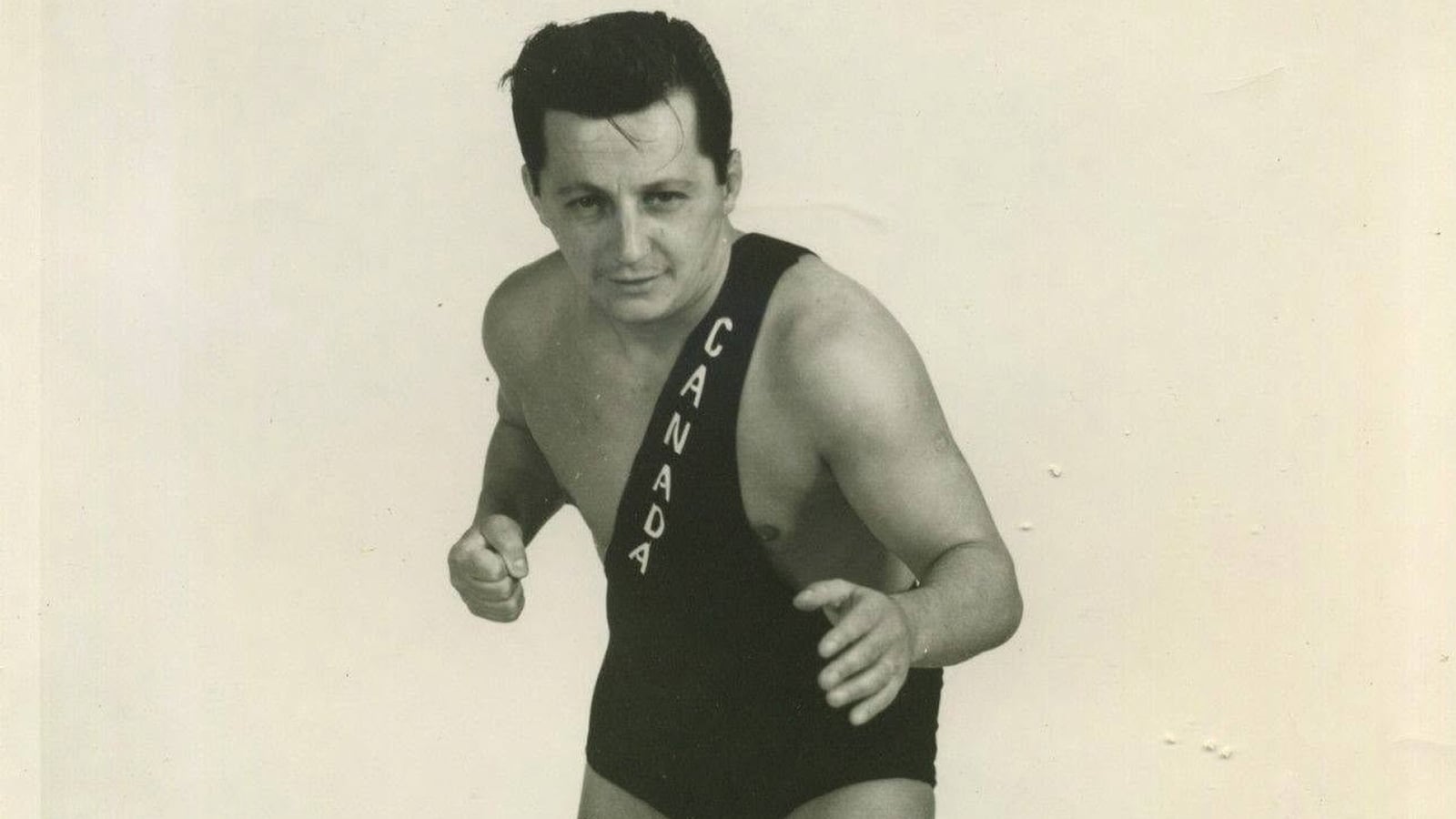
Born Jean Roy in Montreal in 1927, Tiny Roe stood 4 feet 10 inches and began his career at about 98 pounds. Gino Brito described him as having a normally proportioned body. Although Roe did not have dwarfism, promoters grouped him with the smaller wrestlers, and he became one of the circuit’s foundational performers.
Roy trained at Montreal’s St. Jean Baptiste sports facility with Marcel Gauthier, the future Sky Low Low. Jack Britton recruited both men. Roy first worked as Mickey Langlois before adopting the Tiny Roe name. Cast as a villain, he stood out for his quick footwork and dropkick.
Brito called Roe “a real general in the ring,” a wrestler who could set the pace and guide a less experienced opponent. That skill mattered in a touring troupe whose members needed to work smoothly together, often in combinations that changed from one booking to the next.
Away from the ring, Brito remembered a sociable road companion who enjoyed late nights. Roe’s travels traced through Canada, the United States, the Caribbean, South America, Mexico, Cuba, and Europe.
Knee and foot problems ended his career while he was still in his thirties. Roe settled in Windsor, Ontario, and worked as a waiter at the Calcot Hotel before passing away in 1986 at age 59.
7. Sonny Boy Cassidy: The Champion Who Was Just Rough
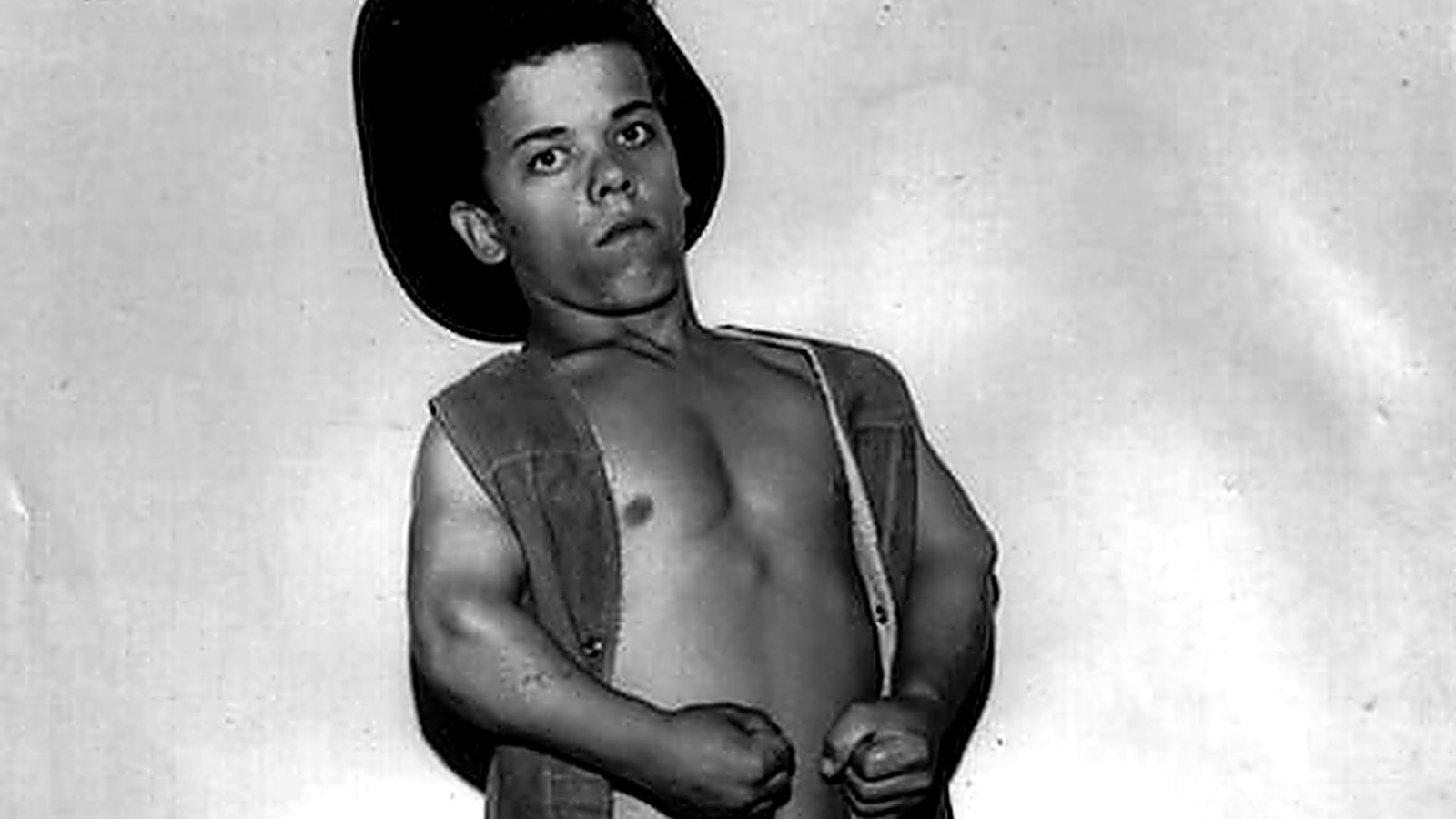
Sonny Boy Cassidy was just rough. His appeal rested on that hard-edged presence, and his career took him through title matches and a steady succession of territory bookings. A non-NWA promoter in Dallas recognized Cassidy as world champion by June 1953. He was also billed as champion in Memphis and Florence, Alabama, during 1957.
In October 1957, Cassidy lost the title to Farmer Pete in Florence and regained it seven days later. His championship history was one strand in a wider patchwork: separate touring groups carried separate champions, and recognition depended on the promoter doing the billing.
Gino Brito also remembered him as Cowboy Cassidy. Whatever name appeared on the poster, Cassidy remained a familiar presence on major cards. On October 25, 1963, he and Pancho Lopez faced Fuzzy Cupid and Farmer Pete at Chicago’s International Amphitheatre.
8. Irish Jackie: The Dependable Mean Irishman
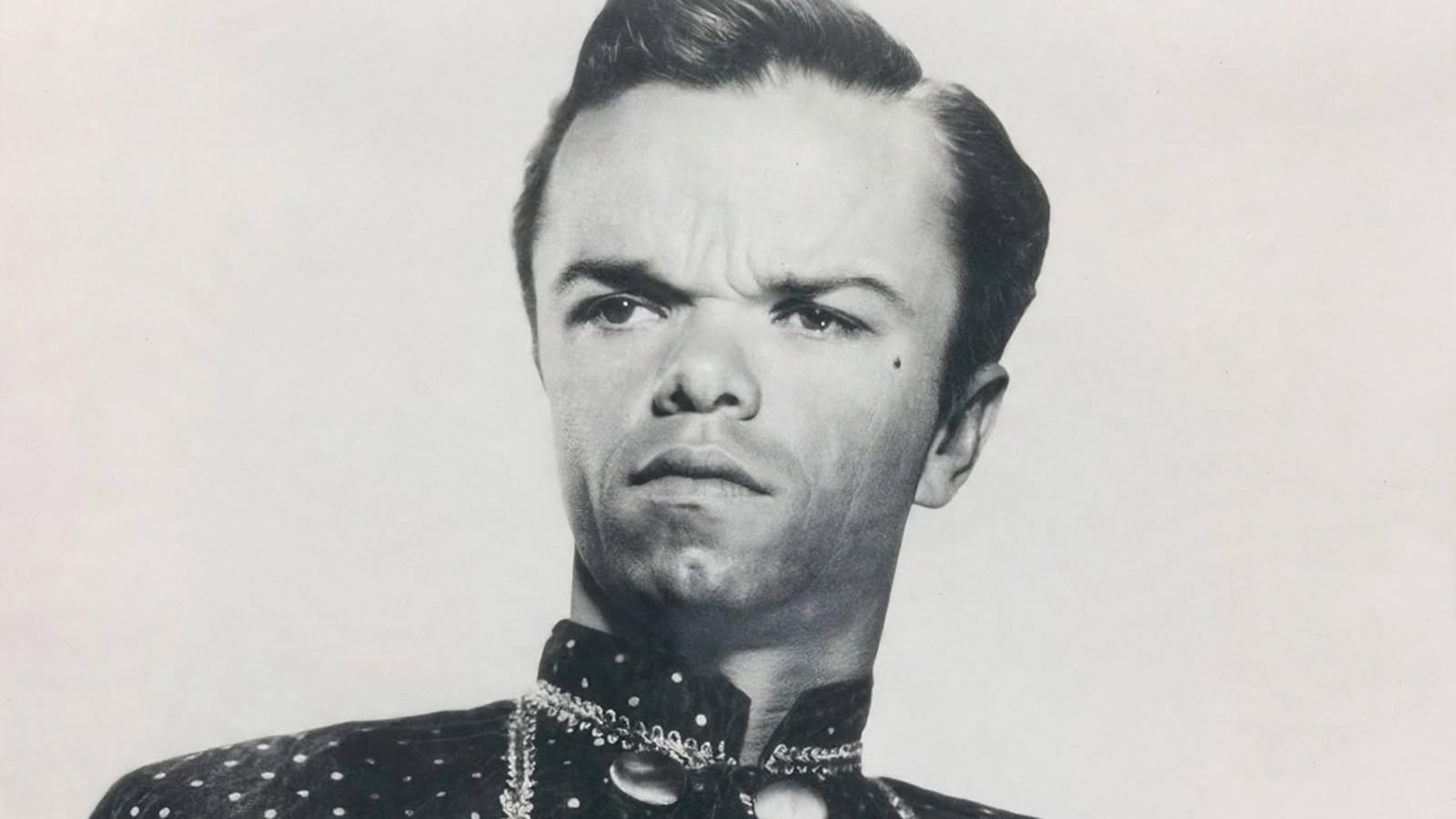
Alongside Sky Low Low, Little Beaver, Fuzzy Cupid, and Lord Littlebrook stood another dependable name: Irish Jackie. His character was straightforward, a mean Irishman whose villainy needed little explanation when the troupe arrived in a new town.
Promoters billed him from Dublin, Ireland, and generally listed his weight in the low 90s. An August 1952 Atlanta preview promoted Jackie against Pee Wee James at the City Auditorium and described both as capable, fast-moving wrestlers.
Other bookings placed Jackie in singles matches, conventional tags, and mixed teams. A 1958 report paired him with Ivan the Terrible against Lord Littlebrook and Tiny Tim. Those appearances mark him as one of the circuit’s steady working villains during its formative years.
9. Cowboy Bradley: The Texan Who Became World Champion
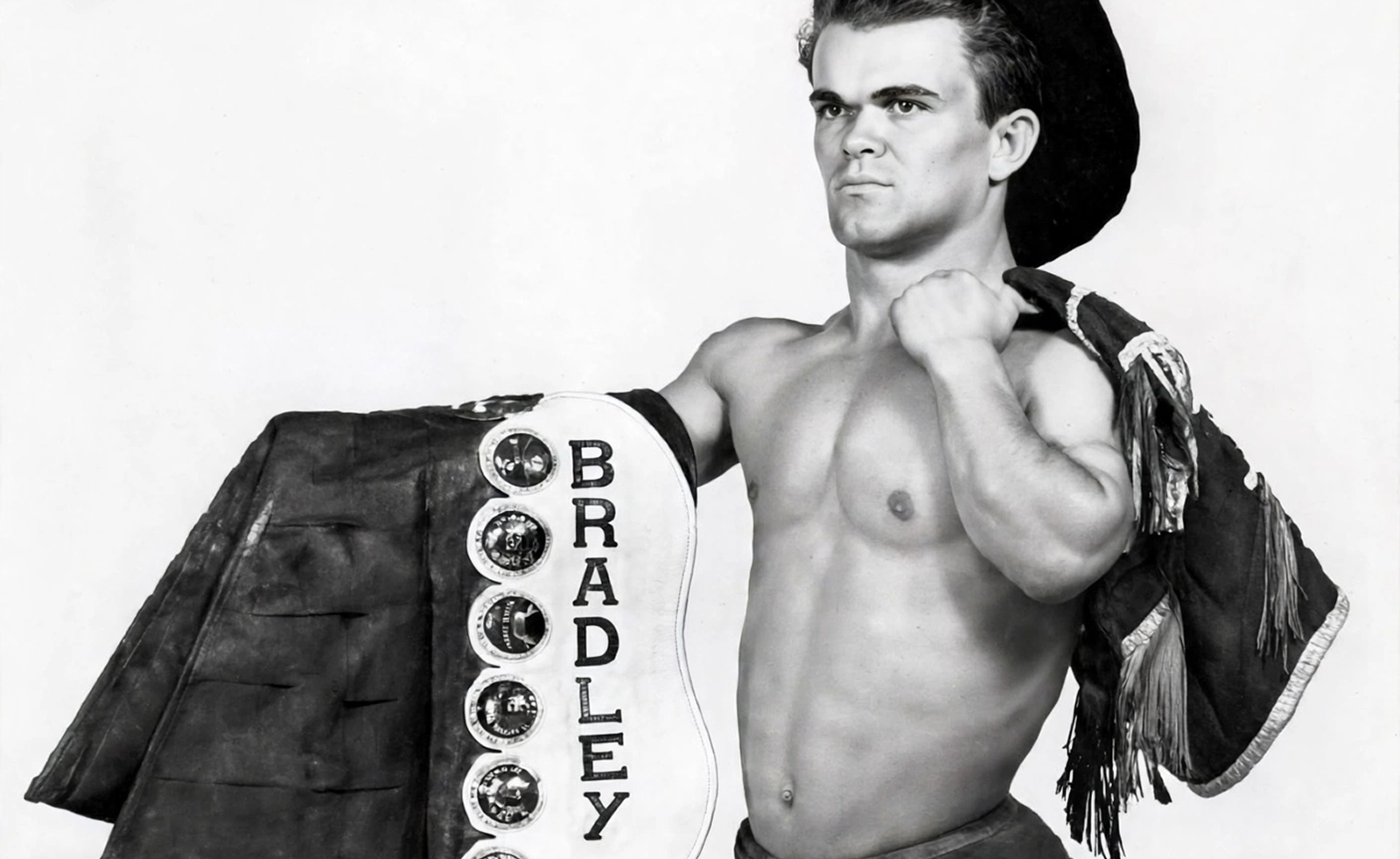
By the 1960s, another wave of little people wrestlers had joined the established names, and Cowboy Bradley became one of its most recognizable performers. Born Robert Claton Bradley on February 11, 1935, in Dickens County, Texas, he graduated from Roaring Springs High School and briefly attended West Texas State College before entering professional wrestling.
Bradley debuted on April 14, 1954. A detailed Handbook of Texas biography credits him with 951 documented matches across the United States and Canada. In June 1960, he defeated Tiny Roe at the Atlanta Municipal Auditorium to win the NWA World Midget’s Championship.
His travels took him through the AWA, WWWF, Central States Wrestling, Florida, Georgia, Mid-Atlantic, and St. Louis circuits. His partners and opponents included many of the division’s leading names, making Bradley a link between its early stars and the performers who followed them.
Bradley retired in 1971 but returned for matches in 1975 and 1977. He passed away in Amarillo, Texas, on June 24, 2010, at age 75.
10. Brown Panther and Little Bobo: One Wrestler, Several Identities
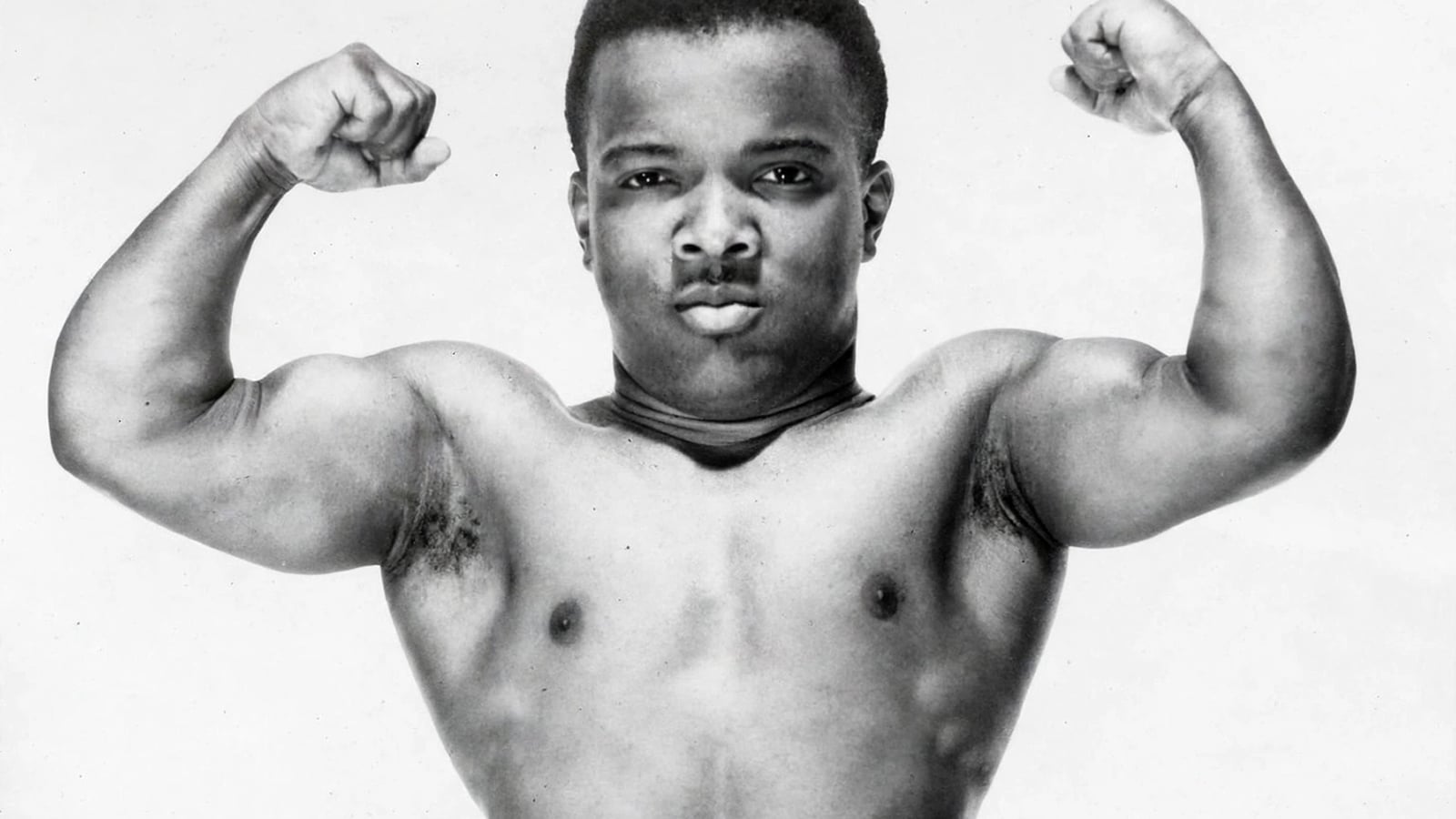
Brown Panther was Bobo Johnson, who also appeared as Panther Brown, Black Panther, Haile Selassie, and Little Bobo. The Little Bobo presentation offered a particularly clear example of the division borrowing from a heavyweight star: Johnson had his own version of the Coco Butt used by Bobo Brazil.
His bookings connected him to several of the circuit’s central figures. Brown Panther teamed with Lord Littlebrook against Pee Wee James and Irish Jackie in Alberta in 1957. Littlebrook and Brown Panther were recognized as world tag team champions in California in August 1958.
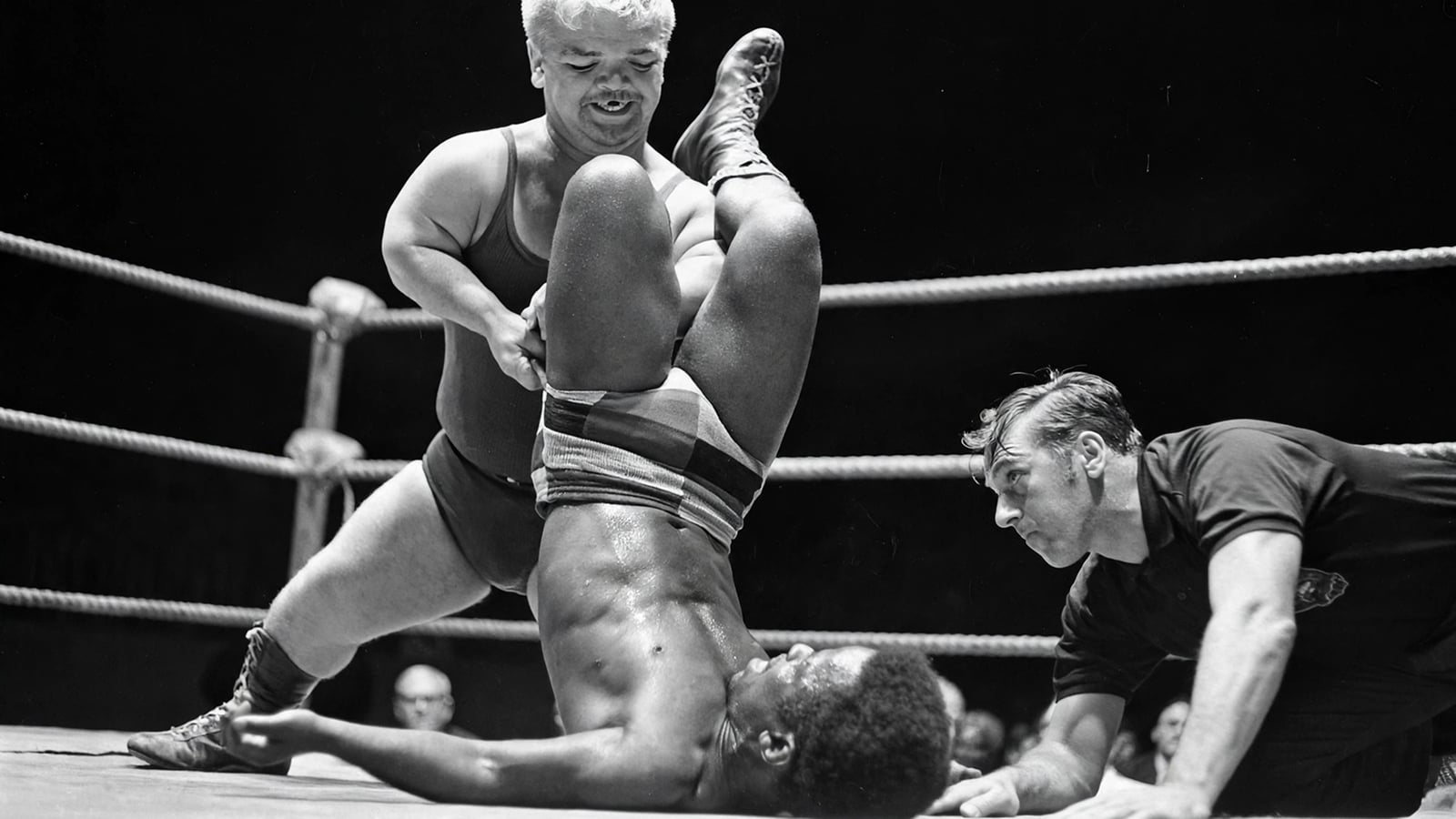
Surviving footage also preserves Brown Panther and Red Feather against Sky Low Low and Billy the Kid. Later images and results place Johnson in the ring into the 1970s and beyond, including the September 1972 Chicago match pictured earlier in this article.
The changing names can make his career look like several separate stories. Together, they trace the extensive travels of a performer who adapted his presentation to different audiences while remaining a fixture of the division.
11. Red Feather: A Native American Character With a Title Link
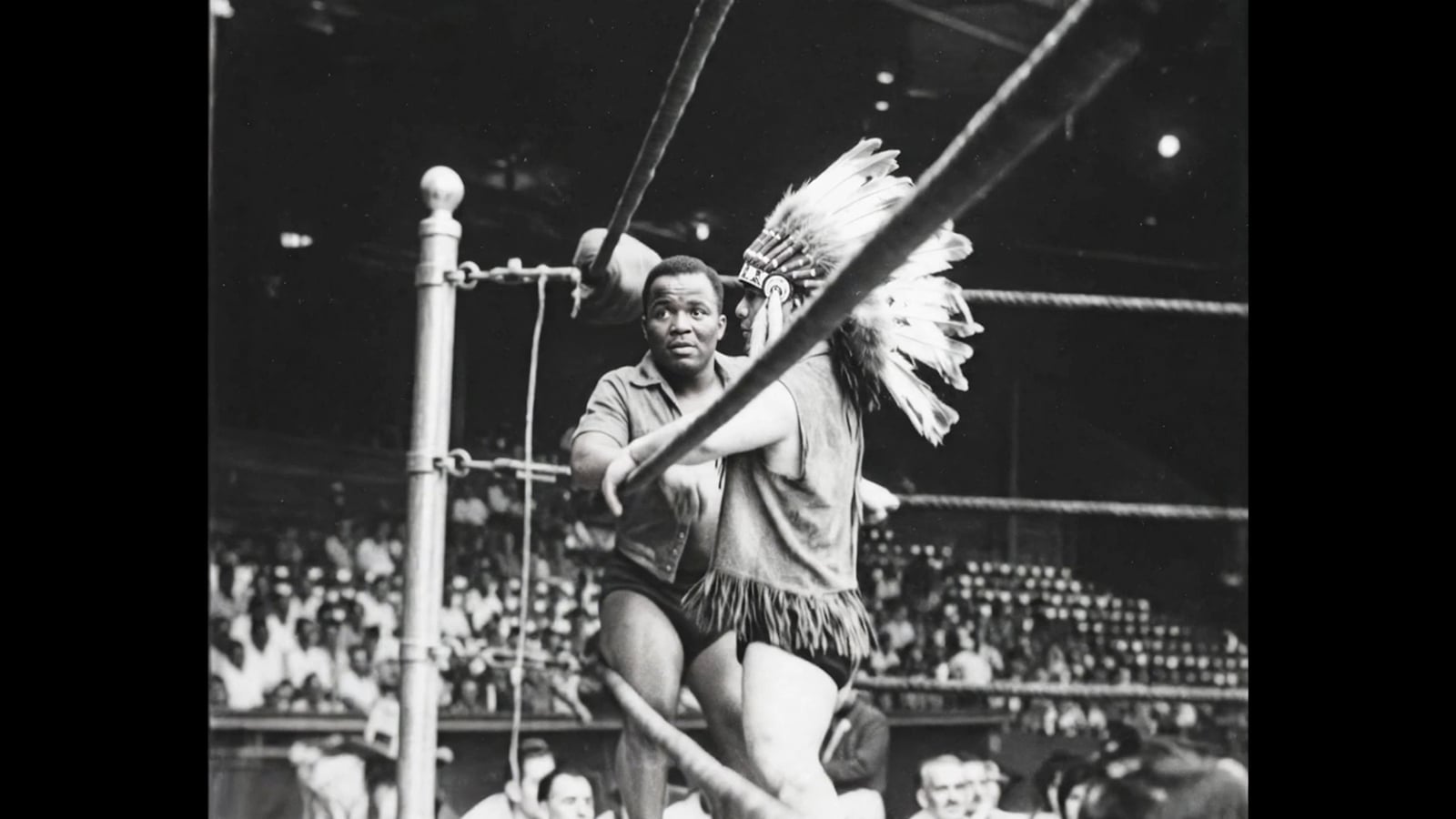
Cowboys and Native American characters were familiar sights in professional wrestling, and the little people circuit reflected those same conventions. Red Feather’s presentation paralleled characters portrayed by Don Eagle, Don Thunderbird, Chief Saunooke, and other full-sized wrestlers. That billing describes a ring persona; it does not establish Red Feather’s ancestry or personal identity.
Also billed as Little Red Feather, he teamed with Brown Panther against Sky Low Low and Billy the Kid in surviving footage from the circuit. His career also included championship recognition: tag title histories list Little Beaver and Red Feather as champions in Minnesota by September 1962.
Those partnerships place Red Feather alongside some of the division’s best-known performers.
12. Billy Curtis: The Film Star With a Wrestling Connection
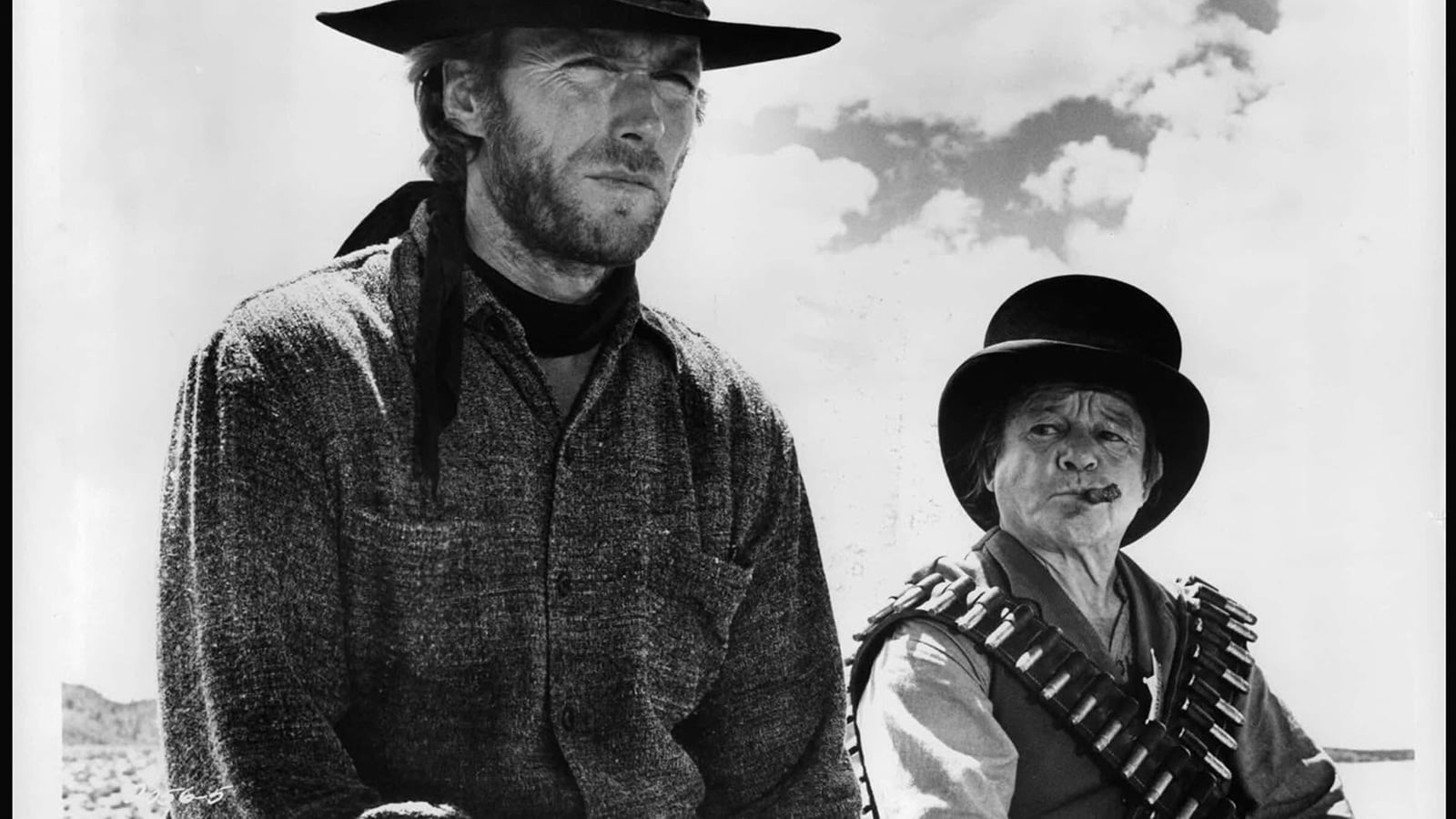
Long before appearing opposite Clint Eastwood in High Plains Drifter, Billy Curtis starred in The Terror of Tiny Town, the 1938 Western made with an all-little-people cast. The film became a fixture of worst-movie discussions, often mentioned alongside Plan 9 from Outer Space, which featured fellow pro wrestler Tor Johnson as Inspector Clay, but Curtis’s career reached far beyond that unusual production.
Born Luigi Curto on June 27, 1909, Curtis played the film’s hero and went on to a screen career spanning more than 50 films. His credits included Planet of the Apes and the role of Mordecai in High Plains Drifter.
His precise match count remains unverified, but Curtis’s own account confirms a connection to the business. In a 1968 interview later cited by the Los Angeles Times, Curtis said he had operated his own little people wrestling show. A 1953 Los Angeles card also lists Billy Curtis in one of the matches.
Curtis retired to Nevada in 1988 after a screen career that began in vaudeville, and he died of a heart attack that November in Dayton, Nevada, at age 79, closing out a rare life that moved between the wrestling ring and Hollywood soundstages for five decades.
Why Tag Teams and Mixed Matches Kept the Attraction Fresh
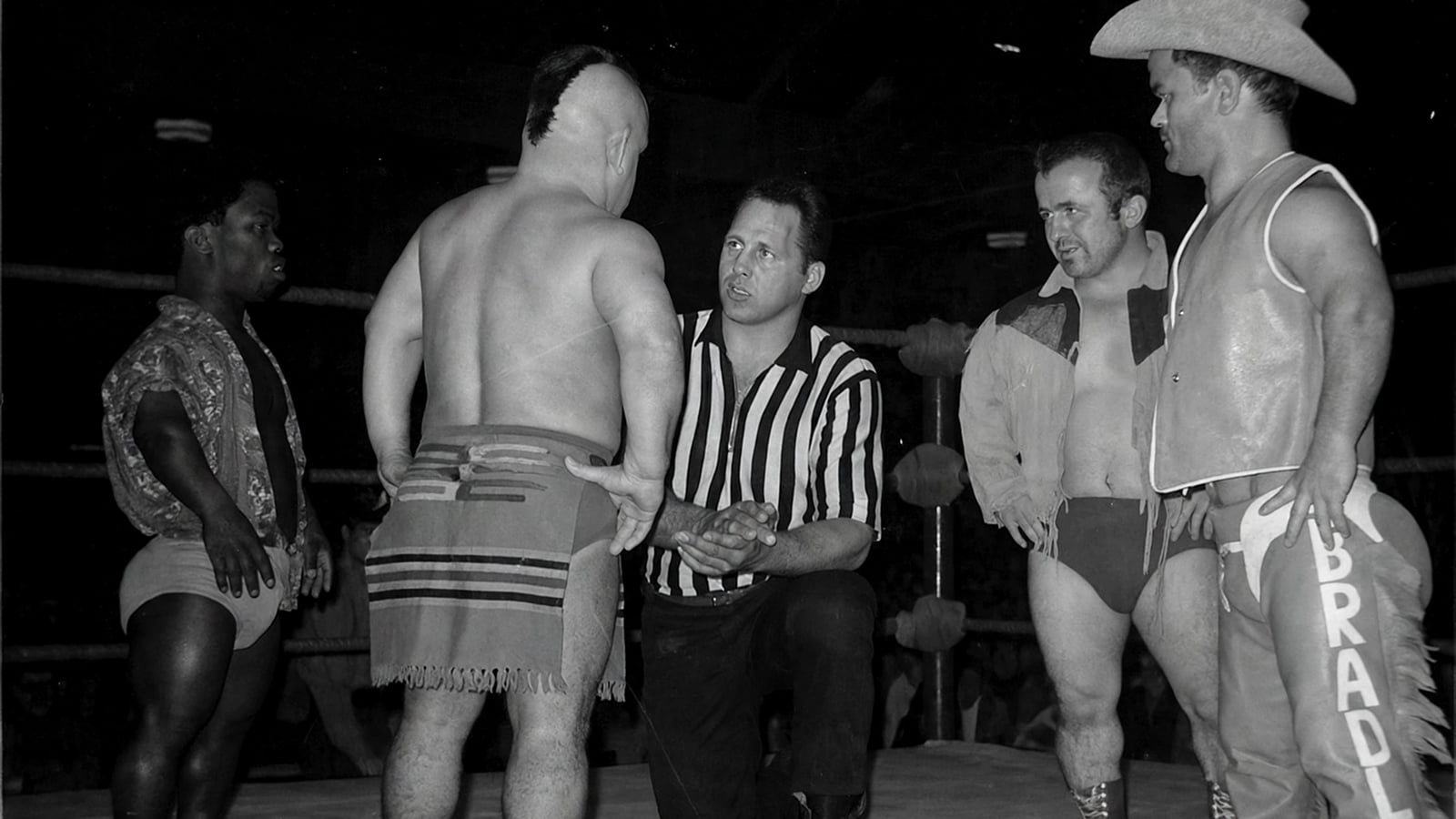
One of the most entertaining matches a promoter could offer was a four-person little people tag. The format allowed quick exchanges, comedy, and clear character contrasts while giving every wrestler a role. Sky Low Low and Fuzzy Cupid against Little Beaver and Lord Littlebrook became a classic arrangement, but the circuit produced many other combinations.
Promoters varied the formula constantly. A full-sized wrestler paired with a little person might face another mixed-size team, or a full-sized woman paired with a little person might face a similar combination on the other side. Tiny Roe, for instance, worked mixed matches alongside Dot Dotson, Kathy Starr, Maurice "Mad Dog" Vachon, and Gorgeous George Grant.
The comedy did not cancel out the wrestling. Contemporary reports noted acrobatics, holds, pacing, and clever character work. The performers knew how to run between a referee’s legs or exaggerate a collision, but they also knew how to deliver a dropkick, guide an inexperienced opponent, and structure a match for television. That combination made the attraction successful and portable.
It also allowed the roster to reproduce nearly every character type found among full-sized wrestlers. There were cowboys, farmers, Native American characters, foreign villains, and vain showmen. Gorgeous Jimmy Little came close to being the division’s Gorgeous George. The Mighty Fritz supplied its German villain. Brown Panther became Little Bobo and used his own Coco Butt. The personalities could change with wrestling’s tastes while the touring format remained intact.
Honorable Mentions: 9 More Little People Wrestlers Who Shaped the Early Pro Wrestling Circuit
The circuit extended well beyond its most familiar stars. These nine additional performers complete the 21 names featured here, spanning the earliest traveling troupes and the wrestlers who carried the attraction into later decades. Their stories connect championship matches, theatrical characters, and Hollywood careers, even when contemporary reporting or the historical record has been light on personal biography.
Major Tom Thumb belonged to the earliest recognized group. Along with Sky Low Low, Pee Wee James, and Tiny Roe, he was among the performers who helped establish the circuit. A July 24, 1950, result from North Bergen, New Jersey, records Sky Low Low and Tom Thumb facing Gorgeous Jimmy Little and Mighty Fritz. Chicago results from March 1953 also place Tom Thumb in a title match at the Rainbo Arena on a card featuring Lou Thesz. His name appears in one version of Lord Littlebrook’s debut story, adding another connection to the troupe’s beginnings.
The Mighty Fritz was the division’s German bad guy. Records list the performer as Mighty Fritz, Mighty Schultz, and Great Schultz. The July 1950 North Bergen tag match placed him beside Gorgeous Jimmy Little against Sky Low Low and Tom Thumb. A 1954 Ontario report paired Mighty Schultz and Pancho the Bull against Mickey Langlois, the future Tiny Roe, and Prince Nicol. The names changed, but the villainous presentation was familiar to audiences accustomed to similar characters in heavyweight wrestling.
The Mighty Atom belonged mainly to a later wave rather than the original late-1940s group. Active on North American cards by the late 1960s, he appeared in contemporary rankings in 1968 and regularly partnered with Little Bruiser. Their bookings took them to Japan, Australia, New Mexico, California, and other markets. A 1968 report described the pair doing pushups between falls to insist that an earlier loss had been a mistake, turning a simple exercise into another opportunity to work the crowd.
Gorgeous Jimmy Little came close to being the division’s version of Gorgeous George. A January 1951 Detroit-area advertisement pictured Jimmy Little in a tuxedo, selling vanity and elegance before the bell. Results place him opposite Sky Low Low in New York and New Jersey during July 1950, both in singles competition and alongside Mighty Fritz in tag action.
Pancho the Bull appeared across the United States and Canada during the early 1950s and remained active for years afterward. A 1951 Salem, Oregon, report described Little Beaver and Long John Smith facing Tom Thumb and Pancho in a tag match that stole the show through comedy and fast movement. Other bookings put Pancho opposite Little Beaver in Winnipeg and beside Mighty Schultz in Ontario. He was a recurring member of the touring combinations that brought the attraction to new audiences.
Baby Face Maren was Jerry Maren, born Gerard Marenghi, one of the Lollipop Guild performers in The Wizard of Oz. Accounts of his entertainment career describe Chicago promoters billing him as Baby Face Maren in the early 1950s, while he used the name Little Red Devil in Tijuana. Wrestling was one part of a career encompassing film, vaudeville, advertising, and television. Like Billy Curtis, Maren connected the ring to the wider entertainment world from which promoters drew performers.
Tito Infante worked a Mexican-villain character, reflecting the nationality-based personas common in the period. Results place him on cards during the middle of the 1950s, and tag title records recognize Tito Infante and Tiny Tim as champions by October 1955. Later records also place Infante alongside Cowboy Bradley. Those partnerships connect him to both the circuit’s early years and the generation that followed.
Tuffy McRay is also remembered as Tuffy McCray, while surviving records vary among McRay, McRae, McRea, and McCrae. Toledo results list Tuffy McRay against Pancho the Bull on August 14, 1952. Two weeks later, Pee Wee James and Tuffy McRay faced Vito Gonzales and Irish Jackie. Canadian listings place Tuffy McCrae on cards in 1954. Behind the inconsistent spelling is a performer whose bookings put him among the circuit’s active early names.
Farmer Pete brought the familiar farmer character into little people wrestling, a smaller counterpart to Farmer Jones, the full-sized wrestler who brought a pet pig into the ring during his Chicago and Los Angeles runs. Pete built his own championship record as well, defeating Sonny Boy Cassidy in Florence, Alabama, on October 4, 1957, before dropping the title back to him seven days later. Posters show him still working mixed and conventional tag matches into the 1970s.
The Television Boom Ended, but the Little People Wrestlers Kept Working
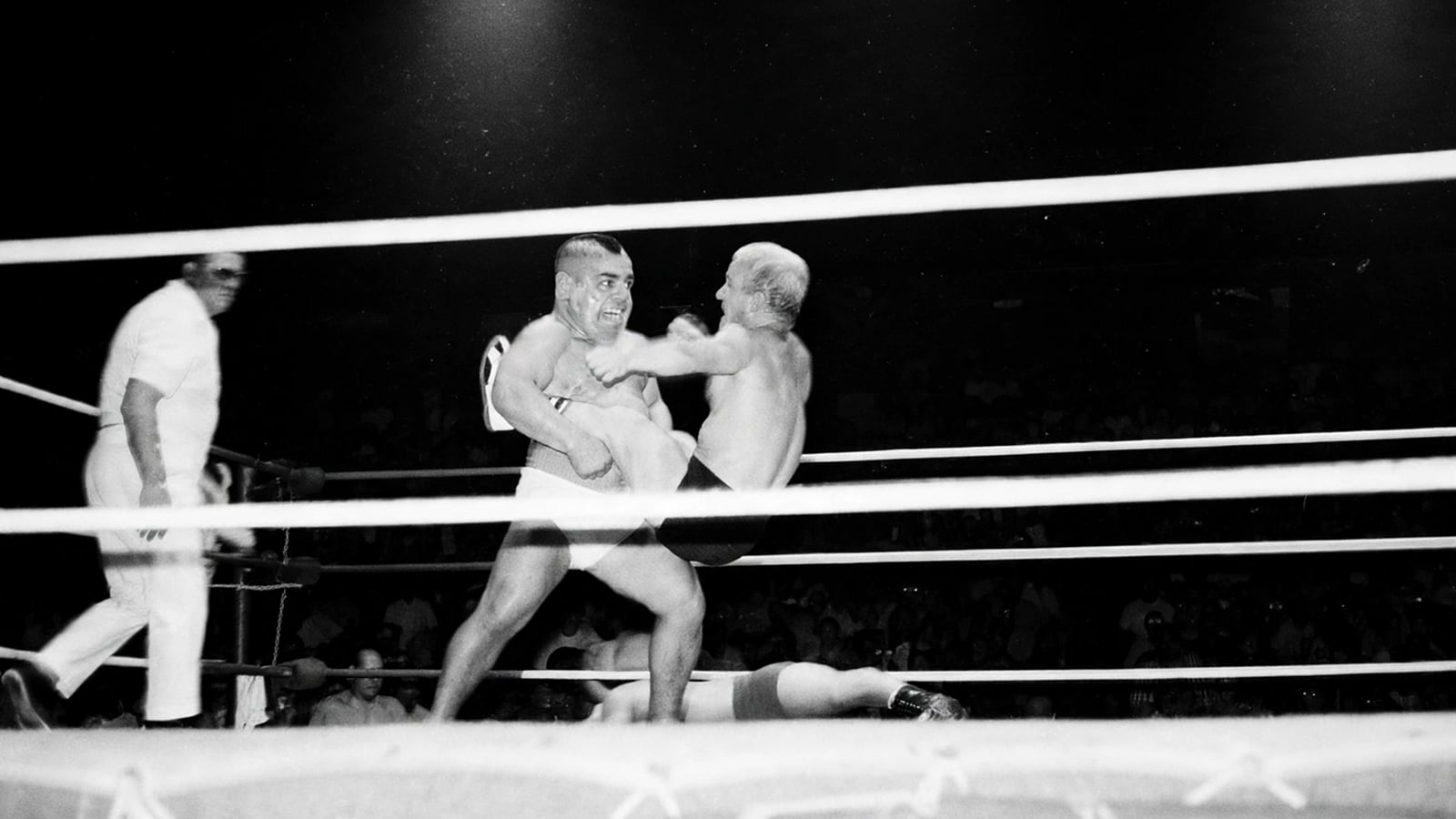
Television’s first wrestling boom did not mark the end of these performers’ careers. Sky Low Low continued into the 1980s. Cowboy Bradley returned after his initial retirement. Brown Panther, Farmer Pete, and others worked well beyond the 1950s. At WrestleMania III in 1987, Little Beaver and Lord Littlebrook stood on opposite sides of a six-person tag match, decades after their generation helped establish the attraction.
Little people wrestling eventually became less common on mainstream American cards, while the tradition developed in a different direction in Mexico. The mini-estrellas division included wrestlers with dwarfism and other short-statured performers, often working as counterparts to established lucha libre stars. The character connections echoed an older promotional practice, but Mexico’s division developed its own style and history.
A modern WWE match offered another reminder of the format’s enduring appeal. At WWE Backlash on May 9, 2026, Danhausen produced Minihausen from a supposed cloning machine before their tag match with The Miz and Kit Wilson. When Wilson later shoved Minihausen back into the box, a wave of additional Minihausens poured out. The multiplying characters and escalating confusion drew on the same kind of visual comedy the earlier touring circuit understood. One of the featured Minihausens was veteran Mexican mini-estrella Mascarita Sagrada, connecting the modern spectacle to another long-established tradition of little people wrestling.
Jack Britton’s touring operation helped give these performers recurring identities that audiences could recognize from television and follow into the arena. Their championship histories were fragmented, and many biographies remain incomplete, but the characters stayed with the people who saw them: the rough champion, the English lord, the farmer, and the many personalities surrounding the famous four.
These little people wrestlers traveled relentlessly, adapted to different audiences, and combined wrestling with comedy that depended on precision. Their contribution to the television age was not simply filling time between heavyweight matches. They gave audiences another reason to watch and another act to remember after the show was over.
These stories may also interest you:
Download PDF Version
Get the complete article as a formatted PDF for offline reading.