Author:
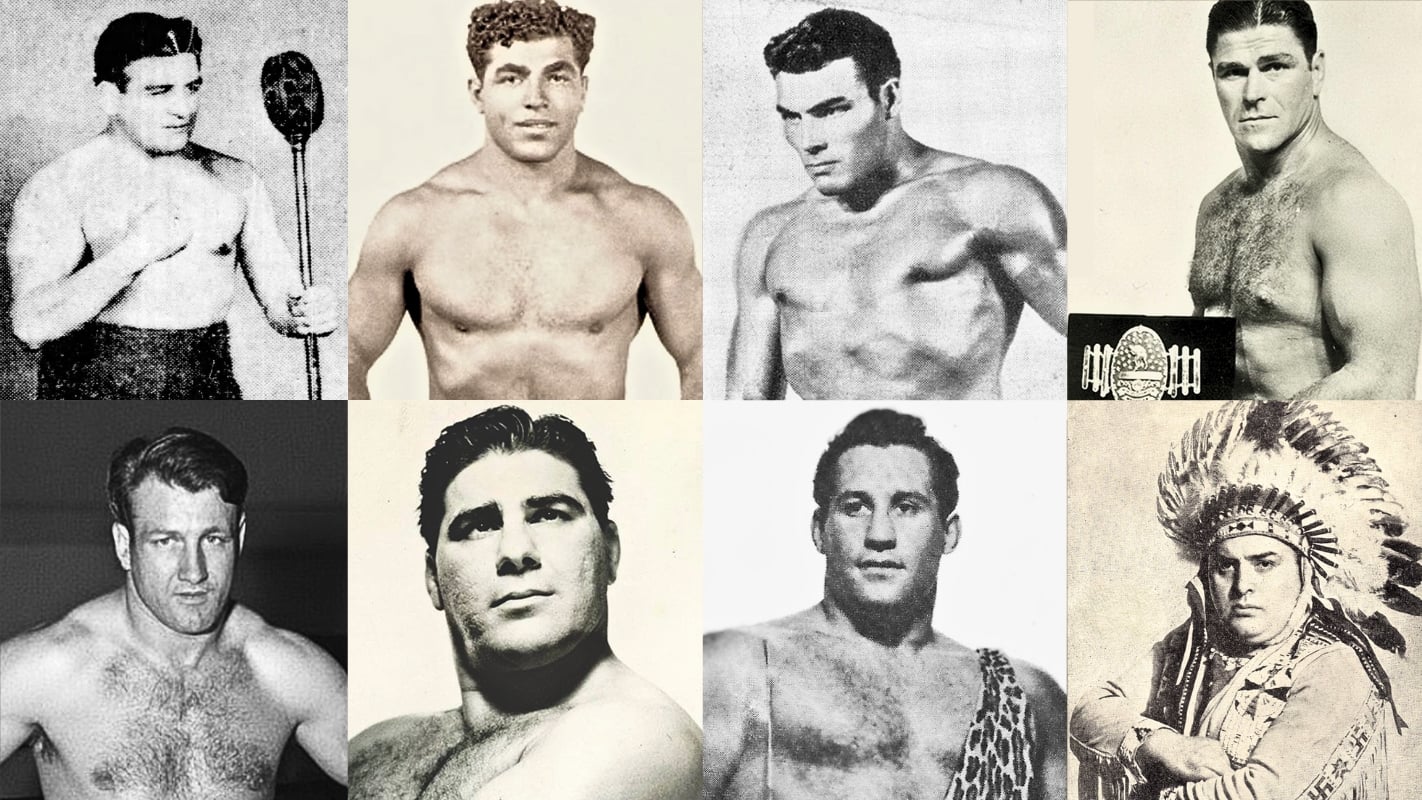
 Before a single television camera rolled inside a professional wrestling arena, before Gorgeous George ever sent a butler to perfume the ring canvas, and long before Hulk Hogan told America to say their prayers and eat their vitamins, there was a generation of good guys who built the babyface from the ground up, one smoky arena at a time. Most of their names have vanished from mainstream wrestling conversations. Very little film of them survives. Their matches exist mostly as results buried in yellowing newspapers at the bottom of archive boxes. Yet the way they worked, the clean technical wrestling, the crowd-rallying comebacks, the dignity under fire from heel champions and promotional double-crosses, became the foundation that every television-era hero stood on. They did not need cameras. They just needed a crowd and a reason to be loved. They were very good at both.
Wrestling Before Television: The Newspaper Era That Built Everything

Professional wrestling was already hugely popular in America long before television. Legends like Frank Gotch, George Hackenschmidt, Earl Caddock, Joe Stecher, and Stanislaus Zbyszko captivated the nation in the early 1900s, and newspapers covered big cards the same way they covered baseball double-headers.
Hackenschmidt defeated Tom Jenkins in New York in 1905 in a bout widely recognized as establishing him as the first undisputed modern world heavyweight wrestling champion. That set the template for the stakes every future babyface would chase: one man on top of the hill, everyone else trying to knock him off.
As time went on, territorial disputes among promoters, competing "world" titles, and the occasional double-cross made headlines and soured some editors on the sport. But even as coverage cooled in the sports pages, pro wrestling remained a major live attraction from New York and Chicago to Los Angeles, Montreal, and Toronto, carried by babyfaces fans believed in enough to buy a ticket for, week after week.
The Men Behind the Curtain: Lewis, Sandow, and Mondt Build the Modern Wrestling Show
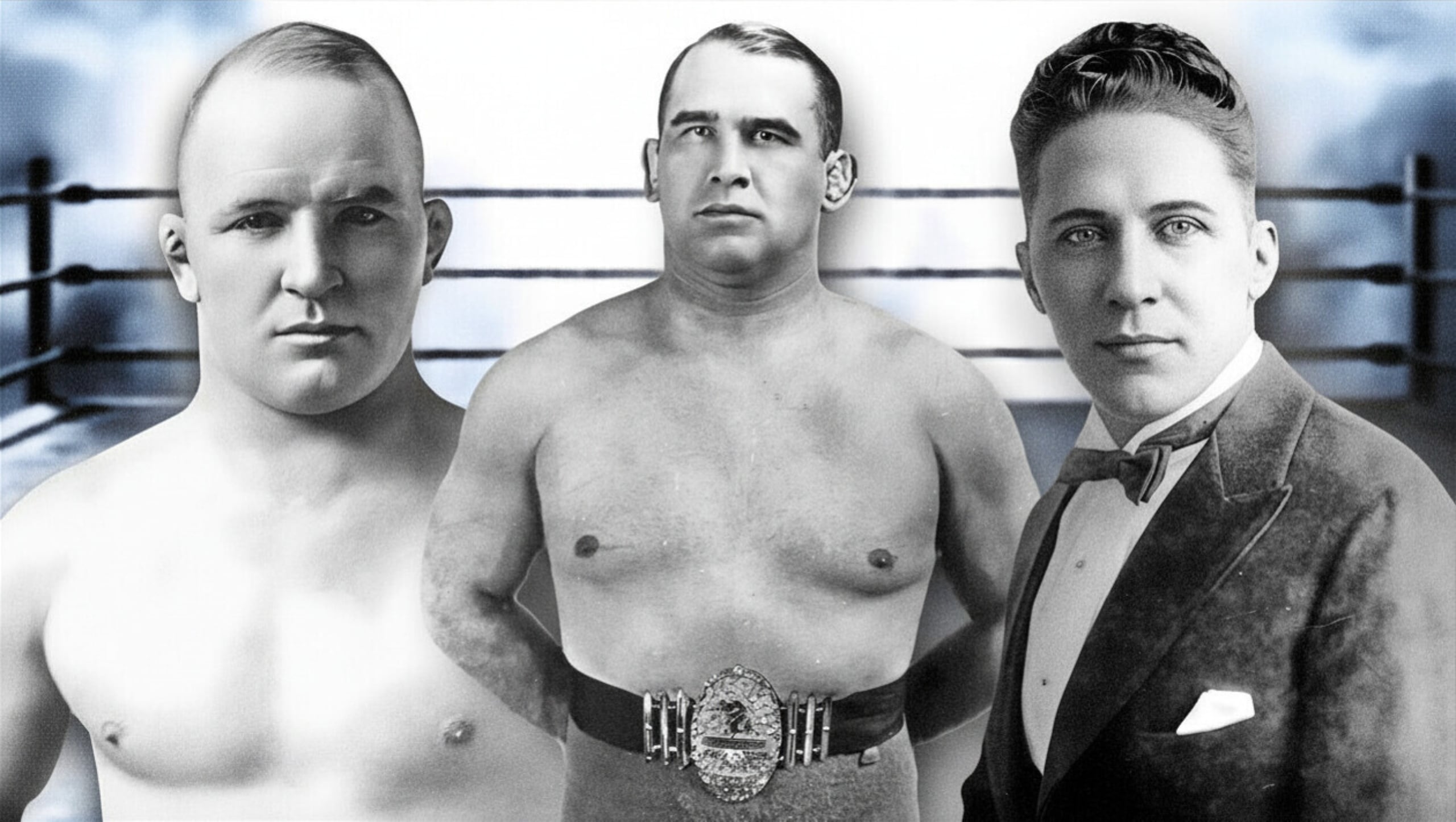
To understand why the pre-TV babyface era mattered, you have to understand who built the stage they performed on. Ed "Strangler" Lewis, Billy Sandow, and Joseph "Toots" Mondt were not just star wrestlers and managers. They were the three men who helped turn wrestling from a single long main event into a full night of stories.
In the earliest days, everything on a card was built around one big match. The rest of the bouts were treated like afterthoughts. It was like being an opening act for the Beatles at Shea Stadium and being told, "Do your fifteen minutes and get off, because nobody cares you’re here." That is how the undercards of the big shows felt.
Sandow, a master matchmaker, changed that. He and his partners decided every match on the card, or at least most of them, needed some kind of backstory or rivalry. That is where the modern wrestling card came from: not just one big main event, but a whole night of ongoing feuds and stories, with babyfaces and heels slotted up and down the bill.
Around 1930, efforts began to regulate professional wrestling with governing bodies. The National Wrestling Association, the first outfit to use the "NWA" initials, was founded that year by many of the same figures behind the National Boxing Association. The original American Wrestling Association (AWA) followed in 1933, and by 1940, the Midwest Wrestling Association (MWA), based in Kansas City, had also been established. All three had their own world champions and helped usher in the territorial era, with major promoters in Los Angeles, New York, Boston, Chicago, St. Louis, and Texas all needing reliable good guys to build around.
This sets the stage for what follows, a guided walk through forty-two pre-TV wrestling good guys (we started with twenty-five, but how could we stop there?), backed up by period research, including Sid Feder’s landmark Wrestling Fans’ Book (1952), contemporary records, and decades of oral history. Seventy years on, their names may be fading, but the way they filled buildings and carried themselves in the ring is still worth talking about.
Enjoying this story? Own it forever.
No ads. No interruptions. Download the full story as a beautifully formatted PDF at just $0.99.
Get My Copy — $0.991. Ed "Strangler" Lewis: The Headlock That Built an Empire
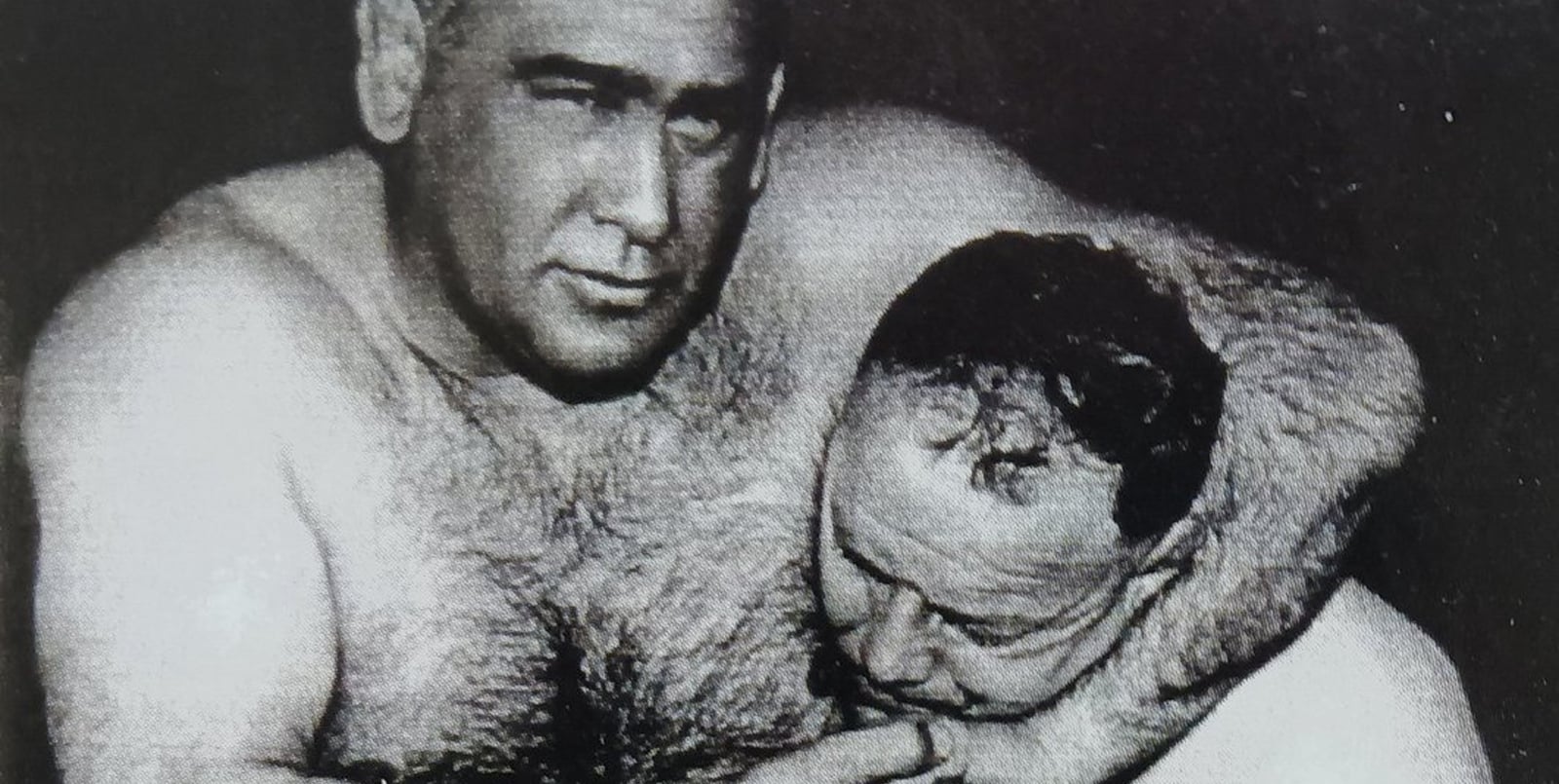
Ed "Strangler" Lewis was both a feared hooker in the back rooms and one of the foundational babyface attractions for the fans who idolized his toughness and mastery of the headlock. He did not get the nickname because he was out there choking people on purpose. It came from the way he wrapped that headlock on you and made it look like your head might pop off. Once he clamped it on, most nights it was as good as over.
Lewis came out of the same world that produced Joe Stecher and Stanislaus Zbyszko, and he was every bit their equal. He first captured a recognized version of the world heavyweight championship in 1920, beating Stecher, and over the next decade, he was generally accepted as a four-time world champion, with his name on just about every version of the title that mattered. He and Stecher wrestled one match that went over five hours without a fall, the kind of marathon that would clear a modern arena but in that era made legends.
He was more than a wrestler. Lewis was a businessman and a visionary. Together with Billy Sandow and Toots Mondt, he formed what people later called the Gold Dust Trio, a promotional outfit that took wrestling out of the old one-match grind and turned it into a full evening, with storylines and rivalries up and down the card. They barnstormed the country, booking Lewis in title defenses and grudge matches and using his credibility to sell their whole package.
One of his most famous bouts came against Jim Londos at Chicago’s Wrigley Field in 1934. That match drew over 35,000 fans and a gate of $96,302, a United States record for pro wrestling at the time. In the middle of the Great Depression, with no television money in sight, that kind of box office tells you exactly what kind of attraction Strangler Lewis really was.
By the time he finally wound down, Lewis had been a world champion, a trainer of champions, and one of the architects of the style of show modern wrestling still runs. For a supposed villain with a scary nickname, he did as much as anyone to show fans what a top-level babyface could look like when the belt was on the line.
2. Jim Londos: The Golden Greek Who Filled Ballparks
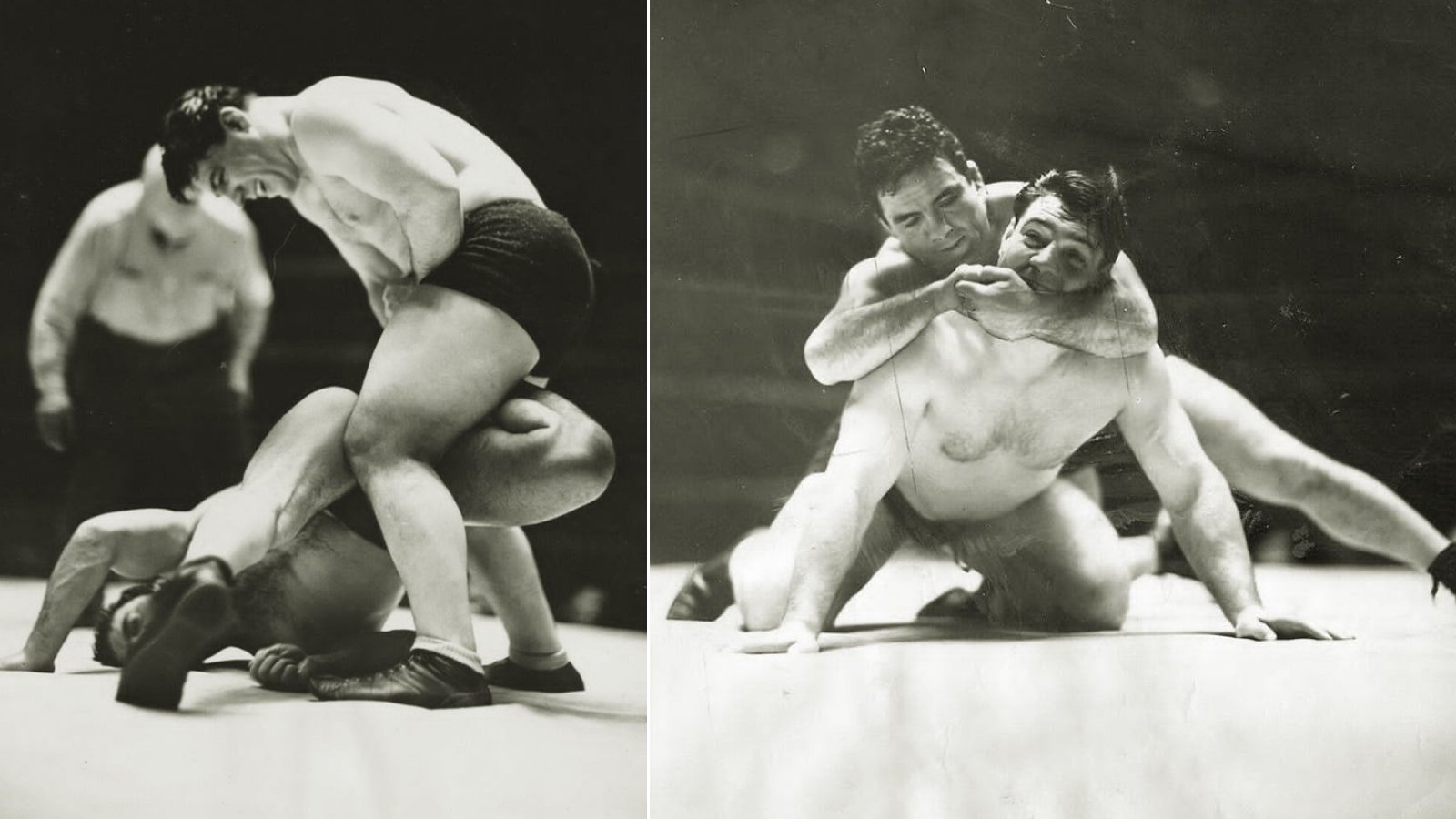
Jim Londos was born Christos Theofilou in Greece and came to the United States as a young man. He started like a lot of immigrants of that time, working odd jobs and taking whatever he could get, and he was not an instant success in the ring. One of the main problems was that he was only about five foot eight. In an era of giant heavyweights, he did not look like a world champion on paper, and it took him a while to get established.
What he had going for him was conditioning, looks, and a real knack for connecting with a crowd. When he finally broke through in the late 1920s, he became a world champion and one of the biggest live draws the business has ever known. Promoters built whole seasons around "The Golden Greek" defending his title, and arenas that had once been half full for other champions suddenly could not hold everyone who wanted to see Londos wrestle.
The Wrigley Field match in 1934, Londos versus Ed "Strangler" Lewis, drew more than 35,000 people, and that $96,302 gate we just talked about, which gives you an idea of his drawing power in the middle of the Depression. That was not a one-off either. In his native Greece, he wrestled in the Panathenaic Stadium in Athens, with contemporary reports putting the crowds in the tens of thousands, often over 60,000 fans and sometimes much more, packed in to see their countryman defend wrestling’s honor against a parade of foreign challengers.
He carried himself like a star. Clean white trunks, a confident but not arrogant demeanor, and a babyface smile that made the newspapers easy to work with. Fans believed in him. Whether he was wrestling in New York, Chicago, or Athens, the story was the same: a smaller man with a huge heart, somehow finding a way to topple monsters. You can see why promoters of that era kept building around him.
Love Pro Wrestling Stories? Add us as a Preferred Source on Google so our stories always show up first for you. It only takes one click.
Add Us on Google3. Milo Steinborn: The Strongman Who Could Lift an Elephant
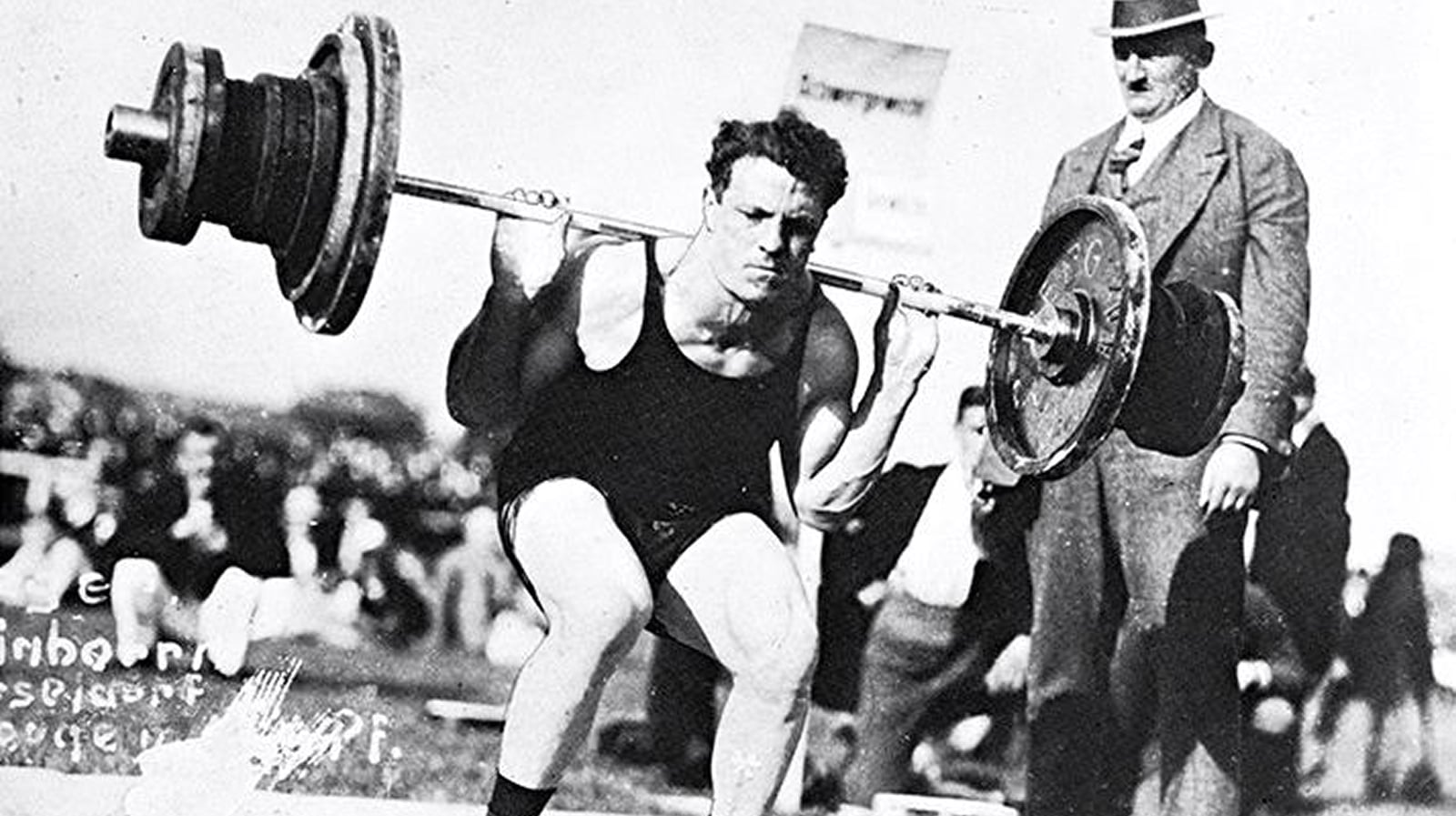
Milo Steinborn may be best known now as the dad of Dick Steinborn, a major wrestler of the fifties and sixties, but Milo himself was something special. Before he ever took a bump, he made his name as a strongman. This was a man who would do deep knee bends with more than 500 pounds on his back when most gyms did not even have proper squat racks. He popularized what lifters still call the Steinborn squat, tipping a loaded barbell up from the floor and rolling it onto his shoulders before dropping into a full deep knee bend like it was nothing.
His feats of strength bordered on the unbelievable. One act that made the papers had Steinborn in a full-dress suit performing a back lift with an elephant at a fair, supporting hundreds of pounds of pachyderm and raising it off the platform as the crowd roared. In an era where posters promised the "world’s strongest man" on every street corner, Milo was one of the few who could back that kind of billing up.
When he moved into professional wrestling, all of that credibility came with him. In the thirties and forties, he was a very popular wrestler on both sides of the Atlantic, working high on cards in the United States and touring Europe. He might not have been the consensus world heavyweight champion, but promoters knew that putting Steinborn’s name on a poster meant families, weightlifting fans, and curiosity seekers would all buy a ticket. He was the kind of babyface fans trusted to stand up to the rougher champions, because they knew if things ever got truly real, Milo had the strength to look after himself.
Between his lifting records, his wrestling career, and the legacy he passed on to Dick, Steinborn is one of those names you cannot leave out if you want to understand how strength and showmanship blended together in the pre-television era.
With hundreds of amazing Pro Wrestling Stories to dive into, where do you start? Get the inside scoop, join our exclusive community of wrestling fans! Receive 10 hand-picked stories curated just for YOU, exclusive weekly content, and an instant welcome gift when you sign up today!
4. "Jumping" Joe Savoldi: The Notre Dame Star Who Perfected the Dropkick
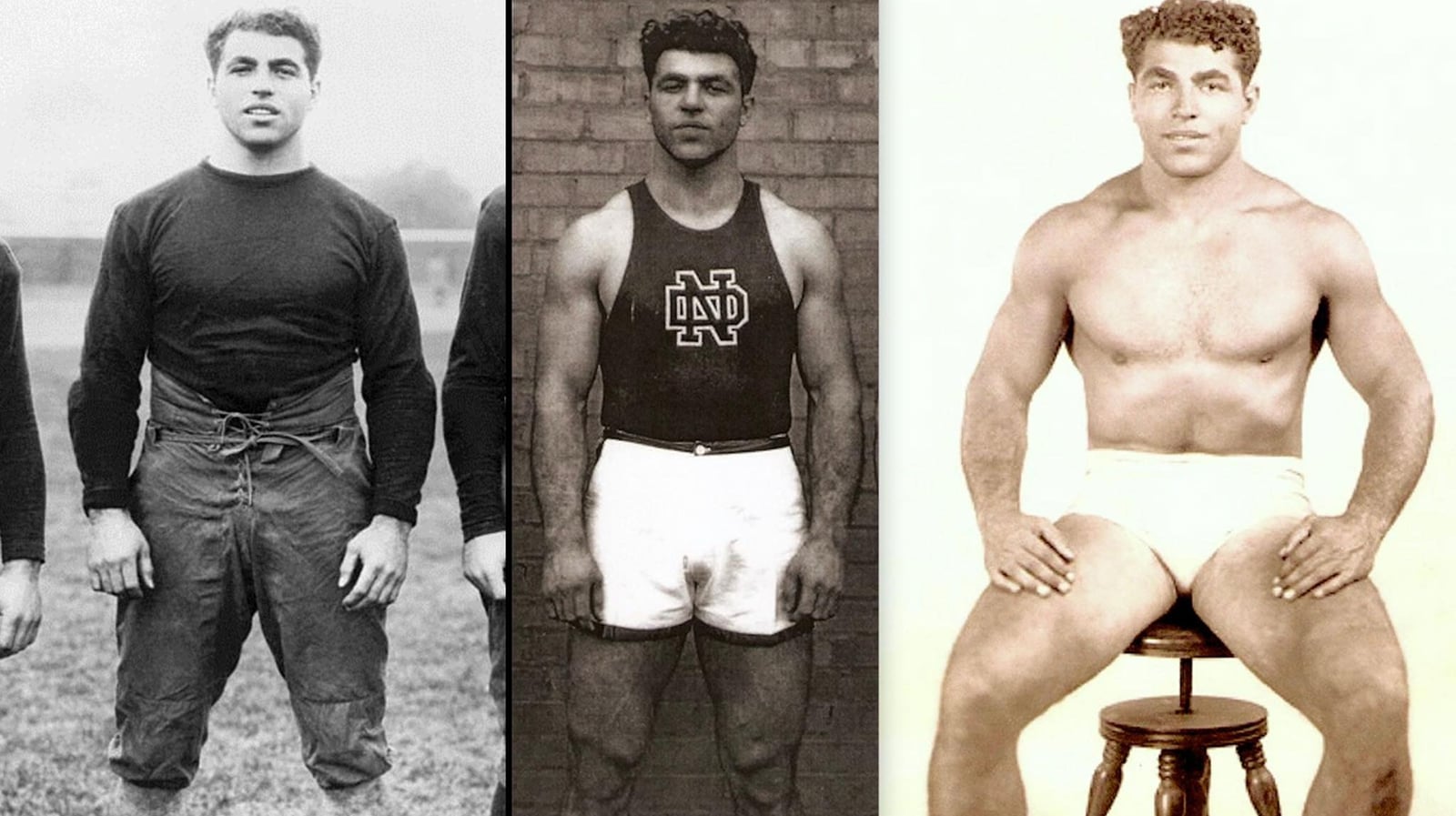
Jumping Joe Savoldi is the man I credit with not inventing, but perfecting, the dropkick. Before he ever stepped through the ropes, he was a football star. He played at Notre Dame under Knute Rockne, part of the last teams Rockne coached before his death, and then went on to the early National Football League with the Chicago Bears. He was used to running into people at full speed, and he brought that same kind of impact over to professional wrestling.
When he turned pro as a wrestler, Savoldi quickly stood out for the way he left his feet. To the fans in the balcony, seeing a former Notre Dame star launch himself through the air and knock somebody flat, that looked like the future.
Savoldi refined that flying tackle into what we now recognize as the modern dropkick, exploding off the mat and snapping both boots into a man’s chest or jaw with real force. Photographs from the period show him almost horizontal in mid-air, and writers of the time talk about him "jumping like a kangaroo." Once Joe popularized that move, every young babyface worth his salt wanted a version of it in his arsenal.
He was more than a stuntman, though. Savoldi was involved in a major feud with Jim Londos in Chicago that drew big gates, and in the early 1930s, he got tangled up in one of the famous title controversies, with different promoters and state commissions arguing over whether his big win in Chicago made him world champion. However you side on that argument, the fact that his name was in the middle of it tells you how seriously he was taken. In an era built on mat men and grinders, "Jumping Joe" gave the babyfaces something new, aerial offense that the crowd could gasp at.
Real Autographs. Only Few Remain.
These are hand-signed originals sold directly by Pro Wrestling Stories. Once they sell out, they are gone for good.
Own a Piece of Wrestling History
-

Justin Credible Signed 8×10 Photo Autograph 2
$30.00 Add to cart -
Jimmy Hart Signed WWF 8×10 Photo Autograph (pictured with Bret Hart & Jim Neidhart)
$35.00 Add to cart -
Fred Ottman Signed WWF 8×10 Photo Autograph (Typhoon)
$35.00 Add to cart -
Jimmy Hart Signed WWF 8×10 Photo Autograph (pictured with Hulk Hogan)
$35.00 Add to cart -
Jerry Lynn Signed 8×10 Photo Autograph
$35.00 Add to cart -
Sabu Signed WWF 8×10 Photo Autograph (Deceased Legend)
$55.00 Add to cart -
Johnny Rodz Signed WWF 8×10 Photo Autograph (wrestling Tony Atlas)
$30.00 Add to cart -
“Greg the Hammer” Valentine Signed WWF 8×10 Photo Autograph
$45.00 Add to cart -
D’Lo Brown Signed WWF 8×10 Photo Autograph
$30.00 Add to cart -
Larry Zbyszko Signed WCW 8×10 Photo Autograph
$40.00 Add to cart -
Larry Zbyszko Signed 8×10 Photo Autograph 2
$40.00 Add to cart -
Butcher Paul Vachon Signed WWF 8×10 Photo Autograph (Deceased Legend)
$45.00 Add to cart -
Brutus the Barber Beefcake Signed WWF 8×10 Photo Autograph (with Ultimate Warrior)
$35.00 Add to cart -
Sunny (Tammy Lynn Sytch) Signed WWF 8×10 Glamour Photo Autograph
$35.00 Add to cart -
Johnny Rodz Signed WWF 8×10 Photo Autograph
$30.00 Add to cart -
Baby Doll (Nickla Roberts) Signed 8×10 Photo Autograph (pictured with Ric Flair)
$35.00 Add to cart -
Hornswoggle (Dylan Postl) Signed WWE 8×10 Photo Autograph
$30.00 Add to cart -
Bushwhacker Luke Signed WWF 8×10 Photo Autograph (pictured with Bushwhacker Butch)
$30.00 Add to cart -
Fred Ottman Signed WCW 8×10 Photo Autograph (The Shockmaster)
$35.00 Add to cart -
Bushwhacker Luke Signed WWF 8×10 Photo Autograph
$30.00 Add to cart -
Nikolai Volkoff & Boris Zhukov Signed WWF “The Bolsheviks” 8×10 Photo Autograph (Deceased Legend)
$60.00 Add to cart -
Leaping Lanny Poffo Signed WWF Turnbuckle Pose 8×10 Photo Autograph (Deceased Legend)
$45.00 Add to cart -
Ken Patera Signed WWF 8×10 Photo Autograph
$35.00 Add to cart -
Missy Hyatt Signed 8×10 Photo Autograph
$35.00 Add to cart -
Marcus “Buff” Bagwell Signed WCW 8×10 Photo Autograph
$30.00 Add to cart -
Tito Santana Signed WWF 8×10 Photo Autograph
$35.00 Add to cart -
Barry Windham Signed 8×10 Photo Autograph
$40.00 Add to cart -
Ron Simmons Signed WWE 8×10 Photo Autograph
$40.00 Add to cart -
Raven Signed 8×10 Photo Autograph
$35.00 Add to cart -
Kevin Sullivan Signed 8×10 Photo Autograph (Deceased Legend)
$45.00 Add to cart -
Bushwhacker Luke Signed WWF 8×10 Photo Autograph (with Bushwhackers Butch)
$30.00 Add to cart -
Vince Russo Signed 8×10 Photo Autograph
$35.00 Add to cart -
Jerry “The King” Lawler Signed WWE 8×10 Photo Autograph 2
$50.00 Add to cart -
Nikolai Volkoff Signed WWF 8×10 Photo Autograph (Deceased Legend)
$45.00 Add to cart -
Johnny Rodz Signed WWF 8×10 Photo Autograph
$30.00 Add to cart -
Justin Credible Signed 8×10 Photo Autograph
$30.00 Add to cart -
Bushwhacker Luke Signed WWF 8×10 Photo Autograph (of The Bushwhackers)
$30.00 Add to cart -
Sunny (Tammy Lynn Sytch) Signed 8×10 Photo Autograph
$35.00 Add to cart -
The Tonga Kid (Sam Fatu) Signed WWF 8×10 Photo Autograph
$35.00 Add to cart -
Sunny (Tammy Lynn Sytch) Signed WWF 8×10 Photo Autograph
$35.00 Add to cart -
Nikolai Volkoff Signed WWF 8×10 Photo Autograph 2 (Deceased Legend)
$45.00 Add to cart -
“Hacksaw” Jim Duggan Signed WWF 8×10 Photo Autograph
$40.00 Add to cart -
Johnny Rodz Signed WWF 8×10 Photo Autograph (pictured with The Grand Wizard)
$30.00 Add to cart -
Johnny Rodz Signed WWF 8×10 Photo (wrestling Andre the Giant)
$30.00 Add to cart -
Bushwhacker Luke Signed WWF 8×10 Photo Autograph (The Bushwhackers)
$30.00 Add to cart -
Steve Keirn Signed WWF 8×10 Photo Autograph (Fabulous Ones)
$30.00 Add to cart -
Steve Keirn Signed WWF 8×10 Photo Autograph (Skinner)
$30.00 Add to cart -
Leaping Lanny Poffo Signed WWF Frisbee Pose 8×10 Photo Autograph (Deceased Legend)
$45.00 Add to cart -
Ken Patera Signed WWF 8×10 Photo Autograph (pictured with Bobby Heenan & John Studd)
$35.00 Add to cart -
Sunny (Tammy Lynn Sytch) Signed WWF 8×10 Photo Autograph (WWE Hall of Fame)
$35.00 Add to cart -
Johnny Rodz Signed WWF 8×10 Photo Autograph (pictured with Captain Lou Albano)
$30.00 Add to cart -
Brutus the Barber Beefcake Signed WWF 8×10 Photo Autograph 2
$35.00 Add to cart -
Tito Santana Signed WWF 8×10 Photo Autograph (Strike Force)
$35.00 Add to cart -
Koko B. Ware Signed WWF 8×10 Photo Autograph
$45.00 Add to cart -
Jerry “The King” Lawler Signed 8×10 Photo Autograph
$50.00 Add to cart
5. Lou Thesz: The Best Professional Wrestler I Ever Saw

Personally, Lou Thesz is the best professional wrestler I have ever seen in my life. I have friends who will argue for Verne Gagne, and I respect that, but for me, it is Thesz. He could do everything, and he made it all look like it belonged in a real contest.
By the time he was in his early twenties, Thesz had already climbed higher than almost anyone his age ever had. In 1937, he defeated Everett Marshall for a recognized world heavyweight championship in a marathon match and, at around twenty-one years old, became one of the youngest world champions in the history of the business. From there, he spent the next two decades either holding a world title or chasing it, unifying belts from different territories and eventually becoming the standard bearer for the National Wrestling Alliance.
Between 1949 and the mid 1950s, Thesz set about collecting the various world titles that were still floating around. When he beat Baron Michele Leone in Los Angeles in 1952 to absorb the California version of the world title into the NWA belt, he came as close as anyone since the Gotch and Hackenschmidt days to being an undisputed world champion.
In ring, he could work hold for hold with the shooters and hookers in the back, and he could also give the fans a little flair with things like the Thesz press, the dropkick, and that beautiful, smooth snap mare he used to set up his finishes.
I once saw him in a televised match for Jim Crockett Promotions out of WRAL TV after he had beaten Buddy Rogers. It was a three-man gauntlet: Angelo Martinelli, a clean scientific wrestler; big Johnny Heideman, who came in trying to just beat the hell out of him; and a young Cowboy Ron Reed, who later became Killer Buddy Colt in Championship Wrestling from Florida. Thesz handled all three, adjusting his style to each man, and that told you everything you needed to know about how complete he was.
Outside the ring, Thesz was right in the middle of the politics that shaped modern wrestling. He was part of the reason Verne Gagne eventually created the AWA, and he was a key figure in the split that led to what we now know as WWE, which started as Capitol Wrestling.
He never cared for the East Coast’s heavy gimmick scene, and he did not get along with Rogers. When Rogers had to give up the NWA belt because of heart problems, Vince McMahon Sr. and his partners realized that if Thesz was never going to be their regular champion at Madison Square Garden, they needed to crown their own. That is where Bruno Sammartino and the WWWF came in, and it shows you just how central Lou Thesz was to the whole chessboard.
Whether he was on your side or not, everybody in wrestling had to reckon with him.
6. Bronko Nagurski: Chicago Bears Legend and Two-Time World Champion
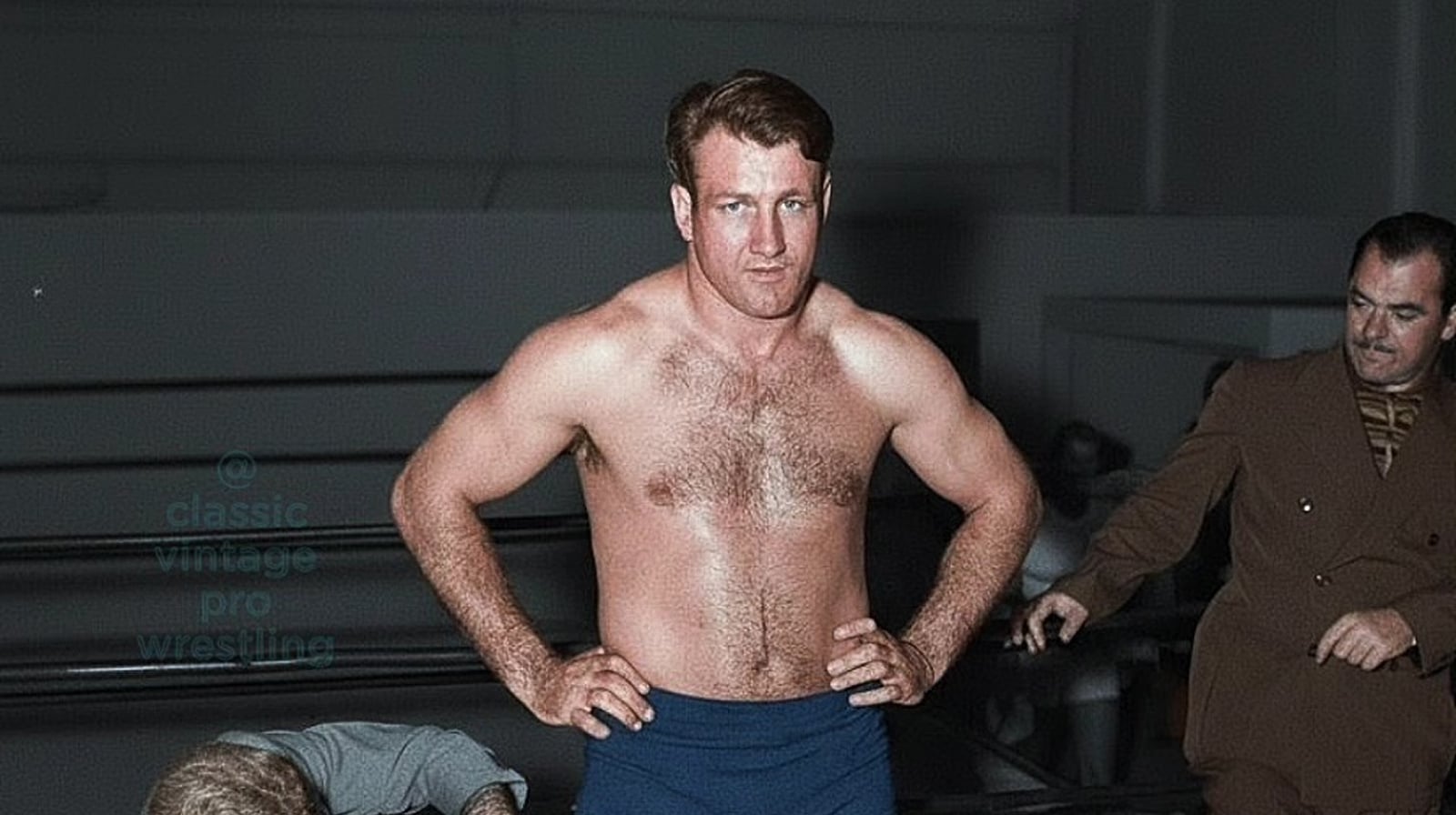
Bronko Nagurski was already a legendary Chicago Bears fullback when he crossed over into professional wrestling, and he quickly became one of its biggest attractions. He had been an All-American at the University of Minnesota, one of the rare players to be honored at two positions, fullback and tackle, before George Halas signed him to the Bears in 1930. Fans who had watched him blow through NFL lines now got to see that same raw power up close in a professional wrestling ring.
Managed by Tony Stecher, brother of former world champion Joe Stecher, Nagurski debuted in 1933 and was pushed hard from the start. In his first match, he flattened Tag Tagerson in four minutes, and that set the tone. He was billed at around six foot two and 235 pounds and looked every bit of it, a barrel-chested powerhouse in a simple pair of trunks who did not need gimmicks. Promoters loved being able to advertise a real, current pro football star on their cards, and the fans responded.
Nagurski twice captured the National Wrestling Association version of the world heavyweight title. He defeated a young Lou Thesz on June 23, 1939, to win his first world championship. He lost the belt to Ray Steele on March 7, 1940, then regained it from Steele almost exactly a year later on March 11, 1941, before finally dropping it to Sandor Szabo that June. In between those title changes, he defended in major cities across the Midwest and South, packing houses on name value alone.
During WWII, the Bears even pulled him back for a brief comeback season in 1943 when wartime rosters were thin, and he helped them win another NFL title. Not many men can say they were a champion in both the National Football League and the wrestling ring. Bronko Nagurski could, and that is why his name still comes up whenever people talk about true crossover stars.
7. Gus Sonnenberg: The Flying Tackle That Changed Wrestling
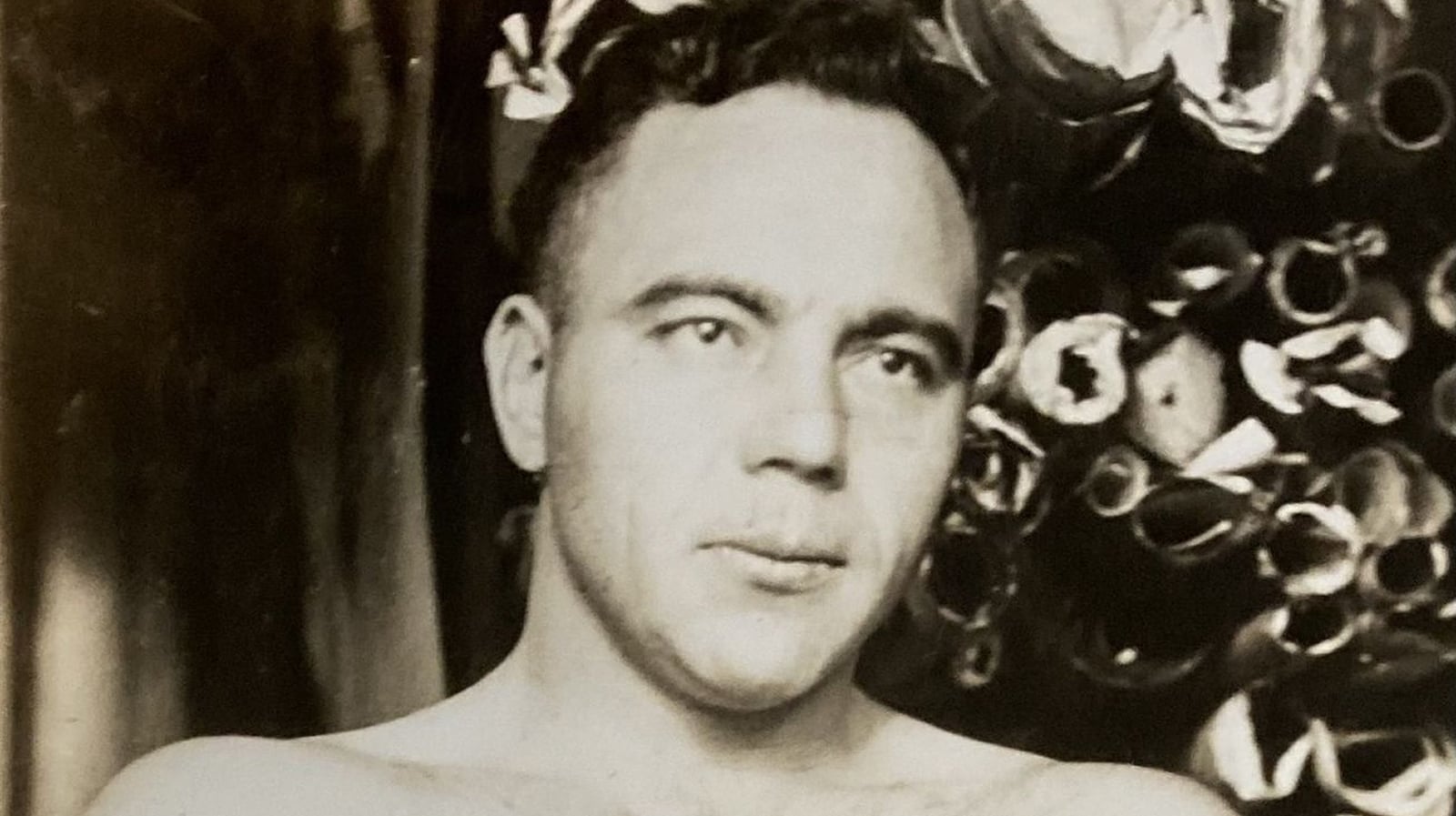
Gus Sonnenberg was one of the earliest football-to-wrestling converts to capture a recognized pro wrestling world title, and there is a great story about one of his first matches. He hit his opponent with a flying tackle, basically a football shoulder block at full speed, and the man got up, stopped the match, and told the referee, "He can’t do that. There is nothing in wrestling that has anything to do with flying tackles." The old timers hated it. The fans loved it.
Before he ever put on wrestling boots, Sonnenberg had been a star in the early NFL with the Providence Steam Roller and helped them win the 1928 league championship. He was short and stocky but explosive, and he brought that same low center of gravity into the ring. Promoter Paul Bowser in Boston saw the potential in advertising a football hero, and he built Sonnenberg up as a wrecking ball who could flatten giants with one well-timed charge.
In January of 1929, Sonnenberg defeated Ed "Strangler" Lewis in Boston to win a widely recognized version of the world heavyweight championship. The National Boxing Association, which had taken it on itself to oversee wrestling titles at the time, did not care for the way Sonnenberg defended that belt and eventually stripped him, but Bowser kept right on recognizing him as world champion and even created the American Wrestling Association name to hang the title on. That Boston AWA version of the world championship ran for decades and shaped the careers of a lot of the men in this list.
Sonnenberg eventually lost his belt in the early 1930s to Ed "Don" George, another footballer-turned-wrestler, but by then the damage was done. Flying tackles and running body blocks were part of the game. What had been a scandal in his first few matches became standard babyface offense. You can draw a straight line from Gus Sonnenberg’s first tackle to every running spear and dive you see in wrestling today.
8. Yvon Robert: The Lion of Montreal
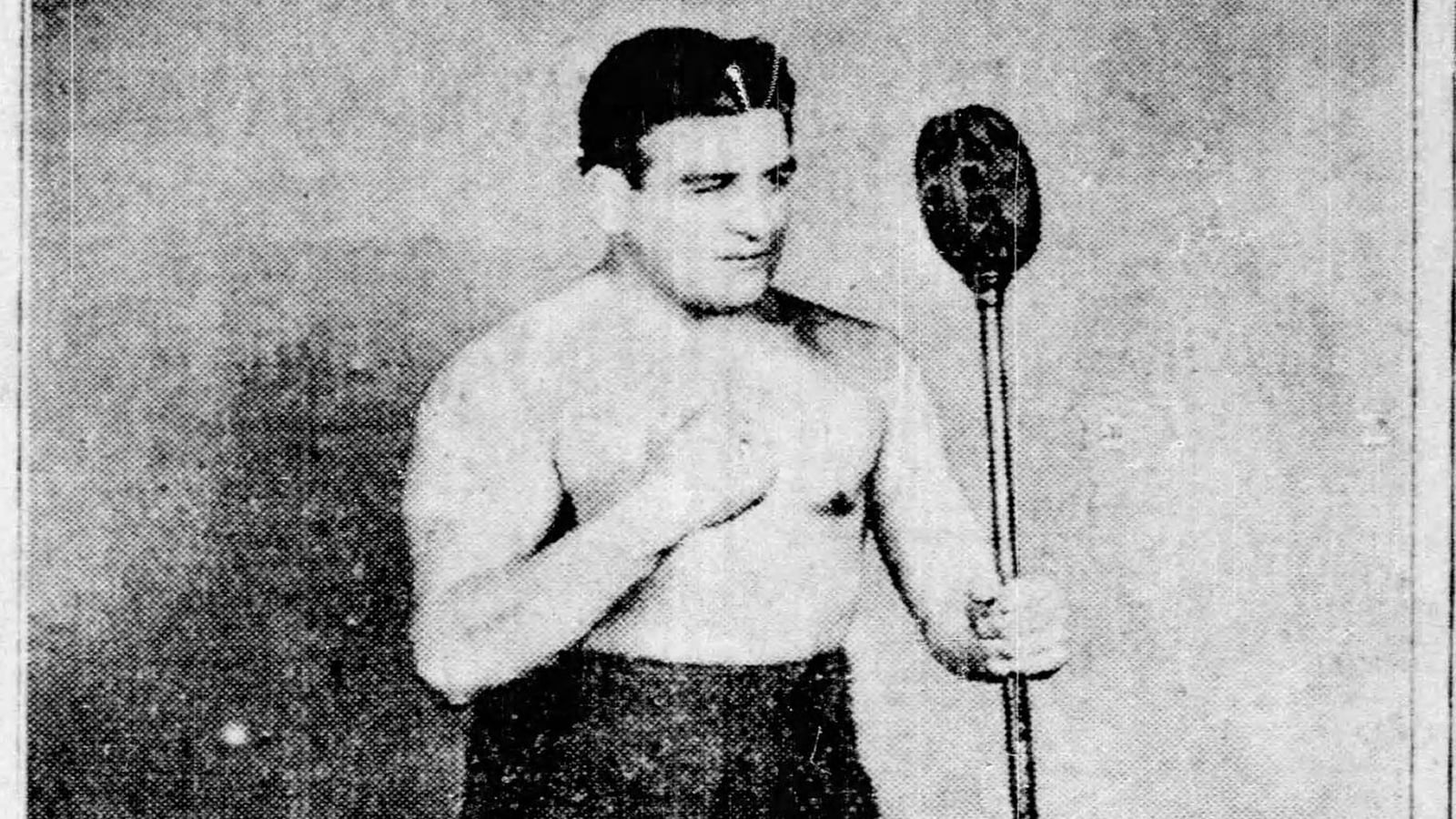
We need to talk about Canada. Canada had two major wrestling centers, Montreal and Toronto, and the man who built the Montreal version of Big Time Professional Wrestling was Yvon Robert. Born in Montreal in 1914, he debuted as a pro in the early 1930s and quickly earned the nickname "Le Lion" for the way he attacked in the ring.
Robert was a powerful but surprisingly agile technician. He wrestled all over the United States for promoters like Paul Bowser in Boston and drew big crowds there, but his real kingdom was the Montreal Forum. He held multiple versions of world and international titles, including the AWA (Boston) World Heavyweight Championship, which he won from Danno O’Mahony in July 1936, and at least five reigns with the Montreal Athletic Commission’s International Heavyweight title. In Paris and other European cities, he was billed as "World Champion 1938," and in Montreal, the local promotion regularly recognized him as the man at the top.
Contemporary accounts talk about crowds of 15,000 and 18,000 fans packing the Forum to see Robert defend against names like Henri Deglane, Steve Casey, and other top heavyweights of the day. He was that rare kind of babyface who looked just as comfortable trading holds on the mat as he did firing up for a wild comeback, and the fans in Quebec took him as one of their own.
By the time television arrived and later stars came along, Montreal already thought of itself as a wrestling city. That was Yvon Robert’s doing. Without him, the pipeline that eventually produced men like Dino Bravo and the Rougeaus would have looked very different.
9. "Whipper" Billy Watson: The Canadian Hero Who Shaved Gorgeous George
Whipper Billy Watson was to Toronto what Yvon Robert was to Montreal. For more than twenty years, he was the babyface that promoter Frank Tunney could always depend on to headline Maple Leaf Gardens. He made the British Empire Heavyweight Championship the main belt around Toronto and, for a time in the 1950s, he also held the National Wrestling Alliance World Heavyweight Title after defeating Lou Thesz, giving Canadian fans a true world champion to cheer for.
Watson’s style was built on clean, scientific wrestling punctuated by a vicious-looking finishing hold he called the sleeper, or the Canuck Commando in some write-ups. He carried himself like a gentleman, did charity work around Ontario, and was the kind of local hero parents did not mind their kids rooting for. The fans trusted him, and that trust translated into consistently strong houses for Tunney’s office.
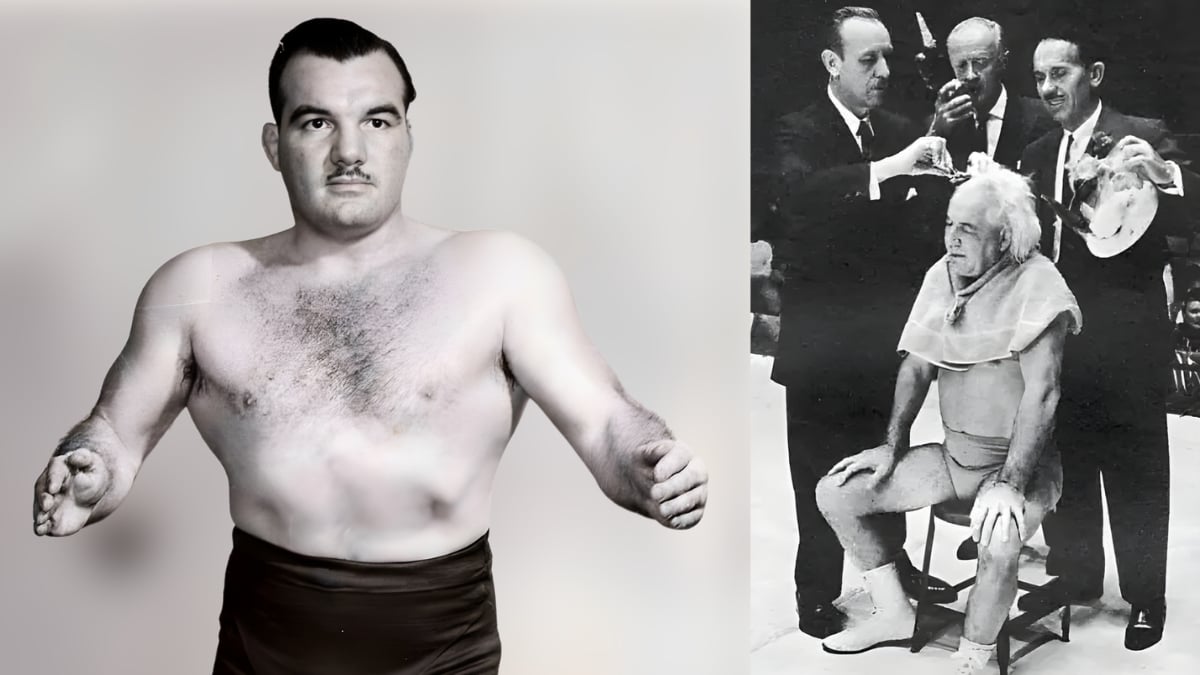
His most famous bout came on March 12, 1959, at Maple Leaf Gardens, where he faced a past-his-prime but still notorious Gorgeous George in a no-curfew, there-must-be-a-winner match. The stipulations were simple. If Watson lost, he would retire. If George lost, his beloved marcelled hair would be shaved in the middle of the ring. Around 14,000 fans packed the building, the largest Toronto crowd of the year, and thousands more watched the match on Canadian television.
George ended up in Watson’s sleeper, and when outside interference could not save him, the decision stood. The babyfaces poured out from the dressing room to make sure the stipulation was carried out, and an enraged Toronto crowd watched as Whipper took the clippers and shaved the most famous head of hair in wrestling. That one scene, Watson standing over a bald Gorgeous George, is the perfect snapshot of his role in Canadian wrestling, the steady hometown hero finally getting one over on the biggest peacock of them all.
10. Danno O’Mahony: Boston’s Imported Irish Superman
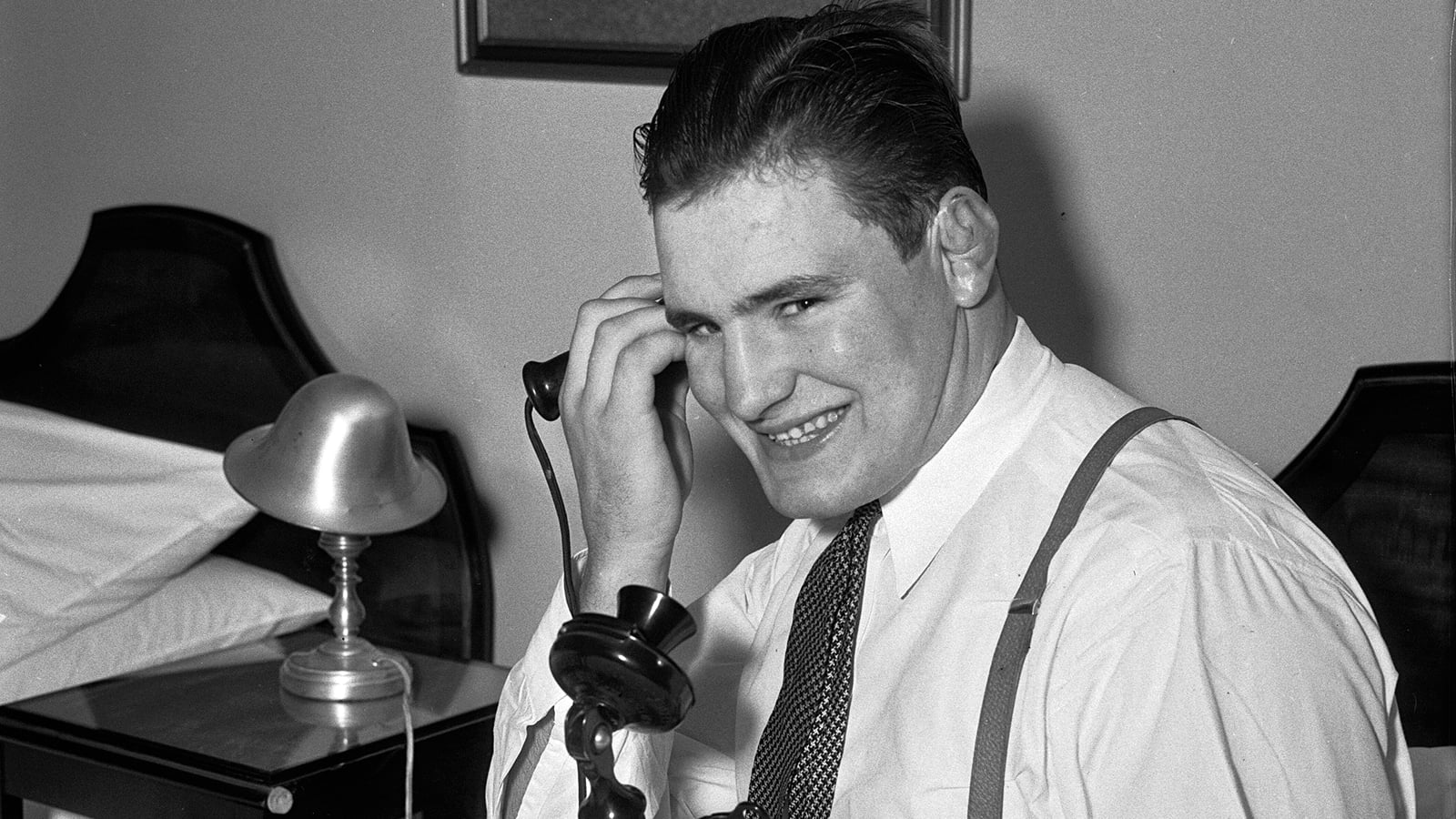
Danno O’Mahony was from County Cork, Ireland. The promoter in Boston was Paul Bowser, and when he took one look at the Irish neighborhoods that filled his Boston cards and realized he could do something special if he brought in a big, tough countryman for them to rally around. So he began importing O’Mahony and other Irish wrestlers and turning them into professional stars.
O’Mahony was the most successful of that approach. Billed at around six foot two and over 230 pounds, he was rugged and broad-shouldered, with a simple, straightforward style built around power throws and a signature move that later generations would know as the Irish whip. In the mid-1930s, Bowser pushed him hard as the "Irish Superman," and for a time, he was recognized as world heavyweight champion by several major organizations after high-profile wins over men like Jim Londos.
In July 1936, O’Mahony lost the AWA (Boston) World Heavyweight Title to Yvon Robert in Montreal in front of a huge crowd, one of several title changes in the complicated world championship picture of that era. Even so, his run at the top proved just how powerful it could be when a promoter built a babyface around a local fan base’s identity. Boston’s Irish fans took Danno as one of their own, and the gates reflected it.
He wrestled people like Ed "Strangler" Lewis and toured across North America before eventually returning to Ireland, where his life was cut short by an automobile accident in 1950. For a brief window in the mid 1930s, though, Danno O’Mahony was as hot a ticket as anyone in the world, proof that the right babyface in the right town could carry a whole territory on his back.
11. Frank Sexton: The Quiet Multi-Champion
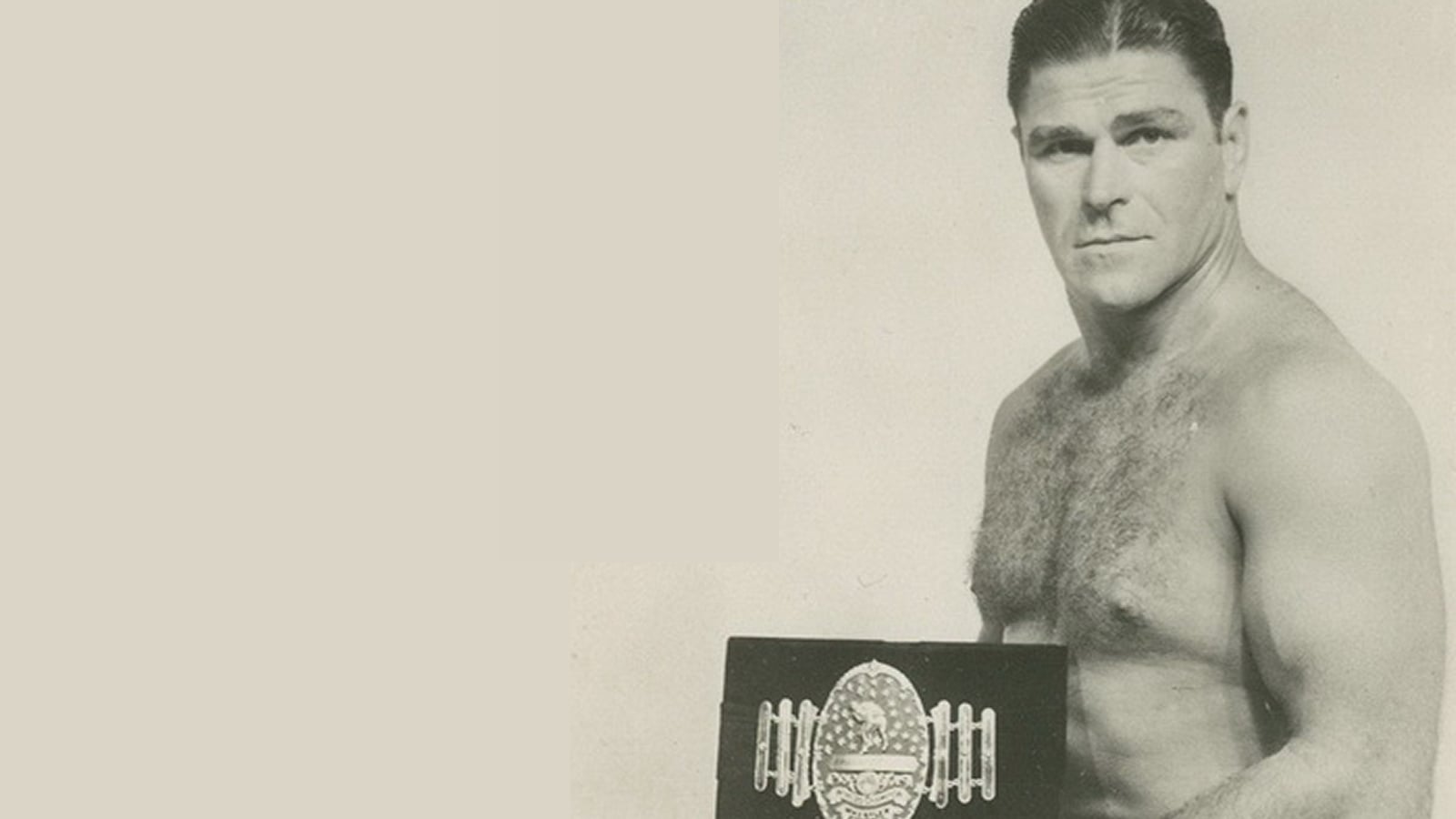
Frank Sexton held just about every major belt you could get your hands on in the 1940s, but you do not hear his name tossed around the way you hear Rogers or Thesz today. He was a long-running AWA World Heavyweight Champion out of Boston, holding that version of the world title for almost five years straight from the mid 1940s into 1950, which is a serious run in any era. On top of that, he picked up the Montreal version of the world championship, Pacific Coast titles, and British Empire honors along the way, quietly stacking up trophies while other men grabbed more of the headlines.
Sexton grew up on a farm in Ohio, played football and wrestled at Ohio State, and earned the nickname "Powerhouse" before he ever set foot in a big arena. He was six foot two, around 230 to 240 pounds, and built like a man who had thrown real bales of hay in his life.
In the ring, he was a great scientific wrestler with a grinding, methodical style, and he was especially known for his Giant Swing, body scissors, and headlock. Sexton is right alongside the other top stars of the day, is credited with a wide catalog of holds, and was rated highly by his peers.
He was never as flashy as Buddy Rogers or as mythologized as Lou Thesz, but when you look at the belts he held and the length of his reigns, you are forced to admit that any man sitting on that many major titles in the Thesz era clearly belonged in the top tier of babyfaces.
12. Ray Steele: Shooter at the Center of a Garden Meltdown
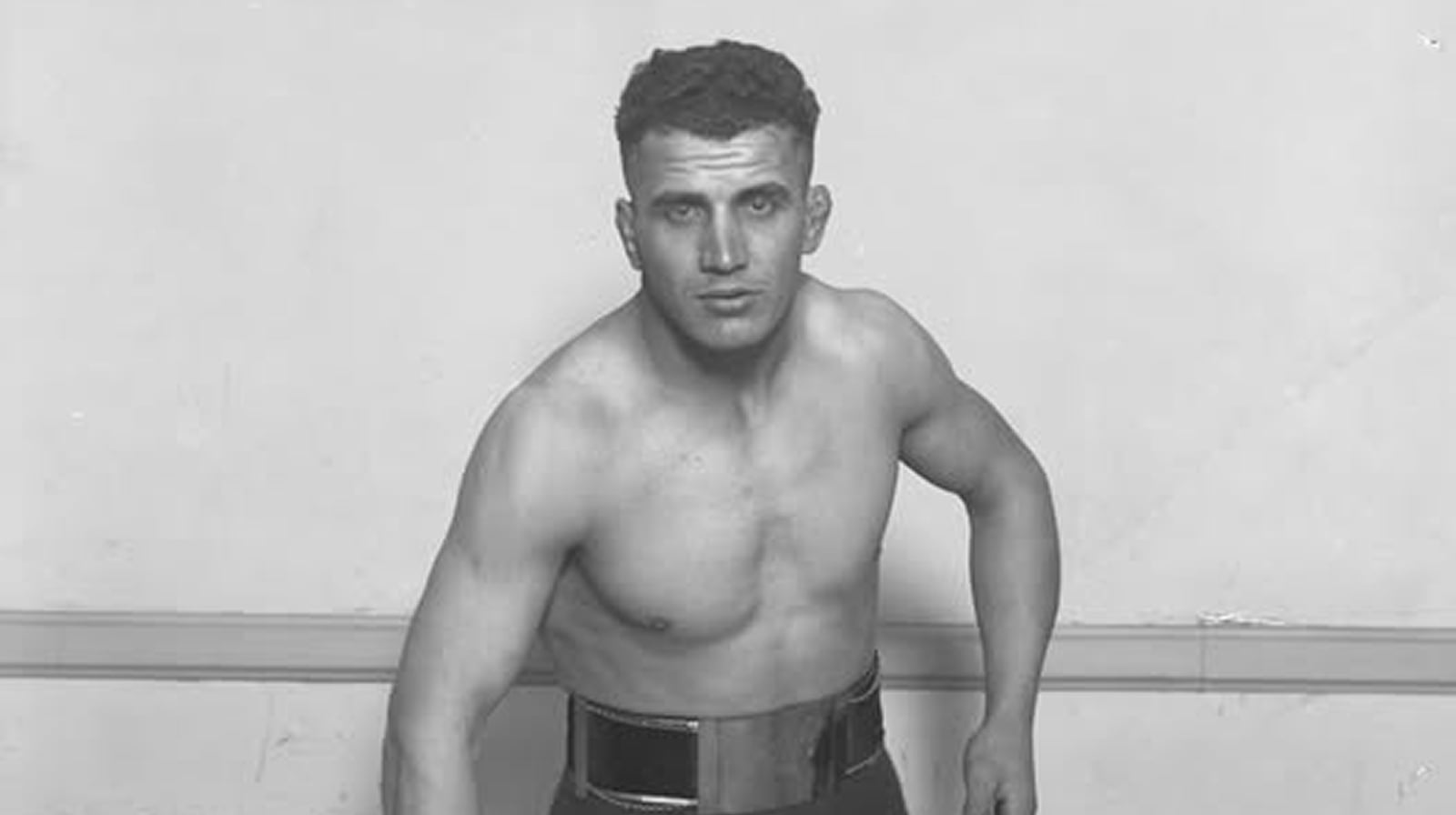
Ray Steele was one of those rugged, highly respected technicians whose reputation in the dressing room sometimes outstripped his fame with casual fans. Born Peter Sauer in a German colony in Russia, he came to the United States as a child and grew up around Lincoln, Nebraska, where he quickly made a name for himself as a top amateur before turning pro. Other wrestlers talked about his balance, his reflexes, and the sheer number of holds he could chain together when he wanted to turn a match into a wrestling lesson.
Steele captured the National Wrestling Association version of the world heavyweight championship by defeating Bronko Nagurski on March 7, 1940, in St. Louis. He held that belt for just over a year before dropping it back to Nagurski on March 11, 1941, in Houston, but during that time, he was recognized as one of the finest pure wrestlers alive. Later on, he was even recognized as NWA World Heavyweight Champion again during the war years and added a World Junior Heavyweight Title to his resume, which shows the range of weights he could credibly work at.
He was also involved in one of the stranger matches in Madison Square Garden history, a bout with Jim Londos promoted amid political tension between rival camps. There was not a lot of wrestling, the crowd got restless and booed, and it became one of those stories that "proved" if two wrestlers do not like each other, they will not sell for each other. Steele finally knocked Londos down, took the disqualification, and ended the whole mess, giving the newspapers more ammunition to use against the sport. Away from that fiasco, though, he was Lou Thesz’s mentor and a man Thesz always named as one of the greatest wrestlers he ever knew, which might be the highest compliment you can get.
13. Dick Shikat: The German Powerhouse with a Shooter’s Reputation
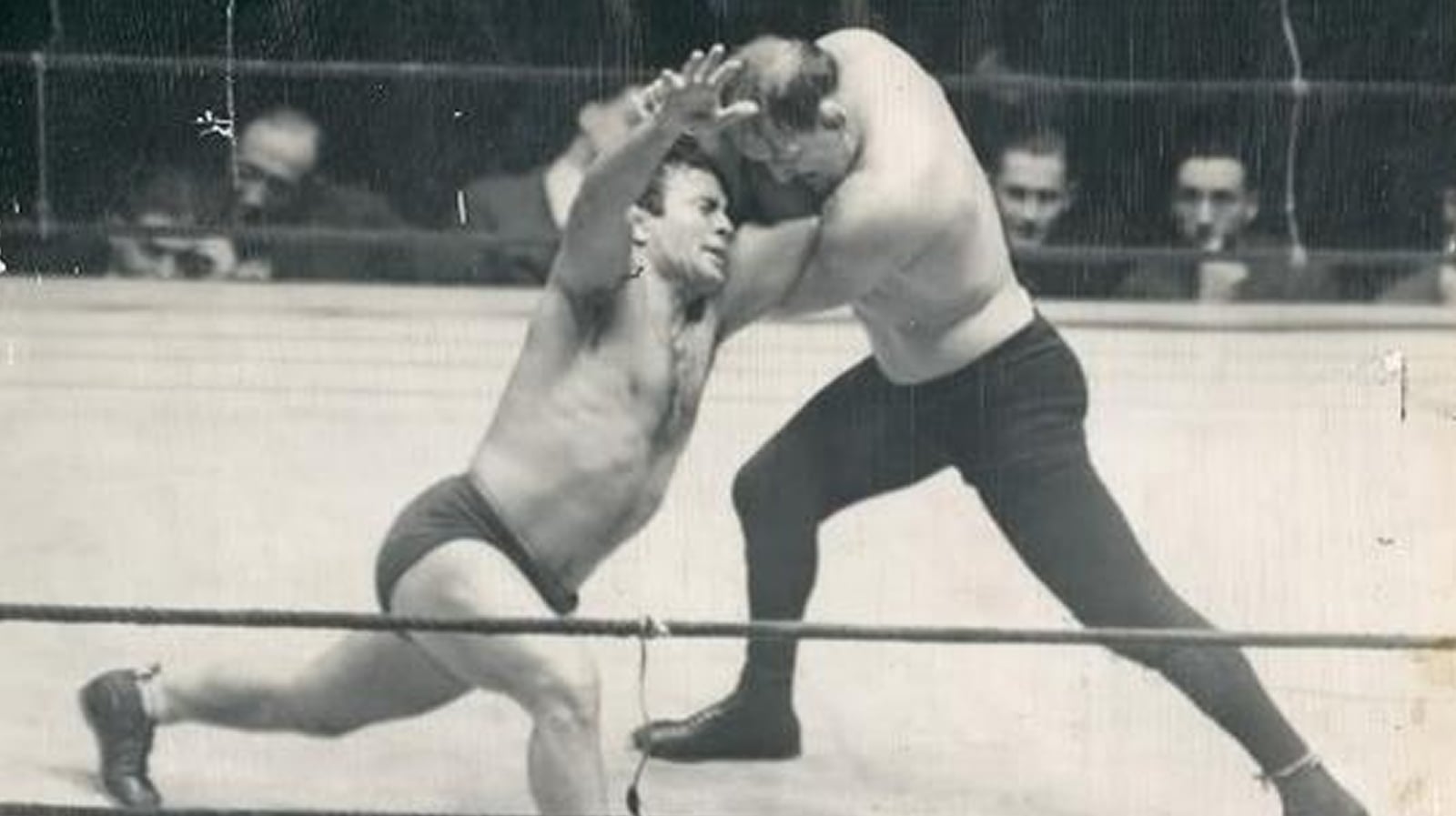
Dick Shikat is another underrated name when you start talking about serious scientific wrestlers. Originally from Germany, he came to America in the 1920s and quickly gained a reputation as a no-nonsense, hooker type who could tie almost anyone in knots if things got rough. Promoters liked having a man like that around because it kept some of the louder personalities honest, and fans bought him as a legitimate threat the moment he stepped through the ropes.
Shikat’s list of titles is impressive. In 1929, he defeated Jim Londos to gain recognition as the National Boxing Association’s World Heavyweight Wrestling Champion, and in March of 1936, he beat Danno O’Mahony for the National Wrestling Association’s version of the heavyweight title. A month or so later, he lost that claim to Ali Baba at Madison Square Garden, which put Baba in the driver’s seat with the New York State Athletic Commission and kicked off another round of arguments over who really held "the" world title.
That 1936 stretch also produced one of wrestling’s most notorious double crosses. Shikat was supposed to lose to O’Mahony, but instead took him apart and forced a real submission, then refused to hand the title back. The promoters blackballed him in a lot of major cities, but the story only added to his aura as a tough, no-nonsense shooter.
In the Carolinas and other territories where memories were not as long, he could still be used effectively as a babyface or a dangerous challenger, because the fans knew that whatever else was going on, Dick Shikat was not a man to be trifled with.
14. Orville Brown: The First NWA Champion History Forgot
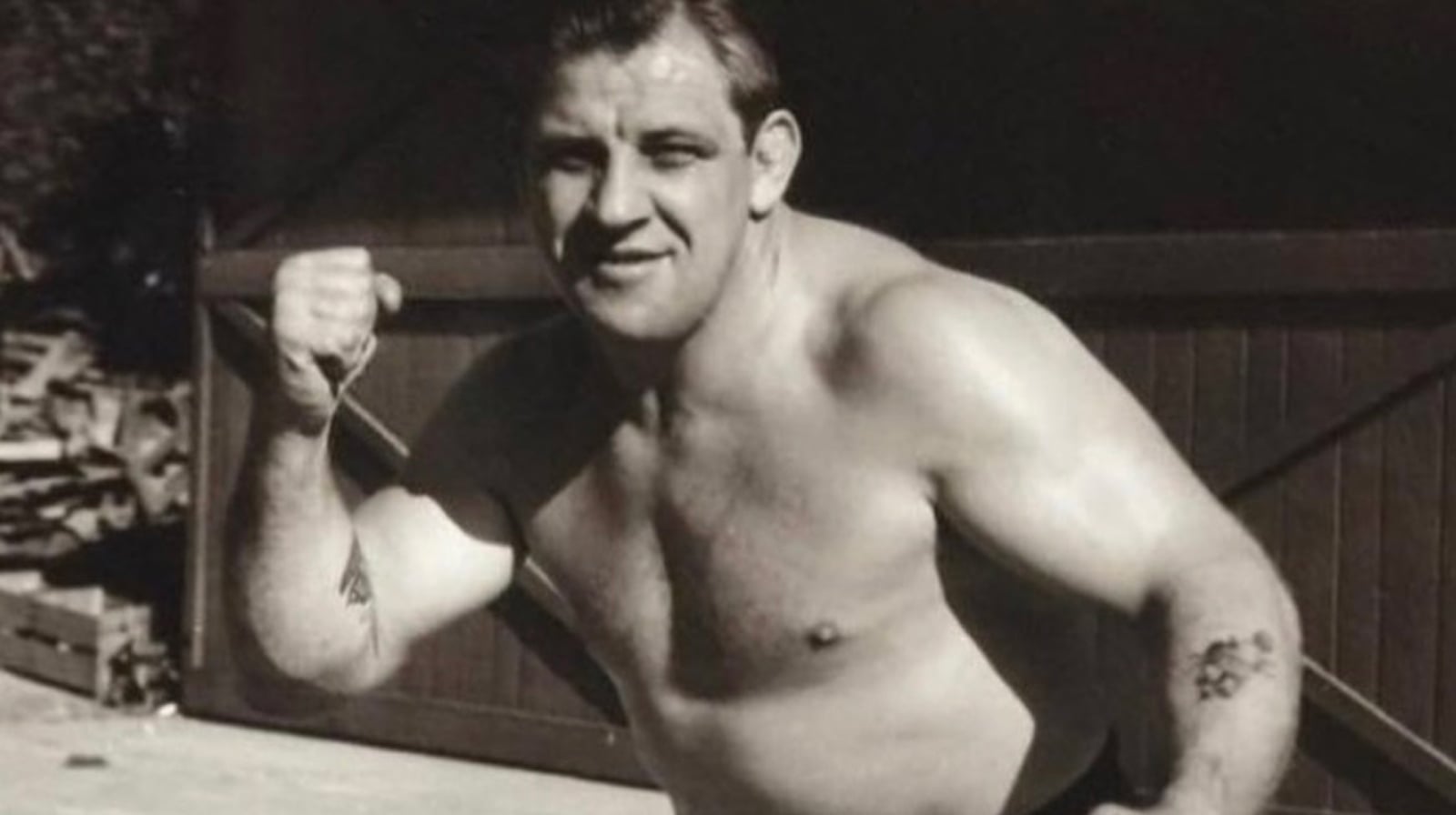
Orville Brown may be the most overlooked world champion of all time. When the modern National Wrestling Alliance was formed in 1948, Brown was already the dominant champion of the Kansas City-based Midwest Wrestling Association, having held the MWA World Heavyweight Title more than 10 times throughout the 1940s. The promoters who made up the new Alliance chose him as their first NWA World Heavyweight Champion, and instead of minting a brand-new belt, he simply had plates added to his old MWA title to reflect the new name.
For about a year, Brown was the man carrying the Alliance’s hopes of unifying all the scattered world titles that still existed around North America. He was booked in long, rugged matches with top contenders and other claimants, and a major unification bout with Lou Thesz was signed for late November 1949 in St. Louis, set to decide once and for all who the real world champion was. By every account, he was a strong draw in Missouri, Kansas, and the surrounding states, a serious, respectable babyface champion fans could rally behind.
Then disaster struck. In the early hours of November 1, 1949, driving home from a show in Des Moines with fellow wrestler Bobby Bruns, Brown’s car collided with a stalled tractor-trailer near Eagleville, Missouri. His Cadillac slid under the back of the truck and was torn open. Brown suffered severe head and arm injuries, spent weeks in the hospital, and was told he would never wrestle again.
The NWA could not wait forever, and they eventually awarded the world title to Thesz, who went on to become the face most people associate with that belt. Brown faded into the shadows of history, but if you look back at the records, he was the first official NWA World Heavyweight Champion, and he never actually lost that title in the ring.
15. Sándor Szabó: West Coast Mainstay and TV Pioneer
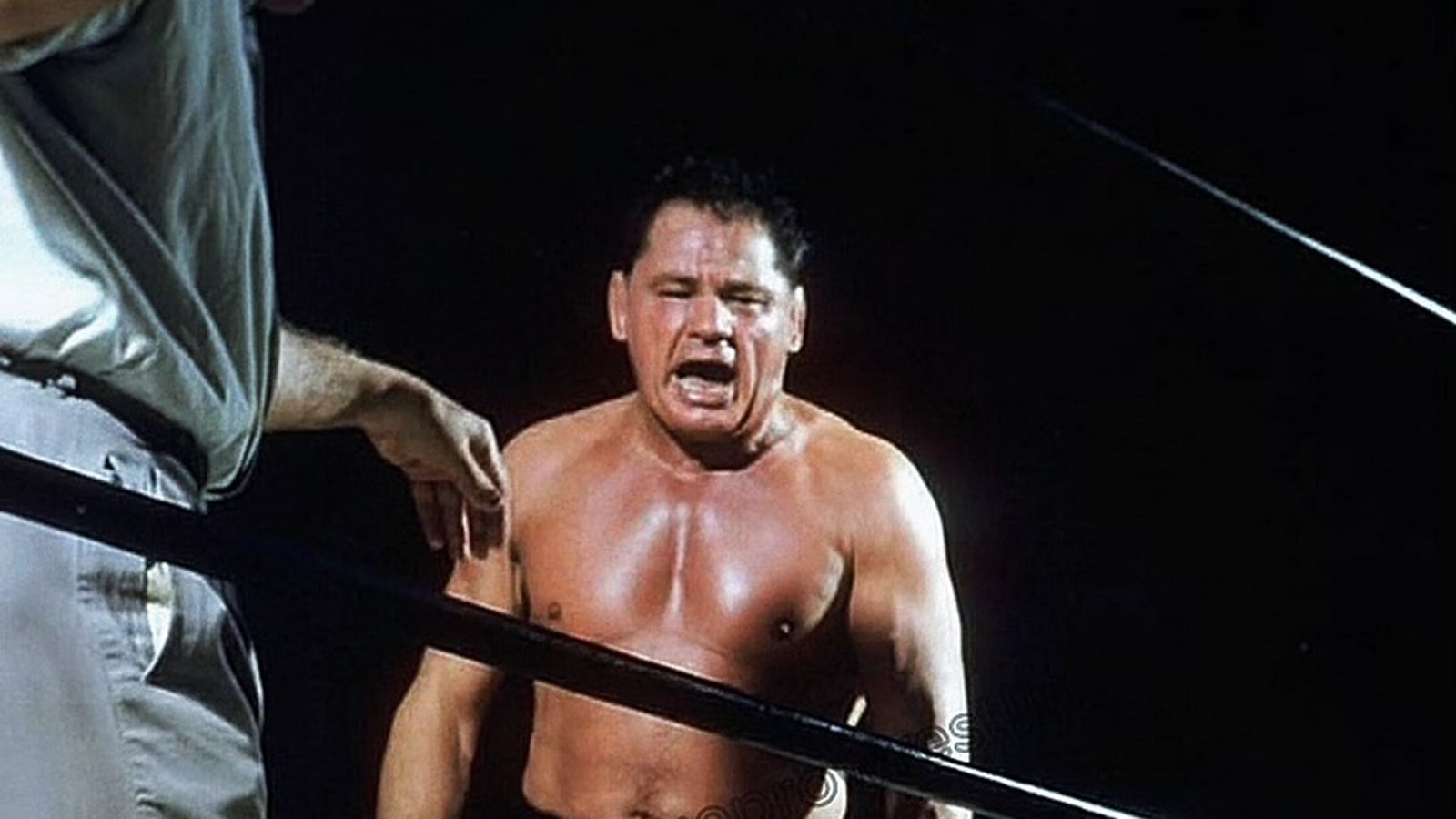
Sándor Szabó was a Hungarian-born powerhouse who became one of the major draws around Los Angeles and the West Coast from the late 1930s into the 1950s and beyond. Early in his American career, Jack Curley and Jack Pfefer promoted him in New York as a kind of attraction, a big foreign strongman to bring in the curious, but once he settled on the West Coast, he turned into something more than a novelty. He became one of the pillars of that whole territory.
In the early 1940s, Szabó held three different versions of world titles, including claims out of Los Angeles and other big cities, and he piled up regional championships on the Pacific Coast. When television arrived in Southern California, he was right there in the thick of it. The weekly show Beat The Champ out of Los Angeles featured him heavily, and a whole generation of fans got their first look at pro wrestling through a screen filled with Sándor’s barrel-chested frame, dark hair, and booming personality.
By the 1950s, he was not just one of the top in-ring stars in Southern California; he was also assistant booker to Jules Strongbow in Los Angeles, helping put together the cards and decide which feuds would carry the territory. He held tag team championships in both Los Angeles and San Francisco and even recorded a song, "Take Me in Your Arms," which gives you a sense of the kind of crossover appeal promoters thought he had.
Szabó wrestled his last match in 1963 and passed away in 1966, but any time vintage LA wrestling footage pops up, and you see that familiar face on a grainy black and white screen, you are looking at one of the men who helped usher West Coast wrestling into the television age.
16. Bobby Managoff: The Scientific Star Who Helped Build Hawaii
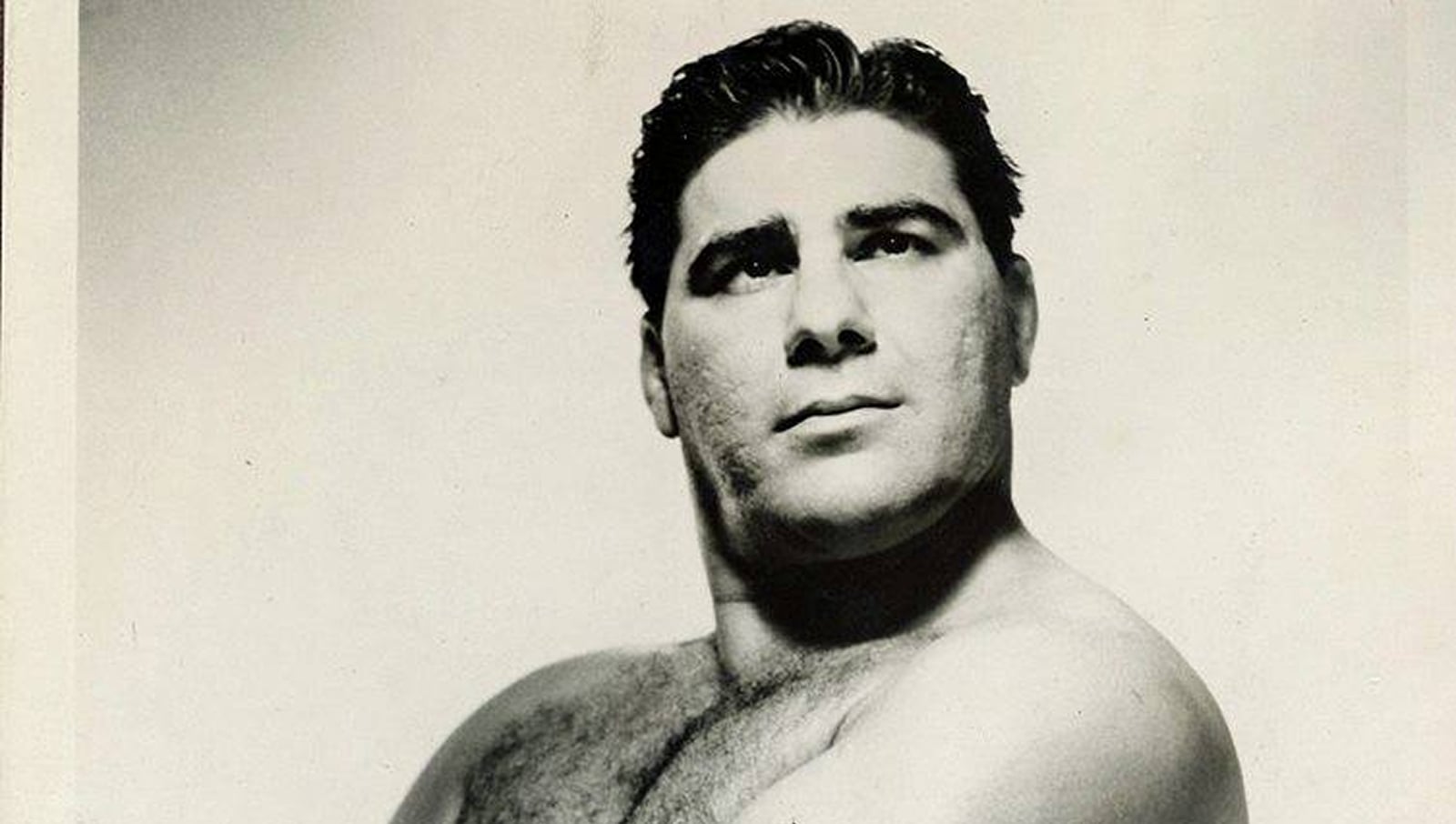
Bobby Managoff was an all-around great scientific wrestler, one of those smooth, clean workers who made everything look effortless. He came out of a wrestling family in Chicago, learned his trade the hard way against tough pros, and by the early 1940s he was good enough that several major offices recognized him as a world heavyweight champion. On top of that, he collected tag team titles in different territories, the kind of steady success that does not always make headlines but keeps a man high on the card for years.
Managoff’s style was textbook babyface. He relied on timing, counters, and holds rather than roughhouse tactics, and he had the sort of ring presence that made fans believe in him the moment the bell rang. When he went to Hawaii in the years before and just after the war, he quickly became one of the most popular wrestlers on those cards, helping establish wrestling there as a regular attraction rather than just an occasional novelty show. Local fans took to him, and promoters knew they could build whole tours around his name.
He is a good reminder that not every major babyface in the pre-TV era needed a wild gimmick or a flashy costume. Some of them were simply excellent wrestlers fans trusted to fight fair and fight hard, and Bobby Managoff fit that mold perfectly.
17. Ed "Don" George: World Champion Caught in the Middle
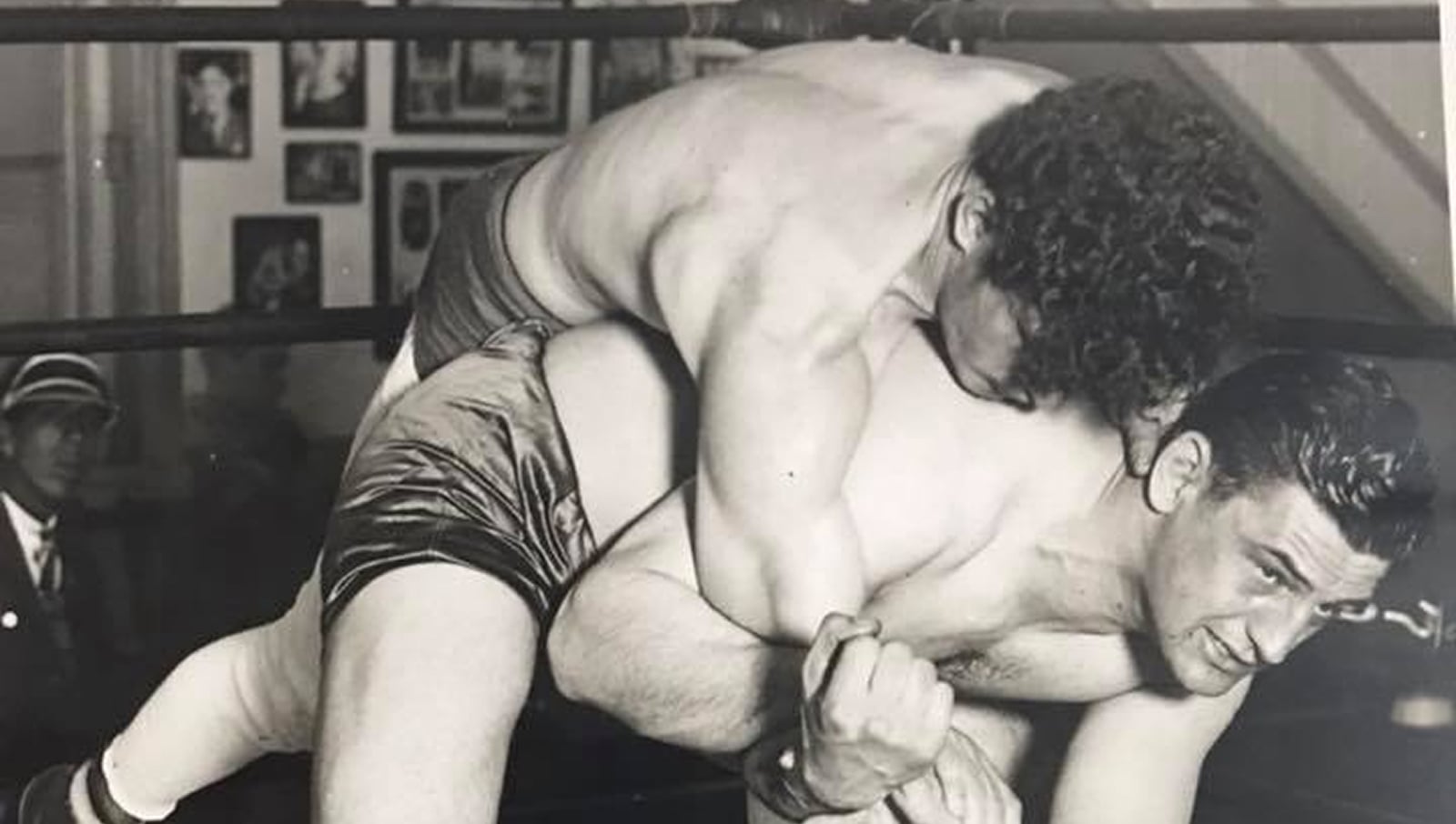
Ed "Don" George was very popular around Boston and up and down the East Coast, but he started out as something far removed from the usual carnival grappler. He had been a standout amateur at the University of Michigan, an Olympic wrestler for the United States in 1928, and a legitimate sports headline before he ever took a payoff from a promoter. When he turned pro, that amateur credibility gave him instant stature in the eyes of fans and sportswriters who were still trying to decide how seriously to take professional wrestling.
In December 1930, George defeated Gus Sonnenberg for the National Wrestling Association’s version of the world heavyweight championship, marking a changing of the guard from the football-tackle era to a more straight-ahead mat style. He also held the AWA (Boston) World Heavyweight Title under Paul Bowser’s promotion and was matched regularly with names like Ed "Strangler" Lewis and Gus Sonnenberg in the biggest arenas on the East Coast. On posters, he was billed as "Don" George, the college and Olympic star who had proven he could hang with the roughest professionals.
George’s name turns up in the middle of at least one of the double-crosses and power plays that swirled around Lewis, Sonnenberg, and the other big players of that era, which probably did his long-term reputation no favors.
Today, you do not hear him mentioned nearly as often as some of his contemporaries, but in the early 1930s, he was a serious, scientific wrestler positioned right at the top of the cards at a time when business was fiercely competitive, and every promoter wanted a respectable champion he could point to with pride.
18. Steve "Crusher" Casey: Boston Garden Folk Hero
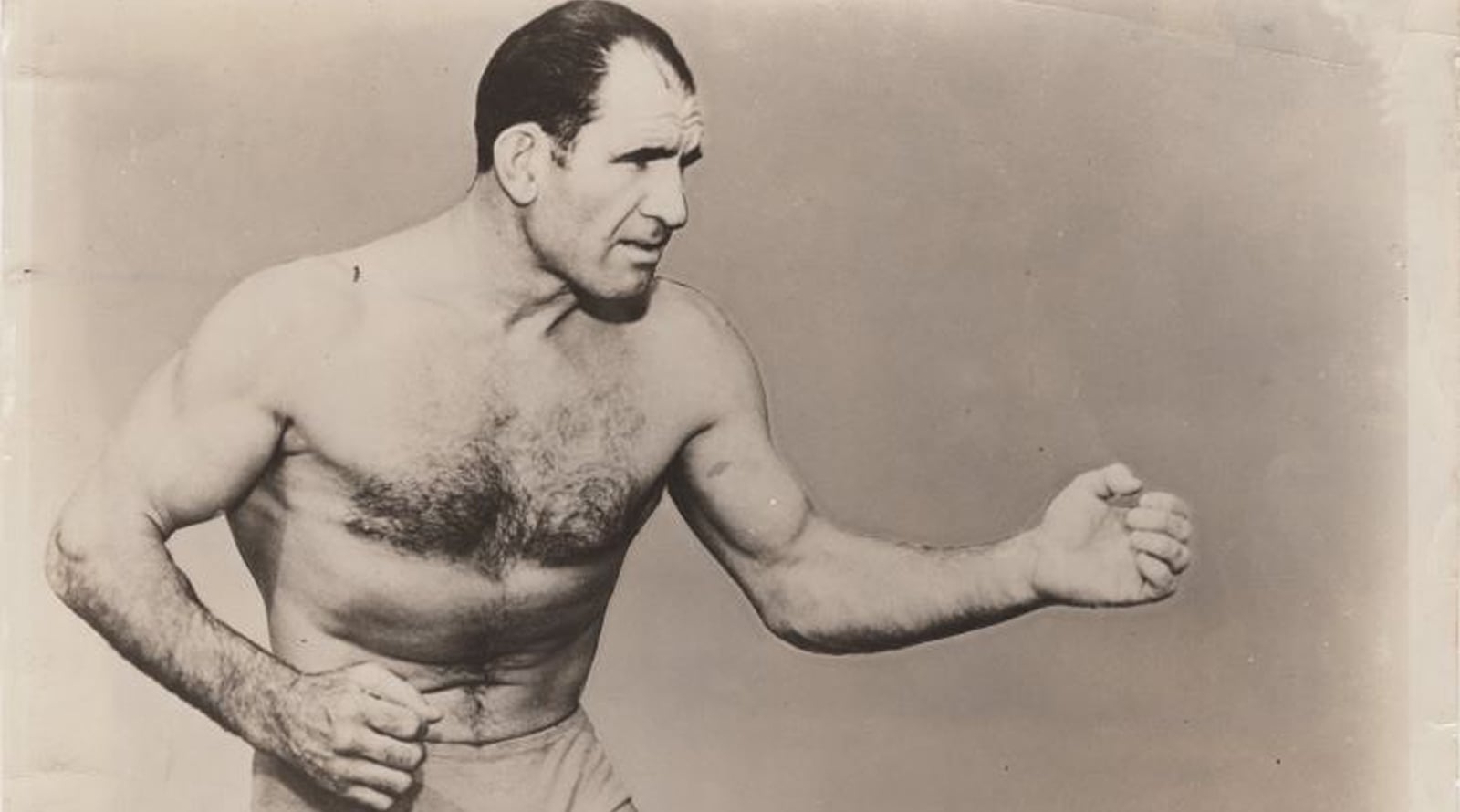
Steve "Crusher" Casey was another Irishman brought into Boston by Paul Bowser, and like Danno O’Mahony before him, he became incredibly popular with the city’s Irish population. Casey and his brothers had already made a name for themselves as champion rowers back home in Sneem, County Kerry, before Steve ever laced up a pair of boots. That background as a real-life athlete, not just a showman, played well in a town that knew something about hard work and hard weather.
Crusher Casey won the Boston version of the AWA World Heavyweight Title multiple times in the late 1930s and early 1940s and regularly headlined the Boston Garden against the biggest names of the day. When you look at old Garden lineups and see his name on top month after month, you understand why older Boston fans talk about him with the same kind of affection St. Louis fans reserve for Sam Muchnick’s crew. To them, he was not just a wrestler. He was their guy.
Over the years, a story has circulated that there was, or had been, a statue of Crusher Casey outside the Boston Garden. Whether that statue ever actually stood there or not, the fact that people can imagine it tells you how far his legend spread locally. His name is still attached to pubs and sports stories in both Boston and Ireland, and his place in Boston wrestling history is secure.
19. Maurice "The French Angel" Tillet: The Face Nobody Forgot
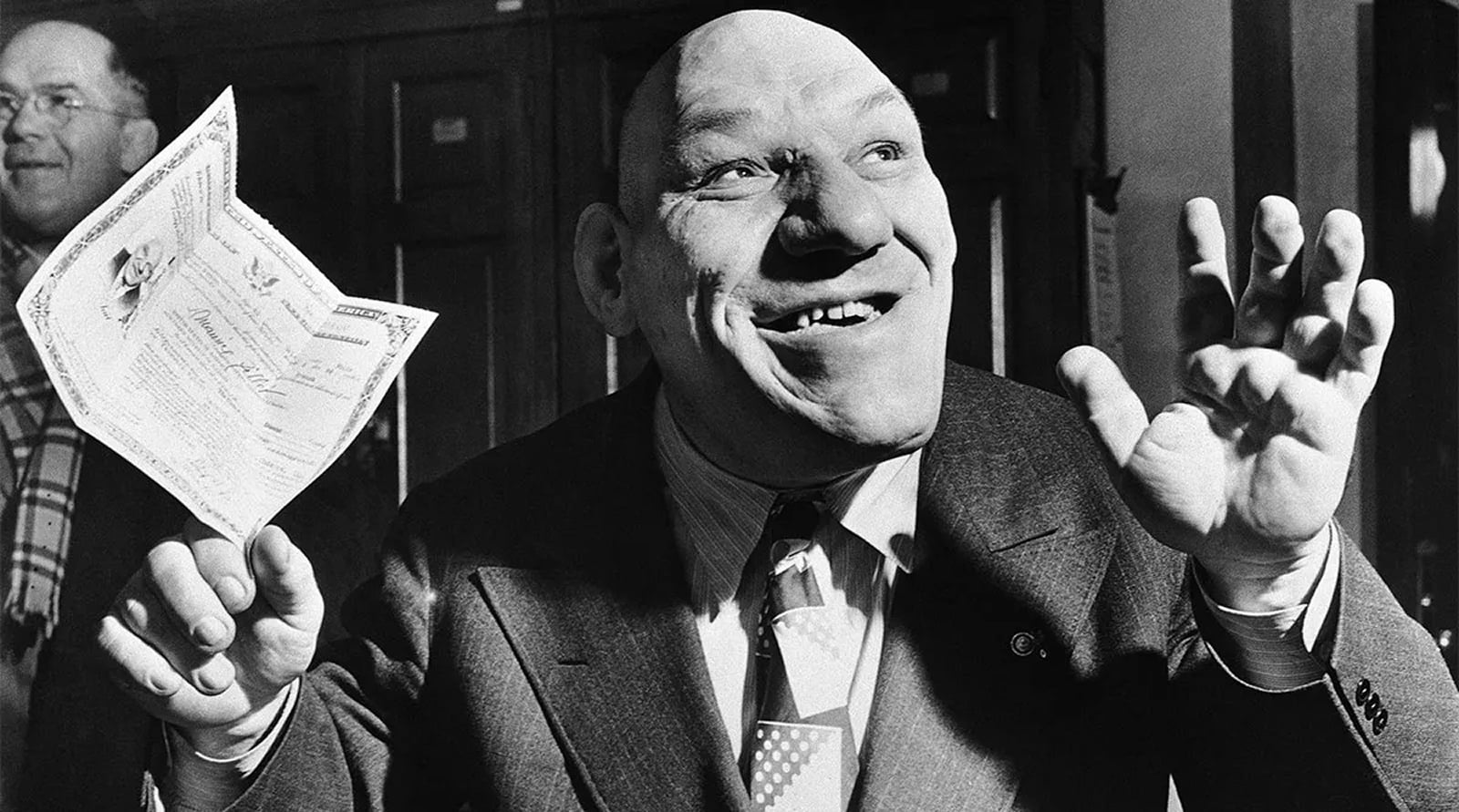
Maurice Tillet, "The French Angel," was one of the most unique-looking wrestlers who ever lived. Born in Russia to French parents and raised in France, he developed acromegaly as a young man, a condition that thickened his bones and caused his hands, feet, and facial features to grow heavier and more pronounced over time. In another line of work, that might have been a tragedy. In professional wrestling, it became the basis of one of the most memorable personas the sport has ever seen.
Did you know? Tillet’s condition, acromegaly, is the same pituitary disorder that later affected André the Giant and Paul Wight (Big Show). In Wight’s case, early surgery on his pituitary gland halted the abnormal growth that had defined giants of earlier generations.
Tillet was discovered by wrestler and promoter Karl Pojello and eventually brought to the United States, where Paul Bowser in Boston recognized what he had. Bowser promoted him hard in New England as "The French Angel," playing up both his European background and his striking appearance. In the early 1940s, Tillet held the AWA (Boston) World Heavyweight Title and other regional championships, and he quickly became one of the hottest attractions in the country. Posters with his heavy brow and broad jawline were impossible to ignore on a street corner.
His popularity was such that around the country, there suddenly appeared a whole choir of imitators, the Polish Angel, the Swedish Angel, the Super Swedish Angel, and more, all trying to cash in on the look he made famous.
In recent years, his likeness has often been compared to the animated character Shrek, leading to widespread but unconfirmed claims that DreamWorks artists drew inspiration from his death mask and photographs.
Tillet’s own career was relatively short, as his health issues caught up with him, but his image is one of the most immediately recognizable in pre-TV wrestling history. Even people who do not know his name can spot that unmistakable face in old photographs.
20. Dean Detton: The World Champion Almost Lost to Time
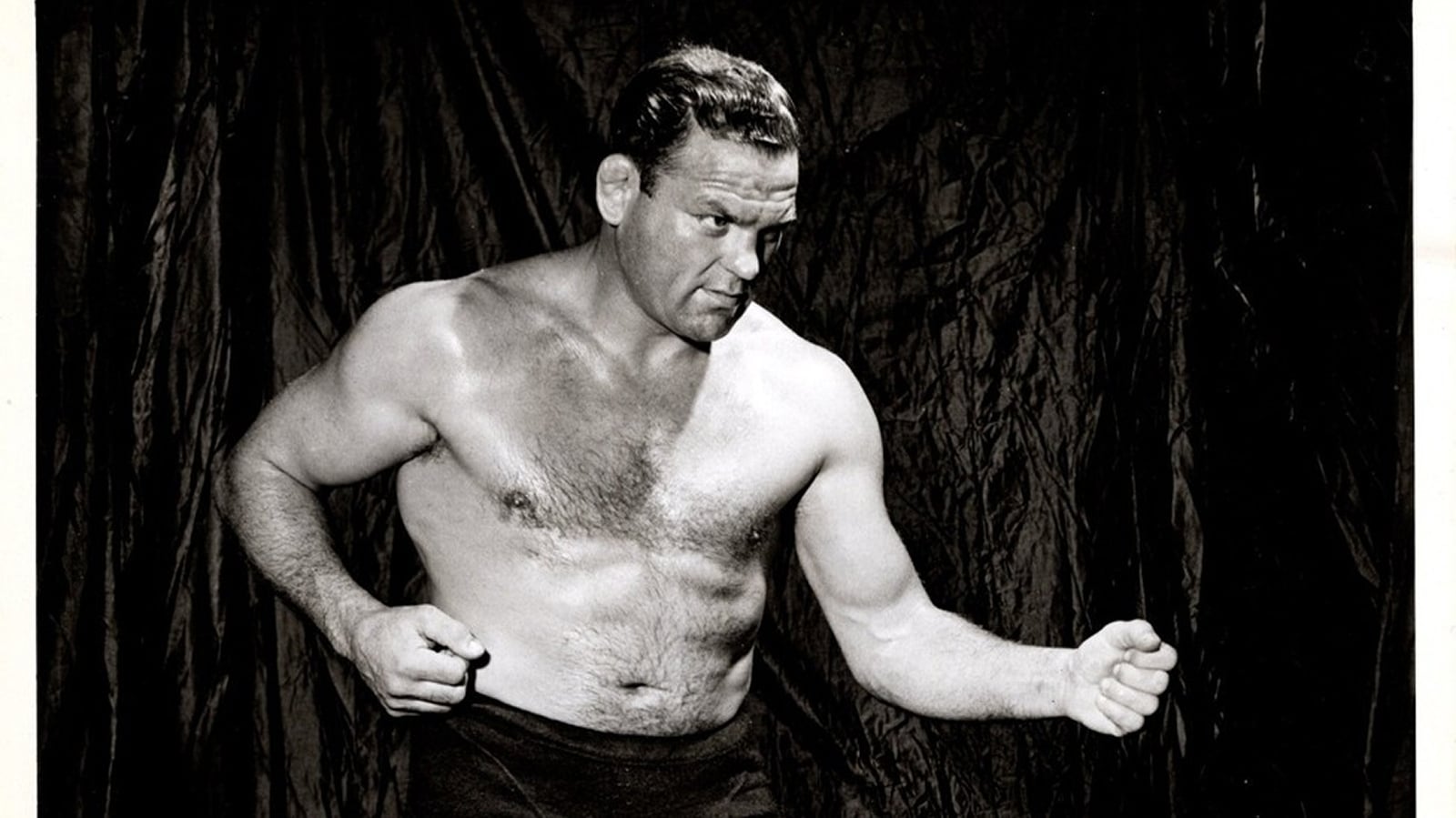
Dean Detton is someone you almost never hear about now, but in his own time, he was a several-time world champion and a respected main eventer. He came up through the amateur ranks in Utah, played some college football, and then made his way into the pro game in the early 1930s, the same rough-and-tumble era that produced Everett Marshall and Ray Steele. He was not as flashy as some of his peers, but he was durable and tough, and promoters kept booking him in serious spots.
The first place I ever came across his name was in connection with Texas, where he was billed as a world champion, and with New Zealand, where he held a version of their top heavyweight title. Records fill in more details. On September 29, 1936, in Philadelphia, Detton captured the original World Heavyweight Wrestling Championship lineage by defeating Ali Baba, a title recognized by The Ring magazine as the "true" world championship of the time. That put him, at least briefly, on top of the pile in a crowded title scene.
Detton defended his various claims across the United States, made long trips overseas, and drew solid houses in places like New Zealand that were hungry for a touring world champion to validate their local cards.
For whatever reason, his name did not stick in the broader public memory the way Thesz, Londos, or Lewis did, but when you go back and look at the belts he held and the people he wrestled, he deserves to be remembered right alongside the better-known names of his era.
21. Mildred Burke: The Woman Who Put Women’s Wrestling on Top
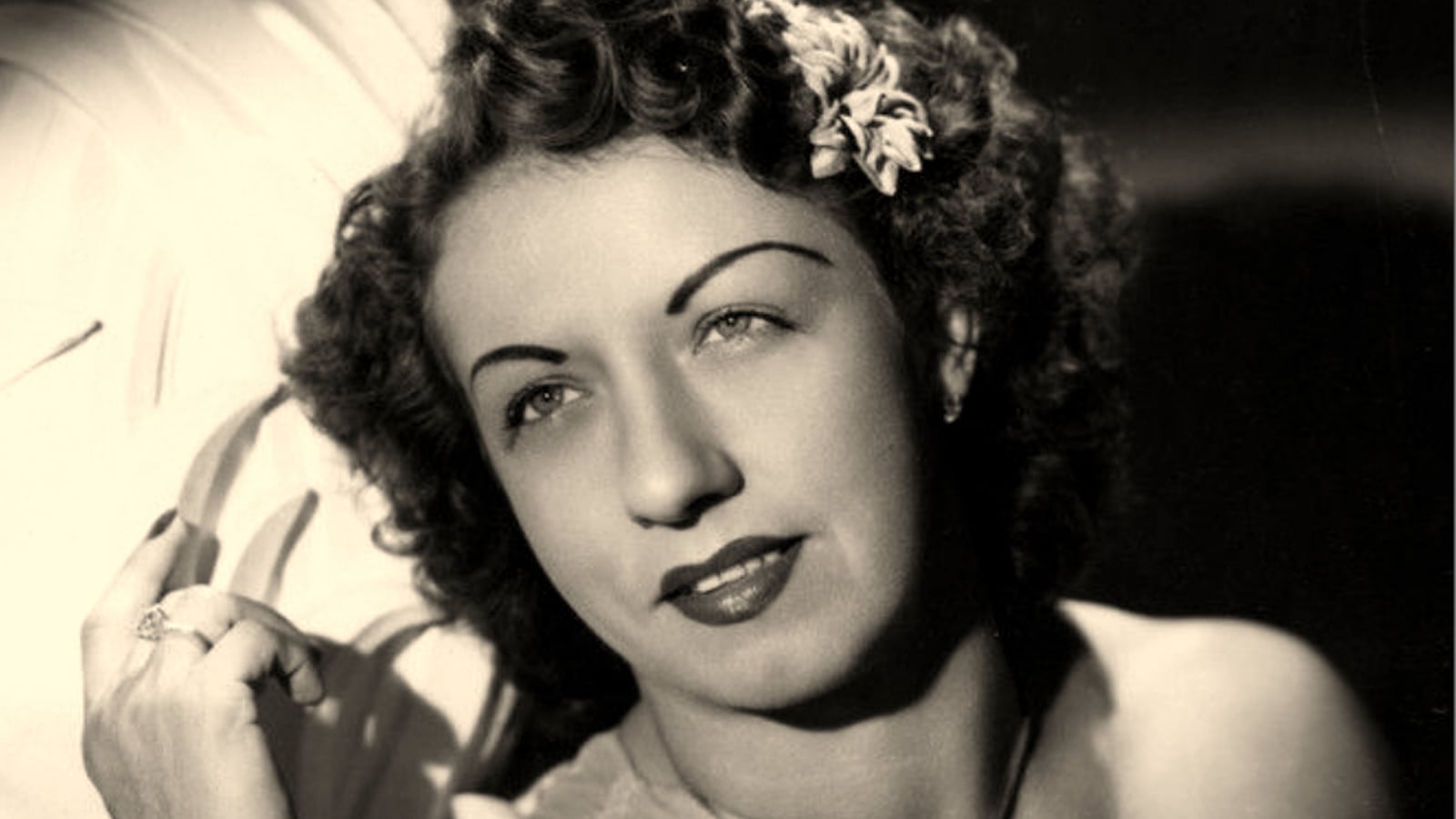
Mildred Burke did not invent women’s wrestling, but she surely kicked it up several notches. She came out of Kansas in the early 1930s, a young mother who fell in love with wrestling from the cheap seats and decided she wanted to be in the ring instead of in the crowd. Billy Wolfe, a Missouri middleweight who later became both her trainer and husband, tried to scare her off by having one of his male students rough her up in the gym. Instead, she slammed him in front of everyone. That was all the audition she needed.
Burke began working preliminaries on mixed cards around the Midwest, slowly forcing promoters and commissions to take women seriously. In January 1937, she defeated Clara Mortensen in Chattanooga to take Mortensen’s Women’s World Championship, and a few months later, the Midwest Wrestling Association formally recognized her as its world women’s champion. That was the first time a sanctioning body like that had put its stamp on a women’s world title. From there, she built what was effectively a fifteen-year reign, traveling the country and beating every serious challenger who came along.
She was a fighting champion. In the 1940s, her main rivals were Elvira Snodgrass, a roughhousing hillbilly from Tennessee, and Gladys Gillem, who came out of the carnivals and was as tough as they come.
Outside the ring, her story, told in the book Queen of the Ring, includes a troubled marriage and business partnership with Wolfe, who booked and controlled most of the women wrestlers in North America and treated them, and her, badly. She eventually broke away from his orbit, fought a controversial two-out-of-three-falls match with June Byers in the mid-1950s that ended without a clear finish, and saw the National Wrestling Alliance pull back its recognition of women’s titles altogether.
By the time she retired, Mildred Burke had more than proved that women could main event cards on their own. She later ran a school in California and trained a whole new generation of wrestlers. Every woman who ever closed a show with a title around her waist owes something to Mildred, whether they know it or not.
Further recommended reading: Mildred Burke: The 5’2″ Giant Who Conquered Wrestling
22. Primo Carnera: Boxing’s Giant Turns to the Mat
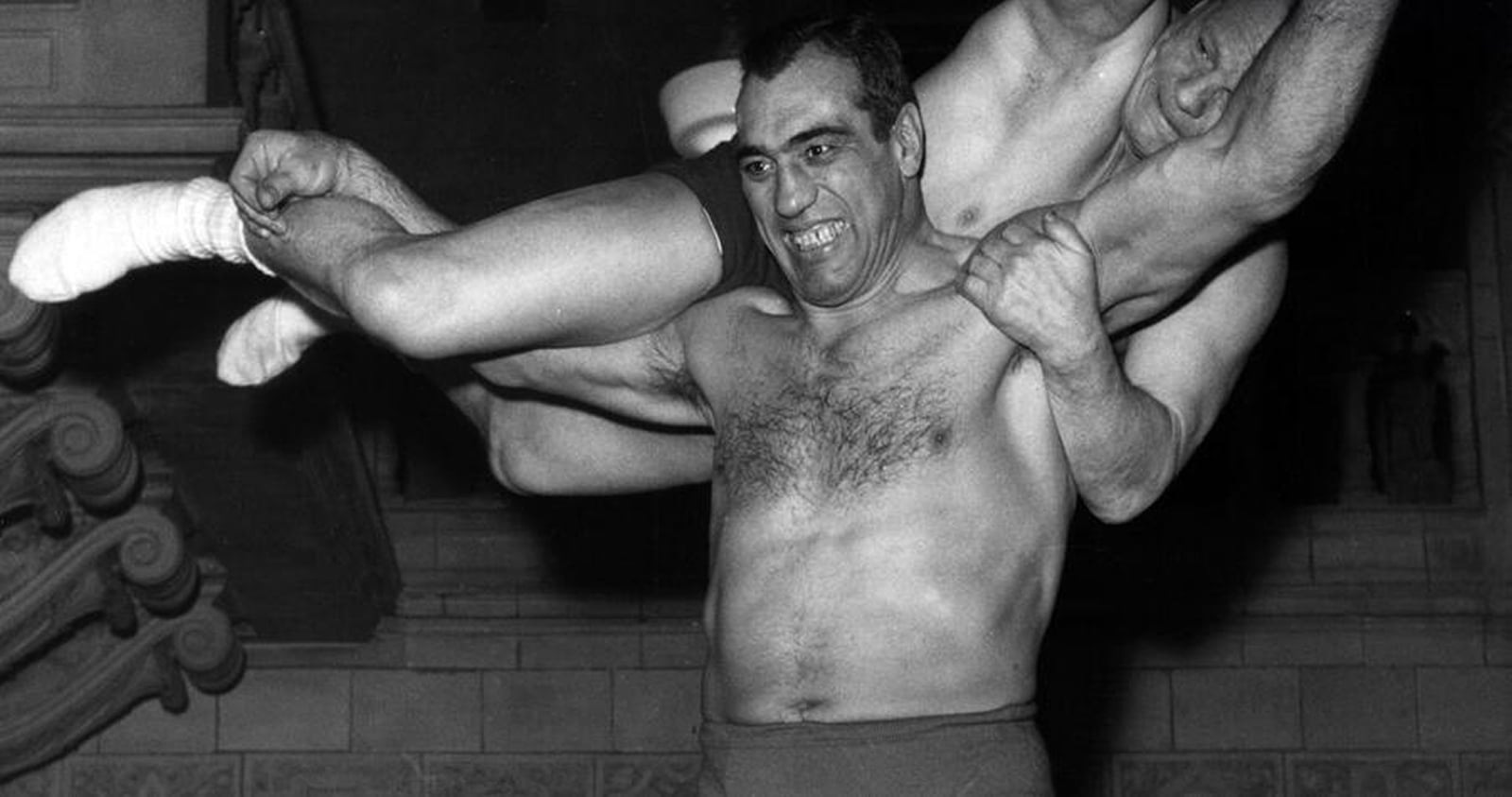
Primo Carnera was already a giant of boxing before he ever took a professional wrestling booking. Born in Italy, he worked as a circus strongman and carnival wrestler in Europe before American backers brought him to the United States as a heavyweight boxing prospect. In 1933, he stopped Jack Sharkey to win the World Heavyweight Boxing Championship, then lost the title a year later to Max Baer and, a bit further down the line, took a brutal beating from Joe Louis. His boxing days left him with a mixed reputation as champion, but there was no arguing with the size of the man.
Carnera stood about six feet six and weighed in the 260 to 270 pound range, nicknamed "The Ambling Alp." When the post-war wrestling boom hit, promoters knew that having a former world boxing champion on the card was money in the bank. He debuted as a wrestler in 1946 and, for the next decade and a half, worked steadily, promoted as a special attraction babyface almost everywhere he went. Fans paid to see the sheer spectacle of him tossing men around with body slams and using his bulk in ways they had not seen in the boxing ring.
There is film of a 1950 match featuring six-foot-six Primo Carnera against around five-foot-eight Jim Londos, which looks like a mismatch on paper. The bout itself turns into a lot of leg scissors and grinding, but the visual of that size difference tells the story of why he was such a draw.

For several years, Carnera was a top name in the wrestling business, taking regional titles in different territories and headlining cards for promoters like Jim Crockett in Charlotte in the mid-1940s. Whatever questions might have surrounded his boxing reign, in wrestling, the box office left no doubt about his value.
23. Everett Marshall: The Airplane Spin Champion of the Midwest
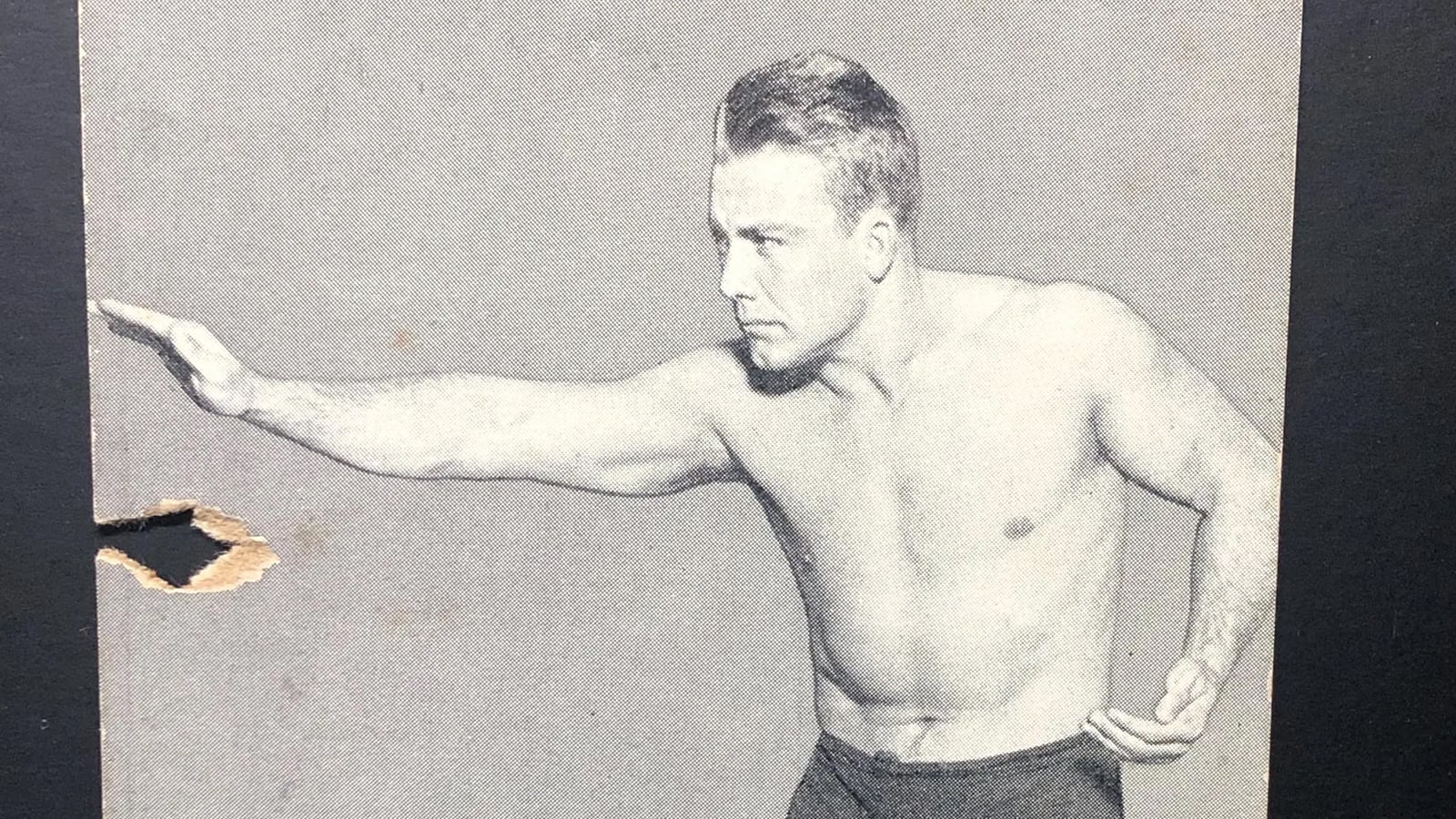
Everett Marshall is someone you do not hear a lot about now, but in the 1930s and early 1940s, he was one of the major figures in the Midwest. Born in Ohio and raised in Colorado, he worked his way up through the tough Denver and Kansas City circuits until he was the man promoters turned to when they needed a world title defended in that part of the country. He had the classic look of the era, broad-shouldered with a solid middle, and he wrestled with a rugged, no-nonsense style that fit his frame.
Marshall held the Midwest Wrestling Association’s world heavyweight title several times and, starting in 1936, he also became a key name in the National Wrestling Association’s title picture. That June, he defeated Ali Baba in Columbus, Ohio, to win recognition as NWA World Heavyweight Champion. Although that recognition shifted between him and other contenders like Lou Thesz and Steve Casey as commissions and promoters argued, Marshall was consistently in the conversation as a man who could credibly be billed as world champion. In the Rocky Mountain region, in particular, he was often presented as the top heavyweight in the sport.
His favorite calling card was the airplane spin. Marshall would hoist a man up across his shoulders and spin him around and around until both of them were staggering, then drop him for the fall. Combined with his hard forearms and grinding holds, that made him a crowd favorite in cities like Kansas City, Denver, and St. Louis. At a time when titles were changing hands often and promotional lines were constantly being redrawn, Everett Marshall gave Midwestern fans a steady, credible babyface champion to hang their hopes on.
24. Chief Saunooke (Osley Bird Saunooke): Legitimate Cherokee Chief and Super-Heavyweight Star
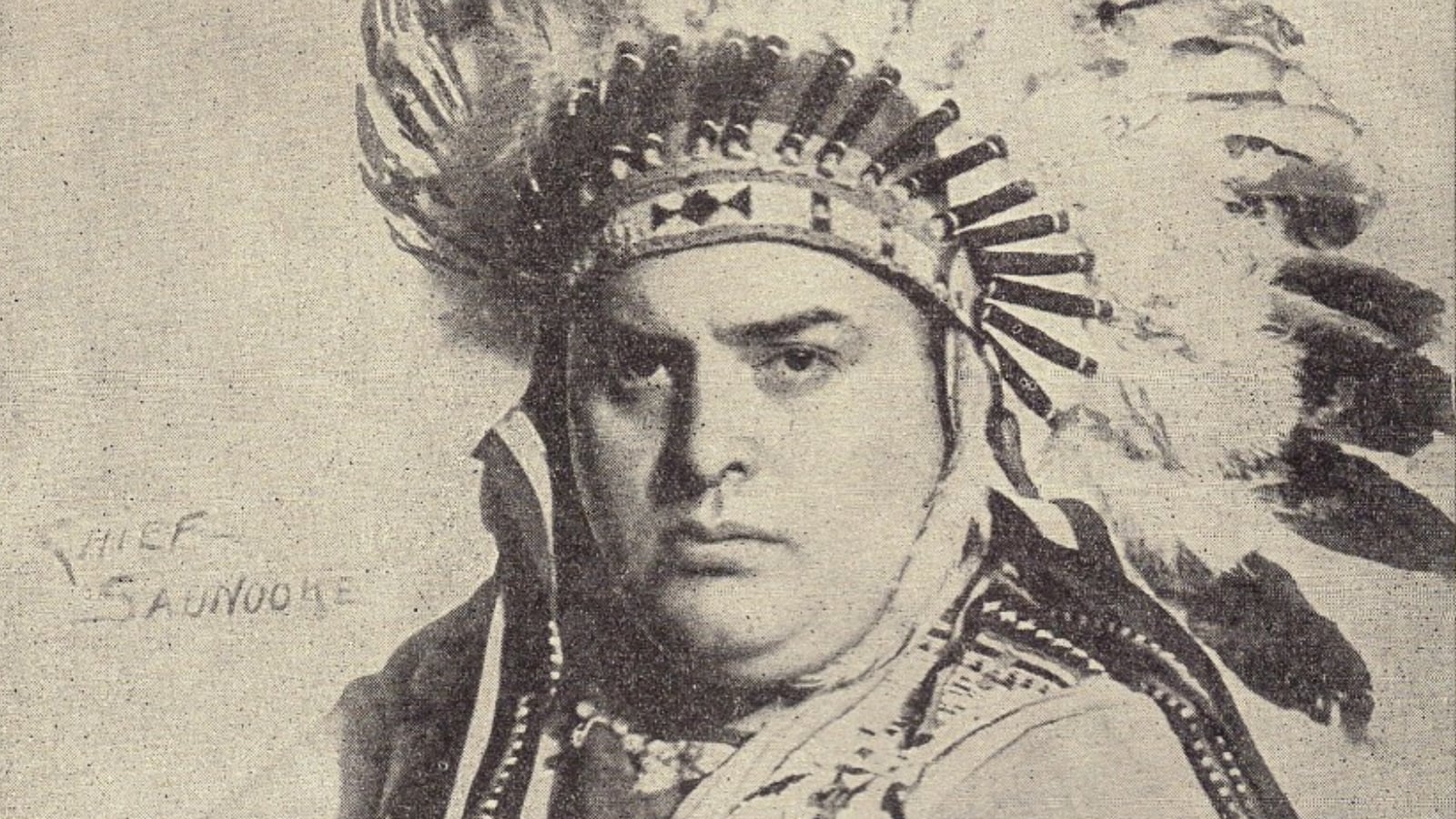
Chief Saunooke, Osley Bird Saunooke, may have been the first wrestler I ever heard of because he was from my part of the world. He was born near Cherokee, North Carolina, descended from a line of Cherokee chiefs, and billed in the ring at about six feet six and well over 300 pounds at his peak. Long before promoters started handing headdresses to anyone with a little Native ancestry, Saunooke was a genuine representative of his people.
He drew on that heritage when he stepped into the ring as "Chief Saunooke." In 1937, he won a recognized super heavyweight or world heavyweight title from Tor Johnson and held some version of that crown for roughly fourteen years, defending it against all comers. Stories from the time say he wrestled in more than 5,000 matches, including seventeen main events at Madison Square Garden in New York, which gives you an idea of how often his name appeared on top of the bill. He was a massive man, but not just a lumbering giant. He could move, and he knew how to use his size to make every shove and slam count.
After retiring from the ring in 1951, Saunooke returned to Cherokee and entered business and politics. He was elected Principal Chief of the Eastern Band of Cherokee Indians and served two non-consecutive terms, from 1951 to 1955 and again from 1959 to 1963. That combination of long-time wrestling stardom and real-world political leadership is unique in the history of the business. Chief Saunooke was not a cartoon character. He was who he said he was, both in the ring and out of it.
25. Chief Little Wolf (Ventura Tenario): The Babyface Who Took Wrestling Down Under
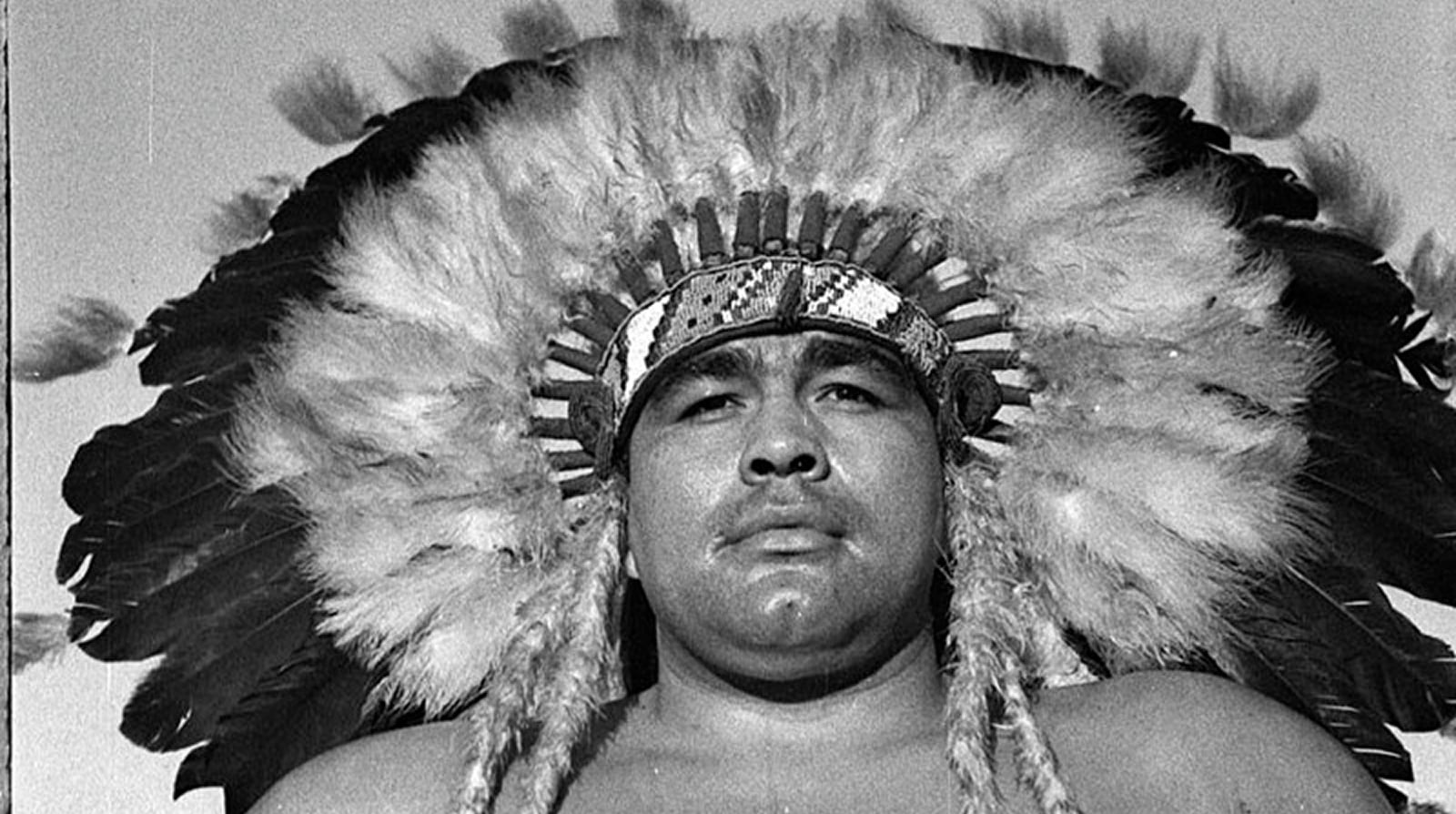
Another chief we need to talk about is Chief Little Wolf. If you are looking for a prototype for later Native American babyfaces like Wahoo McDaniel, this is where you start. Real name Ventura Tenario, he was born in Hoehne, Colorado, in 1911 to parents of Navajo and Spanish descent. He picked up the "Little Wolf" nickname early in life and turned it into a ring identity, complete with a red headband and war cry that made him stand out the moment he walked through the curtain.
At first, he wrestled around the United States under names like Little Wolf or Benny Tenario, but his career really took off when he went to Australia and New Zealand in the mid-1930s. Down there, he became "Chief Little Wolf" and one of the most beloved wrestlers those countries had ever seen. He wrestled more than 1,100 matches between 1932 and 1958, facing opponents like Jim Londos, Ed "Strangler" Lewis, Bronko Nagurski, and Danno O’Mahony, and he did it as the babyface challenger who could give any champion in the world a run for his money.
In 1935, he was enough of a threat that he was lined up to challenge Londos and O’Mahony in big stadium shows, including an appearance at Yankee Stadium in New York that helped raise his profile before he headed overseas. Once he settled in Melbourne, he married an Australian woman, raised a family, and became part of the cultural fabric there. He toured the cities and small towns, helping to establish and promote wrestling as a regular attraction in Australia and New Zealand for decades. When fans down under talk about the wrestlers who put their scene on the map, Chief Little Wolf’s name is always near the top.
26. Earl McCready: Canada’s Forgotten Technical Ace
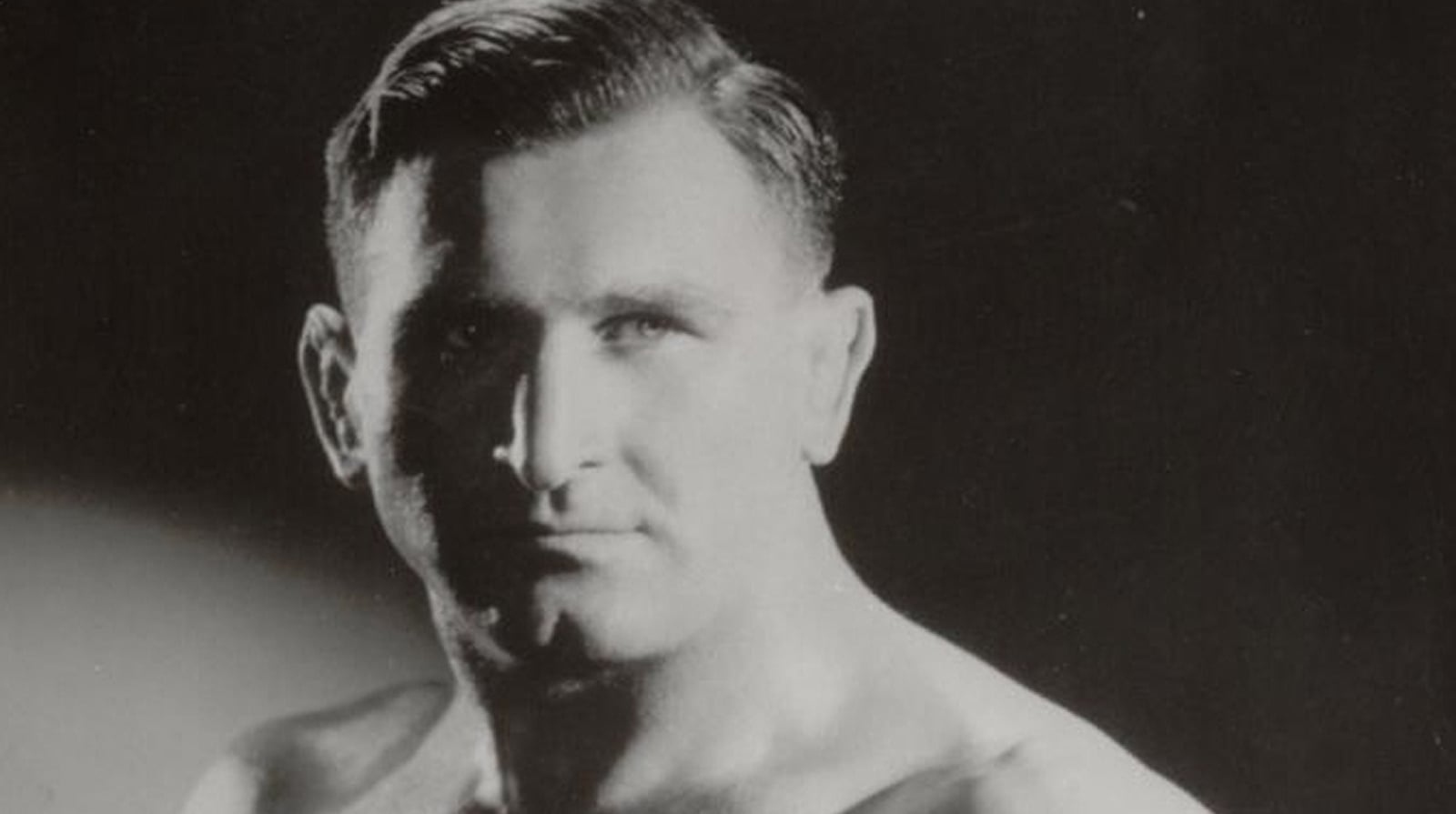
We have already talked about Yvon Robert and Whipper Billy Watson when it comes to Canadian wrestling. Number three on that list, for me, would be Earl McCready. He was the Canadian kid who went south, conquered the American college scene, and then came home to help build the professional side of the sport in Western Canada and across the British Empire.
McCready was a very scientific wrestler with a tremendous amateur background. At Oklahoma A&M, he became the first man ever to win three straight NCAA heavyweight wrestling championships, from 1928 to 1930, and he represented Canada in freestyle at the 1928 Olympic Games before winning a gold medal at the 1930 British Empire Games in Hamilton. When he turned pro, that pedigree followed him. He became British Empire Heavyweight Champion, wrestled all over New Zealand and Australia, and then returned to Britain in the late 1930s for tours that included some of the earliest wrestling broadcasts on British radio and television.
In the ring, he was the kind of wrestler other wrestlers respected immediately, powerful but controlled, able to switch gears from straight mat work to a rougher style if somebody pushed him. In Western Canada, especially in places like Saskatchewan and Alberta, where people knew what honest farm strength looked like, he stood just behind Watson and Robert in importance. If you want to understand why Canadian fans have always taken pride in their technical wrestlers, Earl McCready is a big part of that story.
27. Bert Assirati: British Strongman the Americans Rarely Saw
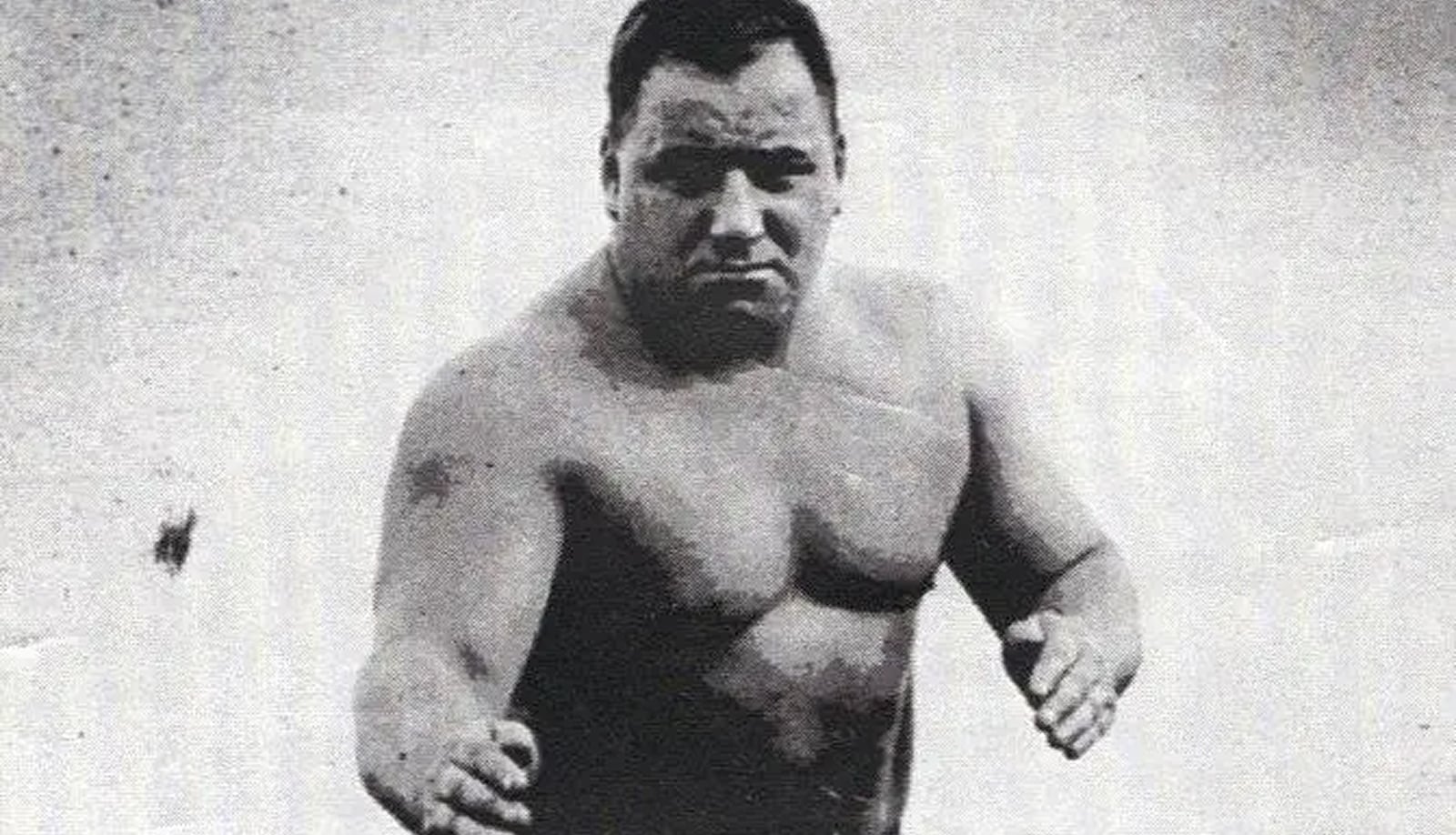
Bert Assirati is someone American wrestling fans rarely got to see, but over in Britain, his name carried the kind of weight that Gotch or Thesz did here. He was one of the major building blocks of professional wrestling in England, a short, thick-set powerhouse who treated the ring like his own personal gym.
Assirati started out as a teenage acrobat and strongman, doing one-arm handstands and gymnastic tricks that most heavyweights would not even attempt. By his late twenties, he was one of the strongest men in the world, legitimately deadlifting around 800 pounds and performing feats of strength that turned heads in weightlifting circles. In the ring, he converted that strength into a grinding, smothering style, and for more than twenty years he ruled as British, Empire, and European Heavyweight Champion, with the British title alone being credited to him in more than a dozen separate reigns as different promoters tried to shuffle him off and then had to bring him back.
In what was likely his only trip to the United States, in 1932, he sailed from Southampton to New York and spent the better part of that year working the East Coast from New York down to Washington, taking part in around 65 matches. The Dusek brothers were impressed enough to want to use him all over the country, but his work permit was not renewed, and he returned to England. He even went three matches with Ray Steele, one of the finest mat technicians America ever produced, and Steele reportedly said afterward that Assirati was a real tiger to deal with. Despite that, he never broke into the main event tier stateside.
He traveled throughout Europe, wrestling in places like France, India, and the Middle East, and wherever he went, the stories were the same, that he was almost impossible to move when he dug his feet in. He was also infamous for a difficult personality and a refusal to cooperate if he felt slighted, which made some promoters think twice but only added to his legend with the fans. Sid Feder’s coveted 1952 Wrestling Fans’ handbook devotes a full page to him in the section on foreign greats the American fan had not seen, and that about says it all. Over there, he was the measuring stick.
28. El Santo: Lucha Libre’s Silver-Masked Legend Begins
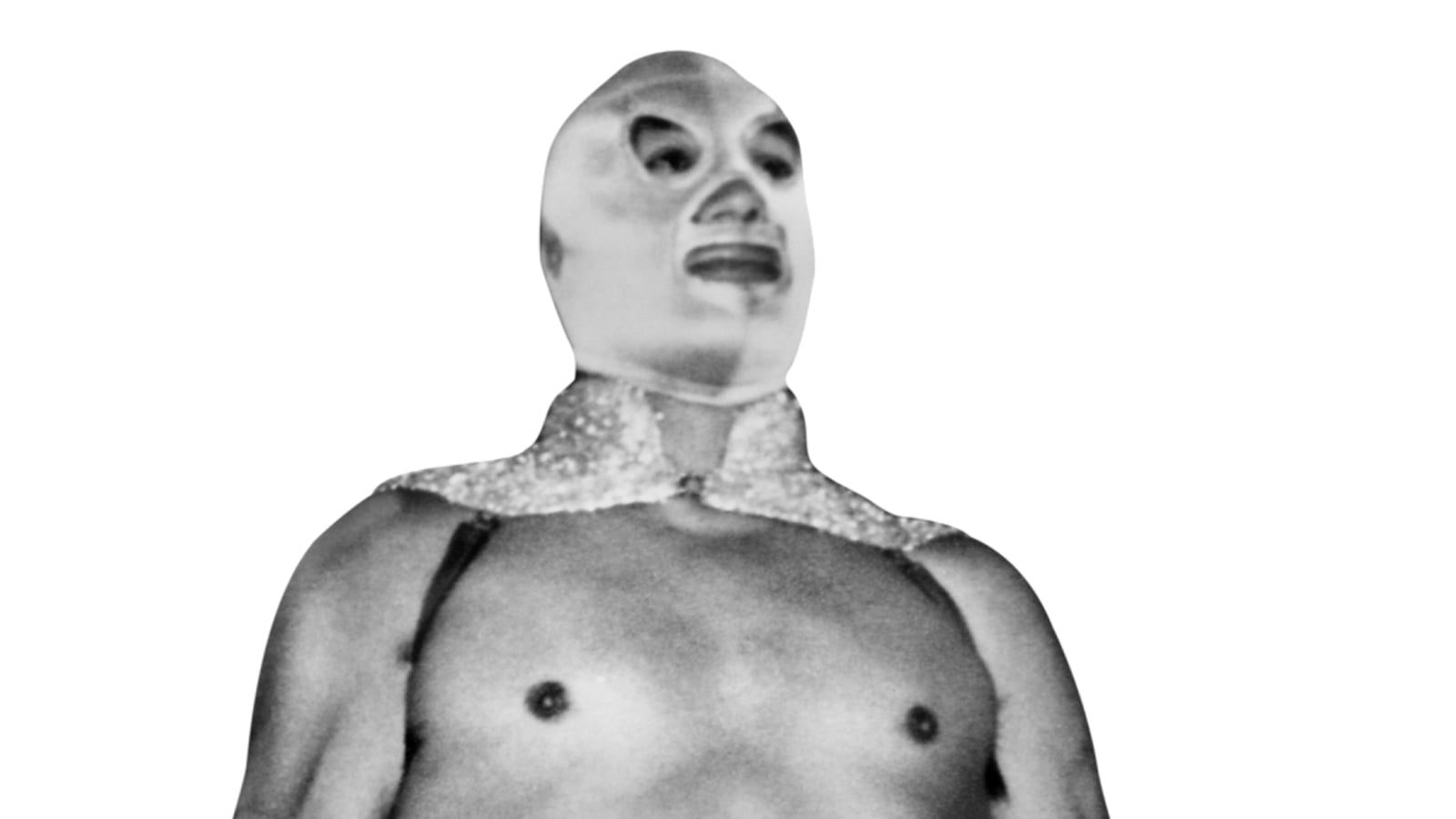
Everybody knows about El Santo now. He is probably the most popular luchador in history and the central legend of lucha libre, the masked hero who belongs as much to Mexican popular culture as he does to wrestling. But in the beginning, he was just Rodolfo Guzmán Huerta, another young grappler trying to find his place on crowded cards in Mexico City in the mid 1930s.
For several years, he wrestled under different names and masks and was, by most accounts, a so-so attraction. The turning point came in the early 1940s when he adopted the all-silver mask and the simple name "El Santo," the Saint. The look was perfect. Silver hood, silver trunks, silver boots, a faceless avenger who could be anybody under that mask, and yet seemed larger than life at the same time. Once that image clicked, his popularity exploded. He became the top tecnico in Empresa Mexicana de Lucha Libre, headlining arenas like Arena Coliseo and Arena Mexico and turning every appearance into an event.
By the late 1950s, he had moved beyond the ring into films and comic books. Santo movies, often wonderfully wild affairs pitting him against monsters, spies, and supernatural threats, filled theaters throughout the 1960s and 1970s, and his weekly comic series ran for more than three decades. He wrestled into his sixties, only unmasking days before his passing, and by then, he was more than just a wrestler. He was a national icon. The silver masked legend that started in those pre-television years never really went away.
Further recommended reading: El Santo Unmasked: 10 Secret Tales on the Superstar Luchador
29. Ray Villmer: Bread-and-Butter Babyface of the South
Ray Villmer represents what I call a bread-and-butter wrestler, the guys who make up the cards and keep things honest. Born in St. Louis in 1912, he broke in before WWII and kept wrestling into the early 1960s, which means he saw just about every phase of the business from the last days of the old trust right up through the heart of the television era. Along the way, he worked under his own name and, in some territories, under a mask as the Mighty Yankee, but the through line was always the same. He was there to give the fans a good match.
Villmer was very popular around St. Louis and especially in the South, in the Carolinas, Georgia, Florida, and the Gulf Coast towns. He held regional singles titles like the California State Heavyweight Title, the NWA Florida Southern Heavyweight Title, the Central States Heavyweight Title, and the Gulf Coast Heavyweight Title, often serving as the steady hand you could put a belt on between wilder champions. He also picked up his share of regional tag team belts, which made sense because he had the kind of style that meshed well with just about any partner.
He never was an NWA World Champion, and you will not find his name on many "greatest ever" lists, but promoters trusted him, wrestlers liked working with him, and fans bought tickets to see him. He could be a main eventer when needed, or he could sit in the middle of the card and make sure the show had some solid wrestling in between the gimmicks. In every territory, you need those guys. In the South, for a long time, Ray Villmer was one of the best examples of that kind of babyface.
30. Bobby Bruns: Wrestler, Champion, and Right-Hand Man in Chicago
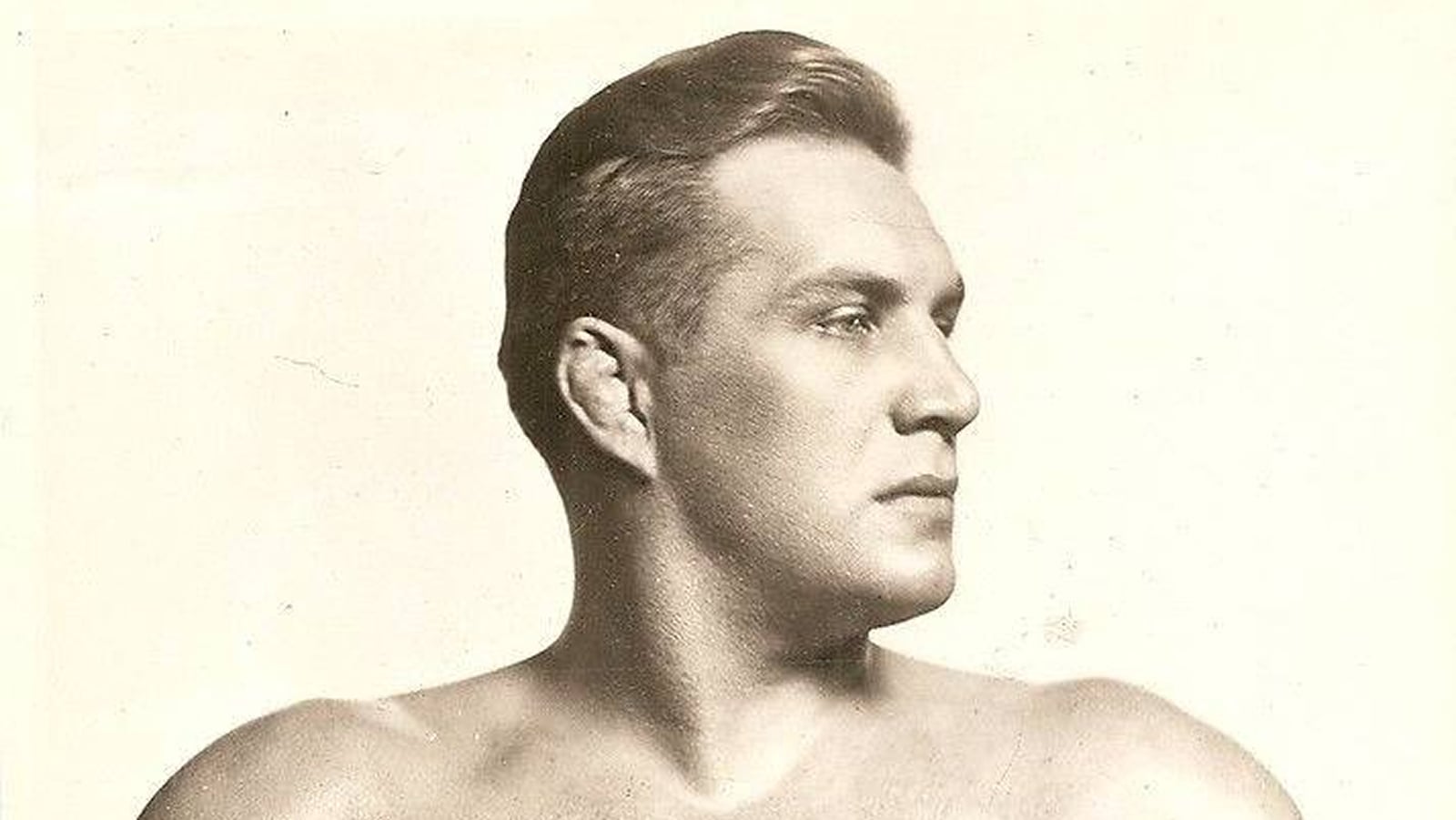
Bobby Bruns was the first man to hold the Midwest Wrestling Association world championship. On January 18, 1940, at Memorial Hall in Kansas City, Kansas, he defeated Orville Brown to win the newly created MWA World Heavyweight Title, and for the next several years, the championship picture in the Midwest revolved around those two names going back and forth. He would hold the belt three times in total, with Brown repeatedly chasing and eventually overtaking him as the territory’s dominant champion.
In the ring, Bruns was a solid, fundamentally sound wrestler, good enough to be trusted in world title programs and steady enough that you could build cards around him whether he was champion that month or not. He was popular around Chicago, where fans got used to seeing his name high on Fred Kohler’s cards, and he did plenty of business across the wider Midwest as a challenger and occasional belt holder.
Once he retired from active wrestling, he moved into the office side and became second-in-command in Kohler’s Chicago promotion, handling talent and finishes and helping steer one of the most important cities in the wrestling world. He also handled booking for the St. Louis Wrestling Club and later played a crucial role in bringing American wrestling to Japan, where he helped recruit Rikidozan and booked early postwar tours. His story shows that some babyfaces go on to shape the business just as much behind the scenes as they did in the ring.
31. Ray Eckert: Eternal Challenger in the Midwest and West
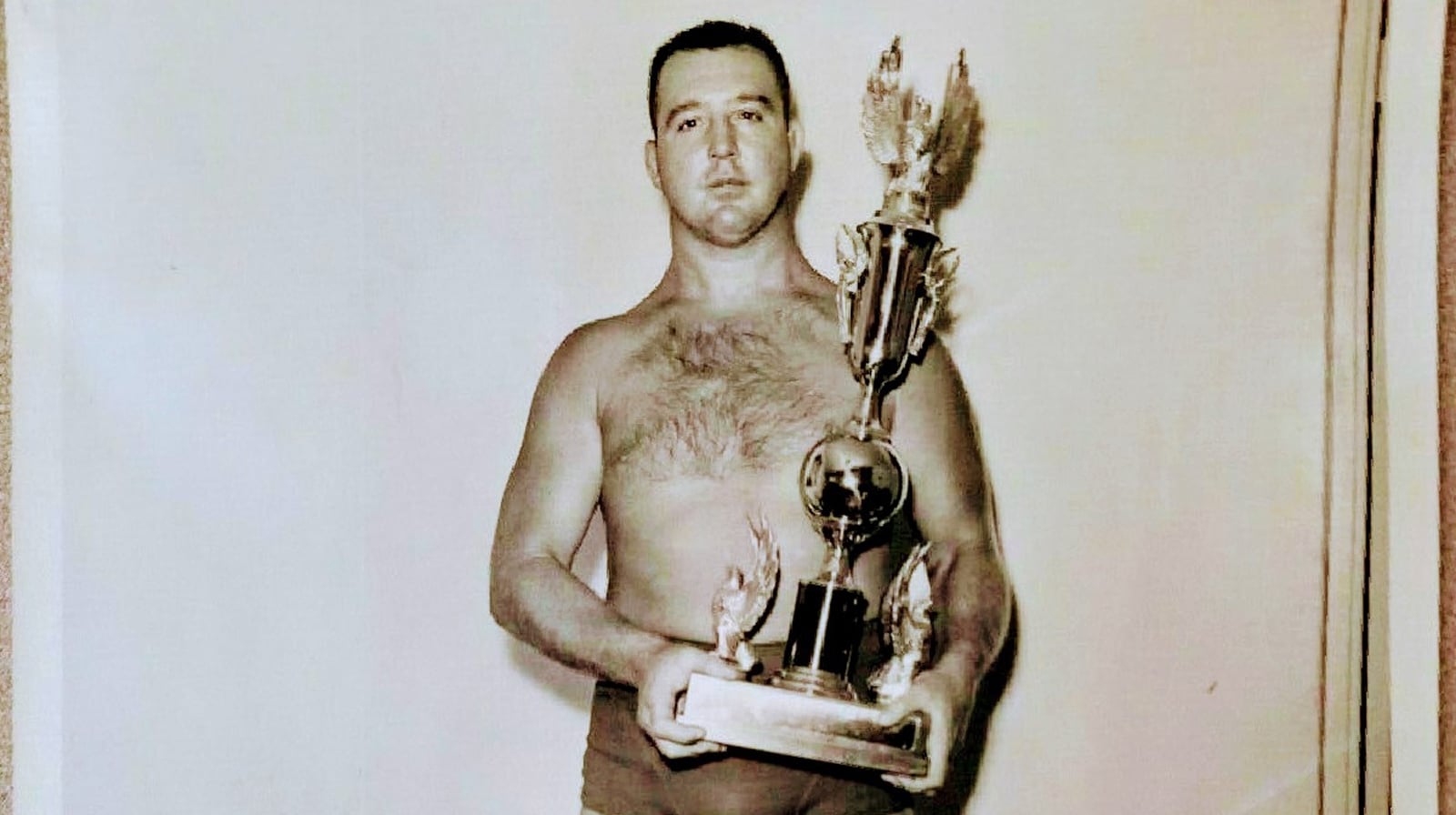
Ray Eckert was another one of those bread-and-butter guys the business quietly depended on. He was a sturdy, no frills babyface who spent most of his career in the Midwest and on the West Coast, the kind of wrestler fans might not list as their absolute favorite but who always got a good hand when his name was announced. Promoters liked him because he was dependable, on time, and could give anybody on the roster a solid match.
Eckert was forever in the role of challenger for people like Lou Thesz and Orville Brown, especially in cities like St. Louis and Kansas City, where a world champion always needed a credible opponent to test himself against between big grudge matches. You will find his name in old lineups in semi-main events against Thesz in the 1950s, and he was used the same way on the West Coast, a tough test for traveling champions and a steady presence on television cards.
He might not have held the really big belts, but when you needed a believable contender for a world title match, or a babyface who could push a heel right to the brink without upsetting long-term plans, you could always count on Ray Eckert. Every territory needed a few men like that to keep the championship scene honest.
32. The Garibaldi Brothers (Gino, Ralph, and Chic): Family Dynasty with a Tragic Ending
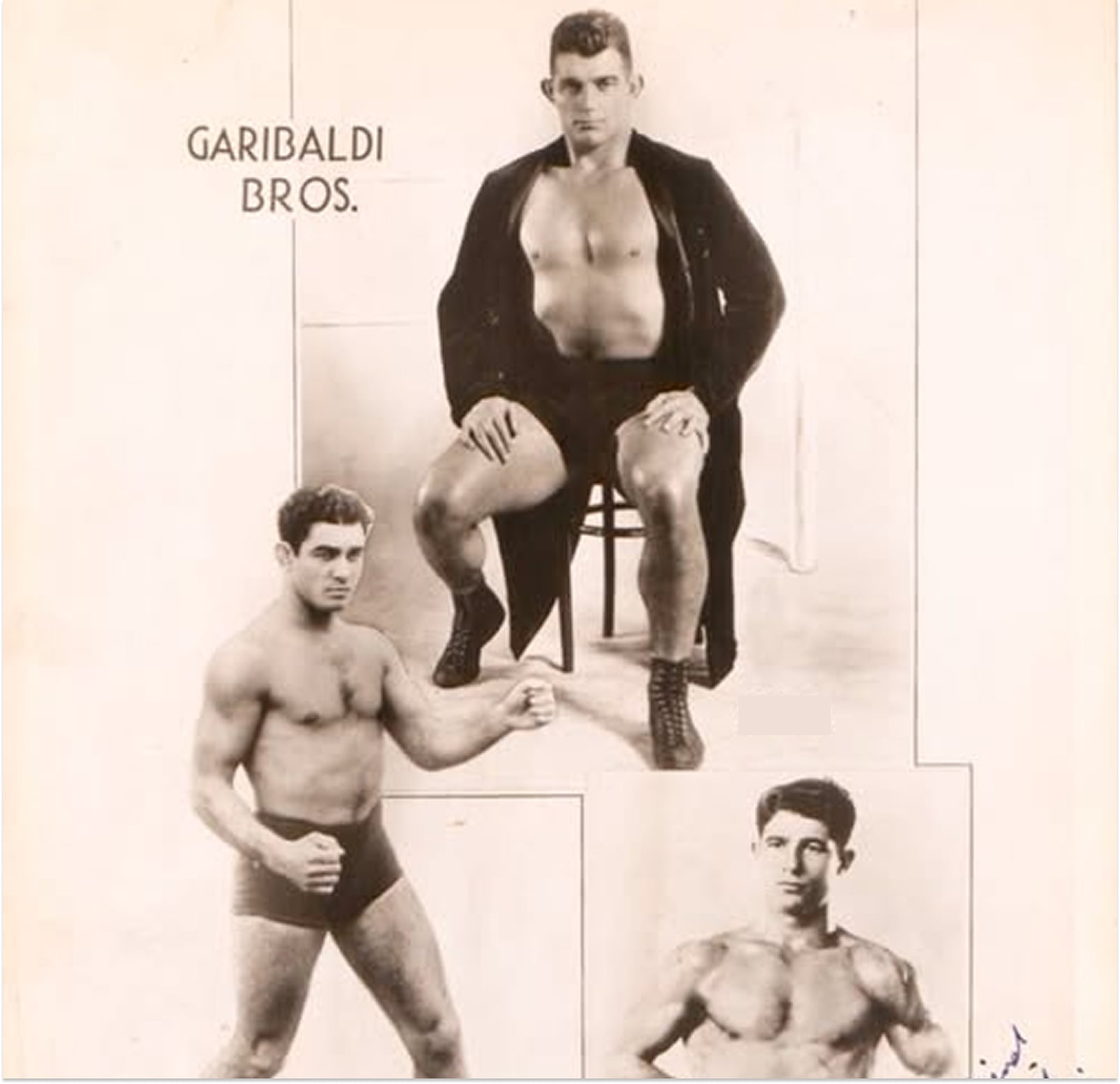
The Garibaldi family produced up to five wrestling brothers, but the three most well-known are Gino, Ralph, and Chick. They came out of St. Louis and took their Italian surname into the ring at a time when ethnic identity still drew crowds. For a while, you could hardly look at a big card in certain territories without seeing "Garibaldi" somewhere on it, either in singles or in tag team form.
Gino was arguably the most successful of the bunch. He held the Texas World Heavyweight Championship, various Pacific Coast titles, and other regional belts, and he later teamed with his son Leo Garibaldi in one of the first really famous father-son tag teams. Ralph Garibaldi had his own runs as a rugged contender and tag partner, usually billed in tough man roles that suited his look. Between them, they gave promoters a ready-made family act that could be pushed as heroes or foils, depending on what the territory needed.
Chick Garibaldi, on the other hand, is one of the sad stories of professional wrestling. Wrestling under his real first name, Charles, at times and as Chick Garibaldi at others, he worked all over the United States, Canada, and Australia for more than twenty years and held a world light heavyweight title and regional tag belts. By the early 1960s, he was a journeyman veteran, making a living putting over newer stars.
In February 1961, in an afternoon matinee at Sunnyside Garden in Queens, New York, he wrestled a very young Bruno Sammartino. During the match, Bruno bodyslammed him, and Chick never got back up. He had suffered a heart attack and died shortly after. For years, fans repeated the story that a bodyslam had broken his back and killed him, but whatever the medical cause, the end result was the same. People used to say wrestling is fake; stories like Chick’s remind you it never was.
33. Gene "Mr. America" Stanlee: The Original Television Pose-Down
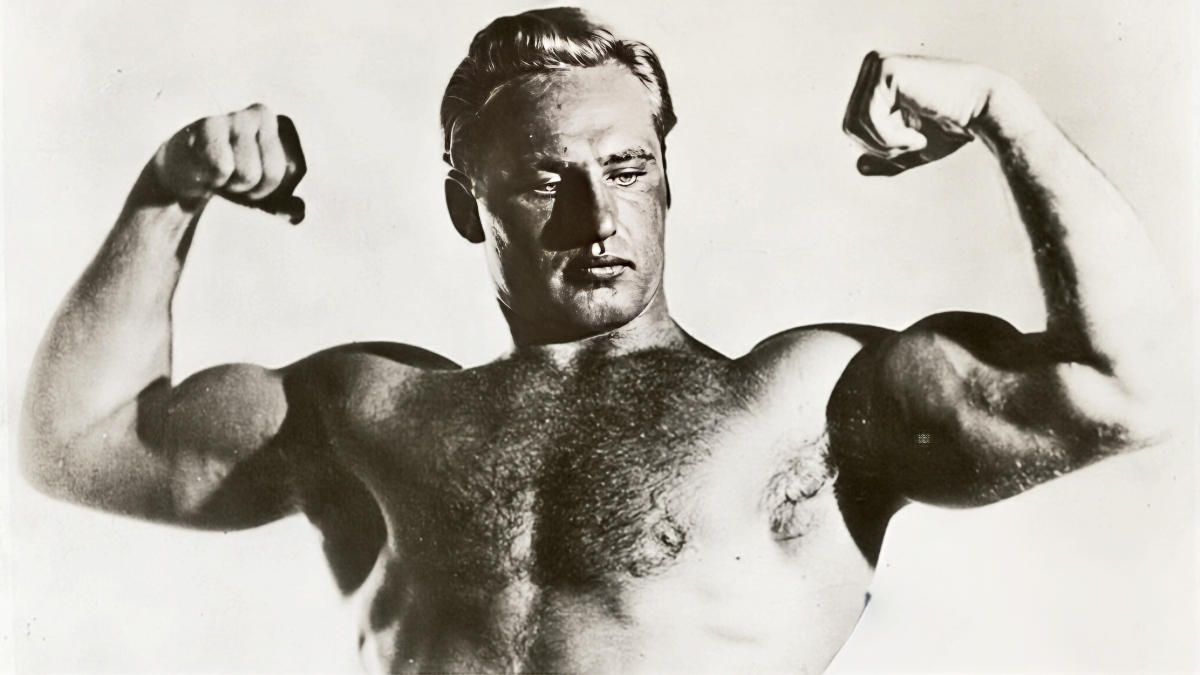
Gene Stanlee was "Mr. America," and he lived up to the name in every way promoters in the 1950s could have hoped for. Born Eugene Stanley Zygowicz in Chicago, he had been a successful amateur wrestler, boxer, and weightlifter before WWII, and then turned even more heads in the Navy by breezing through physical fitness tests and winning service wrestling titles. By the time he turned pro in 1944, he had the kind of physique you just did not see in every locker room: broad shoulders, a narrow waist, and muscles that looked like they had been poured into his skin.
Within two years, he was a major draw. Stanlee brought a bodybuilder’s look into the ring at a time when that still turned heads, and he leaned into it. He had an expensive wardrobe of rhinestone-studded belts, jackets, and robes, reportedly dozens of different outfits he could rotate through, and he played to the cameras and the women in the audience as much as to his opponent. In the ring, he was no slouch either, holding titles like the NWA Southern Heavyweight Championship in Florida and the MWA Ohio Heavyweight Title and teaming with his brother Steve, another bleach-blond muscleman, to win television tag team belts.
When we talk about the early television era, you will see Gene Stanlee’s fingerprints all over it. The DuMont Network and other early TV outlets loved him because he looked like a superhero under the harsh studio lights. Magazines and 8x10s billed him as the "King of Television Wrestling." He would take a full five minutes to disrobe for matches, slowly peeling off jackets and capes and flipping each piece to an attendant at ringside while the cameras lingered. That kind of pose-down showmanship was a direct forerunner of what the TV era would demand from its stars.
Long before body guys became the norm, Gene Stanlee showed everyone how much money there was in simply looking like a star.
34. Chief Don Eagle: Mohawk Star of Buffalo and Boston

Chief Don Eagle did not begin wrestling until 1946, but within a couple of years, he was in the main events. Born Carl Donald Bellrose of the Mohawk nation near Kahnawake, Quebec, he first tried his hand at boxing and even had Jack Kearns, the old Jack Dempsey manager, handling his career before a hunting accident cut that short. His father, Chief Joseph War Eagle, had already been a junior heavyweight wrestler, and he took it upon himself to teach Don the mat game and manage him.
Eagle was a natural. Standing around six foot two and weighing about 220 pounds, he moved with a lightness that surprised people seeing him for the first time. He was very popular, especially around Buffalo, New York, where promoter Ed Don George and others featured him heavily on cards, and in Boston, where Paul Bowser saw in him a spiritual successor to his earlier Irish and French Canadian heroes. His war-dance celebrations and dramatic comebacks made him a favorite with kids, and his genuine toughness kept the adults invested.
On May 23, 1950, in Cleveland, he defeated Frank Sexton to win the AWA (Boston) World Heavyweight Title, ending Sexton’s nearly five-year run with that belt. Just three days later, on May 26, he was at the center of one of wrestling’s most famous controversies, the so-called “Chicago Short Count” against Gorgeous George at the International Amphitheater. Referee Earl Mullihan counted Eagle down while he was clearly kicking, and the match was stopped amid chaos. Whether it was a double-cross or a badly handled finish is still argued about, but what is not in dispute is that Eagle remained one of Bowser’s key babyfaces afterward, headlining rematches and defending his version of the world title across the region.
Along with Wahoo McDaniel, he is likely one of the most successful and popular Native American wrestlers of all time. For a generation of fans in Buffalo, Boston, and all the towns in between, Chief Don Eagle was the first indigenous star they ever saw in a main event, and he carried that responsibility with real pride. His later years, however, told a darker story.
He retired in 1965 at 39, his body worn down by years of accumulated injuries. On March 17, 1966, he was found dead at his home in Kahnawake at the age of 41. Those closest to him, including fellow wrestlers Billy Two Rivers and Don Leo Jonathan, never accepted the verdict of his passing. Two years later, his widow, Jean Eagle, died under equally unresolved circumstances. The questions surrounding both deaths have never been answered.
You can read further on Chief Don Eagle’s tragic story here: Chief Don Eagle: Haunting Secrets of Wrestler’s Mysterious Death
35. Antonino Rocca: The Acrobatic Babyface Before the Garden Years
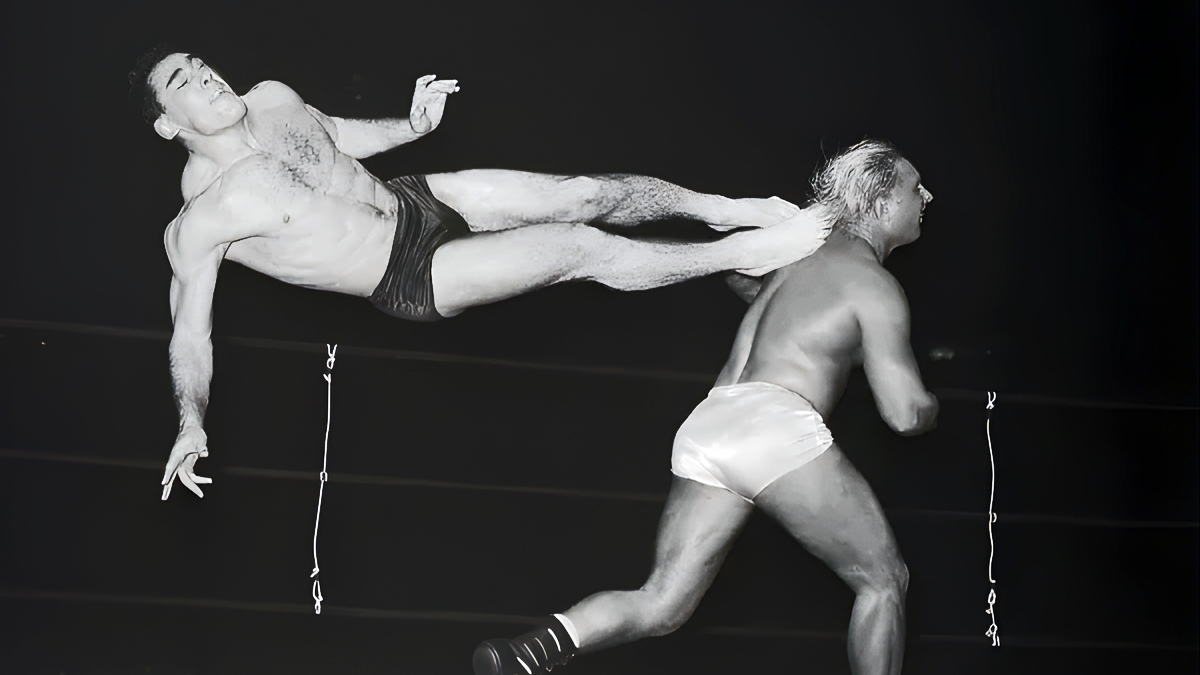
Antonino Rocca set all kinds of gate and attendance records at Madison Square Garden in the 1950s and 1960s, but in the 1940s, before the advent of television, he was just another wrestler trying to break out. Born Antonino Biasetton in Treviso, Italy, in 1921, he emigrated to Argentina as a young man and first made a name for himself there, blending soccer- and rugby-style athleticism with the holds he was learning on the mat.
When he came to the United States, he spent several years bouncing around the territories, including a run in Texas where he held at least one tag team title and worked undercards against the usual collection of journeymen and regional stars. He was not yet the barefoot superhero, just another guy on the card, honing his craft in front of live crowds and slowly figuring out how far he could push his acrobatics without losing the thread of a wrestling match.
Everything changed when he landed in New York in 1949. Teaming with Miguel Perez and working for Capitol Wrestling out of Madison Square Garden, Rocca’s flying bodypresses, headstands, and rope walk spots suddenly had the perfect stage. He became the hero of New York’s Italian and Puerto Rican communities, selling out the Garden and setting attendance records that stood for years. It is important to remember, though, that before all of that, he paid his dues the old-fashioned way, night after night in the territories, earning the right to be the "Argentina" Rocca fans fell in love with.
36. Dave Levin: The World Champion Almost Nobody Remembers (But Should)
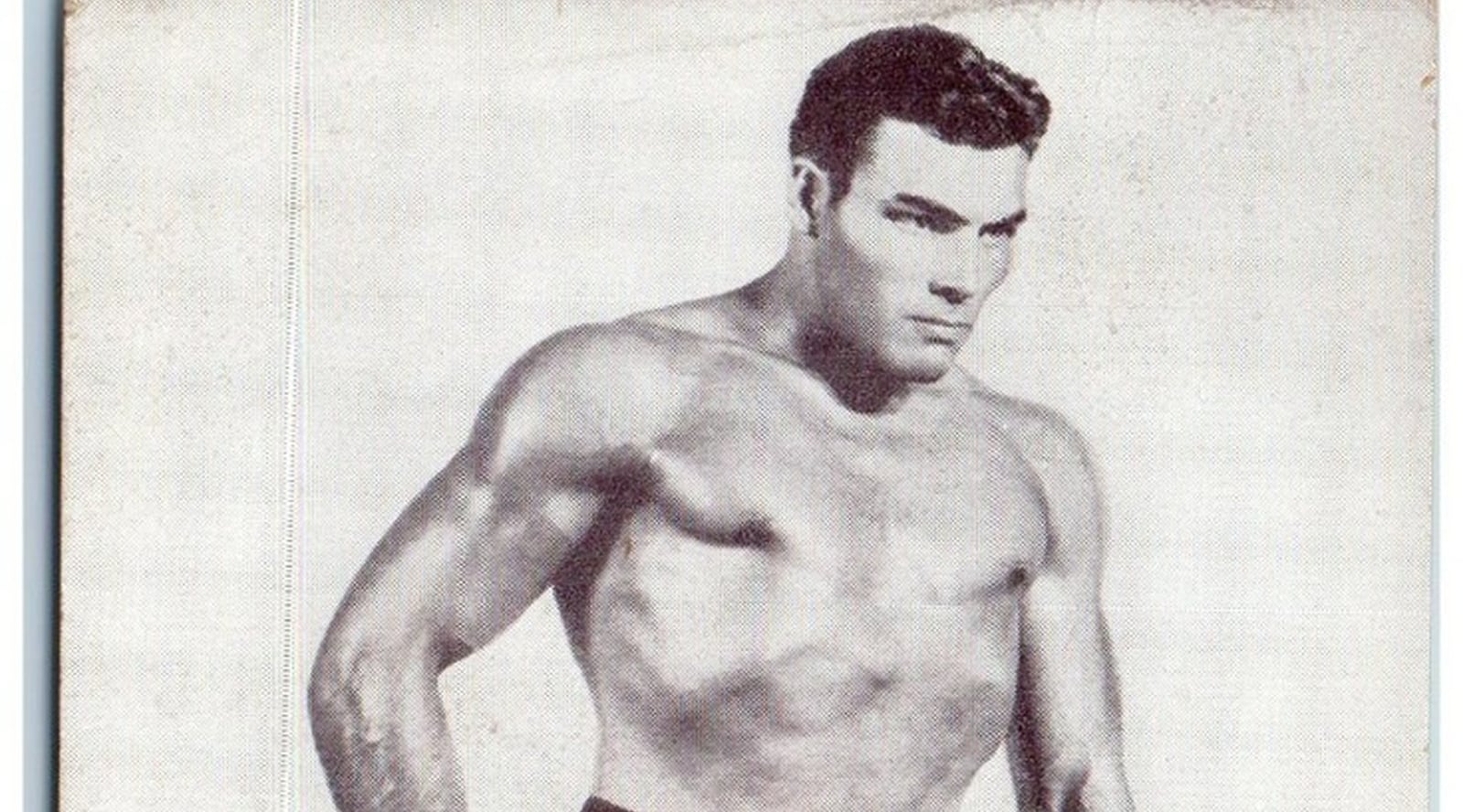
Dave Levin is another name few fans know today, but for a brief stretch in the mid-1930s, he was one of the men at the center of the world title mess. Born George William Wenzel in New York, he wrestled under the name Dave Levin and worked his way up on Northeastern and Midwestern cards with a compact, aggressive style that made him a natural for title contention once the promoters started looking for new faces to build around.
In June 1936, Levin defeated Ali Baba in Minneapolis in a bout publicized as being for the World Heavyweight Championship, and several offices, including promoters in Minneapolis, New York, and New England, began recognizing him as their world champion. Later that year, he added a Los Angeles version of the title by beating Vincent Lopez, which only made the picture more confusing. By 1939, one wrestling magazine joked that there were twenty world champions and every town had its own belt. Levin was one of the reasons they could make that crack with a straight face.
He was a solid wrestler who benefited from the territorial nature of the business and the endless appetite promoters had for a local "world" champion they could advertise on their posters. Once the National Wrestling Alliance and more centralized title lineages took over, his claims faded into the background, but for a couple of years in the 1930s, Dave Levin could look at the marquee and see the word "world" in front of his name, and in that era, that meant something.
37. Mayes McLain: Football Star Turned Charlotte’s Number One Good Guy
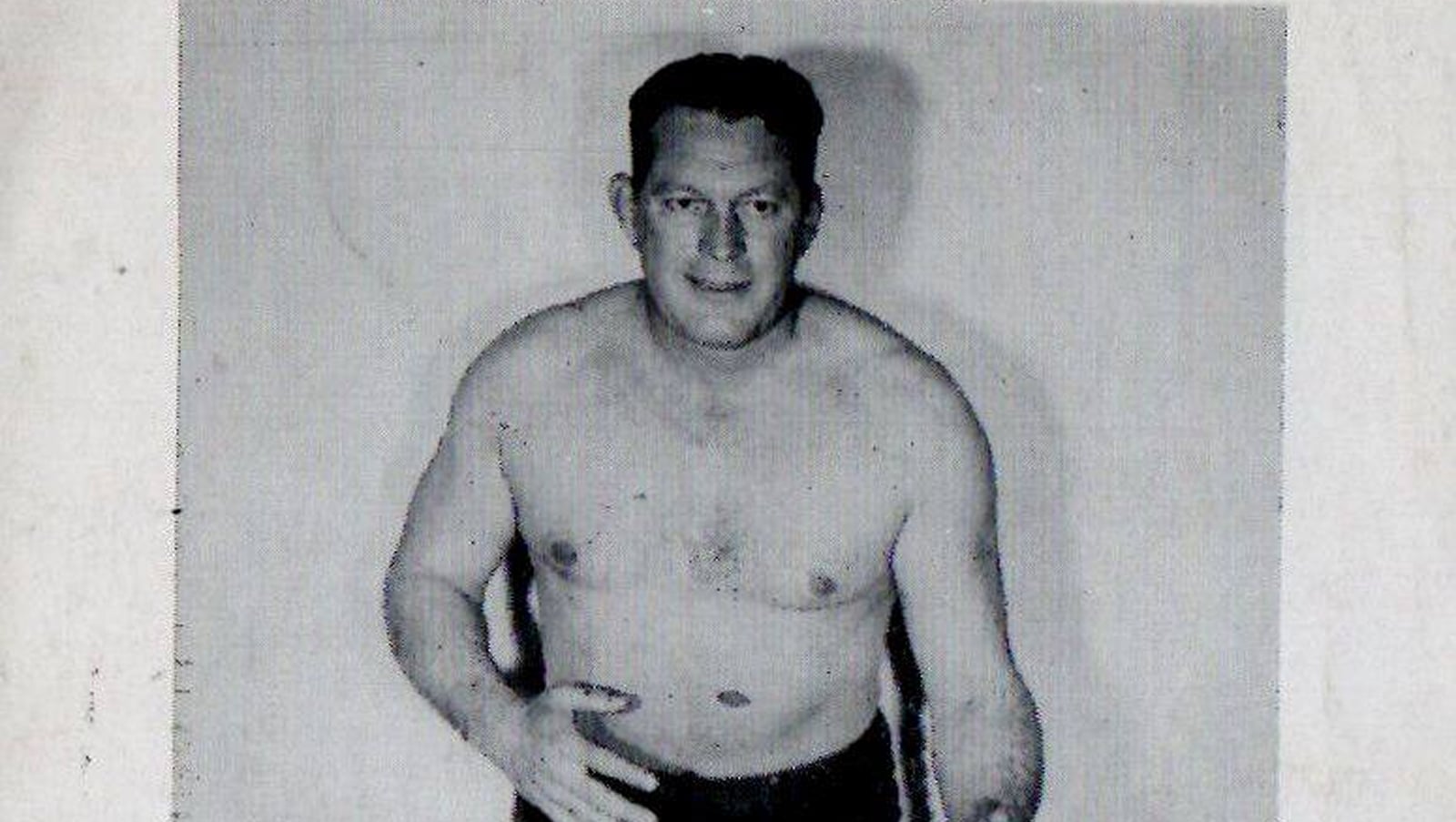
Mayes McLain was another football player turned wrestler, and in his case, the football part of the story was no small thing. At Haskell Institute in 1926, he set college football’s single-season scoring record with 253 points, piling up 38 touchdowns, 19 extra points, and two field goals, a mark that stood for more than sixty years. He later played at the University of Iowa and then in the early National Football League for the Portsmouth Spartans and Staten Island Stapletons under the name Chief McLain.
When his football days were done, he went full-time into professional wrestling, sometimes under his own name and sometimes behind a mask as the "Masked Manager." By the mid to late 1940s, he had become one of the major draws in Charlotte, the number one good guy in Jim Crockett’s promotion for a stretch. Southern fans still valued legitimate athletic backgrounds, and Mayes brought all of that gridiron toughness with him into the ring, selling hard for the villains and then roaring back with power slams and tackles that looked like they came straight off a goal line stand.
He might not be a household name today, but in those early years when Crockett was turning the Carolinas into a serious wrestling territory, Mayes McLain was one of the men carrying the babyface side of the ledger. He gave the fans someone they could trust, a real athlete who fought as if every match mattered.
38. Tiny Roebuck: The Big Man with a Bigger Personality
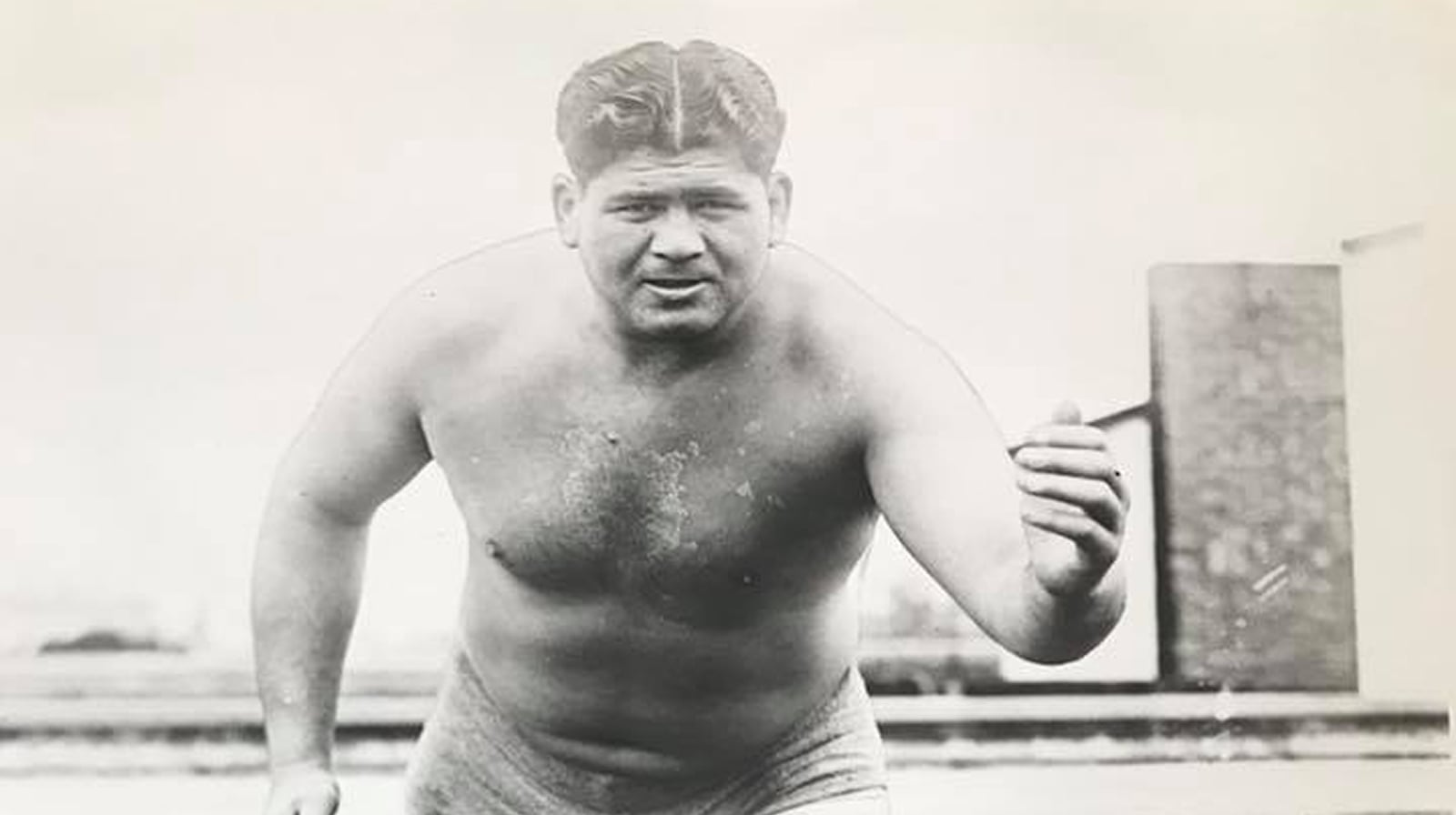
Tiny Roebuck was anything but tiny, somewhere around six foot five and 270 pounds, and not a shy person at all. Born Theodore Roebuck in what was then Indian Territory in Oklahoma, a member of the Choctaw Nation, he first made his name as a football player and all-around athlete before drifting into the ring and discovering he had a knack for professional wrestling.
By the mid 1930s, his name starts showing up on cards alongside Man Mountain Dean, Sándor Szabó, and other big men of the Los Angeles territory. There is surviving film from the "Twin Tornadoes" days of Nick Lutze and Tiny Roebuck teaming in wild tag matches at the Olympic Auditorium, and Roebuck fits right in as a big, charismatic babyface attraction who could run, bump, and brawl in a way that made a lot of other heavyweights look slow by comparison.
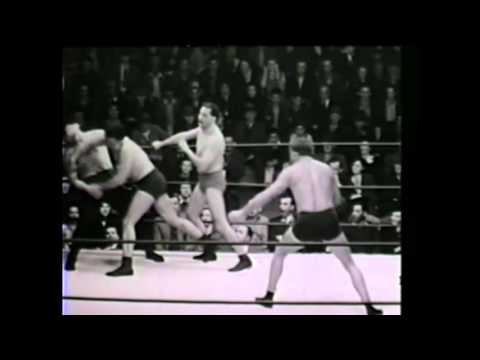
He also parlayed his look into a bit of a movie career, picking up character roles in serials and features like "Robinson Crusoe of Clipper Island," "Straight Place and Show," and "Torchy Blane… Playing with Dynamite." For fans who saw him in person, he was one of those larger-than-life figures you remembered long after you forgot the finer points of the finish, proof that "Tiny" was the kind of nickname only wrestling could give a man that size with a personality to match.
39. Billy “Tarzan” Darnell: Leopard Skin and Brutal Feuds with Buddy Rogers
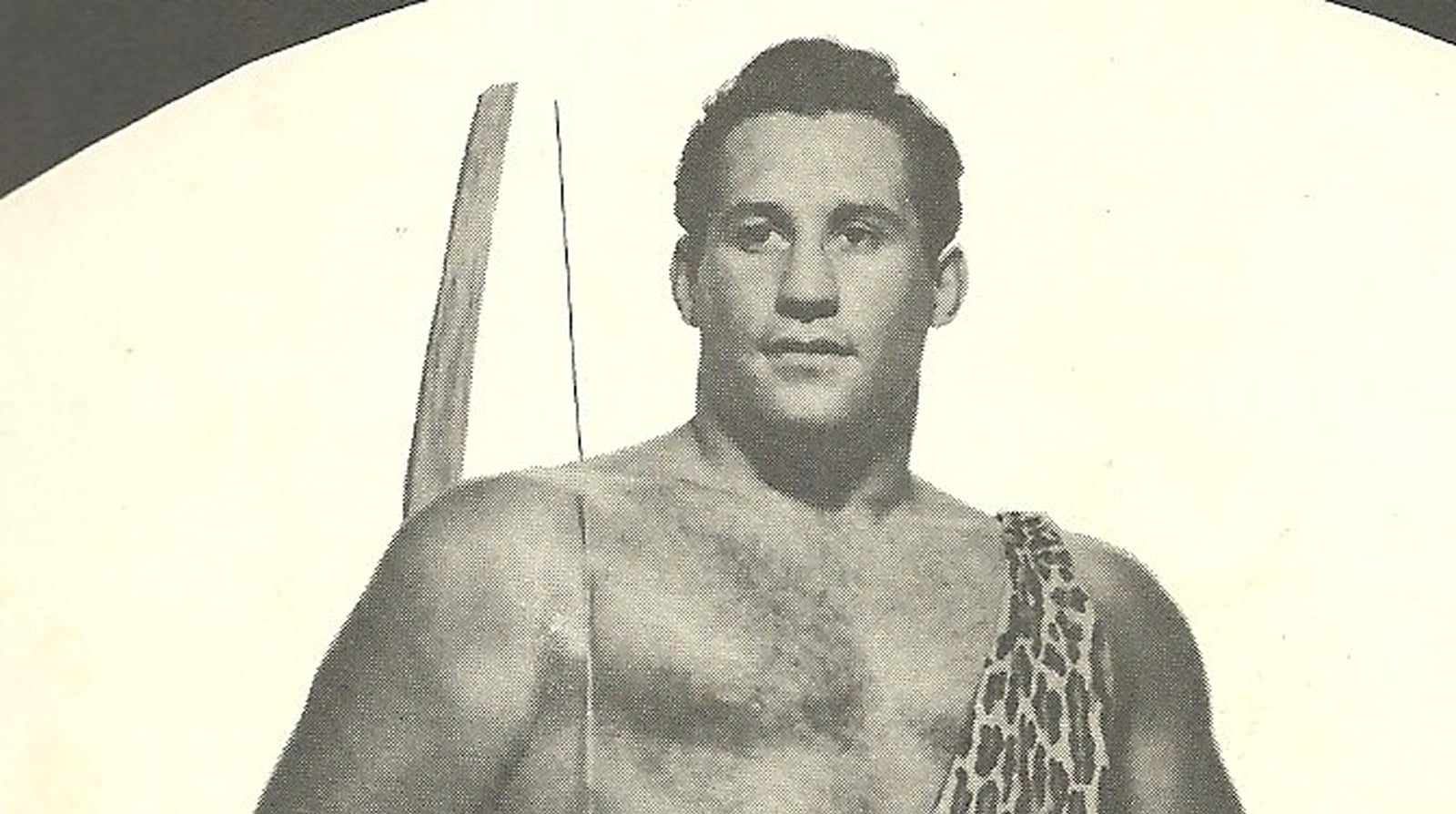
Billy Darnell was called Tarzan Darnell for a reason. When I saw him in the 1950s, he entered the ring in a leopard skin outfit with a wild mane of hair, looking every bit like he had just swung in from the nearest tree. He came out of Camden, New Jersey, just across the river from Philadelphia, the same general area as Buddy Rogers, and for a time, promoters leaned into that connection by billing them as the Rogers Brothers, with Darnell working under the name Billy Rogers in some towns.
Their story actually began in February 1944 when the two first teamed together in Philadelphia and Baltimore. Darnell went into the Army later that year, and when he came out, promoter Jack Pfefer brought both men to Texas and then to the booming California television market, where Rogers got a sequined cape and a “slave-girl” attendant, and Pfefer introduced Darnell to the leopard-skin gear that would define him. It was in California, wrestling on televised cards out of the Hollywood Legion Stadium, that the two first discovered the chemistry that made the eventual feud so explosive. Rogers was the heavyweight champion, Darnell was the junior heavyweight champion, and fans who saw them work together began to wonder what would happen if that partnership ever broke apart.
It did. Buddy and Billy went on to meet more than 200 times across the 1940s and 1950s, from New York to Los Angeles, sometimes in main events and sometimes in bloody grudge matches farther down the card, but always drawing money. Rogers pile-drove Darnell into a neck brace on one occasion, while Darnell knocked out a couple of Rogers’ teeth on another, which gives you a sense of how real those matches could get. The feud made both men stars, and it helped establish the California television scene as a legitimate home for headline-level feuds.
Whenever you put Buddy Rogers and Billy Darnell in the same ring, you got fireworks. The leopard skin, the brutal feuds, the years-long dance between partners and enemies, all of it helped make Tarzan Darnell one of the most memorable figures of that transition period from pre-television to the full TV boom. He retired from wrestling in 1961, eventually earning a chiropractic degree and building a successful practice in New Jersey, the same state where his remarkable story with Buddy Rogers had begun nearly two decades earlier.
40. Reginald Siki: Pioneer Black Main-Eventer the Papers Ignored
From the 1930s onward, Reginald Siki was one of the few Black wrestlers who regularly appeared in main events, yet his name is not mentioned enough today. Born Reginald Berry in Kansas City, Missouri, in 1899, he came out of an era when boxing’s Jack Johnson had already shaken the world, and Joe Louis was about to, but wrestling still had very few Black faces anywhere near the top of the card.
Siki’s ring story claimed he came from Africa and was a prince, but in reality, he was a Midwestern kid who fought and wrestled his way up the hard way. He wrestled in Europe, Turkey, and Asia, appeared before crowds that ran into the tens of thousands, and was, for a time, one of the best-known Black athletes in America between the Johnson and Louis eras. He even spent two years as a German prisoner of war during WWII, survived that, and came back to wrestle again in his mid-forties, which tells you something about the man’s toughness.
Because he was Black, he did not get the coverage that white wrestlers did for doing the same things. He barely appears in some of the standard histories of the business, and when he is remembered at all, it is often only as the inspiration for Sweet Daddy Siki, who came along in the 1950s. But the precedent he set mattered. When the Los Angeles promotion office and other NWA cities began pushing Black wrestlers like Bobo Brazil, Woody Strode, and others into main events in the late 1940s and early 1950s, they were walking through a door Reginald Siki had already kicked open, even if the papers had tried to pretend he was never there.
41. Enrique Torres: First of a Famous West Coast Family
Enrique Torres was the first of the famous Torres brothers, and for a stretch in the late 1940s, he was as big a star on the West Coast as anyone. Born in Santa Ana, California, in 1922, he had a strong amateur background before debuting as a pro at the Olympic Auditorium in 1946, just as California wrestling was exploding with the help of early television.
He made most of his name in Los Angeles, where he held the local version of the World Heavyweight Title almost nonstop between 1946 and 1950, feuding with the likes of Gorgeous George and Baron Michele Leone, and later added the Pacific Coast Heavyweight Championship and Central States titles to his resume. Billed as the "Latin Flash," Torres wrestled around 230 pounds and mixed flying body scissors and dropkicks with solid mat work, all while working under his real name with no gimmick beyond being himself. That authenticity made him a major babyface star for the booming West Coast TV audience.
When we talk about 1950s tag teams, we will be talking about the Torres brothers a lot, especially Ramon and Alberto, who held NWA World Tag Team and U.S. Tag Team titles in multiple territories. But it all starts with Enrique, the singles star who built the name before his brothers joined him and gave the Torres team instant credibility wherever they went.
42. Walter "The Golden Superman" Podolak: Greatest Nickname in the Business
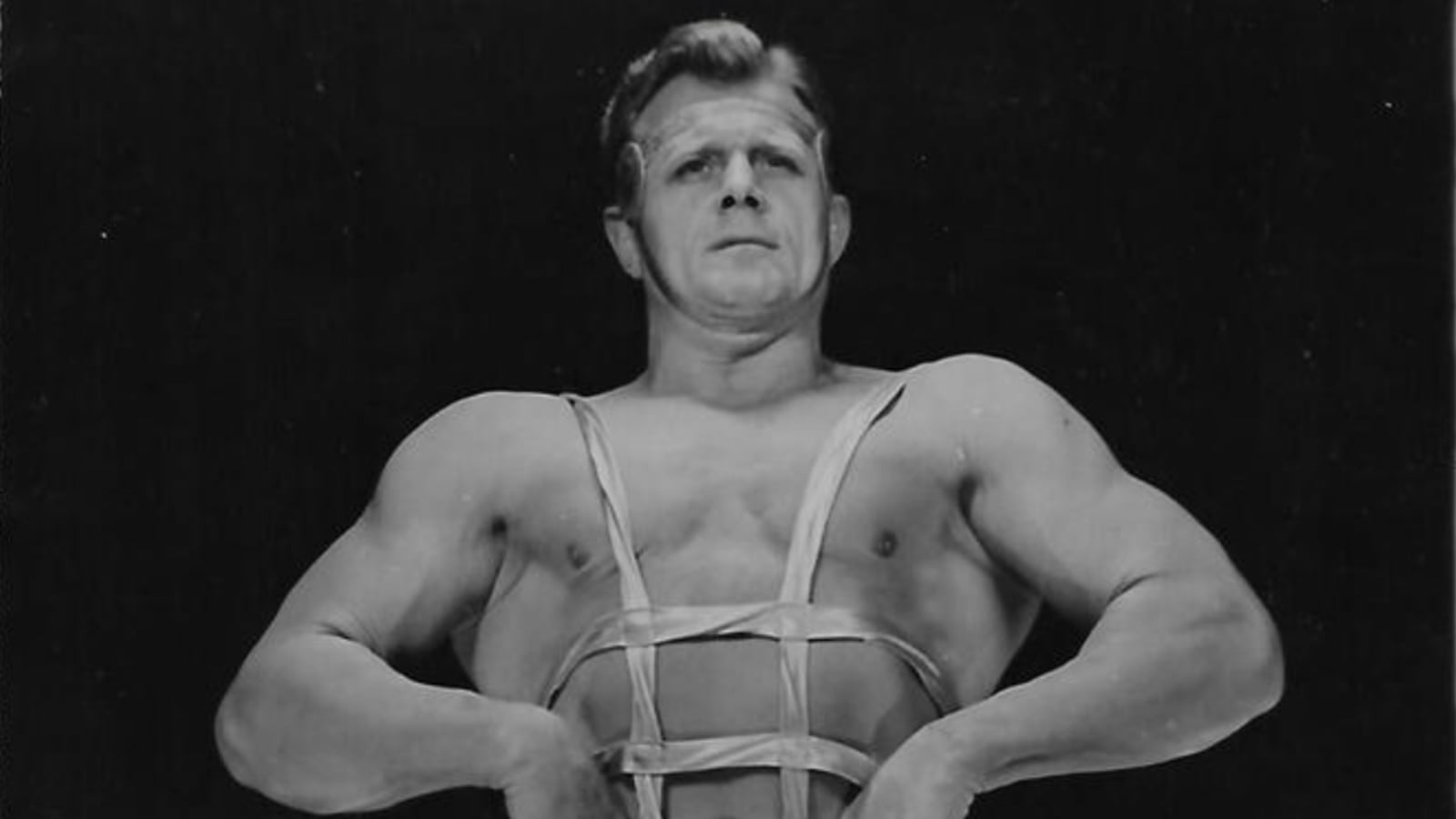
Walter Podolak may have had the greatest professional wrestling nickname of all time: “The Golden Superman.” Born in August 1909, he grew up in upstate New York and spent more time boxing, wrestling, swimming, and tumbling than most kids did hanging around. By his late teens, he was already a serious weight man, deadlifting 400 pounds within three months of training and eventually breaking the world amateur deadlift record with a pull of 643 and three-quarters pounds in 1928.
He parlayed that strength into a career as a bodybuilder and then as a professional wrestler under the Golden Superman moniker, working main events in the 1940s and 1950s and combining an impressive physique with a solid grappling base. Contemporary accounts and later profiles describe him as one of the most famous bodybuilders of the 1920s and 1930s and a regular on wrestling cards in places like Omaha and other Midwestern cities, often matched against rugged pros such as Gino Garibaldi.
The records show Podolak never captured a major, recognized world heavyweight title, but that tells only part of the story. According to a 1975 interview with his friend Fred Howell, Podolak wrestled more than 3,500 matches and lost only 14, an extraordinary record by any standard. Along the way, he held the European championship, the Southern title, and a Texas championship, and he was a regular tag team partner on major cards in New York, Chicago, and the South.
He owned the Golden Superman Gym in New York and remained a local advocate for physical culture, encouraging young people to use sport to stay out of trouble. Not every babyface needs a world belt to mean something to the fans. Podolak is proof of that, a man whose nickname, presence, and nearly unblemished record made him unforgettable.
Why the Pre-TV Babyface Era Still Matters
Across this entire list, a few things stand out. Legitimacy mattered. Many of these men and women had genuine amateur, football, or boxing backgrounds that promoters emphasized to distinguish them from theatrical heels, whether it was Earl McCready’s Olympic credentials, Bronko Nagurski and Mayes McLain coming off the gridiron, or Primo Carnera bringing a world boxing title into the ring. Ethnic and regional identity were central to babyface appeal: Danno O’Mahony in Irish Boston, Yvon Robert in French-Canadian Montreal, Whipper Billy Watson in Toronto, Enrique Torres as the Latin Flash in Los Angeles, giving local fans a hero who felt like one of their own.
The proliferation of governing bodies and world titles confused casual fans and frustrated sports editors, but it also created opportunity. With the National Wrestling Association, the original AWA out of Boston, the Midwest Wrestling Association, and later the NWA all recognizing different champions, multiple wrestlers could be "world champions" in different cities at the same time, and local fans could rally around their own man at the top of the bill. In that environment, bread-and-butter babyfaces like Ray Villmer and Ray Eckert were just as important as headline names, because they kept the cards grounded in honest effort while the politics swirled above them.
By the time television arrived in force in the late 1940s and early 1950s, the blueprint for the modern babyface, brave, athletic, technically sound, and fundamentally honorable, was already fully in place. Lucha libre had El Santo in his silver mask, California had Enrique Torres and Sandor Szabo on early TV, New York soon had Rocca turning the Garden into a second home, and women’s wrestling had Mildred Burke proving she could close a show.
The TV era did not invent the good guy. It just put one in every living room in America. The men and women on this list wrote the playbook that made that possible. These are not just old stories. They are the roots of the business, and they deserve to be remembered.
These stories may also interest you:
- 25 Pre-TV Wrestling Heels Who Built the Modern Villain
- 25 Wild 1950s Wrestling TV Gimmicks That Changed the Business
- 18 Wrestling Heel Pioneers Who Insanely Freaked Out Fans
Download PDF Version
Get the complete article as a formatted PDF for offline reading.