 Author:
 John Cena retired as a 17-time world champion, more world title reigns than any performer in WWE history, with a 10-6 record across 16 WrestleMania appearances. But behind that resume sat a quieter accounting: eight separate injuries, several of them legitimately career-threatening, that Cena worked through, operated on, and returned from, sometimes too early, without ever letting the schedule catch up to the damage. Some of these injuries, as it turned out, came close to ending it all for him.
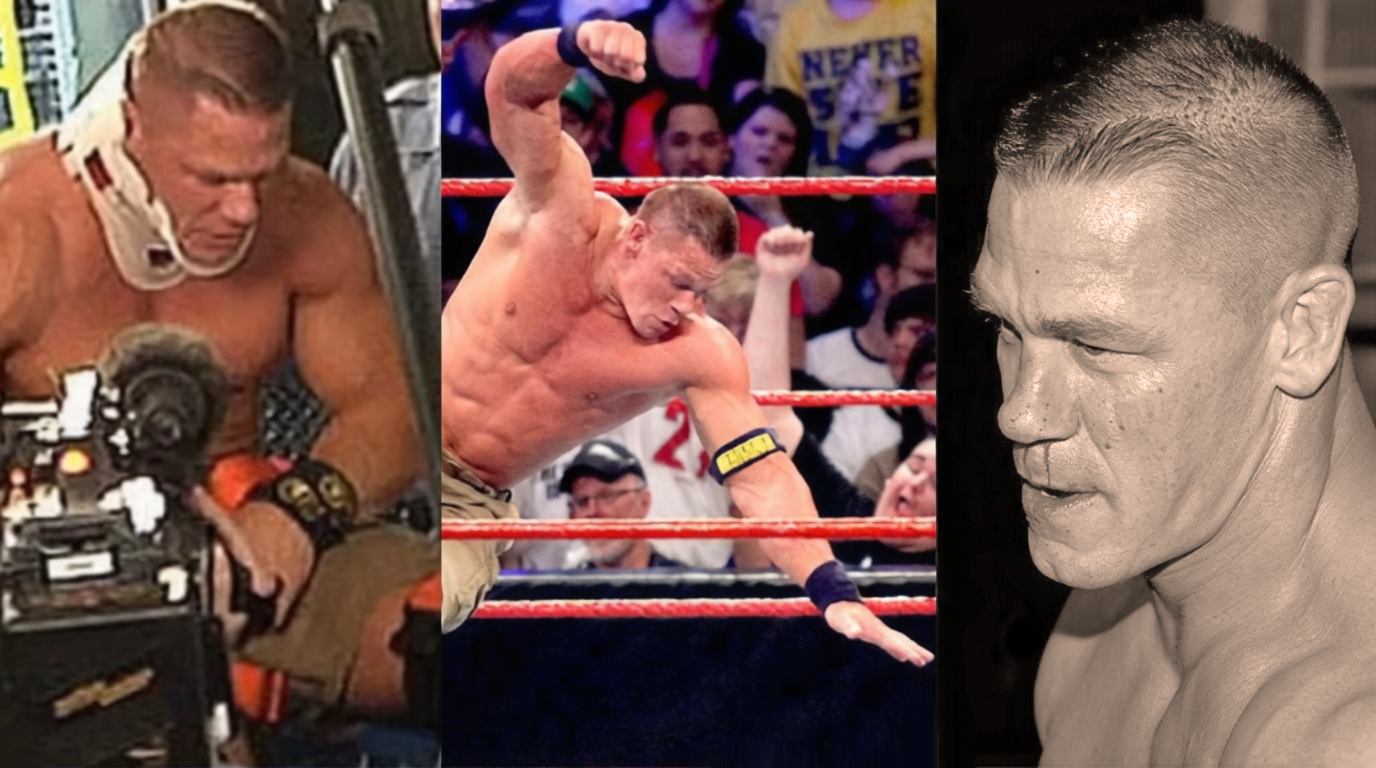
1. The Torn Pectoral Muscle That Ended a 380-Day Reign (2007)
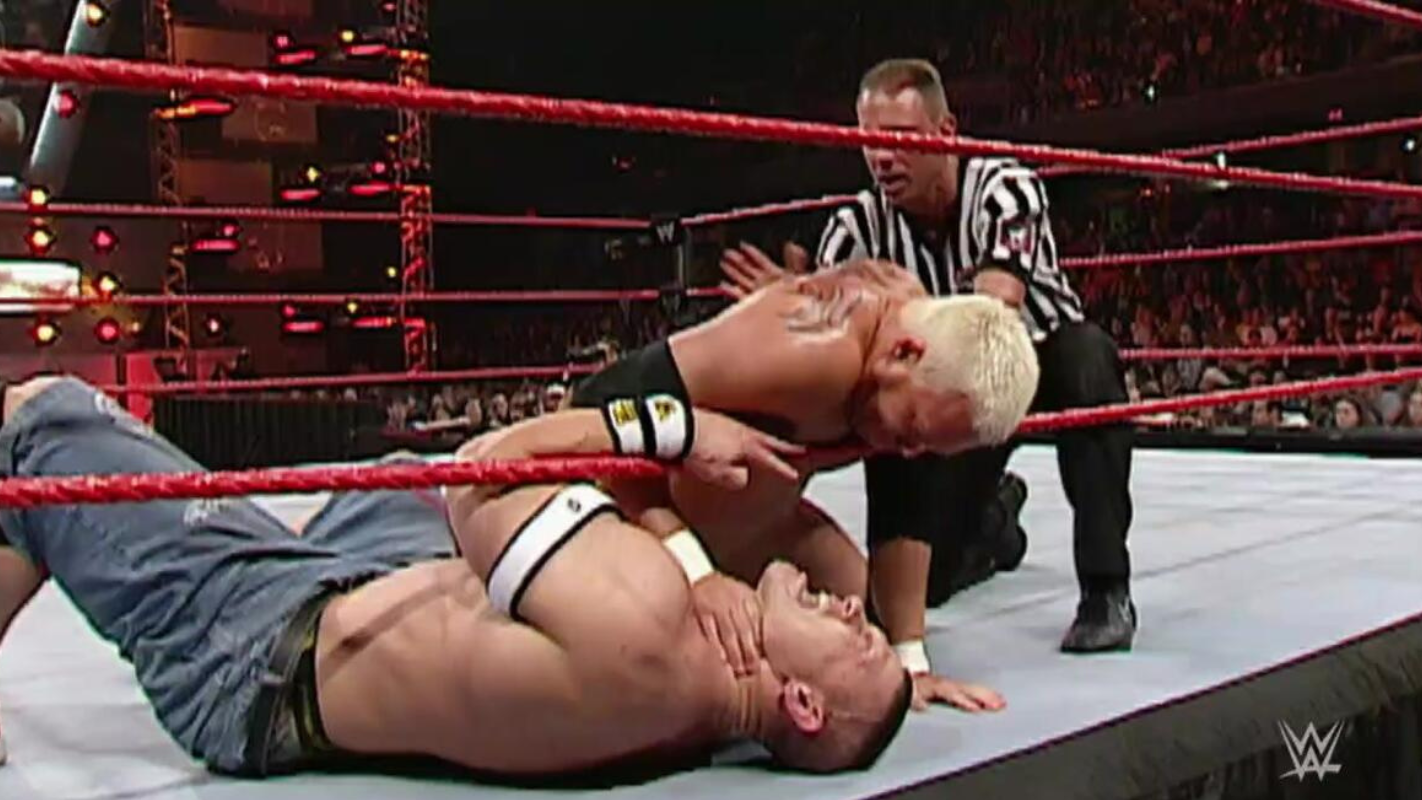
John Cena and Mr. Kennedy were feuding in a heated match at Monday Night Raw on October 1, 2007, in Birmingham, Alabama. Midway through the bout, as Cena executed a hip toss, he tore his pectoral muscle.
He finished the match anyway. Afterward, WWE physician Dr. Ferdinand Rios evaluated him, and the diagnosis was more serious than it first appeared.
In WWE’s injury update following the match, Dr. Rios reported, “He has a complete tear of his pectoralis major muscle. Because he’s so big, the tendon tear is behind the muscle. It was hard to diagnose.”
Cena underwent surgery the next day. Rios laid out what came next in that same update.
“Cena will be hospitalized for a few days to learn the rehabilitation procedure he must undergo. His arm will be immobilized for a week, and then therapists may allow him to start moving it so that the arm doesn’t become stiff.”
The diagnosis revealed his pectoral muscle was completely ripped off the bone, with a projected recovery of six months to a year. That timeline brought Cena’s historic 380-day reign as WWE Champion to an end. He was forced to surrender the title, which Vince McMahon later put on the line between Triple H and Randy Orton at No Mercy 2007.
Cena revisited the injury nearly two decades later in a conversation with Joe Rogan on The Joe Rogan Experience, released December 4, 2025, calling it one of the worst of his career. He explained he never took a painkiller after or during the surgery, noting that pain pills can lead to addiction without a person realizing it, which is why he avoided them for his entire career.
On that same episode, Cena recalled, “Right pec, completely detached, never taken one pain pill. The worst one was probably putting the whole pec back on and then attaching it. But when I woke up, I was able to mess around with a stress ball, and I never took one pill.”
Three months removed from an injury that had originally carried a six- to twelve-month projection, Cena walked into Madison Square Garden as the surprise 30th entrant in the 2008 Royal Rumble, and won the match. Dr. Rios had predicted as much before the recovery even began, telling WWE.com in that original injury update, “I suspect that John might be able to come back sooner than most people with this kind of injury, as he’ll train vigorously.”
In an interview with Chris Van Vliet, Cena described exactly how vigorous that training was, revealing, “They have to put a realistic timeline on their work. That timeline is based on the construct that you do physical therapy three times a week. I would do physical therapy three times a day. I was a physical therapy terminator, and I passed it two and a half months in. The Rumble was coming up, and it was only let out to a few people.”
2. The Herniated Disc That Changed Everything (2008)
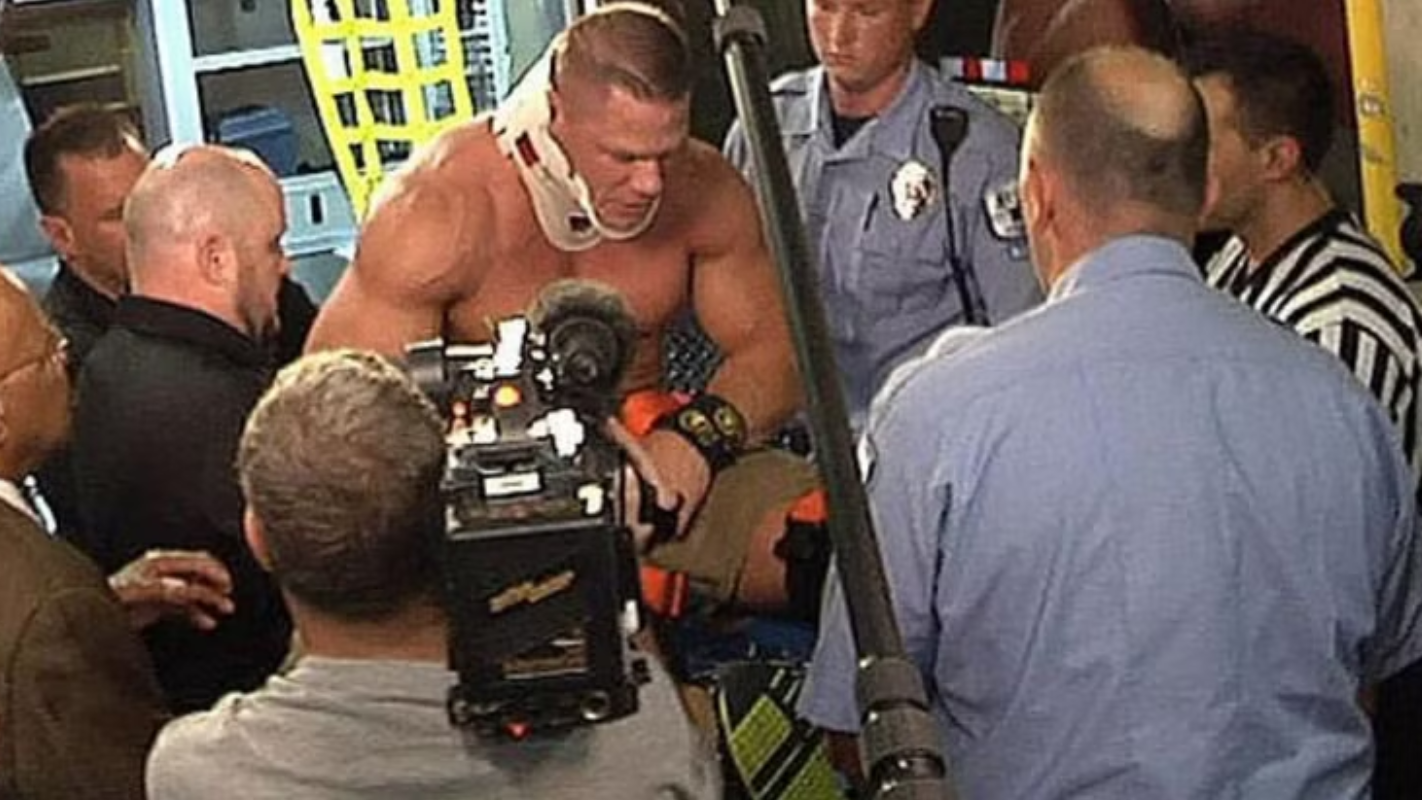
Less than eight months after his Royal Rumble return, John Cena faced Batista at SummerSlam 2008 in one of WWE’s biggest matches of the year. Midway through the bout, Batista delivered multiple Batista Bombs, including one that caught Cena awkwardly after elevating him. At the time, it looked like part of the match. Afterward, it became clear it had been real damage.
In a WWE.com injury report published days later, officials confirmed Cena had suffered a significant herniated disc in his neck and would require surgery. According to WWE physician Dr. Chris Amann, who reviewed the MRI results with Cena, the injury was considerably worse than initially expected. This was not a detached tendon or damaged tissue. This was his neck, the biological superhighway of nerves connecting the brain to the rest of the body, and Cena knew quickly that delaying treatment was not an option.
In that same report, Cena described symptoms that went far beyond pain.
“It needs to be dealt with, because I lost most of the feeling in my right arm and am having pain in my shoulder. I’m losing 20 percent of my strength per day.”
He continued, explaining the risk of waiting.
“If I don’t do anything about it, the injury will end up rupturing, and then the surgery will be more difficult. It’s not easy, because surgery never is.”
He described the physical reality of the disc itself.
“The disk is so bulged out and inflamed that any sudden move could make it worse.”
By late August 2008, WWE sent Cena to Pittsburgh for treatment under Dr. Joseph Maroon, a neurosurgeon at the University of Pittsburgh Medical Center and longtime consultant to elite athletes. Twelve hours before his surgery, Cena addressed the Raw audience directly.
“You can either do one of two things: be upset, or know what you can do to get better. The ultimate goal is to be as strong as I can and get back into the ring as soon as possible.”
Dr. Maroon performed a microsurgical removal of the herniated fragment in a procedure that lasted approximately 90 minutes, accessing the injury through the front of the neck with an operating microscope before removing the fragment compressing both the spinal cord and nerve. He later explained the severity of the situation to WWE.com.
“We performed a microsurgical removal of a large disk fragment compression on the spinal cord, which was weakening the nerve leading to the right arm.”
He was optimistic about what came next, telling WWE.com in a follow-up report, “I think John’s prognosis is excellent. We performed this same procedure on three all pro NFL players, and all three resumed their football careers.”
Batista publicly addressed the incident on WWE’s YouTube channel, denying any malicious intent and describing it as an unfortunate accident resulting from the intensity of the collision.
By choosing a microdiscectomy over a more invasive spinal fusion, Cena recovered faster than expected, returning within three months to defeat Chris Jericho for the World Heavyweight Championship at Survivor Series.
Enjoying this story? Own it forever.
No ads. No interruptions. Download the full story as a beautifully formatted PDF at just $0.99.
Get My Copy — $0.993. The Elbow Surgery That Finally Slowed Him Down (2012)
At Night of Champions in September 2012, John Cena challenged CM Punk for the WWE Championship in one of the strongest matches either man produced that year. The bout ended in controversy after both men pinned each other simultaneously, allowing Punk to retain the title. At the time, there was little indication anything had changed physically.
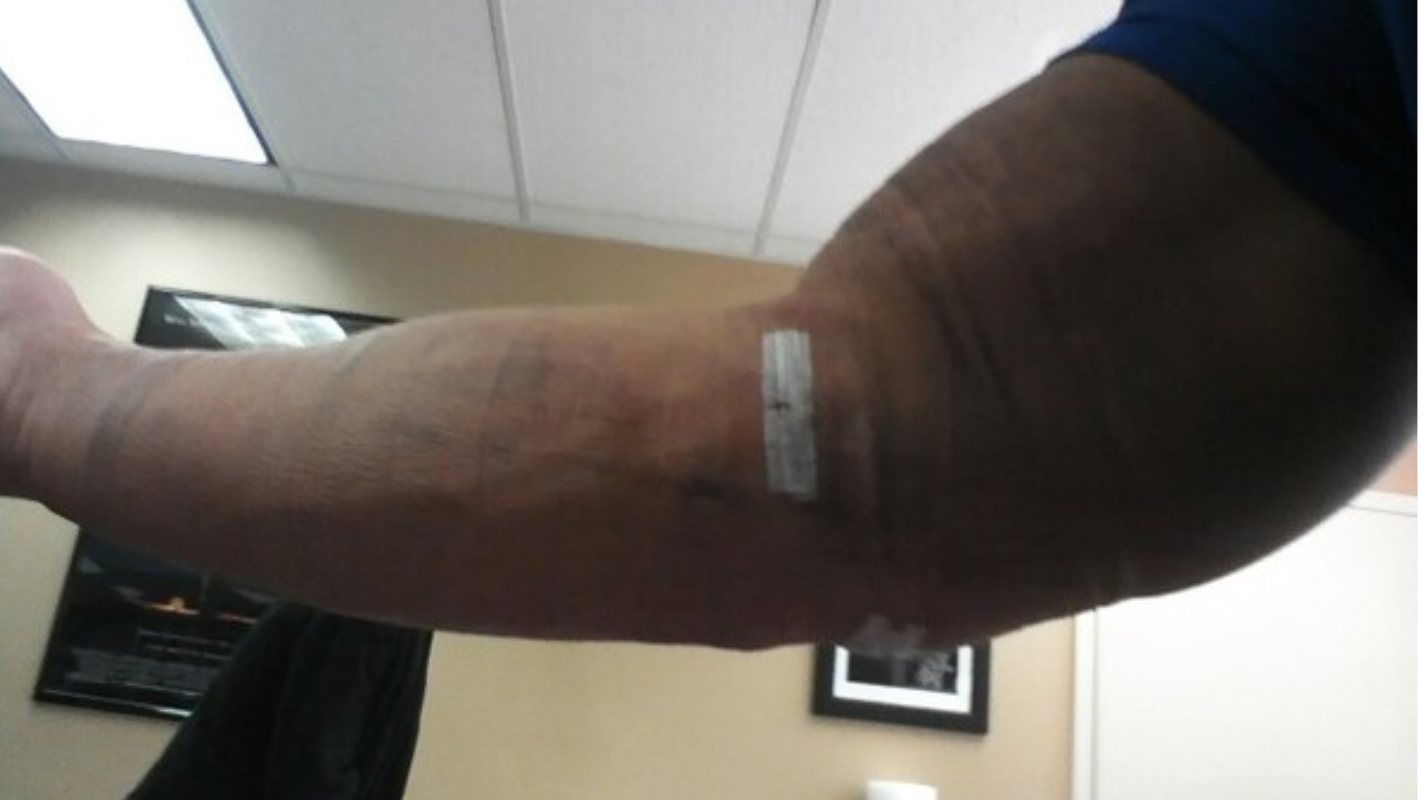
Behind the scenes, Cena’s right arm had reached a point where continuing normally was no longer realistic. Two days later, WWE announced he had undergone surgery to remove bone chips from his right elbow, the result of years of lifting, collisions, and a schedule few performers had maintained.
Dr. James Andrews performed the procedure in Birmingham, removing several bone fragments through an arthroscopic scope. He explained the condition plainly in that same report.
“He had begun to lose motion in his arm, and it had been locking up.”
Andrews described the operation as straightforward despite Cena’s “big, old arm,” and outlined the plan going forward.
“Cena’s rehab will start on Monday with trying to improve his range of motion and getting the swelling down.”
WWE initially projected a recovery of two to three weeks but revised the outlook to six to eight weeks once the extent of the fragmentation became known. Cena publicly corrected the earlier optimism himself in comments reported by Bleacher Report, explaining after speaking directly with Dr. Andrews that six weeks was the safer estimate. For perhaps the first time in his injury history, there was no surprise comeback.
By Survivor Series 2012, Cena returned directly into the WWE Championship picture, competing alongside Ryback against CM Punk in a Triple Threat Match. He did not leave with the title, but for the first time, he had recovered on schedule rather than ahead of it. In retrospect, that may have been the warning. The injuries that followed would stop being isolated moments and start becoming patterns.
4. The Achilles Injury and the Choice to Keep Going (2013)
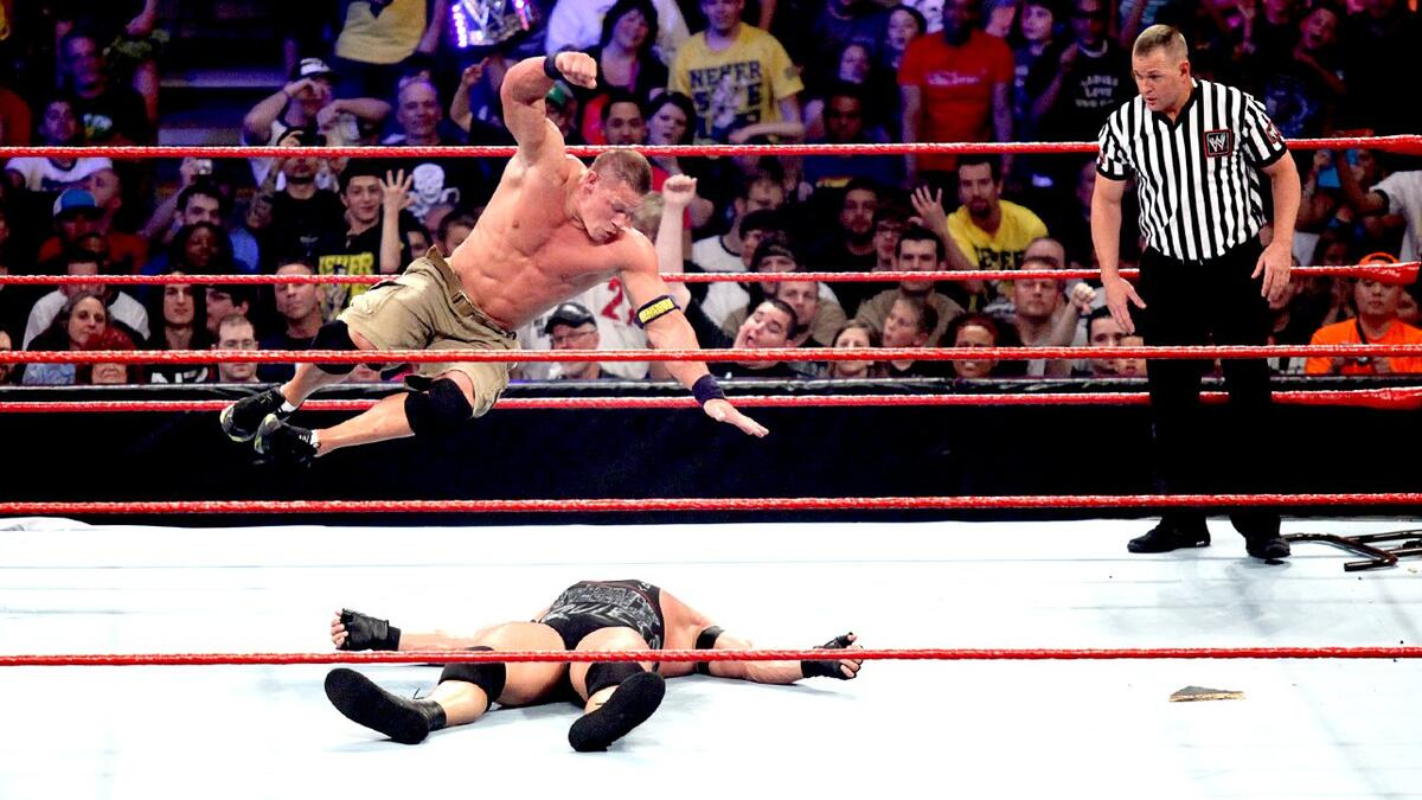
Weeks after defeating The Rock at WrestleMania 29 to reclaim the WWE Championship, John Cena joined WWE’s European tour. During a match with Ryback in April 2013, he injured his right Achilles tendon, the thickest and strongest tendon in the human body, located at the back of the lower leg. For a performer whose style depended on planting, lifting, sprinting, and absorbing impact, that kind of injury is especially damaging. WWE confirmed the injury shortly afterward but offered little detail.
Rather than take time off, Cena continued fulfilling his schedule, including Make-A-Wish appearances in New York, while preparing for his upcoming title defense. On Monday Night Raw, he competed while visibly limited.
At Extreme Rules 2013, Cena faced Ryback in a Last Man Standing Match, a format built around endurance rather than the restriction his injury demanded. WWE acknowledged before the match that Cena was entering compromised. Inside the ring, he moved differently, adapting instead of exploding, the pace measured and unfamiliar, yet he stayed in the fight.
The match ended without a winner after both men crashed through the entrance stage and neither could answer the count. Afterward, WWE reported that despite medical recommendations, Cena declined hospital transport.
In a WWE.com injury update days later, Dr. Michael Sampson stated that although heavily bruised, Cena was recovering better than expected, describing his condition as “day by day.” At the time, it reinforced the “Super Cena” reputation he had spent years building. Years later, it reads differently: the body was beginning to send warnings, and Cena kept answering them the same way he always had, by continuing.
What nobody knew at the time was that this would not be the only major surgery of 2013, nor even the last one that summer.
Love Pro Wrestling Stories? Add us as a Preferred Source on Google so our stories always show up first for you. It only takes one click.
Add Us on Google5. The Torn Left Tricep and the Summer John Cena Finally Stopped (2013)
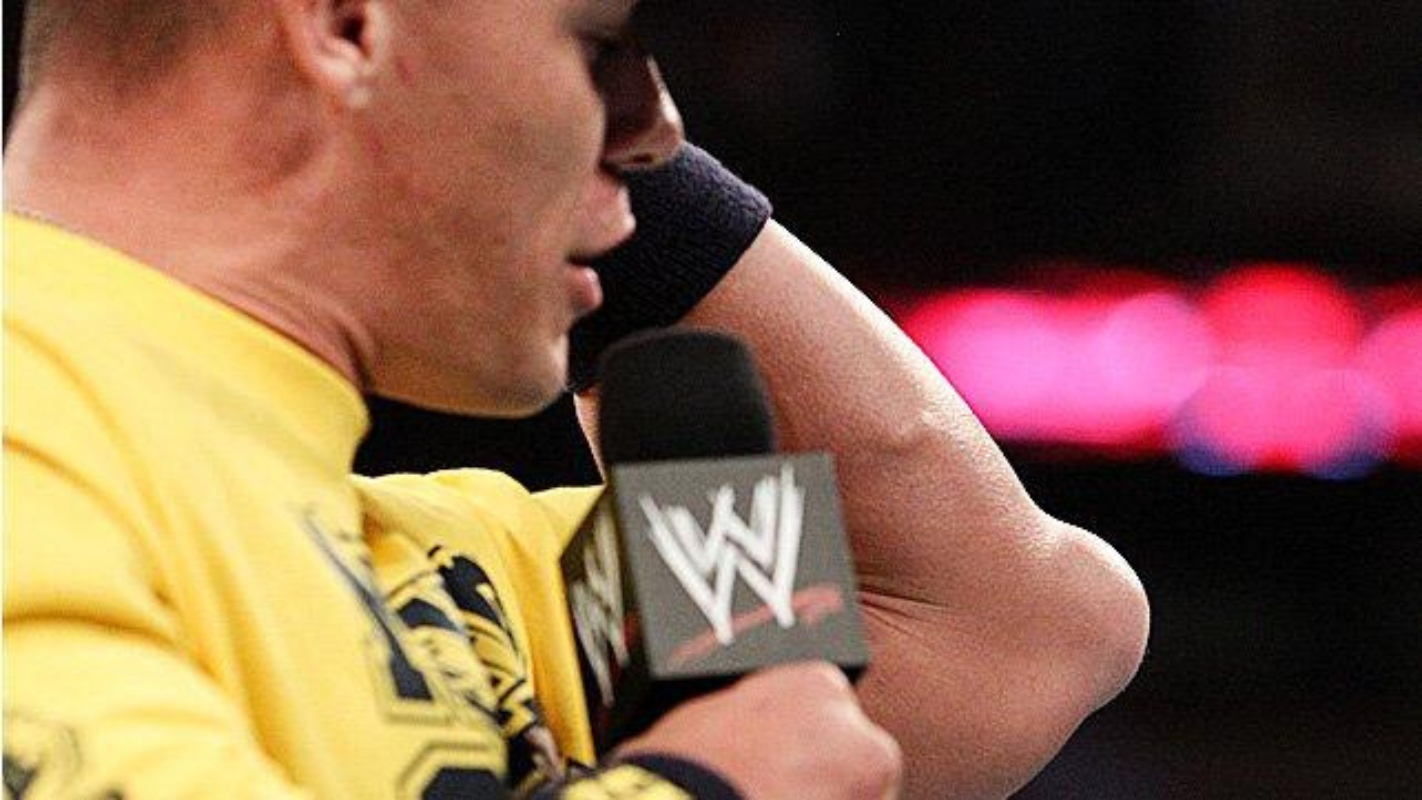
By August 2013, Cena had spent months managing his Achilles injury while wrestling a full schedule. On August 18, he defended the WWE Championship against Daniel Bryan in the main event of SummerSlam.
The following day, WWE confirmed Cena had been competing through a significant undisclosed injury. WWE physician Dr. Michael Sampson explained the diagnosis to the site.
“John has been dealing with a large left elbow bursitis. We did an MRI, which showed a partial triceps tear. Being the warrior that he is, he did not want to have surgery.”
That night on Raw, Cena addressed the audience directly, and his identity inside WWE, built for years on staying available, made the words land with real weight.
“I cannot put off my surgery any longer. Tonight, I leave the WWE.”
WWE confirmed the procedure would be performed by Dr. James Andrews in Birmingham, Alabama, the same surgeon who had repaired Cena’s elbow the year before. The projected recovery window was four to six months.
On October 27, 2013, roughly two months after surgery, he returned at Hell in a Cell to defeat Alberto Del Rio for the World Heavyweight Championship.
Reflecting years later on the toll of that stretch, in a conversation later reported by PostWrestling, Cena summarized it plainly on The Bill Simmons Podcast.
“Both triceps, tore both of those. Torn pec. My neck, I had to have spinal fusion.”
With hundreds of amazing Pro Wrestling Stories to dive into, where do you start? Get the inside scoop, join our exclusive community of wrestling fans! Receive 10 hand-picked stories curated just for YOU, exclusive weekly content, and an instant welcome gift when you sign up today!
6. The Broken Nose and the Cost of Becoming Unbreakable (2015)
By 2015, John Cena’s recoveries had become expected rather than remarkable. A torn pectoral muscle turned into months instead of a year. Neck surgery became weeks instead of seasons. A tricep repair became another championship return.
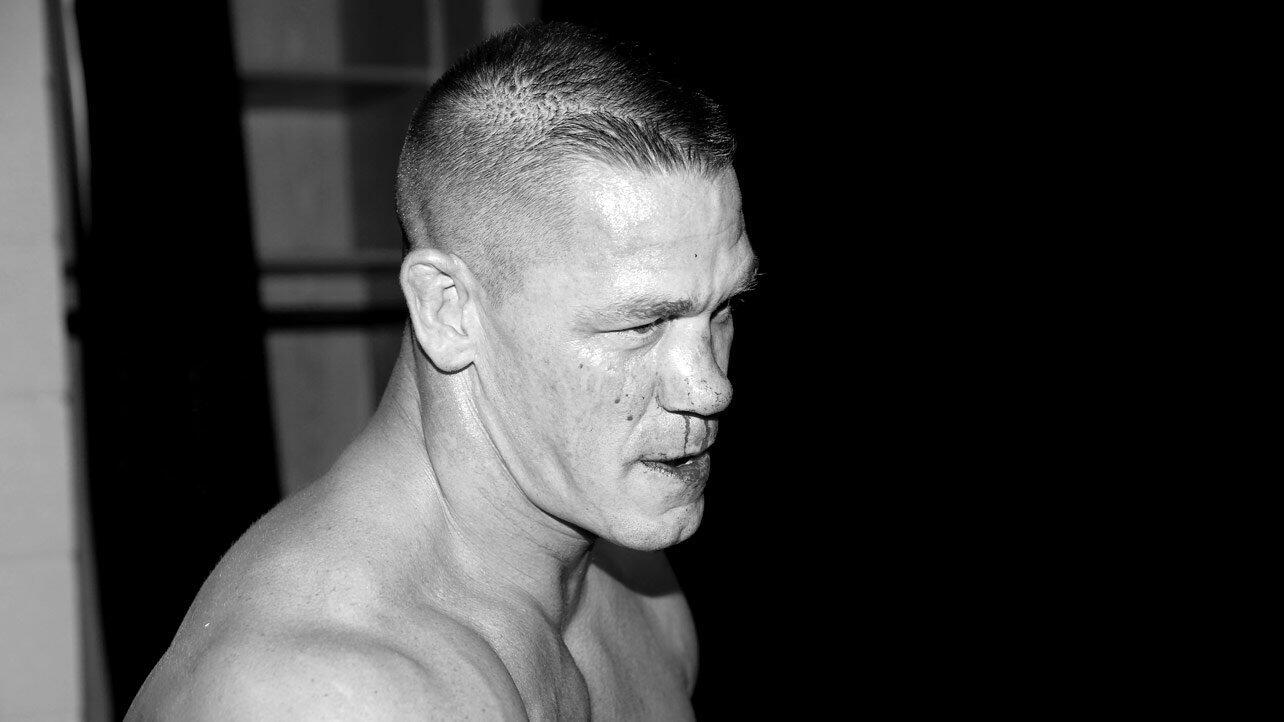
Then, during a Raw match against Seth Rollins for the United States Championship in July 2015, Rollins attempted a jumping knee that connected directly across Cena’s face. Crimson appeared from his nose almost instantly. Cena stepped away briefly, then continued the match.
In a WWE.com injury update published that night, physician Dr. Steve Daquino confirmed the damage. “As you can see on television tonight, John suffered from a nasal fraction. He’s got quite a bit of displacement, so we sent him over to the local emergency room so he can be evaluated by the ears, nose and throat doctor who’s on call tonight and see what can be done to properly repair it.”
Only days later, Cena appeared publicly to accept Rollins’ challenge for a Winner Takes All match at SummerSlam, entering with both the WWE World Heavyweight Championship and United States Championship on the line.
Years later, reflecting on the injury on The Joe Rogan Experience, Cena described it with characteristic brevity.
“Nose relocated.”
Real Autographs. Only Few Remain.
These are hand-signed originals sold directly by Pro Wrestling Stories. Once they sell out, they are gone for good.
Own a Piece of Wrestling History
-

Butcher Paul Vachon Signed WWF 8×10 Photo Autograph (Deceased Legend)
$45.00 Add to cart -
Steve Keirn Signed WWF 8×10 Photo Autograph (Fabulous Ones)
$30.00 Add to cart -
Fred Ottman Signed WCW 8×10 Photo Autograph (The Shockmaster)
$35.00 Add to cart -
Justin Credible Signed 8×10 Photo Autograph
$30.00 Add to cart -
Missy Hyatt Signed 8×10 Photo Autograph
$35.00 Add to cart -
Koko B. Ware Signed WWF 8×10 Photo Autograph
$45.00 Add to cart -
Fred Ottman Signed WWF 8×10 Photo Autograph (Typhoon)
$35.00 Add to cart -
“Hacksaw” Jim Duggan Signed WWF 8×10 Photo Autograph
$40.00 Add to cart -
Nikolai Volkoff & Boris Zhukov Signed WWF “The Bolsheviks” 8×10 Photo Autograph (Deceased Legend)
$60.00 Add to cart -
Nikolai Volkoff Signed WWF 8×10 Photo Autograph 2 (Deceased Legend)
$45.00 Add to cart -
Kevin Sullivan Signed 8×10 Photo Autograph (Deceased Legend)
$45.00 Add to cart -
Johnny Rodz Signed WWF 8×10 Photo (wrestling Andre the Giant)
$30.00 Add to cart -
Sabu Signed WWF 8×10 Photo Autograph (Deceased Legend)
$55.00 Add to cart -
Ken Patera Signed WWF 8×10 Photo Autograph (pictured with Bobby Heenan & John Studd)
$35.00 Add to cart -
Sunny (Tammy Lynn Sytch) Signed WWF 8×10 Glamour Photo Autograph
$35.00 Add to cart -
Sunny (Tammy Lynn Sytch) Signed 8×10 Photo Autograph
$35.00 Add to cart -
Leaping Lanny Poffo Signed WWF Turnbuckle Pose 8×10 Photo Autograph (Deceased Legend)
$45.00 Add to cart -
“Greg the Hammer” Valentine Signed WWF 8×10 Photo Autograph
$45.00 Add to cart -
Johnny Rodz Signed WWF 8×10 Photo Autograph (pictured with Captain Lou Albano)
$30.00 Add to cart -
Ron Simmons Signed WWE 8×10 Photo Autograph
$40.00 Add to cart -
Marcus “Buff” Bagwell Signed WCW 8×10 Photo Autograph
$30.00 Add to cart -
D’Lo Brown Signed WWF 8×10 Photo Autograph
$30.00 Add to cart -
Tito Santana Signed WWF 8×10 Photo Autograph
$35.00 Add to cart -
Johnny Rodz Signed WWF 8×10 Photo Autograph
$30.00 Add to cart -
The Tonga Kid (Sam Fatu) Signed WWF 8×10 Photo Autograph
$35.00 Add to cart -
Steve Keirn Signed WWF 8×10 Photo Autograph (Skinner)
$30.00 Add to cart -
Baby Doll (Nickla Roberts) Signed 8×10 Photo Autograph (pictured with Ric Flair)
$35.00 Add to cart -
Bushwhacker Luke Signed WWF 8×10 Photo Autograph (of The Bushwhackers)
$30.00 Add to cart -
Johnny Rodz Signed WWF 8×10 Photo Autograph (wrestling Tony Atlas)
$30.00 Add to cart -
Jerry “The King” Lawler Signed WWE 8×10 Photo Autograph 2
$50.00 Add to cart -
Bushwhacker Luke Signed WWF 8×10 Photo Autograph (pictured with Bushwhacker Butch)
$30.00 Add to cart -
Bushwhacker Luke Signed WWF 8×10 Photo Autograph
$30.00 Add to cart -
Justin Credible Signed 8×10 Photo Autograph 2
$30.00 Add to cart -
Jerry Lynn Signed 8×10 Photo Autograph
$35.00 Add to cart -
Raven Signed 8×10 Photo Autograph
$35.00 Add to cart -
Bushwhacker Luke Signed WWF 8×10 Photo Autograph (The Bushwhackers)
$30.00 Add to cart -
Johnny Rodz Signed WWF 8×10 Photo Autograph
$30.00 Add to cart -
Sunny (Tammy Lynn Sytch) Signed WWF 8×10 Photo Autograph
$35.00 Add to cart -
Barry Windham Signed 8×10 Photo Autograph
$40.00 Add to cart -
Larry Zbyszko Signed WCW 8×10 Photo Autograph
$40.00 Add to cart -
Jimmy Hart Signed WWF 8×10 Photo Autograph (pictured with Bret Hart & Jim Neidhart)
$35.00 Add to cart -
Vince Russo Signed 8×10 Photo Autograph
$35.00 Add to cart -
Ken Patera Signed WWF 8×10 Photo Autograph
$35.00 Add to cart -
Leaping Lanny Poffo Signed WWF Frisbee Pose 8×10 Photo Autograph (Deceased Legend)
$45.00 Add to cart -
Brutus the Barber Beefcake Signed WWF 8×10 Photo Autograph 2
$35.00 Add to cart -
Brutus the Barber Beefcake Signed WWF 8×10 Photo Autograph (with Ultimate Warrior)
$35.00 Add to cart -
Hornswoggle (Dylan Postl) Signed WWE 8×10 Photo Autograph
$30.00 Add to cart -
Tito Santana Signed WWF 8×10 Photo Autograph (Strike Force)
$35.00 Add to cart -
Bushwhacker Luke Signed WWF 8×10 Photo Autograph (with Bushwhackers Butch)
$30.00 Add to cart -
Jerry “The King” Lawler Signed 8×10 Photo Autograph
$50.00 Add to cart -
Sunny (Tammy Lynn Sytch) Signed WWF 8×10 Photo Autograph (WWE Hall of Fame)
$35.00 Add to cart -
Jimmy Hart Signed WWF 8×10 Photo Autograph (pictured with Hulk Hogan)
$35.00 Add to cart -
Johnny Rodz Signed WWF 8×10 Photo Autograph (pictured with The Grand Wizard)
$30.00 Add to cart -
Nikolai Volkoff Signed WWF 8×10 Photo Autograph (Deceased Legend)
$45.00 Add to cart -
Larry Zbyszko Signed 8×10 Photo Autograph 2
$40.00 Add to cart




7. The Shoulder Surgery and the Recovery Everyone Stopped Questioning (2016)
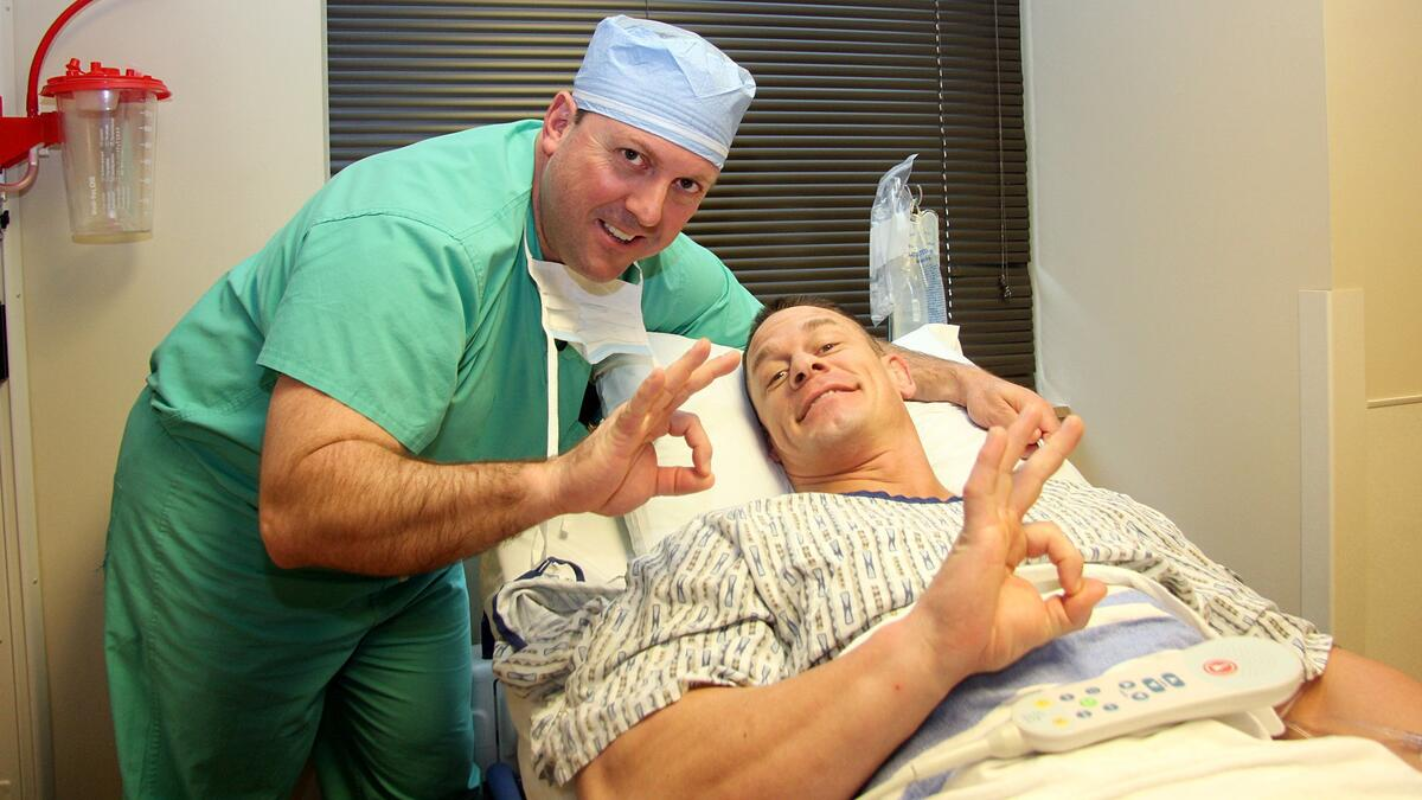
In January 2016, WWE announced John Cena had undergone shoulder surgery. The statement offered no detailed diagnosis and no return timetable, just confirmation that surgery had happened and recovery had begun.
Contemporaneous reporting suggested the injury was significant enough to put his WrestleMania appearance in doubt. Months passed with no dramatic rehabilitation videos, no countdown, only occasional updates. Then at WrestleMania 32 in April, Cena appeared unexpectedly during The Rock’s segment against the Wyatt Family. Weeks later, he made his full in-ring return on the Memorial Day edition of Raw, roughly four months after surgery.
By that point, Cena had undergone major procedures involving his neck, pectoral muscle, elbow, tricep, and shoulder, all while maintaining one of the most demanding schedules in WWE.
8. The Second Tricep Surgery and the End of the Story (2023 to 2025)
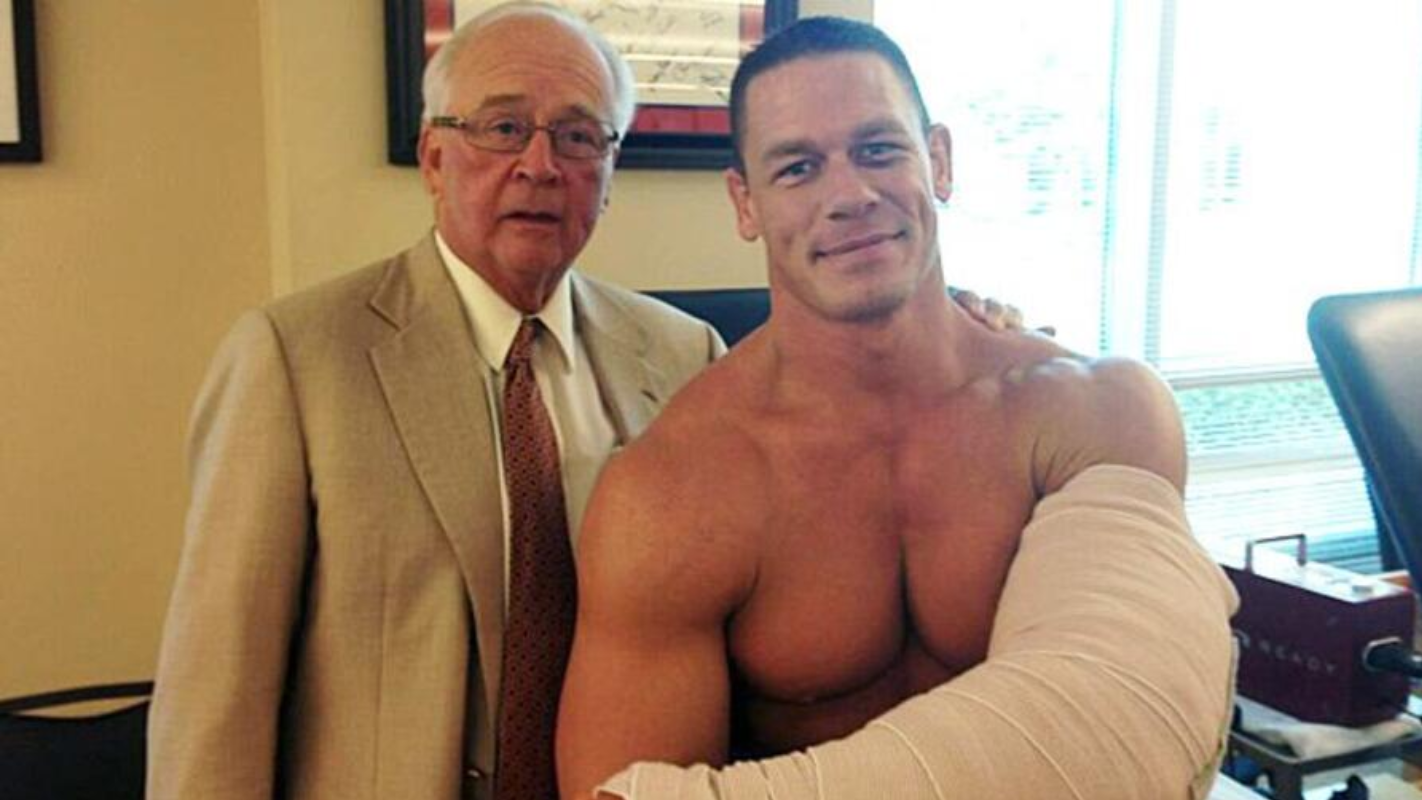
In late 2023, John Cena posted a brief message on X thanking orthopedic surgeon Dr. Jeff Dugas and his team in Birmingham following an arm procedure. He added a short line that carried more weight than it first appeared.
“Thank you @JeffDugasMD and your entire team in Birmingham! One arm fixed, clean & headed for therapy, one arm left to go!”
Combined with the spinal fusion, pectoral repair, and left tricep surgery he had already undergone, the accumulation no longer looked like a series of isolated injuries. It looked structural. Speaking candidly years later about everything his body had absorbed, on The Joe Rogan Experience, Cena laid it out in full.
“I’ve had fusion in my neck, right pec completely detached, reattached, both triceps reattached, both triceps scoped, nose relocated. Like, I got probably 10 physical surgeries where they got to go and correct something.”
The Cost Behind the Comebacks
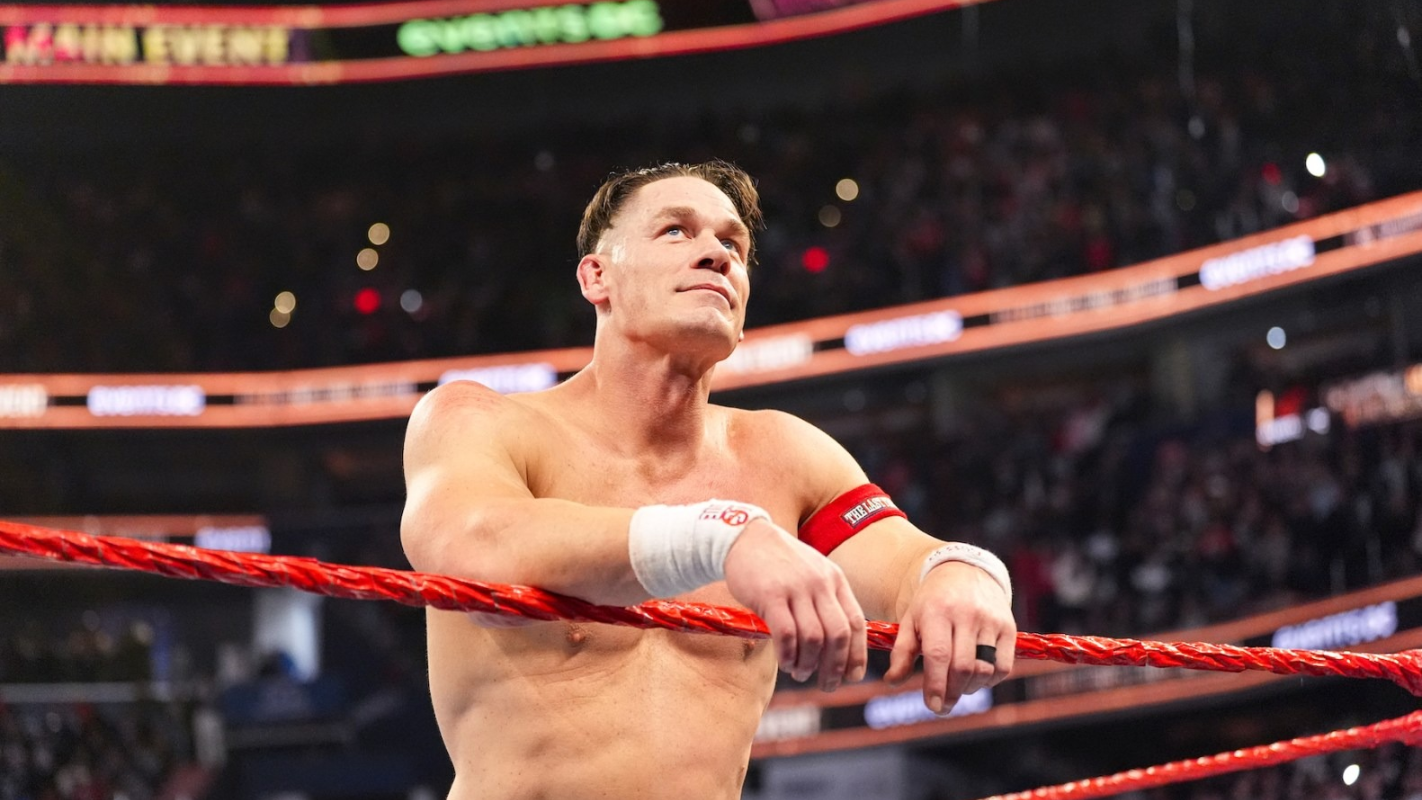
WWE’s Saturday Night’s Main Event on December 13, 2025, marked the end of John Cena’s in-ring career, one built on two decades of pushing a body that was repeatedly asked to do more than it should have been able to withstand.
Each repair marked another return, and each return added another chapter to a career defined less by the injuries themselves than by what came after them.
In many of his promos, Cena referenced his mantras of “Never Give Up” and “Hustle, Loyalty, Respect” as an operating philosophy. Speaking at FanX 2016, he broke down the origin of that thinking, revealing that “Hustle, Loyalty, Respect” was adapted from the United States Armed Forces values of duty, honor, and country.
“Because essentially, if you work hard, you stay loyal to the friends, the people that are loyal to you, and you respect everyone, even if they’re your enemy, then you will operate at a peak level and do nothing but good.”
In his conversation with Chris Van Vliet, Cena traced “Never Give Up” back to his early struggles breaking into the business.
“I try to learn from the mistakes, that’s where never give up comes from. I wasn’t Brock, I wasn’t Roman, I wasn’t Dwayne, I was the last pick. I was one of the guys who was going to get his pink slip, so like, hey, we’re going to fire you, but do you want to do this thing? Yep, let’s go, and I was vaulted.”
That approach carried through every injury on this list. Each time his body broke down, Cena treated it as one more obstacle to work through rather than a reason to stop.
These stories may also interest you:
- Triple H: 4 Career-Threatening Injuries That Tested The Game
- 5 Lesser-Known ECW Injuries That Nearly Killed Wrestlers
- Wrestling Injuries That Shattered 3 WWE Careers
Download PDF Version
Get the complete article as a formatted PDF for offline reading.