 Author:
 If you think the wildest wrestling drama happens in the ring, think again. The real intrigue lies backstage, in the secrets that wrestlers were never supposed to reveal. Pro wrestling shoot interviews, those raw, unfiltered tell-alls, pull back the curtain on wrestling’s biggest illusions, revealing truths promoters once protected at all costs. But how did this code of silence finally break? To find out, we need to journey back to the moment one vengeful promoter nearly brought the entire industry to its knees…
Read this story the way it deserves.
Ad-free. Beautifully formatted. Yours forever.
Get My Copy — $0.99Pro Wrestling Shoot Interview Origins: Jack Pfefer’s Industry-Destroying Betrayal
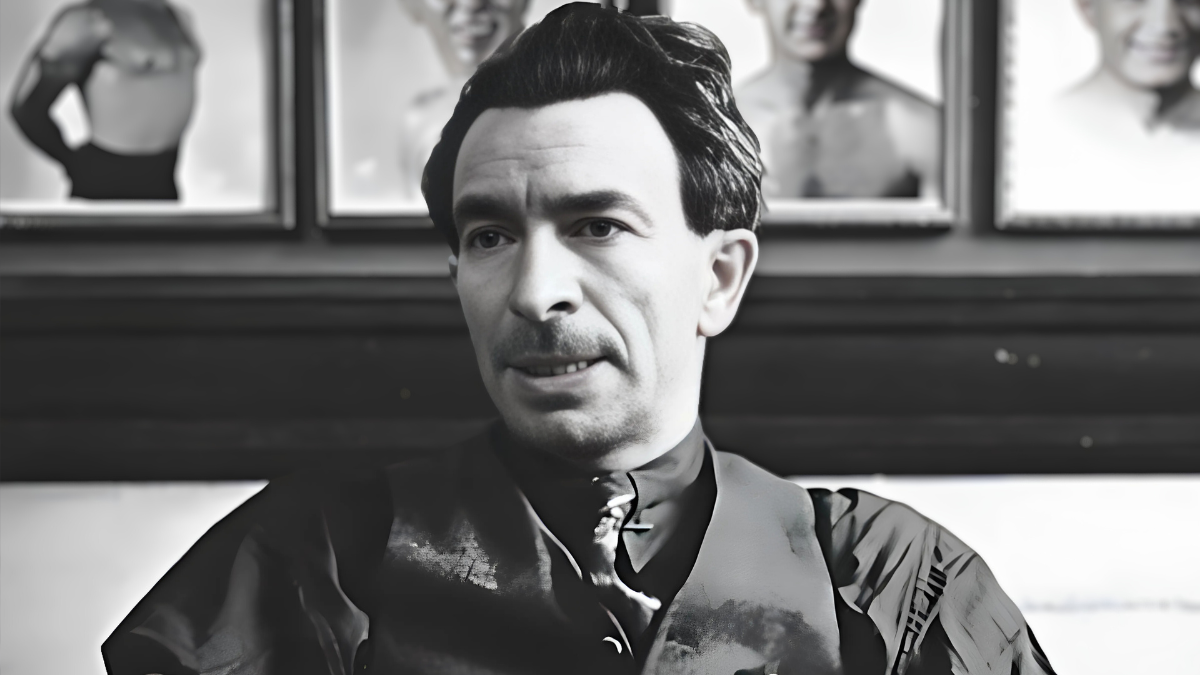
In the 1920s, the Gold Dust Trio of World Wrestling Champion Ed Lewis, his manager Billy Sandow, and fellow grappler Joseph “Toots” Mondt spent the decade refining the “sport” of professional wrestling into a faster-paced, Western-style format.
Emphasis was placed on creating exciting bouts featuring moves such as suplexes and body slams, rather than legitimate mat grappling competitions.
By the time the 1930s arrived, people had already developed suspicions that the discipline had become more showbiz than genuine sport. That said, no one within the industry admitted the obvious. That was until promoter Jack Pfefer found himself in a particularly vindictive mood.
Pfefer immigrated to America from Poland in the mid-1920s as a manager for a touring acting company. His taste for the theatre drew him into the wrestling industry, with a fondness for audience entertainment over the combative element of the business.
In the book, Ballyhoo!: The Roughhousers, Con Artists, and Wildmen Who Invented Professional Wrestling, Jack Pfefer quoted how he wanted to be perceived by the general public.
"I’m not an athletic promoter; I’m a theatrical man. Like Ziegfeld, or the Shuberts, maybe."
Around the time of the Gold Dust Trio’s breakup, Pfefer relocated to New York and began working with Jack Curley. Curley was one of the most influential figures in the pro wrestling industry at the time. He established a relationship with bookers Toots Mondt and Ray Fabiani, allowing regions along the East Coast to share their top performers.
Jim Londos emerged as the Trio’s top superstar. As the New York Wrestling scene boomed, Jack Pfefer found himself a valuable asset to Curley as a talent manager and scout, potentially positioning himself to take Curley’s spot as the head promoter’s health started to decline.
Then it all went wrong.
Curley and Londos had a big falling out in 1932 regarding contract disputes, and the two parted ways. As a result of the breakup, Pfefer ended up aligning himself with the big money draw Londos.
Londos and promoter Tom Packs had taken over the Midwest scene. Still, by November of 1933, a new agreement was in place with Curley, extending across North America with multiple promoters splitting the profits evenly. The only problem was that Jack Pfefer was not included in the deal.
Feeling rejected, a scorned Pfefer spoke to Dan Parker, sports editor of the New York Daily Mirror, and revealed the secrets of the business. In an exclusive, he admitted that matches were predetermined, champions were selected, and bouts consisted of fakery and theatrics. In no uncertain terms, Jack went to town on the industry.
Following these admissions, the New York Daily Mirror and other sports editorials refused to cover pro wrestling as a legitimate sport. Parker would only bring up wrestling matches in future articles to make fun of them, and, combined with the Great Depression, the New York gates began to drop.
Jack Pfefer had gotten his vengeance, in some ways almost killing the business, but in other ways setting it up for new life.
As a man of the theatre, Pfefer continued to promote shows, embracing the new creative freedom that came with shedding pretenses, and created more sensational gimmicks and storylines to sell to his audiences.
Jack would tell New York Journalist A.J Liebling, “An honest man can sell a fake diamond if he says it is a fake diamond, ain’t it?”
In Scott Teal’s book, Wrestling Archive Project: Classic 20th Century Mat Memories, Volume 1, Gene Dundee, a wrestler from the mid-20th century, shared his experiences working under Jack Pfefer’s promotion.
“There was nothing too sacred for Jack. We billed one guy as Bruno Sanmartino; wejust changed the first ‘m’ to an ‘n.’ It made them money. There was a time in Boston, before the New York office really got a firm hold, that when Bruno Sammartino did come to Boston, they thought he was an imposter!”
The 1937 book The Fall Guys by Marcus Griffin also exposed a business full of seedy promoters and “fixed matches,” and covered the dealings of the Gold Dust Trio.
Later in the years, many pro wrestlers and even WWE promoter Vince McMahon would publicly state that wrestling was “a work.”
In the pre-Internet days, it was much easier to keep secrets, and it was commonplace for wrestlers to maintain kayfabe in TV interviews. Fifty-plus years after Jack Pfefer’s passing, pro wrestling is almost unrecognizable. Yet, the WWE shares Jack’s vision, embracing characters and stories over making the audience believe it is real.
However, nobody could have ever imagined how commonplace pro wrestling shoot interviews would become.
Bruiser Brody’s Groundbreaking 1987 Pro Wrestling Shoot Interview
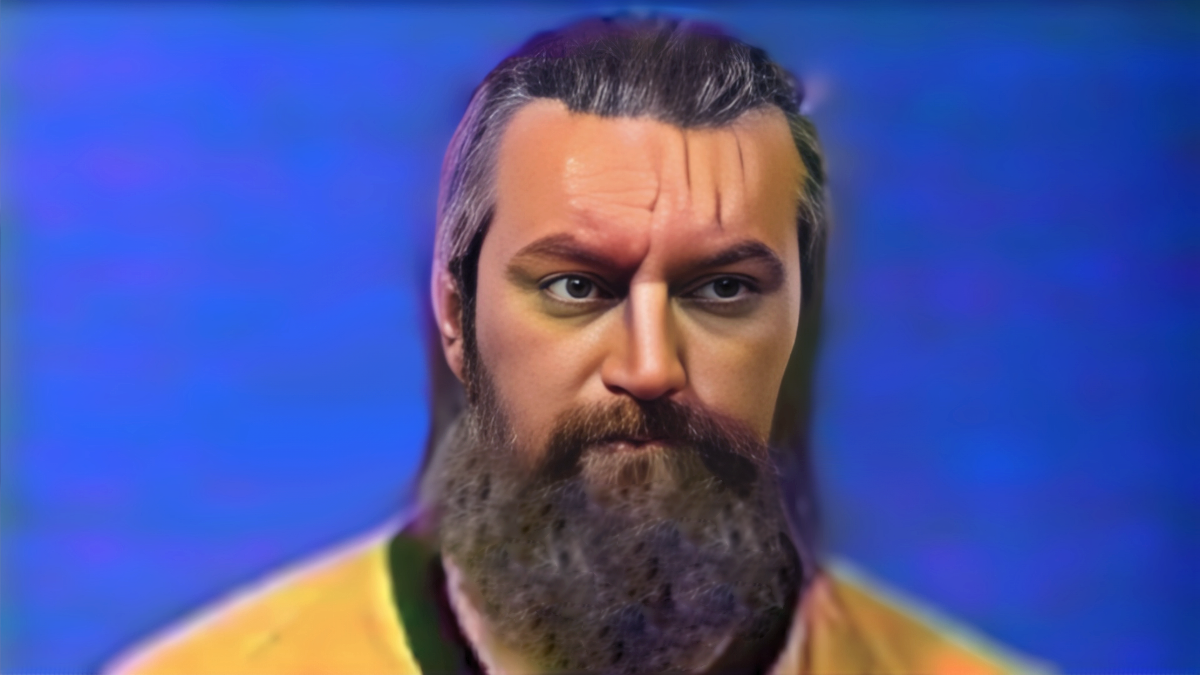
In 1987, Bruiser Brody was scheduled to wrestle in Brushfork, West Virginia. There, he was contacted by a local affiliate of NBC to set up an interview.
Unlike Jack Pfefer, Bruiser Brody did not participate in this NBC interview out of malice or to destroy the industry. There was no big exposé or reveal of the magician’s secrets.
Instead, he just gave honest answers on a variety of subjects. These included the positives of cable expansion, expanding wrestling content on TV, the importance of younger talent learning from more established stars, TV production, and much more.
In fact, Brody sounded similar to how modern-day superstars carry themselves during a television talk show appearance.
If anything, the Bruiser Brody NBC interview in 1987 gave credence to the business rather than damage it.
It demonstrated the amount of work required from both a performance and production standpoint, while also showcasing how intelligent and articulate Brody was, in contrast to the monster he portrayed in the ring.
Speaking to The Temple News, the unnamed interviewer who helped to facilitate and direct the Bruiser Brody NBC interview even remarked on the positive response to Brody in-studio.
"He blew me away with how articulate he was. I was impressed with his depth as a person, as well as his depth as a character."
Oddly, the only big no-no for that time period in pro wrestling history was that, within the first three minutes, Brody gave his real name, Frank Goodish. He also revealed being part of the television production team for World Class Championship Wrestling, but this never made air and is only seen in the raw footage that has since surfaced online.

Eddie Gilbert’s Secret Recording: The Underground Shoot Interview That Started It All
Speaking of raw footage, in the early days of the Internet, it was far more challenging to watch pro wrestling events had you not been in the right territory at the right time.
As such, the tape trading industry was booming.
Bob Barnett grew up a huge pro wrestling fan and became a major figure in the tape trading scene in the late 1980s and early ’90s, specializing in Lucha and All Japan.
A massive fan of Memphis star Eddie Gilbert, Barnett asked Eddie through a mutual friend if he wanted to conduct an unworked interview. Unfortunately, it took a while for Gilbert to decide, as his father, wrestler and referee Tommy Gilbert, was totally against it.
Eventually, Eddie said yes, but kept his intentions hidden from his father and fellow workers. Eddie was doing a Saturday Night Show in Memphis, so Barnett flew out to conduct the interview and then drove to Jackson, Tennessee, during a massive hailstorm.
The taping took place in a hotel back room in 1994, when kayfabe was still taken seriously.
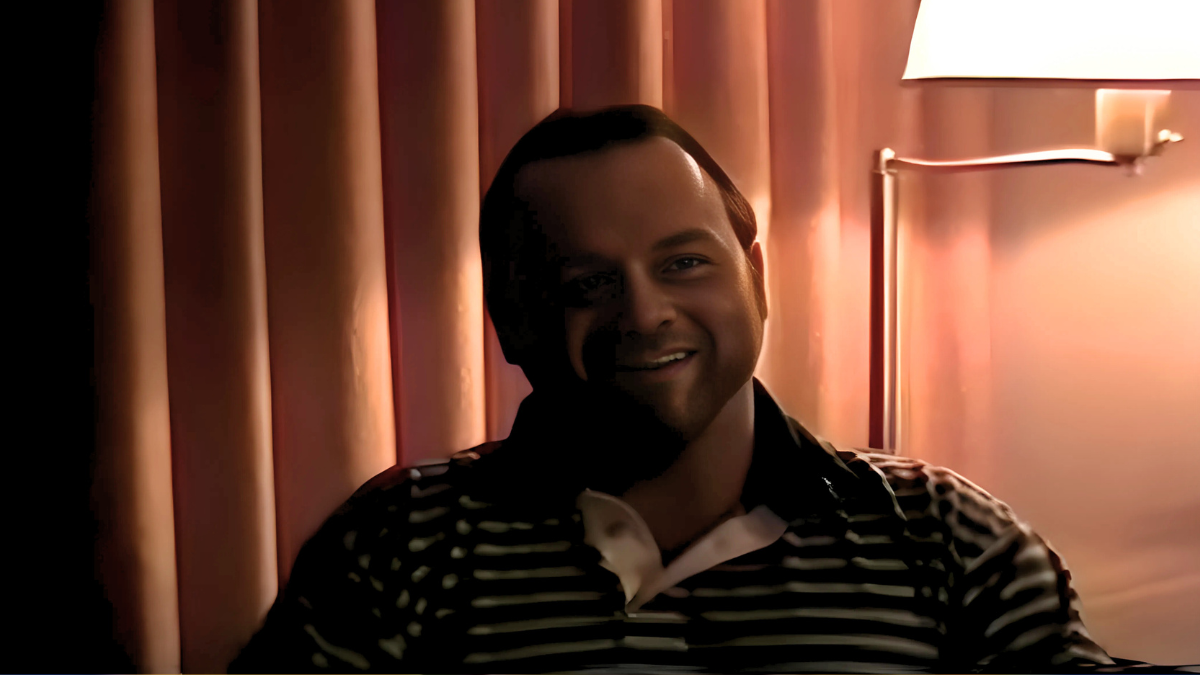
The video, which has since become known as “Looking For Mr. Gilbert,” shows Eddie in a dark shadow, like a Bond villain, giving the whole affair a rather ominous vibe. Unfortunately, the hailstorm knocked out the hotel’s lighting, so the proceedings had to be lit with table lamps.
Bob had no experience in shoot interviews, as no one had done one before. Hence, he kept asking questions, and Gilbert spoke openly in his usual jovial fashion despite the sinister backdrop. Finally, Barnett gave Eddie a copy of the master to sell as he felt fit, and the modern shoot interview was born.

Love Pro Wrestling Stories? Add us as a Preferred Source on Google so our stories always show up first for you. It only takes one click.
Add Us on GoogleRF Video Shoot Interviews: A New Era in Pro Wrestler Interviews Begins
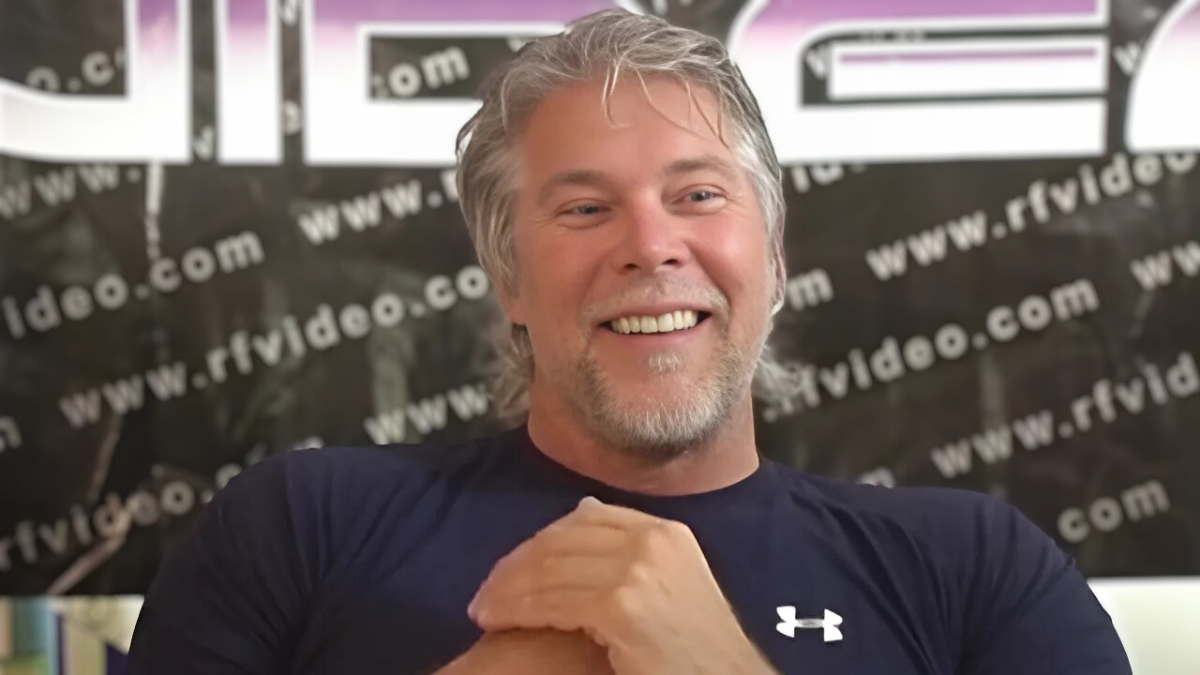
As the 1990s progressed, the continued rise of wrestling “dirt sheets” and the Internet provided fans with unprecedented access to the once-secretive world of professional wrestling.
Given this shift, it made perfect sense for wrestlers to earn some extra income by doing shoot interviews.
Rob Feinstein, who had been a videographer for Extreme Championship Wrestling (ECW), launched Ring of Honor shortly after ECW folded in 2001.
Leveraging his industry connections and production experience, Feinstein began releasing shoot interviews through his company, RF Video, starting in 2004 with ECW icons like Kevin Nash, New Jack, and The Sandman.
Despite Feinstein stepping down from ROH following a public scandal in 2004, when he was caught in an NBC Philadelphia sting operation targeting alleged online predators, RF Video’s shoot interviews continue to this day
With hundreds of amazing Pro Wrestling Stories to dive into, where do you start? Get the inside scoop, join our exclusive community of wrestling fans! Receive 10 hand-picked stories curated just for YOU, exclusive weekly content, and an instant welcome gift when you sign up today!
How Kayfabe Commentaries Revolutionized the Pro Wrestling Shoot Interview Format
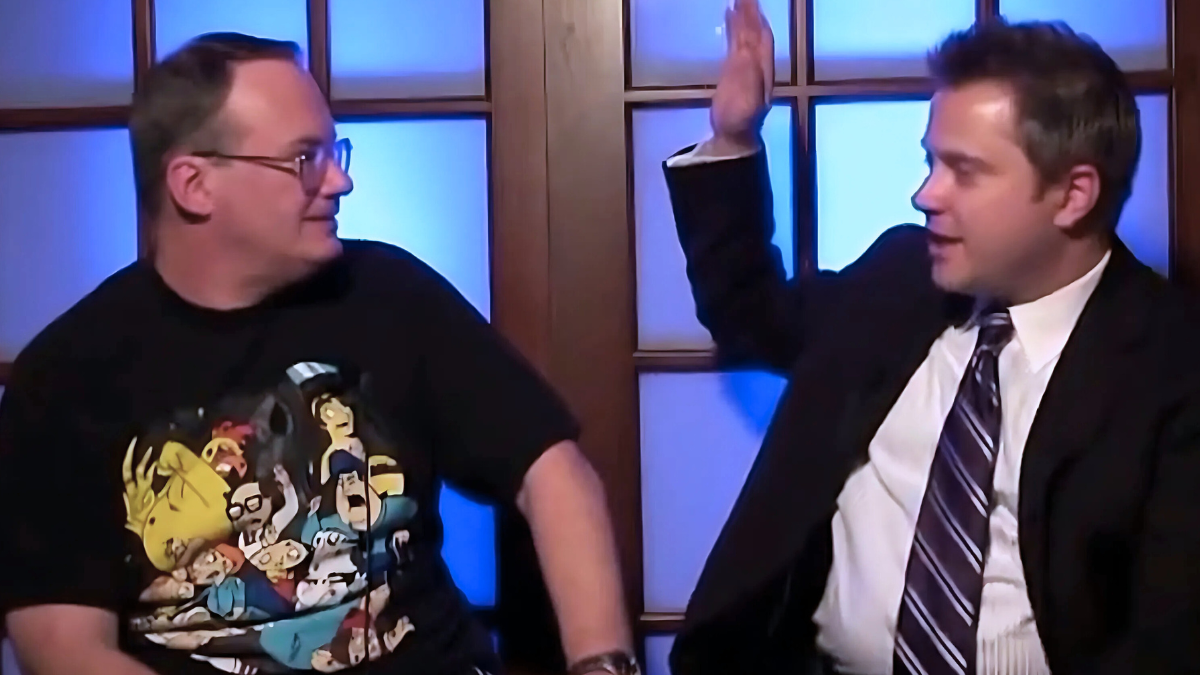
During the winter of 2006, Sean Oliver was winding down his acting career and working as part of a graphics and presentation team on Wall Street.
One night, while having a phone conversation with his friend Anthony Lucignano, the two discussed how no one had yet done a DVD director-style commentary to old wrestling pay-per-views.
The seeds were planted for Kayfabe Commentaries.
Sean Oliver would meet with pro wrestlers in town for a show, pay them a few hundred dollars, buy them dinner, and then record sit-down watch-alongs of classic events. However, after six months, Oliver realized that more money needed to be made in the audible download business, which was still in its infancy.
So the decision was made to move into video, and KC Wrestling was born. Rather than conduct straight-shoot interviews, which had become more commonplace by this time, Oliver gave his videos gimmicks like Guest Booker, where he would interview a promoter about how they would book another territory they weren’t involved with.
There were also Timelines, where wrestlers recalled a historical period from their point of view, and other fun segments such as the D*** (jerk) Bag, in which Oliver would read out a list of wrestlers‘ names, and guests would have to comment on whether or not said wrestlers were “a d***” among other outrageous themes.
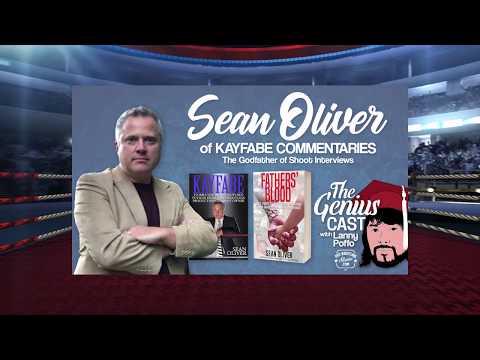
In a Pro Wrestling Stories interview by JP Zarka and the late, great Lanny Poffo, Sean Oliver shared his view on what he thinks the legacy of Kayfabe Commentaries is.
“People always go down the list of credits you talk about. They say things like, ‘Revolutionizing the shoot interview genre,’ which is, you know, let’s face it, a little like being the smartest guy in jail. But can I also take a bit of a bow, for maybe having a residual effect on the number of podcasts out there? Wrestlers who have been given a voice. I think we’ve had a little bit of an effect on what’s become this wrestling podcast boom.”
From Wrestling Shoot Interviews to Pro Wrestlers Launching Their Own Podcasts
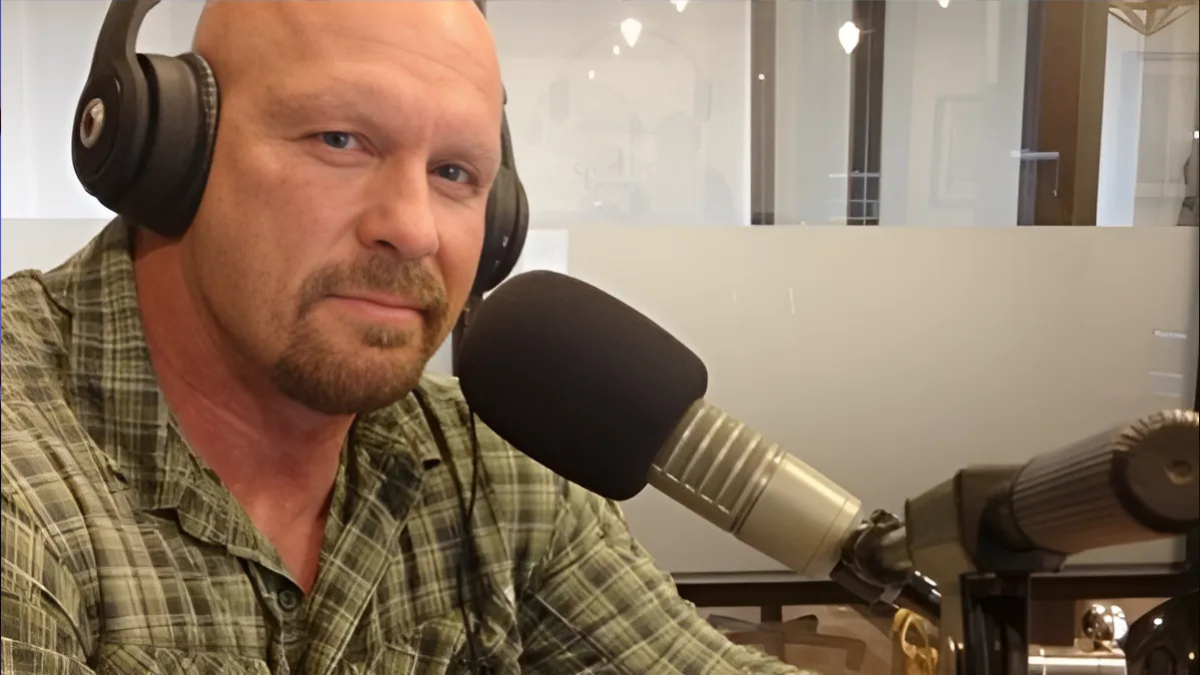
Over time, the pro wrestling podcast industry has grown significantly, alongside podcasts of all varieties.
The Art of Wrestling with Colt Cabana was an early-period podcast that focused heavily on independent wrestling and pro wrestling topics, as well as individuals who fell slightly outside the mainstream companies.
In a 2011 interview with Slam Wrestling, Cabana explained the conversational style of his podcast.
"It’s a conversation. I want it to feel like you’ve opened a door and walked into a room where two guys are just talking."
This was followed on PodcastOne by The Steve Austin Show and Talk Is Jericho.
It wouldn’t be long before other legends jumped on the bandwagon, and the market slowly rose with over a dozen wrestler-hosted weekly podcasts.
Typically, these shows would feature a guest, thoughts, and reviews on the current wrestling product as well as other sports and forms of entertainment.
Conrad Thompson’s Pro Wrestling Shoot Interview Empire

After Ric Flair’s Wooooo! Nation podcast ended, co-host Conrad Thompson developed a structure that would change the wrestling podcast into the form we know now.
After meeting and befriending Ric Flair at a local event in 2013, Thompson would sometimes travel with The Nature Boy and, as such, become close with other figures in the industry. One night, when quizzing Bruce Prichard with questions about his time with WWE, Conrad realized this was what fans wanted to hear.
Something To Wrestle With Bruce Pritchard launched in August of 2016 on MLW Radio.
Rather than interviewing a different guest each week or offering opinions on recent shows, Conrad would ask Pritchard specific questions, with each session focusing on a different historical event or era. This would lead to answers and unheard stories you wouldn’t otherwise receive from broader, career-long retrospectives.
The show was a hit, and Conrad’s empire would grow, featuring more and more industry icons with their own stories to tell.
Conrad’s impressive network includes shows such as Grilling JR, 83 Weeks With Eric Bischoff, What Happened When With Tony Schiavone, My World with Jeff Jarrett, and many more.
As the sheer volume of weekly content grew, Thompson would hire more hosts to help with interview duties, including the one and only Sean Oliver, going full circle with Kevin Nash with the Kliq This Podcast.
In a Pro Wrestling Stories interview, Conrad Thompson described how his conversations with Bruce Prichard led to the creation of a podcast.
“With Bruce, I said, ‘Hey, let’s not talk about current wrestling at all. Let’s get away from the interview format. Let’s just tell your story.’ That came about from us just sitting on my couch in my den one day when I said, ‘Hey man, what happened when?’ and he finished the story for me. That was fascinating. So an hour later, I said, ‘Dude, this as a podcast. This is what people really want to hear.’ And it worked out.”
Modern Pro Wrestling Shoot Interviews: Why Kayfabe May Be Stronger Than Ever
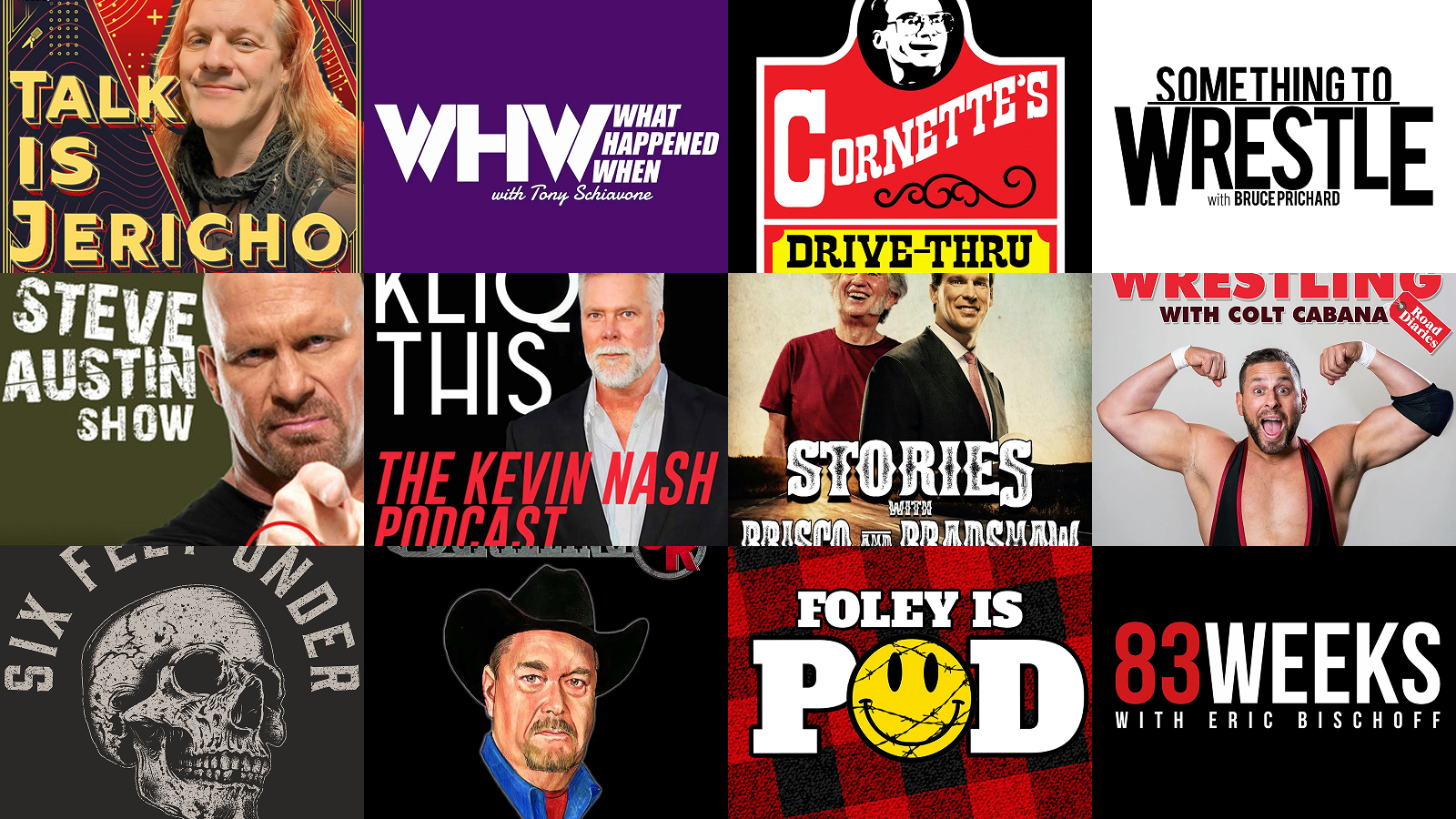
The Internet is full of behind-the-scenes content, more than enough to satisfy any fan keen on the inside story.
The “dirt sheets” evolved into news sites, the “shoots” became weekly podcasts, and video interviews shifted from promoting events to telling intimate and entertaining tales of life on the road.
We live in a world where major wrestling promotions have hundreds of hours of programming featuring their talent speaking out of character. In addition, WWE and AEW host media scrums and podcasts, and offer reality shows where wrestlers talk candidly about their lives before the blood from that evening’s battle has even dried.
However, sometimes, you can still catch an audience. In the summer of 2022, when Cody Rhodes and MJF left AEW, people were still determining whether it was a scripted work. The ongoing tension surrounding The Rock’s involvement in WWE storytelling walks a fine line between fiction and non-fiction.
Thus, wrestling has evolved to a point where reality and storytelling have never blended so closely.
This author will argue that, in this way, kayfabe isn’t dead. It may even be stronger than ever.


