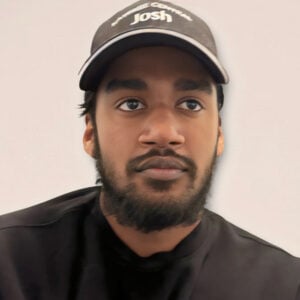
In the early 1990s, as Vince McMahon’s World Wrestling Federation tightened its grip on the wrestling business, a new promotion appeared almost overnight. The Universal Wrestling Federation, led by Queens-born clothing entrepreneur Herb Abrams, arrived with television, name talent, and the conviction that an outsider could do what the insiders had not. Within a few years, that conviction had produced empty arenas, bounced checks, and a final night that still reads like urban legend. To understand how it unraveled, you have to start with the man who believed he could take on the system.
Herb Abrams built the UWF to take on WWE. Instead, his dream unraveled through empty arenas, bounced checks, personal chaos, and a final night that still feels almost impossible to believe. Photo Credit: UWF / Al Burke / Classic Wrestling. Artwork by Pro Wrestling Stories.
Our wrestling history is gold, and so are readers like you!
If the following story adds to your collection of wrestling knowledge, you can:
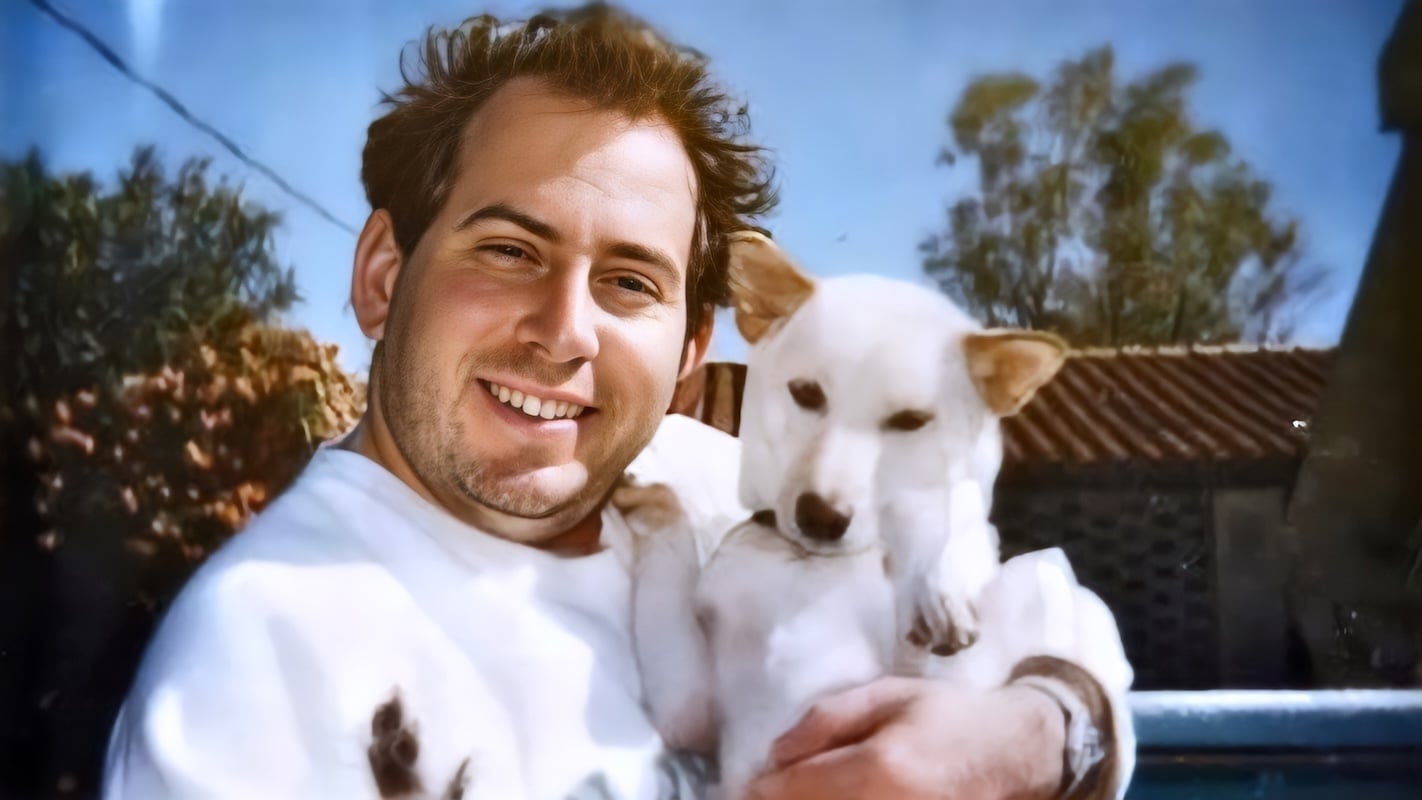
Herb Abrams at home with his dog, who was aptly named “Cokie.” Behind the big promises and boundless energy that drew wrestlers and investors alike to his Universal Wrestling Federation, Abrams was, by every account, a man who lived life at full volume – in business and out of it. Photo Credit: UWF / Al Burke / Classic Wrestling.
Herbert Charles Abrams was born on July 9, 1955, in Queens, New York, the oldest child of Sonia and Abram Abrams. His father was a contract salesman of women’s dresses who employed dozens of workers at his Manhattan office. The clothing trade was the family business, and Herb would eventually follow that path, but his real obsession from childhood was professional wrestling.
He attended William Cullen Bryant High School in Long Island City, and by 1972 had graduated from the Fashion Institute of Technology with an associate’s degree. Wrestling, however, was never far from his mind. As early as 1976, he approached legendary wrestling photographer Bill Apter on the streets of New York and proposed having wrestlers appear at his father’s clothing store in Flushing, Queens, offering them dresses for their wives as compensation. The hustle was already there, years before the UWF existed.
Abrams moved to Los Angeles in the early 1980s and launched his first business venture, Network ‘9’ Limited, in 1983. By 1988, he had started a chain of plus-size women’s clothing stores called “I’m a Big Girl Now.”
Lenny Duge, who became Abrams’ closest friend and a key figure in the UWF, later confirmed that side of Herb’s background in a 2020 season two episode of Dark Side of the Ring, sharing, “Herb owned clothing companies in New York City. It was all these beautiful dresses that you wouldn’t have thought would’ve been for these oversized women.”
Duge, who had spent 24 years as head of post-production and quality control at NBC, said that when he met Abrams, the energy was immediate.
“Herb Abrams was my best friend. We were kindred spirits. Herb was in a pair of jeans, cowboy boots, and he was going from the minute I met him. He believed so much in what he was doing and in what he was selling.”
Mick Foley remembered the same force of personality. “I cannot talk about Herb without smiling. Herb was the little guy with a big personality. His enthusiasm was contagious.”
John Arezzi, a wrestling industry veteran who had worked as a ringside photographer for the WWWF, hosted one of the first wrestling talk radio programs in Pro Wrestling Spotlight, and organized the Wrestling Fans Fantasy Weekend, one of the first fan conventions of its kind, described the first time Abrams approached him: “There was a gentleman who was looking to start a wrestling promotion, and he was a little eccentric. He had really big aspirations.”
The mention of Bruno Sammartino’s name in the pitch was the detail that gave Abrams legitimacy.
“I called Bruno to verify it,” Arezzi admitted, “and he said he was gonna be getting involved with Herb. I certainly gave him the time of day.”
Rick Allen, later known as professional wrestler Sunny Beach, remembered being recruited at that same convention.
“He was looking to do big things,” Allen recalled, “and he goes, ‘Sunny, my boy. We’re going to make it big one day.'”
“Wild Thing” Steve Ray heard the same line in a different room: “Stevie, my boy, I’m going to turn you into a big star. I can’t wait to be around this guy.”
That ability to make people feel chosen would serve Abrams well in the early days, and cost him later when the results failed to match the promises.
His belief in his own words, as Foley put it, “made people around him want to believe.”
Launching Herb Abrams UWF: A National Wrestling Gamble
UWF Fury Hour on SportsChannel America gave Herb Abrams rare national exposure as he tried to position the promotion alongside WWF and WCW. Photo Credit: UWF / Al Burke / Classic Wrestling.
Herb Abrams founded the Universal Wrestling Federation in 1990, securing a reported one million dollar budget from SportsChannel America to produce a weekly television program. It was a genuine achievement for a man with no prior wrestling promotion experience. When asked at the UWF press conference how he expected to succeed without that background, Abrams answered, “What they’re looking for, I have, and that’s the Hollywood glitz.”
In pitching the channel, Abrams reportedly dangled the names of Terry Funk, Big John Studd, and Ricky Steamboat as part of his roster. None of them had actually agreed to work for the new promotion. Abrams understood instinctively that confidence could carry a room further than facts. The deal got done regardless, and UWF was suddenly a national television entity.
The press conference announcing the launch was held at Arezzi’s fan convention, and it set the tone for everything that followed. Arezzi remembered it was “really designed to introduce his vision and announce some of the performers,” but “it turned into more of a circus.”
None of it fully dampened the excitement. Foley’s reaction was characteristic of those who signed on in that period: “This is the man who’s going to mix Hollywood and sports entertainment in a way that not even Mr. McMahon had done.”
UWF Fury Hour National TV Exposure And Cracks Showing
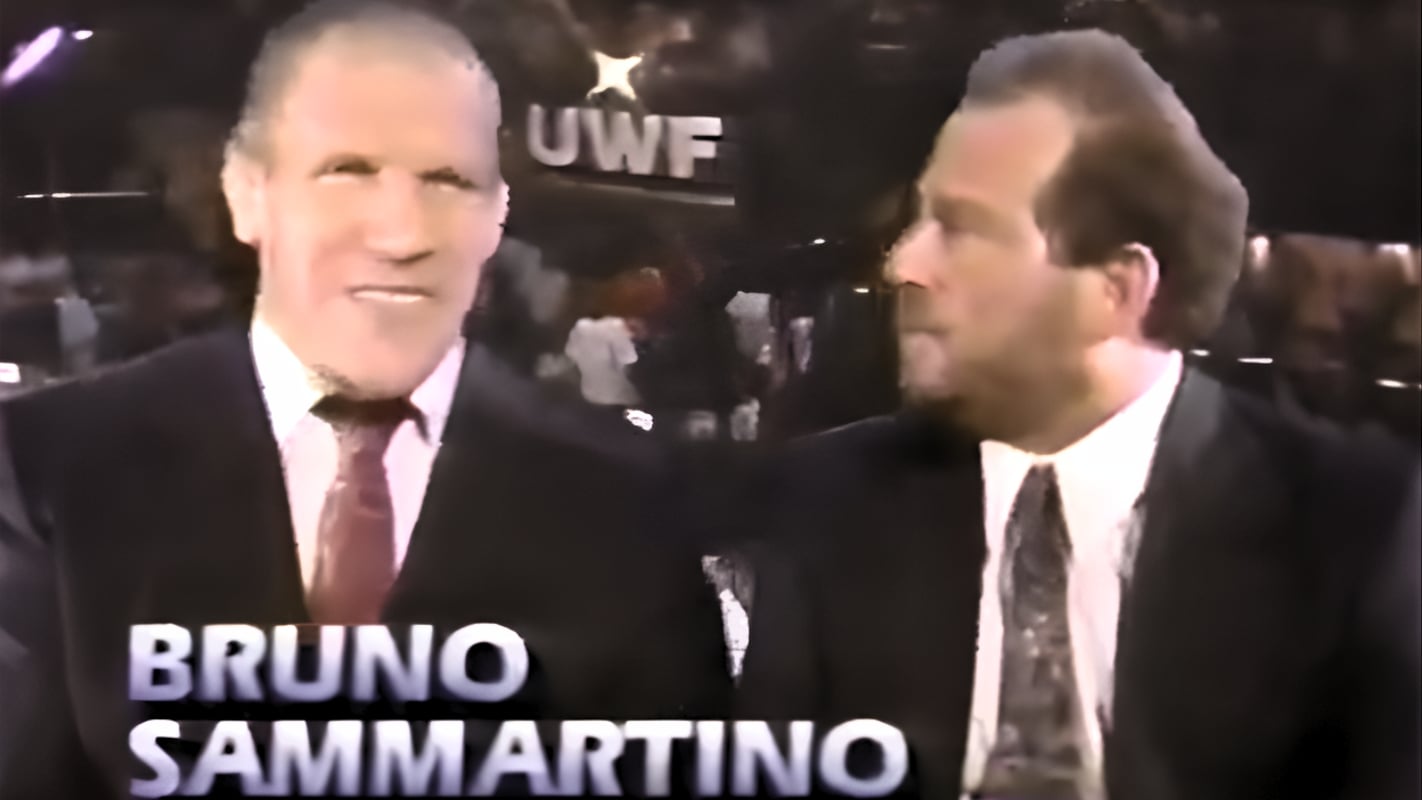
Bruno Sammartino and Herb Abrams at the UWF Fury Hour commentary desk on SportsChannel America. Sammartino’s presence gave the fledgling promotion instant credibility, though he later admitted the company was not being run properly. Photo Credit: UWF / Al Burke / Classic Wrestling.
UWF Fury Hour debuted on SportsChannel America in October 1990, taping at Reseda Country Club in California. B Brian Blair remembered those early shows positively.
“It was a nice setup. It was a small venue, but it was sold out.”
Foley echoed that: “We were believing in Herb’s vision. I didn’t know where it might take us, but I resolved to enjoy it.”
The roster gave the promotion instant credibility. Foley believed Abrams “had what I thought was arguably more star power than WWE at that time. Guys like Paul Orndorff, who’d drawn an enormous amount of money.”
The creative environment was deliberately loose. Blair shared, “It was a lot looser in Herb Abrams territory than it was in Vince’s, where you had to walk like you did in the army.”
Foley went further: “I went from feeling like I’d been wrestling with handcuffs on to feeling like I had total freedom.”
For wrestlers who had spent years in highly regimented organizations, that freedom was genuinely appealing. “Everybody was happy and things were good,” Blair recalled.
Behind the cameras, however, the structure was thin. Abrams served as on-screen commentator alongside Bruno Sammartino for the first 11 episodes of Fury Hour, and the Wrestling Observer Newsletter voted him Worst Television Announcer of 1990. The following year, readers voted him Most Obnoxious as well. Sammartino himself was measured but clear: “I didn’t like what I was seeing. It wasn’t being run properly.” Abrams was eventually replaced on commentary by Craig DeGeorge, though he remained on screen as an interviewer.
One of the more telling early decisions was inserting a jobber named “Davey Meltzer” into a Fury Hour taping as a barely veiled jab at Wrestling Observer Newsletter founder Dave Meltzer. It was a petty move, but it revealed how much of Abrams’ energy went into optics and personal grudges rather than building a sustainable product. The first venue UWF used, the Reseda Country Club, later sued Abrams for money owed. That pattern of non-payment would become one of the defining features of the promotion.
Herb Abrams UWF And The Rivalry With WWF That Faded
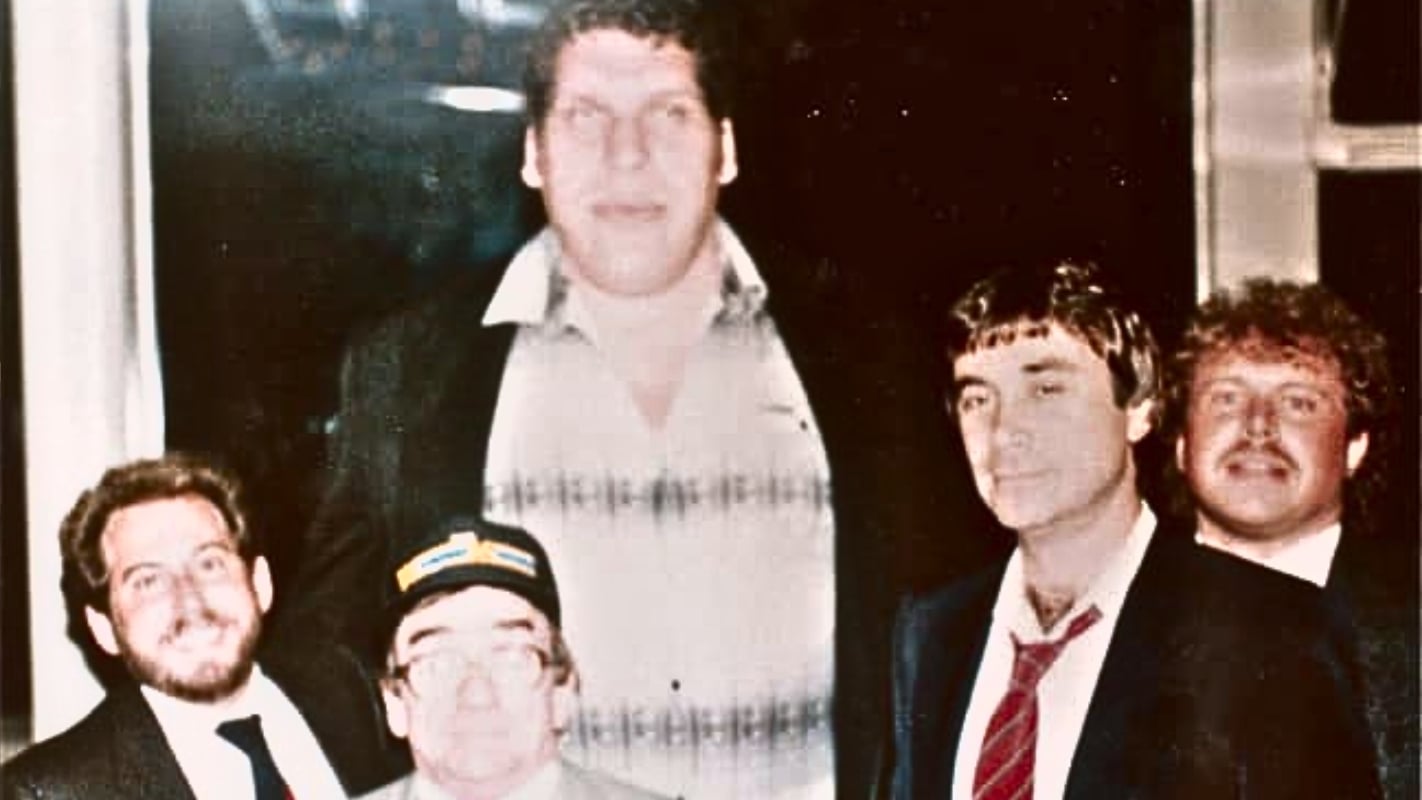
Herb Abrams with Andre the Giant, Abrams’ friend Jeffrey Steinberger, and others during the Universal Wrestling Federation’s brief signing of the legendary giant. Andre’s short-lived UWF appearance generated major attention before Vince McMahon soon brought him back to the WWF. Photo Credit: Jeffrey Steinberger.
Herb Abrams had approached Vince McMahon directly before launching the UWF. “Herb met with Vince McMahon and said to him, ‘You want the East Coast and the Central, and it’s all yours. What about if I promote the West Coast for you?’ And Vince McMahon blew him off,” recounted Lenny Duge.
From that point, the attitude hardened. Blair remembered, “Herb’s vision for the UWF was to put the WWF out of business. He was that arrogant.” Arezzi was more specific: “Herb was doing everything in his power to intentionally needle McMahon and to [anger him]. He wouldn’t even be happy with peaceful coexistence.”
That mindset expressed itself in small and large ways. The UWF television title belt was designed so that when held a certain way, the letters spelled out a direct message to McMahon. “He knew that he was telling Vince McMahon to help himself,” Duge explained.
The biggest symbolic move came when Abrams announced Andre the Giant had signed a long-term contract with UWF. Even a post-prime Andre in a UWF entrance made an impression. Duge called it “colossal,” adding that “even though we maybe had 200, 300 people in the audience, they were all standing and they knew that we had hit.”
The moment did not last. Rick Allen described what happened next: “After Andre made the appearance for UWF, Mr. McMahon got on the phone and called him and brought him right back in.”
This underscored how difficult it was for a new promotion to hold onto major talent when the WWF could simply make a phone call.
With hundreds of amazing Pro Wrestling Stories to dive into, where do you start? Get the inside scoop – join our exclusive community of wrestling fans! Receive 10 hand-picked stories curated just for YOU, exclusive weekly content, and an instant welcome gift when you sign up today!
UWF Beach Brawl Pay-Per-View and the Slide Begins
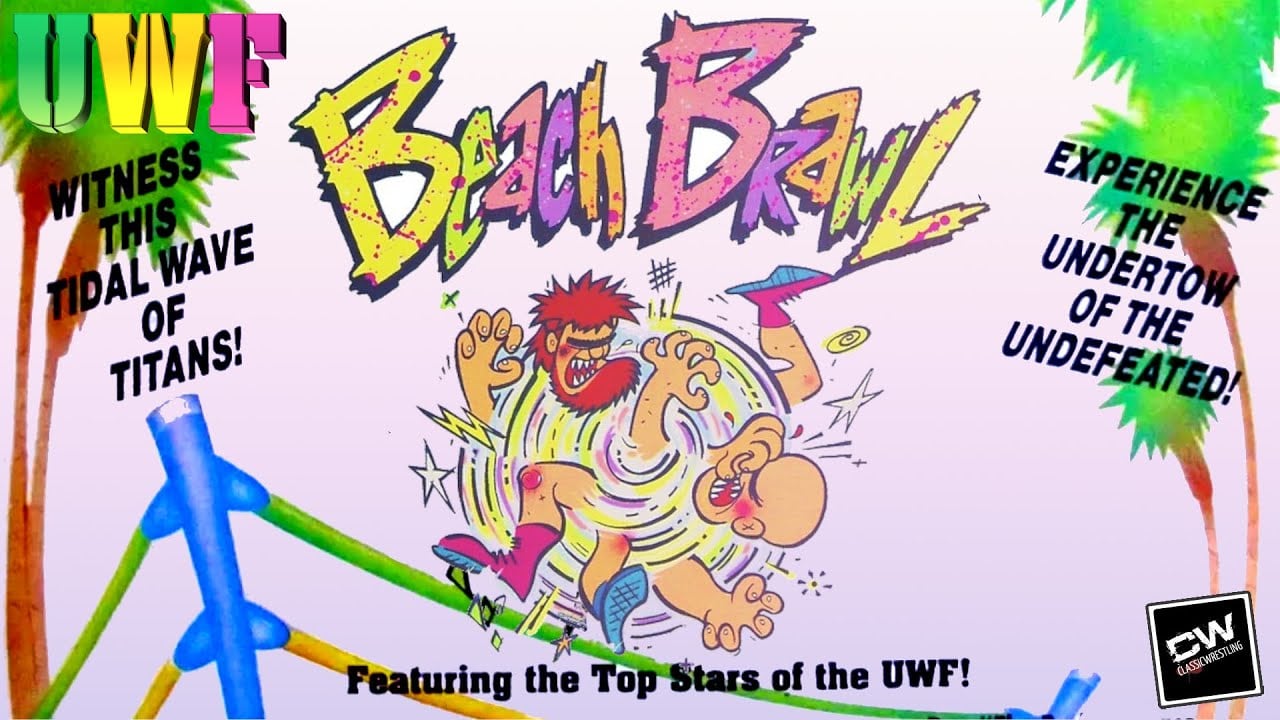
UWF Beach Brawl at the Manatee Civic Center in Palmetto, Florida drew approximately 550 fans to a 4,000-seat arena and set a record for the lowest pay-per-view buy rate in professional wrestling history at 0.1. Photo Credit: UWF / Al Burke / Classic Wrestling.
Beach Brawl on June 9, 1991, was supposed to be the moment the UWF proved itself as a pay-per-view player.
Arezzi explained the logic: “That’s where they made the majority of their income, through their pay per view events. Maybe he was expecting to roll the dice, get lucky, and then finance the whole operation.”
Rick Allen remembered that Abrams had told him, “he had every newspaper, he had every radio station,” and Lenny Duge added, “Everyone was gonna give it a push to help him.”
The chosen venue was the Manatee Civic Center in Palmetto, Florida, a 4,000-seat building located more than an hour from the nearest major city. Allen had a soft reason for its selection, stating, “WWF does TV tapings out of there. I think that’s one of the reasons why Herb picked that place.”
When Duge arrived and saw the building, he had a different reaction entirely.
“I know that there’s no way in hell we can sell this building out. The building was immense, larger than any I had ever seen in my life. And I knew very well that we didn’t sell this building out. Somebody screwed up.”
Approximately 550 fans attended, most of them reportedly comped.
The opening bout, a street fight between Terry “Bam Bam” Gordy and Johnny Ace, ran long and threw the rest of the card into disarray. Production had to dim the arena lights to avoid showing the extent of the empty sections on camera.
Marty Yesberg, a wrestling manager from Gaffney, South Carolina, who worked UWF as the character Colonel Red, was present for some of the promotion’s most chaotic moments and later spoke candidly about what he witnessed. “They had to cut the auditorium lights down to do the TV show so nobody’d know there was nobody there. That was a pay-per-view!”
The buy rate came in at 0.1, a figure that, at the time, represented the lowest pay-per-view buy rate in wrestling history. As Blair put it plainly, “It was the worst pay-per-view, I think, in pay-per-view history.”
The main event saw Steve Williams defeat Bam Bam Bigelow to crown the UWF Television Champion, but the night’s commercial failure made the result almost incidental.
The days surrounding the event told an equally troubling story. Duge found Abrams in his hotel room beforehand and explained, “I found Herb to be in really bad shape. ‘You gotta straighten yourself out. We’ve got this god**** pay-per-view to do. You’re gonna kill yourself.’ Abrams’ reply was, ‘Len, it’s the stress I’m under.'” Duge told him afterward, “When we’re finished with this, we gotta get you into rehab. If you don’t go to rehab, I can’t do this with you.”
Then the checks started bouncing. Blair went to Abrams’ hotel room to collect his pay and found the scene that became infamous among those who worked the show: two women present, Abrams on the bed laughing, and “two big old piles of coke on each nightstand.”
As the women left, Abrams wrote each of them a check for $2,000. Blair admitted, “This guy’s crazy blowing money on coke and hookers. How long is this promotion gonna last?”
Yesberg put it another way: “This is a train wreck. And all they’re trying to do now is just figure out if there’s any survivors.”
Inside The UWF Penta Hotel TV Taping Chaos
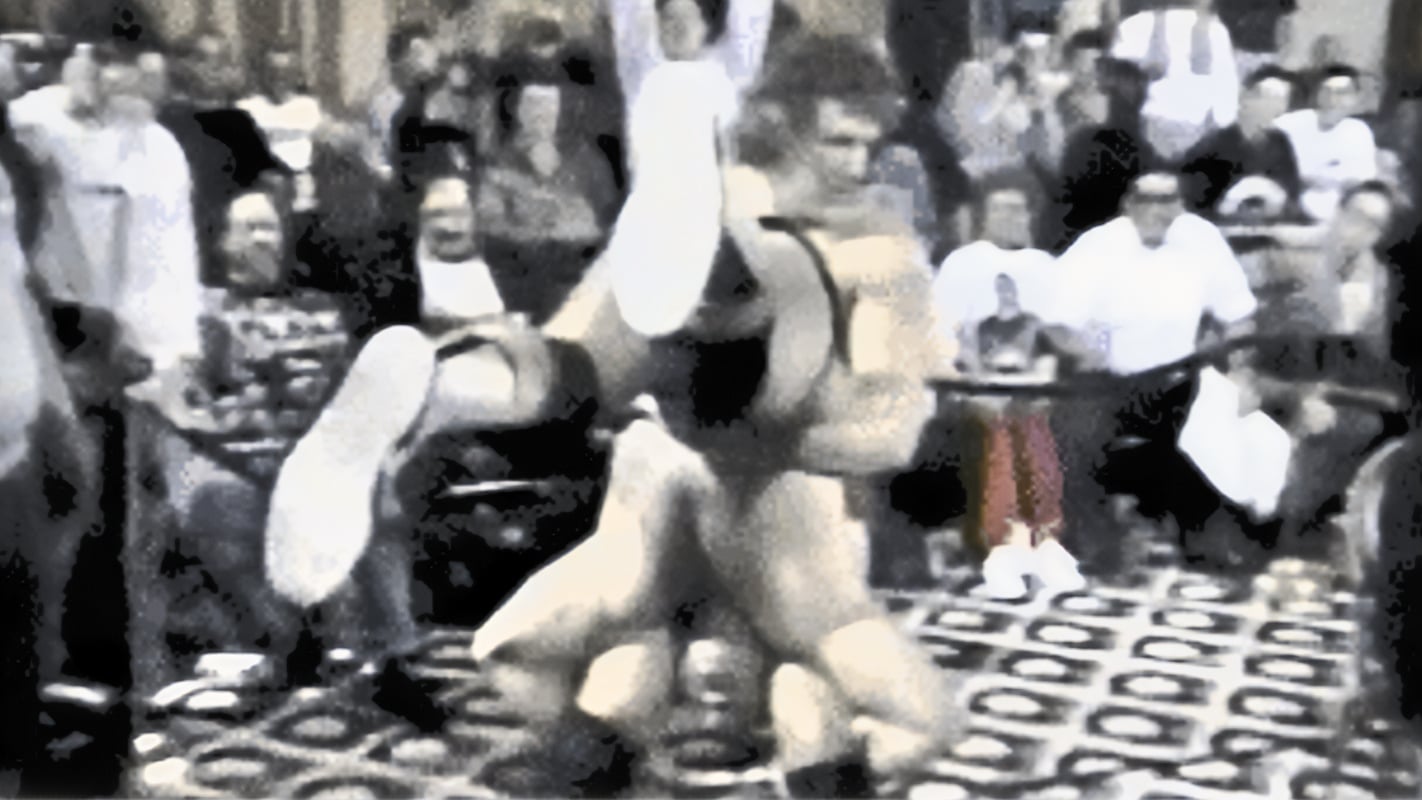
Bob Orton Jr. delivers a piledriver to B Brian Blair on the hotel carpet at the Penta Hotel in New York City during a UWF Fury Hour taping in early 1991. The unconventional setting became one of the most enduring images of how Herb Abrams ran his promotion. Photo Credit: UWF / Al Burke / Classic Wrestling.
Before Beach Brawl, one specific television taping had already made clear how the promotion operated behind the scenes. On March 10, 1991, the UWF held a taping at the Penta Hotel in New York City with roughly 400 people in attendance. The event started late and ran long, and fans left in droves as the night dragged on. By the time the main event was approaching, Abrams grabbed a microphone at ringside and implored the remaining audience to stay. A few returned to their seats. Others walked out anyway.
B Brian Blair’s description of how Abrams booked captured the root of the problem: “Herb would think of things on the fly. He’d change things on the fly. As long as it entertained Herb, he thought it was entertaining the world.”
The wrestlers felt the absence of a clear creative framework. Blair was direct about what was missing: “I don’t think he had the knowledge to really take it to the next level. If you don’t understand the psychology, if you don’t understand how each guy works, what their strengths are, what their weaknesses are, how to put them together, who they work the best with, then you are never going to be successful.”
UWF vice president Zoogz Rift, who took over booking the promotion for a period in 1993 and 1994 before returning to serve as vice president until Abrams’ death, offered a similarly frank assessment, stating, “Money was always around, but he spent it in the wrong places.” The Penta Hotel taping was an early illustration of that gap between resources and results.
Ray has since said the confrontation that followed was a planned angle to generate heat. Former UWF vice president Zoogz Rift contested that version of events. The incident revealed something, regardless: whether it was a shoot or a work, the promotion’s internal dynamics had become as tangled as its television product.
Unpaid Talent And Growing Turmoil Inside UWF
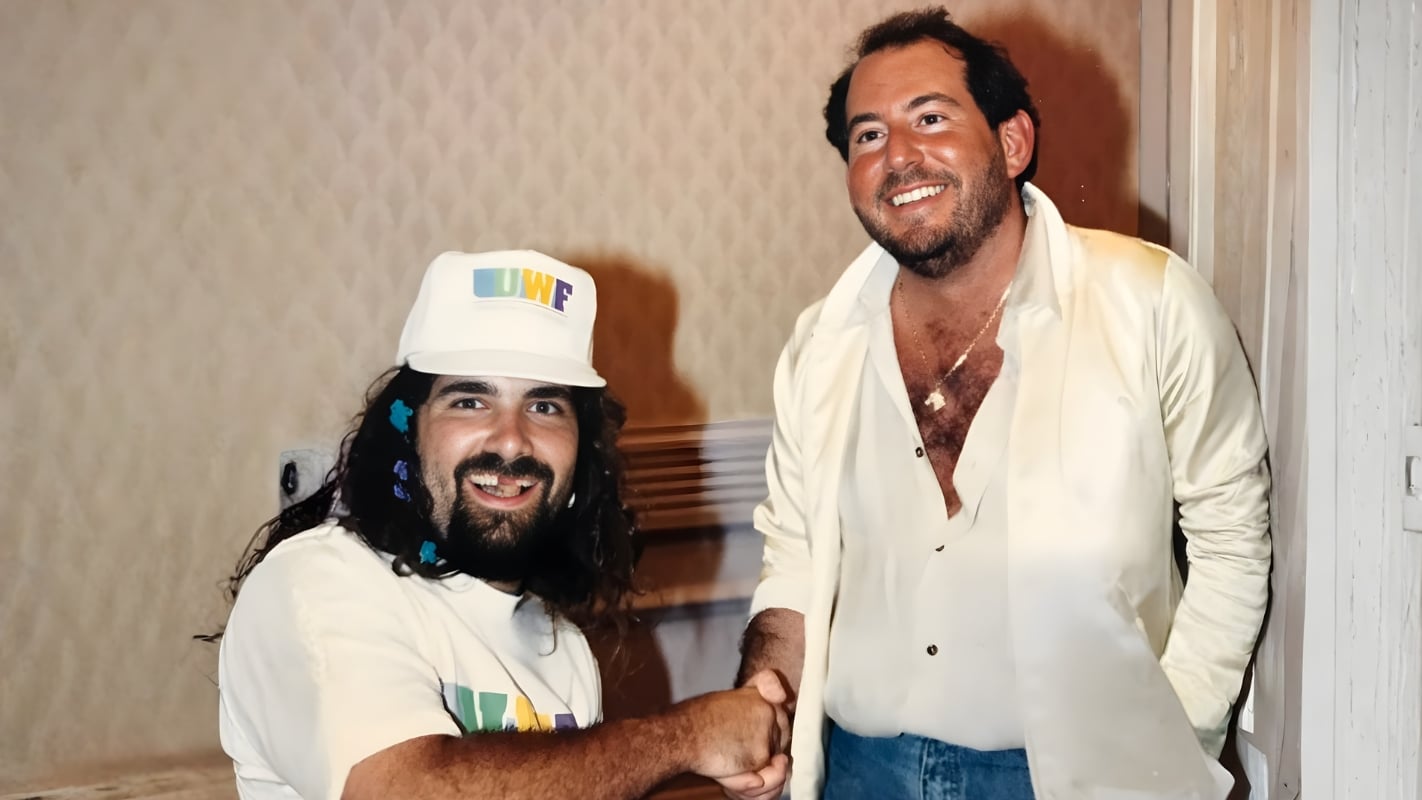
Mick Foley shakes hands with UWF founder Herb Abrams at John Arezzi’s Wrestling Fans Fantasy Weekend convention in 1990. The handshake captured the optimism of the promotion’s early days before unpaid talent, financial chaos, and Abrams’ deteriorating behavior brought the UWF to its knees. Photo Credit: John Arezzi.
When the SportsChannel America deal expired without extension in September 1991, the UWF lost its national platform and the momentum that came with it. Without consistent television, live show schedules became erratic, and the financial pressure that had always been present became impossible to manage.
Marty Yesberg described a telling incident in Spartanburg, South Carolina, where the television crew arrived and demanded payment before setup. Herb agreed to sort it out, then stalled for hours. When the crew threatened to leave at around 4:30 pm, Abrams took them to the office and had his bank called. The bank confirmed that Herb “had multi millions of dollars” in one account. The crew relaxed.
What Abrams had not told them was that he had two accounts, one of them flush and one of them empty, and the check he planned to write was drawn on the empty one.
“Hell broke loose,” Yesberg described. “Some of the guys who had worked that show threatened to throw Herb off the fifth-floor balcony. That’s when reality hit me upside the head. I had people calling my phone. They wanted to kill me for being associated with the company!”
B Brian Blair witnessed the wear on Abrams up close, even after their working relationship ended. “You could see the wear and tear on his face. Between the substance use and the failing promotion, it was really taking a toll on Herb.”
Yesberg was blunter: “I don’t think he was keeping up with money. I don’t think it mattered to him as long as the party continued.”
The paranoia that those around Abrams had noticed began to intensify. Steve Ray shared, “He would get into this paranoia state where he would swear that there was someone with a bug in his hotel room.”
Rick Allen recalled asking Abrams what was wrong and hearing, “I think they’re outside. They’re watching us.” Duge claimed Abrams “would never tell me who it was. Whether it be the police, whether it be the hookers, whether it be the pimps. I’m thinking, no one’s spying on Herb. It’s the [substances he was taking] talking.”
The behavior escalated. In 1993, authorities responded to a disturbance call at the Inn at Aspen in Colorado and found Abrams in the buff and “running through hallways, screaming that he had been shot.” There was no shooter. There was plenty of coke.
In his book Tortured Ambition: The Story of Herb Abrams and the UWF, Jonathan Plombon writes that Abrams “had destroyed the hallways, pried the carpet off the floor, ripped the electrical outlet covers off the wall,” all while believing someone in the adjacent room had a weapon aimed at him. Following his arrest, he reportedly joined AA, found a sponsor, and attempted sobriety. It did not hold.
Zoogz Rift summarized the financial picture in those later years simply: any money that came in “always went up Herb’s nose.”
Herb Abrams Blackjack Brawl at the MGM Grand In Las Vegas
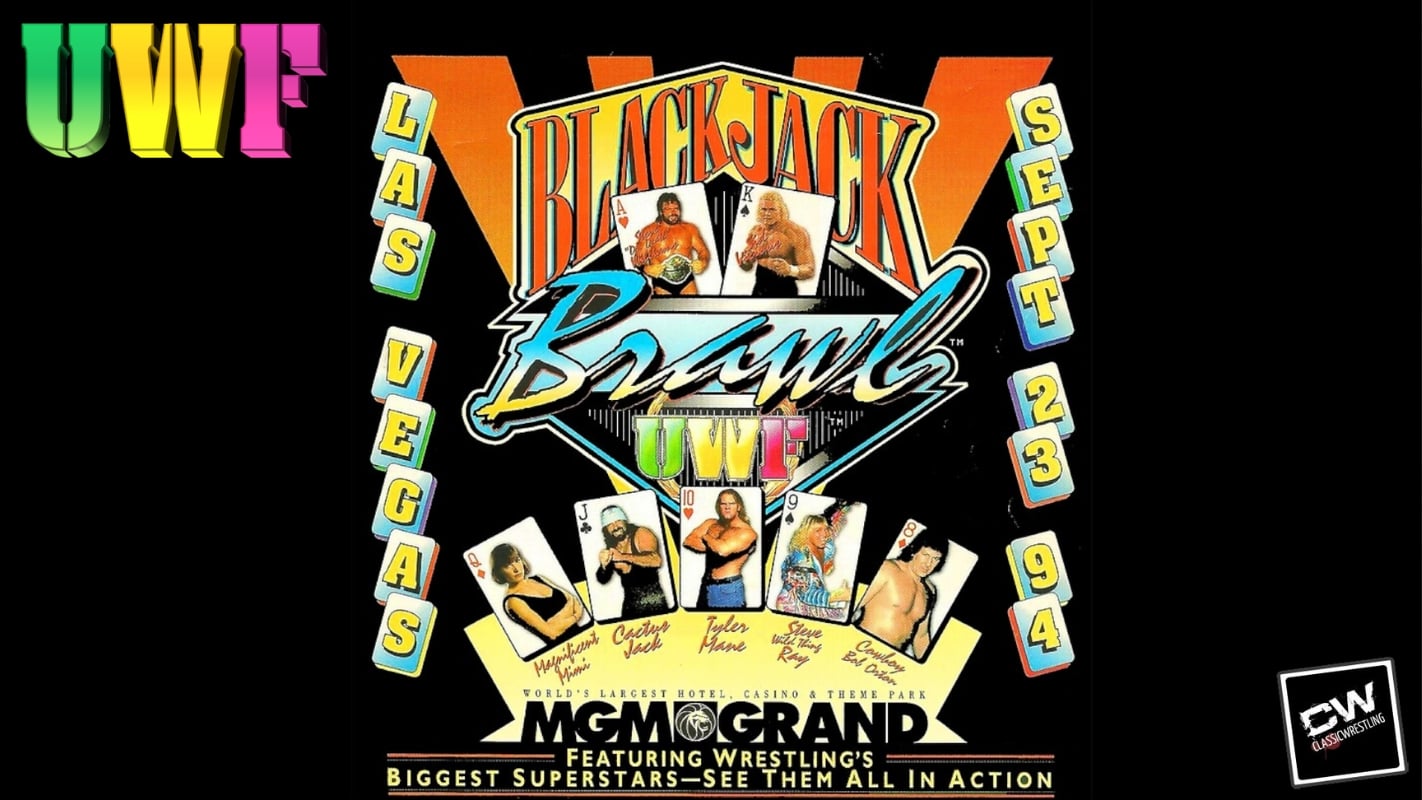
Herb Abrams’ Blackjack Brawl at the MGM Grand Garden Arena in Las Vegas on September 23, 1994, drew approximately 300 fans to a 17,000-seat venue and represented UWF’s final major event. Photo Credit: UWF / Al Burke / Classic Wrestling.
By 1994, Herb Abrams had one more swing in him. Coming off a divorce, he used the spectacle of WrestleMania IX at Caesars Palace as evidence that Las Vegas could support major wrestling events and booked the MGM Grand Garden Arena for a television special called Blackjack Brawl, scheduled for September 23, 1994.
The card was loaded by UWF standards. In Dark Side of the Ring, John Arezzi noted that Abrams “was spending an enormous amount of money on the talent that he was bringing in for it.”
Mick Foley understood the appeal of the setting: “What better way to showcase your product than in one of the preeminent locations in Las Vegas or in the world for that matter?”
Brian Blair cut to how the deal likely came together: “It’s a wager city. It’s a betting city, so obviously he got somebody to take that bet.”
Steve Ray confirmed that this was simply how Abrams operated: “That was his motif. That’s what he did. He would go for the biggest bite he could get and he’d take it.”
The night before the event, Abrams brought Foley up to a penthouse suite overlooking the city. Foley recalled, “When I saw the suite, I believed that MGM was gonna be packed, and I was thinking 17,000 people packed to the rafters.”
Then came the detail that became something of a symbol for the whole promotion.
“Herb goes, ‘Wait till you see this. People are going to lose their minds.’ He proceeds to pull out a pair of yellow ostrich skin cowboy boots that have UWF burnished into the leather. The fact that he thought people would lose their minds over a pair of cowboy boots was an indicator that there were issues.”
Approximately 300 tickets were sold for a venue that held 17,000 people. Foley called it “a gorgeous empty arena.”
Rick Allen admitted, “It was like sad to wrestle in front of a couple hundred people again.”
Arezzi watched Abrams at ringside and described, “He was really outrageous during that show. When he takes the microphone and he just screams into it, ‘Let’s hear it for the Jews,’ in front of the crowd. It was hilarious. It was sad all in the same way. It was weird.”
Blair noticed that Abrams’ “mannerisms were different,” while Lenny Duge said it was visible to everyone working the event that Abrams was under the influence throughout the night.
Foley’s match with Jimmy Snuka produced one of the night’s most vivid images. As the two brawled into the seating area, Foley looked around and took in row after row of empty seats. “16,700 empty seats,” he reminisced. “I remember Brian Blair going, ‘What are you doing?’ I said, ‘It’s Herb’s show. We can do whatever we want.'”
After the event, Foley’s check bounced. “He wrote me a check. It bounced.”
When Duge later told Abrams plainly what the night had produced, “he drew 200 people and it was a total cluster,” Abrams offered the response that has since become the definitive shorthand for his entire career: “Yeah, but I had the MGM.”
Abrams moved back to New York City soon after to care for his ailing mother. He never promoted another UWF event.
Herb Abrams Final Days And The Legacy Of UWF
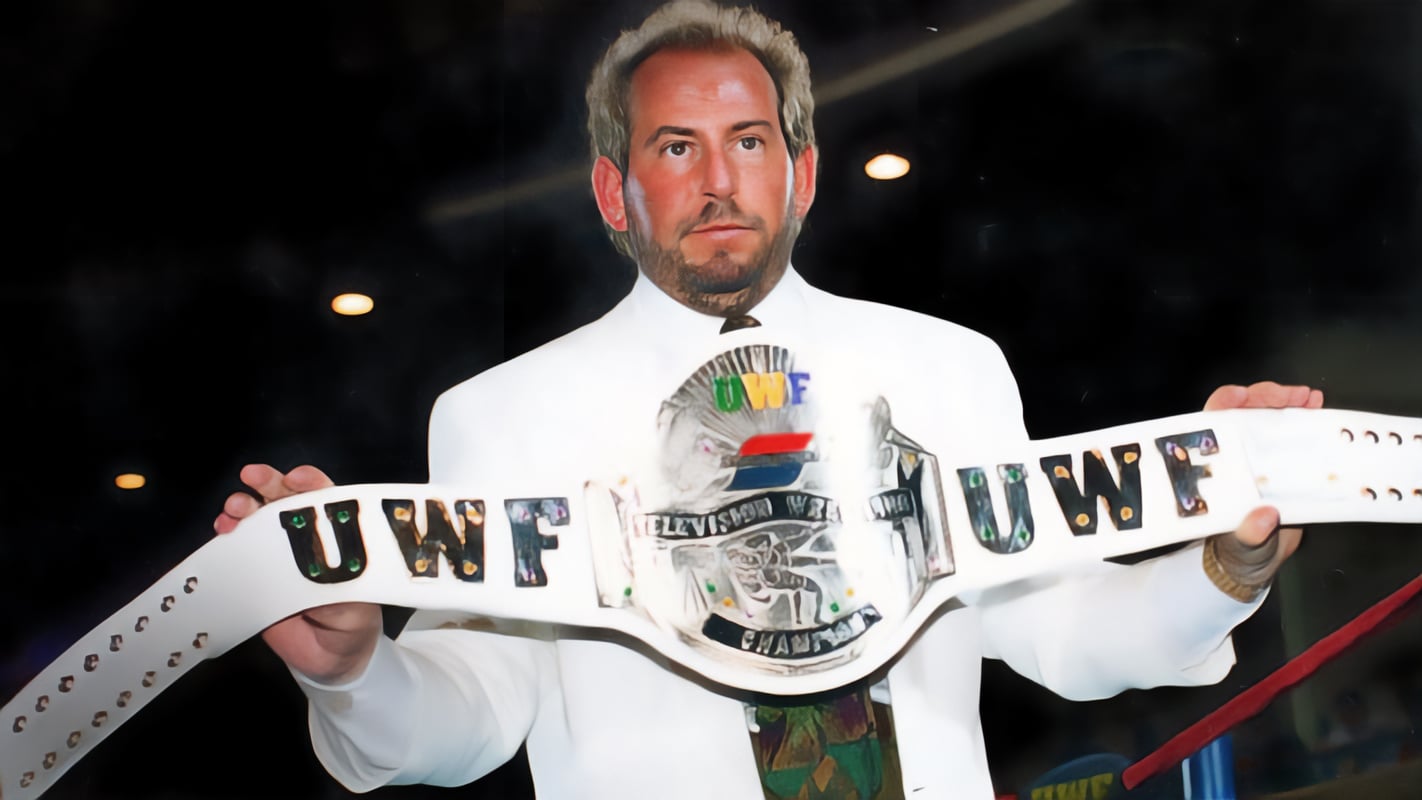
Herb Abrams with the UWF Television Championship, one of the titles that gave his promotion a sense of legitimacy in its early years. Those who knew him best said the same energy that launched the Universal Wrestling Federation was ultimately the thing that consumed it. Photo Credit: UWF / Al Burke / Classic Wrestling.
Between 1994 and 1996, Herb Abrams made several plans to relaunch the UWF. Events were filmed in North Dakota and Minnesota, but were never released. ESPN2 licensed existing television episodes. Abrams sold exclusive rights to the UWF catalog to multiple international companies simultaneously, a deal that could only have been made by someone who had stopped thinking about consequences. None of it produced real momentum.
Brian Blair watched the decline continue. “He didn’t have the spunk that he had, that electricity, constant spark that made the room glow. It was like he aged 10 years in two years.”
Steve Ray shared that when Abrams left Los Angeles for New York, there was brief hope. “I thought he was really cleaning himself up.”
Lenny Duge got a call from Herb that seemed to confirm it. “Len, big things are happening.” Duge asked if he was straight. “Len, I’m perfectly straight.”
Rick Allen, who was working with Abrams in the New York offices during that period, remembered the reality being less encouraging. “Sometimes he’d come in the next day all hungover. Sometimes he wasn’t even coming at all. Sometimes you wouldn’t see him or hear from him for a couple of days. That was just Herb being Herb.”
On July 23, 1996, police were called to Abrams’ Manhattan office on West 57th Street. Accounts of what happened inside that office vary, and those who knew Abrams have since acknowledged that the full picture may never be entirely clear.
What multiple people who were close to him described was a scene involving coke, escorts, and increasingly erratic behavior. Blair said he heard Abrams “had done so much coke that he was whacked and he found a baseball bat and started tearing up the room.”
Arezzi shared he was told Abrams “was covered in either oil or Vaseline and coke.”
Duge stated exactly what he heard from those involved: “Herb was running around unclothed, smashing a baseball bat on the walls and in the office chasing a couple of escorts with coke all over his body.”
Allen was careful about how far to go with any version of events. “Nobody knew the true story. Still we don’t know, cause I wasn’t there. You never believe everything you hear.”
What the official record confirmed was that Herb Abrams suffered a heart attack and died while in police custody. He was 41 years old. Toxicology reports confirmed the presence of coke and other substances.
The news hit those who knew him in ways they were not prepared for. Duge admitted, “I must have cried for two hours. It was the hardest thing to call those men and then to hear them all start to cry.”
He continued, “These super gargantuan strong men that you saw fly across the ring, all crying over Herb dying.”
Duge added something that has stayed with him in the years since: “The worst thing that Herb Abrams ever did to me was die. It’s haunted me for the entire time of these 30 years.”
The story of Abrams’ death took on a life of its own almost immediately. Allen stated, “It became folklore. Everywhere we go you get a Herb Abrams story, and some are better than others. Some are true. Some you don’t know what to believe.”
Yesberg went as far as saying, “When they told me he died, I said, no, he’s faked his death. He’s left the country.” He described a UWF-branded show in South Carolina where a man in blue jeans and cowboy boots reportedly showed up and threatened to sue the promoter. Yesberg still is not entirely sure what to make of it.
Foley, characteristically, cut through the myth: “Herb Abrams couldn’t keep quiet for 30 years. He would find a way to resurface. I find it completely unfeasible that Herb Abrams is alive and not seeking the limelight somewhere.”
For those who had believed in the vision, the loss was genuine. Allen put it plainly: “Herb, we miss you. Wish you were still here with us. The UWF and just what he was doing, if we would’ve had a little bit more backing, a little bit more support, I think it could’ve went a long way.”
Steve Ray added a sincere, “It was a loss of someone who believed in me.”
Why Herb Abrams UWF Ultimately Fell Apart
The official logo of Herb Abrams’ Universal Wrestling Federation, the independent promotion that operated from 1990 until Abrams’ death in 1996. The promotion spent an estimated four to five million dollars over its lifetime and never found the stability its founder believed was always just around the corner. Photo Credit: UWF / Al Burke / Classic Wrestling.
The UWF did not collapse because of one bad show or one bad decision. It fell apart because the traits that got Herb Abrams into wrestling were the same ones that kept the promotion from stabilizing.
His confidence could sell wrestlers, television executives, and even fans on the idea that something new was happening. That same impulse kept pushing the company past what it could realistically support. The result was a promotion built on television exposure, recognizable names, and forward momentum that could not hold once the checks started bouncing and the structure underneath began to fail. Abrams had reportedly spent between four and five million dollars on the UWF over its lifetime, a figure that staggers given what it produced on screen.
The competitive landscape made everything harder. With WWF and WCW controlling national television, pay-per-view infrastructure, and most of the top talent, a new promotion had almost no margin for error. The UWF made too many missteps, too publicly, in front of the audience it needed to impress. As Arezzi summed up: “He was never able to succeed, cause he got in his own way. From his personal demons to the way he ran his business.”
The fundamental gap was one that several people around Abrams identified but could not bridge. He understood wrestling as a fan, he understood promotion as a spectacle, but as B Brian Blair expressed, “You’ve got to start from the bottom and work your way up. Herb started at the top and worked his way down.”
Herb Abrams’ UWF: A Lasting Cautionary Tale
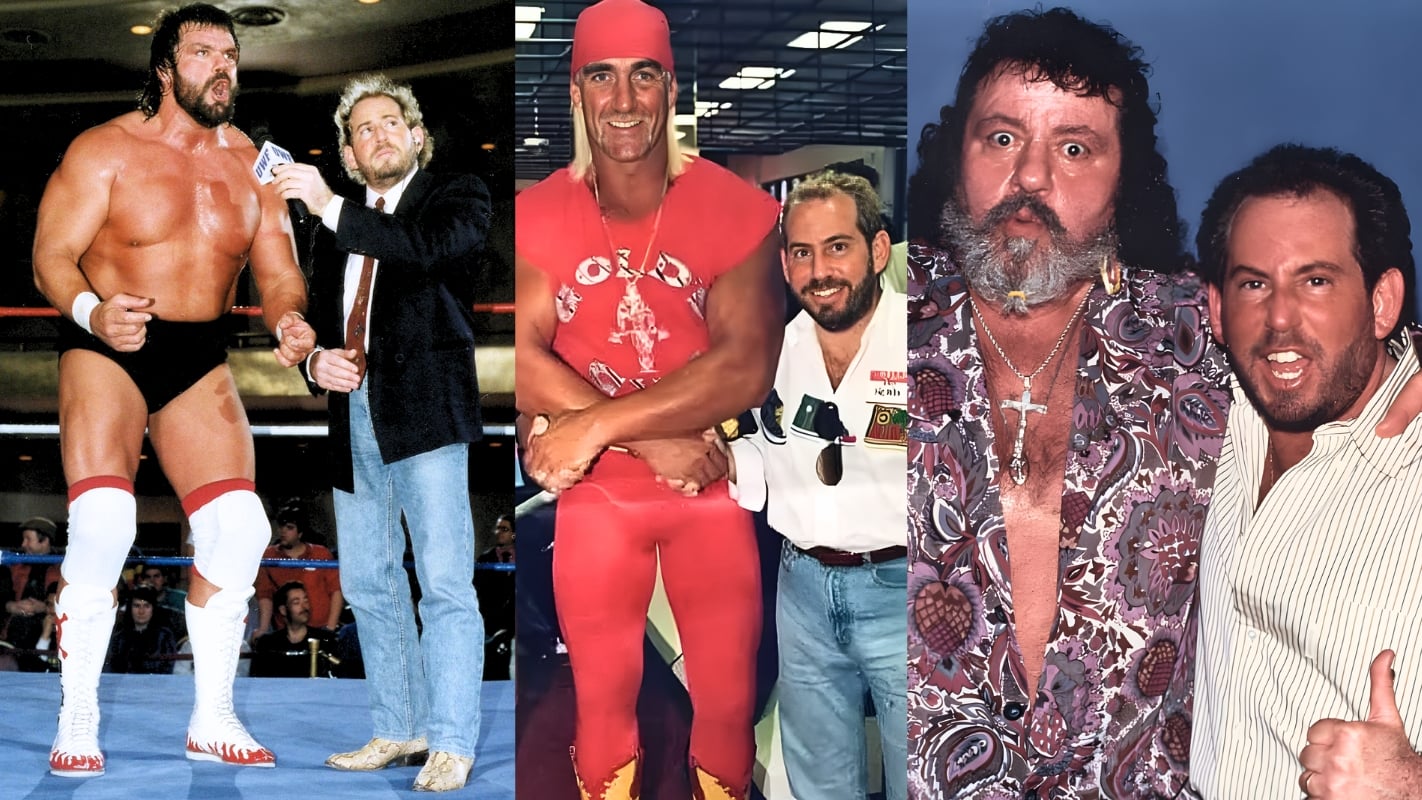
Herb Abrams pictured with “Dr. Death” Steve Williams, Hulk Hogan, and Captain Lou Albano. Whatever his failings as a promoter, Abrams had a gift for getting himself into the room – and making the most of it once he was there. Photo Credit: UWF / Al Burke / Classic Wrestling.
For a brief period, it had national television, a recognizable roster, and a promoter who made people feel like they were getting in on something early. Some of professional wrestling’s most enduring talents passed through its doors during its run. The stories those performers still tell about it, decades later, say something about how much of an impression it made, even in failure.
Mick Foley’s final assessment was characteristically generous: “He had the enthusiasm and, I think, the courage to try to live out his dream. He was such a diehard fan. That was his downfall.”
Lenny Duge added something that cuts even closer to the heart of it: “He would love the negative that’s on the internet. He would love it all. He was Herb Abrams. He was a thing unto himself.”
Abrams’ story is not simply one of failure. It is one of unchecked vision, where opportunity and instability existed side by side until one consumed the other. In a business built on big personalities and bold ideas, Herb Abrams and the UWF remain a reminder that ambition alone is never enough. Without structure, discipline, and follow-through, even the loudest promoter in the room can run out of oxygen.
As Foley concluded, “Maybe he got in death what he didn’t have in life, and that is he became a legend.”
Pro Wrestling Stories is committed to accurate, unbiased wrestling content rigorously fact-checked and verified by our team of researchers and editors. Any inaccuracies are quickly corrected, with updates timestamped in the article's byline header.
Got a correction, tip, or story idea for Pro Wrestling Stories? Contact us! Learn about our editorial standards here. Ever wanted to learn more about the people behind Pro Wrestling Stories? Meet our authors! Want to write for us? Learn how to join the team.
Quick Tip for Facebook Readers
Many of our readers find us through
our Facebook page.
Meta's built in browser (which opens by default on mobile) can occasionally freeze mid article, a known issue unrelated to our site.
For uninterrupted reading: tap the three dots in the top right corner then select 'Open in external browser'.
That usually resolves the glitch. Thanks for your support and we want your wrestling stories to stay as smooth as a top rope hurricanrana!
ProWrestlingStories.com participates in affiliate marketing programs. This post may contain affiliate links, meaning we may earn commissions at no extra cost to our readers. This supports our mission to deliver free content for you to enjoy!
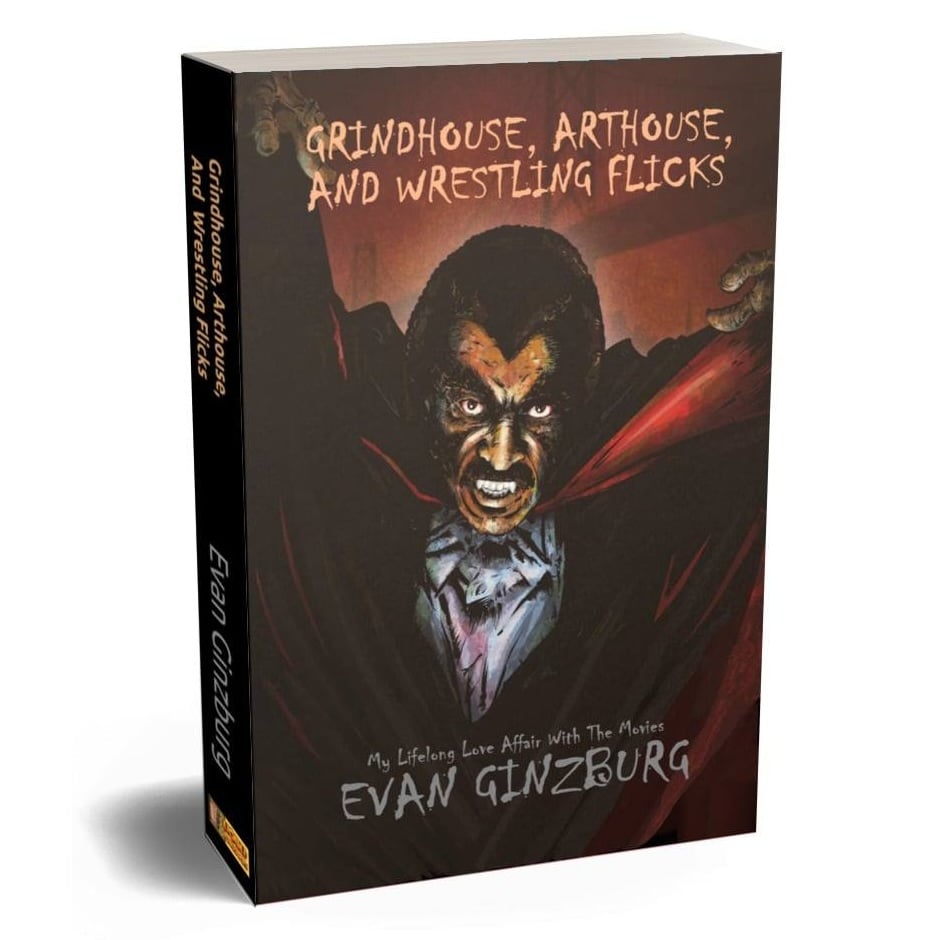
If you love movies and pro wrestling, don’t sleep on this one.Grindhouse, Arthouse, and Wrestling Flicks by Pro Wrestling Stories Senior Editor Evan Ginzburg dives into the fascinating world where cinema and wrestling collide. Packed with hundreds of reviews, hidden gems, and fascinating turns from wrestlers on the big screen, it covers everyone from André the Giant and Roddy Piper to CM Punk, DDP, Chris Jericho, Pat Roach, and The Rock. Smart, passionate, and endlessly browsable, it’s the kind of book fans will keep returning to. Grab your copy today!
Josh Mohammed is the founder of Kayfabe Central, a pro wrestling media platform focused on news, analysis, and storytelling across WWE, AEW, and the independent scene. Based in Ontario, Canada, Josh covers professional wrestling from both a fan and analytical perspective, with a strong interest in the history and psychology of the business.
 Author:


 If you love movies and pro wrestling, don’t sleep on this one.
Grindhouse, Arthouse, and Wrestling Flicks by Pro Wrestling Stories Senior Editor Evan Ginzburg dives into the fascinating world where cinema and wrestling collide. Packed with hundreds of reviews, hidden gems, and fascinating turns from wrestlers on the big screen, it covers everyone from André the Giant and Roddy Piper to CM Punk, DDP, Chris Jericho, Pat Roach, and The Rock. Smart, passionate, and endlessly browsable, it’s the kind of book fans will keep returning to. Grab your copy today!
If you love movies and pro wrestling, don’t sleep on this one.
Grindhouse, Arthouse, and Wrestling Flicks by Pro Wrestling Stories Senior Editor Evan Ginzburg dives into the fascinating world where cinema and wrestling collide. Packed with hundreds of reviews, hidden gems, and fascinating turns from wrestlers on the big screen, it covers everyone from André the Giant and Roddy Piper to CM Punk, DDP, Chris Jericho, Pat Roach, and The Rock. Smart, passionate, and endlessly browsable, it’s the kind of book fans will keep returning to. Grab your copy today!