Author:
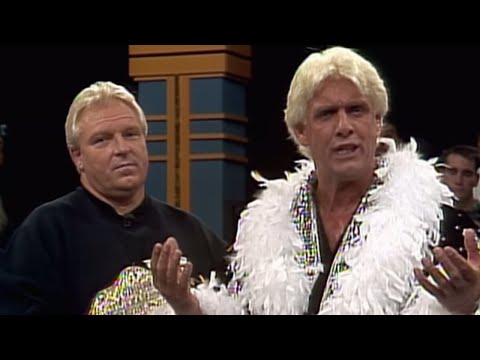
 Ric Flair walked into WWF television carrying WCW’s world title belt. Nobody saw it coming. On September 9th, 1991, Bobby Heenan strutted onto WWF Prime Time Wrestling cradling Ric Flair’s NWA World Heavyweight Championship like a newborn, no warning, no rumor mill, just one of the most jaw-dropping moments wrestling had ever produced. What could push Ric Flair, an NWA and WCW loyalist to his core, to cross enemy lines?

Ric Flair: The Champion WCW Could Not Keep
By mid-1990, Ric Flair had been the defining world champion of Jim Crockett Promotions and then WCW for nearly a decade, carrying the company through the expansion years and into the Turner era. When he dropped the NWA World Heavyweight Championship to Sting at the 1990 Great American Bash, his contract was already a point of contention, and he wanted either a meaningful extension or the flexibility to leave after doing business the right way.
WCW management, now headed by Executive Vice President Jim Herd and President Jack Petrik under Turner Broadcasting, looked at the balance sheets and decided Ric Flair’s contract was one of several high-end deals that needed to be cut back to stem losses at the box office. Within months, the promotion pivoted away from building around its proven main eventer, experimenting with new gimmicks, musclebound prospects, and non-wrestling projects while Flair was pushed into programs that did not match his stature, including a poorly received run opposite El Gigante.
Fans noticed. House show attendance and television ratings flagged, and the top programs built around Flair against Sting or working tag main events did not receive the sustained promotion on TBS they once had. Against that backdrop, Flair’s relationship with Herd deteriorated further, setting the stage for the contract fight that would ultimately send the Nature Boy north.
Jim Herd’s “Gladiator” Vision
In an interview with mediaman.com.au, Ric Flair opened up about why he left WCW for the then WWF with his WCW World Title in tow.
“Jim Herd is the total reason I left.
“He had a lot to do with the destruction and bankruptcy of the company, 10 years before it went bankrupt. He will go down as the biggest idiot of all time.
“It was nothing I did, you know you have a right to protect yourself.
“It came about over $25,000…
“There was a time in my life when I thought I was invincible.
“I knew I was the best at what I did; I never thought of myself better than other people in any other way, apart from the wrestling, where I knew I was the best wrestler alive.
“I went from that character to a guy who was forced to cut his hair, a guy who Jim Herd wanted to wear an earring. He wanted to make me into a gladiator!
“He was taking an established commodity, who’d been the flagship of the company, and changing it stupidly.
Herd’s creative vision for Flair went far outside the traditional image of the NWA World Heavyweight Champion, and reports at the time confirm that he pushed for a short-haired, earring-wearing gladiator presentation that would rebrand Flair away from the robe-wearing Nature Boy persona fans had followed for years.
The idea reflected a broader philosophy in WCW that new characters, bright costumes, and high concept gimmicks could replace the established identity of wrestlers who had already proven themselves as draws.
Flair, proud of his track record and sensitive to how the championship was presented, saw the proposals as disrespectful to the lineage of the NWA title and to his own contribution to the company, deepening an already serious contract dispute.
Enjoying this story? Own it forever.
No ads. No interruptions. Download the full story as a beautifully formatted PDF at just $0.99.
Get My Copy — $0.99The $25,000 NWA Title Bond
“When the NWA was in existence, it was controlled by a board of directors,” Flair continued. “Whoever the champion was, they had to put up a $25,000 bond. It was a statement to say that the champion wouldn’t leave with the belt.
“I put up a bond for 25 grand, and when I asked for my money back, Herd said, ‘**** you and the belt!’
“Herd was so arrogant that he just said, ‘ **** the belt.’ Those were his ways of talking. He thought he was a tough guy.
“I said, ‘It’s not **** me, it’s **** you, watch where the belt is next Monday…'”
Ric Flair’s account was that the $25,000 was originally posted as a bond when the NWA board oversaw the championship, intended as a guarantee that the titleholder would not walk away with the physical belt. When WCW withdrew from the NWA structure and took over the belt’s lineage, Flair understood that the deposit should be returned, particularly as his contract was up for renegotiation in 1991.
Instead, Herd and WCW management refused to refund the money and pressed ahead with plans to take the title off Flair on their terms, even floating internal offers that would have reduced his pay compared to previous years while promising booking input and a babyface run opposite Lex Luger. The standoff over the bond became the symbolic last straw, convincing Flair that he needed to protect himself and his family’s finances by looking elsewhere.
Fired as Champion and a Lawsuit over the Belt
On July 1, 1991, WCW removed Ric Flair from television and fired him despite the fact he still held recognition as their world champion, a move that created immediate legal and promotional headaches. Dave Meltzer reported in his Wrestling Observer Newsletter at the time that WCW sought to strip Flair and create a new champion, advertising Lex Luger versus Barry Windham for the vacated title at the Great American Bash, while Flair’s camp emphasized that his contract and the title situation were not being handled in good faith.
With the $25,000 deposit in dispute and emotions running high, Flair retained physical possession of the famous “Big Gold” belt design, taking it with him as leverage despite WCW insisting the company owned the championship belt regardless of the bond. Within weeks, WCW initiated legal action to compel its return, filing suit to prevent the belt from appearing on rival programming and to recover what they viewed as company property.
The clash between a fired champion still carrying the belt and a national promotion trying to reestablish its world title without him created a rare situation in modern wrestling, one where fans in different territories might see different “world champions” at the same time, depending on which show they watched.
Love Pro Wrestling Stories? Add us as a Preferred Source on Google so our stories always show up first for you. It only takes one click.
Add Us on GoogleCalling Vince and Sending the Belt
“I called Vince McMahon, and I said, ‘I’ll come [to the WWE] as the champion if you want me to be…'” Flair went on.
“I sent the belt to WWE, and Bobby Heenan took it out on TV the next week.”
While WCW scrambled to rebuild around Lex Luger as their new world champion, Flair and Vince McMahon quietly discussed the possibility of bringing the Nature Boy to the WWF as an attraction who could be presented as an outside world champion, complete with his original belt.
WWF television in August 1991 began teasing “the real world champion” through voice-overs and segments with Bobby Heenan, who appeared holding the Big Gold belt on Superstars and Wrestling Challenge even before Flair himself had debuted.
Legally, the WWF avoided explicitly naming the NWA or WCW on air, instead describing Flair’s title in general terms while emphasizing the intrigue of a champion from another promotion challenging Hulk Hogan. Behind the scenes, WCW’s lawsuit over the belt pushed the WWF to eventually blur the championship plate on television, but those early weeks with the unaltered belt visible remain some of the most unforgettable cross-promotional imagery of the era.

With hundreds of amazing Pro Wrestling Stories to dive into, where do you start? Get the inside scoop, join our exclusive community of wrestling fans! Receive 10 hand-picked stories curated just for YOU, exclusive weekly content, and an instant welcome gift when you sign up today!
Prime Time Wrestling: “The Real World Champion” Arrives
Ric Flair’s first WWF television appearance came via a taped episode of Prime Time Wrestling that aired on September 9th, 1991, in which Bobby Heenan walked onto the set cradling the belt and proclaiming that the “real world champion” was on his way. The segment built anticipation around Flair without immediately putting him in the ring, using Heenan’s credibility with WWF audiences to frame the newcomer as a star capable of standing alongside Hogan at the very top of the card.
Flair’s initial WWF in-ring debut at a Superstars taping in Ottawa, Ontario, saw him work a match against an enhancement opponent and receive the biggest reaction of anyone on the show, a reaction that reassured Titan Sports about his ability to connect with a new fanbase.
From there, the company rapidly slotted him into programs with Roddy Piper and, on select house shows, Hulk Hogan, testing different combinations to see where the strongest box office would come from.
“[Ric Flair versus Hulk Hogan at WrestleMania] was the original game plan, and I’ve heard several reasons why it didn’t happen.
“I don’t know for sure, but political issues and things were happening with the company,” Flair admitted, “but it was nothing I was too upset about.”
Real Autographs. Only Few Remain.
These are hand-signed originals sold directly by Pro Wrestling Stories. Once they sell out, they are gone for good.
Own a Piece of Wrestling History
-

Johnny Rodz Signed WWF 8×10 Photo Autograph (wrestling Tony Atlas)
$30.00 Add to cart -
Brutus the Barber Beefcake Signed WWF 8×10 Photo Autograph 2
$35.00 Add to cart -
Leaping Lanny Poffo Signed WWF Frisbee Pose 8×10 Photo Autograph (Deceased Legend)
$45.00 Add to cart -
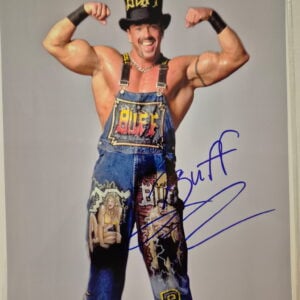
Marcus “Buff” Bagwell Signed WCW 8×10 Photo Autograph
$30.00 Add to cart -
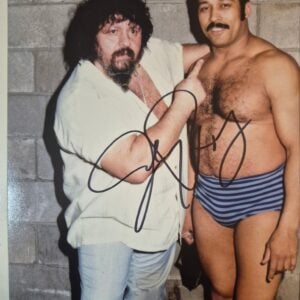
Johnny Rodz Signed WWF 8×10 Photo Autograph (pictured with Captain Lou Albano)
$30.00 Add to cart -
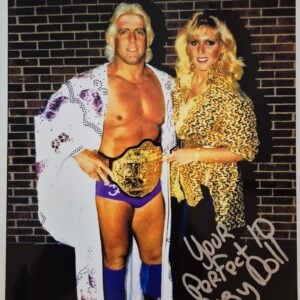
Baby Doll (Nickla Roberts) Signed 8×10 Photo Autograph (pictured with Ric Flair)
$35.00 Add to cart -
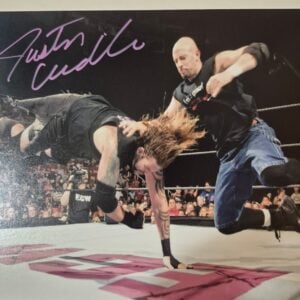
Justin Credible Signed 8×10 Photo Autograph 2
$30.00 Add to cart -
Bushwhacker Luke Signed WWF 8×10 Photo Autograph (of The Bushwhackers)
$30.00 Add to cart -
D’Lo Brown Signed WWF 8×10 Photo Autograph
$30.00 Add to cart -
Sunny (Tammy Lynn Sytch) Signed WWF 8×10 Glamour Photo Autograph
$35.00 Add to cart -
Bushwhacker Luke Signed WWF 8×10 Photo Autograph (pictured with Bushwhacker Butch)
$30.00 Add to cart -
Vince Russo Signed 8×10 Photo Autograph
$35.00 Add to cart -
Tito Santana Signed WWF 8×10 Photo Autograph (Strike Force)
$35.00 Add to cart -
Bushwhacker Luke Signed WWF 8×10 Photo Autograph (with Bushwhackers Butch)
$30.00 Add to cart -
Johnny Rodz Signed WWF 8×10 Photo Autograph
$30.00 Add to cart -
Fred Ottman Signed WCW 8×10 Photo Autograph (The Shockmaster)
$35.00 Add to cart -
Sunny (Tammy Lynn Sytch) Signed WWF 8×10 Photo Autograph (WWE Hall of Fame)
$35.00 Add to cart -
Tito Santana Signed WWF 8×10 Photo Autograph
$35.00 Add to cart -
Ken Patera Signed WWF 8×10 Photo Autograph
$35.00 Add to cart -
Jimmy Hart Signed WWF 8×10 Photo Autograph (pictured with Bret Hart & Jim Neidhart)
$35.00 Add to cart -
Koko B. Ware Signed WWF 8×10 Photo Autograph
$45.00 Add to cart -
Johnny Rodz Signed WWF 8×10 Photo (wrestling Andre the Giant)
$30.00 Add to cart -
Leaping Lanny Poffo Signed WWF 8×10 Photo Autograph (Deceased Legend)
$45.00 Add to cart -
Leaping Lanny Poffo Signed WWF Turnbuckle Pose 8×10 Photo Autograph (Deceased Legend)
$45.00 Add to cart -
Ken Patera Signed WWF 8×10 Photo Autograph (pictured with Bobby Heenan & John Studd)
$35.00 Add to cart -
Nikolai Volkoff & Boris Zhukov Signed WWF “The Bolsheviks” 8×10 Photo Autograph (Deceased Legend)
$60.00 Add to cart -
“Hacksaw” Jim Duggan Signed WWF 8×10 Photo Autograph
$40.00 Add to cart -
Steve Keirn Signed WWF 8×10 Photo Autograph (Fabulous Ones)
$30.00 Add to cart -
Bushwhacker Luke Signed WWF 8×10 Photo Autograph (The Bushwhackers)
$30.00 Add to cart -
Raven Signed 8×10 Photo Autograph
$35.00 Add to cart -
Sabu Signed WWF 8×10 Photo Autograph (Deceased Legend)
$55.00 Add to cart -
Jerry “The King” Lawler Signed 8×10 Photo Autograph
$50.00 Add to cart -
Fred Ottman Signed WWF 8×10 Photo Autograph (Typhoon)
$35.00 Add to cart -
Sunny (Tammy Lynn Sytch) Signed WWF 8×10 Photo Autograph
$35.00 Add to cart -
Johnny Rodz Signed WWF 8×10 Photo Autograph
$30.00 Add to cart -
Steve Keirn Signed WWF 8×10 Photo Autograph (Skinner)
$30.00 Add to cart -
Bushwhacker Luke Signed WWF 8×10 Photo Autograph
$30.00 Add to cart -
Jimmy Hart Signed WWF 8×10 Photo Autograph (pictured with Hulk Hogan)
$35.00 Add to cart -
Larry Zbyszko Signed 8×10 Photo Autograph 2
$40.00 Add to cart -
Jerry Lynn Signed 8×10 Photo Autograph
$35.00 Add to cart -
Jerry “The King” Lawler Signed WWE 8×10 Photo Autograph 2
$50.00 Add to cart -
Nikolai Volkoff Signed WWF 8×10 Photo Autograph 2 (Deceased Legend)
$45.00 Add to cart -
Butcher Paul Vachon Signed WWF 8×10 Photo Autograph (Deceased Legend)
$45.00 Add to cart -
Missy Hyatt Signed 8×10 Photo Autograph
$35.00 Add to cart -
Sunny (Tammy Lynn Sytch) Signed 8×10 Photo Autograph
$35.00 Add to cart -
Kevin Sullivan Signed 8×10 Photo Autograph (Deceased Legend)
$45.00 Add to cart -
Nikolai Volkoff Signed WWF 8×10 Photo Autograph (Deceased Legend)
$45.00 Add to cart -
Brutus the Barber Beefcake Signed WWF 8×10 Photo Autograph (with Ultimate Warrior)
$35.00 Add to cart -
Larry Zbyszko Signed WCW 8×10 Photo Autograph
$40.00 Add to cart -
Johnny Rodz Signed WWF 8×10 Photo Autograph (pictured with The Grand Wizard)
$30.00 Add to cart -
Justin Credible Signed 8×10 Photo Autograph
$30.00 Add to cart -
The Tonga Kid (Sam Fatu) Signed WWF 8×10 Photo Autograph
$35.00 Add to cart -
Ron Simmons Signed WWE 8×10 Photo Autograph
$40.00 Add to cart -
“Greg the Hammer” Valentine Signed WWF 8×10 Photo Autograph
$45.00 Add to cart -
Hornswoggle (Dylan Postl) Signed WWE 8×10 Photo Autograph
$30.00 Add to cart
House Show Classics: Ric Flair vs Hulk Hogan
Once Ric Flair’s contract was official, the WWF scheduled an early run of main event matches that paired him with Roddy Piper before rolling out the first singles bouts against Hogan in major arenas. The initial Flair versus Hogan matches were advertised for late October 1991, including a meeting at the Oakland Coliseum followed by dates at the Los Angeles Sports Arena and Arizona State University’s fieldhouse in Tempe, structured to headline one of two touring crews as the company resumed full North American loops.
Those house show matches were treated as special attractions, often supported underneath by Legion of Doom defenses of the tag titles and Bret Hart’s Intercontinental Championship bouts, presenting cards with multiple championships on the line.
Although plans for a WrestleMania main event between Hogan and Flair ultimately changed, the fall 1991 program gave a glimpse of what that marquee match might have looked like in front of national pay-per-view audiences.
WCW’s Fallout: Lawsuits, TV, and Lost Trust
According to Flair, “As soon as WCW realized the damage, they filed a lawsuit to have me send back the belt.”
“All over 25 grand! Here you have a company spending millions of pounds on nothing, and they couldn’t give me my 25 grand.
“I was really hurt by all that happened, especially after I’d been there so long.
“I said to Herd, ‘I’ll give you three months [to return my deposit],’ and guess what? Ninety days later, he was gone!
“Ultimately, when I came back, they gave me the 25 grand plus interest…”
WCW’s short-term solution to Flair’s departure involved pushing Lex Luger as their new world champion and attempting to reshape the roster with fresh faces, but the long-term damage to the brand and its relationship with fans was severe. Contemporary coverage noted boycotts in Crockett strongholds like North Carolina, where local media and fans saw the firing of Flair as a betrayal of the territory’s history and called for supporters to stay away from WCW events.
The lawsuit over the belt, the blurred championship plates on WWF broadcasts, and the knowledge that Flair had shown up with WCW’s top title on rival television all contributed to the perception that Turner’s wrestling operation did not value its established stars or its own championships as highly as fans did.
Within a year, Herd was gone, but the damage from the Flair saga continued to haunt WCW through the early 1990s as it tried to find its footing under new leadership.
Ric Flair’s WWF Run and Return to WCW
“I enjoyed my time at WWE. I just enjoyed the working environment. I was amongst good friends.
“After a year and a half, WWE was looking to downscale me, and I had a great relationship with Vince. I told him that WCW had offered me a great deal [to come back].
“He told me that I had done a great job, had been a great businessman and that I should do what was best for me.
“So I went back straight back into the turmoil, and it got worse instead of better.
“What I didn’t realize when I went back was the animosity my leaving had caused because it hurt the company.
“All over a lousy 25 grand…”
During his roughly eighteen months in the WWF, Flair captured the company’s recognized world championship, headlined pay-per-views, and delivered classic matches with opponents such as Bret Hart and Randy Savage, fulfilling the promise of the “real world champion” billing in front of a new audience.
Yet by early 1993, as the WWF adjusted its roster and budget, Flair sensed that he was being moved down the card, and an attractive offer from a reorganized WCW led him to discuss a return with McMahon.
In telling the story years later, Flair emphasized that Vince McMahon gave his blessing, advising him to do what was best for his career and family, which cleared the way for the Nature Boy’s homecoming to a WCW that was still dealing with the fallout of his initial exit.
Behind the scenes, some of the same animosity that had surrounded the 1991 departure lingered, but the company ultimately did refund the $25,000 bond with interest, closing a financial loop that had been left open when Herd refused to honor it.
Flair returned to WCW in February 1993, walking back into the company that had fired him, refused to refund his deposit, and lost him to its biggest rival for a year and a half. Herd was long gone by then, forced out ninety days after Flair’s ultimatum, but the $25,000 fight that cost him his job had already proven its point: WCW could fire its champion, but it couldn’t make him leave the title behind.
Watch Bobby Heenan introduce “The Real World Champion” Ric Flair to WWF on Prime Time Wrestling on September 9th, 1991:
Looking to read more stories on Ric Flair? Be sure to check out these other great articles on our site:
- Ric Flair | 13 Stories Showing Who the Real Nature Boy Was
- Ric Flair and Jack Veneno | The Title Change The NWA Won’t Accept
- Ric Flair and Terry Funk – Their Unforgettable Feud from 1989
- Ric Flair and Triple H | The Greatest Short Story in Wrestling History
- Ric Flair and Ricky Steamboat – The Story Behind The Magic
Download PDF Version
Get the complete article as a formatted PDF for offline reading.