Author:
 Thousands of wrestling fans witnessed something extraordinary on July 20, 1985, and almost nobody remembers it happened. Jim Crockett Promotions invaded Philadelphia’s Civic Center with a card so stacked it belonged on pay-per-view. No cameras rolled, no commentary preserved the action; just one night of violent, Southern-influenced wrestling delivered deep inside WWF territory, to hardcore Philadelphia fans hungry for something different from the product they had grown up watching at the Spectrum. Years on, this show exists only in fading memories and dusty record books, proof that some of wrestling’s most compelling moments were never captured on tape.
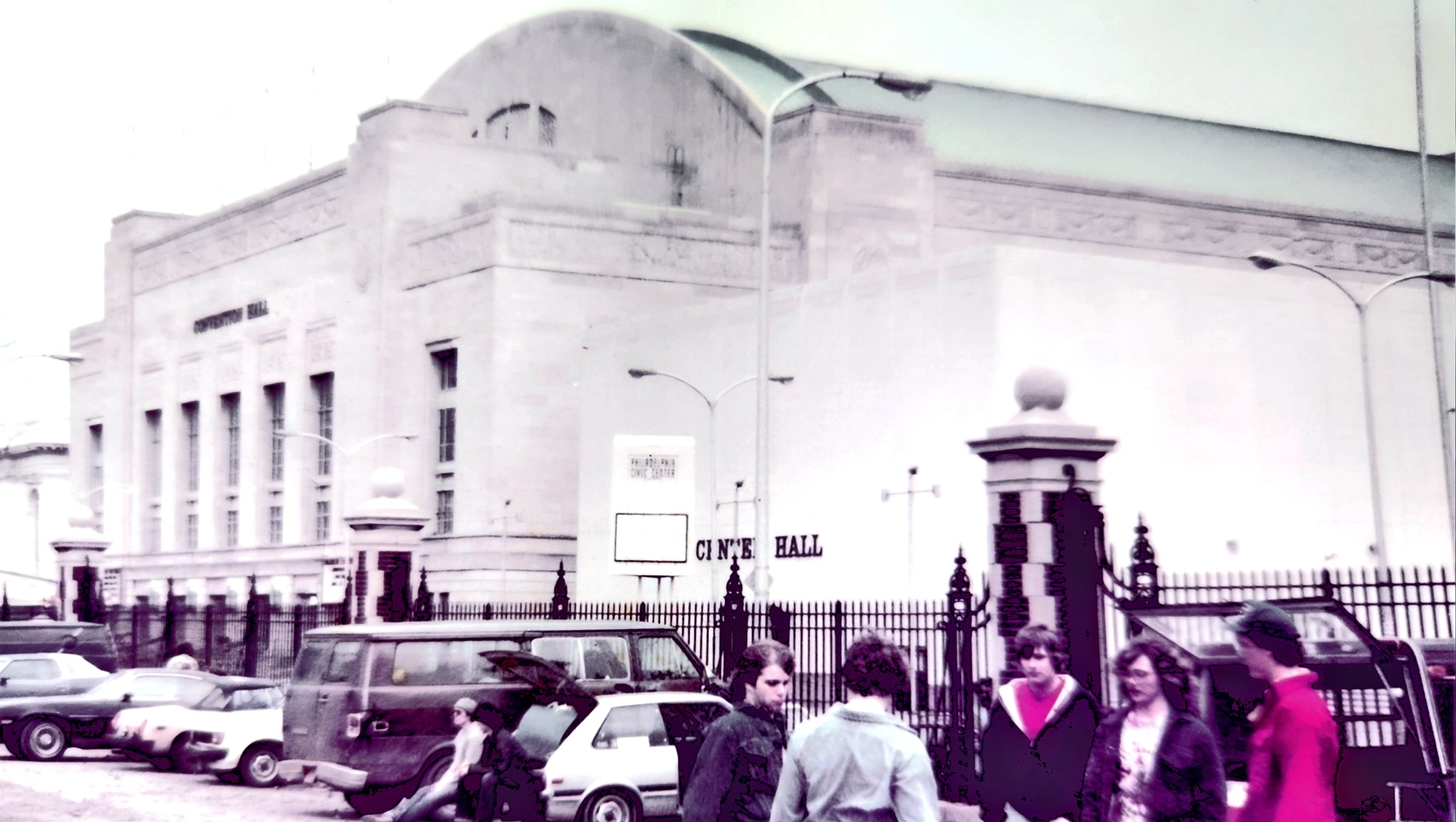
The Long-Forgotten 1985 JCP Philly House Show
Where were you on the night of July 20, 1985?
Most would likely remain silent if asked by a cold case detective, but older wrestling fans from Philadelphia sometimes recall holding a ticket for Jim Crockett Promotions and the National Wrestling Alliance at the Philadelphia Civic Center that night, a card used to keep key storylines moving toward Starrcade 1985. The memory of the exact date and lineup may have blurred with time, yet for those who were there, the memory of an NWA-style supercard dropping into a traditional WWF market still stands out.
This was the house show era, when a tagline like “See it tonight or miss it forever” genuinely applied. Even with cable television and home video growing, only a fraction of major matches ever made air. A fan might see a favorite wrestler or a particular matchup only once in person, with no guarantee it would be taped, much less replayed. The July 20, 1985, event fit that mold perfectly. It did not feature a heavily hyped surprise angle or a landmark title change. On paper, it simply looked like another strong card in JCP’s 1985 calendar. In practice, it became one of those nights local fans would quietly talk about for years.
Enjoying this story? Own it forever.
No ads. No interruptions. Download the full story as a beautifully formatted PDF at just $0.99.
Get My Copy — $0.99Jim Crockett Promotions Targets Philadelphia
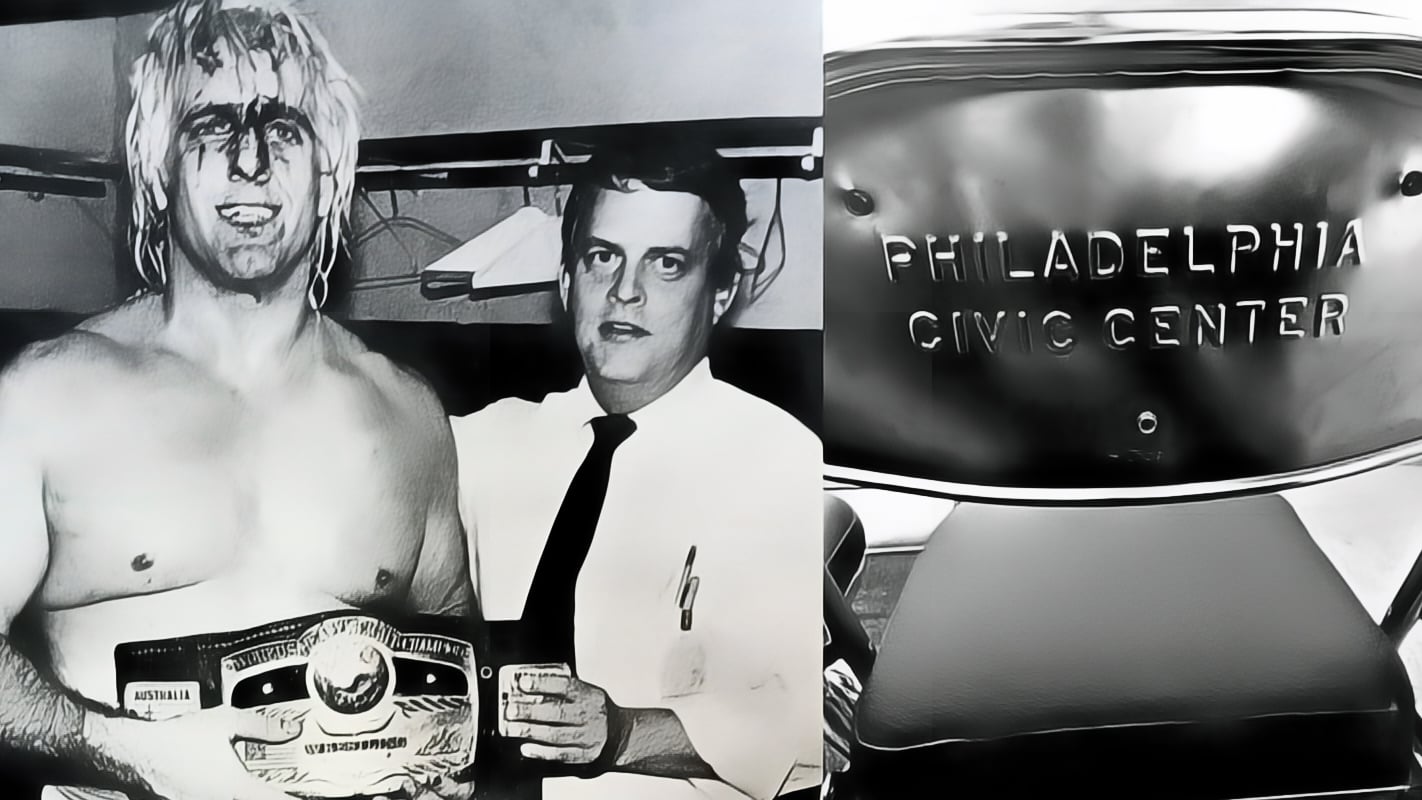
By the mid-1980s, Jim Crockett Promotions had begun pushing beyond its traditional Mid-Atlantic stronghold, taking NWA-branded events into new markets as Vince McMahon’s nationally expanding WWF targeted the same cities. Philadelphia, long a stronghold for the WWWF and then the WWF at the Spectrum, suddenly found itself with an alternative that emphasized fierce feuds, grudge stipulations, and a harder-hitting in-ring style.
JCP partnered with the American Wrestling Association for its first Philadelphia date on February 5, 1985, at the Philadelphia Convention Hall and Civic Center complex, a show headlined by NWA World Champion Ric Flair against Ricky Steamboat.
The partnership returned on February 28, 1985, with a show that featured Ric Flair defending against Sgt. Slaughter and included Magnum T.A., Wahoo McDaniel, and others on the undercard.
The promotion then followed with additional Philadelphia cards on March 26, April 30, and June 12, steadily introducing Crockett storylines and personalities to a fanbase accustomed to the WWF’s more character driven presentation.
By November 23, 1985, the experiment had clearly connected. That night’s JCP event at the Civic Center, headlined by Dusty Rhodes and the Road Warriors against Ric Flair, Ole Anderson, and Arn Anderson of the Four Horsemen, drew a documented sellout of approximately 12,500 fans.
The July 20, 1985, house show, the subject of this article, sat right in the middle of that run, a key step in convincing Philadelphia that Jim Crockett Promotions could deliver a different kind of main event experience.
Love Pro Wrestling Stories? Add us as a Preferred Source on Google so our stories always show up first for you. It only takes one click.
Add Us on GoogleA Loaded Card At The Philadelphia Civic Center
Results listings for July 20, 1985, show the kind of lineup that, with cameras rolling, might easily have passed for a Clash of the Champions special a few years later.
While not every bout was built around a heavy television angle, virtually every match on the card served a purpose within JCP’s larger booking. Some elevated younger talent, some reinforced ongoing feuds, and others simply gave the Philadelphia crowd the kind of physical, high-energy wrestling that had become the promotion’s signature. Right from the opening bell, promoter Jim Crockett and booker Dusty Rhodes offered fans strong action at an affordable ticket price.
Sam Houston vs. JJ Dillon
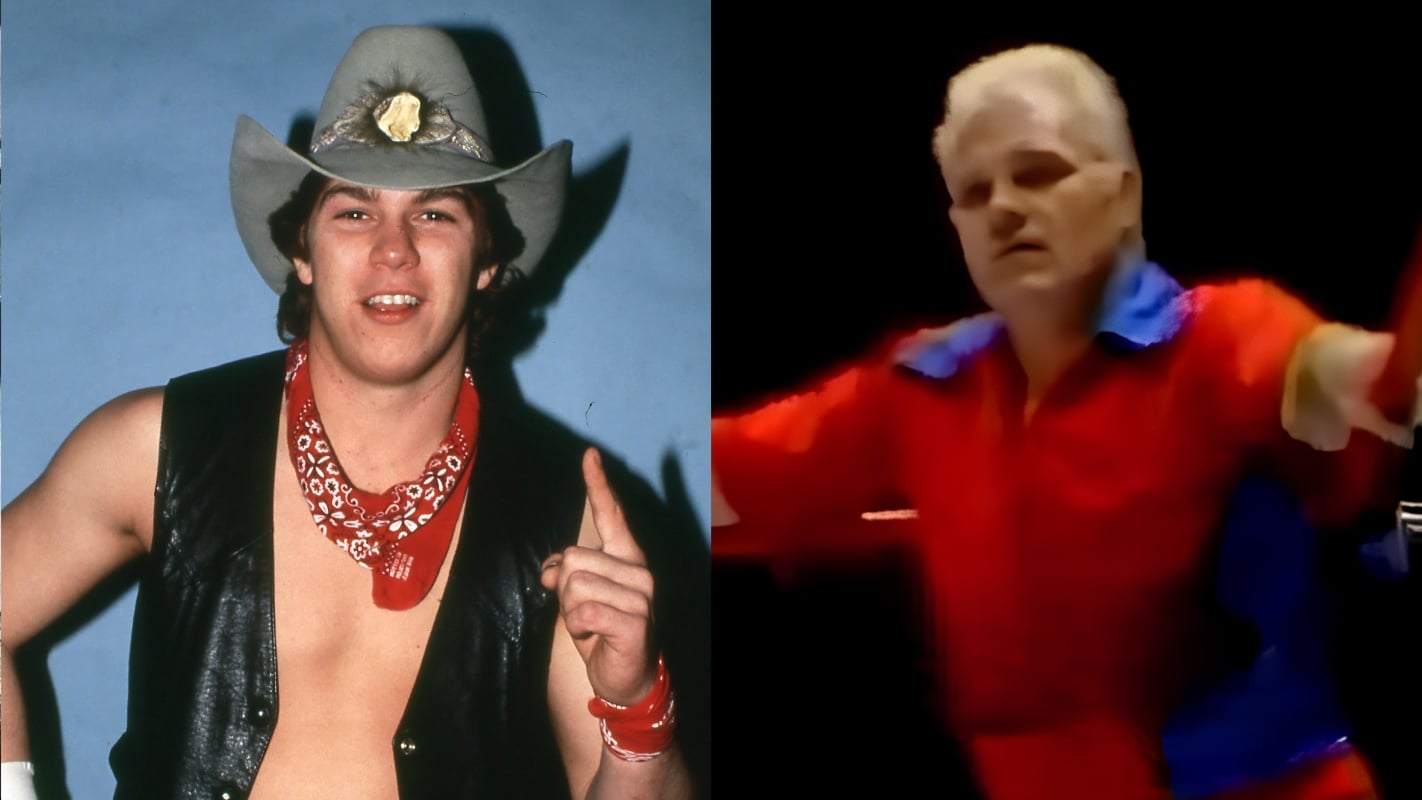
The night opened with Sam Houston facing manager JJ Dillon in a singles match, a pairing that looks modest on paper but fit perfectly into Crockett’s approach. Houston was a lanky, athletic prospect being introduced to new markets as an underdog babyface. Dillon, better known as the scheming second to wrestlers like Ron Bass and, later, the Four Horsemen, would occasionally step into the ring to give local fans a chance to see a reviled talker get punched in the mouth.
This was not a match intended to stall the evening while late-arriving fans filled the arena. Both competitors worked hard to deliver something the crowd could invest in from the first bell. In Philadelphia, Dillon did just that, ultimately dropping the fall to Houston. The young babyface started the night with a meaningful win while Dillon lost little in defeat, a straightforward but effective way to set the tone and let the crowd know that even the manager was expected to take bumps rather than simply stall for time. The result continued Houston’s push toward a Mid-Atlantic Championship title match at Starrcade.
Manny Fernandez vs. Superstar Billy Graham
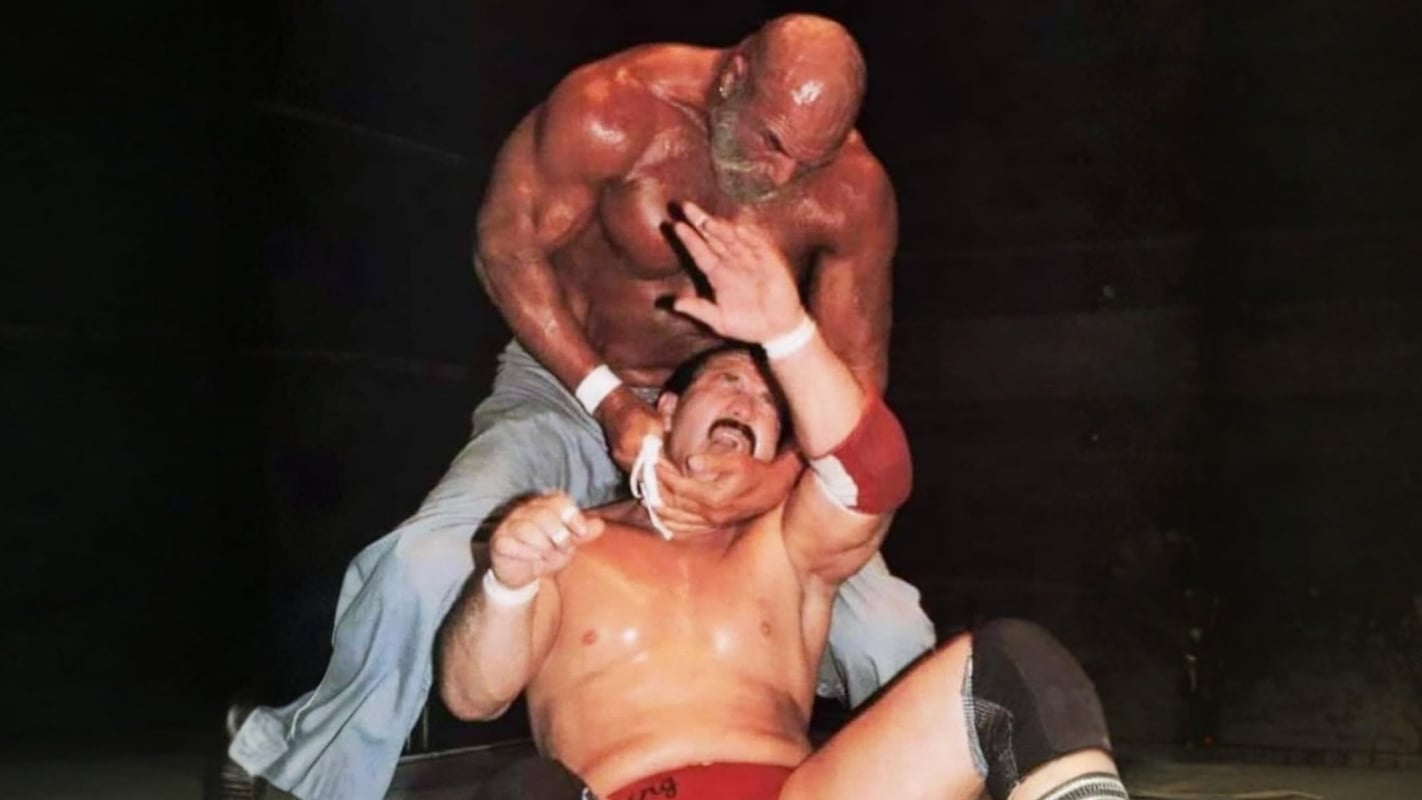
Next up, Manny Fernandez met Superstar Billy Graham. For Philadelphia fans, Graham still carried the aura of his late 1970s WWWF Title run and his series of sellouts with Bruno Sammartino at the Spectrum, even if his in-ring prime had already passed. His tie-dye tights and bodybuilder presentation had once helped define the city’s wrestling identity, and his name on the card was enough to stir nostalgia in an audience that had cheered him as a headliner.
On this night, however, the result reflected the shift in the industry’s balance of power. Few expected to see the former WWWF champion suffering a pinfall loss clean in the center of the ring courtesy of Manny Fernandez’s sunset flip. The outcome underscored where Graham now stood in the hierarchy and positioned Fernandez as a credible star for the Philadelphia market. The match achieved what it set out to do, even if Fernandez would not ultimately receive a sustained main-event run.
Buddy Landel vs. Ron Bass
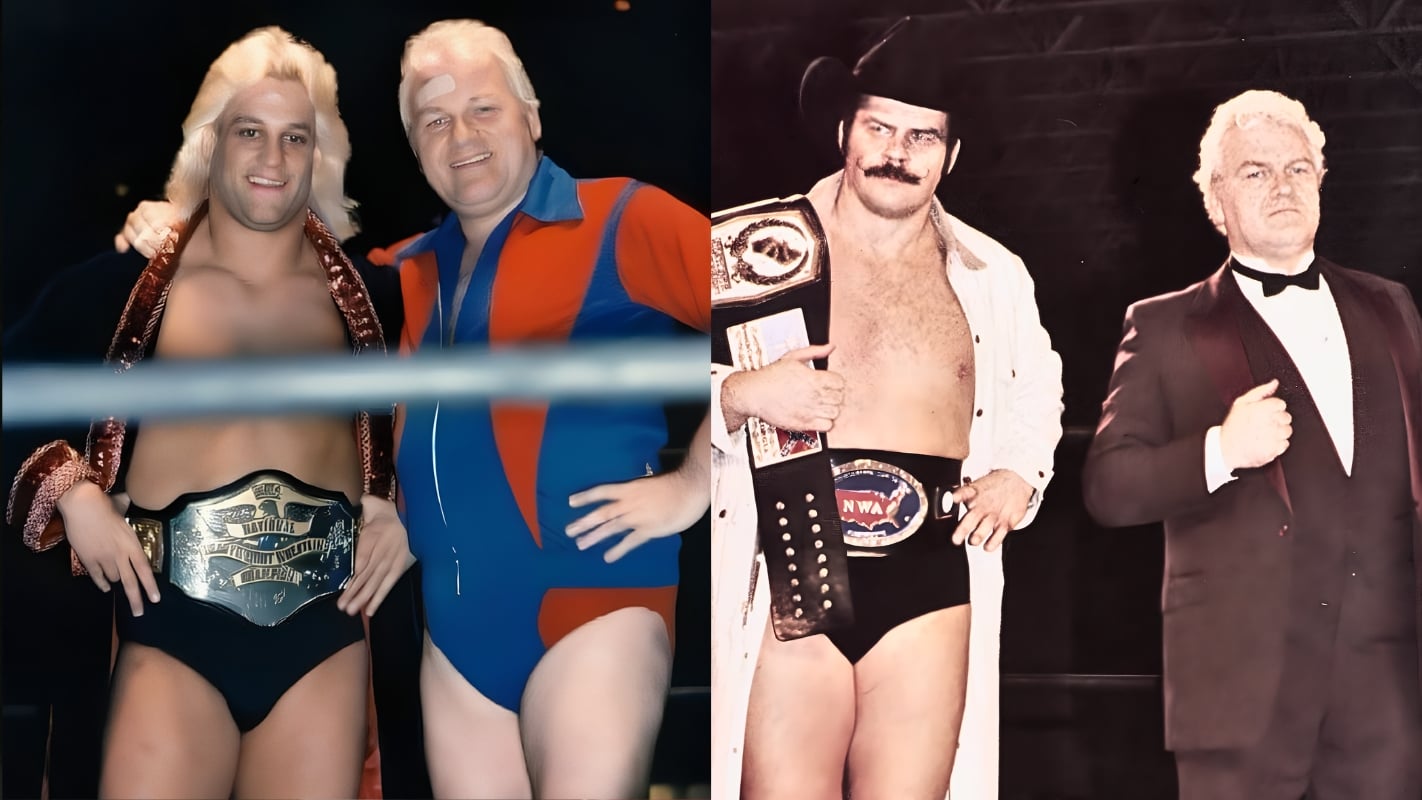
“Nature Boy” Buddy Landel and Ron Bass followed, representing one of the more storyline-heavy pairings on the show. Bass had previously been aligned with JJ Dillon, but by mid-1985, Landel had emerged as Dillon’s new featured charge, a vain blonde heel whose “Nature Boy” presentation drew direct comparisons to Ric Flair and had already earned him a shot at Flair’s NWA World Heavyweight Championship just five weeks earlier.
Their match in Philadelphia drew on that managerial split. Bass brought a rugged, traditional brawling style, while Landel leaned into his arrogant persona, frequently leaving the ring and jawing with fans. The bout functioned less as a definitive blowoff than as a chapter in an ongoing program, establishing Landel as the man Dillon would build around going forward while leaving room for future rematches across Crockett’s territory.
Landel would go on to win the NWA National Heavyweight Title at Starrcade 1985 later that year, before personal struggles derailed one of the more promising careers of the mid-1980s NWA.
Dick Slater vs. The Barbarian
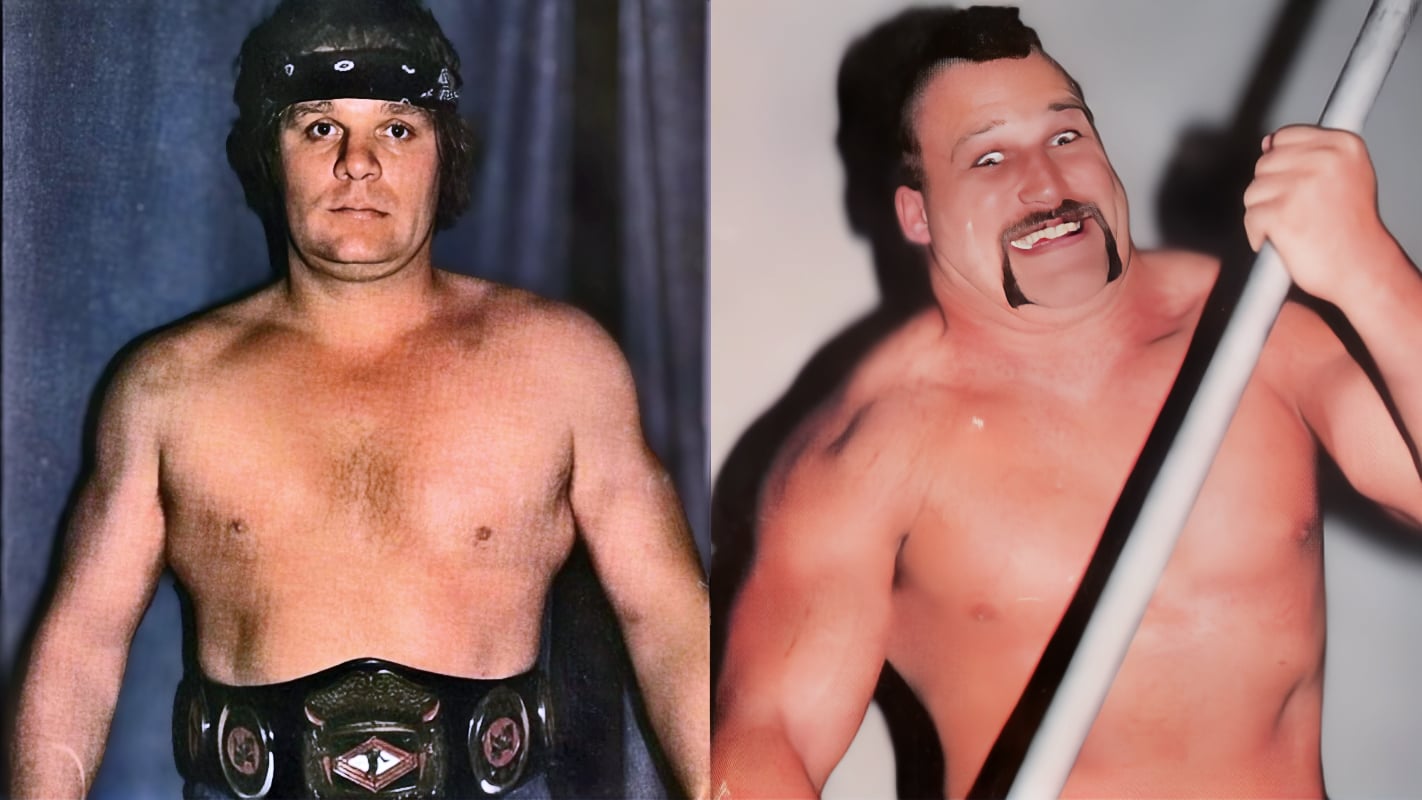
In the middle of the card, Dick Slater faced The Barbarian. The pairing was not a fresh rivalry on the Philadelphia card. The two had been working a bounty match program across JCP towns since early 1985, with Slater cast in the role of a gritty babyface hunting down the Barbarian, one of Paul Jones’ most physically imposing Army recruits. That ongoing tension gave their Civic Center meeting built-in credibility, even without a major title or angle attached.
Slater brought a decade of territorial toughness to the bout, a compact brawler who could work a hard, snug style regardless of his spot on the card. The Barbarian countered with raw size and the menacing backing of Jones at ringside. Slater emerged victorious, giving Philadelphia fans a physical, no-frills contest that changed the show’s rhythm between the stipulation bouts and title matches surrounding it.
Nobody in the building on July 20, 1985, could have guessed that these two opponents would one day stand on the same side of the ropes. Seven years later, Slater and the Barbarian teamed together in WCW, winning the WCW United States Tag Team Championship from the Fabulous Freebirds in 1992. On this night, Philadelphia fans simply caught a glimpse of two performers who knew how to fill a ring, on opposite sides of it.
Magnum T.A. vs. Nikita Koloff (United States Title)
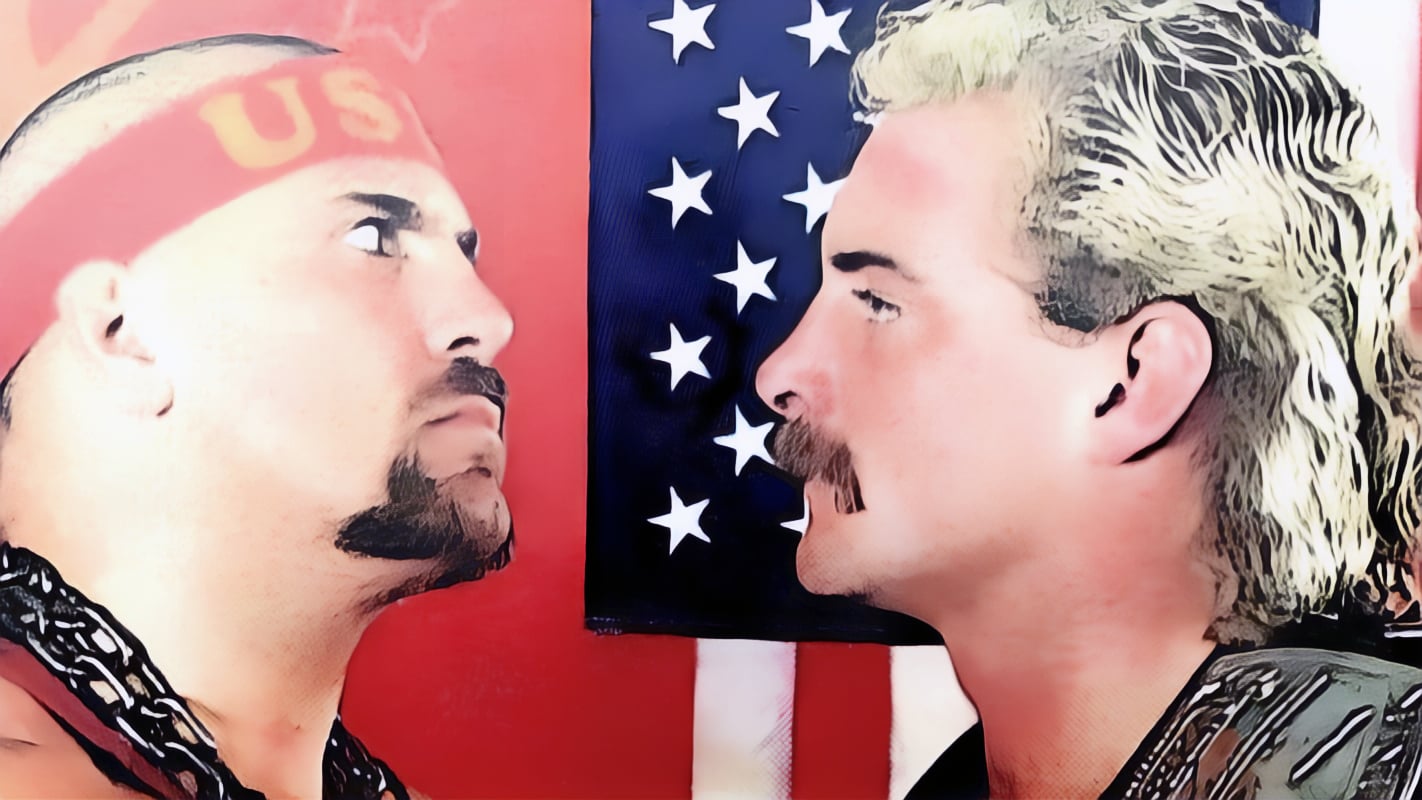
The United States Championship match between Magnum T.A. and Nikita Koloff gave the Philadelphia crowd a look at a rivalry that would become one of JCP’s defining programs the following year. Put simply, this was the quintessential house show matchup: two performers being built as unstoppable forces on television, placed across the ring from each other with no elaborate angle needed to make the result feel meaningful.
At this point, Magnum held the U.S. title and had been presented on television as a rising star, flattening preliminary opponents with a quick belly-to-belly suplex. Koloff, wrestling alongside his “uncle” Ivan Koloff and partner Krusher Kruschev, was being built as a punishing Soviet powerhouse, often finishing enhancement talent just as quickly with the Russian Sickle.
The match was positioned right before intermission, giving it the feel of a cold but compelling encounter rather than a hot-angle blowoff. Fans knew both men from television and wondered how things would play out. The finish saw Magnum retain by countout, preserving his momentum while allowing Nikita to leave as a protected, dangerous challenger. When the wrestlers left the arena, the crowd sensed there was more of this feud to come.
Within a year, Magnum and Nikita would be locked into the famous Best of Seven Series for the same United States title, culminating in their controversial finale at the Charlotte Coliseum in August 1986. The July 20 Civic Center bout now reads like an early chapter in that story, one of the first chances Philadelphia fans had to see the two collide at length before their rivalry reached national prominence.
Jimmy Valiant vs. Paul Jones (Dog Collar Match)
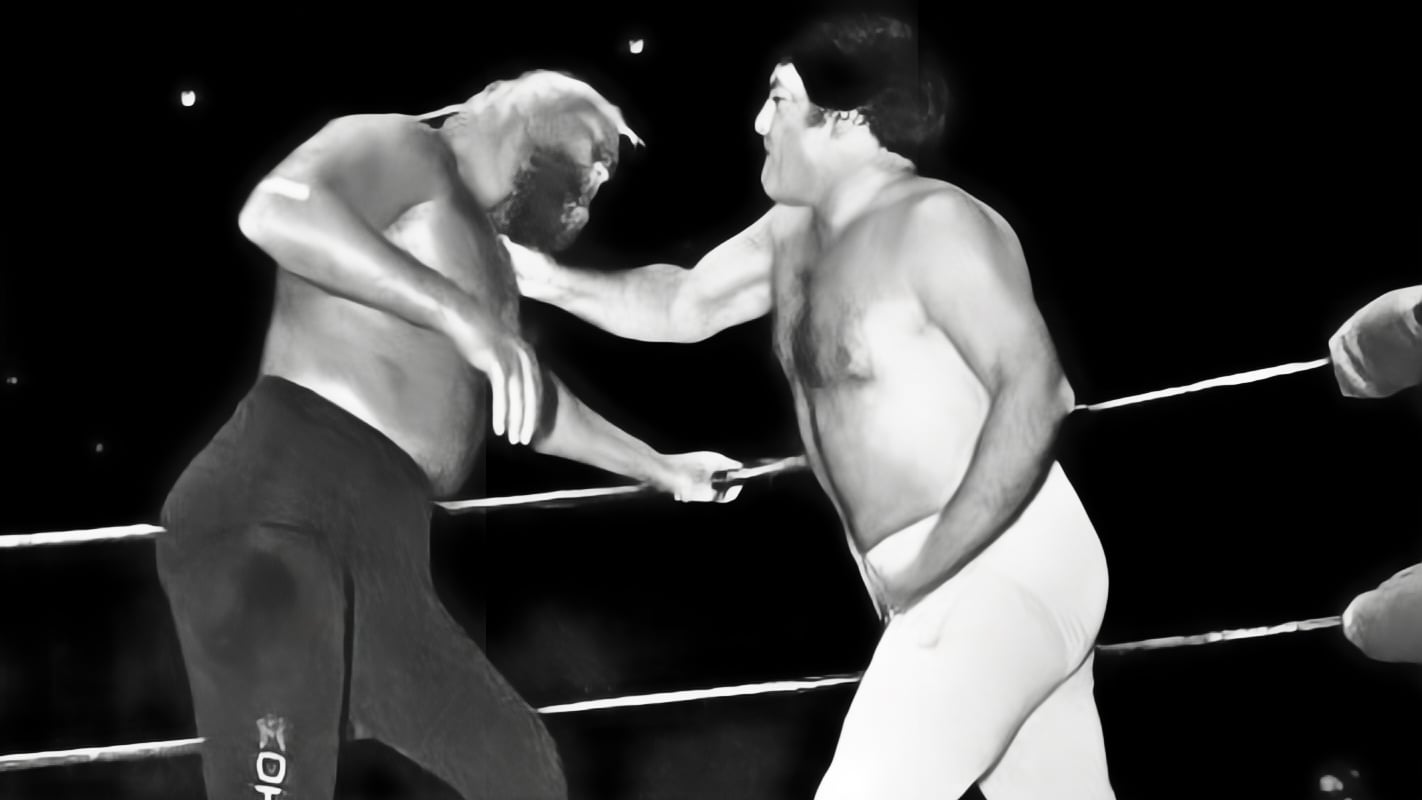
Jimmy Valiant’s dog collar match with Paul Jones took its place deep in a feud that had been raging for years. Throughout the mid-1980s, Jones led a heel stable known as Paul Jones’ Army, while Valiant played the wild “Boogie Woogie Man,” determined to fight him and his recruits across the territory. Their rivalry produced everything from tuxedo matches to hair stipulations, and by 1985, the sight of Valiant chasing Jones around arenas had become a staple of Crockett cards.
In Philadelphia, the dog collar stipulation gave fans exactly what they expected. Jones entered the ring in a sweatshirt, and hecklers kept catcalling the manager when he tried to take it off, prompting him to pull it back down and make angry faces at the crowd. The stalling drew laughs and jeers in equal measure, setting up the physical payoff that followed.
Once the match began in earnest, Valiant made a brief comeback and scored the pin with an elbow drop, earning one of the louder reactions of the night and giving the audience a cathartic close to a long-running grudge. The whole building erupted when Valiant’s hand was raised.
Live wrestling events carried a different energy in those days. Fans had not yet become overexposed from wall-to-wall television coverage, and they reacted to smaller moments with genuine enthusiasm, embracing a “let’s have fun on a night out” atmosphere that Jones and Valiant delivered on fully.
NWA TV Champion Dusty Rhodes vs. Tully Blanchard (Bullrope Match)
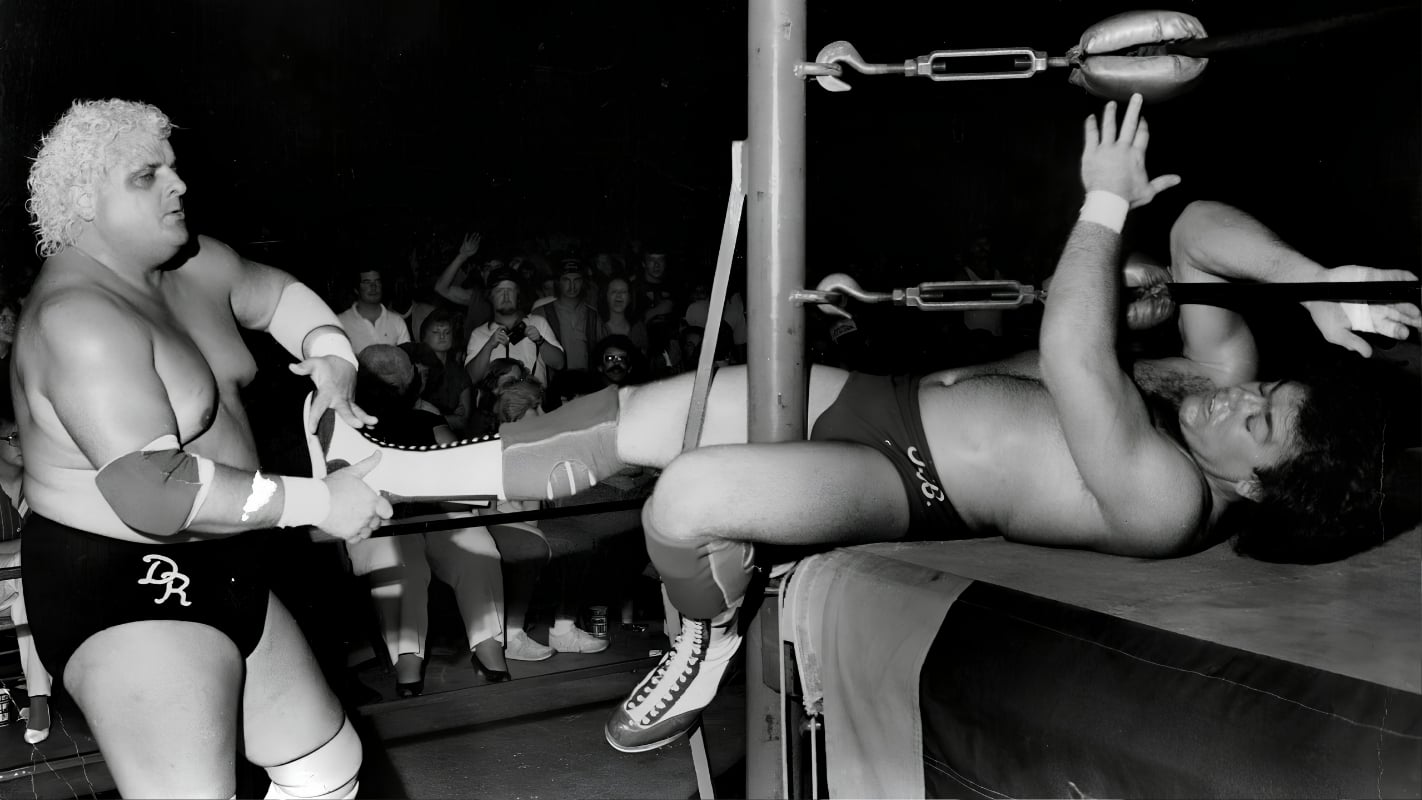
One of the evening’s most important matches saw NWA Television Champion Dusty Rhodes defending against Tully Blanchard in a bullrope match. By 1985, Rhodes was firmly established as one of wrestling’s top attractions, a charismatic, blue-collar hero whose battles with Ric Flair and the Four Horsemen defined much of the NWA main event scene. Blanchard, in turn, had carved out a role as an arrogant, sharply dressed antagonist who prided himself on outwrestling and outsmarting the fan favorites around him. He was a far cry from the 300-pound punch-stomp-and-kick heels common in the northeast at the time, and his brilliant promos made him someone the crowd genuinely wanted to see on the receiving end of a cowbell.
Television title bouts between Dusty and Tully were a recurring feature of JCP’s 1985 schedule, including cage and barbed wire variations that drew strong houses across the territory, often headlining Civic Center cards on nights when Flair was defending the NWA crown elsewhere. Even so, fans had not grown tired of the matchup, largely because Blanchard consistently delivered inside the ring.
When the two met at the Civic Center, Philadelphia crowds carried a “tonight’s the night” energy, expecting the chance to witness a title change live and in person, something that carried genuine weight in the pre-internet era.
For the July 20 card, the promotion leaned on Rhodes’ signature stipulation, the Texas bullrope match, which tethered the two wrestlers together and introduced a heavy cowbell as a legal weapon. Baby Doll, Blanchard’s “Perfect 10” valet, had been won by Dusty as his valet for 30 days, so she was in his corner when he came to the ring carrying the bull rope. The valet immediately crossed to Tully’s side, and Dusty grabbed the microphone to protest loudly before the action got underway, drawing a roar from the crowd.
On this night, Dusty entered as TV champion, having captured the title earlier in the summer, and defeated Blanchard cleanly to retain. The bout provided Philadelphia fans with a decisive finish to a feud that often produced disputed endings on television, while still leaving Blanchard strong enough to slide into the United States title picture later in 1985. It was a prime example of how JCP used house shows to deliver clean conclusions and big moments that viewers at home would only hear about secondhand.
Ricky Morton & Robert Gibson vs. Ivan Koloff & Krusher Kruschev (NWA World Tag Team Championship)
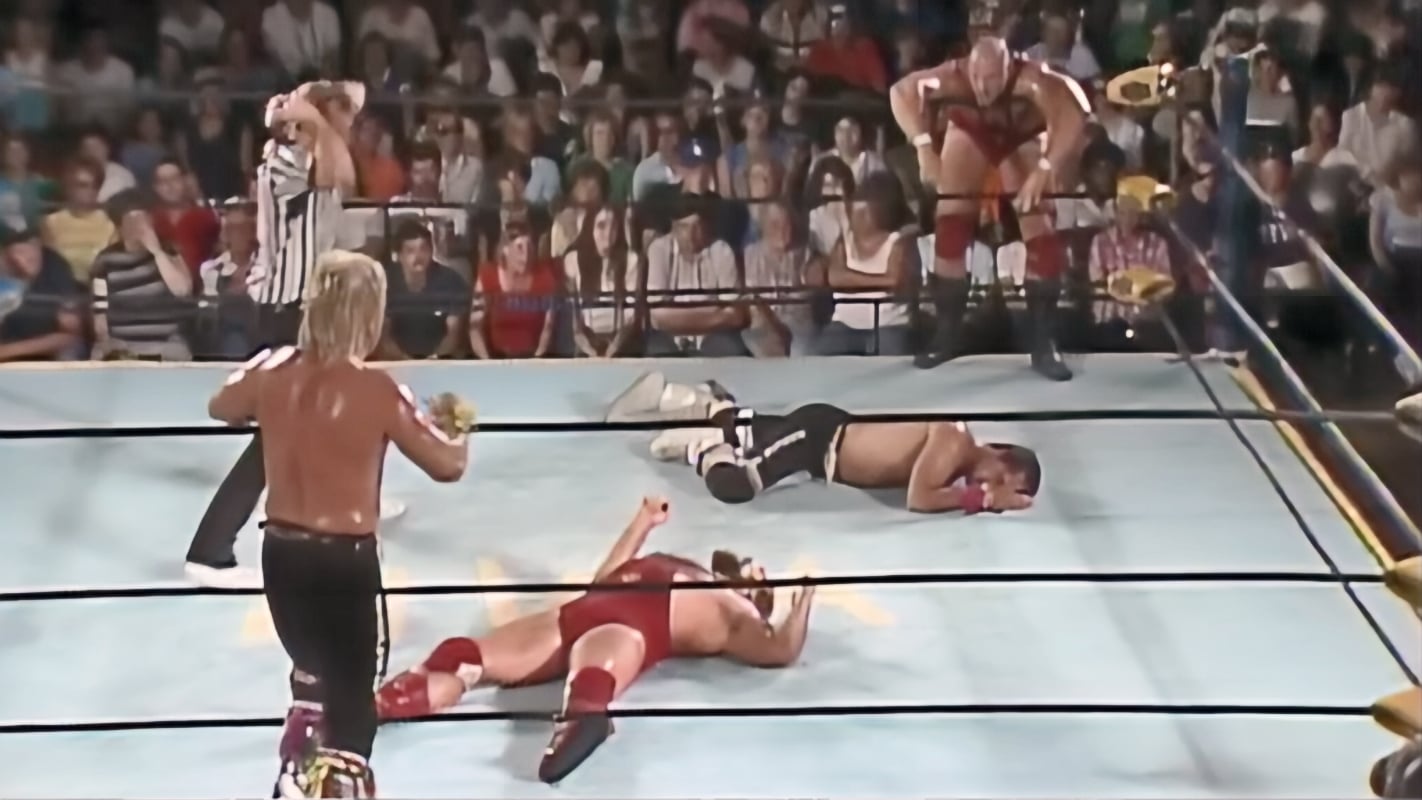
The main event saw Rock ‘n’ Roll Express members Ricky Morton and Robert Gibson defend the NWA World Tag Team Championship against Ivan Koloff and Krusher Kruschev, and it was nonstop action from bell to bell.
Morton and Gibson had quickly become one of Crockett’s most popular attractions, bringing rock-concert energy and fast-paced offense that resonated especially strongly with younger fans. Their Soviet opponents, by contrast, represented the kind of bruising, politically flavored villainy that had defined Ivan Koloff’s career since his days challenging Bruno Sammartino.
In Philadelphia, crowd reactions reflected that contrast. Many fans rallied loudly behind Morton and Gibson, while a portion of the audience respected Ivan Koloff’s toughness and treated the Russian team as dangerous, if not always loudly booed, challengers. The crowd was not entirely in the young champions’ corner, which gave the match an unpredictable energy.
The finish saw Morton pinned for the three count, sending a jolt through the building, before it became clear the title had not changed hands, a “Dusty finish” designed to set up the rematch. It was a classic mid-1980s NWA ending that preserved the champions, protected the challengers, and gave local fans a reason to come back for another round.
With hundreds of amazing Pro Wrestling Stories to dive into, where do you start? Get the inside scoop, join our exclusive community of wrestling fans! Receive 10 hand-picked stories curated just for YOU, exclusive weekly content, and an instant welcome gift when you sign up today!
A Rowdy Night Philadelphia Fans Still Remember
For those who attended, one defining trait of Jim Crockett Promotions in Philadelphia was its atmosphere. The Civic Center crowds developed a reputation for being louder and more unpredictable than the typical WWF audience across town, with a noticeable contingent that openly rooted for heels and reveled in the more violent, gritty presentation Crockett offered. Floor seats in particular could feel volatile, as verbal exchanges between wrestlers and fans bled into arguments between different sections of the crowd. That rowdy, “suspension of disbelief at full volume” vibe was its own kind of lost art, and it was on full display on July 20.
When the final bell rang, the usual scramble to beat the post-show traffic began. Those who stayed until the end did not leave with a new champion crowned or a famous television angle to look back on. Instead, they carried away memories of Magnum T.A. and Nikita Koloff colliding before their rivalry fully exploded, of Dusty Rhodes busting open Tully Blanchard with a bullrope in defense of the Television title, and of Ricky Morton and Robert Gibson surviving another challenge from the Russian contingent on top. The card had set up the next month’s show, given everyone their money’s worth, and sent a building full of fans out into the Philadelphia night talking.
In hindsight, the card also sits at a poignant crossroads in several careers. Within fifteen months of this show, Magnum T.A. would suffer the October 1986 car wreck that ended his full-time in-ring career and turned matches like this U.S. title defense into snapshots of an abruptly shortened prime. Dusty Rhodes, meanwhile, would briefly reclaim the NWA World Heavyweight Championship in 1986 before transitioning into a behind-the-scenes role that helped shape future generations, and was eventually inducted into the WWE Hall of Fame, passing away in 2015 at age 69, prompting an outpouring of tributes from colleagues and fans alike.
None of that was known to the people filing out of the Civic Center that summer night in 1985. For them, it was simply another live event on a busy wrestling calendar, one more entry in the listings tucked alongside results from Charlotte, Greensboro, and Atlanta.
Decades later, with no broadcast footage and only barebones result lines surviving online and in record books, the July 20, 1985, JCP house show in Philadelphia demonstrated how much of wrestling’s history lived and died in the arenas themselves.
For the fans who were there, it was one night to see it live or miss it forever. For everyone else, it has become one of those stories that lives on only through the memories of those who still talk about it.
These stories may also interest you:
- WWE Louisville 1996 House Show That Nearly Fell Apart
- WWE Riot 1997: Never-Before-Seen Photos Revealed
- 6 Wrestling House Show Title Changes Not Seen on TV
Download PDF Version
Get the complete article as a formatted PDF for offline reading.
Real Autographs. Only Few Remain.
These are hand-signed originals sold directly by Pro Wrestling Stories. Once they sell out, they are gone for good.
Own a Piece of Wrestling History
-

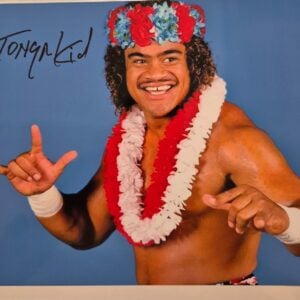
The Tonga Kid (Sam Fatu) Signed WWF 8×10 Photo Autograph
$35.00 Add to cart -
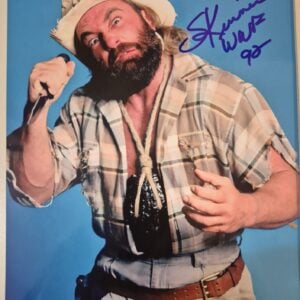
Steve Keirn Signed WWF 8×10 Photo Autograph (Skinner)
$30.00 Add to cart -
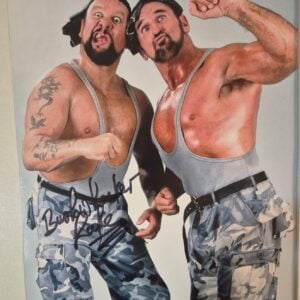
Bushwhacker Luke Signed WWF 8×10 Photo Autograph (The Bushwhackers)
$30.00 Add to cart -
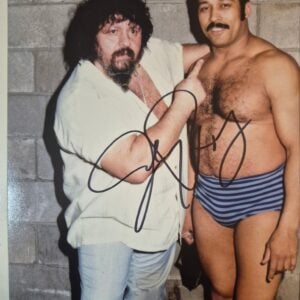
Johnny Rodz Signed WWF 8×10 Photo Autograph (pictured with Captain Lou Albano)
$30.00 Add to cart -
Barry Windham Signed 8×10 Photo Autograph
$40.00 Add to cart -
Hornswoggle (Dylan Postl) Signed WWE 8×10 Photo Autograph
$30.00 Add to cart -
Sunny (Tammy Lynn Sytch) Signed WWF 8×10 Photo Autograph
$35.00 Add to cart -
Jerry Lynn Signed 8×10 Photo Autograph
$35.00 Add to cart -
Jimmy Hart Signed WWF 8×10 Photo Autograph (pictured with Bret Hart & Jim Neidhart)
$35.00 Add to cart -
Justin Credible Signed 8×10 Photo Autograph 2
$30.00 Add to cart -
Brutus the Barber Beefcake Signed WWF 8×10 Photo Autograph (with Ultimate Warrior)
$35.00 Add to cart -
Johnny Rodz Signed WWF 8×10 Photo (wrestling Andre the Giant)
$30.00 Add to cart -
Bushwhacker Luke Signed WWF 8×10 Photo Autograph (with Bushwhackers Butch)
$30.00 Add to cart -
Koko B. Ware Signed WWF 8×10 Photo Autograph
$45.00 Add to cart -
Johnny Rodz Signed WWF 8×10 Photo Autograph (pictured with The Grand Wizard)
$30.00 Add to cart -
Nikolai Volkoff & Boris Zhukov Signed WWF “The Bolsheviks” 8×10 Photo Autograph (Deceased Legend)
$60.00 Add to cart -
Marcus “Buff” Bagwell Signed WCW 8×10 Photo Autograph
$30.00 Add to cart -
Justin Credible Signed 8×10 Photo Autograph
$30.00 Add to cart -
Raven Signed 8×10 Photo Autograph
$35.00 Add to cart -
Johnny Rodz Signed WWF 8×10 Photo Autograph
$30.00 Add to cart -
Jerry “The King” Lawler Signed 8×10 Photo Autograph
$50.00 Add to cart -
Butcher Paul Vachon Signed WWF 8×10 Photo Autograph (Deceased Legend)
$45.00 Add to cart -
Bushwhacker Luke Signed WWF 8×10 Photo Autograph (pictured with Bushwhacker Butch)
$30.00 Add to cart -
Missy Hyatt Signed 8×10 Photo Autograph
$35.00 Add to cart -
Bushwhacker Luke Signed WWF 8×10 Photo Autograph
$30.00 Add to cart -
Tito Santana Signed WWF 8×10 Photo Autograph
$35.00 Add to cart -
Nikolai Volkoff Signed WWF 8×10 Photo Autograph 2 (Deceased Legend)
$45.00 Add to cart -
Leaping Lanny Poffo Signed WWF Turnbuckle Pose 8×10 Photo Autograph (Deceased Legend)
$45.00 Add to cart -
Leaping Lanny Poffo Signed WWF 8×10 Photo Autograph (Deceased Legend)
$45.00 Add to cart -
Jerry “The King” Lawler Signed WWE 8×10 Photo Autograph 2
$50.00 Add to cart -
D’Lo Brown Signed WWF 8×10 Photo Autograph
$30.00 Add to cart -
“Greg the Hammer” Valentine Signed WWF 8×10 Photo Autograph
$45.00 Add to cart -
Sunny (Tammy Lynn Sytch) Signed WWF 8×10 Photo Autograph (WWE Hall of Fame)
$35.00 Add to cart -
Johnny Rodz Signed WWF 8×10 Photo Autograph (wrestling Tony Atlas)
$30.00 Add to cart -
Johnny Rodz Signed WWF 8×10 Photo Autograph
$30.00 Add to cart -
Larry Zbyszko Signed WCW 8×10 Photo Autograph
$40.00 Add to cart -
Larry Zbyszko Signed 8×10 Photo Autograph 2
$40.00 Add to cart -
Fred Ottman Signed WCW 8×10 Photo Autograph (The Shockmaster)
$35.00 Add to cart -
Tito Santana Signed WWF 8×10 Photo Autograph (Strike Force)
$35.00 Add to cart -
Fred Ottman Signed WWF 8×10 Photo Autograph (Typhoon)
$35.00 Add to cart -
Bushwhacker Luke Signed WWF 8×10 Photo Autograph (of The Bushwhackers)
$30.00 Add to cart -
Nikolai Volkoff Signed WWF 8×10 Photo Autograph (Deceased Legend)
$45.00 Add to cart -
Ken Patera Signed WWF 8×10 Photo Autograph (pictured with Bobby Heenan & John Studd)
$35.00 Add to cart -
Steve Keirn Signed WWF 8×10 Photo Autograph (Fabulous Ones)
$30.00 Add to cart -
“Hacksaw” Jim Duggan Signed WWF 8×10 Photo Autograph
$40.00 Add to cart -
Jimmy Hart Signed WWF 8×10 Photo Autograph (pictured with Hulk Hogan)
$35.00 Add to cart -
Leaping Lanny Poffo Signed WWF Frisbee Pose 8×10 Photo Autograph (Deceased Legend)
$45.00 Add to cart -
Sunny (Tammy Lynn Sytch) Signed WWF 8×10 Glamour Photo Autograph
$35.00 Add to cart -
Kevin Sullivan Signed 8×10 Photo Autograph (Deceased Legend)
$45.00 Add to cart -
Brutus the Barber Beefcake Signed WWF 8×10 Photo Autograph 2
$35.00 Add to cart -
Vince Russo Signed 8×10 Photo Autograph
$35.00 Add to cart -
Ken Patera Signed WWF 8×10 Photo Autograph
$35.00 Add to cart -
Sabu Signed WWF 8×10 Photo Autograph (Deceased Legend)
$55.00 Add to cart -
Sunny (Tammy Lynn Sytch) Signed 8×10 Photo Autograph
$35.00 Add to cart -
Ron Simmons Signed WWE 8×10 Photo Autograph
$40.00 Add to cart