Andre the Giant, Haystacks Calhoun, and Yokozuna are often cited when fans think of professional wrestling’s largest attractions, yet one name quietly outweighs them all: Happy Humphrey. Billed at around 800 pounds, the Georgian farmhand‑turned‑professional wrestler filled arenas, shared the road with a young Harley Race, and later became the subject of a medical case study that drew national attention and a place in the Guinness Book of World Records. But, behind those numbers was a daily reality that few spectators ever saw. Years later, when doctors intervened with a drastic plan that would transform his body and life, the outcome took him somewhere neither he nor wrestling fans could have predicted.
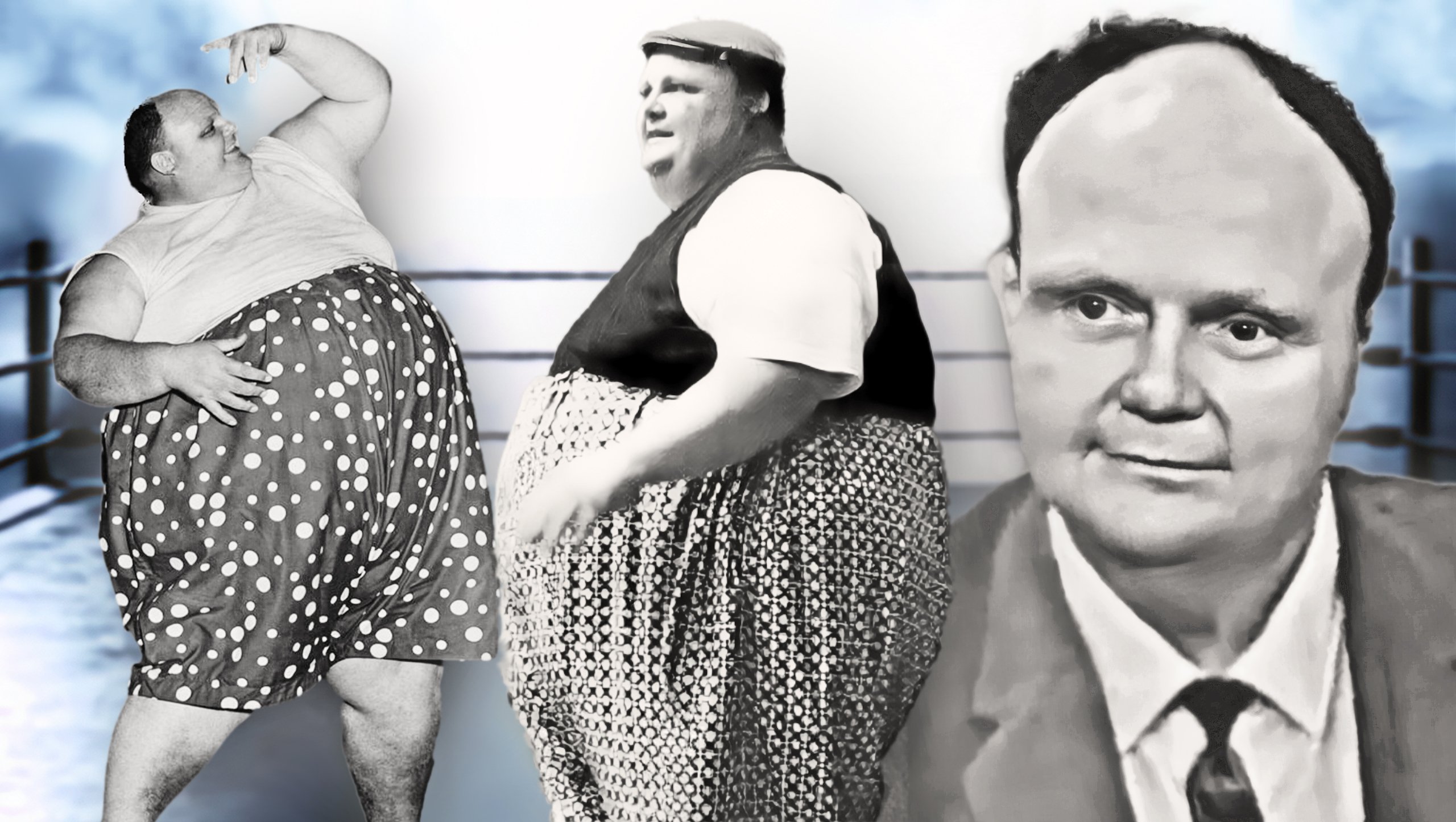
William "Happy Humphrey" Cobb went from an 800-pound wrestling attraction selling out arenas to a man with a secret that would make national headlines and change his life forever. Artwork by Pro Wrestling Stories.
Our wrestling history is gold, and so are readers like you!
If the following story adds to your collection of wrestling knowledge, you can:
Happy Humphrey’s Early Life: From Georgia Farmhand to 800‑Pound Wrestling Attraction
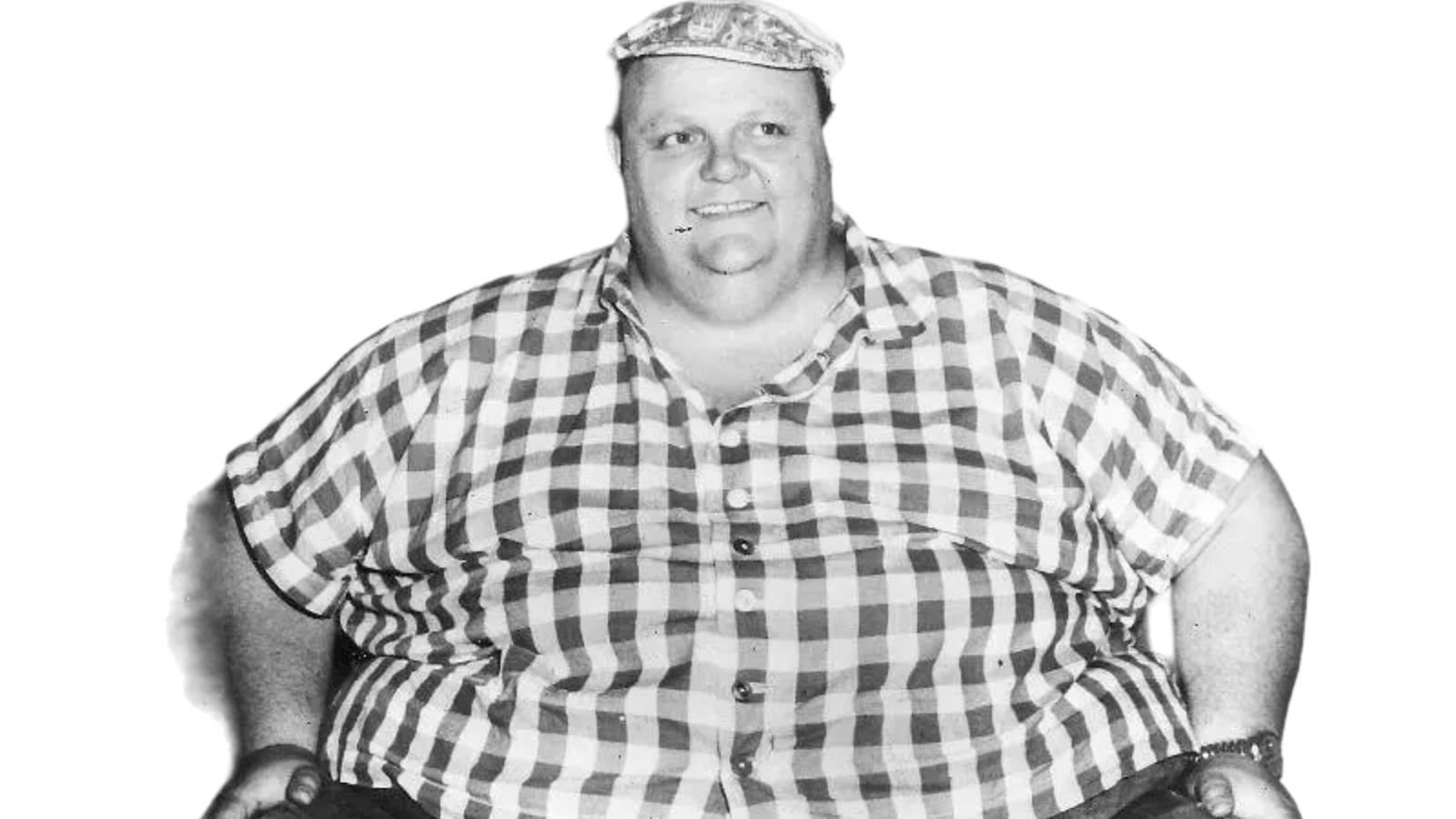
In the 1950s, William "Happy Humphrey" Cobb toured the American wrestling circuit, already billed at over 600 pounds and drawing crowds as one of the era’s earliest super‑heavyweight attractions. Photo Credit: WWE.
Happy Humphrey was born William Joseph Cobb to Ralph Ernest Cobb and Willie Mae Goodman in 1926 in Payne, Georgia. The now-consolidated city of Payne was only 0.04 square miles and had a few hundred residents.
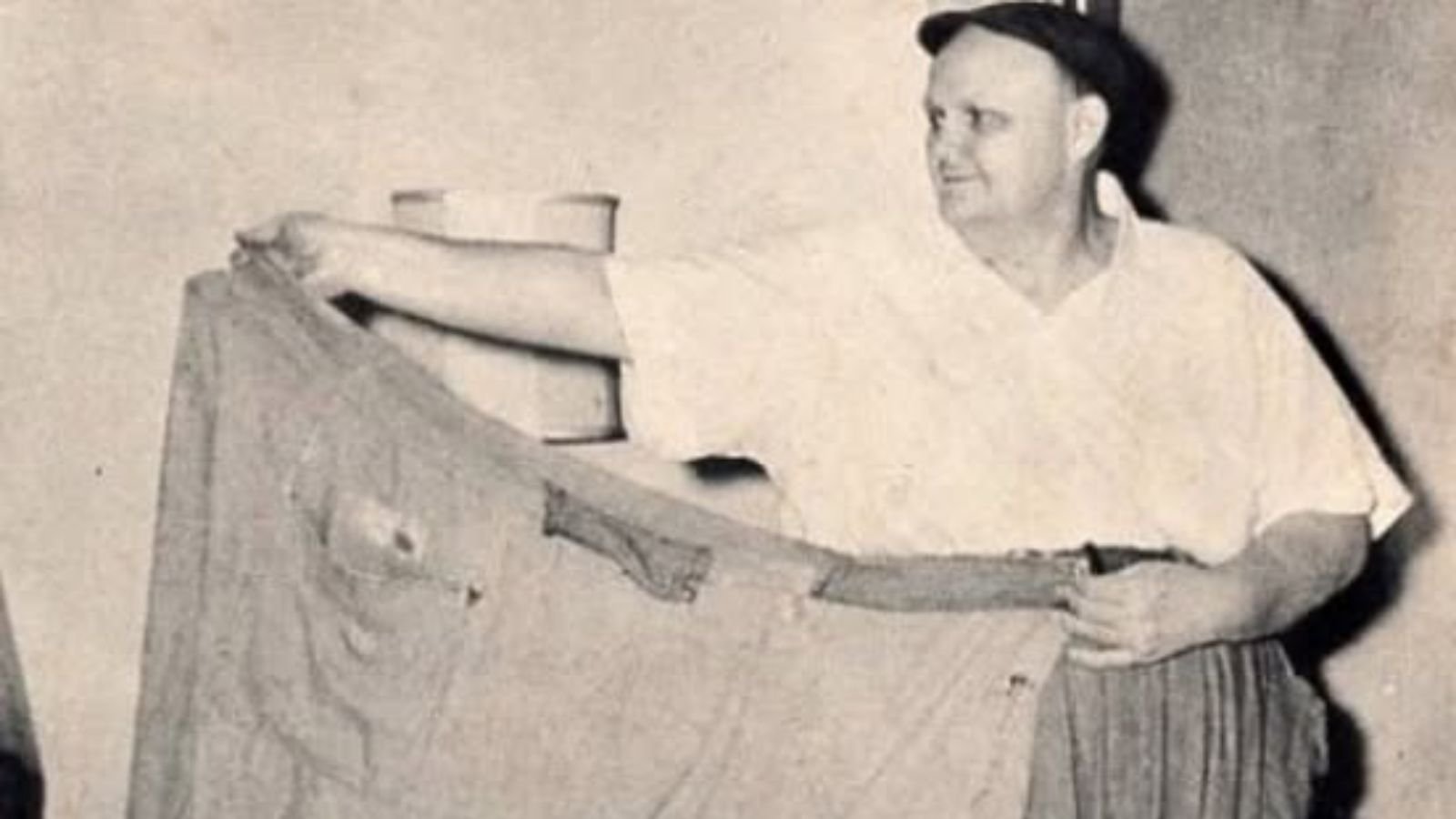
From the moment he was born, William Cobb Jr. defied all expectations. Weighing in at 18 pounds at birth and reportedly reaching 300 pounds by age 12, his extraordinary size posed challenges his family had never anticipated. As Bill Gutman documents in Strange and Amazing Wrestling Stories, the solution for a boy that size was improvised from the start – his parents used a bedsheet as a diaper.
As to why Happy Humphrey was so heavy and how he could maintain such weight to begin with, contemporary Harley Race noted that a pituitary gland disorder caused Cobb’s weight issues.
Working as a farmhand from an early age, Cobb became known among family, friends, and community members for his strength, with one rumor claiming that Humphrey could carry a 500-pound bale of cotton.
Yet the farm life did not satisfy Cobb. He once opined, "You know, this life on a farm is not what it is cracked up to be. Here we sit with no money coming in, while our land is snowed under and producing nothing. Farming is a seasonable pursuit, and I’d like to have something to do and be active the year around."
Happy Humphrey’s Wrestling Rise: Bear Debut, NWA Bouts, and Madison Square Garden Main Events
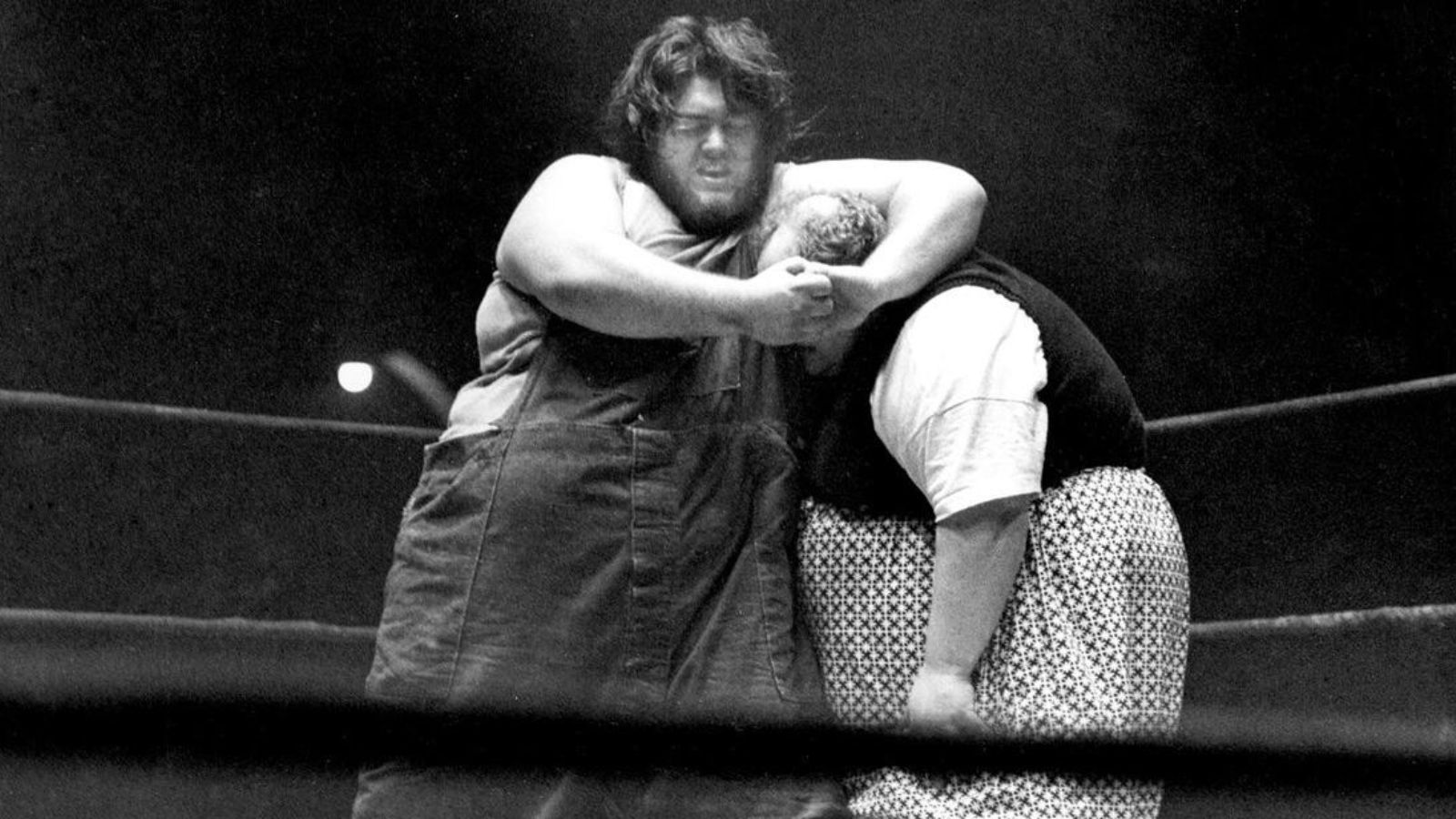
Happy Humphrey battles fellow super‑heavyweight Haystacks Calhoun in a featured matchup that united two of pro wrestling’s largest attractions at the turn of the 1960s, emphasizing the drawing power of early giant wrestlers. Photo Credit: WWE.
After entering the pro wrestling business in 1951, Cobb debuted as Big Humphrey, taking his name from Humphrey Pennyworth, the portly best friend in the Joe Palooka comic strip series.
His start in wrestling was unlike most, debuting against a 600-pound, seven-foot bear called Big Ginger. Humphrey lasted nearly half an hour and was paid $200, which is equivalent to $2,400 in modern currency.
Later that year, in 1951, he would win the only title in his career, the NWA Texas Tag Team championship belts (later known as the World Class Texas Tag titles) with Timothy Geohagen. This was followed by multiple challenges for Lou Thesz’s NWA World Heavyweight title. As well as Thesz, Humphrey wrestled some of the era’s top stars, such as Antonino Rocca, Bobo Brazil, and Fritz Von Erich.
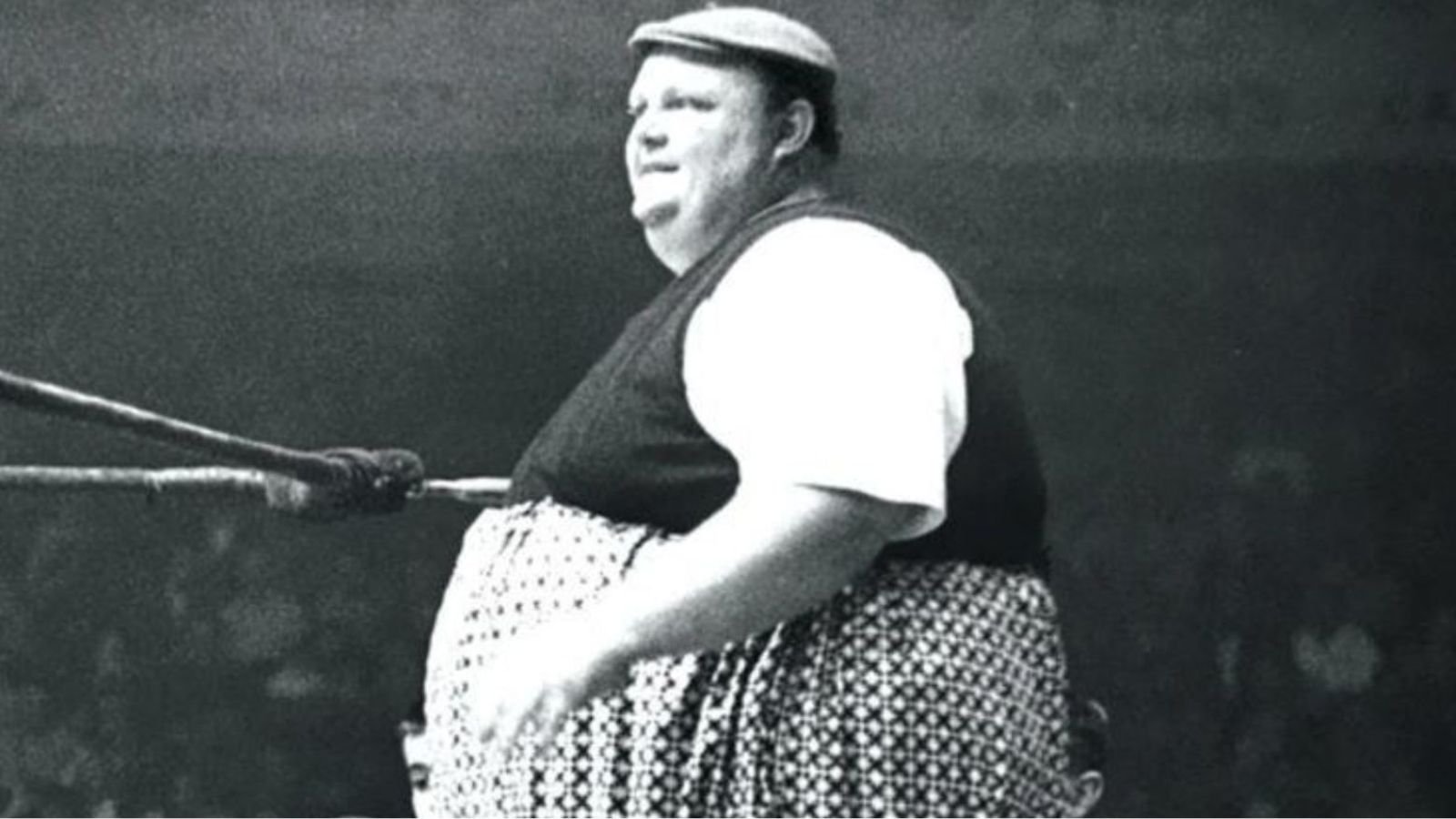
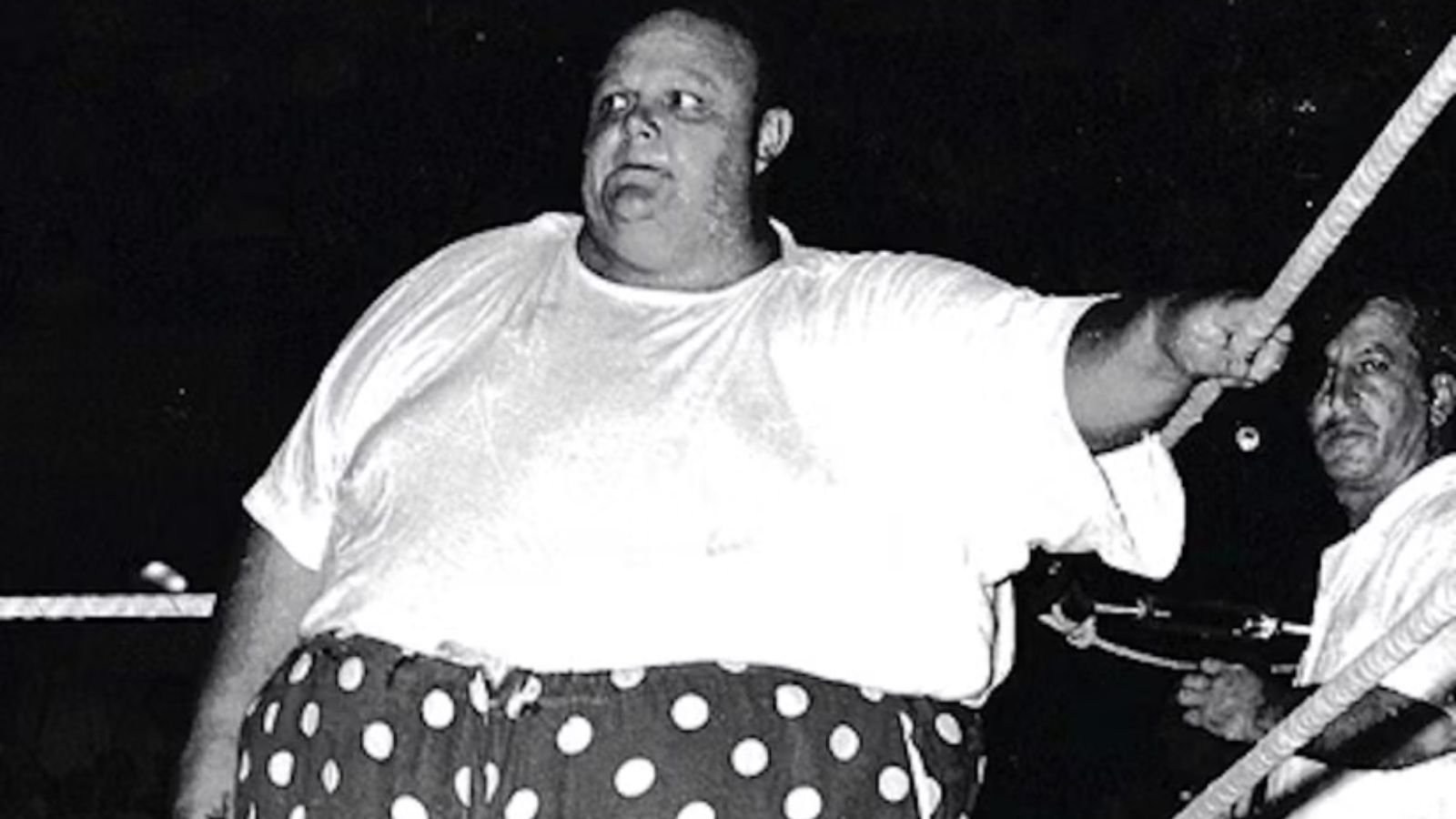
It was only in 1958 that he became Happy Humphrey, playing the avuncular farm boy who wore a pork pie hat with his patterned 93-inch trousers. Under the moniker of Happy Humphrey, his most famous opponent was inarguably fellow big man Haystacks Calhoun.
Weighing a combined 1,350 pounds, Happy Humphrey and Haystacks Calhoun would meet in a sell-out Madison Square Garden main event promoted by Vince McMahon, Sr. in 1959. It occurred under the NWA Capitol Wrestling banner, the precursor to the World Wide Wrestling Federation (WWWF) and today the WWE.
They would meet several times during this period, often with Calhoun defeating Humphrey by countout, as the nearly 800-pound Humphrey had difficulty returning to the ring after being knocked out of it.
Over the decade he was involved in professional wrestling, it is thought Humphrey wrestled more than 1,000 matches. By his own estimation, from 1956 to 1962, he travelled 90,000 miles a year, enough to circle the Earth three times over. He would say, "Hawaii, England, France, Germany, Australia, South Africa, Canada. You name it, I’ve been there. Where else could a farmboy like me meet so many interesting people and get to see the world?" he pondered.
Happy Humphrey and Harley Race: Life on the Road with an 800‑Pound Wrestler
In the early 1960s, a young Harley Race traveled with Happy Humphrey, often serving as driver and assistant to the 600‑plus‑pound wrestler, gaining firsthand experience of territorial wrestling life and the logistics of moving such a large attraction between towns. Photo Credit: WWE.
As you might expect, being 800 pounds meant life was very different for Humphrey compared to the average man.
In 1960, Humphrey met a young wrestler called Harley Race, and the two formed a close friendship.
A teenage Race was paid $5 a day to look after Humphrey or $25 to wrestle him, depending on the promoter’s request.
More often than not, Harley Race worked as Humphrey’s driver, getting him from location to location in his modified Pontiac. To accommodate Humphrey, the doors opened from front to back, seats were removed, and more shock absorbers were added.
Far worse was Race’s job washing Humphrey.
In Harley’s autobiography, King of the Ring, he wrote, "Because he was so huge, many ordinary showers didn’t accommodate him too well. But because I had to sit next to him in the car, I quickly learned that we needed to find a way to bathe him regularly.”
Race continued, “What I ended up doing, and I did this more than once, was to have to lay him on the ground with his clothes off while I squeezed liquid soap on his body. I then used a mop to scrub him and a garden hose to wash him off."
Their partnership ended abruptly on Boxing Day 1961, when newly-married Harley and wife and mother-to-be Vivian jackknifed into a truck. Sadly, Vivian was killed instantly. Harley was also declared dead at the scene but miraculously survived. He was told his right leg would need to be amputated, but a second opinion ended up saving Race from the procedure.
Though told he would never wrestle again, Harley Race was back in the ring less than two years later, shortly resuming his kinship with Humphrey, travelling and wrestling across the Midwest and the South.
For the rest of his life, Harley Race had only nice words to say about Humphrey, whom he considered incredibly generous and whom Race credited with teaching him how to bump in the ring.
Happy Humphrey’s Diet: What an 800-Pound Wrestler Ate Every Day
After a heart condition ended his in‑ring career in 1962, Happy Humphrey’s weight reportedly exceeded 900 pounds, forcing him to rely on multiple chairs for support and marking a difficult period for one of wrestling’s earliest documented super‑heavyweight stars. Photo Credit: WWE.
Naturally, much has been made of the diet of a man tipping the scales at 800 pounds.
"The meal started as soon as I woke up and didn’t end until I went to sleep," Happy Humphrey once said in a 1964 edition of Wrestling Confidential Magazine.
In a 1962 interview with Wrestling World, Humphrey also revealed what he ate for breakfast.
"Well, as a rule,” he told the interviewer, “I can down two dozen eggs, three plates of toast, two pounds of ham, followed by about two gallons of milk … But, mind you, that is just a starter. I have an eternal desire to be chawing on something all the time, and even between meals, I go seeking snacks of this and that because it seems that I am always hungry."
In response, the interviewer asked about the cost of retaining this feeding frenzy. Humphrey responded that this would set him back about $30 a day, or over $320 in today’s money.
He had no regrets, asking, "Did you ever see a fat man that wasn’t happy?"
Other legendary tales include that he once ate 18 pounds of catfish for dinner in Tennessee. Many sources also report that Humphrey could eat 15 chickens in a single sitting.
He says that a doctor did tell him to lose weight, but that he instead changed doctors, stating that eating made him happy, as without his food, the world would be far "too solemn and dismal."
As Earle F. Yetter of Wrestling World wrote around that time: "The spirit of Happy Farmer Humphrey moves on. It seems that he will continue his set course in life, wrestling and eating. But if it makes him happy, he is entitled to that privilege."
With hundreds of amazing Pro Wrestling Stories to dive into, where do you start? Get the inside scoop – join our exclusive community of wrestling fans! Receive 10 hand-picked stories curated just for YOU, exclusive weekly content, and an instant welcome gift when you sign up today!
How Happy Humphrey’s Extreme Weight Restricted His Daily Life and Career
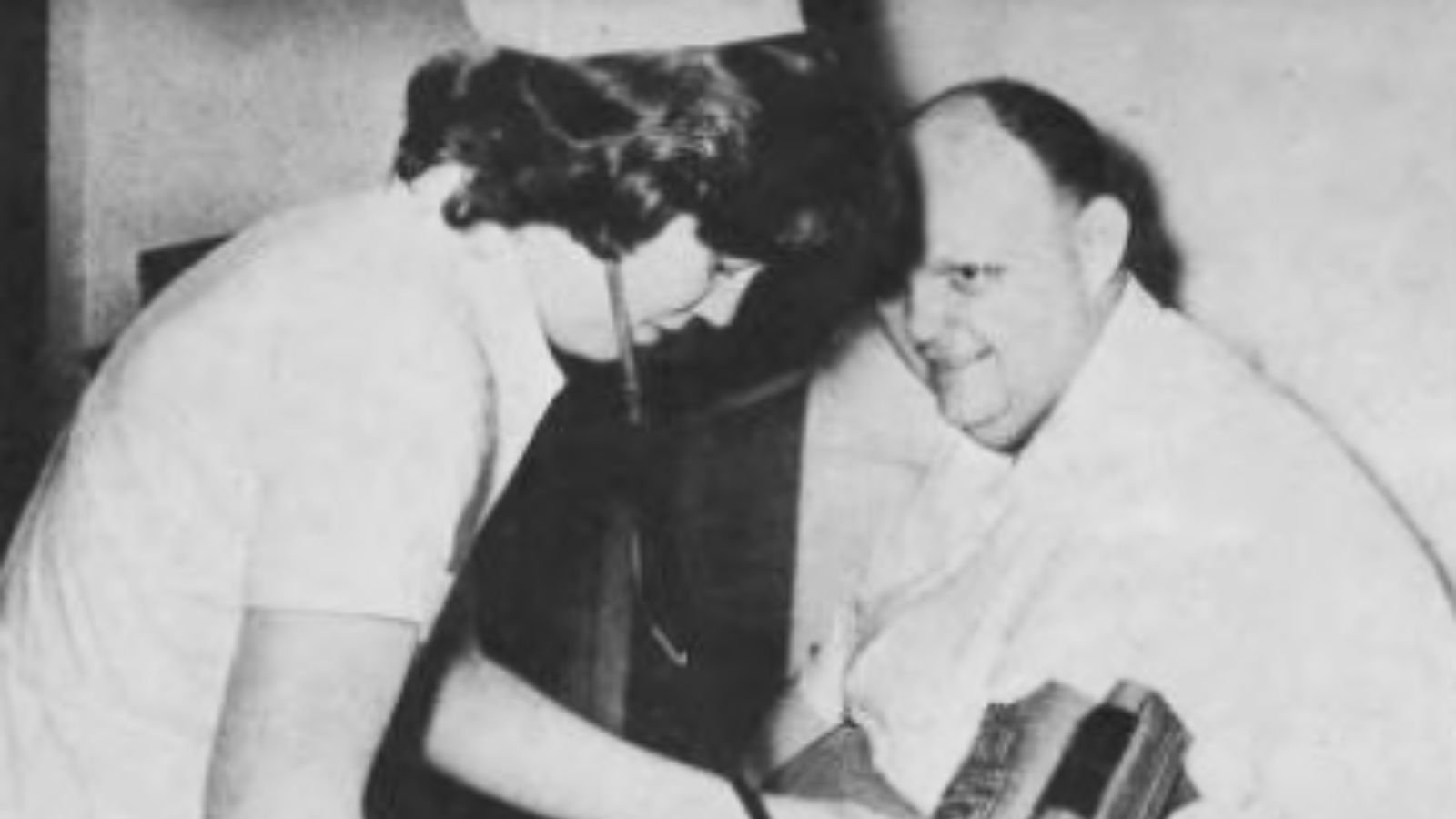
Following medical advice, Happy Humphrey entered the Medical College of Georgia’s Clinical Investigation Unit in Augusta at 802 pounds, spending nearly two years on a monitored 1,000‑calorie‑per‑day diet that became a noted case study in extreme obesity and supervised weight loss. Photo Credit: Wrestling Confidential.
Few may express shock that a man of Happy Humphrey’s stature would have serious health problems and dramatic limitations in his movement and what he could do in his daily life.
Rival Haystacks Calhoun remembered, "When I learned he was up to 800 pounds, I warned him that it wasn’t healthy."
On several occasions, Humphrey’s weight led to embarrassing real-life situations.
Once in Montgomery, Alabama, Humphrey entered a phone booth to make a call. However, when trying to exit, he realized he was wedged in. A reported 1,000 spectators looked on as eight officers eventually pried him out. He never went into another phone booth.
On a separate occasion in 1960, Humphrey was watching The Adventures of Huckleberry Finn in a movie theatre in New Orleans, Louisiana. He would then get stuck in the seat, causing some hysteria in the cinema for 30 minutes. As Humphrey recalled, "It took seven cops to bail me out. They had to cut the seats around me, and when it was all over, there were about eight fire trucks and a couple of thousand people outside trying to figure out what was going on."
By 1962, he was having serious troubles going about daily life. Happy Humphrey struggled to get out of bed on his own and was unable to walk more than a few steps before needing to rest on two chairs. He was only 34 at the time.
He had previously undergone surgery to cut 100 pounds of fat, but Humphrey had quickly regained the weight. It was clear that to save his life, more drastic measures would be needed.
Happy Humphrey’s Guinness‑Recognized Weight Loss and Experimental Diet Study
In spring 1965, Happy Humphrey left the Medical College of Georgia’s Clinical Investigation Unit at 232 pounds, having lost 570 pounds under medical supervision and earning recognition in the Guinness Book of World Records for his weight‑reduction program. Photo Credit: Wrestling Confidential.
In 1962, Happy Humphrey agreed to devote himself to the Medical College of Georgia’s Clinical Investigation Unit in Atlanta. For 83 weeks, he would be put on a strict diet to not only help him lose weight but also to study the methods of doing so.
Overseen by Dr. Wayne V. Greenberg, Humphrey was given an 1,000 calories-a-day diet, described by one wrestling magazine as a regimen that "would make a fashion model flinch."
He shifted different food types in 56-day cycles.
A high-protein diet consisted of boiled eggs, skimmed milk, lean ground beef, margarine, toast, tomato soup, raw carrots, ketchup, green peas, and dietetic apple sauce. To drink: mushroom broth, tomato juice, and low-fat skimmed milk. Humphrey claimed this diet worked best, making him lose the most body fat and leaving him least hungry between meals.
A high-carbohydrate diet consisted of toast, corn, lima beans, shortbread, peaches, dietetic apple sauce, salad, pineapple, puffed rice, and a limited quantity of sugar. To drink: grape juice, orange juice, and low-fat skimmed milk.
The final, high-fat diet consisted of salt-free mayonnaise and butter, puffed rice, stewed tomatoes, a boiled egg, whipped cream on a piece of dietetic fruit, and a slaw with soybean oil and onions.
He was also allowed half a canned pear with an ounce of cream cheese as a snack. During this time, he was also under orders not to exercise.
Wrestling Confidential stated that Humphrey’s drastic diet change would be "as startling as Beatles with crew cuts."
To pass the year and a half in isolation from the outside world, Humphrey focused on arts and crafts, building his own clock and a lamp made from lolly sticks. As a practising Mormon, he would also read the Bible for several hours a day.
Happy Humphrey at 232 Pounds: Media Spotlight After His Record Weight Loss
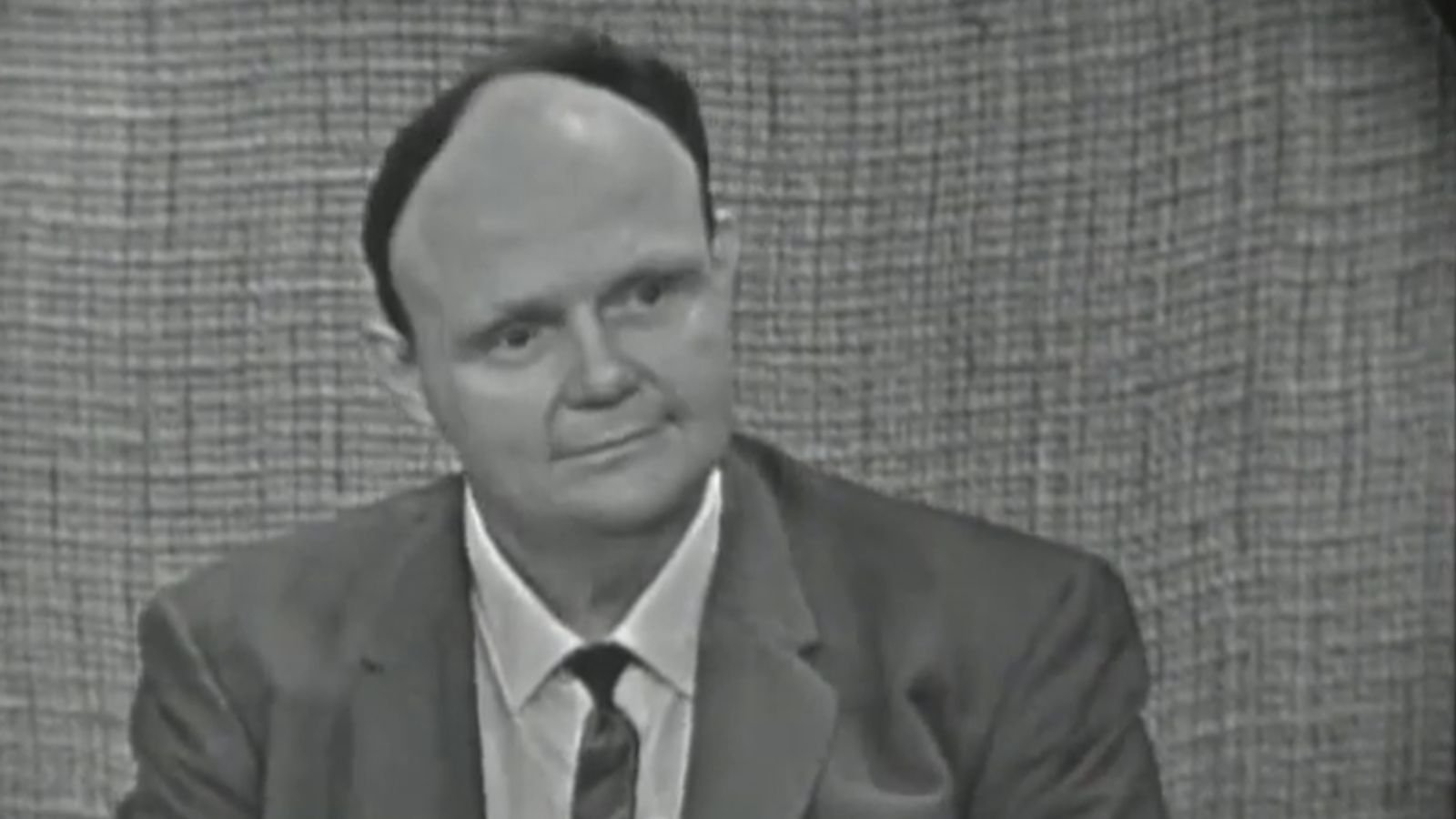
In 1965, former 800‑pound wrestler Happy Humphrey appeared on the CBS game show I’ve Got a Secret, sharing his nationally publicized weight‑loss story and past as a super‑heavyweight attraction in professional wrestling. Photo Credit: CBS.
As reported in Time magazine in July 1965, when he left the facility, Happy Humphrey weighed a svelte 232 pounds.
This meant Humphrey had lost an eye-watering 570 pounds. For reference, that is the equivalent of losing the entire weight of Yokozuna!
The staggering shedding landed William Cobb a place in the Guinness Book of World Records for the most weight lost by a living individual.
Guinness noted that Humphrey’s waist measurement declined from 101 inches to 44. He could cross his legs for the first time he could remember. He could swim. He could buy clothes again.
In addition to the aforementioned article in Time, the story also made mainstream news. In September 1965, Cobb appeared on the nationally-broadcast CBS program I’ve Got A Secret. The show, hosted by Steve Allen, was a spin-off of the popular program What’s My Line?, featuring everyday folk in the hot seat instead of celebrities.
Other people to star included ex-Beatles drummer Pete Best, KFC creator Colonel Sanders, chess prodigy Bobby Fischer, discoverer of Pluto Clyde Tombaugh, and Samuel J. Seymour, the last living witness to Abraham Lincoln’s assassination.
Cobb joined this eclectic bunch with the secret that he used to be 802 pounds. He also claimed to have the appetite of 15 men. Revealing his ‘secret’, he stunned the panelists by revealing his 570-pound weight loss.
Humphrey indicated that he was determined to keep the weight off for good.
He said at the time: “There’s a lot at stake, and these people have done too much for me to fall back again. They saved my life, and I’m not going to tempt fate again.”
Happy Humphrey’s Later Years: Return to Wrestling, Film Roles, and Life in Georgia
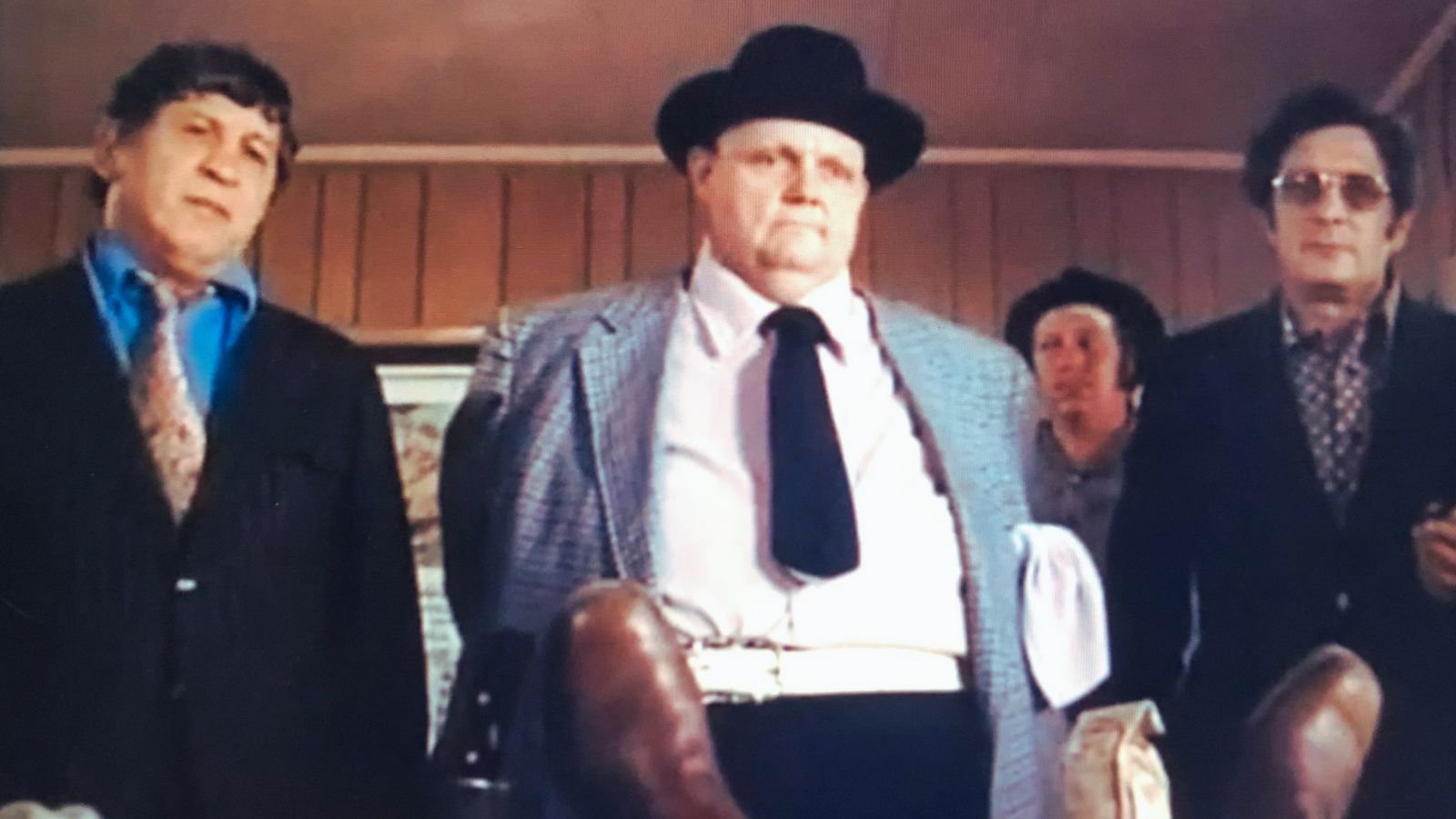
In the 1975 film Moonrunners, former wrestler Happy Humphrey (William Cobb) appeared as "Tiny," using his imposing size and wrestling notoriety in a supporting role that connected his ring career with 1970s Southern outlaw cinema. Photo Credit: Warner Bros Pictures.
Although Happy Humphrey returned to professional wrestling in 1973, he never regained the momentum or fan interest he had in the 1950s and early 1960s.
He often spoke fondly of wrestling, crediting the industry with treating him well. In particular, he loved seeing the joy on the faces of the little kids when they would feel his belly. It allowed him to have a life that few other people like him could imagine.
After retiring, Happy Humphrey continued working at a shoe repair shop in Augusta, Georgia.
In 1975, Cobb had a notable role in the film Moonrunners, starring James Mitchum and Kiel Martin. In it, he played the ironically titled “Tiny," a silent, New York mob syndicate enforcer. Also making cameos in the film are country icon Waylon Jennings and former boxing world middleweight champion Joe Giardello.
Moonrunners was directed by Gy Waldron, who later used the film as inspiration for his more successful show, The Dukes of Hazzard. By the early 1980s, Hazzard had become the second-most-viewed program in the country (behind Dallas).
Though Humphrey promised to keep his size in check, when he ultimately passed away on May 14, 1989, he was reported to weigh 600 pounds. Remarkably, for a man who weighed over 800 pounds, he lived to 62. Comparatively, Yokozuna, who weighed a quarter less than Humphrey, died aged just 34.
Cobb is buried at the Southlawn Cemetery in Aiken, South Carolina, near the Georgia border.
The Lasting Legacy of Happy Humphrey, Pro Wrestling’s 800-Pound Star
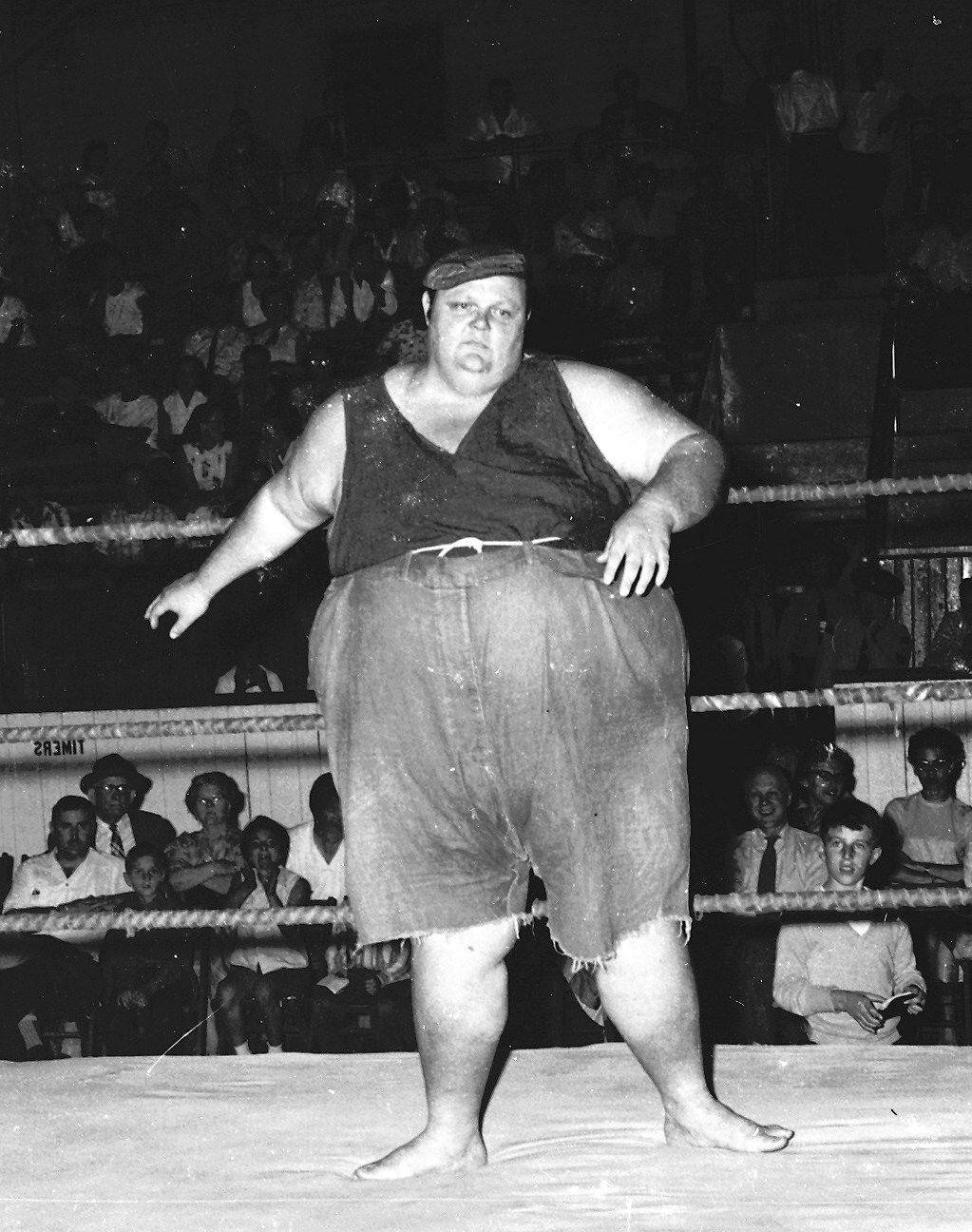
William "Happy Humphrey" Cobb stands in the ring during his active years as pro wrestling’s heaviest competitor, a distinction he holds to this day. Much of the footage and documentation from his career has been lost over time, making photographs like this among the few surviving records of the 800-pound Georgian’s time in the squared circle. Photo Credit: WWE.
Happy Humphrey may be the heaviest wrestler in pro wrestling history, but the full weight of his story has never quite reached the audience it deserves.
Wrestling at the regional level in an era with little footage and fewer records, much of what is known about William Cobb has been filtered through kayfabe, exaggeration, and the passage of time.
What remains is the outline of a life genuinely worth knowing: a Georgia farmhand who saw the world, filled arenas, befriended a future legend in Harley Race, and quietly rewrote the record books long after the crowds stopped coming.
Pro Wrestling Stories is committed to accurate, unbiased wrestling content rigorously fact-checked and verified by our team of researchers and editors. Any inaccuracies are quickly corrected, with updates timestamped in the article's byline header.
Got a correction, tip, or story idea for Pro Wrestling Stories? Contact us! Learn about our editorial standards here. Ever wanted to learn more about the people behind Pro Wrestling Stories? Meet our authors! Want to write for us? Learn how to join the team.
Quick Tip for Facebook Readers
Many of our readers find us through
our Facebook page.
Meta's built in browser (which opens by default on mobile) can occasionally freeze mid article, a known issue unrelated to our site.
For uninterrupted reading: tap the three dots in the top right corner then select 'Open in external browser'.
That usually resolves the glitch. Thanks for your support and we want your wrestling stories to stay as smooth as a top rope hurricanrana!
ProWrestlingStories.com participates in affiliate marketing programs. This post may contain affiliate links, meaning we may earn commissions at no extra cost to our readers. This supports our mission to deliver free content for you to enjoy!
Griffin Kaye is a life-long pro wrestling fan and historian with a love for '80s and '90s WWF, the NWA, WCW, ECW, and AEW. His favorite wrestlers include Ricky Steamboat, Bret Hart, Ric Flair, William Regal, Tito Santana, Stan Hansen, and Mr Perfect. He also writes for websites like Ring The Damn Bell!, BritWrestling.co.uk, and Lace 'Em Up among others. He can be reached on Instagram at @TheGriffinKaye.
 Author: