Author:
 Before the era of high-profile televised women’s championship bouts, a group of Black women wrestlers from Columbus, Ohio, and beyond were quietly, and sometimes dangerously, reshaping professional wrestling from the inside out. What these twenty-five ladies accomplished deserves the brightest of spotlights.

How Television Brought Black Women Wrestlers to the Fore

Television changed everything in the late 1940s. Suddenly, people had a glowing window into events happening across the country, and professional wrestling promoters scrambled to fill the screen with something audiences had never seen before.
Pro wrestling was already gaining traction as a TV draw, and Gorgeous George had become one of the medium’s first major stars by 1947. But for Billy Wolfe, the sport’s leading women’s wrestling promoter and manager of world champion Mildred Burke, the next frontier was clear: Black women in the ring.
Wolfe, inspired in part by Jackie Robinson’s breaking of Major League Baseball’s color line in April 1947, began recruiting African American women from his home base of Columbus, Ohio.
TV gave people many ideas. It let people search for things they hadn’t seen before. And as far as Black women were concerned, Billy Wolfe was the one who put the pieces together.
What followed was a remarkable chapter in sporting history, one woven through with grit, undeniable athletic talent, Jim Crow-era segregation laws, and a road life that few could have endured.
The Road These Women Traveled
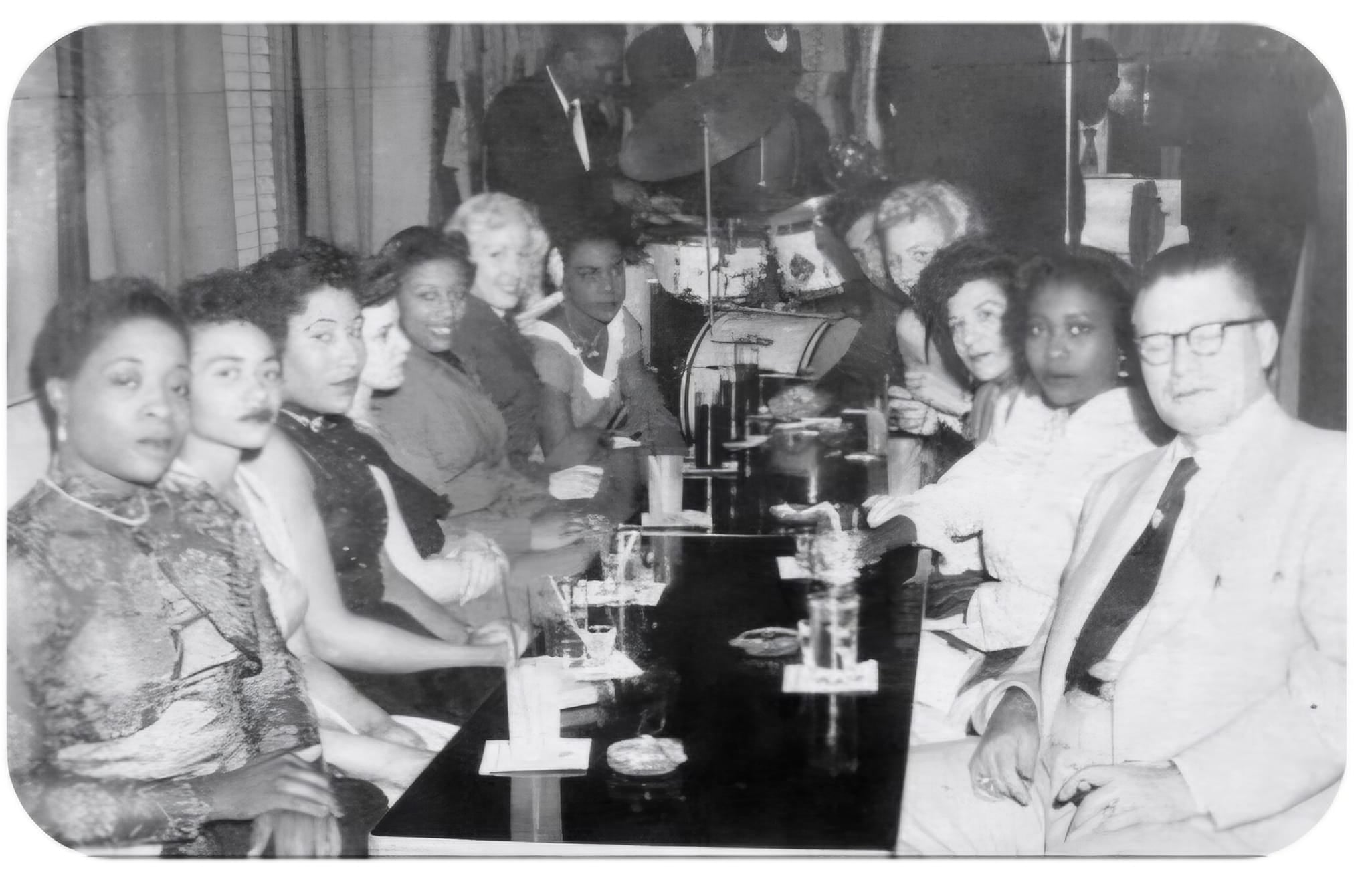
To understand what these women endured, you have to understand the America they were moving through. There was no interstate highway system in the early 1950s, just slower two-lane U.S. and state highways. There were no 24-hour restaurants in most parts of the country. And for Black travelers in many states, there were no hotels or motels that would accept them at all.
Segregation wasn’t just something made up to keep people down. It was the law. In several states, Black people and white people could not legally dance together, box, or wrestle each other. Louisiana went so far as to pass a law in 1956 banning interracial athletic events and dancing outright, and it took the U.S. Supreme Court to finally strike it down in 1959. For a Black woman booked against a white woman, the building itself could be breaking the law before the bell ever rang.
The Wingo sisters traveled with their grandmother, staying in guesthouses and private homes, a mix of bed-and-breakfast and improvised lodging, often populated by a varied assortment of characters. (You’ll meet Babs, Ethel, and Marva in full below.) One or two guesthouses I went to personally in the 1960s were someplace you wouldn’t take your grandmother to. That’s what they faced, especially traveling in the South.
A wrestler I spoke with in the past recalled a 1958 spot show in a small town in Montana. “Finished up, showered, got out of there, got in the car, and went for something to eat. Nothing in town was open. Had to drive four hours to get a hamburger!” It was the same experience throughout the country. We’re not talking about glamorous work.
The pay, for its time, was significant. In a 1952 Jet magazine feature, Wolfe stated that the Black women wrestlers on his roster were earning an average of $300 a week, at a time when the average American worker was taking home $40 to $50 a week. According to Jet, the three Wingo sisters and their peers were among the best-paid Black Americans in the country at the time, earning approximately $10,000 annually. A woman wrestler I spoke with personally said she would easily make $280 a week, with hotel stays costing only a couple of dollars. For the Black women wrestlers who paid more for less in accommodations, every dollar came at a price.
Women’s wrestling was also banned entirely in some of the country’s biggest markets during this era. California outlawed it until a court lifted the ban in 1965. New York’s ban was not lifted until 1972, which meant Madison Square Garden, the most prestigious wrestling venue in the country, was closed to women for the entire golden era of the sport.
One can only reflect that if the Black women had ever gotten into Madison Square Garden on one of the big Saturday shows, there would have been a lot more to the development of these wrestlers. But they couldn’t work in New York. They would work Capitol Wrestling shows in Washington, D.C., and Baltimore, but New York was off-limits.
Most of the women Wolfe recruited came from Columbus and its surrounding Ohio communities. They trained hard, earned far more than the average American worker, and traveled an America that, in many states, did not welcome them. They slept in private guest houses when hotels turned them away. They drove hours through the night for a single meal. And in the most hostile corners of the South, some of them escaped harm by hiding in the trunks of cars.
These are their stories.
Enjoying this story? Own it forever.
No ads. No interruptions. Download the full story as a beautifully formatted PDF at just $0.99.
Get My Copy — $0.991. Ethel Johnson: The First Black Woman to Break Wrestling’s Color Line
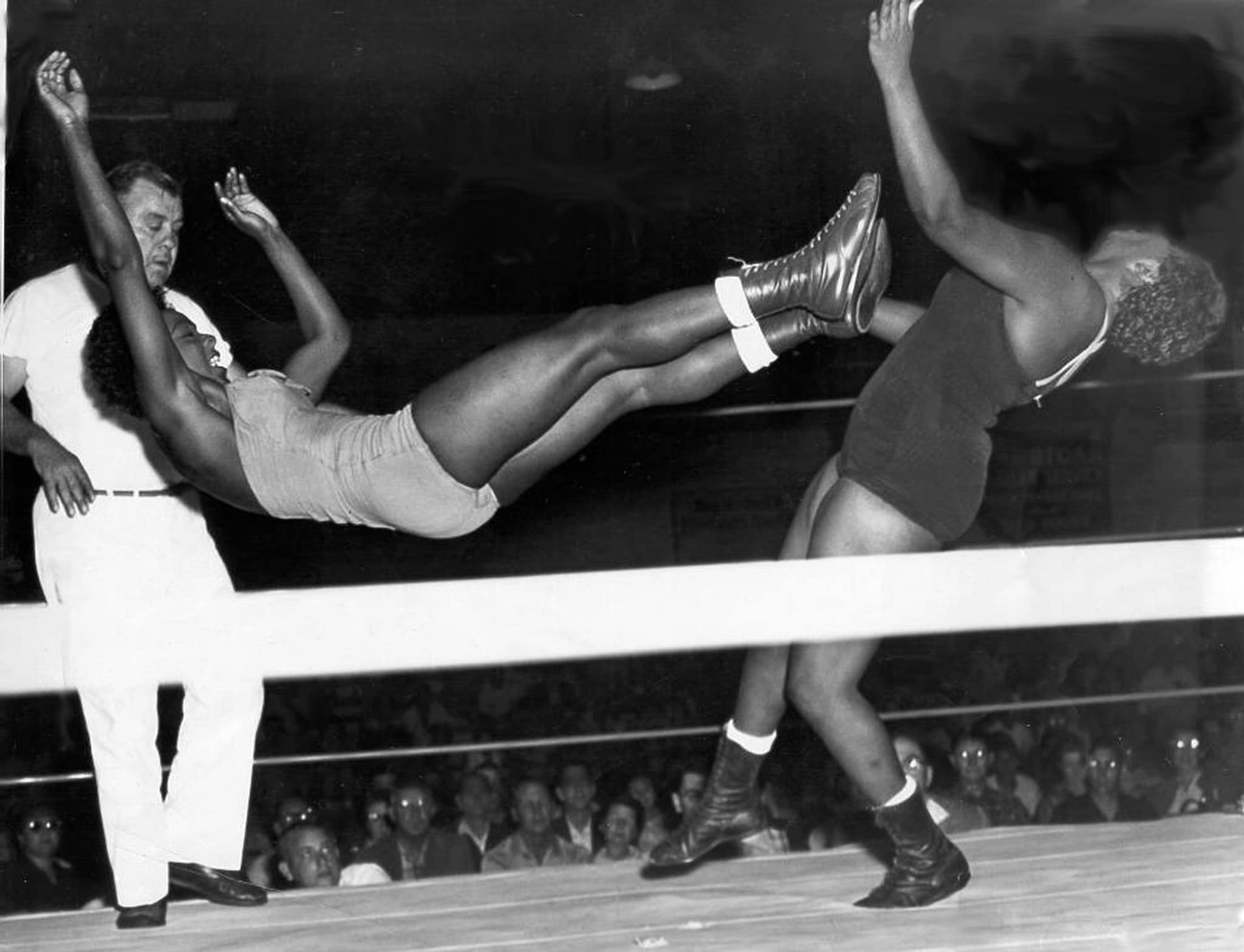
If there is one name that defines Black women’s wrestling in the 1950s, it is Ethel Johnson. Born Ethel Blanche Wingo on May 14, 1935, in Decatur, Georgia, and raised in Columbus, Ohio, she grew up in an athletic household. Her father was a boxing and judo instructor in the United States Army, and she absorbed that competitive spirit from an early age.
She went to Billy Wolfe with a plea. Wolfe, who had already built Mildred Burke into the world’s most famous woman wrestler, turned her away. She was too young, and at around 125 pounds, too light for what he had in mind. Ethel went away and trained harder.
“I had strong leanings toward designing and painting,” she recalled in a 1950s interview with sportswriter Dan Daniel for Ring Wrestling magazine. “However, the call of the wrestling game was too strong for me. I wanted life, excitement, fame, and dollars.”
After months of additional training and weight work, she returned to Wolfe and earned her shot. Her first match was against Mae Young, a seasoned veteran who, by Ethel’s own admission, “was a caution.” She lost. And she kept losing. For two full years, she did not win a match. But as she later said: “I never lost a match without learning something from it.”
The education paid off. By the mid-1950s, she was widely regarded as one of the most capable women wrestlers in the sport, regardless of race. Wolfe billed her as “the biggest attraction to hit girl wrestling since girl wrestling began.” Her signature flying head scissors and standing dropkick made her one of the most technically exciting performers of her era, among the first wrestlers, male or female, to use a standing dropkick as a regular in-ring weapon. Chris Bournea, filmmaker and director of the documentary Lady Wrestler, described her simply: “She was really a powerhouse. They called her a hurricane.”
She was a multiple-time Colored Women’s World Champion and Texas Colored Women’s Champion, and on July 9, 1957, in Calgary, Canada, she teamed with June Byers to win the NWA World Women’s Tag Team Championship, one of the most prestigious tag titles in the sport at the time.
By 1954, she was headlining cards alongside Gorgeous George at the Municipal Auditorium in Kansas City, drawing nearly 9,000 fans. She wrestled professionally from 1951 through 1976, a career spanning a quarter of a century.
Ethel passed away on September 14, 2018, in Columbus, at age 83. In 2021, she was inducted into the WWE Hall of Fame. In 2023, she and her sisters, Babs Wingo and Marva Scott, were inducted into the Women’s Wrestling Hall of Fame.
2. Babs Wingo: The Trailblazer Who Made Interracial Wrestling History
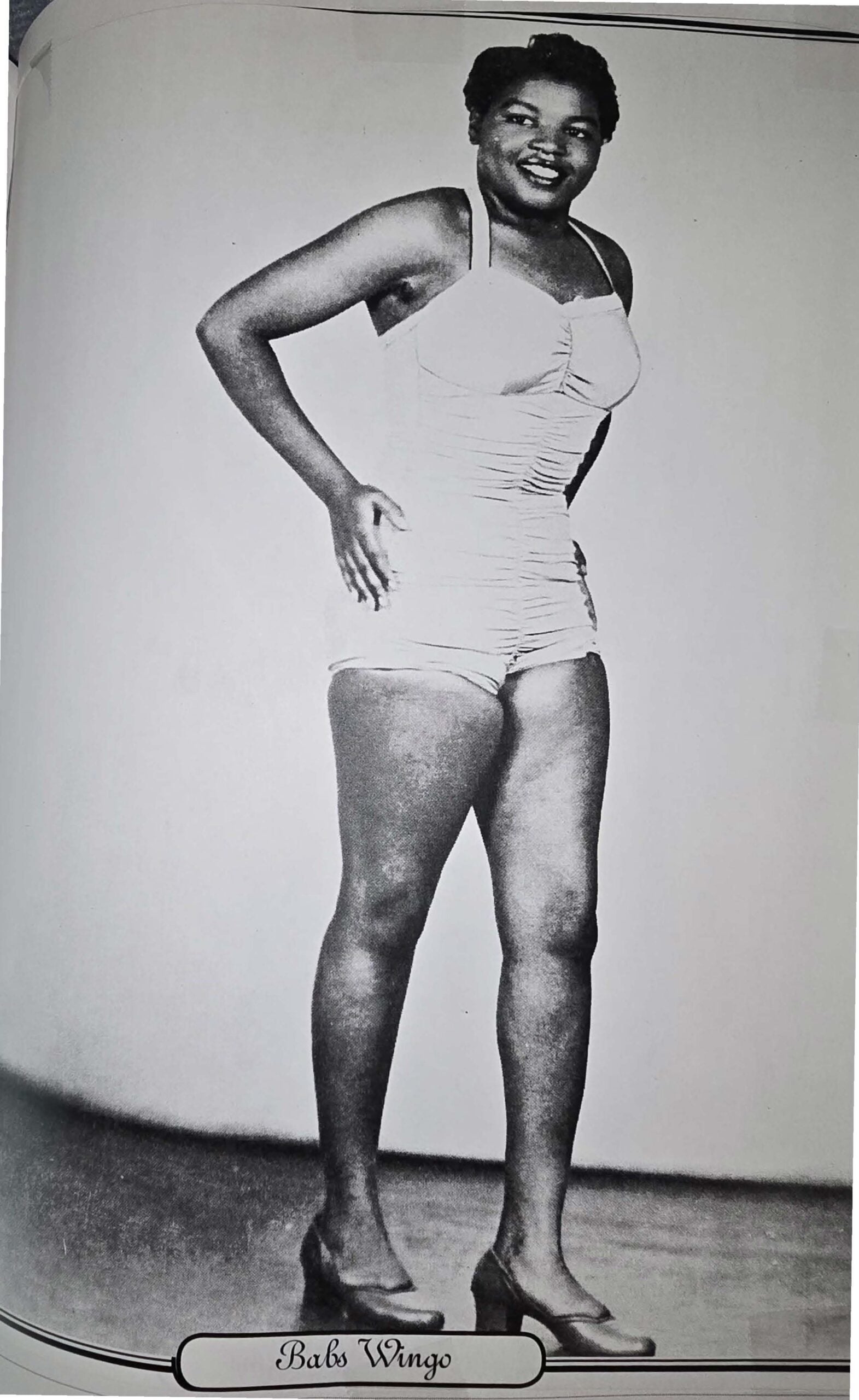
Babs Wingo was the first of the three Wingo sisters to enter professional wrestling and one of the boldest figures in the sport’s integration. Born Betty Wingo in Decatur, Georgia, she had been working as a hat-check girl and babysitter in New Orleans before Billy Wolfe signed her. She was the first of the four Columbus women to turn professional.
As a wrestling fan who watched and attended matches at the time, I remember her vividly. Babs was the bad girl. She was billed from New Orleans, Louisiana. More built than her sisters, five-foot-five, listed anywhere from 150 to 180 pounds. She took more bumps and bruises, and at least one broken collarbone, than any of her peers.
In 1953, in what was billed as the first interracial women’s championship match in professional wrestling history, Babs Wingo stepped into the ring against world champion Mildred Burke in Kansas City before a crowd of 9,000 fans, and won. The match and the result were seismic for the sport.
In that same year, Ethel Johnson and Babs Wingo worked a singles match in Kansas City that drew those same record numbers alongside Gorgeous George.
“They can’t hurt me much any more,” Babs told Ring Wrestling magazine. “Now I am the one who dishes out the bumps and bruises.”
Off the mat, she was an oil painter and an avid music enthusiast, with a large collection of records by Mario Lanza and Jan Peerce. She retired from wrestling in 1965 and passed away unexpectedly in April 2003 in Columbus.
Love Pro Wrestling Stories? Add us as a Preferred Source on Google so our stories always show up first for you. It only takes one click.
Add Us on Google3. Marva Scott: The “African Black Cat” Who Joined the Family Legacy
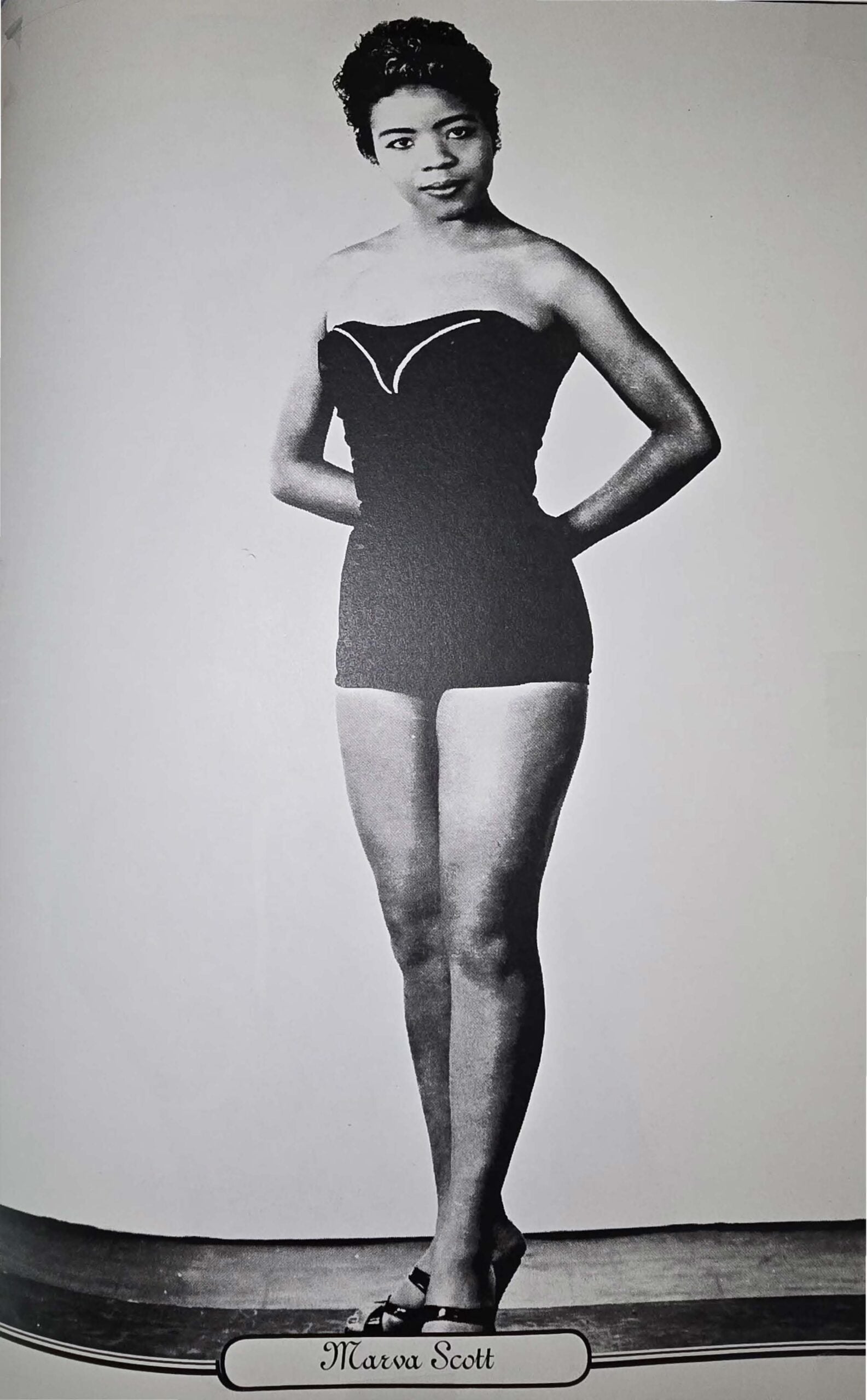
The youngest of the Wingo sisters, Marva came to wrestling a few years after her older siblings. Born Marva Aniece Wingo in Decatur, Georgia, and raised in Columbus, she graduated from the Central High girls’ basketball program. In the ring, she wrestled under both “Marva Scott” and the gimmick name “The African Black Cat.”
Her debut was a trial by fire, sent to Washington, D.C., to face her own sister, Babs, in her very first match. “I never before had been away from home and, frankly, I was scared,” she recalled. “Babs wrestled me into knots.”
She improved rapidly, returned to Charlotte for a rematch, came very close to beating Babs, and grew into a legitimate star.
She and Ethel frequently teamed up in tag matches, they held the Ohio Women’s Tag Team Championship together, and her standing in the sport did not go unnoticed by those keeping its records.
James C. Melby, a pioneering wrestling historian and longtime editor of Wrestling Revue and The Ring’s Wrestling Magazine, whose name the National Wrestling Hall of Fame later attached to its journalism award, ranked Marva among the top six female wrestlers of her era.
Match records confirm she was still competing and winning well into the 1970s, including documented victories over Ramona Isbell in AWA-affiliated matches in 1975 and 1979.
Marva retired from wrestling in 1979, the last of the three sisters to do so. She passed away in August 2003, the same year as Babs.
Read more about these three trailblazing sisters in our dedicated feature, Babs Wingo, Marva Scott, and Ethel Johnson: Wrestling’s Unsung Pioneers.
With hundreds of amazing Pro Wrestling Stories to dive into, where do you start? Get the inside scoop, join our exclusive community of wrestling fans! Receive 10 hand-picked stories curated just for YOU, exclusive weekly content, and an instant welcome gift when you sign up today!
4. Kathleen Wimbley: The Unbeaten Rookie Who Became a Wrestling Sensation
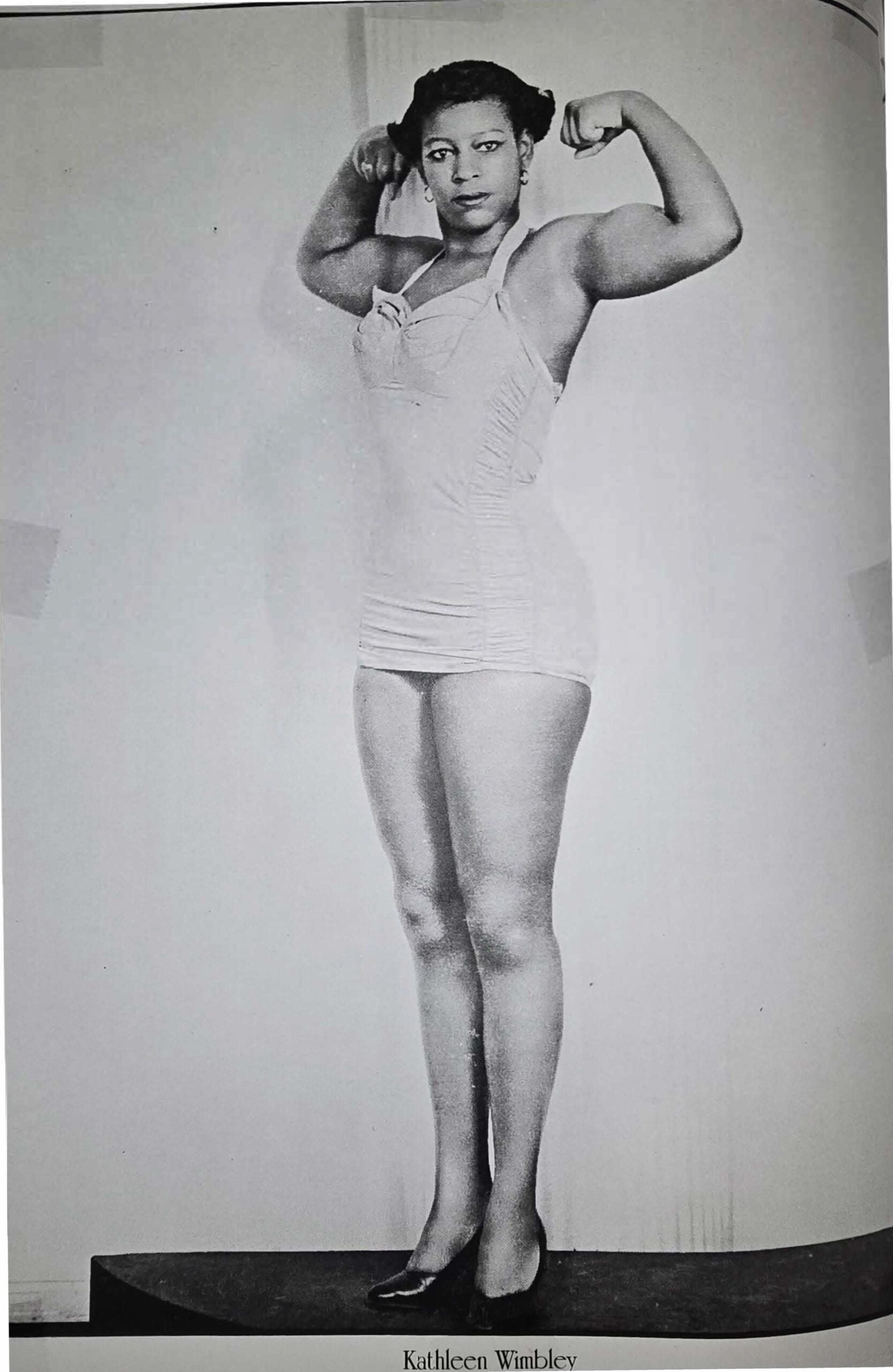
Kathleen Wimbley stood apart the moment she entered the ring. A Columbus, Ohio native and childhood friend of the Wingo sisters, she was described in Dan Daniel’s “Gal Grapplers Kill Color Line” Ring Wrestling magazine feature as “one of the prettiest” of the group, and one of the most complete athletes.
At South High School in Columbus, she had captained an integrated girls’ basketball team, was an accomplished bowler, played football with the boys, and played clarinet in the South Side band. Her brother Arthur was a jiu-jitsu instructor in the United States Marines. She trained for six months before accepting her first professional match, and she did not lose once during her first half-year of competition, reversing the standard learning curve for women wrestlers of the era.
Her idols were Mildred Burke and Nell Stewart. In 1952, Wimbley, Ethel Johnson, and Babs Wingo worked a main-event tag match in Baltimore, Maryland, that drew a record 3,611 fans, the largest wrestling crowd in the city’s history to that point.
She also won the August 1960 NWA Capitol Wrestling battle royal, defeating Babs Wingo, Ethel Johnson, Pearl Bates, and Ramona Isbell, a result that documents her competitive standing among the group’s very best.
Real Autographs. Only Few Remain.
These are hand-signed originals sold directly by Pro Wrestling Stories. Once they sell out, they are gone for good.
Own a Piece of Wrestling History
-

Missy Hyatt Signed 8×10 Photo Autograph
$35.00 Add to cart -
Raven Signed 8×10 Photo Autograph
$35.00 Add to cart -
Ken Patera Signed WWF 8×10 Photo Autograph
$35.00 Add to cart -
Johnny Rodz Signed WWF 8×10 Photo Autograph
$30.00 Add to cart -
Baby Doll (Nickla Roberts) Signed 8×10 Photo Autograph (pictured with Ric Flair)
$35.00 Add to cart -
Bushwhacker Luke Signed WWF 8×10 Photo Autograph (of The Bushwhackers)
$30.00 Add to cart -
Jerry Lynn Signed 8×10 Photo Autograph
$35.00 Add to cart -
Fred Ottman Signed WWF 8×10 Photo Autograph (Typhoon)
$35.00 Add to cart -
Bushwhacker Luke Signed WWF 8×10 Photo Autograph
$30.00 Add to cart -
Larry Zbyszko Signed WCW 8×10 Photo Autograph
$40.00 Add to cart -
Bushwhacker Luke Signed WWF 8×10 Photo Autograph (with Bushwhackers Butch)
$30.00 Add to cart -
Sunny (Tammy Lynn Sytch) Signed WWF 8×10 Photo Autograph (WWE Hall of Fame)
$35.00 Add to cart -
“Greg the Hammer” Valentine Signed WWF 8×10 Photo Autograph
$45.00 Add to cart -
Tito Santana Signed WWF 8×10 Photo Autograph (Strike Force)
$35.00 Add to cart -
Nikolai Volkoff & Boris Zhukov Signed WWF “The Bolsheviks” 8×10 Photo Autograph (Deceased Legend)
$60.00 Add to cart -
Kevin Sullivan Signed 8×10 Photo Autograph (Deceased Legend)
$45.00 Add to cart -
Sunny (Tammy Lynn Sytch) Signed 8×10 Photo Autograph
$35.00 Add to cart -
Johnny Rodz Signed WWF 8×10 Photo Autograph
$30.00 Add to cart -
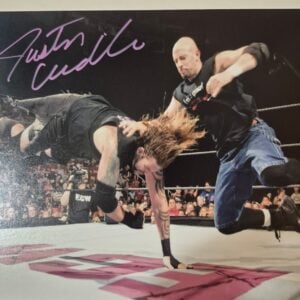
Justin Credible Signed 8×10 Photo Autograph
$30.00 Add to cart -
Jerry “The King” Lawler Signed WWE 8×10 Photo Autograph 2
$50.00 Add to cart -
Jerry “The King” Lawler Signed 8×10 Photo Autograph
$50.00 Add to cart -
Nikolai Volkoff Signed WWF 8×10 Photo Autograph 2 (Deceased Legend)
$45.00 Add to cart -
Brutus the Barber Beefcake Signed WWF 8×10 Photo Autograph (with Ultimate Warrior)
$35.00 Add to cart -
Steve Keirn Signed WWF 8×10 Photo Autograph (Skinner)
$30.00 Add to cart -
Barry Windham Signed 8×10 Photo Autograph
$40.00 Add to cart -
Sunny (Tammy Lynn Sytch) Signed WWF 8×10 Photo Autograph
$35.00 Add to cart -
The Tonga Kid (Sam Fatu) Signed WWF 8×10 Photo Autograph
$35.00 Add to cart -
Johnny Rodz Signed WWF 8×10 Photo Autograph (pictured with The Grand Wizard)
$30.00 Add to cart -
D’Lo Brown Signed WWF 8×10 Photo Autograph
$30.00 Add to cart -
Leaping Lanny Poffo Signed WWF Turnbuckle Pose 8×10 Photo Autograph (Deceased Legend)
$45.00 Add to cart -
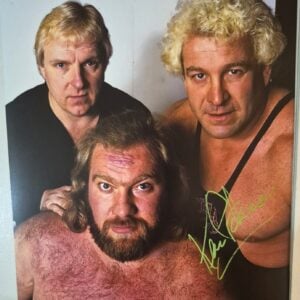
Ken Patera Signed WWF 8×10 Photo Autograph (pictured with Bobby Heenan & John Studd)
$35.00 Add to cart -
Marcus “Buff” Bagwell Signed WCW 8×10 Photo Autograph
$30.00 Add to cart -
Larry Zbyszko Signed 8×10 Photo Autograph 2
$40.00 Add to cart -
Vince Russo Signed 8×10 Photo Autograph
$35.00 Add to cart -
Johnny Rodz Signed WWF 8×10 Photo (wrestling Andre the Giant)
$30.00 Add to cart -
Johnny Rodz Signed WWF 8×10 Photo Autograph (wrestling Tony Atlas)
$30.00 Add to cart -
“Hacksaw” Jim Duggan Signed WWF 8×10 Photo Autograph
$40.00 Add to cart -
Brutus the Barber Beefcake Signed WWF 8×10 Photo Autograph 2
$35.00 Add to cart -
Leaping Lanny Poffo Signed WWF Frisbee Pose 8×10 Photo Autograph (Deceased Legend)
$45.00 Add to cart -
Sabu Signed WWF 8×10 Photo Autograph (Deceased Legend)
$55.00 Add to cart -
Johnny Rodz Signed WWF 8×10 Photo Autograph (pictured with Captain Lou Albano)
$30.00 Add to cart -
Sunny (Tammy Lynn Sytch) Signed WWF 8×10 Glamour Photo Autograph
$35.00 Add to cart -
Bushwhacker Luke Signed WWF 8×10 Photo Autograph (The Bushwhackers)
$30.00 Add to cart -
Jimmy Hart Signed WWF 8×10 Photo Autograph (pictured with Bret Hart & Jim Neidhart)
$35.00 Add to cart -
Butcher Paul Vachon Signed WWF 8×10 Photo Autograph (Deceased Legend)
$45.00 Add to cart -
Hornswoggle (Dylan Postl) Signed WWE 8×10 Photo Autograph
$30.00 Add to cart -
Bushwhacker Luke Signed WWF 8×10 Photo Autograph (pictured with Bushwhacker Butch)
$30.00 Add to cart -
Koko B. Ware Signed WWF 8×10 Photo Autograph
$45.00 Add to cart -
Tito Santana Signed WWF 8×10 Photo Autograph
$35.00 Add to cart -
Nikolai Volkoff Signed WWF 8×10 Photo Autograph (Deceased Legend)
$45.00 Add to cart -
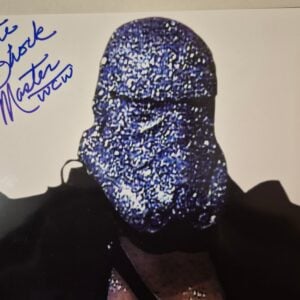
Fred Ottman Signed WCW 8×10 Photo Autograph (The Shockmaster)
$35.00 Add to cart -
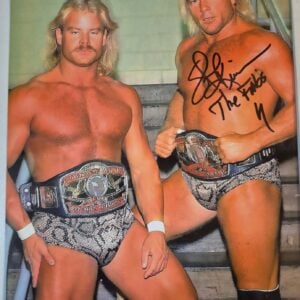
Steve Keirn Signed WWF 8×10 Photo Autograph (Fabulous Ones)
$30.00 Add to cart -
Justin Credible Signed 8×10 Photo Autograph 2
$30.00 Add to cart -
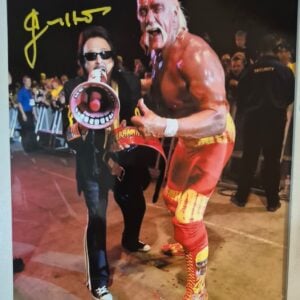
Jimmy Hart Signed WWF 8×10 Photo Autograph (pictured with Hulk Hogan)
$35.00 Add to cart -
Ron Simmons Signed WWE 8×10 Photo Autograph
$40.00 Add to cart
5. Louise Greene: The Youngstown Dreamer Who Chose “Furs and Diamonds”
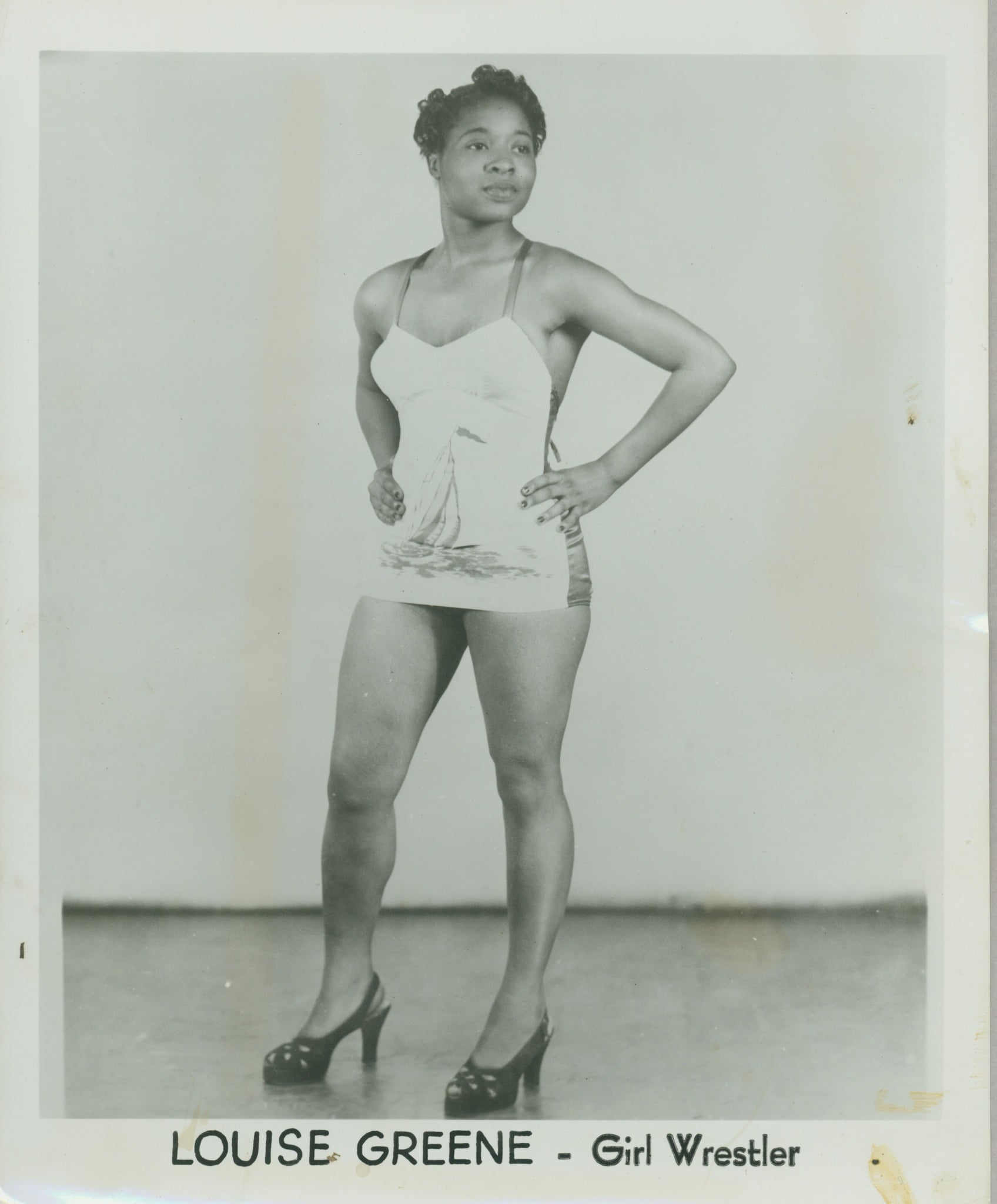
Louise Greene grew up in Youngstown, Ohio, with dreams of a life in music and dance. Wrestling, she decided, was the faster route to the life she wanted.
“Furs and diamonds,” she told Ring Wrestling magazine when asked why she entered the mat game. “You don’t come by them honestly hitting a typewriter unless you marry rich. I started out to be a singer and dancer. But the lure of the wrestling business was not to be denied. I have no regrets. I will catch up on my singing when I quit the mat.”
She was profiled prominently in the Dan Daniel Ring Wrestling feature alongside Betty White, Kathleen Wimbley, and Babs Wingo, and described as “a sturdily-built grappler of great promise.”
By 1952, she had become one of the recognizable faces of the new wave of Black women entering the sport, arriving alongside Marva Scott just as the crowds were growing and promoters were scrambling to keep up with the demand.
She was no flash in the pan, either. A decade later, she was still lacing up her boots, competing on cards down in Florida in early 1962, including a January bout against Ramona Isbell.
For a woman who got into the business chasing furs and diamonds, she stuck around long enough to earn them.
6. Betty White: The Columbus Competitor Jack Pfefer Called One of the Best
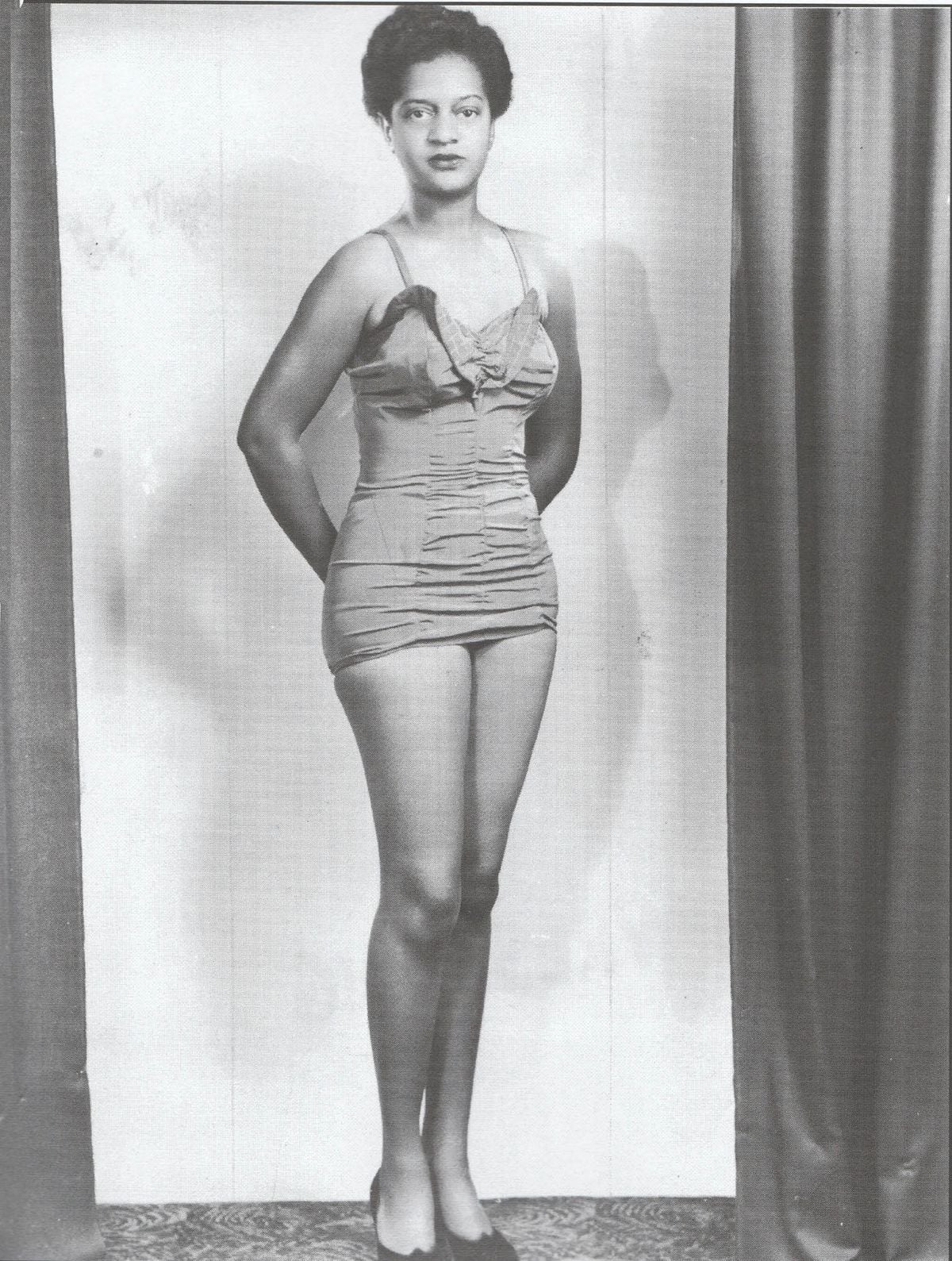
Not to be confused with the television actress of the same name, Betty White was a Columbus, Ohio, product who earned her reputation the hard way, one match at a time.
Veteran promoter Jack Pfefer, one of the most colorful and well-connected figures in the business, said of her: "You have to rate Betty among the most able women wrestlers in the business. She never has given a poor performance yet." That kind of endorsement from a man of Pfefer’s stature carried real weight.
She backed it up where it counted, in the ring, over a career that spanned the better part of a decade. By late 1953, she was working the Baltimore Coliseum, tangling with Babs Wingo, Mary Horton, and Kathleen Wimbley on the kind of integrated cards that were still a rarity in that era. Years later, she was still at it, trading holds with the best of the group, including a Chicago tag bout against Ethel Johnson and Lula Mae Provo in 1958.
Away from the ring, the money she earned bought her the life she wanted. In era interviews, Betty admitted to having a taste for fine things, collecting shoes, dining at the better restaurants, and building up a wardrobe of jewelry and clothes, all of it paid for by what she made between the ropes.
7. Lula Mae Provo: The Crowd-Pleaser Who Won Hearts Everywhere She Appeared
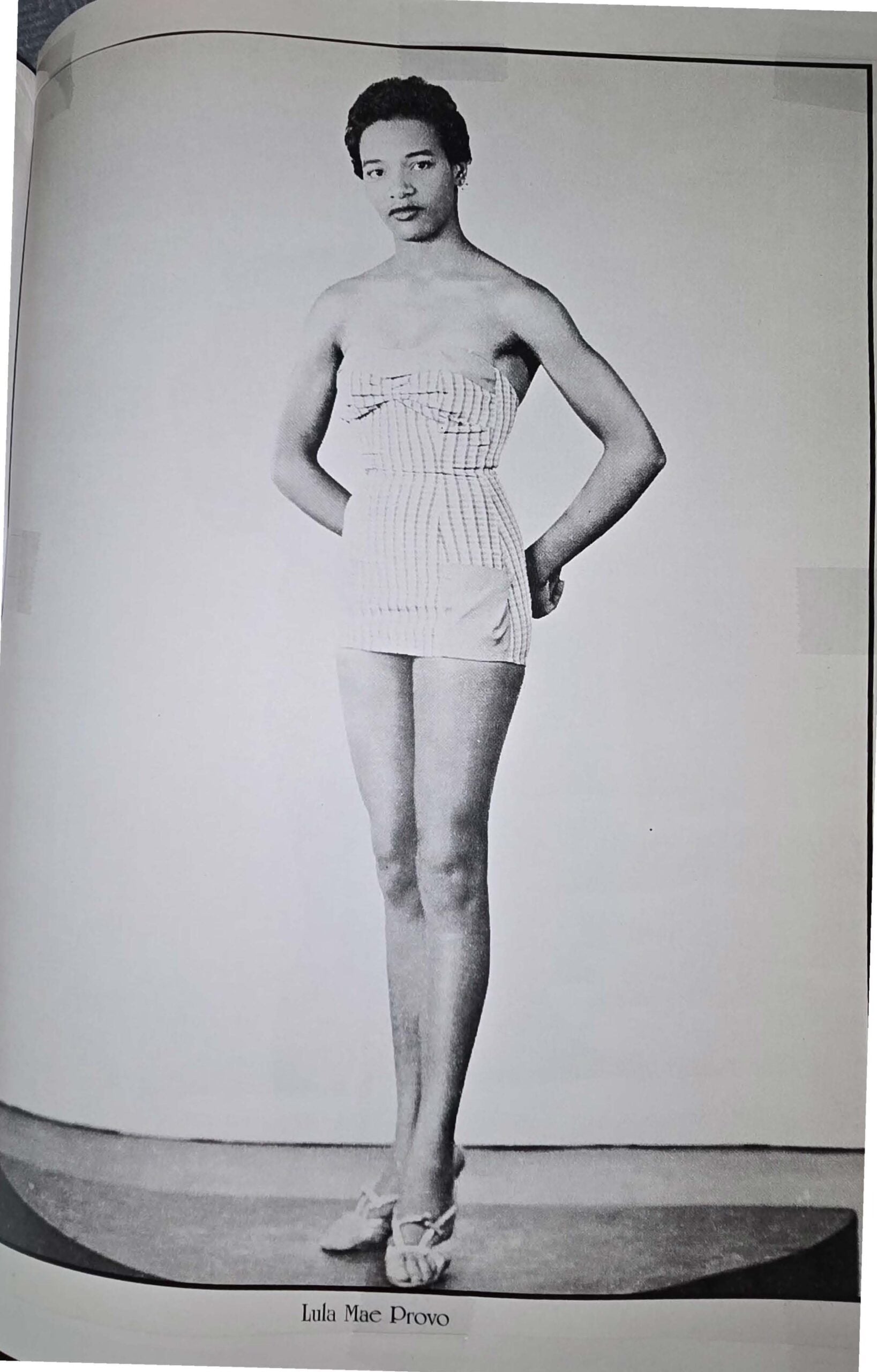
You’ll see her name spelled "Lulu Mae Provo" in plenty of old match records, but the Ring Wrestling Magazine feature that profiled her in the 1950s wrote it "Lula Mae Provo," and that is the spelling we’ll trust here. The same article grouped her with Mary Horton and Marva Scott as three of the women who "won the hearts of fans wherever they have appeared." They were thrill providers, the kind of talent that strengthened any card they were booked on.
She was far more than a name in a magazine, though. She was still working main cards years after that profile ran, often opposite Babs Wingo, in towns from Chicago to St. Louis to Boston.
In 1958, she teamed with Ethel Johnson to beat Betty White and Babs Wingo on a Chicago show, and as late as September 1961, she was still going, dropping a best-of-three-falls match in St. Louis when Marva Scott and Ramona Isbell got the better of her and Babs.
Along with Ramona Isbell and Louise Greene, she was part of the wave that kept the crowds growing and the demand for women’s wrestling climbing across the territories.
Her story did not end when she left the ring. In recent years, her daughter, Valerie Hawes, has worked to make sure her mother’s place in wrestling history is not forgotten, including a Women’s History Month talk fittingly titled "An Icon Hiding In Plain Sight."
Provo is remembered today as a pioneer who helped open the door for the women who followed her into the business. A Columbus bakery, Deez Cookies, even named a cookie in her honor.
8. Mary Horton: The Poet and Intellectual of the Wrestling Ring
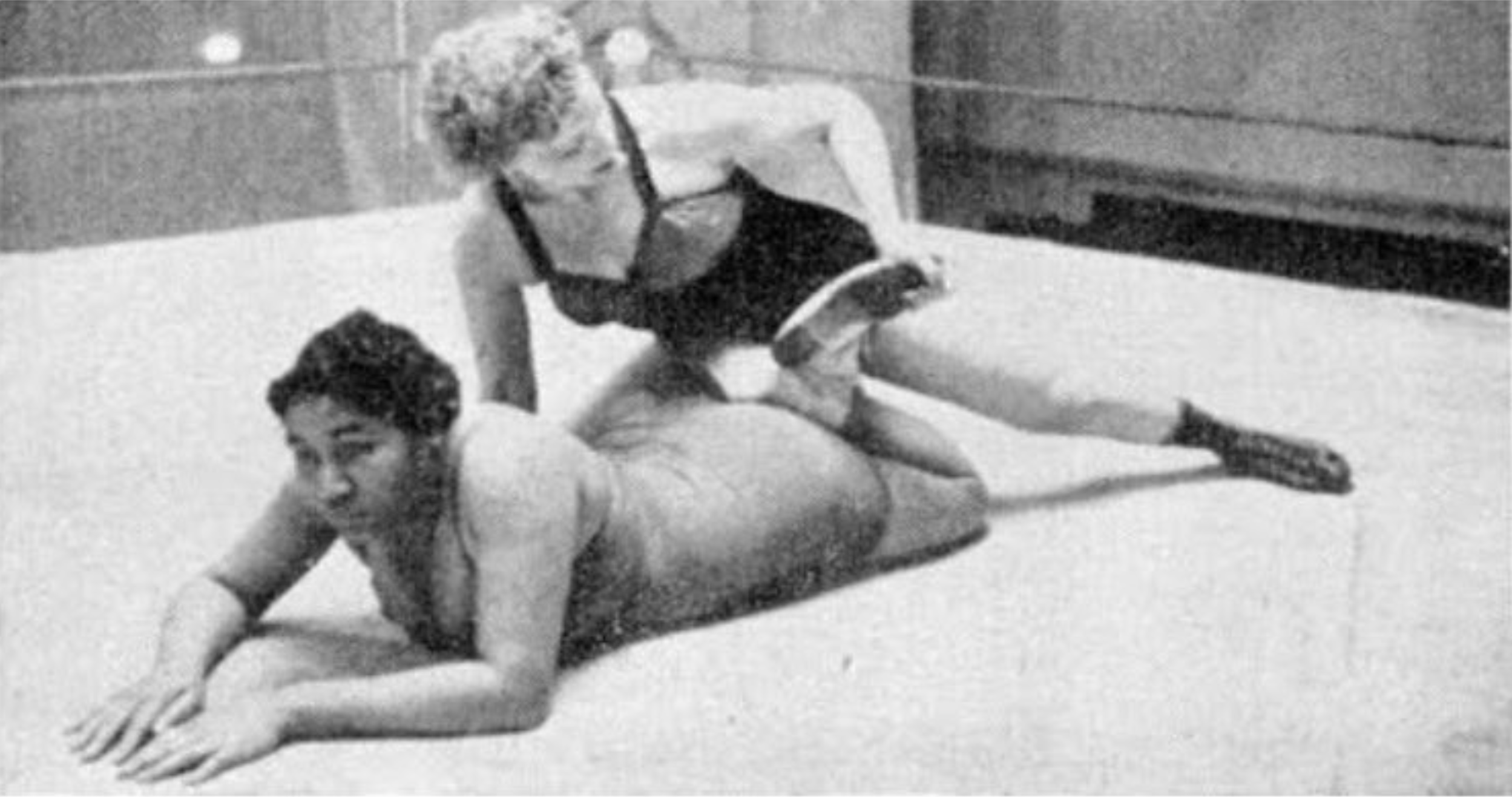
Mary Horton was the rare wrestler who could finish a brutal match and then go home to her poetry. A former college student out of the Columbus scene, she was just 22 years old when she entered the business. Her off-hours interests ran to poetry and politics, a world away from the punishment she absorbed every time she stepped through the ropes.
She came up under promoter Billy Wolfe, carrying the same banner as world champion Mildred Burke during the early years of integrated women’s wrestling.
By December 1953, she was working at the Baltimore Coliseum on a card she shared with Babs Wingo and Betty White. She also crossed the ring with Ramona Isbell repeatedly during this stretch, in both singles and tag matches.
Her name has not faded among the women who helped open professional wrestling to those who came after her.
9. Ramona Isbell: The Secret She Kept for 50 Years
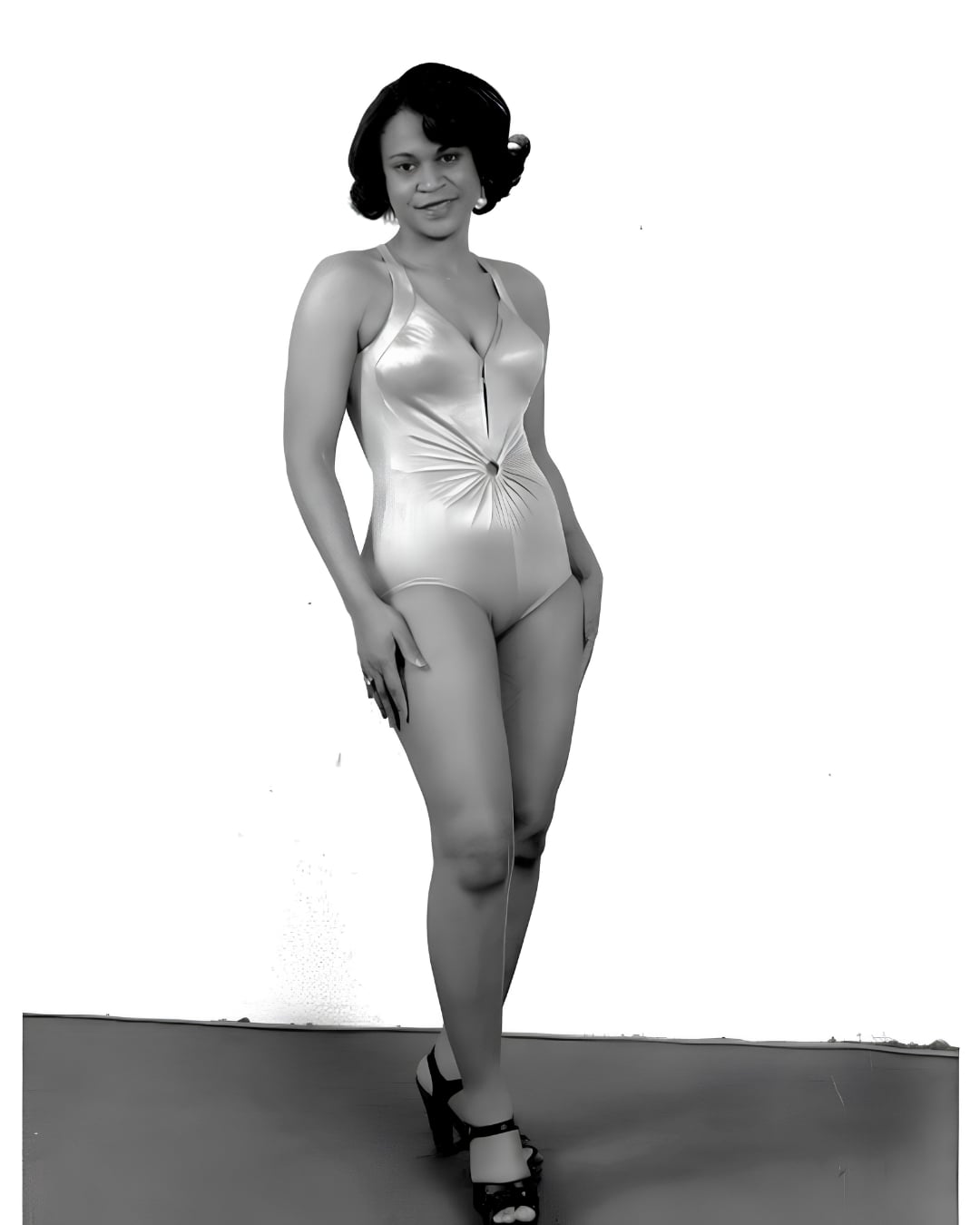
For more than fifty years, almost no one knew. Ramona Isbell had been a professional wrestler, one of the first Black women in the sport, and she carried that chapter of her life quietly, even from those closest to her.
“I would sneak and train with Billy Wolfe. My mother didn’t even know I was training,” she told WOSU Public Media in 2018. “I liked the freedom, I liked the money, I liked the travel, and I had fun.”
She was born on June 20, 1939, in Columbus, Ohio, stood 5 feet 4 inches tall, and weighed 160 pounds. By her early 20s, in 1961, she had signed with Wolfe, training three times a week and wrestling in the modified one-piece swimsuits of the era for anywhere from $100 to $400 a night.
For a young single mother of four, that money was everything. As her daughter Terry Lynn put it, Ramona used it to give her children “the best of the best.”
What followed was one of the longest and most well-traveled careers of any woman in this story. She beat Babs Wingo, Ethel Johnson, and Lula Mae Provo in battle royals, held the NWA St. Louis tag titles with Marva Scott, and was still taking bookings in Florida as late as 1973 and trading holds with Marva Scott in AWA rings into 1979. The road took her well beyond American territories, too, into the ring in Tokyo, Sydney, and Montreal, with tours that reached Japan, Nigeria, and Australia.
She wrestled her last match in 1981, closing out a career that began in the integration era of the 1950s and ran clear into the next generation of the sport. From there, she stepped quietly into ordinary life, working for the state of Ohio and retiring as a purchasing agent with the Ohio Industrial Commission, her years in the ring still a closely held secret.
It was not until the 2018 documentary Lady Wrestler: The Amazing, Untold Story of African-American Women in the Ring that the world finally caught up with what she had done, a film that introduced her, in its own words, as one of the toughest and best-trained wrestlers of her time.
10. Sweet Georgia Brown: The First Black Woman to Win a Wrestling Championship Title in History
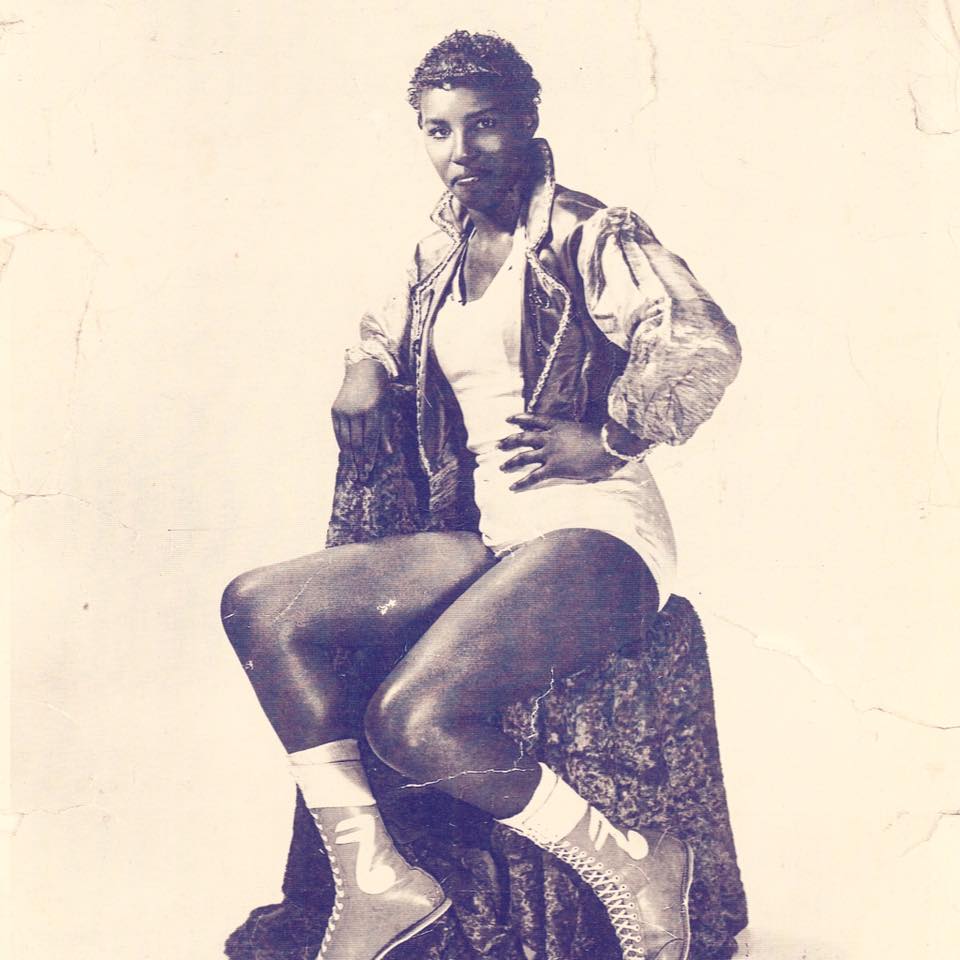
Susie Mae McCoy walked into The Fabulous Moolah’s training camp at around 19 years old and came out the other side as Sweet Georgia Brown. Born December 22, 1938, in Cayce, South Carolina, she made her debut in 1958 and, within five years, did something no Black woman had done before her.
On October 21, 1963, she beat Nell Stewart for the NWA Texas Women’s Championship, becoming the first Black woman to win a professional wrestling championship of any kind, a regional title that predated, by a full decade, the first world championship won by a Black woman.
The road there carried a heavy price. Moolah and her then-husband Buddy Lee ran their talent operation with a tight grip on the money, taking large cuts and leaving little behind for the women who earned it. Years later, Brown’s own children would go further, telling The Free Times in 2006 that the exploitation she endured reached far beyond her paychecks.
The danger followed her onto the road, too. Booked against a white wrestler in an Arkansas town, she found a group of Klan members waiting at the arena who had come not to watch but to hurt her. She got out by hiding in the trunk of a white wrestler’s car, and the car was driven away safely into the night.
Musicians who traveled that same South in those years told of being stopped on the roads between towns by white-hooded riders, surviving only because a backseat full of records proved they were just passing through. The threat was no exaggeration. These women lived under the same fears every time they crossed a state line.
I still remember an old poster that carried a name but no face: The Masked African Lioness. For a long time, the identity behind that mask was one of the genuine puzzles of 1950s and 1960s women’s wrestling, and it turned out to be Sweet Georgia Brown.
Her ring names ran the gamut: Sweet Georgia Brown, Black Orchid, African Lioness, and Masked Lioness.
A surviving result from the period reads “Ethel Johnson beat Masked African Lioness,” which lines up squarely with the known match history between Johnson and McCoy. Masking an established wrestler was a familiar trick of the era, used to protect a gimmick in a new territory, spin up a mystery, or give a promoter a fresh attraction for a particular town.
That Brown could appear as herself on one card and as a masked curiosity on another is a small but revealing look at how the territorial system worked for Black women. She was a named draw and an anonymous attraction at the same time, leaving a paper trail scattered across dozens of small promotions.
Her career took her through Florida, Calgary, the Mid-Atlantic, Alabama, and Hawaii, where she worked under multiple identities and shared cards with names like Betty Ann Spencer into 1965. She retired in 1972 and died of breast cancer on July 25, 1989, at the age of 50.
11. Dinah Beamon: The Rising Star From “Ol’ Miss”
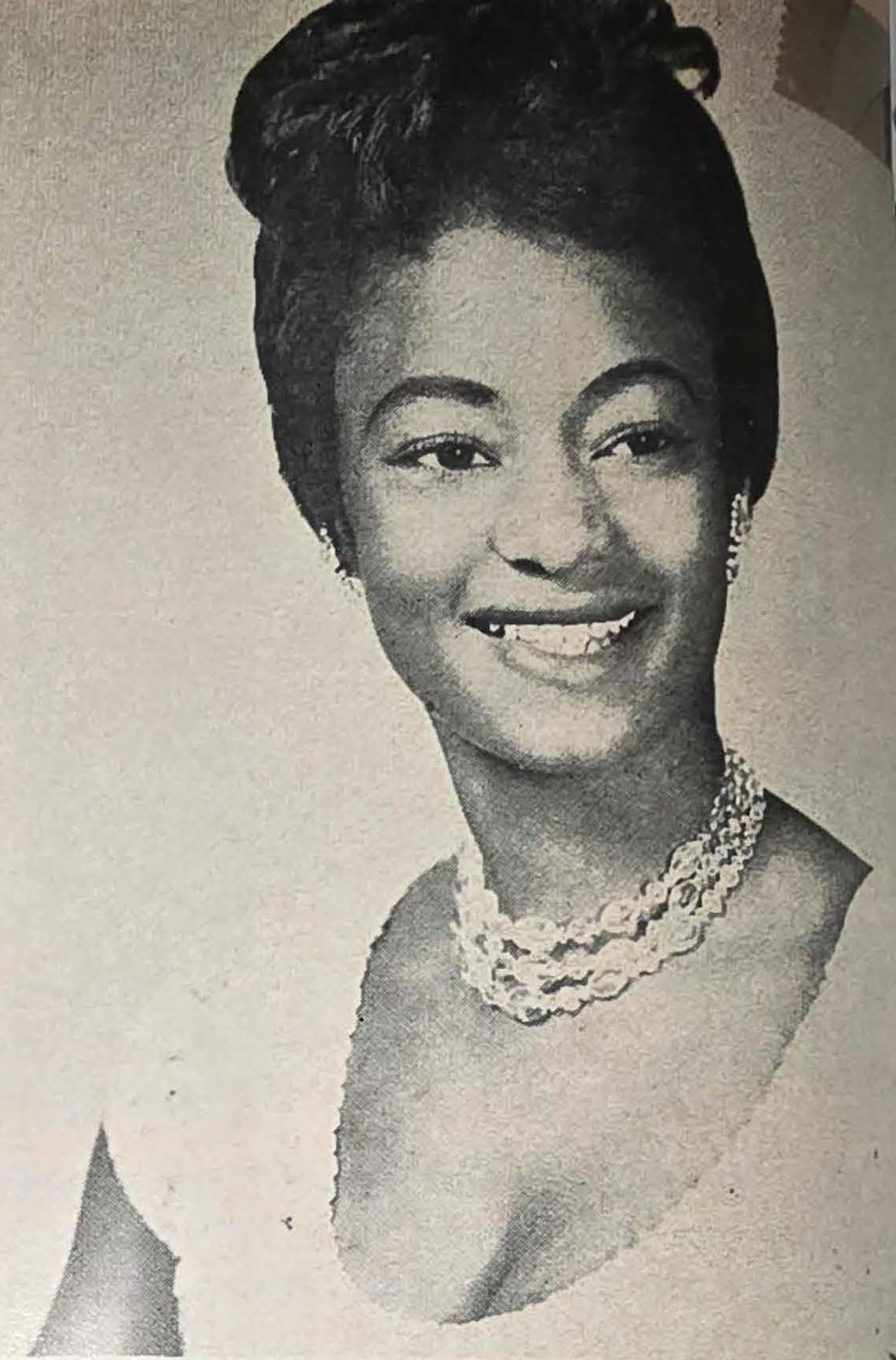
She was only 19 when the wrestling press took notice. In his "Gal Grapplers Kill Color Line" feature for Ring Wrestling magazine, veteran sportswriter Dan Daniel tagged her "Pert Dinah Beamon," using a word of the day for spirited and quick-witted, and called her "this lovely miss from ‘Ol Miss’ one of the top newcomers in the ranks of female grapplers," adding that "when it comes to looks and talent she stacks up with the best." In the same piece, Daniel named Dinah Beamon and Sweet Georgia Brown as the two standout women of color in the sport at that moment.
Born Dorothy Amanda Beamon in Laurel, Mississippi, she stood 5 feet 6 inches and wrestled at around 131 pounds. Her career carried her through the territorial circuit of the 1960s, including a run with Big Time Wrestling out of Boston and a 1962 Chicago card where she faced Sweet Georgia Brown, on a bill that also featured Bill Miller against The Sheik and Karl Gotch.
By the time the separate racial billing of the previous decade had faded, and the cards were simply integrated, Dinah Beamon was already part of the generation making that shift the new normal.
12. Virginia Franklin: The Reliable Fill-In Who Earned Her Place in Greensboro’s Historic All-Black Tag Match
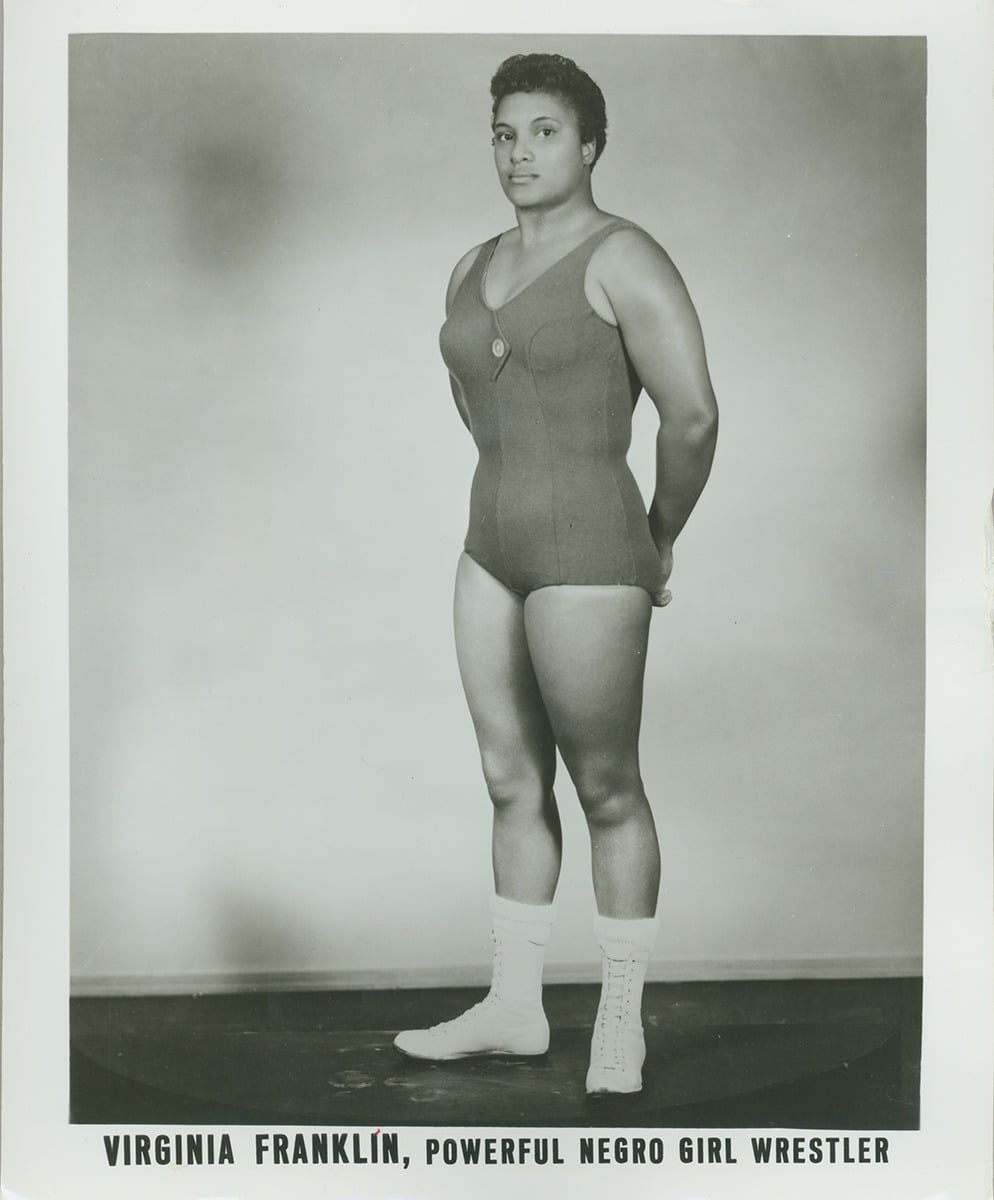
Virginia Franklin was a wrestler who could be trusted to step into the biggest bookings on short notice. In 1960, she filled in for Ramona Isbell in a best-of-three-falls match, teaming with Lula Mae Provo against Marva Scott and Babs Wingo. She turned up again on a February 1962 Florida card opposite Provo and Ramona Isbell, and that July she won a Florida battle royal outright, going over Babs Wingo, Louise Greene, Lula Mae Provo, and Ramona Isbell in one night.
Her most historically striking appearance came in Greensboro, this time not as the substitute but as a featured starter. The Mid-Atlantic Gateway, a respected archive of Jim Crockett Promotions’ history, documents a 1962 Greensboro Coliseum card that staged an all-Black women’s tag match, with Babs Wingo and Fuzzy Robinson, in for Marva Scott, against Ethel Johnson and Virginia Franklin, and called it “a rare such booking in wrestling during the era of segregation.” Ringside seats went for $2.50.
By the mid-1960s, the racial designation had all but disappeared from the cards. The matches were simply integrated. Virginia Franklin was among the women who carried forward what the Wingo sisters and Kathleen Wimbley had started a decade before.
13. Pearl Bates: A Decade of Competition Hiding in the Match Records
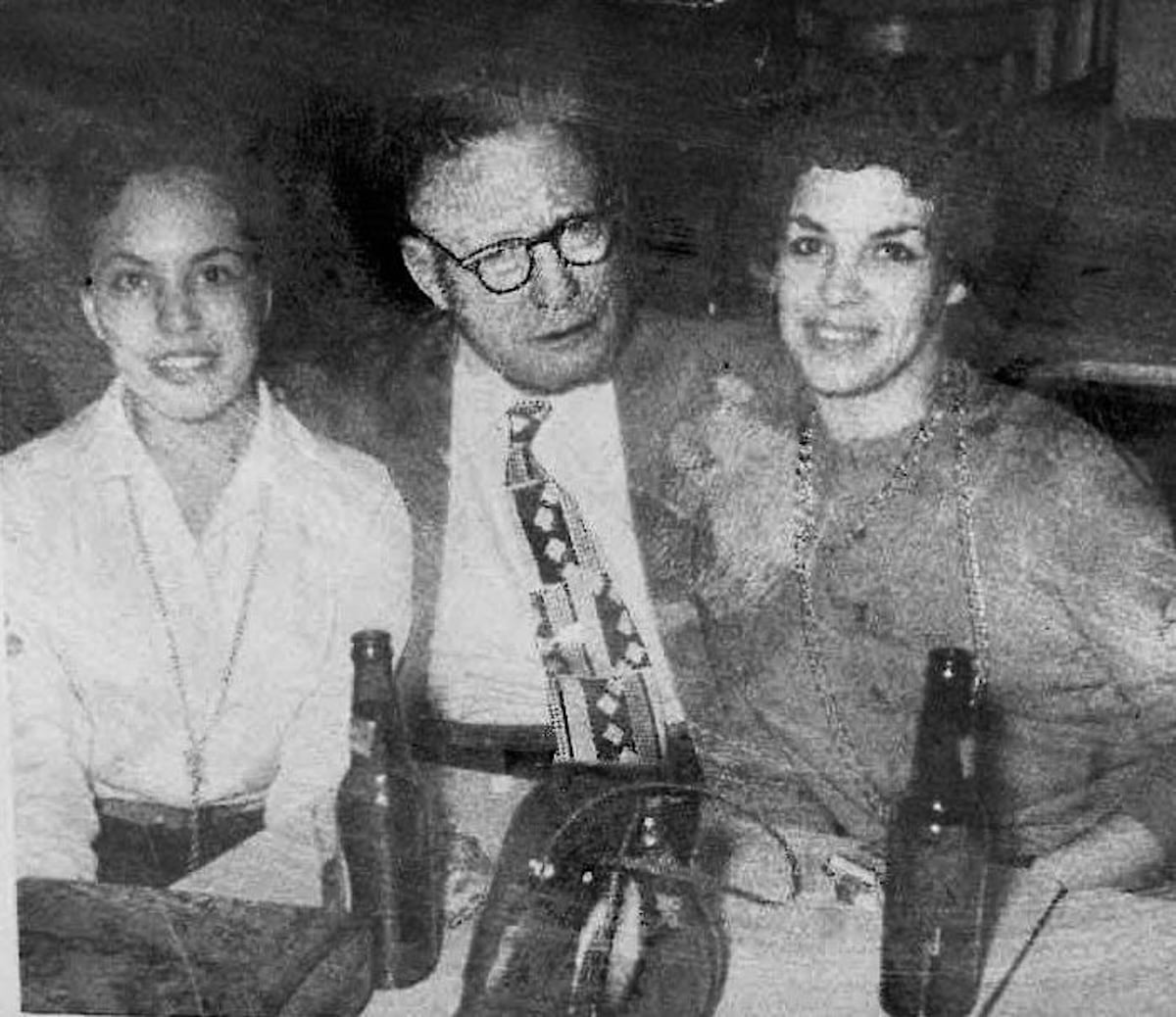
Pearl Bates is one of those names that turns out to be far busier in the record than her obscurity suggests. She appears on Billy Wolfe’s historical roster of women wrestlers under her real name, Mary Reynolds, a detail backed by multiple sources, including a Pittsburgh card listing her alongside Karen Kellogg and an April 29, 1967, Indianapolis card that drew 10,500 fans.
Trace her bouts and a full career emerges. In 1960, she teamed with Ethel Johnson to beat Babs Wingo and Marva Scott, and that same year, she stood in a Capitol Wrestling battle royal beside Kathleen Wimbley, Babs Wingo, Ethel Johnson, and Ramona Isbell. A 1961 Minneapolis battle royal under Verne Gagne’s AWA banner placed her among that same company, and a 1961 Greensboro card had Babs Wingo and Fuzzy Robinson getting past her and Virginia Franklin, on a night Buddy Rogers defended the NWA United States Championship.
From those 1960 Capitol Wrestling results through the 1967 Indianapolis card, her run stretches across the better part of a decade. She competed steadily on major cards through the transition years, when the strictly segregated “colored” billing of the early 1950s was giving way to integrated wrestling, and she did it well enough to keep getting booked.
14. Tina Cole: The New Orleans Bayou Talent Who Helped Grow the Crowds
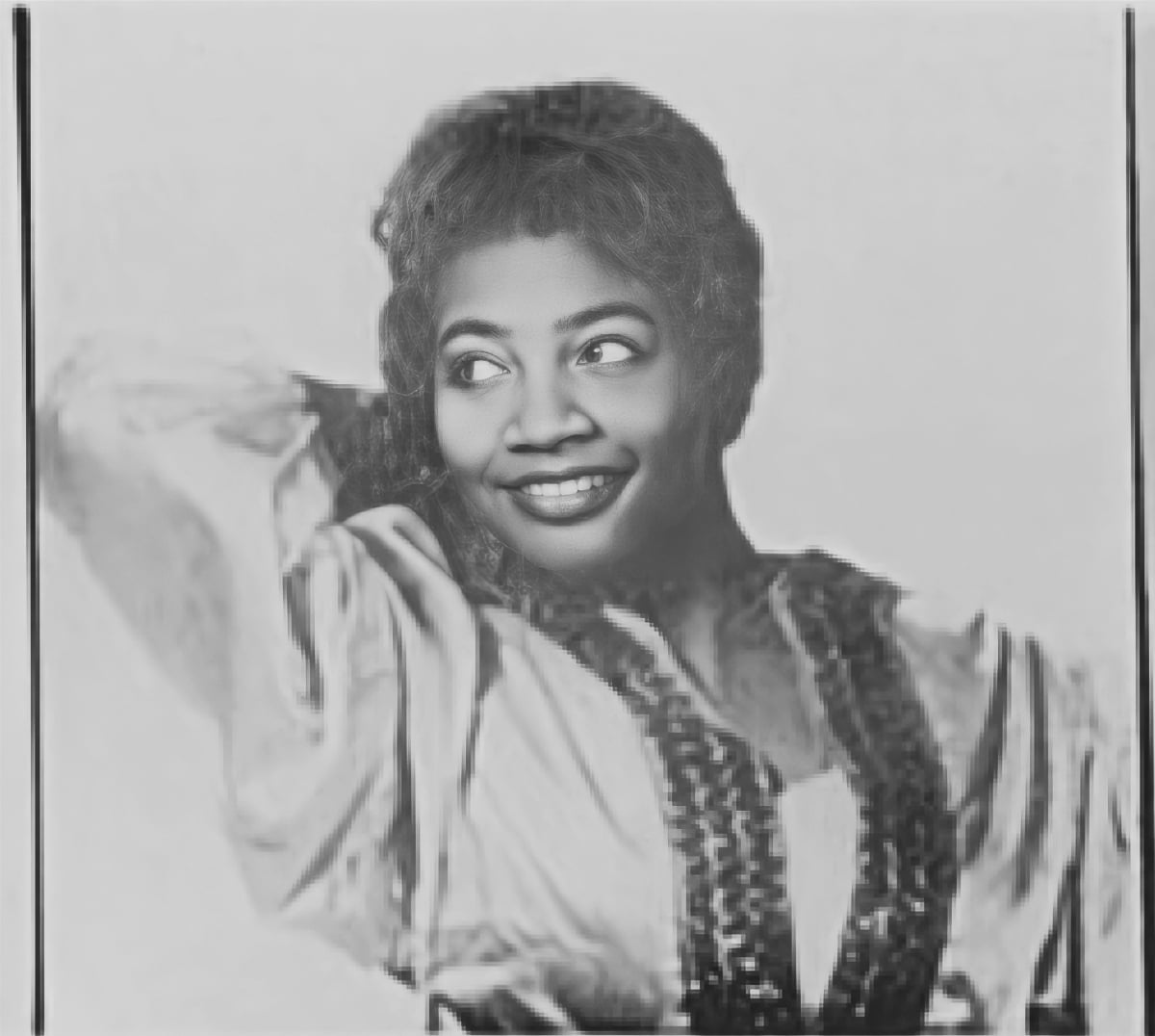
The wrestling press introduced her with a wink. “Now we come to Tina from the Bayous,” one 1950s Ring Wrestling magazine feature noted. “Family name Cole, native of New Orleans.” Behind the playful billing was a real competitor who earned her place among the women integrating the sport.
Tina Cole came up through the same circuit as the Wingo sisters and their peers, and her impact is preserved in the historical record. The Franklin County Black History Series, documenting the Columbus, Ohio, women who reshaped the business, lists Tina Cole alongside Ramona Isbell, Louise Greene, and Lula Mae Provo as one of the Black women wrestlers whose presence “increased the size of the crowds and the demand for larger prizes.”
She shared cards and the ring with the biggest names of her generation, including a documented bout against Sweet Georgia Brown. New Orleans gave women’s wrestling Babs Wingo, and in Tina Cole, it gave the sport another daughter of the bayous who helped carry the integration era forward.
15. Betty Ann Spencer: The Woman Who Broke California’s Ban on Women’s Wrestling
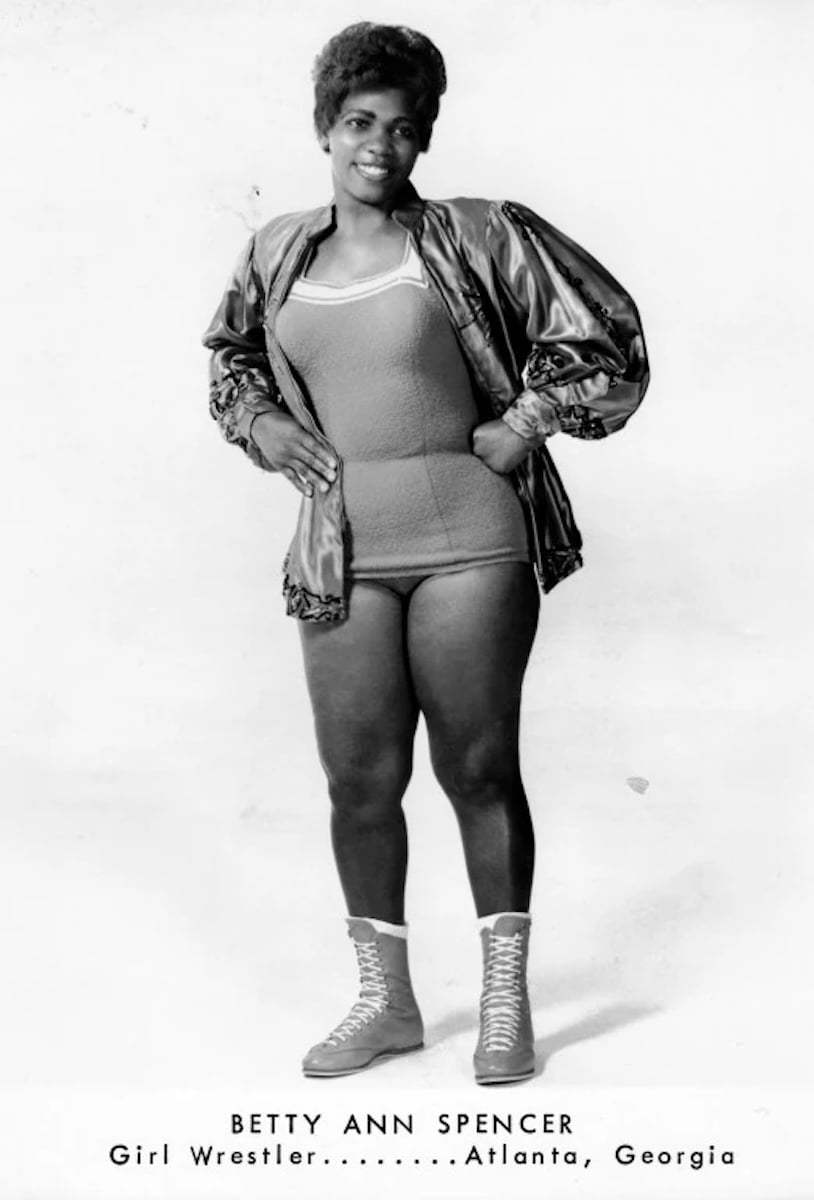
By the time Betty Ann Spencer came up, the landscape had shifted. The rigid racial billing of the early 1950s had given way to integrated cards, and a new wave of Black women was competing on the same shows as their white counterparts, without the separate billing that had marked the decade before.
Spencer’s mark on the sport, though, came in a courtroom as much as a ring. On September 17, 1965, Superior Court Judge Harold F. Collins lifted California’s long-standing ban on women’s professional wrestling after Spencer and Barbara Baker sued the California State Athletic Commission, seeking a writ of mandate to force the state to license women. They were represented by attorney Paul Caruso, whose client list included war hero and actor Audie Murphy. While 44 other states already allowed women’s wrestling, California had clung to the notion that women were “frail and gentle beings.” The ruling ended that, and within months, women’s wrestling was a regular draw at the Grand Olympic Auditorium in Los Angeles.
In the ring, Spencer worked NWA-affiliated cards through the 1960s, documented on a 1965 Tulsa card with Sweet Georgia Brown, and on cards in the Toledo, Ohio territory. She trained in The Fabulous Moolah’s Columbia, South Carolina camp, the same one that produced Sweet Georgia Brown.
She belongs to the bridge generation, women who never had to break the color line because Ethel Johnson and Babs Wingo had already broken it. What Spencer broke was a different barrier, a legal one, in the country’s largest entertainment market.
16. Jean LaPrea: One of the First Black Women to Challenge Stereotypes in the 1950s Wrestling Ring
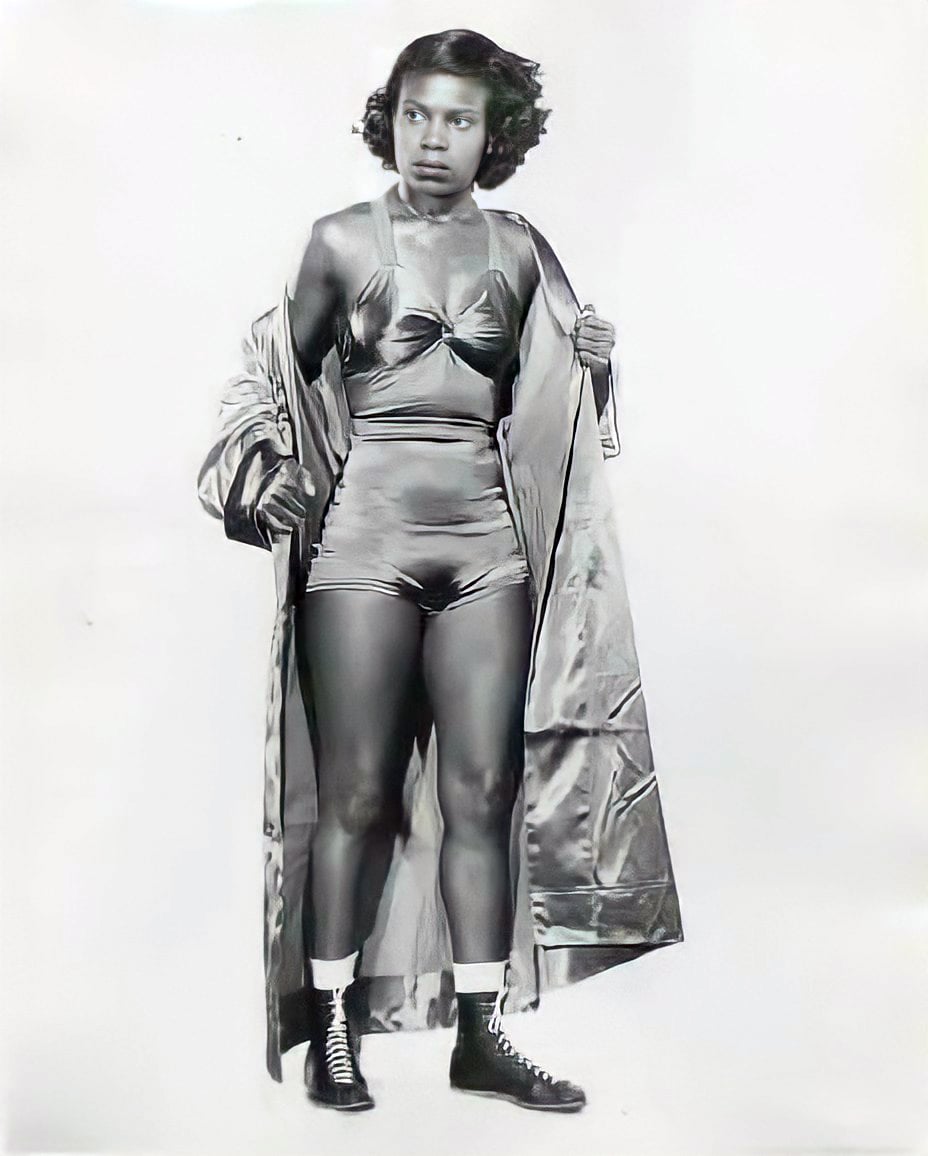
Jean LaPrea arrived in professional wrestling at the same pivotal moment as the Wingo sisters and Kathleen Wimbley, stepping into the ring at a time when the very presence of a Black woman on a wrestling card was itself an act of defiance.
She is one of the first Black women to integrate professional wrestling and challenge stereotypes in the 1950s.
Her name surfaces alongside Carroll Cullom, Lillian Duke, and Barbara Ryan in photographs from the early 1960s bearing the stamp of Billy Wolfe’s operation, placing her squarely within the same generation and promotional network as the women who had broken the color line only a few years before.
17. Carroll Cullom: A Black Woman Wrestler Who Helped Diversify the Ring in the 1950s and 60s
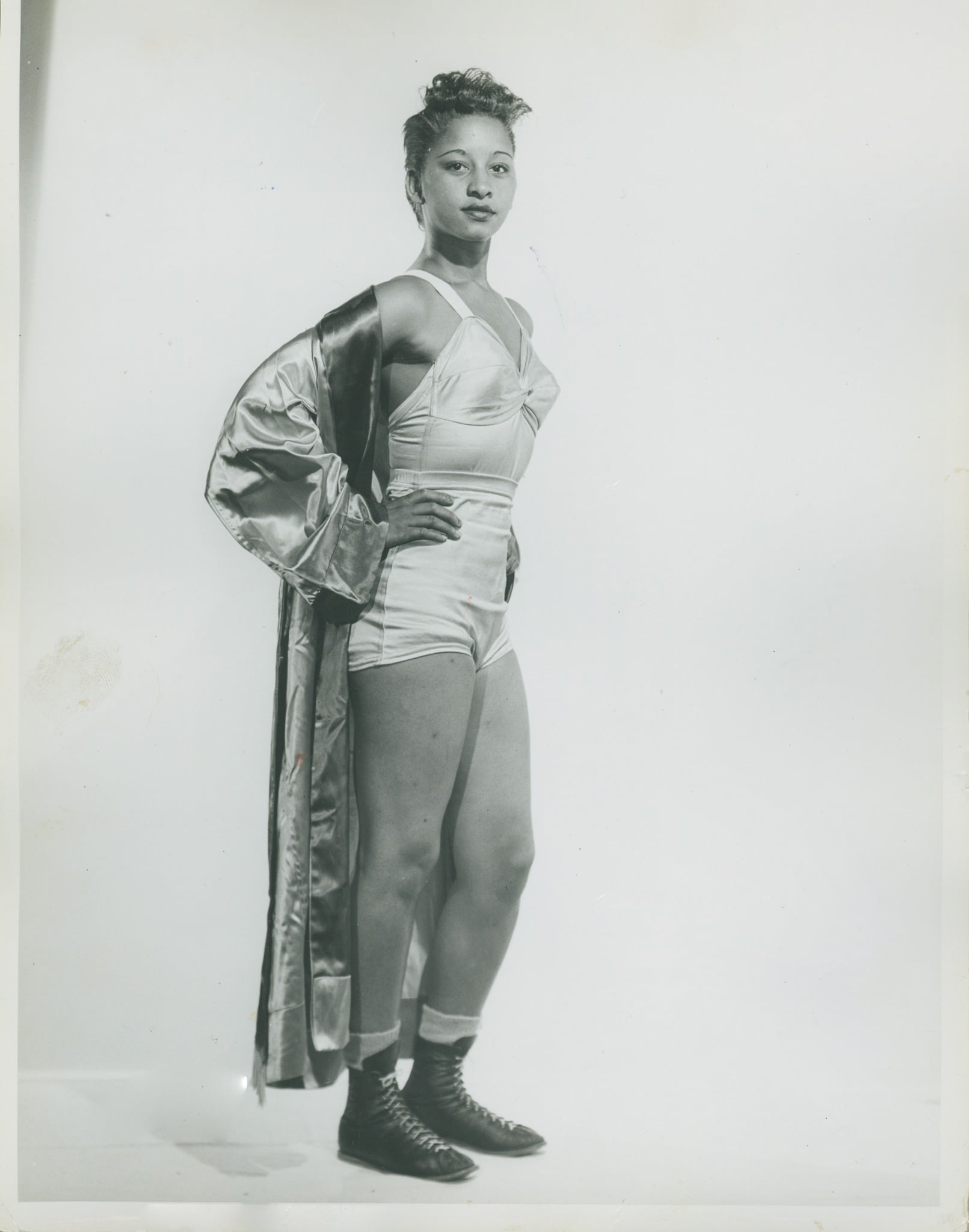
Of all the women in this article, Carroll Cullom is the one about whom the record speaks most softly. We will not pretend to know more than we do. What survives of her story is a name, a photograph, and a single line of testimony stating that she was from Memphis, Tennessee, and rather than dress that up with invention, it is more honest and more respectful to tell you plainly what is known and what is not.
What is known is this: Carroll Cullom was one of the Black women who helped diversify professional wrestling in the 1950s and 1960s. In those records, she is often listed alongside another performer of the era, Barbara Ryan, a pairing that suggests the two crossed the same circuits in the same years.
Beyond that, her training, the territories she worked, the women she faced across the ropes, the dates that bracketed her career, none of it has surfaced in the surviving record. She does not appear in the magazine rosters of her contemporaries, and the match results that anchor so many of these histories have not been found for her. That absence is not a judgment on her ability or her importance. It is simply the reality of how thinly the careers of Black women wrestlers were documented in her time, and how much was allowed to slip away.
And yet she was there. A photograph exists. A woman whose name is worth preserving.
In an era when integration was still a daily negotiation rather than a settled fact, Carroll Cullom stepped into the ring and competed, and her presence on those cards was part of how the door was pushed open for everyone who followed. That she is remembered at all, when so many like her were forgotten entirely, is reason enough to set her name down here with care, and to leave space for the fuller story that further research may one day recover.
18. Lillian Duke: The 1950s Black Woman Wrestler Whose Impact on Wrestling History Has Only Grown Over Time
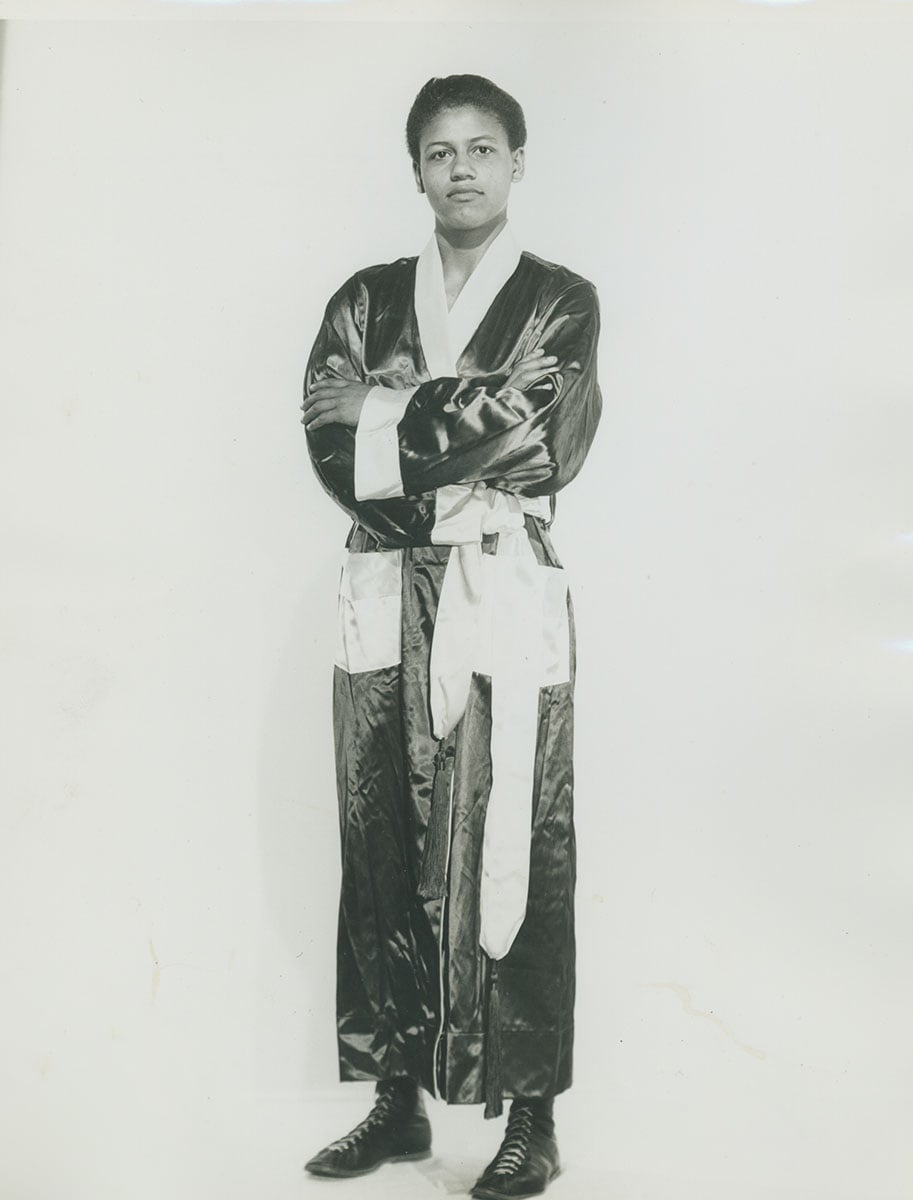
Lillian Duke is among the women whose names survive thanks to the Lady Wrestler project, filmmaker Chris Bournea’s effort to recover the stories of the African American women who worked the wrestling circuit in the 1950s and 1960s. Bournea credits her with making “a big impact on the wrestling industry in the 1950s alongside her African-American female peers,” and her surviving photograph bills her out of Texas.
What the record does not give us is the rest of the story. Her dates, her real name, the territories she traveled, and the women she faced have not survived in any documented form, and she does not appear in the magazine rosters that preserved so many of her contemporaries. That silence is not a measure of how much she mattered. It is a measure of how little care was taken to record the careers of Black women in the ring during her time.
What remains is a name, a photograph, and a place of origin, enough to know she was there, competing, in the years when simply stepping through the ropes was its own act of defiance. She is set down here so that the fuller story, if it is ever recovered, has a place to land.
19. Barbara Ryan: The Seattle Wrestler Preserved in a Single Photograph
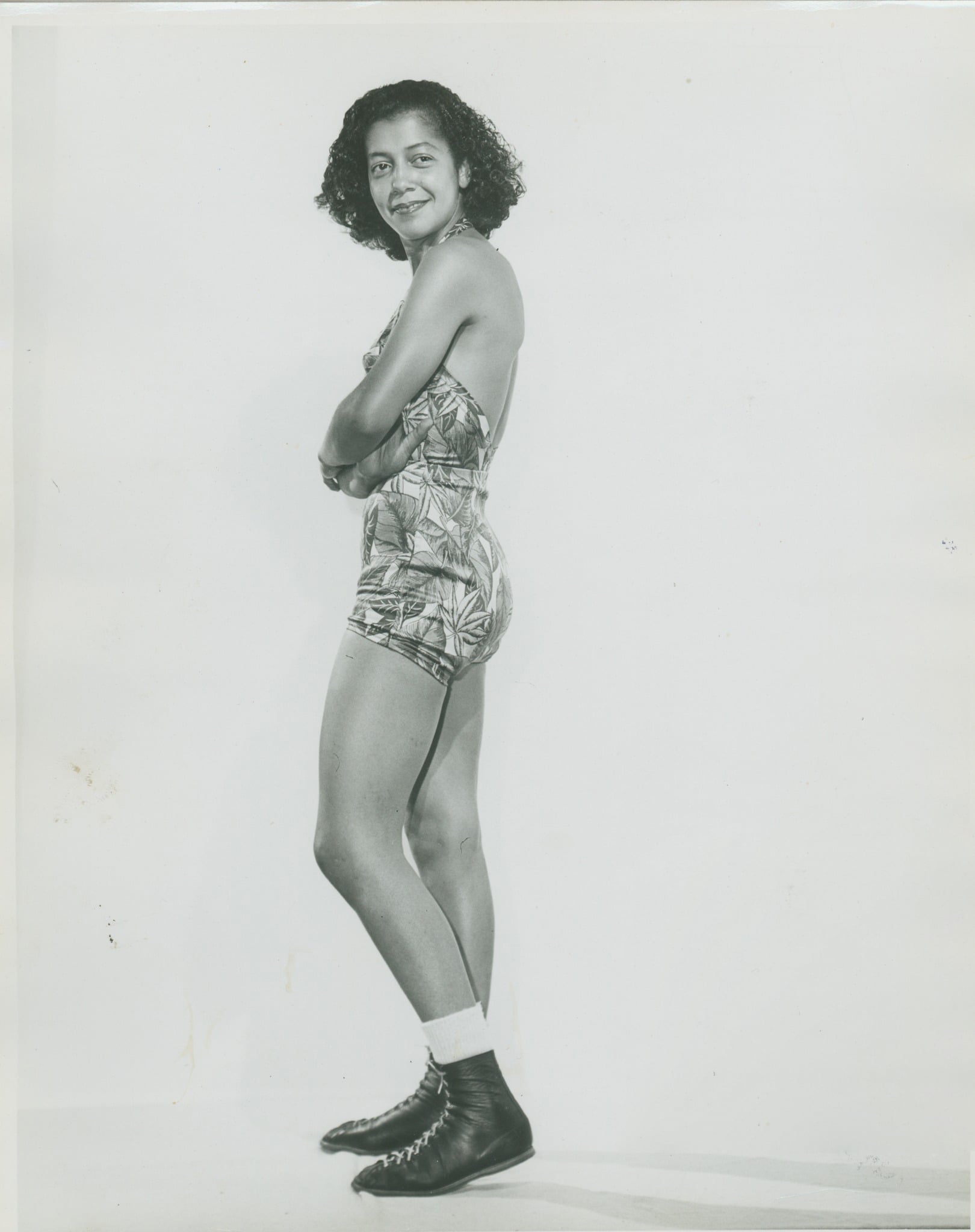
Barbara Ryan belongs to a specific cluster of Black women wrestlers whose surviving footprint, at least for now, rests largely on a small group of studio portraits from the early 1960s.
Ryan’s vintage portrait identifies her as hailing from Seattle, Washington, a notable detail in itself, since the Pacific Northwest sat far outside the Columbus, Ohio, pipeline that produced so many of Billy Wolfe’s wrestlers.
Her in-ring record has not survived in meaningful detail, which is not the same as saying there was no career there. By the time Ryan was photographed, Babs Wingo and Ethel Johnson had already spent a decade proving Black women could headline cards. Ryan built on the ground Wingo and Johnson had already won, traveling from the far corner of the country to do it.
That she left behind a face, a hometown, and a name, but almost no recorded results, is not a verdict on her ability. It is a reminder of how casually this history was discarded while it was being made.
20. Etta Charles: The “Girl Wrestler” With a Real Capitol Wrestling Match on the Books
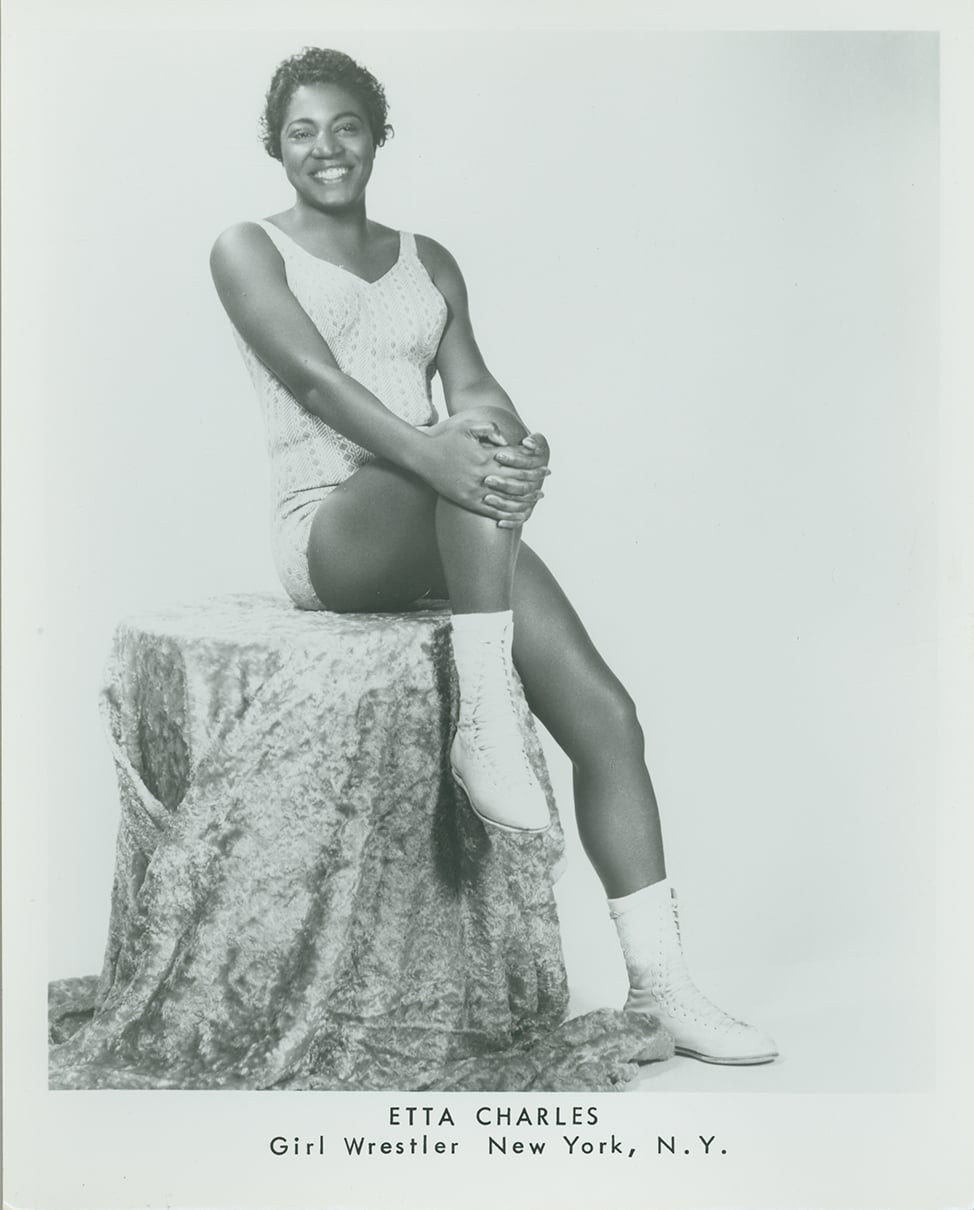
Unlike many of the women in this article, Etta Charles left behind something concrete: a verifiable match result in the surviving Capitol Wrestling territory listings.
In a documented bout from that territory, Dinah Beamon and Kathleen Wimbley defeated Etta Charles and Sweet Georgia Brown, a result preserved in the Capitol Wrestling card listings. The pairing matters. Sweet Georgia Brown was one of the most recognizable Black women in the business. You did not get booked in a tag match opposite Beamon and Wimbley, with Sweet Georgia Brown as your partner, unless promoters trusted you to hold up your end against top-tier talent.
Etta Charles was a working pro who shared cards with the best of her generation, and unlike so many of her peers, she has the results to prove it.
21. Mary Jane Robinson: New Orleans’ Third Contribution to Wrestling’s Integration Era
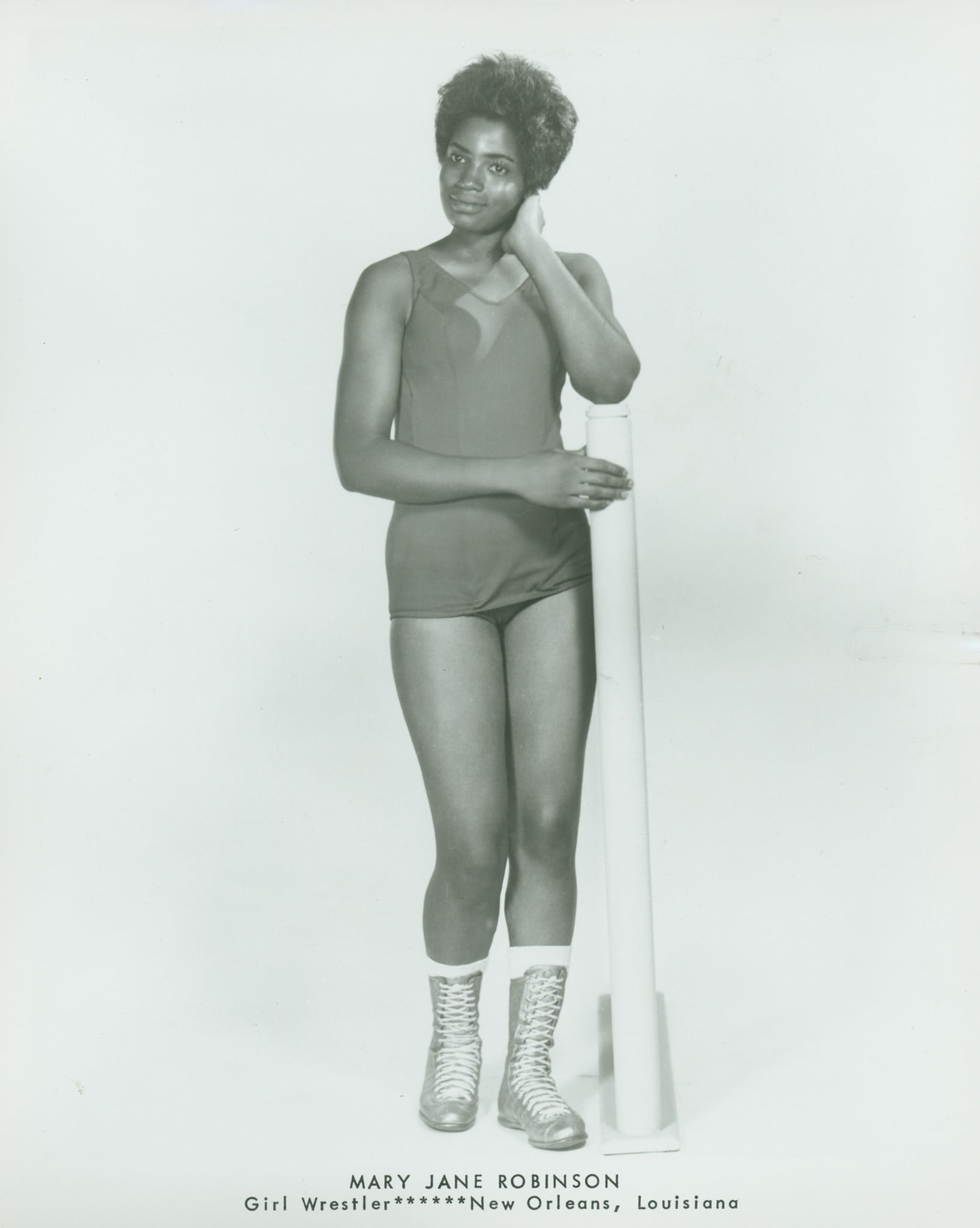
New Orleans threads through this story more than once. Babs Wingo worked as a hat-check girl in the city before Billy Wolfe signed her, and Tina Cole was another Louisiana product who carried something of the Gulf Coast into the ring. Mary Jane Robinson is the third name the Crescent City gave to this chapter of wrestling history.
The detail that survives about Robinson is geographic and deliberate. Mary was one of the Black women who helped bring equity to the man’s world of pro wrestling in the 1950s and ’60s.”The word equity is doing real work in that sentence. These women were not novelty acts filling time. They were competitors forcing their way into a sport whose business model had been built around their exclusion.
New Orleans sat inside some of the most rigidly segregated wrestling territory in the country, the same Deep South circuit where, in neighboring states, the law itself could make an integrated match illegal before the bell rang. That a Black woman from that city built a wrestling career at all is the part of Robinson’s story that no thin record can erase.
22. Esther Jackson: A Name Preserved From Wrestling’s Integration Era
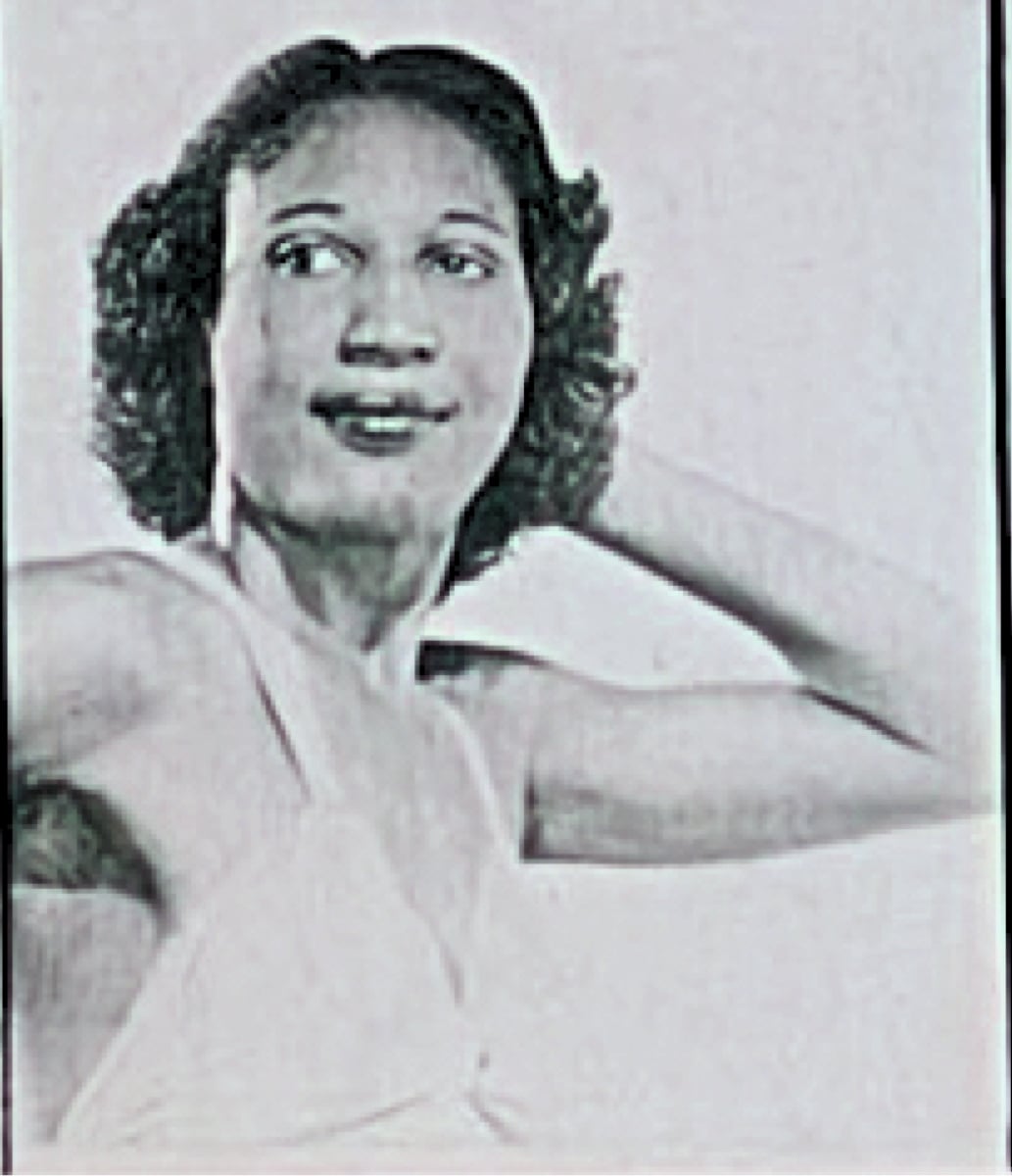
Esther Jackson worked the cards in an era that offered Black women wrestlers no union, no standard contract, and in much of the country, no legal guarantee they were even allowed in the building.
Her name survives because of original research rather than recycled lore. Jackson is documented in Chris Bournea’s Lady Wrestler archive, the project that grew out of years of interviews with surviving wrestlers, their children, and witnesses to the era, and which produced the 2017 documentary of the same name. It remains the single most serious effort anyone has made to recover this corner of wrestling history, and the names Bournea chose to preserve were not chosen casually.
What has not survived is a detailed bout-by-bout record, and it would be dishonest to pretend otherwise or to manufacture one. What we can say with confidence is that Esther Jackson was there, that she competed during the integration era, and that her name was known in the business well enough to be carried forward by the people who lived it. In a history where countless women were erased outright, documented presence is not a footnote. It is the whole fight.
23. Angela Burt: The “Colored Champion of the World” Who Started at 32 and Made Crowds Furious
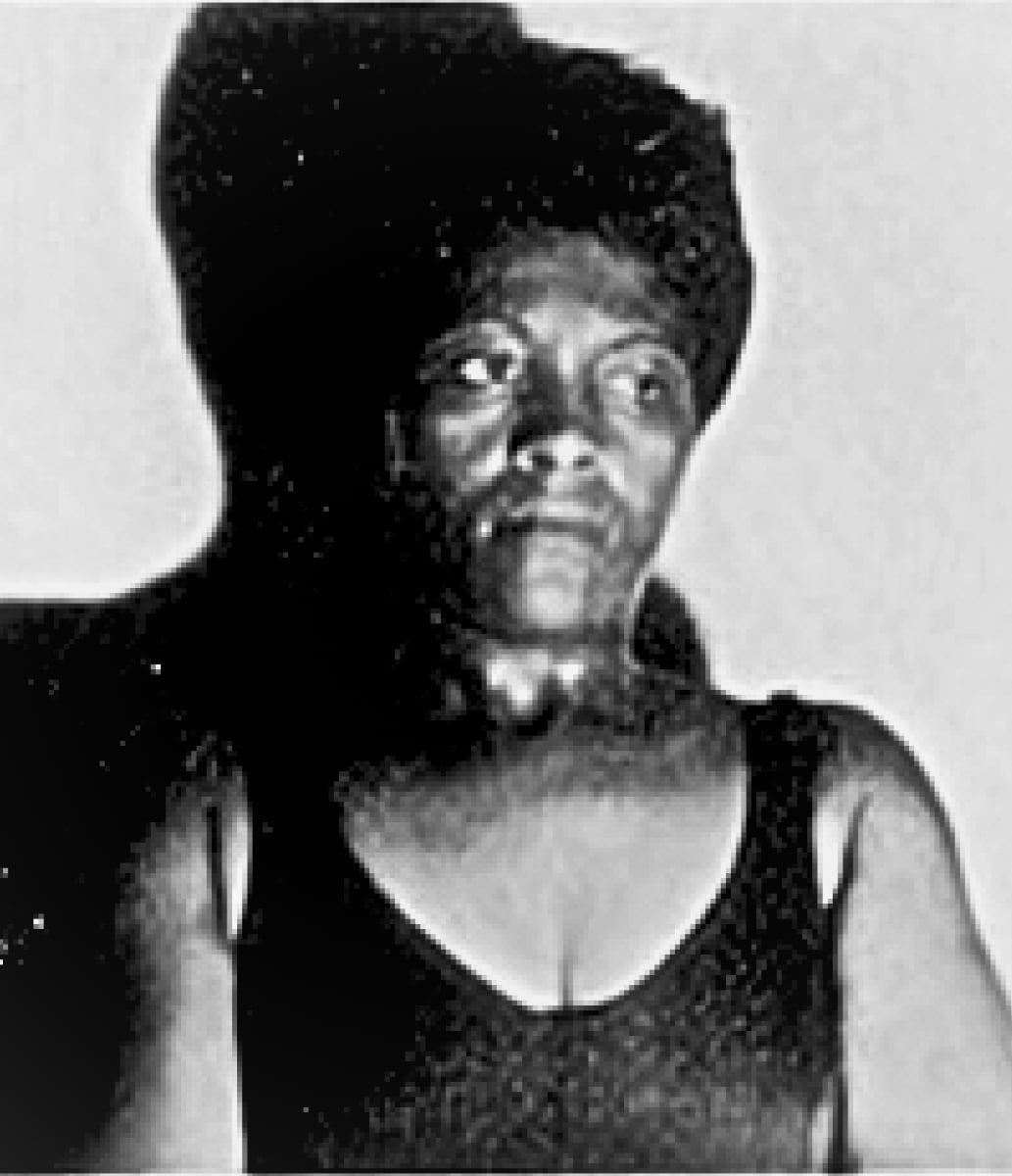
Angela Burt is one of the rare later entries in this group whose career can be told in real detail, and the details are extraordinary. She was born December 6, 1930, in Chicago, Illinois, trained under veteran Violet Ray, and did not debut until 1962, at the age of 32, beginning her career with Van Fleet’s troupe in Iowa. Most of the women profiled here came to the business as teenagers. Burt arrived as a fully grown woman, and she wrestled like one.
Documented as one of the toughest women wrestlers of the early 1960s, Burt regularly defeated opponents such as Rita Crawford, a run of victories that frequently enraged the predominantly white crowds watching a Black woman win.
Promoters billed her as the “Colored Champion of the World,” a title that captured both her standing in the ring and the ugliness of the era that produced it. By every account that survives, she was nobody’s pushover.
Angela Burt retired in 1965, after a short but uncompromising career, and died on January 26, 2013, at the age of 82. Hers is exactly the kind of life this article exists to recover: a late bloomer from Chicago who walked into hostile arenas in her thirties, won anyway, and refused to shrink for anyone’s comfort.
24. Lola Loray: The Boston Competitor Who Earned Her Place in the Negro Girls World Tournament
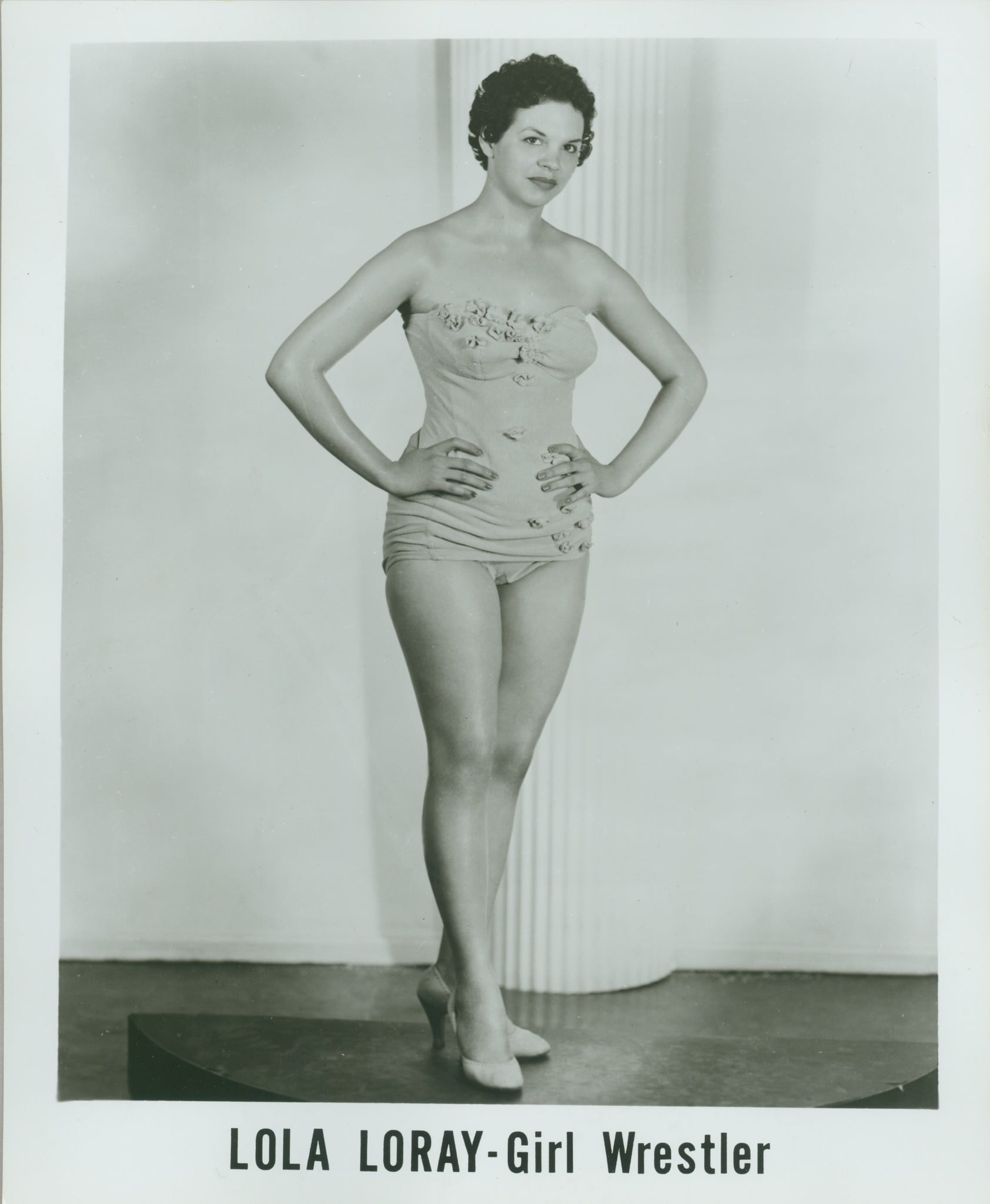
Lola Loray, identified in some records as Gladys Reynolds, earned her standing as one of the best in the group. Billed as “Lola Loray of Boston,” she worked the same circuit and the same territories as her peers through the late 1950s and into the early 1960s.
Period match records place her on Ohio cards in 1957 and 1962, where she competed in three-falls tag matches with partners including Shirley Lee and Vicki Lynn. Her name turns up across the kind of small-town and mid-sized arena bookings that made up the bread and butter of women’s wrestling in those years, the spot shows and auditorium cards that rarely made the national press but kept the business running night after night.
She came up through the same Columbus-centered scene as so many of the women in this article, the operation run by Billy Wolfe, the man widely credited with popularizing women’s professional wrestling and bringing it to the television screen.
Surviving records tie her training to the deep talent pool around that operation, with her name connected to instruction from figures of the caliber of Cowboy Luttrall, Buddy Rogers, and Al Haft, the kind of pedigree that produced serious in-ring talent.
She made her debut in the mid-1950s and wrestled mostly through the Ohio area, where she lived, the same scene that served as the home base for this entire generation of women.
She competed at a serious level. In November 1962, she went all the way to the final of a women’s championship tournament, falling to Karen Kellogg in the deciding match, a result that confirms promoters trusted her to carry a main event to its conclusion. You do not get booked into a tournament final unless the people making the matches believe you belong there.
Her career carried a quieter kind of courage, too. She was diagnosed with cancer and briefly stepped away from the ring, and it took her the better part of a year to recover. Once she did, she went back to wrestling, returning to a profession that asked everything of a woman’s body, after her body had already been through one of the hardest fights there is.
When her time in the ring finally came to an end, she built an ordinary working life away from wrestling, the way many of these women did. She spent years with Schottenstein’s Enterprises, working in their accounting department and later as a Distributions Supervisor, before retiring. She passed away on September 2, 2018.
Like so many of the women in this story, Lola Loray left behind a record that is fragmentary, scattered across old cards, faded posters, and the memories of those who saw her work. But the surviving evidence is clear on what matters most: she was there, she competed, and she earned her spot in a tournament lineup that history now recognizes as a landmark gathering of pioneering talent. That is a legacy worth preserving.
25. Sandy Parker: The Pacific Northwest Fan Who Became Wrestling’s First Black Woman World Champion

While this article centers on the Black women who entered the business at the dawn of television through the early 1960s, we would be remiss not to include Sandy Parker, the wrestler who came up as that pioneering era was closing and carried its legacy to a height few of her predecessors were ever permitted to reach.
Parker’s story even shares geography with this list. Born Jolene Cassandria Parker in Vancouver, British Columbia, on March 2, 1952, and raised by her grandmother, she fell in love with wrestling as a teenager by crossing the border to watch matches in Seattle, Washington, the same Pacific Northwest scene that, a few years earlier, had produced Barbara Ryan.
A self-described tomboy who climbed trees, played baseball, and held her own against the boys in her neighborhood, she was just fifteen when she saw her first match and was hooked instantly, soon attending two or three shows a week.
How she broke in says everything about her determination. Too young at fifteen to take the trainers up on their offers, she waited, then went to the local library and combed through the phone directories of the biggest cities in North America, writing letters to trainers she found there. A reply from Lou Klein, “The Man of 1,000 Holds” and the trainer of the Original Sheik, brought her to Detroit. After roughly four months of training, refined by veterans Mary Jane Mull and Lucille Dupree, Parker debuted in Battle Creek, Michigan, against Mull herself. She came up directly in the wake of the women profiled throughout this article, building on ground broken by Marva Scott, Babs Wingo, Ethel Johnson, Kathleen Wimbley, and Sweet Georgia Brown.
Parker was a natural heel, drawn to villainy, but American promoters, almost all of them white men, told her a Black woman as a heel would read as too “hostile” for their crowds, and held her back from the role she was built for. Her time training under The Fabulous Moolah in South Carolina exposed the same exploitation so many of these women faced, with Moolah skimming 25 to 50 percent of her wrestlers’ pay and reserving the best bookings for those who stayed in her favor.
It was abroad that Parker finally got to be exactly who she was. Traveling to Japan with the legendary Mildred Burke, she debuted for All Japan Women’s Pro-Wrestling in April 1973 and soon defeated Miyoko Hoshino for the WWWA World Championship, ending Hoshino’s nearly 300-day reign.
That victory made her the first Black woman to hold a world wrestling title, and, at the same moment, the first openly gay woman to do so, in an era when being gay was still criminalized across much of the United States.
In Japan, she was finally free to wield the heel persona she loved, and she became an eight-time WWWA Tag Team Champion before retiring in 1986.
She lived her later years quietly in Las Vegas, where she passed away in June 2022 at the age of 77, her death unknown to the wrestling world for nearly two and a half years.
The pioneers in this article forced the door open. Sandy Parker walked through it and onto the top of the world.
Her remarkable full story is told in our dedicated feature, Sandy Parker: Wrestling’s First Black Woman Champion.
The Black Women Wrestlers Who Showed Up and Made History
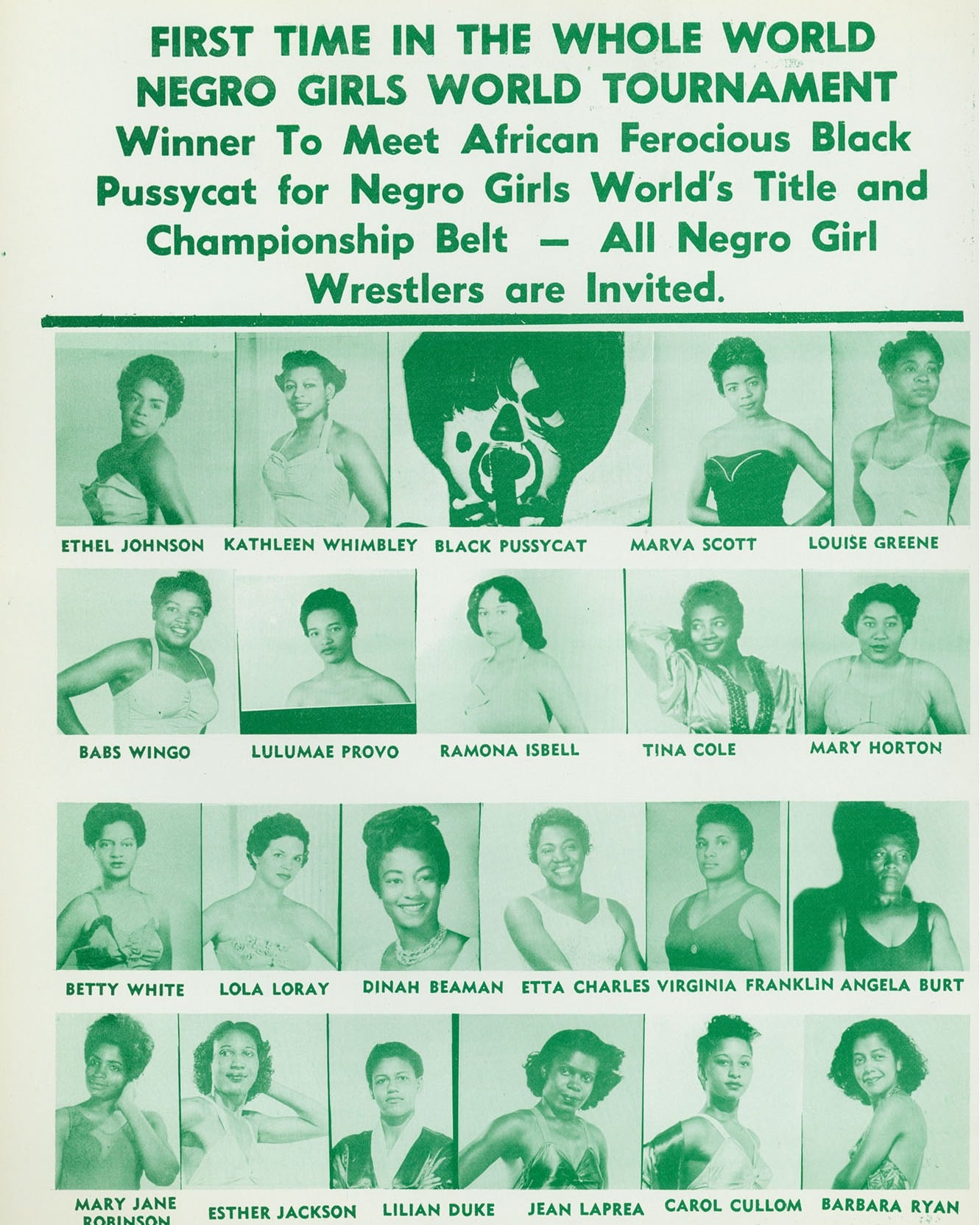
Despite all of it, the segregation laws, the hostile hotels, the four-hour drives for a bite to eat, the danger waiting outside the arena, they showed up. They trained. They competed. They made history. And by the mid-1960s, the rigid racial segmentation of women’s wrestling had dissolved. The integrated card became the standard, a development that was, in large part, the legacy of the women in these pages.
They did it without guarantees, without recognition, and in most cases without ever knowing that anyone would one day go looking for their names. They wrestled because they were wrestlers, and in doing so, they pried open a door that had been bolted shut, not just for themselves, but for every woman who would later step through it and never have to ask whether she was allowed in the building.
That is the quiet enormity of what they did. For some, the records may be thin, and the photographs few, but the proof of these twenty-five women is written into the sport itself, into every ring they were once told they could not enter.
These women were not footnotes. They were the foundation.
A few of the women in this list, including Jean LaPrea, Carroll Cullom, Lillian Duke, Barbara Ryan, Mary Jane Robinson, and Esther Jackson, left behind only fragments in the historical record: a name, a photograph, a single result on a faded card. That is a reflection of an era that too often failed to document these pioneers, not of what they gave to the sport. If you knew any of these women, or have a photograph, a clipping, or a story to share, the Pro Wrestling Stories team would be honored to hear from you. You can reach us at admin at prowrestlingstories dot com, and we would be delighted to give these trailblazers the fuller telling they deserve.
These stories may also interest you:
- Babs Wingo, Marva Scott, and Ethel Johnson: Wrestling’s Unsung
- 12 Women Shamefully Not in the WWE Hall of Fame
- 25 Wild 1950s Wrestling TV Gimmicks That Changed the Business
Download PDF Version
Get the complete article as a formatted PDF for offline reading.