The “Million Dollar Man” Ted DiBiase built a legendary wrestling career, proving “everybody’s got a price.” Now, his family name is at the center of Mississippi’s largest public welfare fraud case, a $77 million scandal that prosecutors say siphoned federal anti-poverty funds meant for America’s poorest to luxury rehab centers, athletic stadiums, and personal bank accounts. Ted DiBiase Jr., a former WWE World Tag Team Champion, faces 13 federal counts, including wire fraud and money laundering, as his trial began January 6, 2026. His brother Brett pleaded guilty to conspiracy. And Ted Sr., himself never criminally charged, filed a defamation lawsuit against the state auditor, arguing he’s been wrongly implicated. As legal battles unfold simultaneously in federal and state courts, the DiBiase family legacy hangs in the balance between wrestling immortality and a criminal scandal that has shocked the industry.
Ted DiBiase Jr. (left), “Million Dollar Man” Ted DiBiase Sr. (center), and Brett DiBiase (right). The DiBiase family’s wrestling legacy, once defined by championship belts and WWE Hall of Fame honors, now intersects with a $77 million Mississippi welfare fraud scandal involving federal charges, civil litigation, and a defamation lawsuit. Photo Credit: WWE. Artwork by Pro Wrestling Stories.
Quick Tip for Facebook Readers
Many of our readers connect with our content through our Facebook page. However, Meta's built-in browser (which opens by default on mobile) occasionally freezes mid-article- a known issue unrelated to our site. To enjoy uninterrupted reading: Tap the three dots in the top right corner → Select 'Open in external browser.' This will resolve the glitch. Thanks for your support. We want your wrestling stories to stay as smooth as a top-rope hurricanrana!
The Million Dollar Man: From Technical Wrestling Mastermind to WWE Hall of Famer
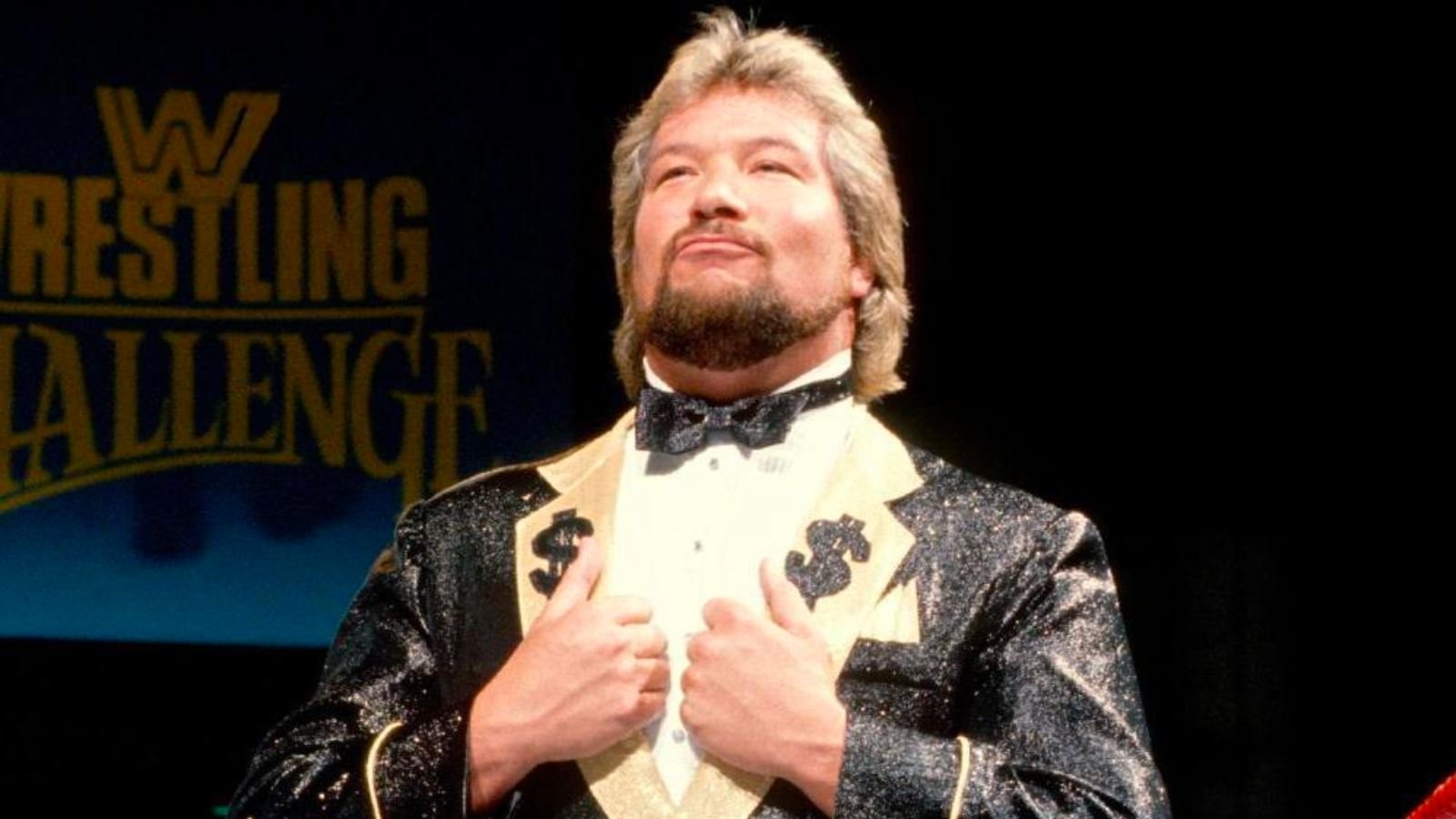
"The Million Dollar Man" Ted DiBiase Sr., in his iconic WWF character during his prime wrestling years, long before public allegations surfaced in 2020 involving his sons in a Mississippi welfare scandal investigation. DiBiase was inducted into the WWE Hall of Fame in 2010 after decades of work as a technical wrestling legend. Photo Credit: WWE.
Ted DiBiase Sr., born January 18, 1954, in Omaha, Nebraska, built a decades-long professional wrestling career that made him one of the most respected technical wrestlers and compelling villains in wrestling history. His adoption by legendary wrestler “Iron” Mike DiBiase at age four connected him to wrestling royalty, though Mike’s death from a heart attack in the ring when Ted was 15 left a permanent mark on the young wrestler’s trajectory.
In that interview, DiBiase recalled that early in his career, seasoned veteran Dick Murdoch encouraged him to pursue wrestling seriously, recounting advice that emphasized hands-on apprenticeship: “Instead of just going and getting a regular summer job, why don’t you come down to Louisiana and wrestle for the summer and go back?”
This hands-on education in the territories taught DiBiase the fundamentals that would later distinguish him in the WWF.
During his territorial years, DiBiase competed against and learned from some of wrestling’s greatest talents. He described his experience in Mid-South as invaluable, explaining, “Watts had so many great wrestlers come through that territory.” This exposure to diverse wrestling styles and personalities helped DiBiase develop the versatile skill set that would later make him one of wrestling’s most believable performers.
The territorial system also taught DiBiase the political realities of professional wrestling. DiBiase later recalled that there was once “a major campaign” to position him as the next NWA World Champion, but internal wrestling politics meant the title ultimately went to other names like Dusty Rhodes and Ric Flair. This political education would prove invaluable when he navigated the complex landscape of the WWF’s national expansion.
DiBiase’s most iconic work came in the World Wrestling Federation (WWF), where he debuted his “Million Dollar Man” character in 1987. The gimmick, a wealthy heel who could supposedly purchase anything, became one of wrestling’s most enduring personas.
As documented on Pro Wrestling Stories, the character drew heavily from Vince McMahon’s real-life tendency to flaunt money and authority, a persona McMahon himself embodied.
DiBiase won numerous championships during his career in major promotions, including three WWF Tag Team Championships (with “IRS” Mike Rotunda), the WWF North American Heavyweight Championship, the 1988 King of the Ring tournament, and multiple regional championships across the National Wrestling Alliance (NWA) territories.
In 2010, after fourteen years of eligibility, DiBiase was inducted into the WWE Hall of Fame, with his sons introducing him at the ceremony. The Wrestling Observer Newsletter also inducted him upon its founding in 1996, cementing his status as one of the industry’s technical and character-work standards.
DiBiase Dynasty continued: Ted DiBiase Jr.’s WWE Championship Run and Brett DiBiase’s Early Career
Ted DiBiase Sr. (center), Ted DiBiase Jr. (left), and Brett DiBiase (right) at the 2010 WWE Hall of Fame induction ceremony. Ted Jr. holds his father’s iconic Million Dollar Championship belt—a moment capturing the family’s wrestling prominence, years before the Mississippi welfare scandal allegations emerged. Photo Credit: WWE.
Ted DiBiase Jr., born November 8, 1982, represented the continuation of a professional wrestling dynasty. Following family tradition, he trained under Chris Youngblood and the legendary Harley Race at Race’s Wrestling Academy, making his professional debut on July 8, 2006.
DiBiase Jr. quickly established himself as a technical wrestler, winning the Fusion Pro Tag Team Championship with his brother Mike DiBiase in February 2007 and briefly touring with Pro Wrestling Noah in Japan.
In July 2007, he signed a developmental contract with WWE, training at Florida Championship Wrestling (FCW), where he captured the FCW Southern Heavyweight Championship in December 2007 before injury forced him to relinquish the title in January 2008.
His WWE television debut on May 26, 2008, proved immediately successful. In his first televised match, he won the World Tag Team Championship with Cody Rhodes, beginning a partnership that would define his early WWE tenure. The duo, known as “Priceless,” captured the championship twice, establishing themselves as a dominant force. When they aligned with Randy Orton to form the stable The Legacy in 2008, DiBiase Jr. ascended further up the card, feuding with some of WWE’s top talents.
However, DiBiase Jr.’s WWE career ended sooner than expected.
In a 2021 interview with Chris Van Vliet, he explained his 2013 departure. "I was offered another 5 year deal. It was generous, but when it came down to it I was battling some things internally. There were some mental health issues. I was going through depression and anxiety, and also being a new father," DiBiase Jr. stated.
He continued, emphasizing his values and family priorities: "I believe the greatest asset we have in our world is time. You’re not guaranteed more and you can’t get it back. That was one of the greatest gifts I could give my son."
He also reflected on his identity during that period, noting that "My core values are faith, family, love, wisdom, service, in that order. I was dying internally and losing sight of who I was."
He has not wrestled regularly since the mid-2010s and has described himself as effectively retired from in-ring competition.
His younger brother, Brett DiBiase, also pursued professional wrestling, though his career received less public attention. His name later appeared most frequently in coverage of the Mississippi welfare case rather than in discussions of wrestling.
Mississippi’s largest fraud case: How $77 million in Temporary Assistance for Needy Families went missing
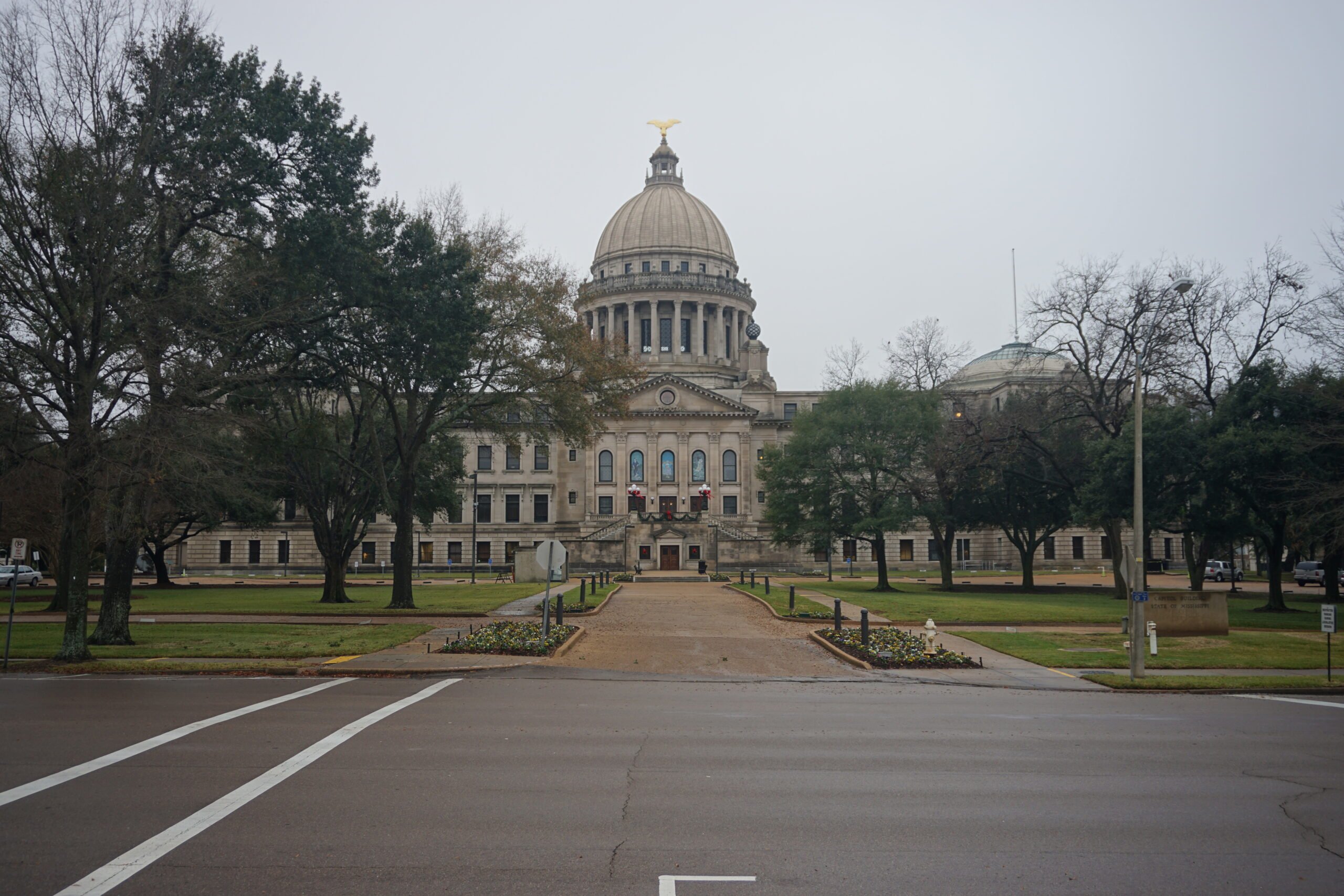
The Mississippi State Capitol in Jackson, where oversight of the Mississippi Department of Human Services resides. Investigations into the welfare fraud scandal began in June 2019 and would become the largest public embezzlement case in Mississippi history, involving $77 million in misappropriated federal welfare funds. Photo Credit: Wiki Commons / Michael Barera.
In June 2019, investigators with the Mississippi State Auditor’s Office began examining records at the Mississippi Department of Human Services (MDHS). According to their findings, more than $77 million in federal Temporary Assistance for Needy Families (TANF) and Emergency Food Assistance Program (TEFAP) funds were diverted from their intended purpose between 2016 and 2019.
It would become known as the largest public embezzlement case in Mississippi history.
These funds, designed to provide emergency assistance to Mississippi’s poorest families, were instead funneled through nonprofit organizations to high-profile individuals and projects bearing no relation to poverty assistance.
At the center of the alleged scheme was John Davis, 55, the executive director of the Mississippi Department of Human Services. In collaboration with leaders of two nonprofit organizations, Nancy New of the Mississippi Community Education Center (MCEC) and Christi Webb of the Family Resource Center of North Mississippi (FRC), Davis is alleged to have created a system of contracts.
Under Davis’s direction, MDHS would subgrant federal funds to these nonprofits with minimal oversight, and the nonprofits would then award what prosecutors called “sham contracts” to various entities for services allegedly never provided or barely provided.
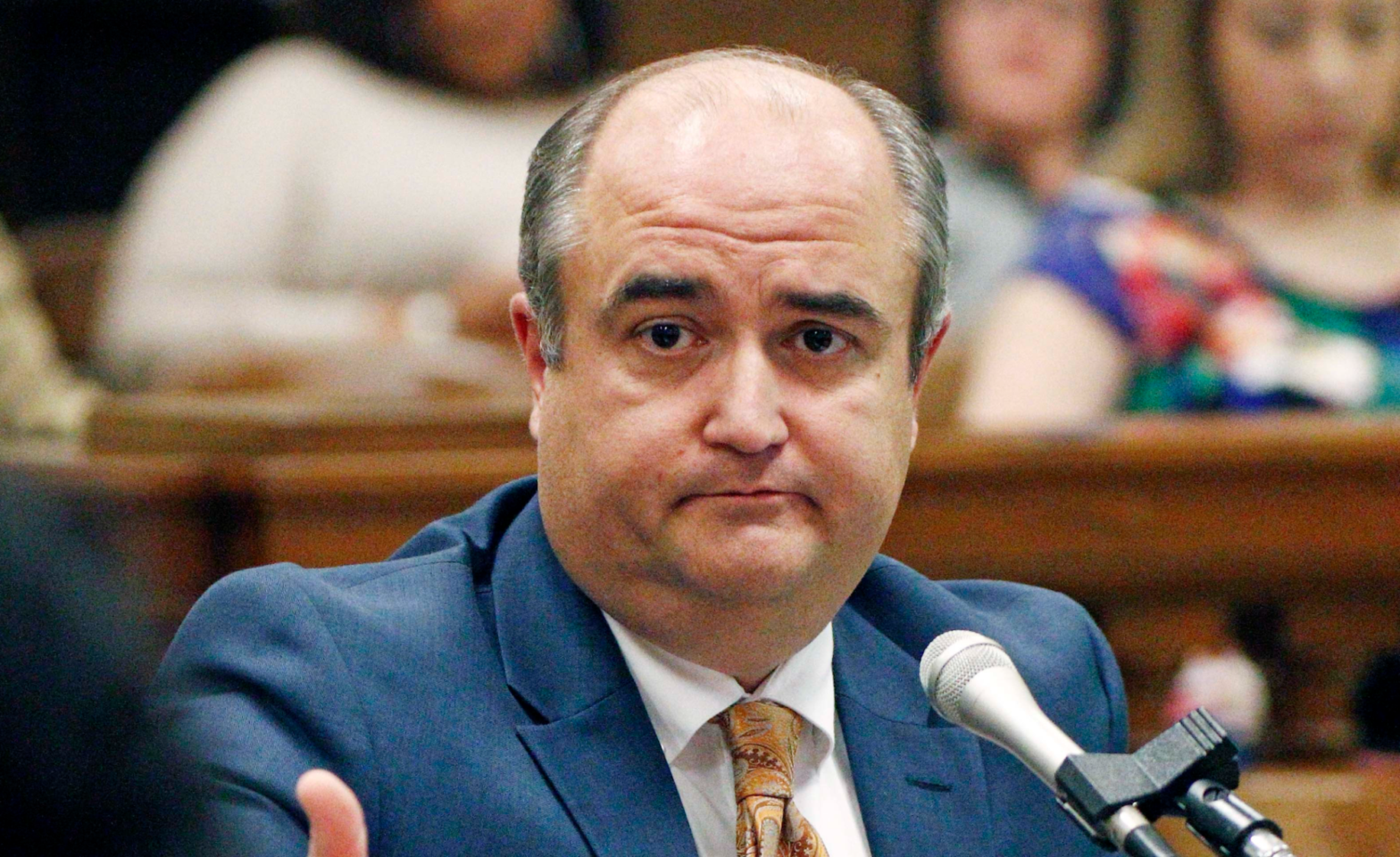
Mississippi State Auditor Shad White announced the scheme’s exposure on February 5, 2020, with the arrest of six individuals: John Davis, Brett DiBiase, Nancy New, Zach New, Anne McGrew, and Latimer Smith.
In a statement that would later become central to Ted DiBiase Sr.’s defamation lawsuit, White characterized the scandal in public remarks: the funds “were intended to help the poorest among us” but were “instead taken by a group of influential people for their own benefit,” and he described the scheme as “massive.”
White has consistently warned about systemic vulnerabilities in federal welfare programs.
In a Fox News interview, he stated, “Welfare fraud is incredibly easy. Federal welfare money is distributed to states and funneled to third-party nonprofits with little oversight. That creates opportunities for misuse.”
From World Tag Team Champion to Federal Defendant: Ted DiBiase Jr. faces wire fraud and theft charges
The Thad Cochran United States Courthouse in Jackson, Mississippi, where Ted DiBiase Jr.’s federal trial commenced on January 6, 2026. This federal proceeding marks the first criminal trial in what prosecutors describe as the largest public embezzlement case in Mississippi history, involving more than $77 million in misappropriated welfare funds. Photo Credit: H3HC.
In April 2023, more than three years after the initial arrests, federal prosecutors indicted Ted DiBiase Jr. on 13 counts.
The indictment charged him with one count of conspiracy to commit wire fraud and to commit theft concerning programs receiving federal funds, six counts of wire fraud, two counts of theft concerning programs receiving federal funds, and four counts of money laundering.
Unlike his brothers and co-conspirators, DiBiase Jr. maintained his not-guilty plea and exercised his right to a trial rather than accepting a plea agreement.
According to federal charging documents, prosecutors allege that DiBiase Jr. worked directly with John Davis and nonprofit operators to execute the scheme. Prosecutors contend that Davis, who held the position of MDHS executive director with broad authority over federal fund distribution, directed Webb and New to administer federal funds to contracts, with at least five contracts specifically awarded to DiBiase Jr.’s companies: Priceless Ventures LLC and Familiae Orientem LLC.
Federal prosecutors allege these entities provided no legitimate services or services far below what was claimed on invoices, despite receiving substantial TANF and TEFAP funds. DiBiase Jr. allegedly received payments totaling more than $1 million through these contracts.
According to prosecutors, DiBiase Jr. used funds received through these contracts for personal purchases: a boat, a vehicle, and a down payment on a residential house. The money laundering counts suggest federal investigators believe he took deliberate steps to disguise the source and nature of these funds.
If convicted on all charges, DiBiase Jr. faces significant federal penalties: five years on the conspiracy count, up to 20 years on each of the six wire fraud counts, and up to 10 years on each of the two theft counts and four money laundering counts. Federal judges typically have discretion to impose sentences concurrently or consecutively, which would substantially affect the final sentence length.
On January 6, 2026, DiBiase Jr.’s federal trial commenced, marking the first federal criminal trial in the entire Mississippi welfare scandal. With over 80 potential witnesses listed by prosecutors, the trial is expected to last weeks or months. Unlike his co-conspirators, who accepted guilty pleas and cooperated with authorities, DiBiase Jr. has maintained his not-guilty plea and forced the government to present its complete case in open court.
With hundreds of amazing Pro Wrestling Stories to dive into, where do you start? Get the inside scoop – join our exclusive community of wrestling fans! Receive 10 hand-picked stories curated just for YOU, exclusive weekly content, and an instant welcome gift when you sign up today!
Luxury rehab on welfare dimes: How Brett DiBiase’s drug treatment became federal evidence
Rise in Malibu, a luxury rehabilitation facility in California, became central to allegations when prosecutors say Brett DiBiase’s treatment costs were paid through TANF funds using fabricated invoices. Brett DiBiase pleaded guilty to federal conspiracy charges in March 2023. Photo Credit: Rehab.com.
Among the family members named in the scandal was Brett DiBiase, Ted DiBiase Sr.’s youngest son. Unlike his older brother Ted Jr., Brett’s involvement in court filings centers on a more personal matter that illustrates the scandal’s impact.
According to court documents, Brett DiBiase received payments through the nonprofit system to finance his attendance at Rise, a luxury rehabilitation facility in Malibu, California.
Prosecutors allege that John Davis and Latimer Smith manufactured false invoices claiming Brett DiBiase would provide substance abuse training to community members. These invoices, prosecutors say, were used to justify paying his treatment costs from TANF funds, federal money designated to help impoverished families.
According to prosecutors, Brett DiBiase was simultaneously both receiving treatment at the facility for his own opioid use disorder and being falsely represented as the person providing the training.
On March 2, 2023, Brett DiBiase appeared in federal court and pleaded guilty to one count of conspiracy to defraud the United States, accepting responsibility in the alleged scheme. Federal prosecutors could have brought additional wire fraud charges similar to those against his brother but did not. Under federal sentencing guidelines, this conspiracy count carries a potential penalty of up to five years in prison. As of January 2026, Brett DiBiase remained unsentenced and awaiting his sentencing hearing.
In state court, Brett DiBiase pleaded guilty in December 2020 to making false representations to defraud the government. His guilty plea marked him as the first family member to accept responsibility in any court proceeding. The civil lawsuit filed by the Mississippi Department of Human Services named Brett as one of the defendants, seeking to recover approximately $824,000 in TANF funds that the state alleges were improperly paid.
From Christian Ministry to Scandal: Ted DiBiase’s Heart of David Ministry’s $1.7 million TANF transfer and sudden closure
Heart of David Ministry, the Christian nonprofit founded by Ted DiBiase Sr. in 2001, became central to civil litigation when prosecutors alleged it received $1.7 million in TANF transfers. The organization ceased active operations by early 2025, facing reputational challenges stemming from its connection to the scandal. Photo Credit: Heart of David Ministry Facebook Page.
Beyond his sons’ direct involvement, Ted DiBiase Sr. became named in civil litigation regarding his nonprofit organization, Heart of David Ministry, which he founded in 2001.
The organization, focused on Christian evangelism and community encouragement, received substantial transfers of TANF funds during the period of the scandal. According to MDHS civil filings, Ted DiBiase Jr. urged John Davis to direct approximately $1.7 million in TANF funds to Heart of David Ministry, which prosecutors contend became a recipient of federal welfare payments.
The Mississippi Department of Human Services filed a civil lawsuit in December 2022 against Heart of David Ministry, alleging the organization received over $1.7 million in TANF transfers that the state contends violated federal guidelines. The lawsuit also named Ted DiBiase Sr. personally as a defendant.
While DiBiase Sr. has never been criminally charged in connection with the Mississippi welfare case, distinguishing him from both of his sons, he is named as a party in the state’s civil litigation seeking recovery of funds.
DiBiase Sr. has disputed the state’s allegations throughout the civil litigation, arguing that Heart of David Ministry operated legitimately and that funds were used appropriately. In one civil judgment stemming from the MDHS lawsuit, a court ordered Heart of David Ministry and Ted DiBiase Sr. to pay $722,299 in restitution.
By early 2025, Heart of David Ministry had ceased active operations. Its website became inaccessible, and its social media presence, previously active, went dormant. No detailed public statement explaining the closure has been issued, though the combination of legal proceedings, reputational challenges, and operational pressures appears to have contributed to the ministry’s closure.
The NFL Hall of Famer and the Volleyball Stadium: How Brett Favre became central to Mississippi’s welfare scheme
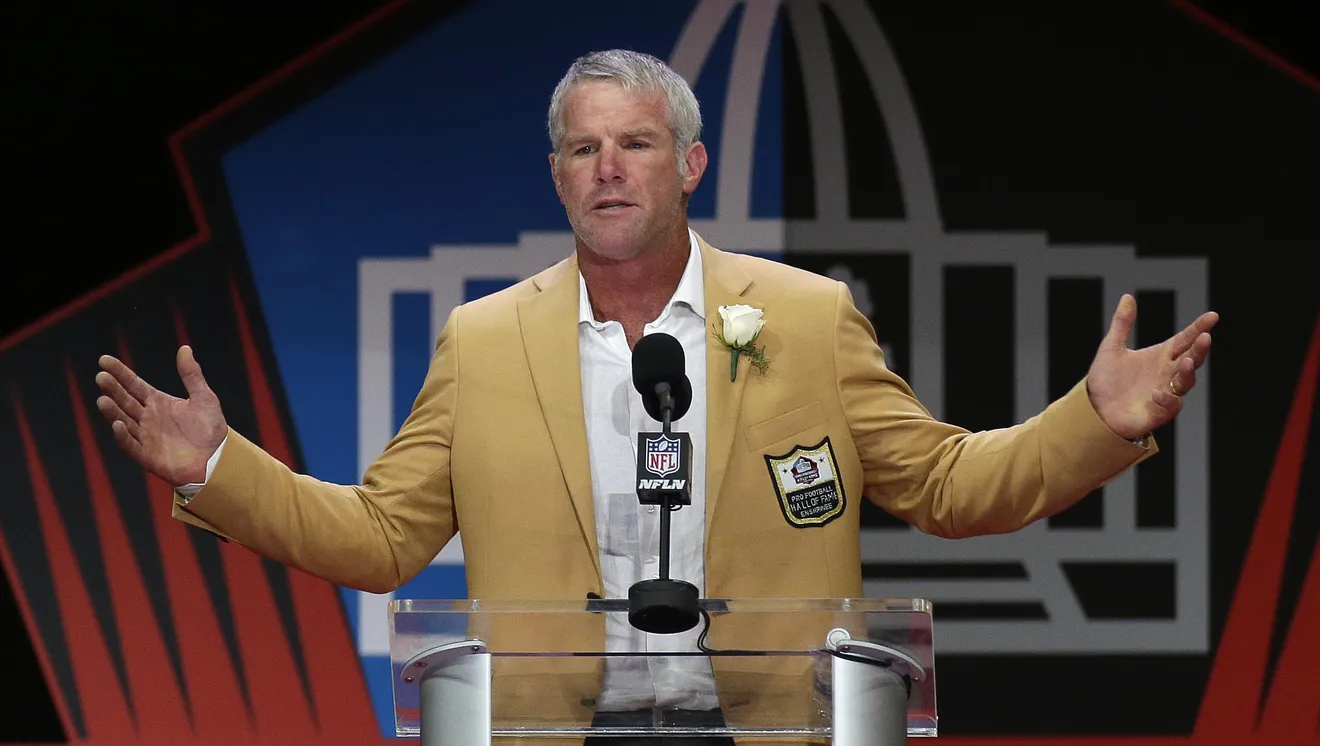
NFL quarterback Brett Favre, pictured here during his induction at the 2016 Pro Football Hall of Fame ceremony, became prominent in the Mississippi welfare scandal. Prosecutors have alleged that Favre received payments for speaking events he did not attend and was involved in arrangements in which TANF funds were directed to a volleyball facility at his alma mater, the University of Southern Mississippi. Photo Credit: Rick Wood/Milwaukee Journal Sentinel.
While the DiBiase family faced criminal charges, perhaps the most recognizable public figure named in the scandal was someone outside wrestling: NFL Pro Football Hall of Fame quarterback Brett Favre.
Favre has not been criminally charged in connection with the case. However, he became central to the scandal’s national attention due to his involvement in some of the fund transfers and his public statements regarding the allegations.
In May 2020, state auditors revealed that approximately $5 million in TANF funds had been directed toward a volleyball facility at the University of Southern Mississippi, Favre’s alma mater, during a period when Favre’s daughter was playing volleyball for the school.
Text messages obtained by prosecutors and filed as evidence in the civil lawsuit showed Favre requesting information in 2017 about receiving payments from welfare funds: “If you were to pay me is there anyway the media can find out where it came from and how much?” he texted to Nancy New. According to prosecutors, the message appeared to demonstrate Favre’s awareness that the funds’ origins might be problematic.
Additionally, state auditors allege that Favre received approximately $1.1 million in payments for speaking events he did not attend, and that approximately $1.7 million in TANF funds were invested in a concussion treatment company associated with Favre.
Favre repaid the $1.1 million in speaking payments in two installments ($500,000 in May 2020, $600,000 in October 2021). However, according to the state auditor’s office as of 2024, Favre has not reimbursed interest on those payments or provided reimbursement related to the stadium funding or concussion company involvement.
Favre has consistently denied wrongdoing. In a 2022 statement to media outlets, he stated, “I have been unjustly smeared in the media. I have done nothing wrong, and it is past time to set the record straight. No one ever told me, and I did not know, that funds designated for welfare recipients were going to the University or me.”
In September 2024, Favre testified before Congress’s House Ways and Means Committee regarding TANF program reform. During his testimony, he disclosed that he had been diagnosed with Parkinson’s disease.
Unlike the DiBiase family members, Favre was never arrested or criminally charged. However, he remained a defendant in the state’s ongoing civil lawsuit and filed a counter-defamation suit against State Auditor Shad White for statements made regarding his involvement.
From Department Director to Prison: John Davis and co-conspirators face justice in Mississippi’s largest fraud case
John Davis, former executive director of the Mississippi Department of Human Services, received a 32-year prison sentence in September 2022 for his role in orchestrating the $77 million welfare fraud scheme. Photo Credit: AP.
The welfare fraud scheme succeeded because federal funds distribution systems contained minimal oversight and because key gatekeepers, particularly John Davis, possessed authority to move money through nonprofits with limited scrutiny.
Davis, 55 at the time of sentencing, had spent his career as a government bureaucrat in Mississippi’s social services system. His position as executive director of the Mississippi Department of Human Services placed him in direct control of how federal welfare funds were allocated to nonprofits.
On September 21, 2022, John Davis pleaded guilty in state court to five counts of conspiracy and 13 counts of fraud against the government. Judge Adrienne Wooten sentenced Davis to 90 years in state prison with 32 years to be served, a historically severe sentence reflecting the scope of the alleged misconduct.
In a separate federal case on September 22, 2022, Davis pleaded guilty to one count of conspiracy to commit wire fraud and one count of theft concerning programs receiving federal funds. Federal sentencing guidelines call for a maximum of approximately 15 years in federal prison. Under his plea agreement, his eventual federal sentence will take precedence over the state term.
Nancy New, founder of the Mississippi Community Education Center nonprofit, entered guilty pleas in 2022. She pleaded guilty in April 2022 to federal charges and in May 2022 to state charges directly related to welfare fund misappropriation. Her guilty pleas addressed 13 felony counts related to fraud and other misconduct. As of January 2026, New remained awaiting her sentencing hearing, nearly four years after entering her pleas.
Zach New, Nancy’s son, also entered guilty pleas to both state and federal charges related to the alleged scheme. According to court documents, he is accused of personally facilitating the transfer of welfare funds to the University of Southern Mississippi Athletic Foundation for volleyball stadium construction. Like his mother, Zach New remained unsentenced as of January 2026.
Christi Webb, director of the Family Resource Center of North Mississippi, pleaded guilty in federal court on March 16, 2023, to charges of stealing government funds. Under federal sentencing guidelines for a first-time federal offender, she faces a potential penalty of up to 10 years in federal prison and a $250,000 fine. As of January 2026, her sentencing hearing remained pending.
From Wrestling Legend to Litigant: Ted DiBiase Sr.’s defamation lawsuit against Shad White over ‘Mississippi Swindle’ book
Ted DiBiase Sr., the “Million Dollar Man,” in WWE attire during his later years as a Legends ambassador. In August 2025, DiBiase Sr. filed a defamation lawsuit against Mississippi State Auditor Shad White, claiming the auditor’s public statements and 2024 book caused damage to his reputation and contributed to Heart of David Ministry closing. Photo Credit: WWE.
In August 2025, Ted DiBiase Sr. filed a lawsuit in Hinds County Circuit Court against Mississippi State Auditor Shad White, alleging defamation. The lawsuit directly challenges White’s 2024 book, Mississippi Swindle: Brett Favre and the Welfare Scandal that Shocked America, published in August 2024, along with related public statements by White.
DiBiase Sr.’s complaint asserts that White used his official position to make statements he contends are false and damaging to his reputation.
According to his legal filing, DiBiase alleges the book portrays him as complicit in the misuse of federal TANF funds, a characterization DiBiase denies. In his complaint, DiBiase emphasized that “no court has ever found me liable for any wrongdoing related to these allegations.”
He noted that while civil suits have named him as a defendant in connection with Heart of David Ministry, no court has yet issued a final judgment establishing his legal responsibility. DiBiase also points out that he has not been criminally charged in connection with the Mississippi welfare case.
DiBiase claimed that White’s statements and the book’s continued distribution caused harm to his reputation and contributed to Heart of David Ministry closing in January 2025. He alleged that White’s media coverage and book sales could “cause irreparable harm” and “potentially taint the jury pool” in ongoing civil litigation.
DiBiase’s legal complaint asserted multiple claims: defamation, defamation per se, negligence, gross negligence, and recklessness. The lawsuit sought compensatory damages, punitive damages, and an injunction halting publication and distribution of White’s book. Additionally, DiBiase requested a declaratory judgment stating that White has no right to publish the disputed allegations while civil litigation remains pending.
White was served with the lawsuit on November 19, 2025, and filed a motion to dismiss on December 19, 2025. White’s legal team asserts that he is entitled to “absolute privilege,” a legal doctrine that protects government officials from defamation claims for statements made in the course of their official duties.
White’s attorneys further argue that DiBiase, as a public figure, must demonstrate “actual malice,” meaning that White made statements knowing them to be false or with reckless disregard for their truth. This standard, they contend, is a high legal bar that DiBiase cannot satisfy. Additionally, White’s legal team characterizes DiBiase’s request to halt publication of the book as an unconstitutional “prior restraint” on First Amendment rights, a court order preventing publication before it occurs.
DiBiase Sr.’s legal team requested an extension to respond to White’s motion to dismiss, with a new response deadline set for January 28, 2026. The litigation appears positioned for extended proceedings, with both sides preparing for what could become a prolonged legal dispute over the boundaries between government accountability investigations and defamation protections.
Maximum penalties and sentencing: How federal prosecutors are advancing the Mississippi welfare fraud case
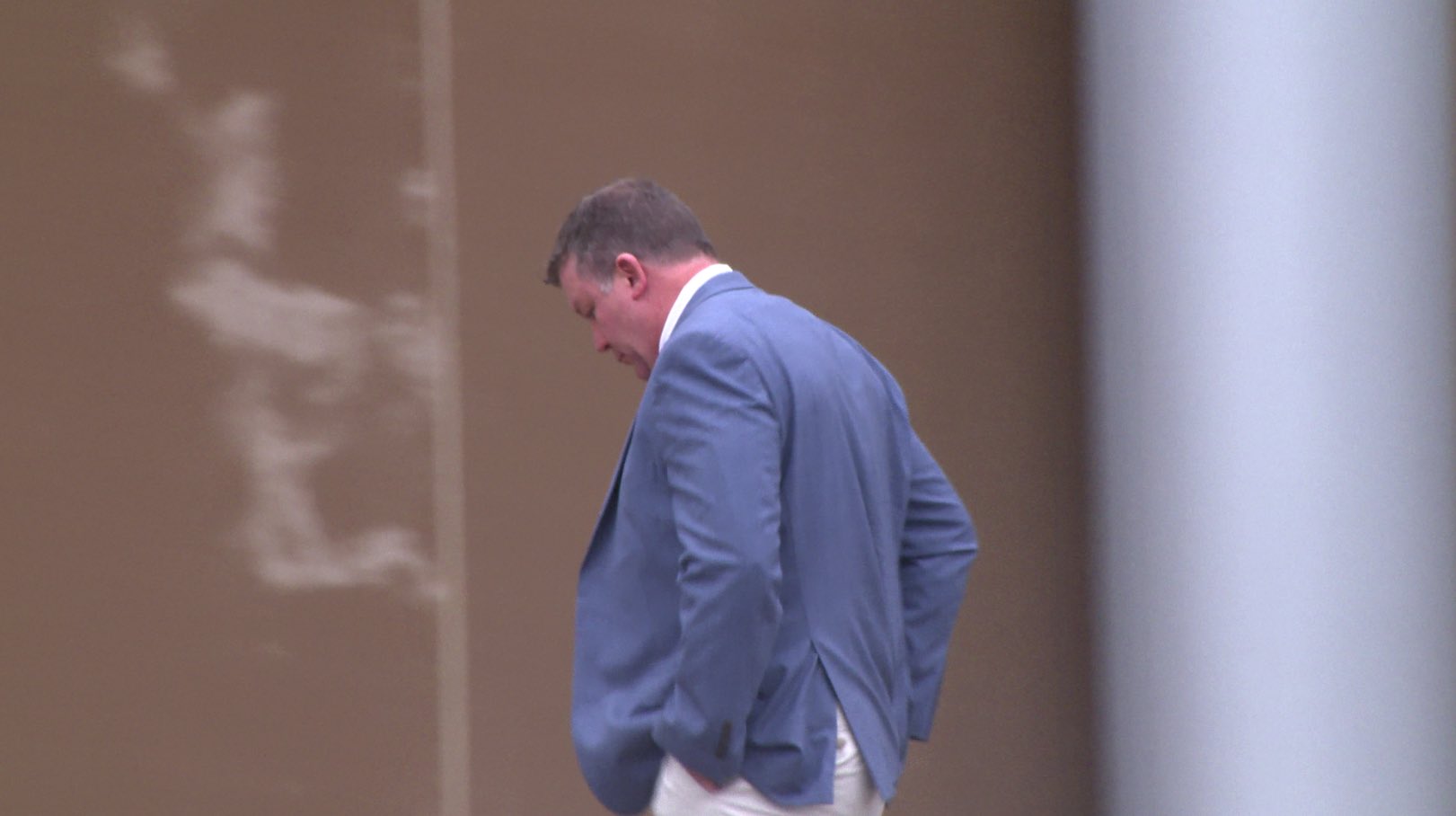
Ted DiBiase Jr., the former WWE World Tag Team Champion, whose federal trial commenced on January 6, 2026. DiBiase Jr. faces 13 federal counts including wire fraud, conspiracy, and money laundering. Unlike his co-defendants who accepted guilty pleas, DiBiase Jr. exercised his right to a jury trial, making this the first criminal trial in the entire Mississippi welfare scandal. Photo Credit: WAPT.
Federal prosecutors have pursued charges methodically, with guilty pleas from multiple defendants establishing the framework for understanding the alleged scheme. John Davis’s 32-year state prison sentence, with federal sentencing to take precedence, established a baseline for the penalties involved in this case.
The federal trial of Ted DiBiase Jr., which commenced on January 6, 2026, represents the first criminal trial in the entire welfare scandal. Unlike his co-conspirators, who accepted guilty pleas, DiBiase Jr. chose to exercise his right to a trial. This means federal prosecutors must present their complete case, witness testimony, documentary evidence, financial records, and expert analysis, before a jury rather than to a judge in a plea hearing.
The trial’s scope reflects the complexity of financial fraud prosecution. Prosecutors have identified over 80 potential witnesses, suggesting evidence will include testimony from MDHS employees, nonprofit staff, financial institutions, law enforcement, and expert witnesses. The trial is expected to last weeks or months, depending on the defense strategy and prosecution’s presentation pace.
DiBiase Jr. faces serious potential penalties if convicted on any counts. Each wire fraud count carries a maximum of 20 years in prison. Multiple convictions could theoretically expose him to decades in federal prison, though federal judges have discretion to impose sentences concurrently, which would substantially reduce the total time. Even under a conservative sentencing approach, multiple convictions would likely result in a sentence measured in years rather than months.
Other co-defendants remain awaiting sentencing. Nancy New, Zach New, and Christi Webb have all pleaded guilty but have not yet had sentencing hearings. Their ultimate sentences will be determined by federal judges, who consider multiple factors, potentially including the outcome of DiBiase Jr.’s trial and the extent of each defendant’s cooperation with authorities.
From Three Generations of wrestling pride to federal indictments: The DiBiase family legacy transformed
Brett DiBiase (left) and Ted DiBiase Jr. (right) share a moment at the 2010 WWE Hall of Fame induction ceremony celebrating their father. The brothers, once celebrated as part of a wrestling dynasty, now face federal charges and civil litigation connected to the Mississippi welfare scandal. Photo Credit: WWE.
The DiBiase family’s public profile has undergone a transformation comparable to any dramatic character arc in professional wrestling. Ted DiBiase Sr., the “Million Dollar Man” who built substantial wealth through professional wrestling and earned a respected reputation in sports entertainment, now finds media coverage focusing heavily on federal fraud allegations and litigation connected to the welfare case. Heart of David Ministry, which he founded as a faith-based organization, ceased operations in early 2025, facing reputational challenges stemming from its connection to the scandal.
Ted DiBiase Jr., who transitioned from WWE competition into business and entertainment work after his 2013 departure, now faces the prospect of substantial federal prison time if convicted on the charges before him. His January 2026 trial represents the most publicized legal proceeding in the scandal, attracting daily media attention. The championship credentials and tag team accolades that once defined his wrestling career have been overshadowed by federal indictments.
Brett DiBiase, identified in the case not for wrestling accomplishment but for receiving treatment through disputed TANF fund transfers while facing federal conspiracy charges, awaits sentencing. His involvement underscores the personal dimensions of the scandal, an individual battling opioid addiction whose treatment came from funds designated for the nation’s poorest families.
WWE, which employed both Ted Jr. and featured Ted Sr. as a Legends ambassador, has not released extensive public statements regarding the family’s legal situation. In 2021, Ted Sr. briefly appeared on NXT to mentor wrestler Cameron Grimes, suggesting WWE’s openness to featuring the WWE Hall of Famer despite unfolding scandal allegations. However, his appearances have ceased as criminal charges and trials have intensified public focus.
Regardless of trial outcomes, the DiBiase legacy will forever carry the weight of these allegations. The “Million Dollar Man” character, built on the theatrical premise that everything has a price, now exists in an uncomfortable irony: Ted DiBiase Sr. spent decades portraying greed as entertainment, only to watch his sons become entangled in actual criminal schemes involving the nation’s poorest citizens.
WWE, which lionized the DiBiase family across three generations, has largely remained silent. What remains is a family fractured by federal indictments, a closed ministry, and the question of whether redemption is possible after this degree of public reckoning.
This article reflects developments as of January 8, 2026. Pro Wrestling Stories will update this piece as new information emerges from Ted DiBiase Jr.’s trial proceedings, sentencing hearings for other defendants, and ongoing civil litigation.
Pro Wrestling Stories is committed to accurate, unbiased wrestling content rigorously fact-checked and verified by our team of researchers and editors. Any inaccuracies are quickly corrected, with updates timestamped in the article's byline header.
Got a correction, tip, or story idea for Pro Wrestling Stories? Contact us! Learn about our editorial standards here. Ever wanted to learn more about the people behind Pro Wrestling Stories? Meet our team of authors!
ProWrestlingStories.com participates in affiliate marketing programs. This post may contain affiliate links, meaning we may earn commissions at no extra cost to our readers. This supports our mission to deliver free content for you to enjoy!
"Evan Ginzburg’s stories are a love letter to wrestling, filled with heart, humor, and history. A must-read for any true fan."— Keith Elliot Greenberg
JP Zarka is the founder of Pro Wrestling Stories, established in 2015, where he serves as a senior author and editor-in-chief. From 2018 to 2019, he hosted and produced The Genius Cast with Lanny Poffo, brother of WWE legend “Macho Man” Randy Savage. Beyond wrestling media, JP’s diverse background spans education as a school teacher and assistant principal, as well as being a published author and musician. He has appeared on the television series Autopsy: The Last Hours Of and contributed research for programming on ITV and the BBC. JP is a proud father of two daughters and a devoted dog dad, balancing his passion for history and storytelling with family life in Chicago.
 Author: