Author:
 In Canada, the Hart Family Dungeon in Calgary became famous for its rigorous training methods under Stu Hart’s uncompromising philosophy. This basement training facility of the Hart Family home produced legendary wrestlers such as Bret Hart, Owen Hart, and many others who carried their family’s legacy around the world. In the United States, Eddie Graham’s Florida territory had grueling training at the Tampa Sportatorium in a training room often nicknamed the "Snake Pit," where countless industry stars were produced, including Hulk Hogan. Under the guidance of Hiro Matsuda, many aspiring wrestlers endured a regimen of 1,000 pushups and 1,000 squats before they ever stepped into a professional ring. But it was another Snake Pit, the original, which was something else entirely – a tough little room in Wigan whose roots reach back to Billy Riley and were carried on by Roy Wood.
Few gymnasiums in sports history have influenced their discipline as profoundly as this humble corrugated tin building located on a Lancashire allotment.
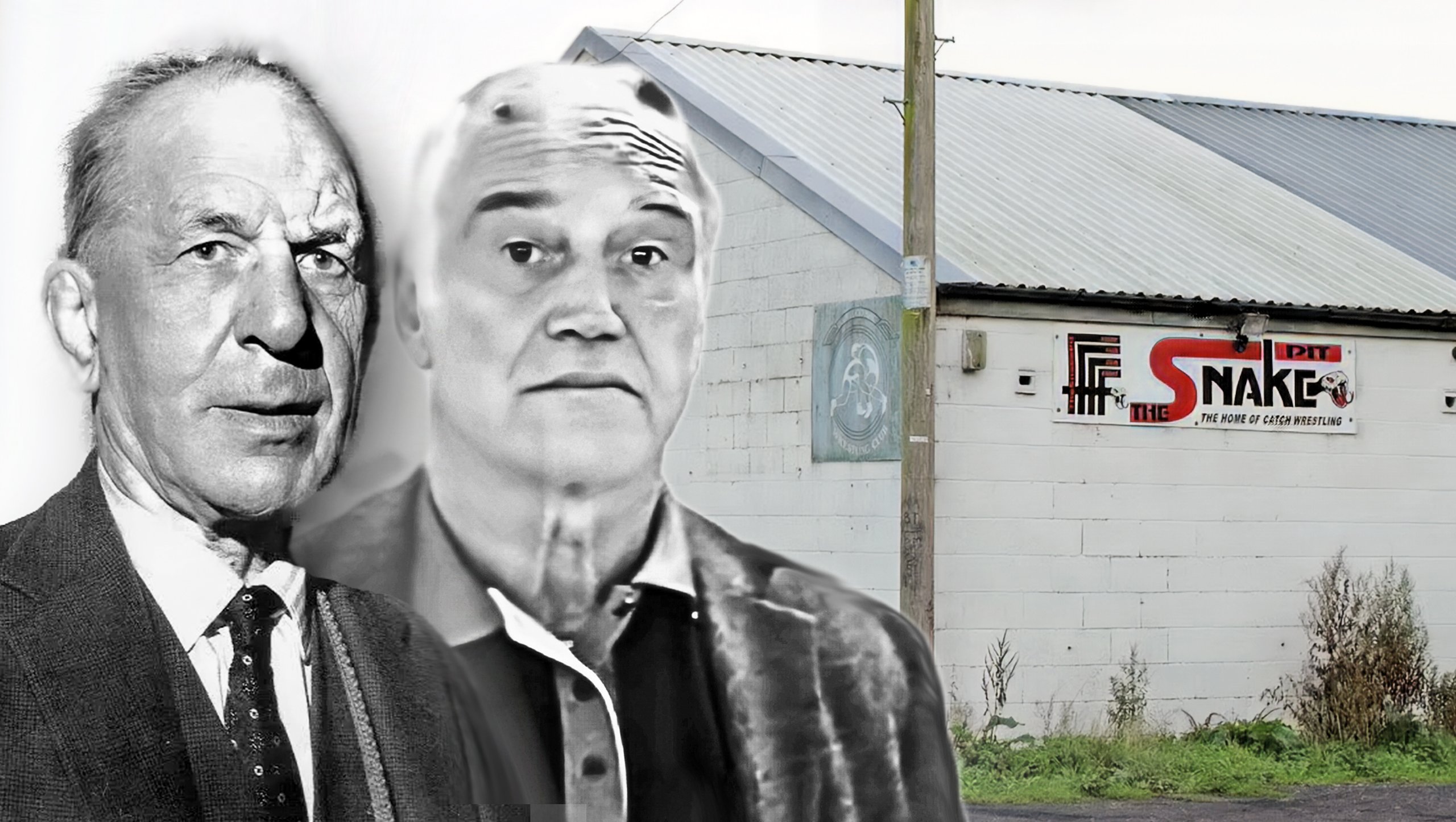
At the bottom of Pyke Street in Whelley, Wigan, Billy Riley’s Snake Pit emerged as the unlikely epicenter of a professional wrestling revolution. It transformed how the sport was taught, practiced, and understood across different continents. The walls of this modest institution nurtured renowned wrestlers like Karl Gotch and Billy Robinson, whose legacies have shaped the business worldwide. For seventy years, Riley’s Snake Pit quietly influenced an evolution across continents. Demolished initially in 1977, one man would not let it stay dead.
How Billy Riley Became a World Champion Catch Wrestler Before Founding the Snake Pit

On Pro Wrestling Stories, we have documented catch wrestling’s revolutionary impact on professional wrestling, tracing how legitimate grappling techniques reshaped its very foundation. Yet few wrestling organizations can claim as much historical significance or continuing relevance as Billy Riley’s Snake Pit.
With Andrea Wood and David Horrix’s new book, Fight the Good Fight: The Story of the Snake Pit Wigan—The Greatest Wrestling Story Ever Told, providing comprehensive new documentation, understanding the Snake Pit’s story means understanding how professional wrestling itself evolved.
Andrea Wood, who co-runs the Snake Pit alongside her husband, David Wood, and her father, Roy Wood (2024 recipient of the British Empire Medal for services to wrestling), spent years compiling family recollections, historical records, and training documentation to create the definitive account of Billy Riley’s institution and its global influence.
The book explores catch wrestling’s sociological roots within Wigan’s working-class communities, traces the Riley family’s history extending back generations, examines Billy Riley’s revolutionary coaching philosophy, and documents the facility’s evolution across multiple decades of professional wrestling transformation. It honors both celebrated champions and lesser-known wrestlers whose Snake Pit training reshaped wrestling in ways mainstream history has overlooked.
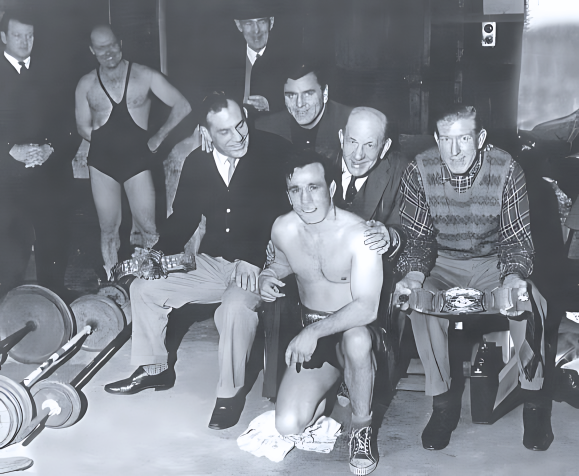
Billy Riley’s emergence as a wrestling authority was neither accidental nor based solely on competitive success. Born in 1896 in Leigh, Lancashire, Riley grew up in coal-mining communities where catch wrestling functioned as both cultural tradition and practical economic path. Wrestling championships offered escape from the mines, financial security, and social status that few other opportunities provided to working-class youth in industrial England.
Riley excelled in this environment, eventually capturing the middleweight championship of the world from 1919 to 1923 and later securing the British Empire Championship during the 1930s. He competed against the era’s finest grapplers, defeating Jack Robinson in Africa under championship conditions. Yet Riley recognized that individual championships, however impressive, represented only one measure of wrestling excellence. The deeper question that occupied Riley’s thinking was how to preserve and transmit the technical mastery that catch wrestling represented at a time when professional wrestling was increasingly abandoning legitimate grappling for theatrical entertainment.
The Snake Pit Gymnasium Established in 1948: How Billy Riley Preserved Catch Wrestling
In 1948, after transitioning from active competition, Billy Riley invested in a small allotment at the bottom of Pyke Street in Whelley, Wigan. The resulting structure, a corrugated tin-roofed building with minimal amenities, would become known as the Snake Pit. Its physical modesty was absolute, yet Riley’s vision for the gymnasium was revolutionary.
Riley established a training methodology based on uncompromising standards. He believed that wrestlers must master catch wrestling fundamentals before adapting those techniques to professional wrestling. This philosophy placed the Snake Pit in direct opposition to the prevailing professional wrestling industry trend, which increasingly emphasized entertainment presentation over grappling legitimacy.
The training itself became legendary for its intensity. Stories of accomplished wrestlers visiting the Snake Pit only once, the experience proving too demanding to repeat, became standard anecdotes within wrestling circles. Yet this reputation simultaneously served as an attraction for dedicated students who recognized that genuine wrestling excellence required genuine effort. From across the globe, wrestlers traveled to Wigan seeking instruction from Riley, understanding that the Snake Pit offered access to wrestling knowledge unavailable elsewhere.
Karl Gotch and Billy Robinson: Legendary Catch Wrestlers Trained at Riley’s Snake Pit
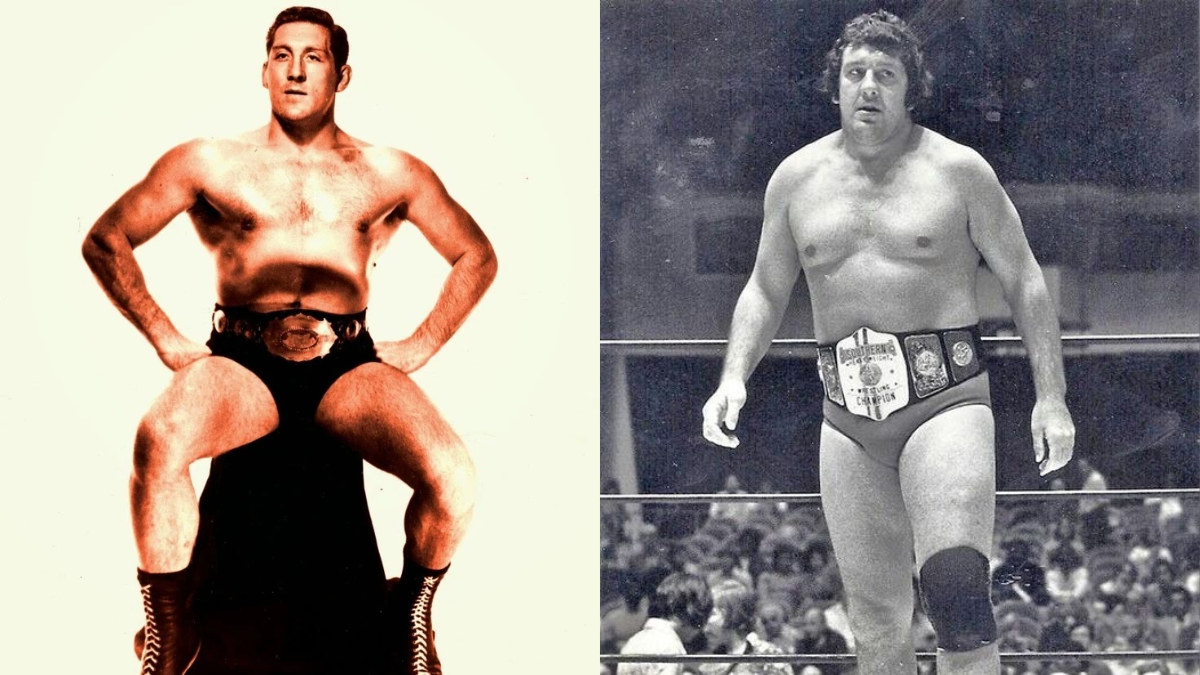
Among the most significant students to train under Billy Riley were two wrestlers whose careers would extend the Snake Pit’s influence across continents: Karl Gotch and Billy Robinson.
Karl Gotch, born Karl Charles Istaz in Belgium, arrived at the Snake Pit during the 1950s as a young wrestler seeking to develop legitimate grappling skills. Riley’s instruction transformed Gotch into a technical wrestler of extraordinary proficiency. During the 1960s, Gotch traveled to Japan where he became a professional wrestling legend. The German suplex, one of wrestling’s most fundamental and commonly executed techniques, traces its pedagogical lineage directly to Gotch’s popularization of the catch wrestling belly-to-back throw, a technique refined under Riley’s tutelage.
Billy Robinson, a local Wigan native, spent 12 years training under Riley’s direct supervision beginning around 1949. His father, recognizing the Snake Pit’s unparalleled reputation for technical excellence, encouraged his son toward Riley’s gymnasium. Robinson’s training at the Snake Pit established the technical foundation that would define his career as a catch wrestling master. His later coaching work, most notably training Kazushi Sakuraba, who became internationally recognized as the “Gracie Hunter” for his systematic victories over multiple members of the Gracie family, demonstrated how catch wrestling techniques could be transmitted across generations and continents while maintaining their competitive effectiveness.
Love Pro Wrestling Stories? Add us as a Preferred Source on Google so our stories always show up first for you. It only takes one click.
Add Us on GoogleRoy Wood and the Lesser-Known Snake Pit Wrestlers Who Shaped Wrestling History

While Karl Gotch and Billy Robinson achieved international prominence, the book Fight the Good Fight emphasizes the contributions of lesser-known wrestlers whose Snake Pit training shaped wrestling in ways rarely acknowledged by mainstream wrestling history. Tommy Moore, Harold Winstanley, Alan Wood, and numerous other grapplers trained at the facility and contributed substantially to its reputation and technical excellence. These wrestlers’ stories, preserved within the book’s pages, ensure that the Snake Pit’s legacy encompasses more than celebrated champions.
Billy Riley passed away in September 1977. Following his death, the original gymnasium facility deteriorated and was eventually demolished. The apparent threat to catch wrestling’s continued transmission through the Snake Pit was addressed through Roy Wood, one of Riley’s final students, who had begun training at the gymnasium around 1958.
Roy Wood inherited both Riley’s technical knowledge and his philosophical commitment to wrestling education. After the original gymnasium’s loss, Wood reopened the Aspull Olympic Wrestling Club, where he had trained as a young wrestler. He implemented a philosophy emphasizing democratic access to wrestling instruction, establishing a discreet scholarship system that allowed individuals to train regardless of financial circumstances. This approach reflected Riley’s own values and ensured that wrestling remained available to working-class youth in Wigan.
In December 2024, Roy Wood’s decades of dedication to wrestling were formally recognized when he received the British Empire Medal for services to wrestling and young people. At over 80 years old and continuing active coaching, Wood represents the living connection between Billy Riley’s era and contemporary catch wrestling instruction.
With hundreds of amazing Pro Wrestling Stories to dive into, where do you start? Get the inside scoop, join our exclusive community of wrestling fans! Receive 10 hand-picked stories curated just for YOU, exclusive weekly content, and an instant welcome gift when you sign up today!
Andrea Wood and David Wood: How They Expanded the Snake Pit Globally and Documented Its Legacy

Roy Wood’s daughter, Andrea Wood, and her husband, David Wood, have become instrumental in extending and documenting the Snake Pit’s reach and historical significance. Under their leadership, alongside Roy Wood, the Snake Pit has expanded from a single gymnasium into an international organization spreading catch wrestling across multiple continents.
The organization now operates satellite Snake Pit facilities in the United States, Japan, Denmark, Sweden, and Brazil. The gymnasium has formalized its educational mission through comprehensive catch wrestling manuals, instructor accreditation courses, and structured competition programs. The organization has also documented its heritage extensively through training materials, recordings, and historical artifact preservation.
Most significantly, Andrea and David Wood authored Fight the Good Fight: The Story of the Snake Pit Wigan—The Greatest Wrestling Story Ever Told, offering the first comprehensive historical documentation of the gymnasium’s complete narrative. The book combines academic rigor with intimate knowledge, drawing on Roy Wood’s firsthand recollections and decades of personal involvement with the facility.
Snake Pit World Championships: Annual Catch Wrestling Competition Carrying Forward Billy Riley’s Vision
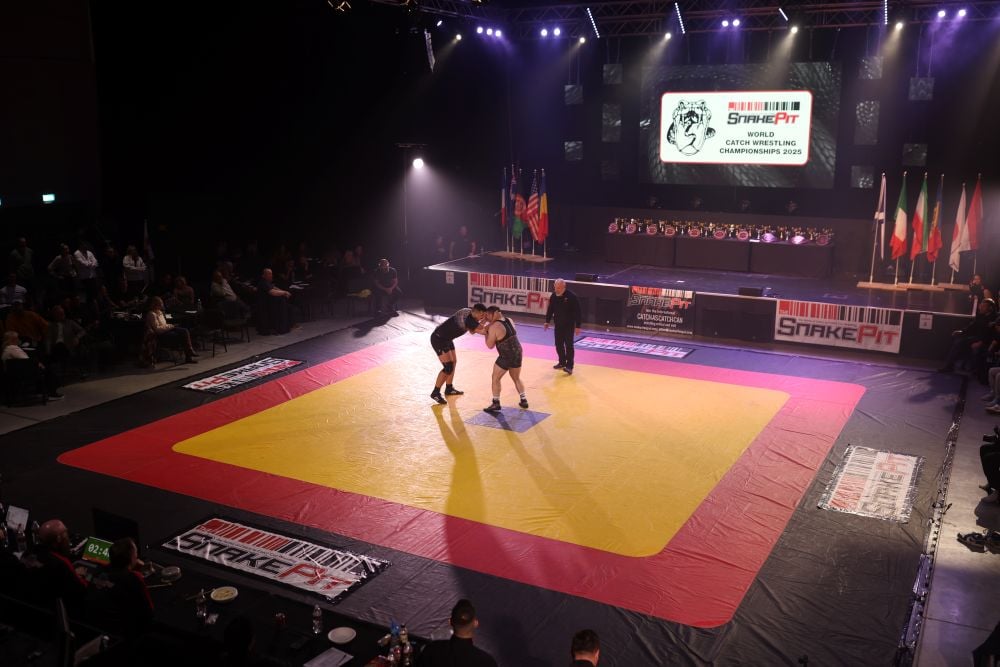
Since 2018, the Snake Pit has hosted the Catch Wrestling World Championships, an annual competition that draws wrestlers from across the globe to compete under traditional catch wrestling rules. The championships take place in Wigan, connecting contemporary competitors to the gymnasium’s historical location and significance.
The events demonstrate that catch wrestling retains legitimate competitive appeal and attracts serious athletes. Competitors travel from multiple nations to train and compete under traditional rules in the town where coal miners and working-class wrestlers developed this martial art over a century ago, and where Billy Riley refined and systematized its technical principles.
Understanding Modern Wrestling Through the Snake Pit’s Seventy-Year History
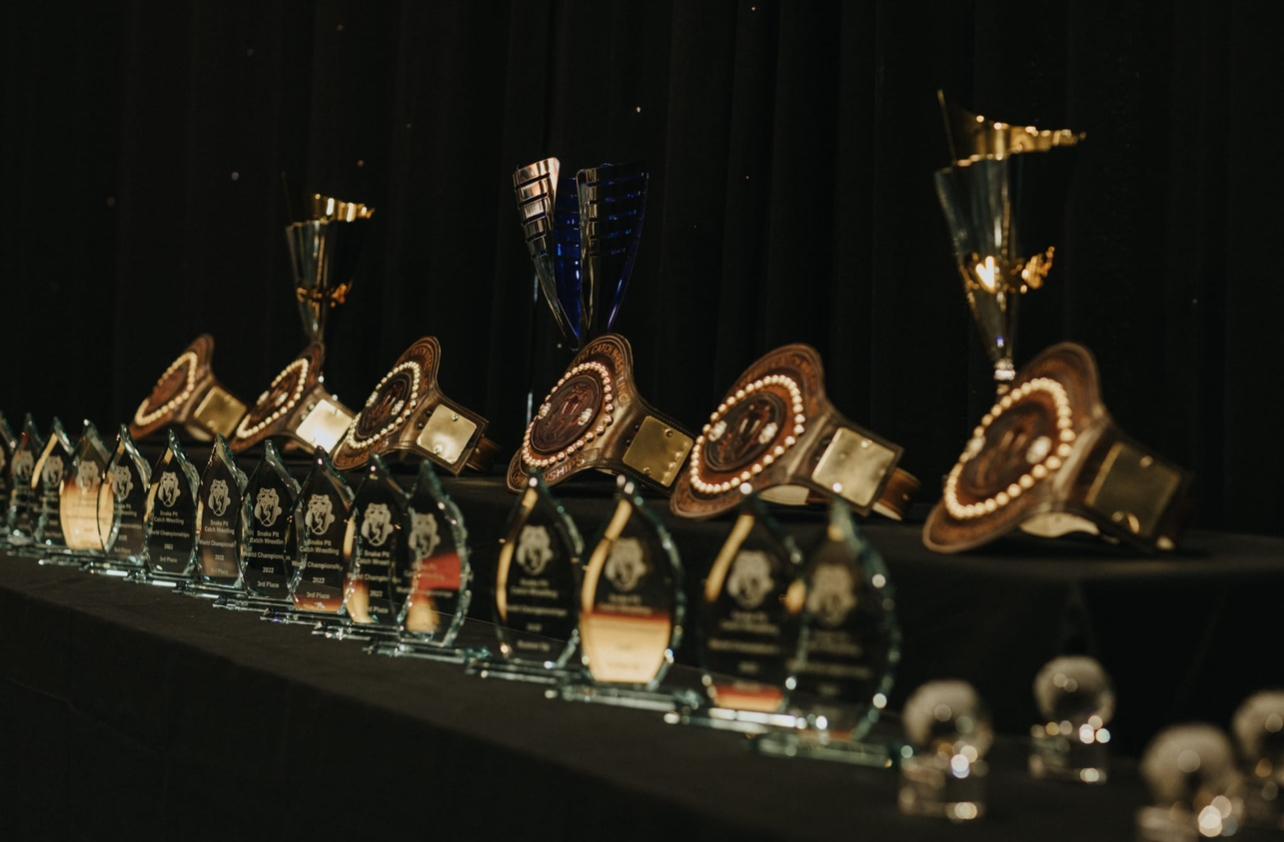
The Snake Pit’s story is wrestling’s story. It is the narrative of how one man’s dedication to legitimate skill and uncompromising technical standards created an institution that shaped not only professional wrestling but combat sports across the globe. It is the story of working-class tradition, of knowledge transmitted from master to student through physical practice and experiential learning. It is the account of how an unassuming corrugated-metal building in a Lancashire town became influential and embedded in wrestling’s development and ongoing presentation.
Billy Riley’s vision of wrestling excellence, transmitted through Roy Wood to Andrea and David Wood, ensures that catch wrestling remains not a relic of the past but a vital tradition for the future.
New Book Celebrates Billy Riley’s Snake Pit in Wigan

PRESS RELEASE (OCTOBER 2025): Fight the Good Fight” Documents the Legendary Training Facility That Helped Shape Professional Wrestling
The following was personally shared with Pro Wrestling Stories by Emma Calter (née Riley), great-granddaughter of Billy Riley:
Wrestling fans, history buffs, and proud Wiganers have something to celebrate from Autumn 2025! The town that gave the world Catch as Catch Can wrestling is back in the spotlight with a brand-new book, a world championship event, and a family connection that brings Billy Riley’s incredible story full circle.
Billy Riley, the world champion wrestler from Wigan who became a legend in his own time, left behind more than just victories on the mat. His famous gym nurtured generations of wrestlers and put Wigan on the map. Now, his great-granddaughter, Emma Calter (née Riley), proudly supports the people keeping his legacy alive today and celebrates the continued impact of his story.
The legendary Snake Pit in Aspull remains the beating heart of catch wrestling’s revival. Run by Roy Wood (who was honoured with a British Empire Medal by the King in 2024 for his outstanding contributions to wrestling and youth development) and his daughter Andrea Wood, the gym continues to honour the enduring legacy of Billy Riley.
Roy, once like a son to Riley, has kept the tradition alive, and Andrea is proudly helping to carry it forward, welcoming the next generation of wrestlers. Andrea’s husband David Wood also plays an active role in supporting the club, helping ensure the spirit and values of catch wrestling thrive.
One of the passionate voices capturing this legacy is David Horrix, a respected author who, together with Andrea Wood, has co-written a compelling new book that explores the deep roots of catch wrestling and the iconic figures who shaped its journey. Their work not only honours the sport’s rich history but also looks ahead to its exciting future.
The Snake Pit sums it up best:
"Catch is in our blood! Wigan is where it all began, and we’re on a mission to make sure it’s never forgotten. The time is now and we’re taking action!"
That action roared to life on Saturday, 18th October, 2025, as The Edge in Wigan hosted the World Championships of Catch Wrestling – a thrilling celebration of the sport’s rich heritage. Wrestlers from across the globe gathered to compete, honour tradition, and showcase the enduring spirit of Catch.
Highlights included a fierce double title defence by U.S. athlete Brianna Kellin in the Women’s 68kg line up, Bryony Killabee successfully retaining her Women’s 55kg World Champion title, and Scotland’s Finlay Marshall making history with his third consecutive 74kg World Championship win, becoming on of the first wrestlers to claim one of the Snake Pit’s prestigious belts and take it home. Two others to win a belt were Tom Higgins, 82kg, and Brett Pfarr, 90kg, who also celebrated their third consecutive year win.
Emma Calter said, "It’s amazing to see my great-grandad’s legacy being kept alive in such a powerful way. Catch wrestling is part of Wigan’s story, and I couldn’t be prouder to see people like Roy, Andrea, David, David and the whole Snake Pit community working so hard to make sure it’s celebrated and passed on to the next generation."
Andrea and David’s book, Fight the Good Fight: The Story of the Snakepit, Wigan, the Greatest Wrestling Story Ever Told, has officially launched and is available to order from Amazon.
With a book to inspire, a championship to excite, and a legacy to celebrate, Wigan once again proves why it remains the beating heart of catch wrestling.
For more information, visit snakepitwigan.com.
These stories may also interest you:
- The Story of Catch: Uncovering Wrestling’s Hidden History
- 19th Century Wrestling: 30 Untold Facts Revealed!
- 12 British Wrestlers From the Past Who Paved the Way
Download PDF Version
Get the complete article as a formatted PDF for offline reading.