Author:
 For over a century, Joseph "Toots" Mondt, Ed "Strangler" Lewis, and Billy Sandow, together known as the Gold Dust Trio, have taken the blame. The story of what they allegedly did to professional wrestling in the 1920s has been repeated so many times that it’s treated as settled history. Almost no one ever stops to ask whether any of it is true. The historical record has a very different answer, and it’s been hiding in plain sight for over a hundred years.
Who Were the Gold Dust Trio?
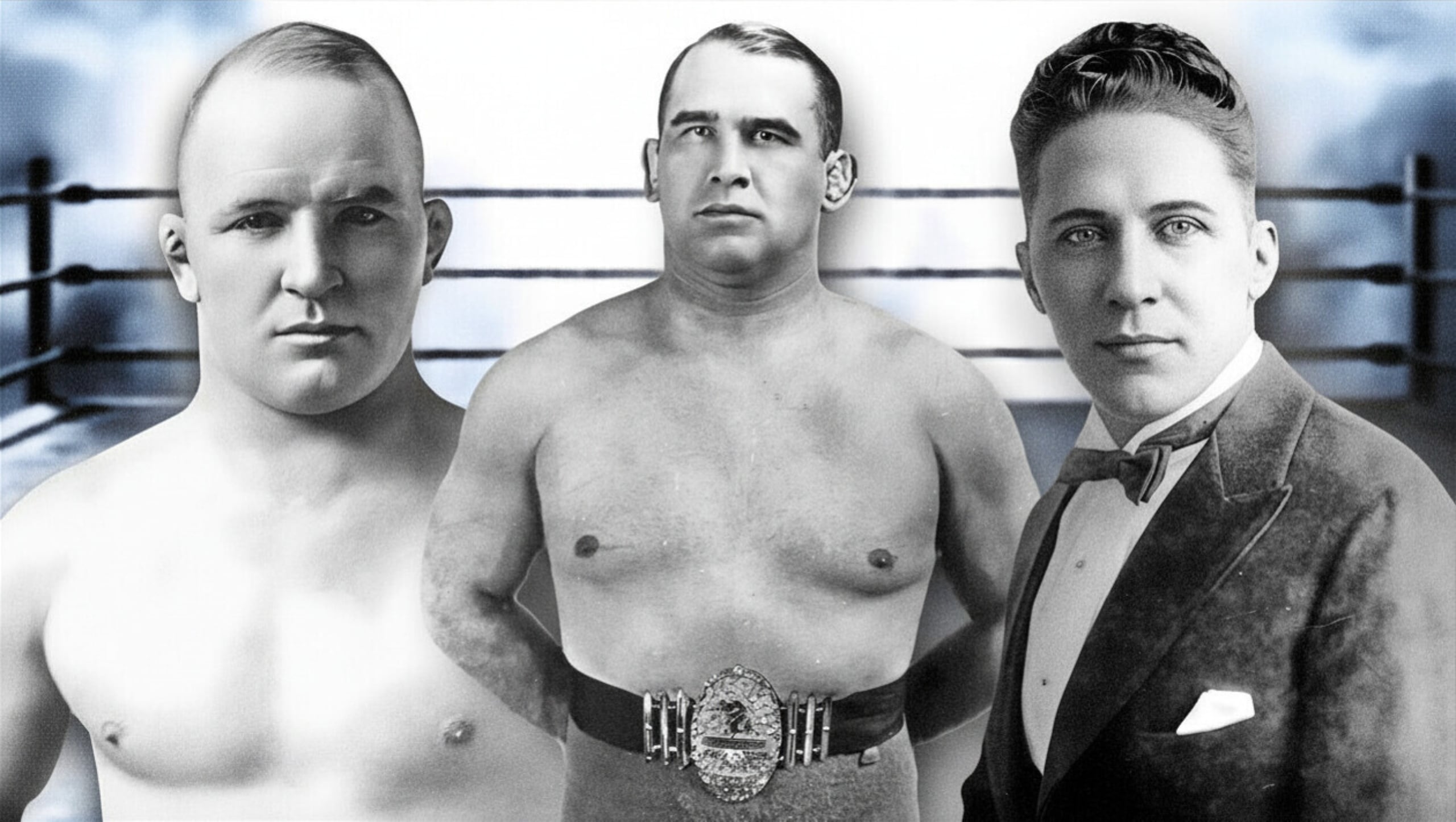
Joseph "Toots" Mondt, Ed "Strangler" Lewis, and Billy Sandow were not just three names on a poster. Together, they formed one of the most powerful alliances in professional wrestling’s formative years, and the money they generated together earned them a nickname that stuck: the Gold Dust Trio.
Lewis was the dominant World Heavyweight Champion of the 1920s, a feared hooker whose name headlined cards across the United States.
Sandow, born Wilhelm Baumann, was his sharp-minded manager and promoter, the business strategist who handled contracts, bookings, and negotiations.
Mondt, a tough catch wrestler and creative thinker, rounded out the group as the architect of their in-ring and promotional approach.
Working in concert, the trio centralized bookings, signed wrestlers to exclusive contracts, and moved cards from small halls and burlesque theaters into major sports arenas, effectively creating one of the first modern, nationwide wrestling promotions.
Mondt’s concept of blending traditional mat work with elements of boxing, Greco-Roman, freestyle wrestling, and roughhouse fighting – what he called "slam-bang Western-style wrestling" – gave their shows a faster, more explosive feel that stood out in an era of long, grinding contests.
This combination of Lewis’s drawing power, Sandow’s business sense, and Mondt’s in-ring vision turned wrestling into a legitimate commercial enterprise. And yet, for all the gold they generated, history has largely remembered them as the men who corrupted the sport rather than built it. That verdict deserves a much closer look.
Did The Gold Dust Trio Invent Slam-Bang Wrestling?
For decades, a particular narrative has dominated pro wrestling history circles: that the Gold Dust Trio – Ed “Strangler” Lewis, Billy Sandow, and Joseph “Toots” Mondt – essentially ruined professional wrestling in the 1920s by abandoning the “pure” wrestling tradition of the previous era. It’s become an accepted fact repeated so often that few stop to question whether it’s actually true.
The prevailing account suggests that Lewis, Sandow, and Mondt created something entirely new when they popularized what became known as “slam-bang Western-style wrestling.” According to this narrative, they combined boxing, Greco-Roman wrestling, freestyle, lumbercamp fighting, and theatrical elements to transform a dying sport.
But here’s what that account misses: the slam-bang style wasn’t new at all. It was the original American wrestling tradition.
If we look back to the times of the earliest known American wrestling stars, the pioneers of the profession, we see the champions of the 1870s, such as J.H. McLaughlin, H.M. Dufur, G.W. Flagg, and John McMahon. Their style of wrestling was collar-and-elbow, the most common wrestling style of that era.
This was slam-bang wrestling by its very definition. Imagine two men standing, holding each other by the collars of their jackets, tripping each other’s feet, lifting one another, and viciously slamming into each other, trying to make their shoulders and hips hit the ground together. It was an upright form of wrestling – all falls were flying, and there was no wrestling on the ground whatsoever. All you could do was literally throw and slam your opponent as many times as you possibly could. That was the whole of the show.
This wasn’t a limitation; it was what fans wanted to see.
The French Bring Greco-Roman: Strategy Over Innovation
Then the French came in the late 1870s and brought their Greco-Roman style, which featured wrestling on the ground. However, the parterre (ground) part of the struggle was limited in time by the rules. And for what reason? To make sure the fans got to see their favorite part of the show: the slamming.
Those French pioneers were mostly big, physically strong men, and watching them sit on the ground for hours was probably not the most entertaining thing to watch. That is why the main focus of the professional Greco-Roman exhibition was slamming. Even in the 1880s, fans loved and admired the same things, just as wrestling fans decades later would ask who could lift and throw Andre the Giant.
The Lancashire Wrestlers: Speed, Acrobatics, and the Touch-Fall Rule
Then the first Lancashire wrestlers came in the mid-to-late 1880s, and their wrestling style, even though it featured equal time on the ground, also included slamming. We have to remember that Lancashire catch-as-catch-can was a touch-fall sport, not a pin-fall sport. This means that slamming your opponent straight onto his shoulders ended the match immediately.
The ground wrestling in Lancashire style was mostly represented by sharp changing positions from defense to attack – called “getting behind” to apply a nelson and reversing that position – and trying to roll your opponent onto his back using various nelsons and lower extremity holds combinations. When rolling happens, it means an instant touch of the two shoulders on the mat. Regardless of how quickly it happened, if the referee saw both shoulders strike the mat together, the match was over. Besides that, rolling and some walking on the head, the most recognizable Lancashire technique, the match itself was one big continuous slamming, because fans loved the flying falls the most.
The Rock Island Argus publication (April 22, 1895) described the third fall: "Burns went to his knees, Lewis keeping his body hold. After struggling, Lewis threw Burns heavily with a rolling fall in 22 minutes and 8 seconds."
The Wichita Eagle Sun (April 21, 1895) described the confusion that often accompanied these fast-paced finishes: "Lewis then assumed the aggressive violently and downed Burns with body hold with a flying fall. The fall was fair and square but the crowd objected so strenuously that the referee… felt called upon to make a speech in his own defense."
Note, interestingly, some newspapers claimed the fall won by Lewis was a "flying fall" while others called it "rolling." As a matter of fact, it was likely a combination of both. Lewis didn’t just slam Burns right onto his shoulders (a perfect flying fall), but threw him so they rolled with Burns’s shoulders instantly touching the carpet. Either way, the match was won on a quick touch-fall, precisely following the Rules of Lancashire Catch wrestling.
The French stylists were big men, but the Lancashire wrestlers were typically short and small, 5’3″ tall and averaging around 150 pounds. Yes, catch-as-catch-can wrestling was extremely fun to watch, but only when done by the lighter men because they could do it all fast and in an acrobatic way.
To watch big men perform catch wrestling was simply impossible. Picture two heavyweights slowly and clumsily changing their getting-behind position for hours. That is exactly why and how the first rough-house matches were invented and introduced into professional wrestling. The bigger men would not wrestle, meaning the slow “sit and get fit” type of thing, but instead turn the exhibition into an actual fun-to-watch brawl, a fistfight, an old-fashioned all-in match. They lacked the speed and flexibility of the smaller wrestlers, yet they had to impress the crowds.
That’s why, when people who fantasize about what they call “the golden era,” they often don’t even understand what they’re fantasizing about. Read the detailed newspaper reports from the 1880s and 1890s and try to envision what they literally describe. They speak about slamming, and slamming, and slamming again. Frank Gotch himself was the biggest slammer of his generation. The newspaper reports also describe slapping, punching, and head-butting. If you thoroughly read Frank Gotch’s mat battle descriptions, you’ll see all of that.
The Gotch Example: Documentary Evidence of Slamming
Even Gotch’s most famous 1908 match with Hackenschmidt resulted in a devastating body slam that basically knocked the Russian out. After that, he refused to continue the match and reported it to both the referee and Gotch.
According to the official record book, Frank A. Gotch World’s Champion Wrestler: His Life, Mat Battles and Instructions on How to Wrestle by George S. Robbins (Compiled and Edited by Joseph B. Bowles, Chicago, 1913), which is available online to view in full via Google Books (every pro wrestling fan should know that such material exists and have access to it) – Gotch himself documented his wrestling matches and techniques:
“12:30—Hack rises, Gotch follows him to the ropes with a partial waist-hold. Hack holds to the ropes. Gotch bores and secures a waist lock, carrying the Russian out and throwing him heavily to the mat. Hack manages to roll over, but is apparently exhausted. He tells Gotch that he will give up. Gotch rises and the bout ends after two hours and three minutes. Announcer Phelon says: ‘Mr. Hackenschmidt surrenders the title of the champion wrestler of the world to Frank Gotch.'”
Contemporary newspaper reports captured the sheer violence of Gotch’s style:
“Although there was never anything like a fall, except when Gotch caught the big fellow off guard in a corner and tossed him five feet on the broad of his back, it was still the most superb exhibition of physical prowess and condition ever seen in Chicago.”
Another account described the slam itself: “He picked up the brawny foreigner and slammed him to the floor with a force that threatened to break every rib in Hackenschmidt’s body.”
A well-known fact is that the last match lost by Gotch was his 1906 title change against Fred Beell, the Great Wonder of Wisconsin. According to the same official record book (page 102):
“GOTCH MADE UNCONSCIOUS. In the second bout, Beell dashed back of the champion, grabbed him by the legs and hurled him over his head. Gotch came to his feet, but he had slowed up. Beell went back of him like a flash, and again Gotch was thrown over Beell’s shoulders, the champion alighting on his head with a resounding thump.
“Gotch refused to give up, and Beell put him down again. Gotch had come up four times, and Beell had kept after him, giving him no rest. Beell hurled Gotch to the mat, and when the champion tried to rise the woodchopper from Marshfield picked him up bodily and hurled him over his head. Gotch landed off the mat on his head and fell back as limp as a rag. Beell picked him up and carried him to the center of the mat. It required five minutes to restore Gotch to consciousness. He collapsed in his dressing room and bled profusely.
“After twenty minutes Gotch, groggy, was led into the ring. Beell, seeing that the champion was almost helpless, rushed in to win in a hurry. He put him down almost without resistance and won the fall with a half-nelson in about five minutes, taking the American championship and enough money on the side to make him independently wealthy.”
A contemporary newspaper report repeated this story precisely: “FRANK GOTCH LOSES. Iowa Wrestler is Thrown Twice by Fred Beell of Wisconsin. Fred Beell of Wisconsin won the American wrestling championship from Frank Gotch, who wrestled in Norfolk some years ago, taking the last two falls, Gotch winning the first. The match was pulled off at New Orleans.
“Gotch got a half-Nelson in the first and threw Beell in thirty-one minutes. Gotch weakened in the second, and his opponent picked up the champion four times and threw him bodily on the ground. The fifth time Beell picked him up and carried him to the mat, securing the fall in thirty-nine minutes. After five minutes’ rest, Gotch regained consciousness, and securing a half-Nelson, Beell secured the third fall in half a minute.”
The Police Gazette Rules: The Turn That Changed Everything
Everything changed in the 1890s and early 1900s when American promoters accepted the Police Gazette Rules, which demanded pin-fall victories only. These were called “slow falls” in contrast to the Lancashire “fast falls” -the slams and rolls. This new introduction clearly ran counter to the rules of Lancashire wrestling. So yes, it was still catch-as-catch-can, but no longer after the “Lancashire fashion.”
Honestly, this kind of show was hard to watch. Can you imagine two big men sitting in the center of the ring for about an hour without even moving much, trying to pin one another? Even the newly introduced Japanese painful and torturous jiu-jitsu holds didn’t change the overall picture of the show. It was still very bland. That is what the pin-fall rule meant for the bigger guys’ shows.
And that is exactly why Gotch was smart enough to never follow that format. He was a typical rough-house and slamming type of wrestler. You could call him the Bruno Sammartino of his era, and you’d be pretty close to the historically accurate image of Gotch, to the factual truth about his wrestling style.
Very similar was his main opponent, Tom Jenkins. We encourage everyone to read the newspaper reports about Gotch vs. Jenkins matches. They were the pure classics of their time, rough-house and slamming at their very best.
If you’ve seen the recently rediscovered Hack’s 1908 footage, we recommend watching it.

Or even better, give a chance to the Stecher-Caddock match from 1920. Try to watch it till the end. You won’t be able to finish watching it – that’s how incredibly unexciting it looks. It looks like some random freestyle collegiate wrestling match that apparently was billed for the World Pro Wrestling Heavyweight Championship.

What the Gold Dust Trio Actually Did to Pro Wrestling in the 1920s
It’s safe to say Lewis-Sandow-Mondt didn’t really invent anything. They simply realized that in the future, there would be no place for the pin-fall format, as no one would be willing to pay even a broken dime to watch it. This very realistic approach to the tastes of wrestling fans, the people for whom this business actually exists, changed the game once and forever.
Being smart enough to combine it all, the Japanese torture chamber tricks, the “policemen holds” as they called them (because jiu-jitsu was first used by law enforcement people), the old school American all-in brawl type, and of course the historical wrestling, which was nothing but slamming, slamming, and slamming again – they synthesized something that worked. So yes, long life to the slam-bang style, the wrestling as we all like it.
They weren’t ruining wrestling. They were saving it by returning it to what it had always been fundamentally about: dynamic, explosive, entertaining action that fans were willing to pay to see.
Understanding the Amateur Rules: Why Catch Wrestling Worked Differently
To fully understand why professional wrestling’s transition mattered so much, it’s helpful to understand how amateur catch-as-catch-can actually worked.
Recently, I received an interesting inquiry from one of the currently active wrestling professionals asking about the rules of catch-as-catch-can wrestling that were part of the 1904 St. Louis Olympics. Their main concern was about the “deadliest and most vicious submissions being part of it.” Frankly, this is not the first time I have been asked this question. Several years ago, the same question was addressed to me by probably one of the most famous “modern catch wrestling” coaches in the United States. After I published my book The Story of Catch, I have been regularly receiving such and similar questions from my readers.
The rules that governed the 1904 Olympics were the Rules of the Amateur Athletic Union of America, and they had not changed since the 1890s or the 1900s. Those were the old Rules of Lancashire wrestling, according to which two shoulders on the mat ended the match, regardless of how quickly it happened. There was no other way of winning a catch wrestling match. In old Lancashire matches, bouts sometimes lasted for days, which was not practical for organized amateur competitions, so time limits were introduced.
WRESTLING RULES OF THE AMATEUR ATHLETIC UNION: CATCH-AS-CATCH-CAN
1. In all competitions, the ring shall be roped and of not less than 12 feet or more than 24 feet square.
2. Weights to be: Bantam, 105 lbs. and under; Feather, 115 lbs. and under; Light, 135 lbs. and under; Welter, 145 lbs. and under, and Middle, 158 lbs. and under.
3. Any hold, grip, lock, or trip allowed, except the hammer lock, strangling, and full Nelson holds.
4. Nothing heavier than light slippers or rubbers without heels allowed on feet.
5. Both shoulders shall be on the floor at the same time to constitute a fall.
6. A rest of not less than five nor more than ten minutes shall be allowed between each fall.
7. No striking, kicking, gouging, hair pulling, butting, strangling, or anything that endangers life or limb, will be allowed.
11. Duration of bouts shall be six minutes.
This was followed by a paragraph explaining how to read the rules:
RULES GOVERNING AMATEUR WRESTLING
Under amateur rules, bouts are limited to six minutes, and if there is no fall, there is a three-minute rest, followed by six more minutes of wrestling. Then, if neither contestant has scored a fall, the referee has the power to give the decision to the man who, in his opinion, has done the better work. Flying and rolling falls are counted. The hammer lock is barred, as are also the double-Nelson and strangle.
These were the rules of the 1904 Olympics. The heavyweight class tourney was won by a Norwegian athlete named Bernhoff Hansen, who had learned catch wrestling here in America and later joined professional wrestling circuits.
Debunking the Amateur vs. Professional Myth
Another big misconception in pro wrestling history, still quite popular in pro wrestling circles, despite all the articles and books on the subject, is that there were originally two kinds of catch wrestling. According to this false narrative, one type was for amateurs, in which matches were won on pins, and the other was for professionals, in which most wrestling games were won on submissions.
This is nothing but anti-history. Something that never was. Something that was made up about 25 or more years ago by people promoting submission-style self-defense in America and worldwide, who wanted to capitalize on pro wrestling history, primarily because their own thing was just a newborn baby. We’re talking about modern catch, a pin, and submission sport. As a matter of fact, most of them didn’t even have an amateur wrestling background. They were former Brazilian Jiu-Jitsu practitioners.
The truth is simple: there has always been only one catch wrestling, the same for everyone, regardless of their competitive status, whether amateur or professional.
All submissions currently used in professional wrestling are not historically related to Lancashire wrestling. Instead, they have exclusively oriental origins, more specifically, Japanese origins. The Japanese punishing holds and self-defense holds, because back then there was no such sport as judo or jiu-jitsu in Japan, first appeared in America in the 1890s, and in the early 1900s, they were already part of the professional wrestling (or catch wrestling) vocabulary. However, they were not used to submitting an opponent, as all professional matches were won exclusively by pinfall. Rather, they were used to wear out the opponent and deliver him as much physical damage as possible so that he no longer could resist and would be easily pinned to the mat.
There were two kinds of holds and combinations in catch wrestling: those that led to directly forcing the opponent onto his shoulders, and those that made him turn his shoulders to the mat himself.
Gotch Explains His Own Wrestling Philosophy
Let Frank Gotch himself speak on this. In an interview, Gotch explained his wrestling approach:
“The match or matches I wrestle must be under Catch-as-catch-can rules, as interpreted by Lancashire. That means no holds barred but the strangle hold, and, of course, you must not choke a man. Any hold that is to be applied to an opponent when he can turn his shoulder is a legitimate hold; but if he gets hurt resisting one of those holds, it is not the fault of his opponent.”
Gotch went on to explain his philosophy of wrestling:
“As all rules of sport are continually being tinkered with, so we often find critics complaining of the freedom given the athlete in the grips of catch-as-catch-can wrestling. Personally, I believe that the American catch-as-catch-can rules, as established by the Police Gazette, are the best in the world. I detest brutality on the mat as much as anyone else; I do not believe in injuring or maiming a man unnecessarily.
“The Japanese warriors,” Gotch explained, “in their great battles, always, it is said, plan to leave a single avenue of retreat open to the besieged. So in wrestling a hold should always lead to a fall, not to simple brutality. A man should always be given the opportunity of yielding. My toe-catch combination has often been severely criticised. And yet, it is not unfair in catch-as-catch-can wrestling, and I have never employed it without leaving my opponent free to turn his shoulders to the mat, if he doesn’t like it.”
Gotch concluded with his assessment of wrestling versus other martial systems:
“They have not a hold which is not known to our wrestlers, but the first rule of wrestling is that nothing unfair is allowed. Hence, in wrestling, we do not break fingers, gouge out eyes, or choke a person. As for killing a man, if called upon some evening to protect yourself, would you not rather get up the next morning with the knowledge that you had protected yourself without doing so than to know that you had?
“A person versed in jiu-jitsu may be able to practice it all right on an inexperienced person, but the experienced wrestler and boxer can guard against jiu-jitsu. To make jiu jitsu effective you must first get close to your opponent and secure a hold, and this hold the wrestler can prevent your securing. A wrestler or boxer can break an arm or leg easily enough, but disdains to do so. Wrestling is more civilized than jiu jitsu. Wrestling is a sport. Jiu Jitsu is too dangerous for that, being essentially a method of offense or defense without the redeeming feature of wrestling or boxing.”
The Toe Hold: Strategy, Not Brutality
Ed Smith, in his famous book Professional Wrestling, explained the toe-hold phenomenon this way:
“Gotch invented the toe hold merely as a subterfuge for securing the easier and equally as effective crotch lock. In getting a reputation for using the toe hold, Gotch got exactly what he wanted. He desired to be known as always going after that hold. But he used it in the greater number of cases merely to turn an opponent over on his side and thus get the legs spread apart so that he may run his arm in between them and secure the crotch lock.
“That is the whole thing in a nutshell. The toe hold is a stall to get something else. Let it be known right now that the toe grip is a mighty hard thing to get on an opponent who knows anything. But when you go after it you can get a man to roll on his side and spread his legs out. This makes it possible and, in many cases, easy to get the crotch hold.
“And I will tell you something more about this crotch hold that will astonish you. I have seen Gotch pick up an opponent bodily, raise him over his head, and then drop him to the mat, getting the crotch hold actually while his man is coming down through the air.”
With hundreds of amazing Pro Wrestling Stories to dive into, where do you start? Get the inside scoop – join our exclusive community of wrestling fans! Receive 10 hand-picked stories curated just for YOU, exclusive weekly content, and an instant welcome gift when you sign up today!
The Last Time Lancashire Catch Wrestling Was Used in Pro Wrestling (And Why It Failed)
The last time the original rules of Lancashire wrestling, the old 1856 Snipe Inn Catch-as-catch-can wrestling rules, were used in professional wrestling contests in the United States was in New York in the early 1920s. Since the mid-1890s, professionals had held almost all their exhibitions under the Police Gazette Rules (pin-fall only), but amateur contests were still governed by the Lancashire Rules (flying, rolling, pins).
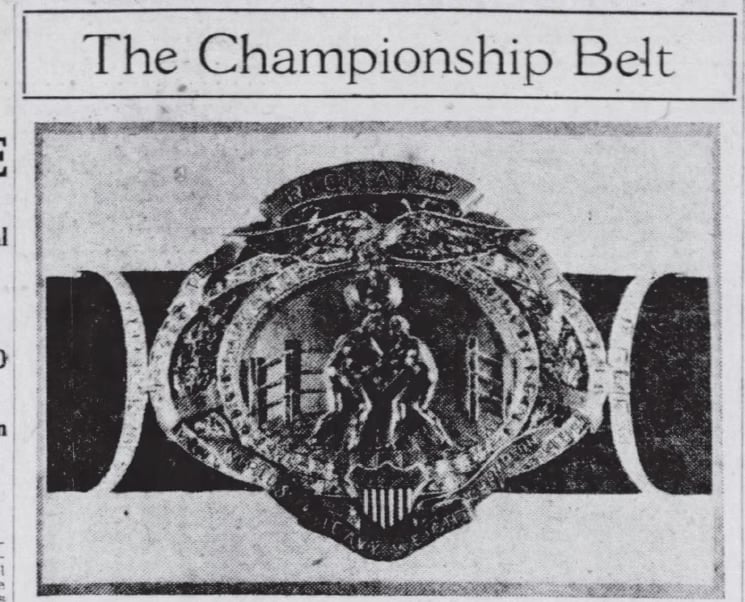
The clinical pin-fall matches, especially those of heavyweights, if they didn’t turn into rough and tumble fights, were deadly boring. But that is what pin-fall sport is: slow and uninteresting.
William Muldoon, the chairman of the New York State Athletic Commission and a former American and World champion wrestler, attempted to reintroduce the original rules of Lancashire catch wrestling:
“Two falls to win, flying, rolling and pin falls to count, no holds barred but the strangle hold, except when headlock, scissors or toe holds be used for purely punishing purposes, when at the command of the referee such holds must be loosened.”
Muldoon’s attempt to revive catch wrestling in its original Lancashire format was motivated by the fact that matches were too long and unexciting. The perfect example is the Stecher vs. Caddock title match. He tried to bring back flying falls (winning on slams) because during his performing years, that is how it was, and it was fun to watch back in the 1880s.
Sadly, this introduction didn’t last long and ultimately failed for two important reasons. First, it never found support from the masses – fans didn’t like it because all the contests were decided in a very short time. Flying and rolling falls came so quickly that they killed the business and entertainment value. Second, by the 1920s, after two decades of not using these old rules, a younger generation of wrestlers simply didn’t know how to prolong the match despite the “quick fall rules.” That required a lot of actual skill: complete technical knowledge of Lancashire wrestling, and an understanding of how to wrestle both on your feet and on all fours.
Contemporary newspapers reported on the innovation:
“The innovation of flying falls (the victim being thrown in such manner that both shoulders touch the canvas) and of rolling falls (the loser being rolled over on his back so that both shoulders touch the mat) will be severely tried tomorrow night, as many of the best wrestlers in the world will engage in the bouts in the Garden arena.”
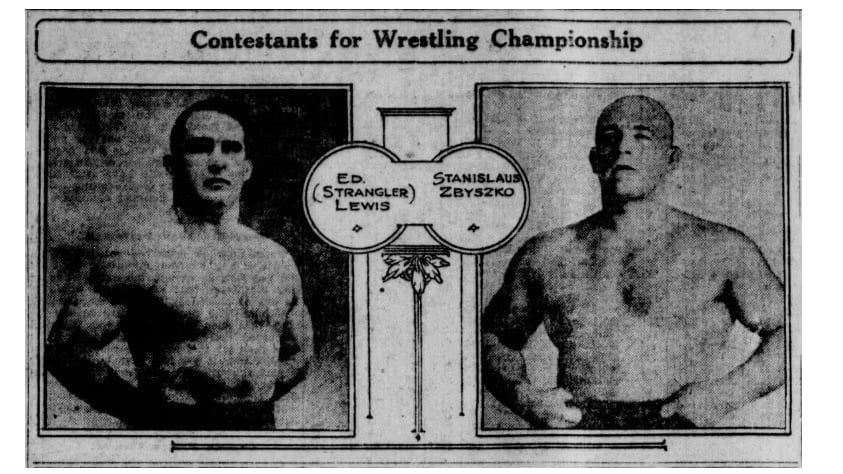
Stan Zbyszko became the last heavyweight champion to win under Lancashire quick-fall rules on November 28, 1921, when he defeated Ed "Strangler" Lewis, marking the final time a professional wrestling world title would be decided under the original flying and rolling fall format.
William Schora’s 1885 Defense of Lancashire Wrestling
It’s important to mention one of the greatest Lancashire wrestlers of all time, one of only two wrestlers in history who held both the Gold Cup and Silver Belt of Lancashire: William Schora of Ashton-under-Lyne. In his later years, Schora moved to the United States and became a naturalized citizen. This is an extract from his 1885 interview, which settles this entire dispute once and for all:
“Many people allege that your style is cruel. Do you think so?”
He continued, “No, but I won’t deny that it can be made so. It all depends on who the antagonists are. In the articles which govern contests, it is distinctly laid down that no man shall scratch, pull each other’s ears, break fingers, or commit any unfair action. The work must be restricted to fairly putting the men on their shoulders in a fair way. And if these rules were more fully understood by the general public there would be less misconception about the sport.”
Pro Wrestling Championship Titles Before the Gold Dust Trio: The Truth
One of the most persistent misconceptions in wrestling history involves the very concept of championship titles and their “lineages.” Wrestling historians frequently cite title lineages stretching back to the 1870s, presenting them as legitimate organizational records. The problem is simple: professional wrestling titles didn’t exist in the 19th century in any formal sense.
Here’s how it actually worked: wrestlers claimed titles through newspaper promotion. Newspapers, paid by match promoters and wrestlers to advertise bouts, simply billed events as “for the World Championship” or “for the American Championship.” Outside that newspaper bubble, these titles meant nothing. They were marketing claims, not organizational realities.
There was no Association of Pro Wrestling Promoters of North America in the 19th century. No formal governing body. Wrestlers were independent entrepreneurs making their own claims to whatever titles they could market. The Police Gazette of R.K. Fox tried desperately to control wrestling title lineages, but ultimately failed – independent wrestlers had no interest in losing their freedom-of-market claim.
A perfect snapshot of this “independent” era can be found in contemporary newspaper coverage of the October 1897 match between Dan McLeod and Farmer Burns. The Indianapolis Journal reported that the audience was filled with rival wrestlers like Tom Jenkins and John Carkeek, who attended specifically to challenge the winner on the spot:
“They were there to challenge the winner of the match, and announced their intention. Both Burns and McLeod signified their willingness to give either of the men a match… The outcome will probably be the arrangement of several matches to take place in this city.”
This was the reality of the pre-trust era: titles were disputed, challenges were issued from the front row, and matches were arranged city by city rather than by a national governing body. There was no centralized authority, just independent wrestlers negotiating their own opportunities wherever they could find them.
This changed dramatically with Frank Gotch. For the first time, American promoters, across multiple states, unanimously agreed to recognize a single champion and promote him consistently. Gotch’s title was the first real championship title in professional wrestling because it was backed by an actual organized body of promoters willing to enforce it. Before Gotch, titles were myths. Under Gotch, they became organizational facts – “money in the bank,” as the saying goes.
This also explains why promoters began importing large European wrestlers, Greco-Roman specialists with no experience in American catch wrestling.
Gotch didn’t have enough capable American heavyweight opponents. Fred Beell was too small. Joe Parr was small as well. They needed European wrestlers to give Gotch credible challengers and justify regular title defenses.
Very few of these imported wrestlers succeeded at the top level. I would say only the Zbyszkos achieved ultimate success, because they made the right choices and exactly followed the will of the powerful men who owned the professional wrestling business.
The thing is, Gotch didn’t have any capable heavyweight opponents of American birth, except maybe Joe “Apollo” Rogers, who appears in that memorable 1908 Hackenschmidt footage mentioned earlier. Beell was too small. Parr was small as well. Those were not heavyweights. That is why promoters started bringing in big European wrestlers to make sure Gotch was defending his title regularly and to make them enough money. They chose him as their champion solely for that purpose: he promised commitment to his title and his profession.
The promoters tried to establish such a legacy even before Gotch, but his predecessor, Jenkins, was not committed to the profession as Gotch was. They even brought Hackenschmidt once, and Jenkins lost to him according to their plan, but they couldn’t rely on Hackenschmidt either. He was basically a semi-retired wrestler in the mid-1900s. And even despite Gotch’s sporadic retirements, we can accept him as the first real heavyweight professional catch wrestling champion on American soil.
It is also important to note that the move toward monopolizing the business, often blamed on the Gold Dust Trio in the 1920s, actually began much earlier. By 1909, newspapers like the Montreal Gazette were already reporting on the formation of the “Empire Athletic Association,” a coalition of promoters explicitly designed to control talent.
A report from The Gazette, Montreal, dated February 2, 1909, outlined their strict control over the industry:
“The association controls the leading wrestling clubs in America and a mat artist barred from the organization for wrong-doing of any kind finds himself unable to secure engagements… Only one thing is binding in the association, and there is no appeal from it. If a wrestler is billed to appear and has signed articles to that effect, he must carry out his contract or be barred from ever appearing before any of the clubs of the association.”
Jack Curley, a key figure in this early trust, framed it as a benevolent necessity: “The Empire Athletic Association is in existence to protect the public that supports the game, and will not tolerate any wrong doing.
Curley went even further, explicitly threatening wrestlers who made the sport look “shady” to the press – a clear precursor to the way the Gold Dust Trio would later manage the business’s image:
“If the majority of the sporting editors in any city write up a match as looking shady the wrestler blamed for doing wrong will never again be given a match.”
This demonstrates that the “trust” model was already being built during the Gotch era, long before Lewis, Sandow, and Mondt formalized it.
Prior to the Gotch Era, professional wrestling was pretty much independent, a self-employed small business entrepreneur kind of entity. All those champions starting from 1870 were independents. No company-owned titles existed. There were no real titles. The Police Gazette of R.K. Fox tried really hard to control wrestling title lineages, but they ultimately failed. Independents did not want to lose their freedom-of-market claim. After Gotch, it was already an industry embodied by the governing body of promoters’ associations.
That is why I do not take the pre-Gotch, 19th-century lineages and title stories seriously or consider them. They never were. Championship titles exist only within a frame of reference in which a company owns and runs them. The 19th-century lineages were created by some wrestling history enthusiasts for Wikipedia purposes.
The Gold Dust Trio Didn’t Break Pro Wrestling. They Saved It
What the historical record shows, across more than a century of match reports, rule books, and newspaper accounts, is that professional wrestling has never really changed at its core.
Fans in 1875 wanted to see men thrown to the ground. Fans in 1895 wanted flying falls. Fans in 1925 wanted slam-bang action. Fans today want the same thing.
Lewis, Sandow, and Mondt didn’t rewrite that story. They understood it. The Gold Dust Trio looked at a sport that had drifted away from what made it compelling, and they pulled it back – not out of self-interest alone, but because the alternative was a product no one would watch.
That’s not the legacy of men who broke professional wrestling. That’s the legacy of men who made sure it survived.
Don’t miss Ruslan C. Pashayev’s must-read features on Pro Wrestling Stories:
- Earliest Wrestling Footage: 1908 Hack vs. Rogers Review
- 19th Century Wrestling: 30 Untold Facts Revealed!
- Evan Lewis: The 19th Century’s Most Feared Wrestler
Can’t get enough pro wrestling history in your life? Sign up to unlock ten pro wrestling stories curated uniquely for YOU, plus subscriber-exclusive content. A special gift from us awaits after signing up!
Want More? Choose another story!
Be sure to follow us on Facebook, X/Twitter, Instagram, Threads, YouTube, TikTok, and Flipboard!
Our wrestling history is gold, and so are readers like you!
If this story added to your collection of wrestling knowledge, you can say thanks:
Tip jar (PayPal)
Browse our merch at our brand-new shop (launched February 2026)!
Pro Wrestling Stories is committed to accurate, unbiased wrestling content rigorously fact-checked and verified by our team of researchers and editors. Any inaccuracies are quickly corrected, with updates timestamped in the article's byline header.
Got a correction, tip, or story idea for Pro Wrestling Stories? Contact us! Learn about our editorial standards here. Ever wanted to learn more about the people behind Pro Wrestling Stories? Meet our authors! Want to write for us? Learn how to join the team.

ProWrestlingStories.com participates in affiliate marketing programs. This post may contain affiliate links, meaning we may earn commissions at no extra cost to our readers. This supports our mission to deliver free content for you to enjoy!
 If you love movies and pro wrestling, don’t sleep on this one.
Grindhouse, Arthouse, and Wrestling Flicks by Pro Wrestling Stories Senior Editor Evan Ginzburg dives into the fascinating world where cinema and wrestling collide. Packed with hundreds of reviews, hidden gems, and fascinating turns from wrestlers on the big screen, it covers everyone from André the Giant and Roddy Piper to CM Punk, DDP, Chris Jericho, Pat Roach, and The Rock. Smart, passionate, and endlessly browsable, it’s the kind of book fans will keep returning to. Grab your copy today!
If you love movies and pro wrestling, don’t sleep on this one.
Grindhouse, Arthouse, and Wrestling Flicks by Pro Wrestling Stories Senior Editor Evan Ginzburg dives into the fascinating world where cinema and wrestling collide. Packed with hundreds of reviews, hidden gems, and fascinating turns from wrestlers on the big screen, it covers everyone from André the Giant and Roddy Piper to CM Punk, DDP, Chris Jericho, Pat Roach, and The Rock. Smart, passionate, and endlessly browsable, it’s the kind of book fans will keep returning to. Grab your copy today!