In 1970s and ’80s Britain, Saturday afternoons belonged to two wrestling titans. The ring shook, the crowd roared, and the nation tuned in as Big Daddy and Giant Haystacks fought for supremacy. Haystacks, a towering, rule-breaking menace, thrived on chaos and intimidation, while Big Daddy, the proud working-class hero, seemed to carry the crowd’s hopes on his massive shoulders. Their rivalry was more than a spectacle; it became a phenomenon that turned wrestling into a weekly ritual in homes across the UK. Yet, as you’ll soon discover, the truth behind their battles was never simply good versus evil, and most fans have only ever heard half the story.
Big Daddy vs Giant Haystacks ruled 1970s and 1980s Britain. But the feud was never just good versus evil. Most fans only heard half the story! Artwork by Pro Wrestling Stories.
Our wrestling history is gold, and so are readers like you!
If the following story adds to your collection of wrestling knowledge, you can:
Big Daddy (Shirley Crabtree): The Rise of Britain’s Working-Class Wrestling Hero
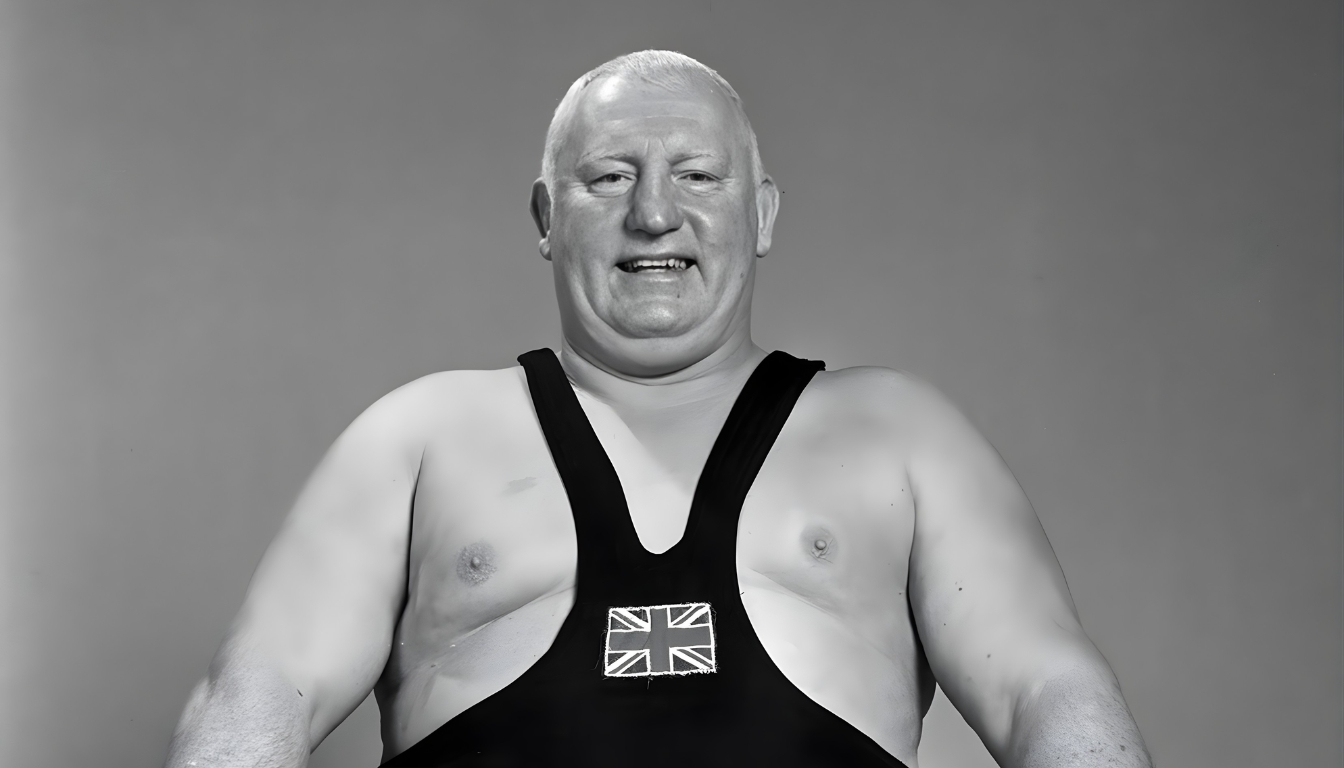
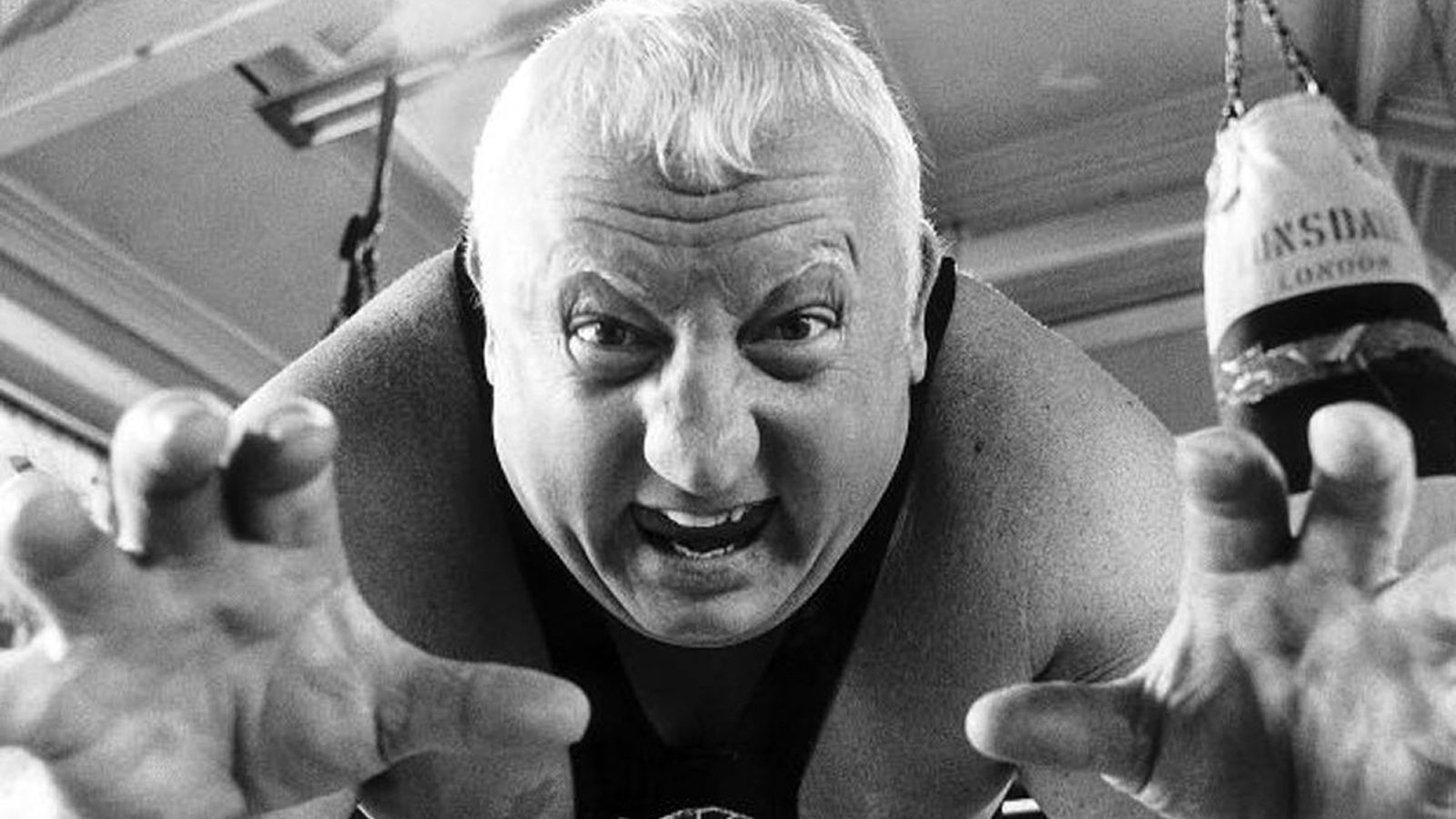
Big Daddy, born Shirley Crabtree, was Britain’s beloved wrestling hero, a towering 6’6" icon who captured hearts with his charisma and rags-to-riches story. Known for epic battles against Giant Haystacks, his blue-eyed heroics, signature Daddy Splash, and unforgettable catchphrase "Easy, Easy, Easy," made him a legend of 1970s-1980s British wrestling. Photo Credit: The Guardian.
Shirley Crabtree was born in Halifax, Yorkshire, on November 14, 1930, into a proud working-class family of blacksmiths and coal miners.
Life was built on grit and graft, and Crabtree followed that path early, leaving school at just 14 to work in the coal pits and help support his household.
Even as a teenager, his size and natural athleticism set him apart. Standing well over six feet tall from a young age, with remarkable strength, he became involved in rugby league and trained with both Bradford Northern and Halifax, showcasing the physical presence and toughness that would later define his wrestling persona.
Crabtree began his professional wrestling career in 1952, following in the footsteps of his father, Shirley Crabtree Sr., who had also competed in the sport.
In his early years, he was billed as "Blond Adonis" Shirley Crabtree, a chiselled, physique-driven attraction who bore little resemblance to the larger-than-life figure he would eventually become.
Throughout the 1950s and early 1960s, he established himself as a credible competitor on the British wrestling circuit, capturing the Joint Promotions European Heavyweight Championship, a title previously held by the feared Bert Assirati, cementing his status as one of the country’s top heavyweights.
In 1966, Crabtree stepped away from wrestling during a downturn in the industry and turned his attention to business, owning and managing a nightclub in Bradford while remaining a recognizable local figure.
His return to wrestling in 1972 marked a transitional period. Initially billed as "The Battling Guardsman," Crabtree worked predominantly as a heel and reintroduced himself to audiences through appearances on ITV’s World of Sport, the flagship programme that brought British wrestling into millions of homes every Saturday afternoon.
Behind the scenes, his brother, Max Crabtree, rose to prominence within Joint Promotions, eventually taking control of the booking. It was under this new creative direction that Shirley Crabtree underwent the transformation that would define his legacy. Shedding the old identities, he re-emerged as Big Daddy, a patriotic, working-class hero designed to resonate deeply with British audiences.
The connection was immediate and electric. Despite standing 6’6″ and weighing well over 25 stone (350 lbs), Big Daddy mastered the art of the underdog comeback, rallying crowds with exaggerated resilience and theatrical flair.
Even a stint as a heel alongside the towering Giant Haystacks failed to dull the public’s affection for him. Once the partnership dissolved, the stage was set for a rivalry that would transcend sport.
The split ignited one of the most iconic feuds in British wrestling history, with Big Daddy positioned as the people’s champion against the monstrous 6’11" Haystacks, a clash that would captivate the nation for years to come.
Giant Haystacks: Martin Ruane’s Rise as Britain’s Ultimate Wrestling Villain
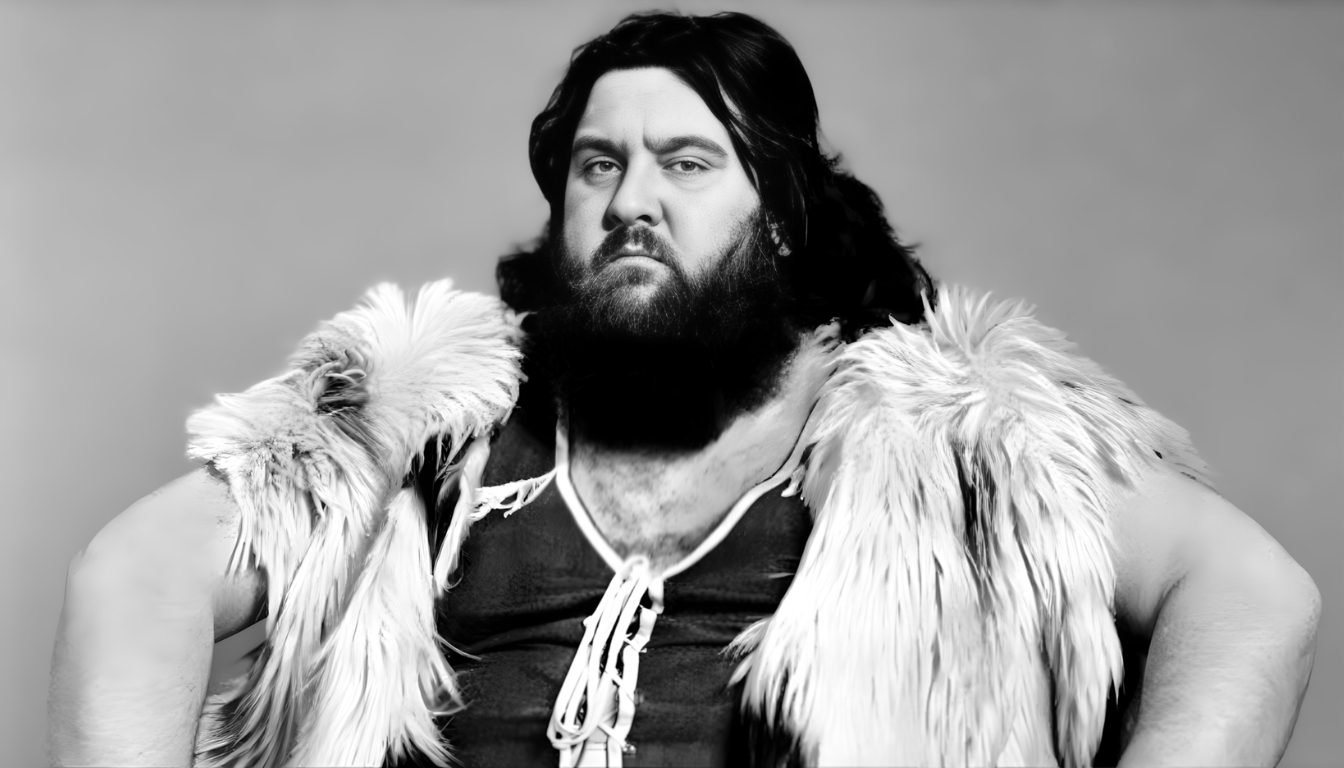
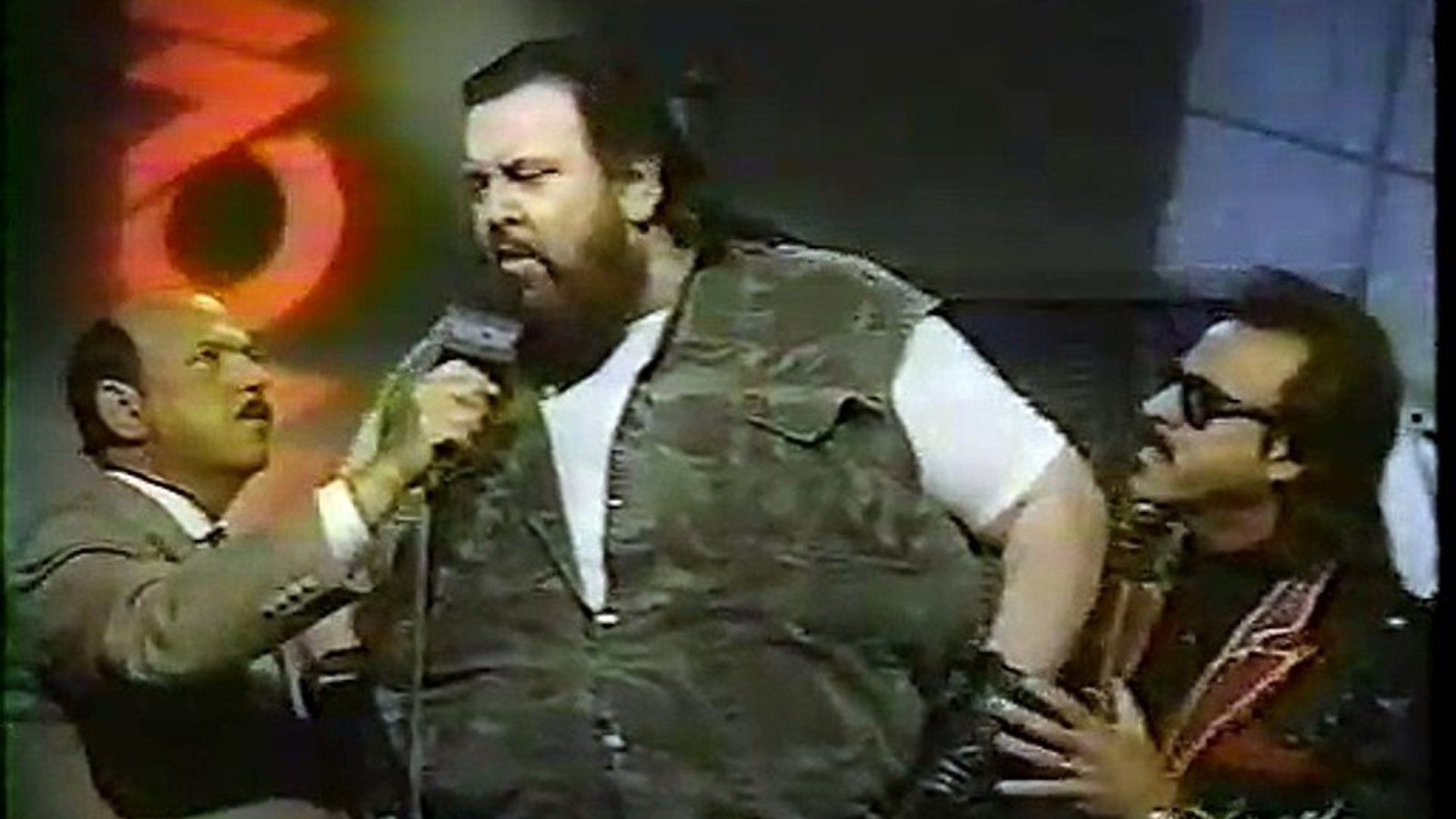
Giant Haystacks (Martin Ruane) was the towering, menacing heel whose sheer size and brute strength made him a nightmare for opponents. With devastating body blocks, bone-crushing elbow drops, and relentless crowd taunting, he became the perfect foil to heroic figures like Big Daddy. Photo Credit: Telegraph.
Martin Ruane was anything but ordinary, yet earned the perfectly fitting name Giant Haystacks.
Ruane was born in London on October 10, 1947, to Irish parents, and from the very beginning, he stood out, reportedly weighing over 14 pounds at birth. If ever there were an omen, that was it.
In 1949, his family relocated to Salford, where Ruane would spend most of his life, proudly embracing his County Mayo heritage.
Growing up in working-class surroundings, he developed the toughness and resilience that would later define both the man and the character.
Even before stepping into a wrestling ring, Ruane’s immense frame and natural strength made him impossible to ignore. Before wrestling, Ruane worked as a nightclub bouncer, a job well suited to his imposing stature. It was through a friend’s suggestion that he entered the wrestling business in the late 1960s.
In 1967, the journey toward Giant Haystacks truly began, though not immediately under that name. He first competed as Luke McMasters, then briefly adopted the name "Haystacks Calhoun," inspired by the popular American wrestler. Eventually, Ruane refined the gimmick into something uniquely his own.
As he explained during a 1984 appearance on Ireland’s The Late Late Show, "I was looking for a name that described what I looked like; something people would remember."
Giant Haystacks was born, a name that perfectly captured both his towering size and his unruly, almost mythic presence.
Inside the ring, Haystacks built his style around brute force and overwhelming mass, drawing comparisons to global giants such as André the Giant.
His offence was simple yet devastating: crushing body blocks in the corner, clubbing forearms, and a rib-splitting elbow drop that flattened opponents beneath him.
Everything about him screamed menace. His ring attire, often rough, countryside-inspired gear, added to the aura.
He looked less like a polished athlete and more like a wild, untamed force of nature, a beast dragged from the fields and set loose in the squared circle. It was a character that British audiences instantly understood and reacted to.
Yet, behind the terrifying exterior, there was another side. Fellow World of Sport performer Klondyke Kate once described him in the Daily Mirror as a "fabulous bloke with a heart of gold."
Even so, promoters sometimes found him unpredictable. One infamous moment occurred during a television appearance on Good Evening Ulster, when host Jackie Fullerton reportedly irritated Ruane during an interview. What was meant to be a light demonstration of strength turned into Haystacks lifting and body-slamming the presenter onto the studio floor, a shocking and controversial incident that only reinforced his larger-than-life reputation. Years later, Fullerton would claim the move went further than intended, but by then the moment had become part of wrestling folklore.
After his partnership with Big Daddy dissolved, Haystacks fully embraced his role as Britain’s ultimate villain. The snarling, rule-breaking heel was a persona he embodied with conviction. His size, scowl, and unapologetic aggression made him the perfect antagonist. I
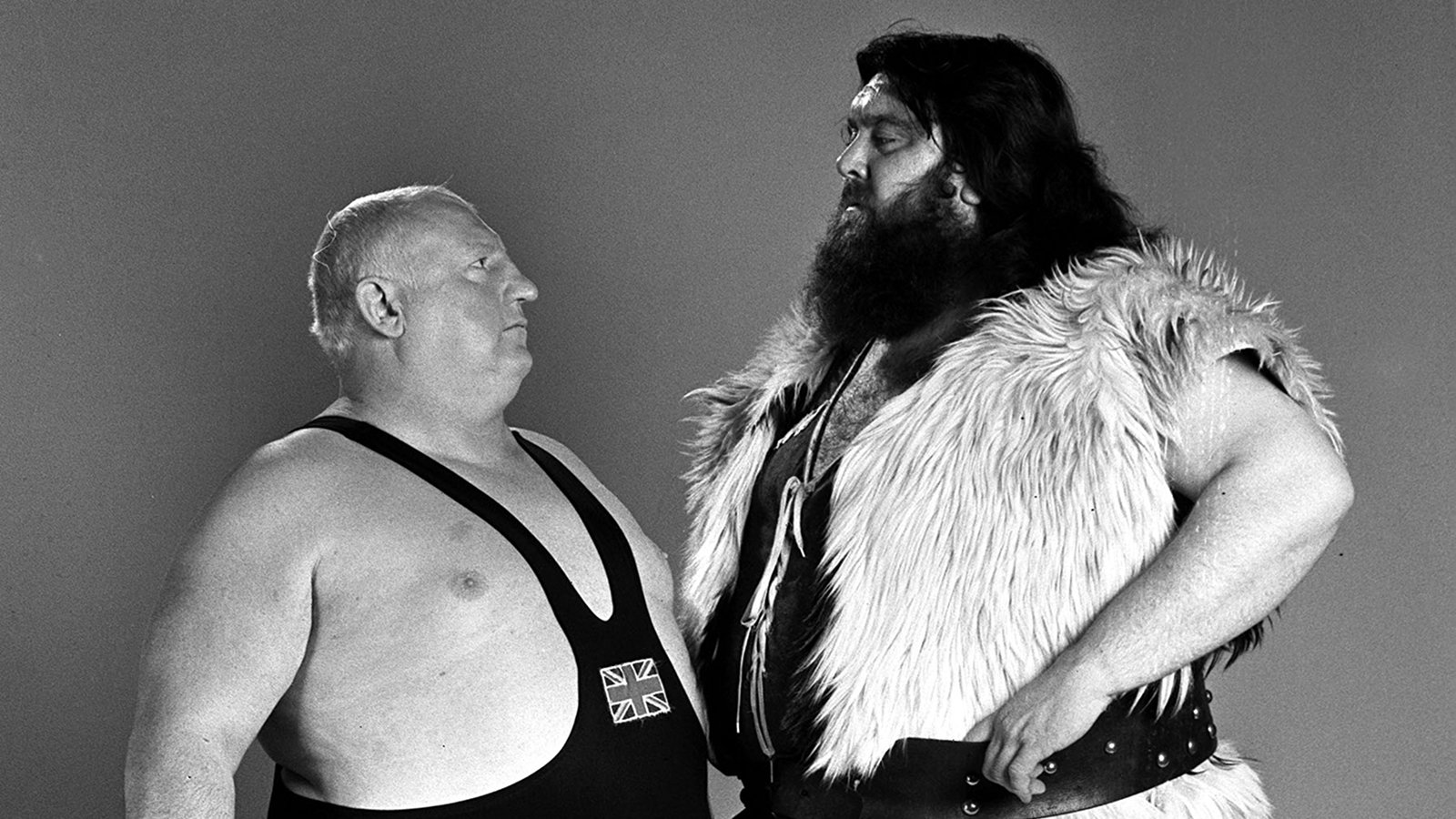
In Big Daddy, Britain had its beloved blue-eyed hero; in Giant Haystacks, it had the monster to conquer. Together, they formed the ideal contrast, good versus evil, crowd favourite versus towering tyrant, and Haystacks thrived in the role he seemed born to play.
Big Daddy and Giant Haystacks: The Tag Team, Kendo Nagasaki, and the Feud’s Real Origin
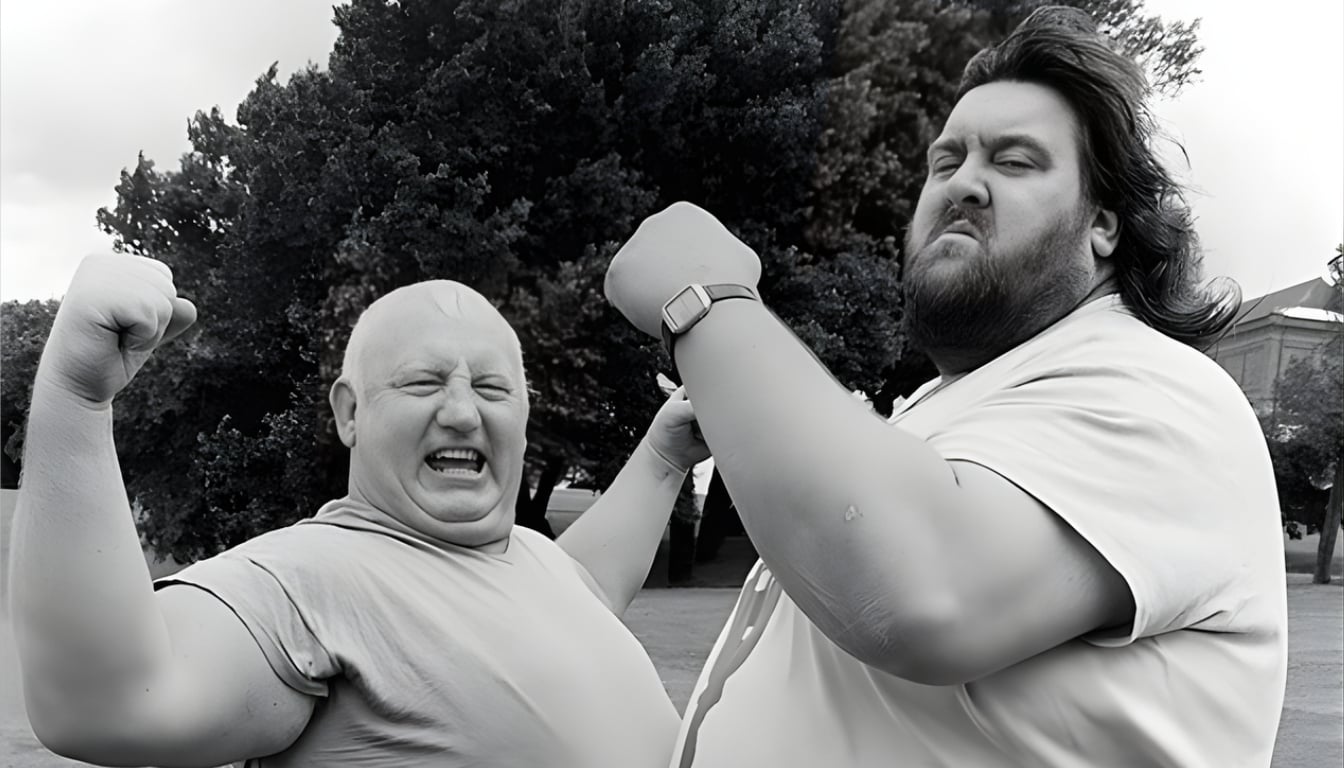
Shirley Crabtree (Big Daddy) and Martin Ruane (Giant Haystacks) pictured together in 1981, six years after first teaming as one of British wrestling’s most physically dominant heel tag teams. Their partnership, which included a feud with the masked Kendo Nagasaki, laid the groundwork for a rivalry that would captivate the nation for years to come. Photo Credit: Daily Mail.
Before Big Daddy and Giant Haystacks became sworn enemies, they were something far more unsettling: partners.
When Ruane moved to Joint Promotions in the summer of 1975, he was paired with Crabtree, then still working as a heel, to form one of the most physically imposing tag teams British wrestling had ever seen. Their first televised match together came in July 1975, a loss by disqualification against brothers Roy and Tony St. Clair, but the duo quickly established themselves as an almost unstoppable force on the circuit.
The partnership produced one of British wrestling’s most compelling feuds when the colossal heel duo clashed repeatedly with the mysterious masked villain Kendo Nagasaki, who teamed with various opponents, including Rex Strong.
The feud reached a pivotal moment on December 2, 1975, when Big Daddy unmasked Nagasaki during a televised bout, sending the crowd into a frenzy.
It was one of the first significant signs that audiences were beginning to cheer Crabtree despite his heel alignment.
Nagasaki, humiliated, immediately retrieved his mask, but the damage was done, and the moment has since been cited as the spark that ignited what became known as Daddymania.
As the Nagasaki feud ran through 1975 and into 1976, the crowd’s affection for Big Daddy became impossible to ignore. Promoters, led by his brother Max Crabtree, recognised the shift and began steering Shirley toward a full babyface turn.
By 1977, the partnership with Haystacks dissolved entirely. The televised split saw Haystacks walk out during a four-man tournament final in September 1977, refusing to compete against his former partner. A November rematch ended in a no-contest when Haystacks contrived to crush the referee between himself and Big Daddy.
The feud that would define both men had officially begun, not from out of nowhere, but from the wreckage of one of Britain’s most dominant tag teams.
Big Daddy versus Giant Haystacks: The Feud That Ignited British Wrestling Fandom
The early days of the Big Daddy and Giant Haystacks feud saw the former tag team split, setting up a clash of hero versus monster that enthralled Britain. Big Daddy’s heroic comebacks contrasted perfectly with Haystacks’ raw power, building suspense and turning every appearance into a must-see event for fans nationwide. Photo Credit: ITV.
With the split confirmed and the crowd already firmly behind Big Daddy, the feud moved quickly from backstage tension to front-page spectacle.
Mention Saturday afternoon wrestling in the UK and two names immediately rise to the surface: Big Daddy and Giant Haystacks. That was no accident. They were the headline attraction wherever they appeared, the names printed largest on the bills and the reason thousands filled venues across the country.
Among their many encounters, both as reluctant partners and bitter opponents, one event in particular lit the fuse: their appearance together at the Royal Albert Hall in 1976.
On that night, the colossal pairing of Big Daddy and Giant Haystacks suffered a surprising defeat at the hands of Mike Marino and Steve Veidor, the popular "Golden Boys."
For two men presented as near-invincible attractions, the loss was startling. Big Daddy’s aura of dominance had been carefully cultivated, and Haystacks’ monstrous presence suggested inevitability. Yet, the defeat served a larger purpose. In a venue as prestigious as the Royal Albert Hall, the reaction made one thing abundantly clear. Fans didn’t want to see them side by side; they wanted to see them collide.
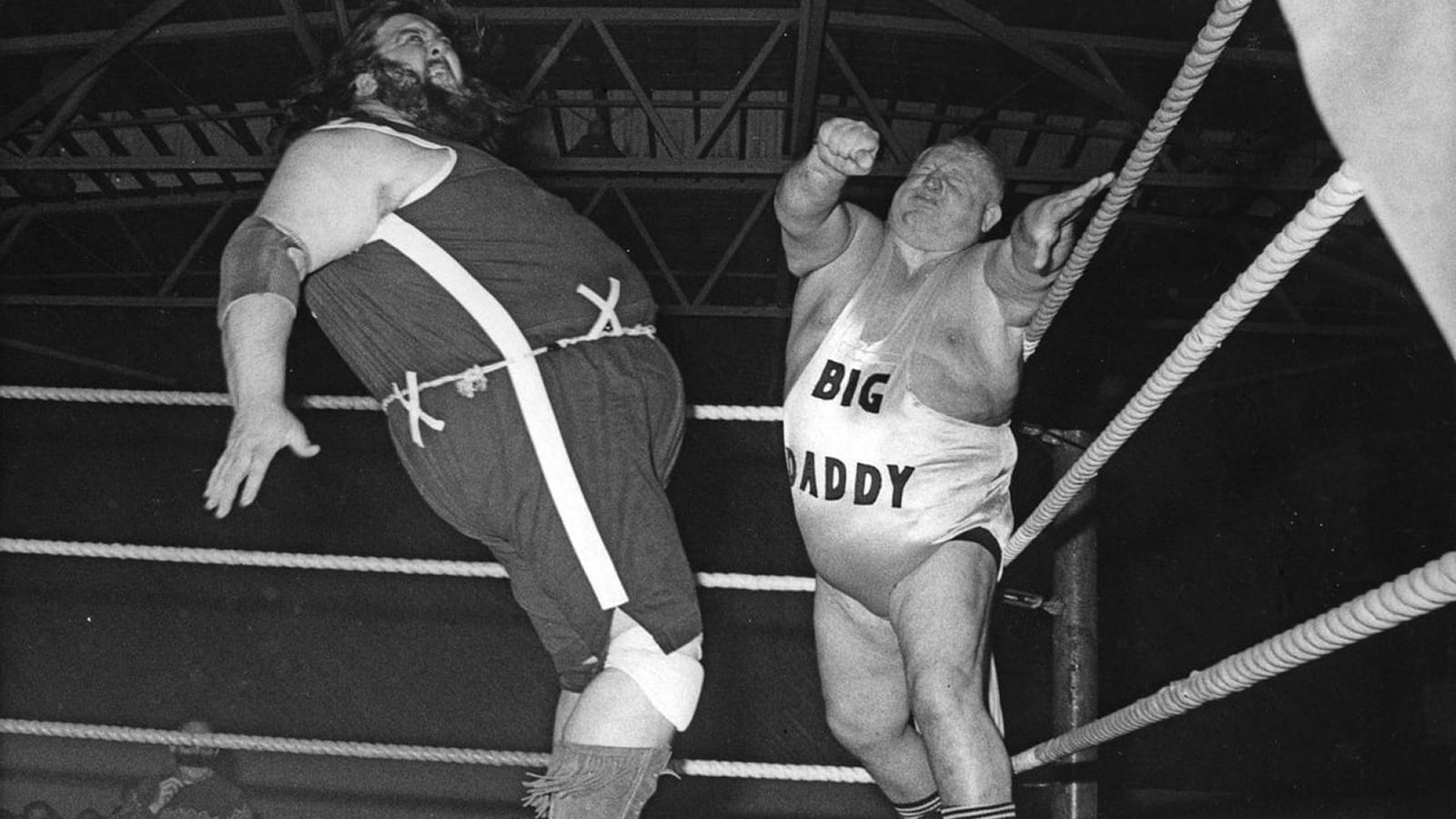
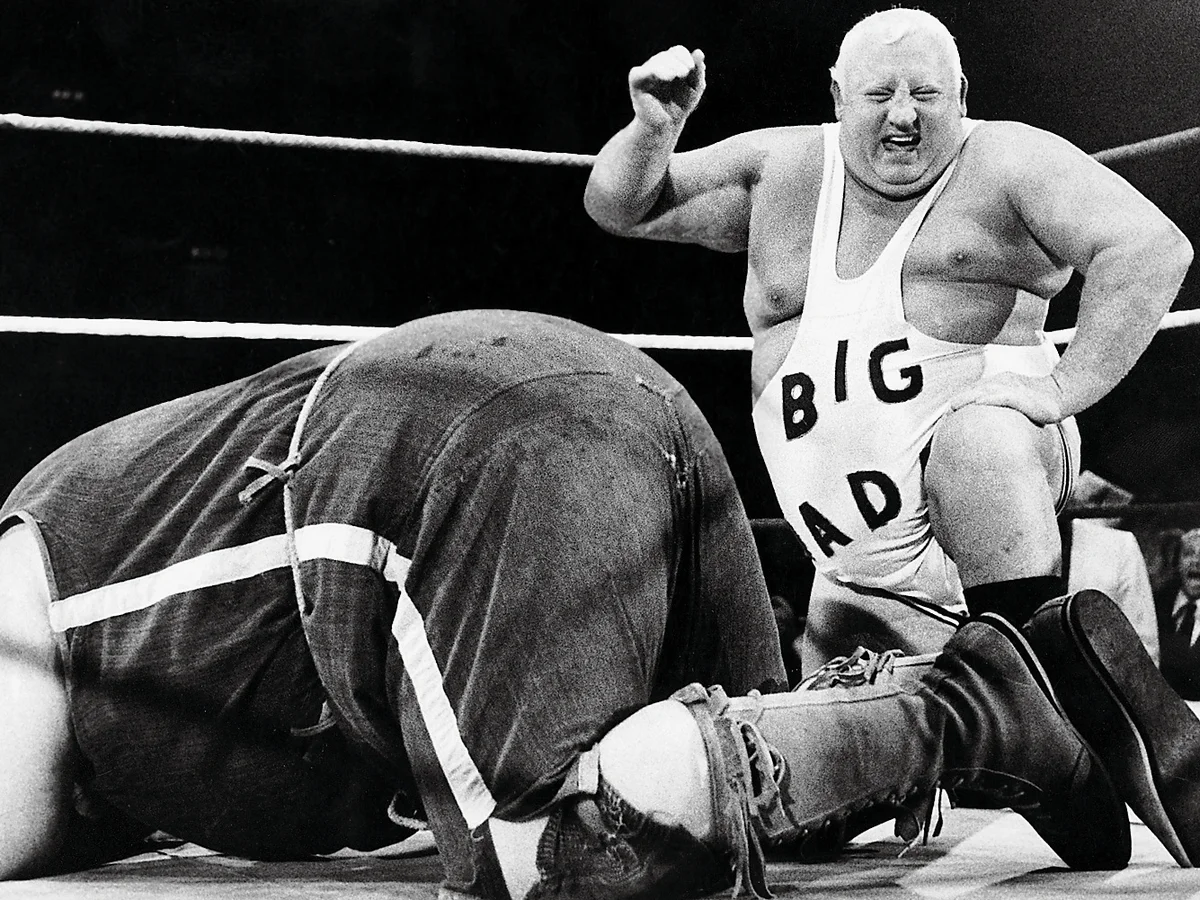
The appetite for that collision stemmed largely from their contrasting in-ring philosophies. Big Daddy, despite his immense size, mastered the art of the crowd-fuelled comeback. He absorbed punishment, rallied with exaggerated resilience, and fed off the chants and cheers as if the audience were a literal twelfth man pushing him forward. His offence was simple but effective: shoulder barges, corner splashes, and the now-iconic seated splash that pinned countless foes. It wasn’t technical wizardry; it was theatre, timing, and connection.
Haystacks, by contrast, weaponised intimidation. His offence was heavy, grinding, and merciless, crushing body blocks in the corner, clubbing strikes, and that devastating elbow drop that seemed to flatten opponents beneath sheer mass. He taunted the crowd relentlessly, sneering at their chants and reveling in their hostility. Where Big Daddy invited sympathy, Haystacks demanded fear. The dynamic was irresistible: the monstrous heel battering the beloved hero, only for the tide to turn in dramatic fashion.
All the ingredients were there. Size, spectacle, contrast, and emotion. The Royal Albert Hall moment crystallised what promoters already suspected: the true money was in opposition, not alliance. From that spark grew one of the most enduring rivalries in British wrestling history, a feud that would pack arenas, dominate television, and cement both men as icons of an era.
With hundreds of amazing Pro Wrestling Stories to dive into, where do you start? Get the inside scoop – join our exclusive community of wrestling fans! Receive 10 hand-picked stories curated just for YOU, exclusive weekly content, and an instant welcome gift when you sign up today!
Big Daddy vs Giant Haystacks: The Key Matchups That Defined the Feud
The Big Daddy vs. Giant Haystacks feud began in the mid-1970s, when they were initially tag team partners, before storyline tension led to a dramatic split. Haystacks turned fully heel, setting up the classic hero-versus-villain rivalry that captivated British wrestling fans nationwide for years. Photo Credit: ITV.
Giant Haystacks and Big Daddy were two giants of British wrestling, and they clashed various times. With their unprecedented drawing power, promoters would have been foolish not to capitalize on every opportunity. Among the myriad encounters, two series of matches stand out, offering a glimpse into the build-up and storytelling that made their rivalry legendary.
In 1984, a series of six-man tag matches pitted the ‘All-Stars’ – Big Daddy, Alan Kilby, and Pat Patton – against the notorious ‘Wrecking Crew’ of Giant Haystacks, Scrubber Daly, and Lucky Gordon.
On Big Daddy’s side, Kilby and Patton brought quick, precise striking and smart ring awareness, countering the brute force of 23-stone Daly and the sheer size of Haystacks. Their partner, Big Daddy, served as the anchor: a heroic powerhouse capable of turning the tide in any contest. Lucky Gordon, ever the crafty heel, would routinely bend the rules and target Daddy, often absorbing the pinfall himself.
The matches followed a familiar pattern that showcased classic storytelling: Haystacks avoided Big Daddy whenever possible, allowing the ‘All-Stars’ to be picked apart by the villains.
The audience roared in response whenever Big Daddy found an opening, rallying behind the hero as he fought back with crushing shoulder tackles and corner splashes.
The Wrecking Crew relied on underhanded tactics, controlling the pace and frustrating the crowd, but the All-Stars’ resilience and clever teamwork kept the action engaging.
Watching these bouts, it’s clear that the blueprint for modern tag wrestling was already in place: heels cutting off the ring, isolating opponents, while the blue-eyed star patiently waited for the perfect moment to tag in and shift momentum. Once Big Daddy was in, the action became relentless, with Gordon and Daly succumbing one by one to his power and determination.
The series concluded with the All-Stars victorious, five matches to two, proving not only Big Daddy’s in-ring dominance but also the enduring appeal of the feud.
This run came three years after the monumental showdown at Wembley Arena between Daddy and Haystacks, underscoring how long and compelling this rivalry captivated audiences across Britain.
Big Daddy vs Giant Haystacks: The Wembley Arena Showdown That Defined Their Rivalry
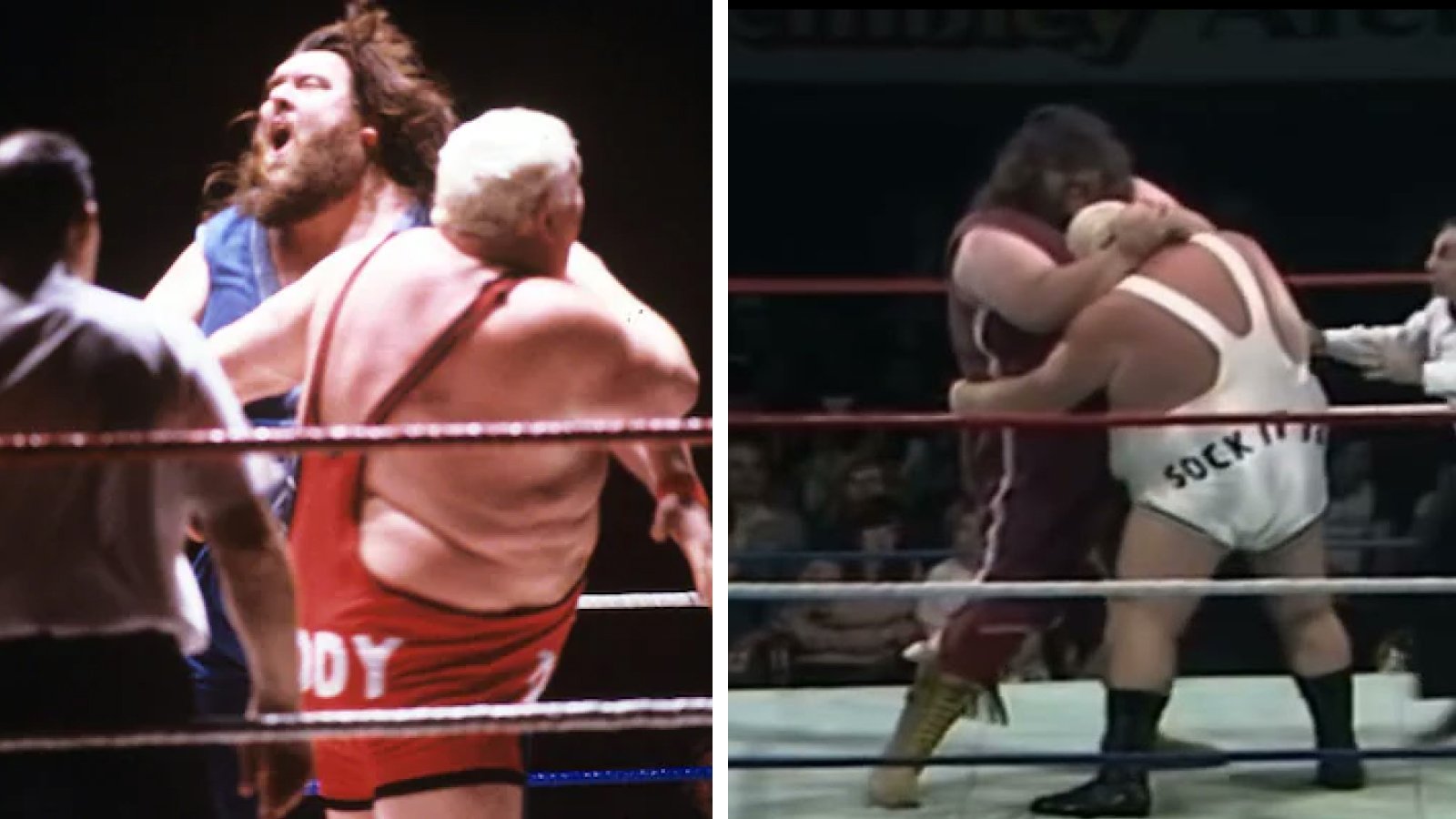
On June 18, 1981, at Wembley Arena, Big Daddy faced Giant Haystacks in their most iconic clash, with the crowd erupting as Daddy’s fans chanted "Easy, Easy, Easy." The match was short but unforgettable. Haystacks dominated early, only for Big Daddy to recover and secure a dramatic KO victory in front of a raucous audience. Photo Credit: ITV.
On June 18, 1981, Wembley Arena played host to what is arguably the most famous clash between Big Daddy and Giant Haystacks.
The entrances alone set the stage for an unforgettable spectacle. Haystacks emerged first, a towering, almost mythic figure whose sheer size and presence sent shivers through the audience. Fans instinctively recoiled, while children clung to their parents’ hands, wide-eyed at the seemingly unstoppable giant.
Moments later, Big Daddy made his way to the ring, greeted by a thunderous ovation. The crowd erupted, chanting "Easy, Easy, Easy!," Daddy’s iconic catchphrase, as the working-class hero strode confidently toward his colossal opponent, the anticipation in the arena palpable.
Even before the bell rang, the arena seemed to quiver under the weight of nearly two tons of combined wrestling mass, the tension thick enough to touch.
When the opening collar-and-elbow tie-up began, it immediately became a test of strength and strategy. For a moment, the two behemoths appeared evenly matched, each pushing and countering with precision, though Daddy’s trademark shoulder tackles, honed through countless bouts, failed to put Haystacks off his stride.
"Not going to work this time," the commentator warned, and indeed, Haystacks’ sheer size began to dominate until a timely referee bump created a dramatic pause.
Seizing the opportunity, Haystacks unleashed a barrage of punishing offense, wearing Big Daddy down with crushing body blocks and corner attacks. Yet, in a display of resilience and crowd-fueled momentum, Big Daddy fought back with heroic flair, turning the tide against the larger foe.
The climax saw Haystacks catapulted from the ring and crashing through a table at ringside, unable to beat the referee’s ten-count. In a mere 2 minutes and 50 seconds, Big Daddy emerged victorious in what would be remembered as the ‘Final Showdown,’ cementing the feud in British wrestling lore.
The impact of this match extended far beyond the ring. Generations of fans still recall it vividly: parents telling tales of watching the showdown with their children, families gathered around televisions on Saturday afternoons, and the collective awe that filled arenas across the UK.
Big Daddy Shirley Crabtree: His Final Years, Complicated Legacy Beyond the Ring
Big Daddy, in 1979, at the peak of his popularity, had fully cemented himself as the ultimate British wrestling hero, headlining World of Sport and drawing massive crowds. His larger-than-life persona, crowd-pleasing antics, and heroic comebacks made him the beloved face of British wrestling, inspiring fans of all ages across the country. Photo Credit: ITV.
Following the immense success of their enduring feud, Big Daddy (Shirley Crabtree) and Giant Haystacks (Martin Ruane) took very different paths in the latter stages of their lives and careers.
Shirley Crabtree faced increasing health challenges as he aged, limiting his appearances in the ring primarily to his hometown of Halifax. Despite wrestling less frequently, he remained a key figure in shaping the next generation of British talent.
Crabtree helped mentor and occasionally partner with future legends such as Davey Boy Smith (The British Bulldog) and Thomas Billington (The Dynamite Kid), better known globally as the British Bulldogs in the WWF. Davey Boy Smith, in particular, would become celebrated for his combination of power and technical skill, while Billington revolutionized in-ring style for decades.
Crabtree also crossed paths with William Regal (then wrestling as Steven Regal), a prodigious talent whose later achievements in WWE and WCW would be unmatched. Big Daddy’s influence on these performers was instrumental, ensuring that the legacy of British wrestling continued even as the scene evolved.
Tragedy struck in 1987 during a tag team match at the Hippodrome in Great Yarmouth. Big Daddy teamed with his nephew, Greg Valentine (Steve Crabtree), against Ml ‘King Kong’ Kirk and King Kendo in a Joint Promotions event.
After executing his signature ‘Daddy Splash’ on Kirk, reports state that Kirk lay motionless in the ring, turning purple.
Immediate resuscitation was attempted, but tragically, Kirk was pronounced dead at the hospital. Crabtree was cleared of any wrongdoing, as Kirk’s underlying heart condition contributed to the incident.
Reflecting on the event in a 1987 BBC report, Big Daddy stated, "As long as I live, I’ll never forget seeing him laid down there on the canvas instead of on his feet raging and flying about, and that will stay with me."
This devastating incident, widely covered in the media, is often cited as a factor in the decline of British wrestling, which was seen as under-regulated and dangerous at the time. Coupled with the growing popularity of American wrestling’s glitz and spectacle, the golden era of UK wrestling began to fade.
Big Daddy officially retired in 1993, and Joint Promotions closed its doors in 1995.
Crabtree retreated to a quieter life in Blackpool, running a gym and taking long walks along the coast, reflecting on a career that had thrilled generations. He passed away in 1997, following a stroke two months prior.
Even decades after his prime, he remains remembered as a hero to a generation and as a towering figure responsible for the rise, and paradoxically the eventual decline, of British wrestling.
Giant Haystacks in WCW: The Attempts to Achieve American Wrestling Stardom
In 1996, Giant Haystacks reemerged in the United States as "Loch Ness" in WCW, facing stars like Hulk Hogan and Lex Luger. Though a fresh attempt to capture American audiences, the gimmick never matched his legendary British presence, and health issues eventually forced him to return home, cutting short his WCW run. Photo Credit: WWE.
Meanwhile, Martin Ruane sought to take his talents across the Atlantic.
In 1996, he signed with WCW and adopted the moniker ‘Loch Ness,’ a loose reinterpretation of his legendary Giant Haystacks persona.
His debut in the American wrestling scene pitted him against none other than Hulk Hogan. Loch Ness primarily appeared on WCW Saturday Night, with some Nitro matches, including a memorable altercation with The Giant (later Big Show) before a bout with Lex Luger.
Booker Kevin Sullivan later explained that bringing Ruane in as Loch Ness drew criticism behind the scenes, but he believed in the attraction: "I took a lot of heat over him… big guys draw," he recalled, adding that Ruane "worked very hard" and "was a nice man."
Unfortunately, Ruane’s time in the U.S. was cut short. Health issues and a cancer diagnosis forced him to return home to England, robbing him of the chance to fully realize his American wrestling ambitions. Ruane passed away in 1998, almost exactly a year after Crabtree, leaving both men forever linked even in death.
His influence, however, lives on in contemporary British wrestlers such as Piper Niven (formerly Doudrop in WWE), Dave Mastiff, and Rampage Brown, whose combination of power, agility, and presence echoes the larger-than-life super‑heavyweight style Haystacks helped popularize.
Despite his fearsome in ring persona, Ruane was often remembered as a quiet, decent man of genuine character away from the ring, very different from the monster he portrayed.
Big Daddy and Giant Haystacks: Their Legacy in British Wrestling
The feud between Big Daddy and Giant Haystacks remains one of the most legendary in British wrestling history, a classic tale of Good vs. Evil. Their contrasting styles, immense size, and larger-than-life personas captivated fans across the UK, inspiring generations, filling arenas, and cementing both men as household names long after the final bell rang. Photo Credit: ITV.
Big Daddy and Giant Haystacks were cultural icons. Even decades later, their names evoke an era before CGI, pyrotechnics, and Hollywood spectacle, when British wrestling thrived on raw crowd connection.
For many in Britain today, when wrestling is mentioned, those two names come up first. For this author, it is usually Mum and Grandma reminiscing about watching at their auntie’s house on a Saturday lunchtime. The whole family would be there, squeezed around the TV, and it genuinely felt like something special. Even mentioning that this piece was in the works has prompted others to share their own memories of the feud and how it brought families together.
Beyond the ring, Haystacks captured wrestling’s power on The Late Late Show in 1984, expressing: “It’s like being a conductor. You bring them up to the highest pitch and down to the lowest.”
That’s why the legacy endures. Big Daddy vs Giant Haystacks went beyond good vs evil.
Today, their story continues to resonate in pubs, living rooms, and online forums across the UK. The timeless appeal of these two men proves that, when talent, charisma, and audience connection align, wrestling can enthrall without flashing lights or gimmicks.
Pro Wrestling Stories is committed to accurate, unbiased wrestling content rigorously fact-checked and verified by our team of researchers and editors. Any inaccuracies are quickly corrected, with updates timestamped in the article's byline header.
Got a correction, tip, or story idea for Pro Wrestling Stories? Contact us! Learn about our editorial standards here. Ever wanted to learn more about the people behind Pro Wrestling Stories? Meet our authors! Want to write for us? Learn how to join the team.
Quick Tip for Facebook Readers
Many of our readers find us through
our Facebook page.
Meta's built in browser (which opens by default on mobile) can occasionally freeze mid article, a known issue unrelated to our site.
For uninterrupted reading: tap the three dots in the top right corner then select 'Open in external browser'.
That usually resolves the glitch. Thanks for your support and we want your wrestling stories to stay as smooth as a top rope hurricanrana!
ProWrestlingStories.com participates in affiliate marketing programs. This post may contain affiliate links, meaning we may earn commissions at no extra cost to our readers. This supports our mission to deliver free content for you to enjoy!
If you love movies and pro wrestling, don’t sleep on this one.Grindhouse, Arthouse, and Wrestling Flicks by Pro Wrestling Stories Senior Editor Evan Ginzburg dives into the fascinating world where cinema and wrestling collide. Packed with hundreds of reviews, hidden gems, and fascinating turns from wrestlers on the big screen, it covers everyone from André the Giant and Roddy Piper to CM Punk, DDP, Chris Jericho, Pat Roach, and The Rock. Smart, passionate, and endlessly browsable, it’s the kind of book fans will keep returning to. Grab your copy today!
Louis Bellinger is a lifelong wrestling fan from England who loves mixing his passions for the business with writing. Formerly contributing to Wrestle Purists, he’s happy to be part of Pro Wrestling Stories to share his love for professional wrestling history.
 Author:

 If you love movies and pro wrestling, don’t sleep on this one.
Grindhouse, Arthouse, and Wrestling Flicks by Pro Wrestling Stories Senior Editor Evan Ginzburg dives into the fascinating world where cinema and wrestling collide. Packed with hundreds of reviews, hidden gems, and fascinating turns from wrestlers on the big screen, it covers everyone from André the Giant and Roddy Piper to CM Punk, DDP, Chris Jericho, Pat Roach, and The Rock. Smart, passionate, and endlessly browsable, it’s the kind of book fans will keep returning to. Grab your copy today!
If you love movies and pro wrestling, don’t sleep on this one.
Grindhouse, Arthouse, and Wrestling Flicks by Pro Wrestling Stories Senior Editor Evan Ginzburg dives into the fascinating world where cinema and wrestling collide. Packed with hundreds of reviews, hidden gems, and fascinating turns from wrestlers on the big screen, it covers everyone from André the Giant and Roddy Piper to CM Punk, DDP, Chris Jericho, Pat Roach, and The Rock. Smart, passionate, and endlessly browsable, it’s the kind of book fans will keep returning to. Grab your copy today!