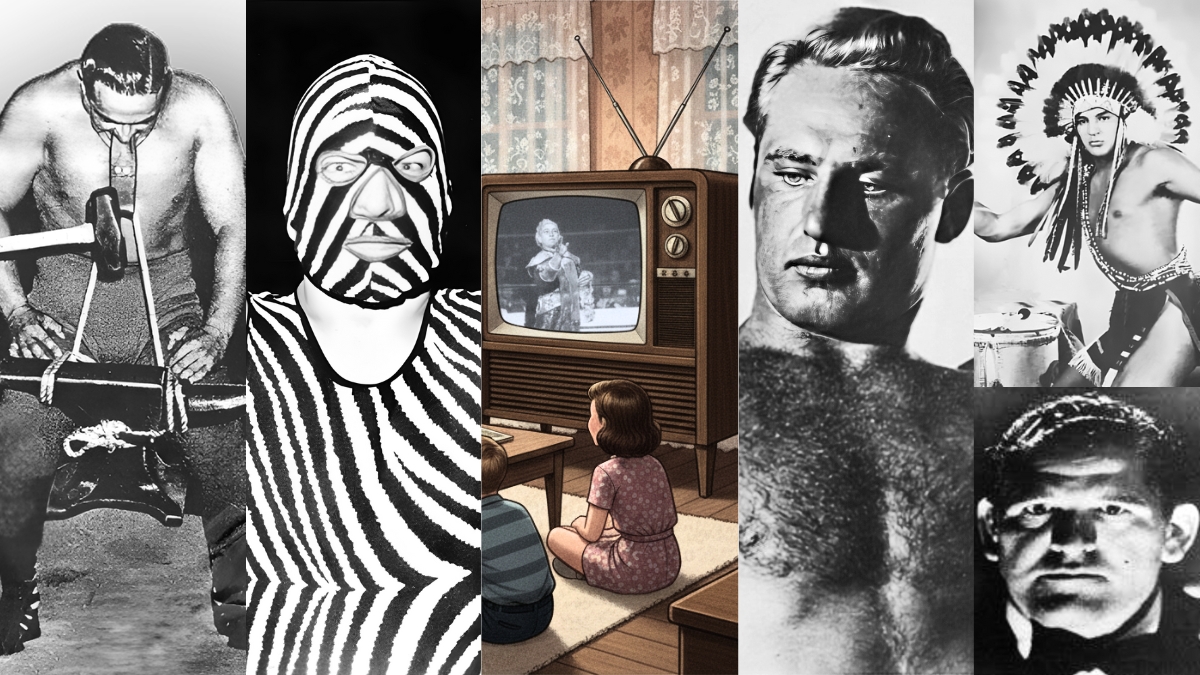
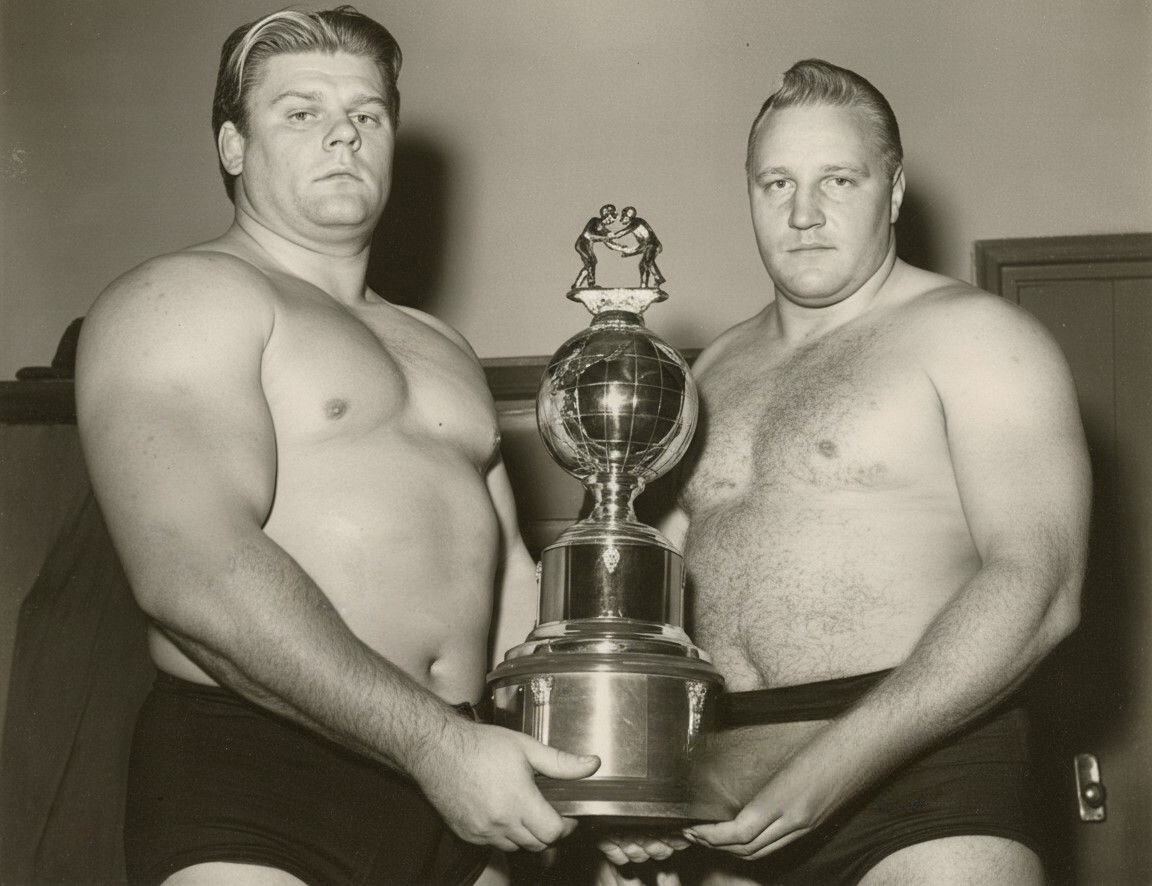
The 1950s were a watershed moment for professional wrestling. Television exploded onto the American landscape, and with it came an explosion of creativity among mid-card wrestlers who realized they could build entire careers on innovative gimmicks. What emerged from this era wasn’t just entertainment; it was the blueprint for everything professional wrestling would become. The following twenty-five prototypes forged in this decade still echo through the business today, 70-plus years on.
From carnival strongmen who could hoist anvils with their teeth to zebra-striped monsters, "Mr. America" body idols, Native headliners, hypnotists, and more, discover 25 wild 1950s TV gimmicks that rewired what wrestling could be and turned early television into must-see viewing for families across America. Artwork by Pro Wrestling Stories.
Our wrestling history is gold, and so are readers like you!
If the following story adds to your collection of wrestling knowledge, you can:
How Television Changed Everything: The Economics of Wrestling in the 1950s
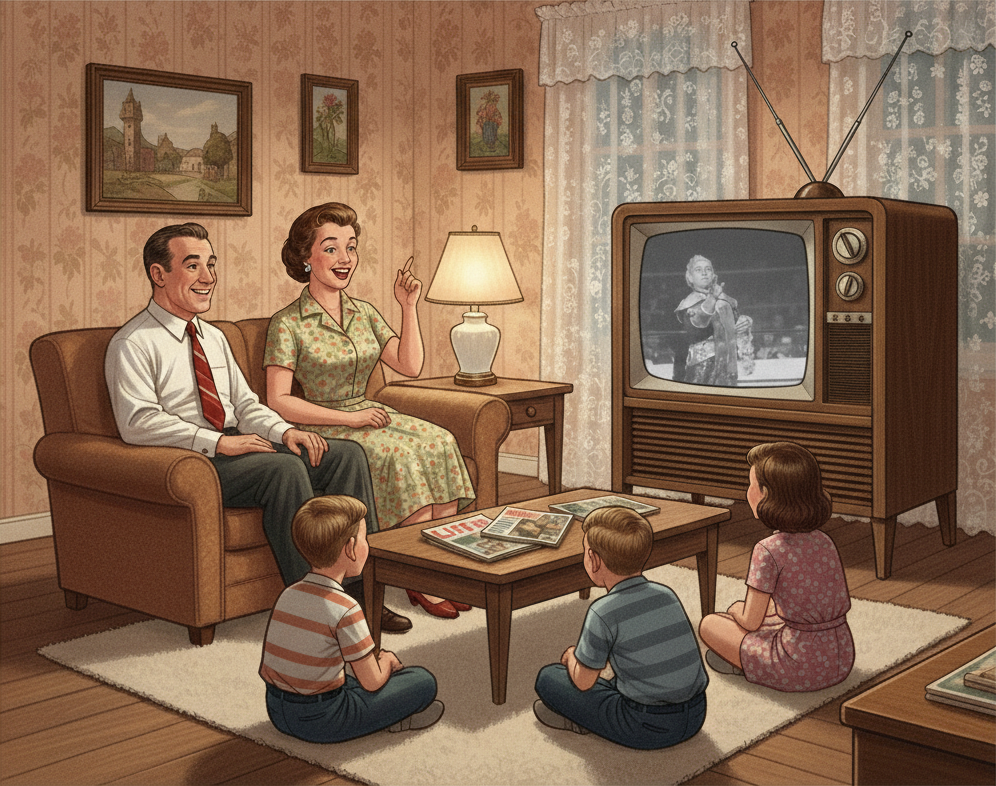
A 1950s family gathers around the television to watch Gorgeous George, as wrestling’s new TV boom reshapes the business behind the scenes. Artwork by Pro Wrestling Stories.
To understand the creative explosion of 1950s wrestling, you first need to understand how wrestlers got paid. Outside of a select few superstars, such as the likes of Gorgeous George, Killer Kowalski, and Antonino Rocca, there were no guaranteed contracts. Wrestlers worked for what was called “the door,” meaning the promoter would set aside 30 to 40 percent of the gate revenue for wrestling talent. How much you made depended entirely on your spot on the card.
If you wrestled in the main event, you’d get 11 to 12 percent of that 30 to 40 percent talent pool. Mid-card performers got 7 to 8 percent. Opening acts got maybe 2 to 3 percent. You were paid in cash nightly, and that was it. The California State Athletic Commission eventually set a floor: $12.50 was the least a wrestler could make per night. There’s a rumor in the book Gorgeous George: The Outrageous Bad-Boy Wrestler Who Created American Pop Culture that even at the first $100,000 gate in Los Angeles, the preliminary wrestlers still only made $12.50.
Some promoters used a different model entirely, such as a flat fee: bad guys got $45 per match, good guys got $35 per match. But the door system was standard across the business.
Here’s where promoter Fred Kohler changed the game. Kohler ran wrestling in Chicago, and he paid for television better than anyone else in the entire industry. Instead of setting aside 30 to 40 percent of the gate for wrestling talent, Kohler set aside 60 percent. In 1951 and 1952, a guy wrestling in the first preliminary match could walk out of Marigold Arena with $200 in his pocket for a single night’s work. That was unbelievable money for the era. Kohler’s innovation attracted the best talent in the country to Chicago and influenced how other promoters valued their television talent.
The 1950s marked the real beginning of what we know as professional wrestling today.
Television Opened the Creative Floodgates: 25 Revolutionary Gimmicks That Shaped Wrestling in the 1950s
A lucky 1950s household, antenna pointed just right, pulls in a distant city signal as a black-and-white wrestling main event crackles to life in the living room. One more night where the glow of the TV turned wild ring action into must-see entertainment. Artwork by Pro Wrestling Stories.
Once television arrived, wrestling exploded into a creative medium. If you lived in certain parts of the country in the early 1950s – Los Angeles, New York, Chicago – it was hard not to miss wrestling while turning the dial. Most guys who were mid-card performers came up with some of the wildest gimmicks you ever saw, all designed to work on television.
Here are twenty-five memorable early TV wrestling gimmicks from the 1950s, gimmicks that changed the business forever, as remembered by this longtime wrestling fan who watched it like religion as a young boy and teenager in the ’50s, back when, if you were lucky enough to pull in multiple city signals on your antenna, you could catch matches on television six nights a week.
1. Elephant Boy and Slave Girl Moolah: Breaking Racial Barriers in the Deep South
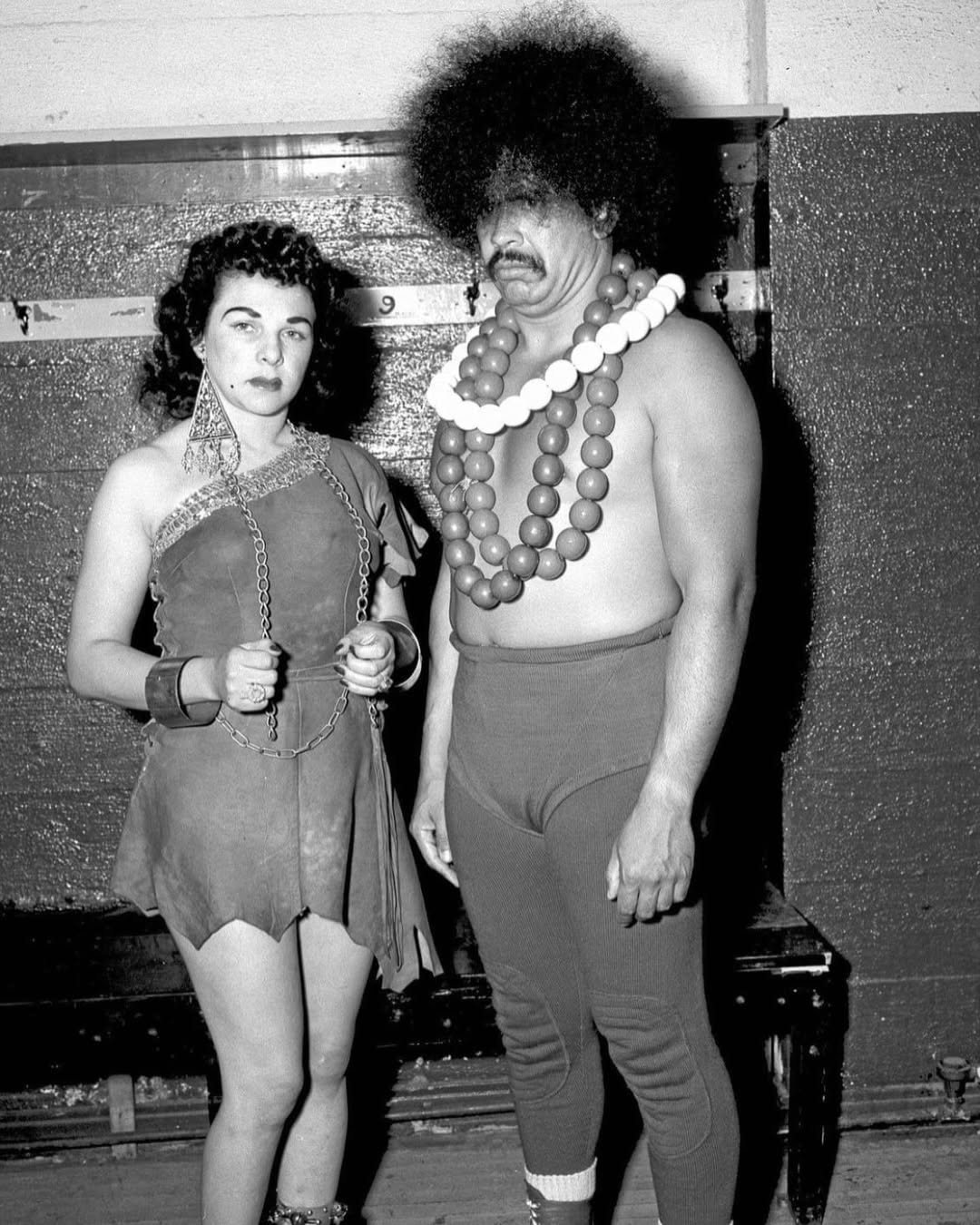
Elephant Boy (Tony Olivas) posing with Slave Girl Moolah circa 1952, a pairing that drew real heat in the segregation-era South. Photo Credit: Wrestling Illustrated.
One of the earliest and most controversial gimmicks of the 1950s featured a wrestler billed as Elephant Boy. William Victor "Tony" Olivas (often referred to simply as Tony Olivas) was a Mexican American performer from Ojai, California. Promoter Jack Pfefer packaged him with an "exotic" persona, at times billing him as a "South African" wildman, despite his real background.
Olivas’ look did most of the promotional heavy lifting: he was dark-skinned, with long, thick, untamed hair that framed his face and made him instantly distinctive on posters and in newspapers.
His most infamous pairing was with the young valet then known as Slave Girl Moolah, who would later wrestle and promote for decades as The Fabulous Moolah. As part of their act, she would kiss him in the ring, a spot that provoked real hostility in segregated-era territories.
While they were wrestling in the Deep South, an incident on the road nearly turned into a riot. In a restaurant after a show, a woman confronted Moolah and began screaming at her for kissing Elephant Boy in the ring, using a racial slur, and refusing to back down. The confrontation escalated to the point that the sheriff had to be called in to calm things down. It’s a stark reminder of the segregation‑era racism that wrestling performers had to navigate just to do their jobs.
Despite this early chapter, Moolah went on to become one of the most influential and decorated figures in women’s wrestling across the mid to late 20th century, though her legacy is also widely debated due to long-running allegations about how she operated as a promoter and trainer.
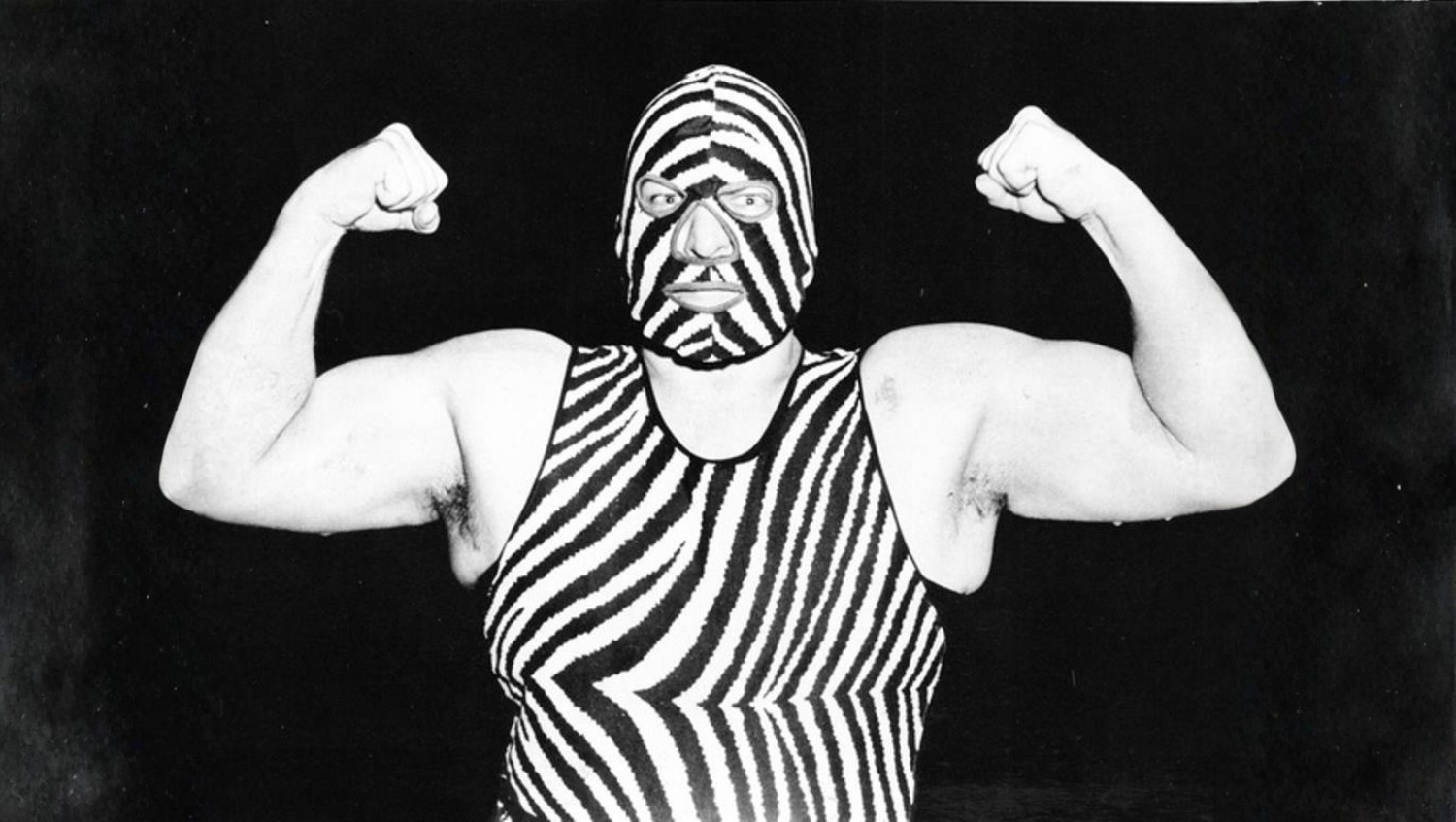
2. The Zebra Kid: When Masked Marvels Went Mainstream on Television
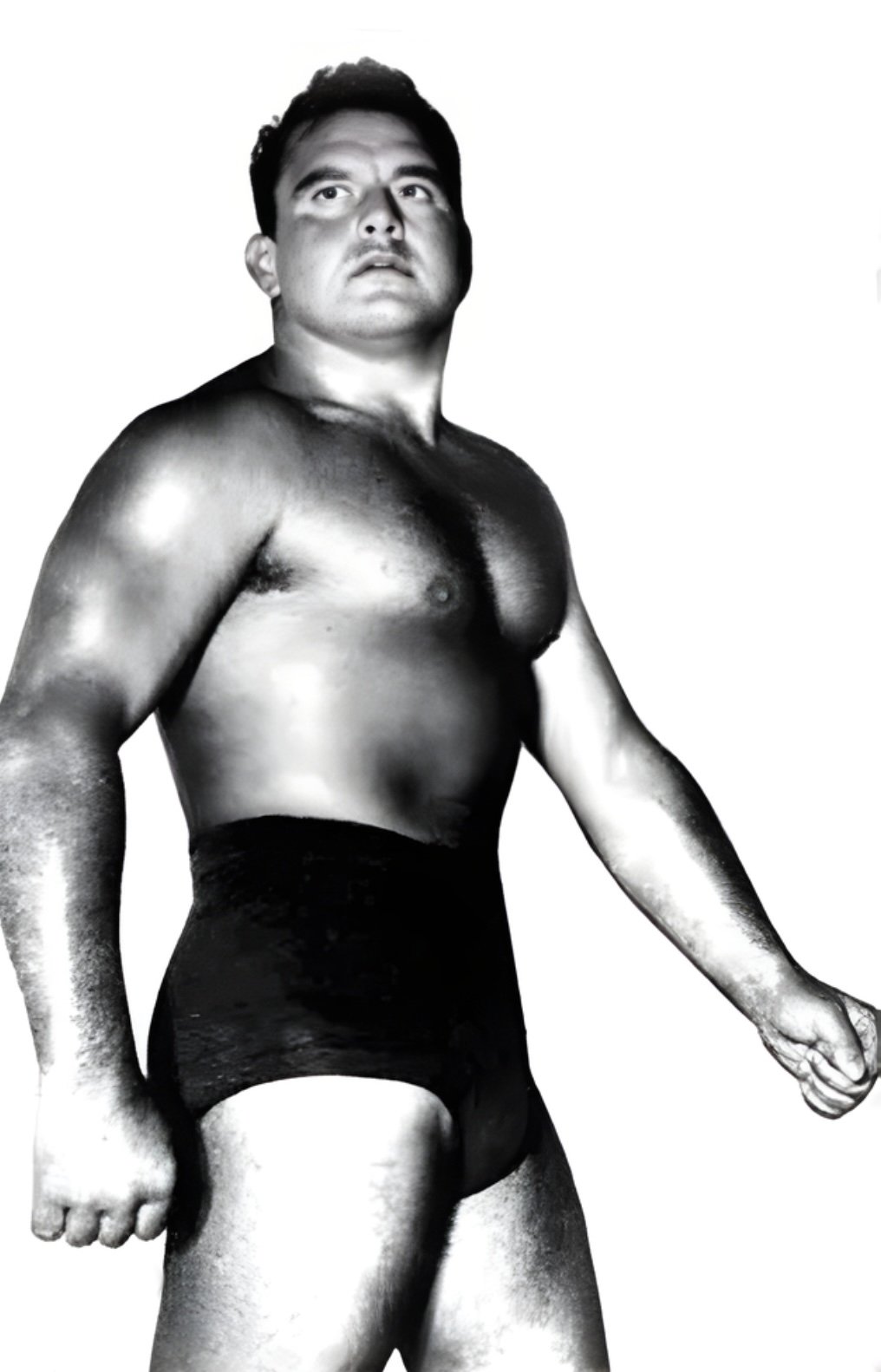
The Zebra Kid (George Bollas) brought a striped look suited to black-and-white television in the early 1950s. Photo Credit: NWA.
There have always been masked wrestlers, dating back to the 1930s with wrestlers like Bob Weinberg, but the Zebra Kid took the concept to a whole new level on television.
The Zebra Kid most fans and historians point to was George Bollas, a powerhouse heavyweight who worked under the striped mask in the late 1940s and early 1950s, then returned to it later.
He was billed in the low to mid-300-pound range, depending on the territory, and he leaned into a look made for the camera. Full zebra stripe gear, full coverage, and a mask that turned his entire body into a walking visual. On black and white television, those stripes popped in a way almost nothing else did.
People had never seen anything like it before. Television made visual presentation matter in ways it never had before, and The Zebra Kid epitomized that shift. He was positioned as a bad guy, and his mere appearance drew heat.
With hundreds of amazing Pro Wrestling Stories to dive into, where do you start? Get the inside scoop – join our exclusive community of wrestling fans! Receive 10 hand-picked stories curated just for YOU, exclusive weekly content, and an instant welcome gift when you sign up today!
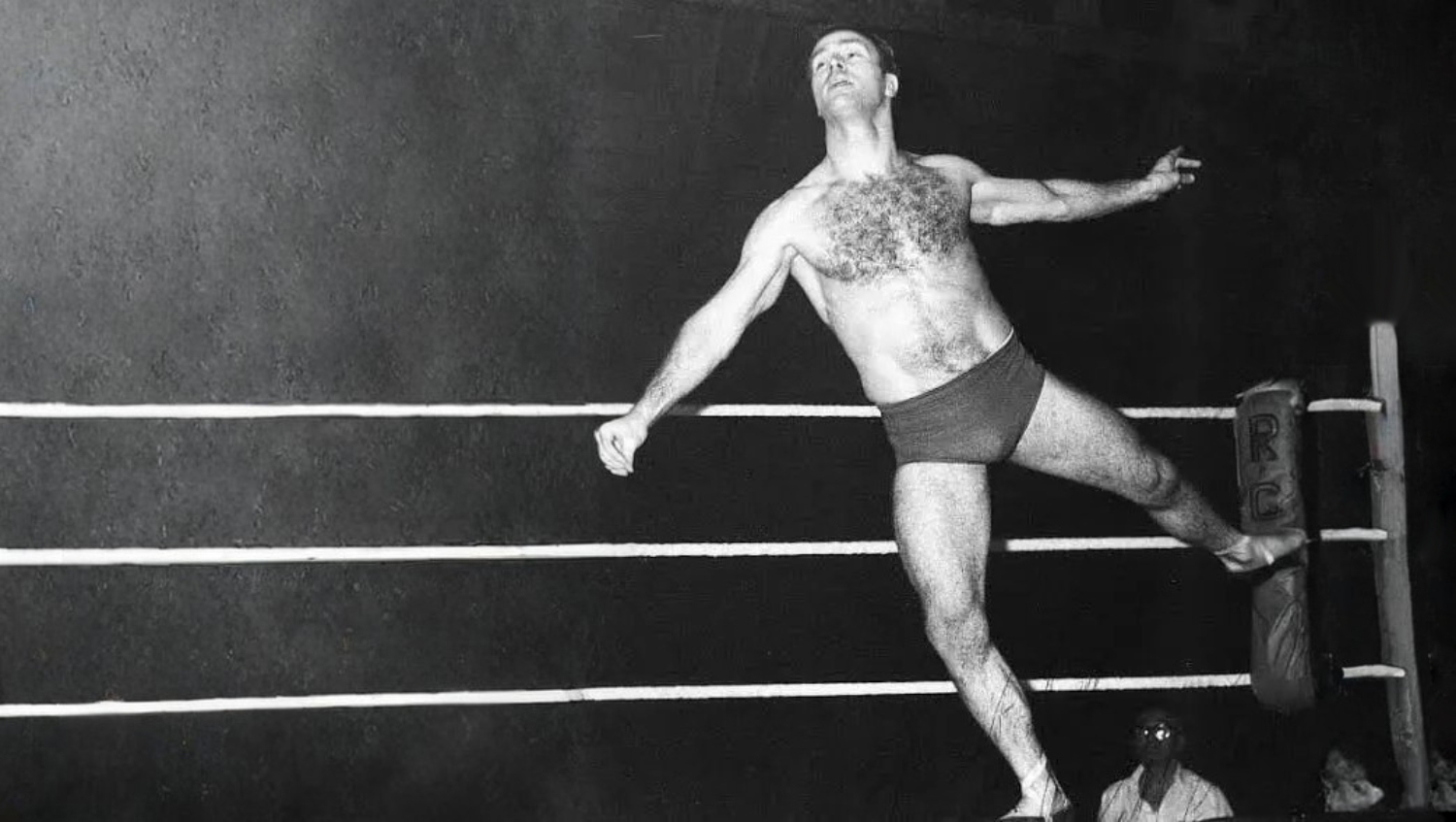
3. Ricky Starr: The Ballet Dancer Who Drove His Opponents Crazy
Ricky Starr, the ballet-trained "wrestling dancer," turned pirouettes and slipper footwork into a TV era gimmick that made heavy heels look foolish and drove crowds wild. Photo Credit: NWA.
Before he ever became a wrestler, Ricky Starr (real name Bernard Herman) was a legitimately trained ballet dancer, and that background became his calling card in the ring.
He was not a monster-sized heavyweight, but he also was not the tiny novelty act some people assume. Starr was typically billed around 200 pounds (though he probably weighed closer to 165), which still made him look lighter and quicker than many of the brutes he was put in there with, and that contrast was the whole point.
Starr would come to the ring in ballet slippers, dressed like a classical dancer, then spend the match doing exactly what the gimmick promised: pirouettes, spins, and slippery footwork that turned the ring into his stage.
His opponent, always the bad guy, would grow more and more frantic as he tried to grab him, which only made the crowd louder. The heat did not come from Starr being vicious. It came from the insult of it all: this graceful, smiling dancer making a tough guy look foolish in front of everyone.
The act was so distinctive that it crossed over onto mainstream television. Starr appeared on Mr. Ed in the early 1960s, including the episode "The Wrestler" (aired January 7, 1962), where his wrestling persona was part of the storyline.
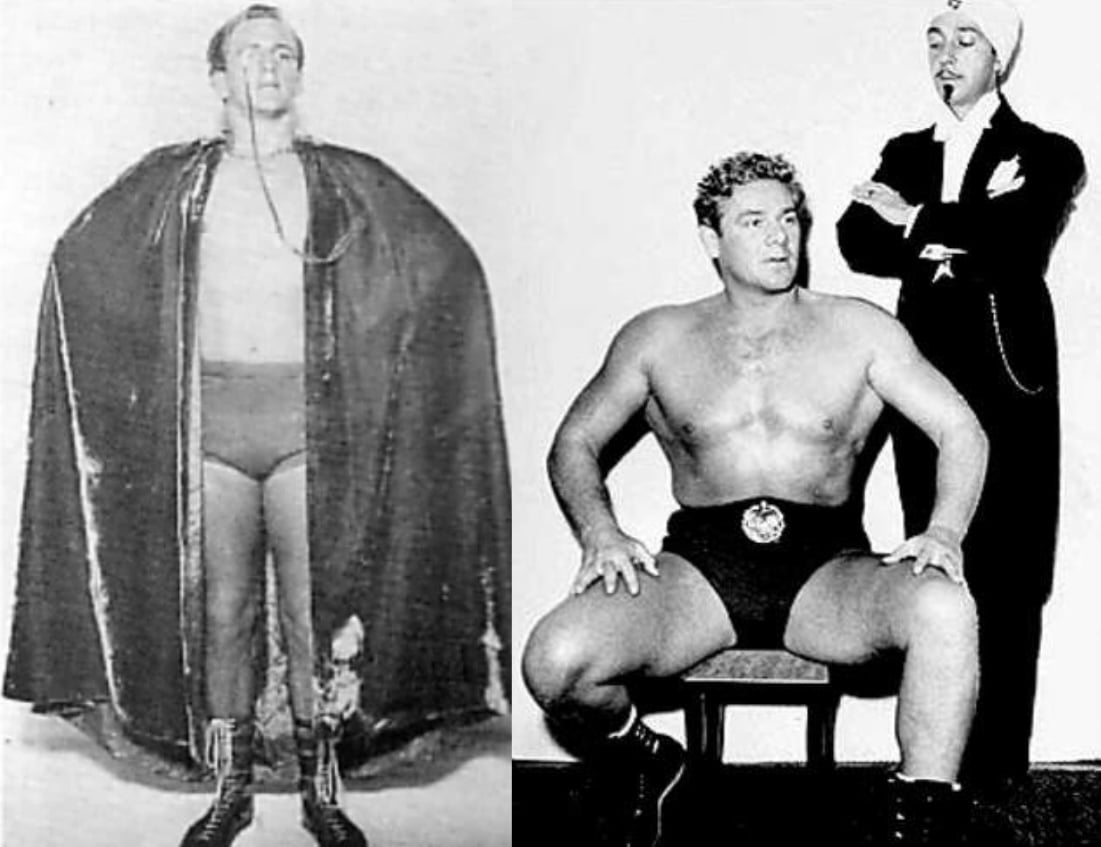
4. The English Lords: Aristocratic Psychology Meets American Wrestling
Lord James Blears, complete with robe and monocle, and Lord Leslie Carlton, flanked by his ever present manservant, arrived in full "upper crust" mode, a visual gimmick designed to make fans want to see someone wipe the smirk off their faces. Photo Credit: Los Angeles television wrestling archives.
The English Lords consisted of Lord James Blears and Lord Leslie Carlton. They came to the ring with a manservant, wore capes, and Carlton topped it off with the monocle, then spent the match talking down to the "American commoners" they were facing.
Neither man was known as a pure technician, but they were masters of psychology. Carlton, in particular, played the character like it was theater. Even promoters admitted the monocle and valet were part of the package, because once the audience saw him, they already wanted to see somebody wipe the smirk off his face.
Carlton’s real name was Leo Whippern, and before the Lord act he wrestled as Tug Carlson. As Lord Carlton, he leaned hard into the idea that he was not just aristocracy, but dangerous aristocracy, the kind of man who claimed to have done things in WWII that he could not talk about, and who hinted at being a master of killer jujitsu and other "exotic" techniques. And he would look at the crowd like it was dirt.
Whether fans believed it almost did not matter. The point was that he acted like he believed it, and the crowd hated him for it.
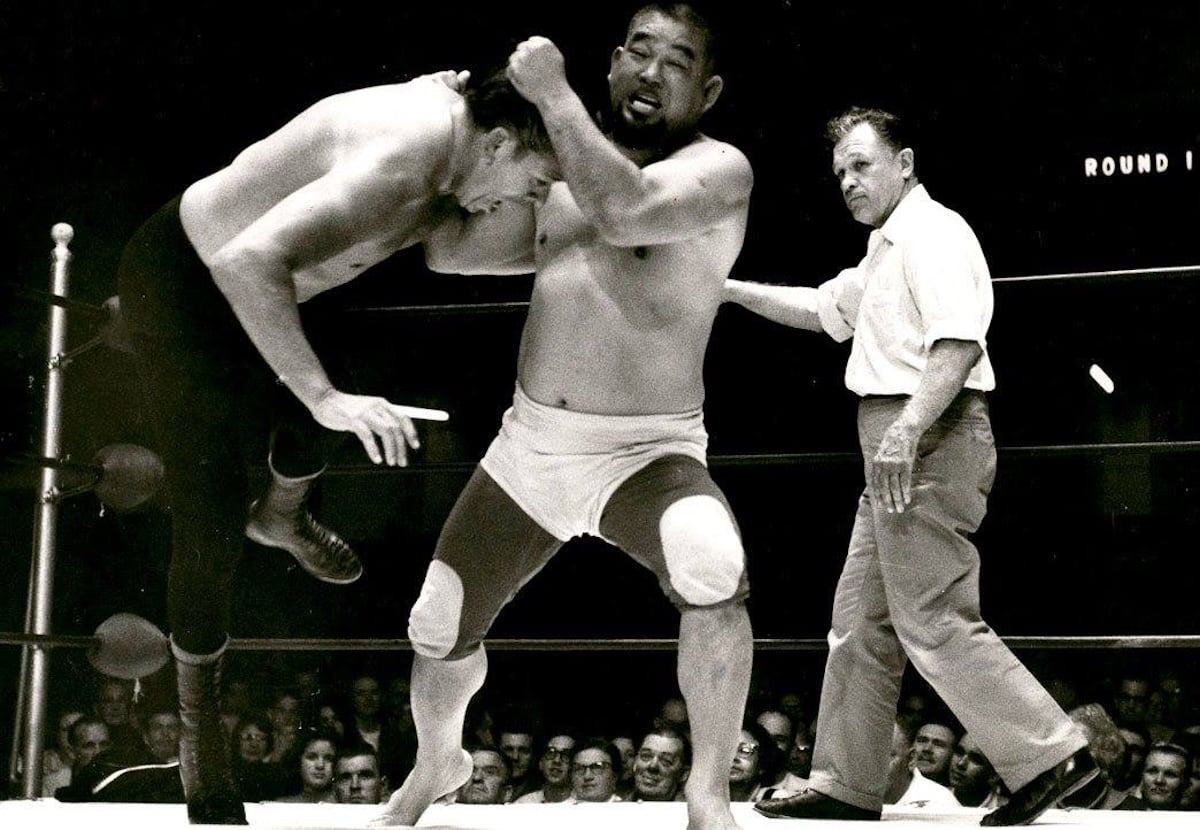
5. Mr. Moto: Capitalizing on Post-War Anti-Japanese Sentiment
Mr. Moto (Masaru "Charlie" Iwamoto), seen here tossing Vic Christy during a match, became one of television wrestling’s most infamous post-war villains, turning pre match ceremony and ruthless rule breaking into instant, reliable heat. Photo Credit: Scott George.
Coming out of WWII, anti-Japanese sentiment in America was very real, and wrestling promoters knew exactly how to weaponize it. Mr. Moto was one of the most famous examples of that era. Behind the character was Masaru "Charlie" Iwamoto, an American wrestler born in Hawaii, who debuted in 1939 and later worked under names like The Great Moto and Mr. Moto.
The gimmick leaned into the ugly mood of the time: the foreign villain who mocked the fans, played dirty, and treated the audience like fools.
Before his matches, Moto had a ritual that crowds never forgot. Accompanied by his servant Suji Fuji, he would perform pre-match ceremonies tied to his "sumo days," and he became one of the first major heels known for using sacred salt, tossing it as part of the act and as a weapon, a detail that reliably enraged audiences.
In the ring, it was every dirty trick you can imagine: eye rakes, hair pulls, tights grabs, cheap shots behind the referee’s back. And it worked. Moto became a top television era villain, especially in Los Angeles, where he spent much of his career in the Hollywood Wrestling orbit and the Grand Olympic Auditorium scene.
Even outside the ring, the hostility around the character could spill into real life. One story from his biography describes a WWII veteran striking him in a drug store, which is the kind of detail that underlines how much real racism and war baggage these acts were tapping into.
When Moto finally stepped away from being a regular in-ring performer, he did not disappear. He became a behind-the-scenes force in Los Angeles, credited as a booker who helped develop talent and storylines at the Grand Olympic Auditorium alongside names like Freddie Blassie and Jules Strongbow.
There is also a tale from the early 1970s that has become part of Mr. Moto lore. The story goes that he was coaching a Los Angeles Rams player who was booked for a simple angle: run in, make the save, grab the mic, and sell tickets for the next show. Moto, famously profane, allegedly fed the rookie a line loaded with his usual foul language, and the player repeated it, word for word, on live television. Supposedly, the broadcast cut out immediately.
There is no paper trail tying any specific Rams player to the televised promo incident, so it remains in that familiar grey area where many wrestling anecdotes end up after being passed around from wrestler to wrestler over the years, but it was too good not to share!
Although not the former Ram player mentioned in the story above, there was a well-known football-to-wrestling connection in that market that belonged to a different chapter entirely: the popular tag team duo known as The Rasslin Rams, which is its own story.
6. The Rasslin Rams: When Pro Football Players Became a Wrestling Attraction
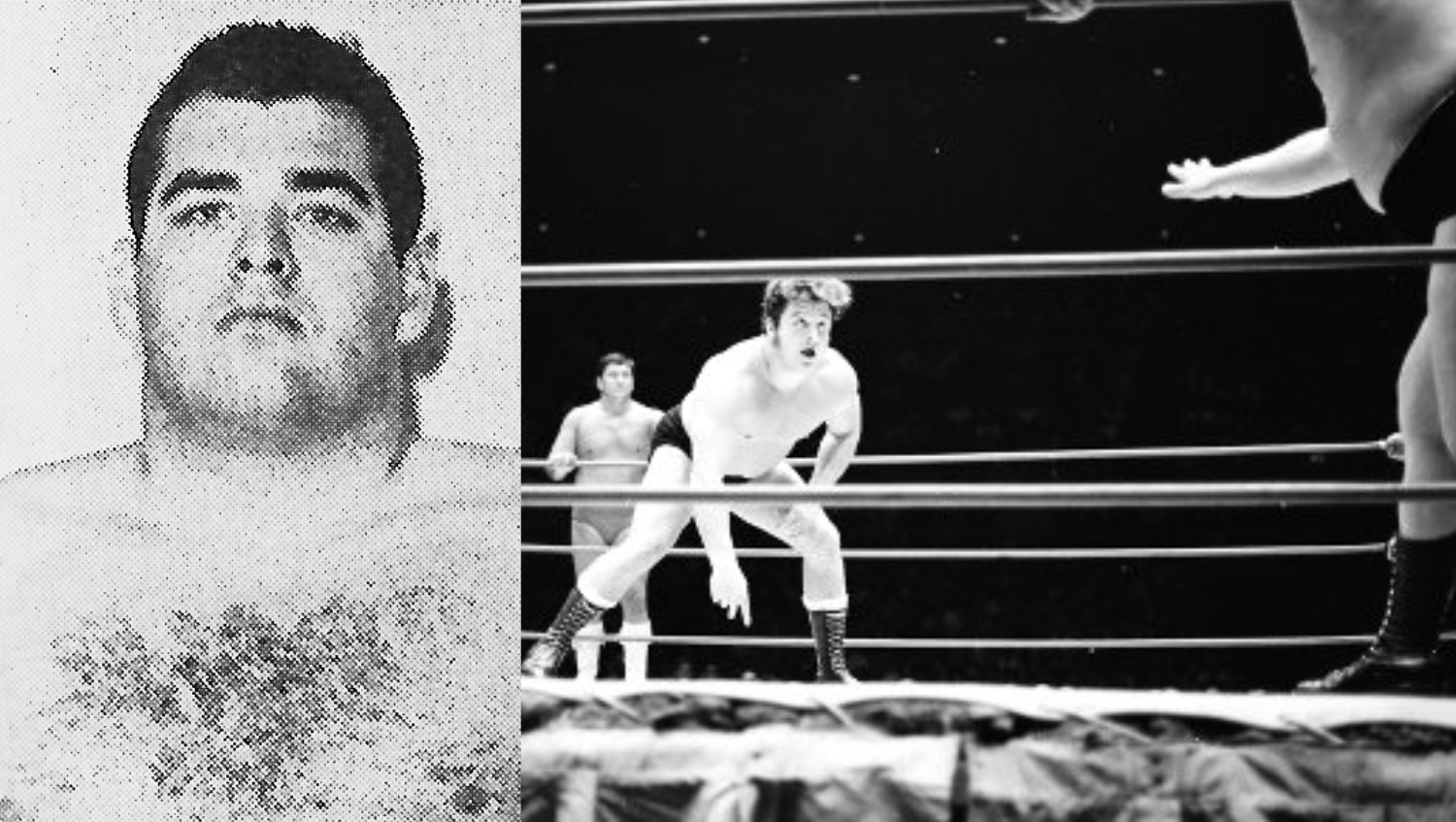
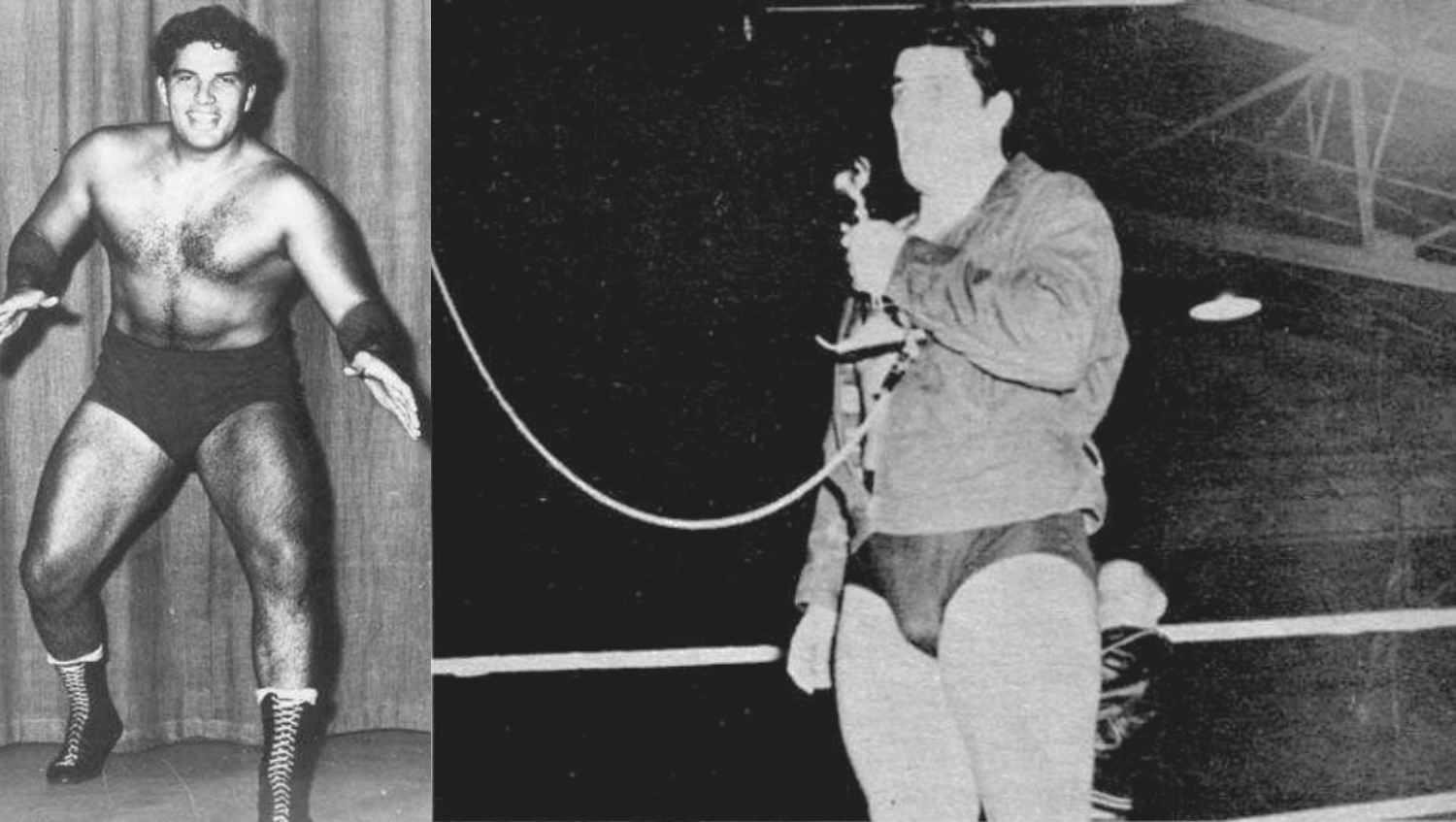
On the left, a newspaper clipping of Joe Carollo, a starting tackle for the NFL team the Los Angeles Rams. On the right, Don Chuy, seen dropping into a football stance before launching a flying tackle. Carollo and Chuy were real Rams players who spent their off seasons trading cleats for wrestling boots as The Rasslin Rams. Photo Credit: 50thstatebigtimewrestling.com.
Wrestling pulling talent from pro football feels like a modern headline, but it has been part of the business for a long time. In Los Angeles, one of the clearest examples came with the tag team known as The Rasslin Rams, players who traded the gridiron for the ring, and fans bought into it because the size, toughness, and credibility felt real.
One half of the act was Joe Carollo, a Rams lineman who later entered pro wrestling. The other was Don Chuy, who teamed with him under the Rams-themed branding and helped make the presentation feel like more than a one-off novelty. You were not just watching two guys with a cute nickname. You were watching "real football men" in a wrestling ring, and that idea carried weight with television audiences.
Although their best-known run lands a little after the pure 1950s window, once television hit, the business began chasing clear, instantly understandable hooks. A football background was one of the cleanest shortcuts to believability you could possibly sell on live TV. The audience did not need a backstory. They did not need a narrator to explain the gimmick. They saw "Rams," and they understood the pitch in one second.
And that is the real connection to the 1950s boom. This decade trained promoters to think in visuals and identities that translated through a screen. Some guys did it with capes and monocles. Some did it with ceremonial salt. Some did it by singing a tune before they locked up. And some did it by walking in with the credibility of a different sport and letting the crowd fill in the rest.
The modern wrestling pipeline from football is talked about as if it were a new phenomenon, but the instinct behind it is old. Television rewarded anything that felt legitimate, and The Rasslin Rams were one more example of how early TV era wrestling learned to package reality as part of the show.
7. Karl Von Hess: The Stormtrooper Gimmick That Drew Heat Across America
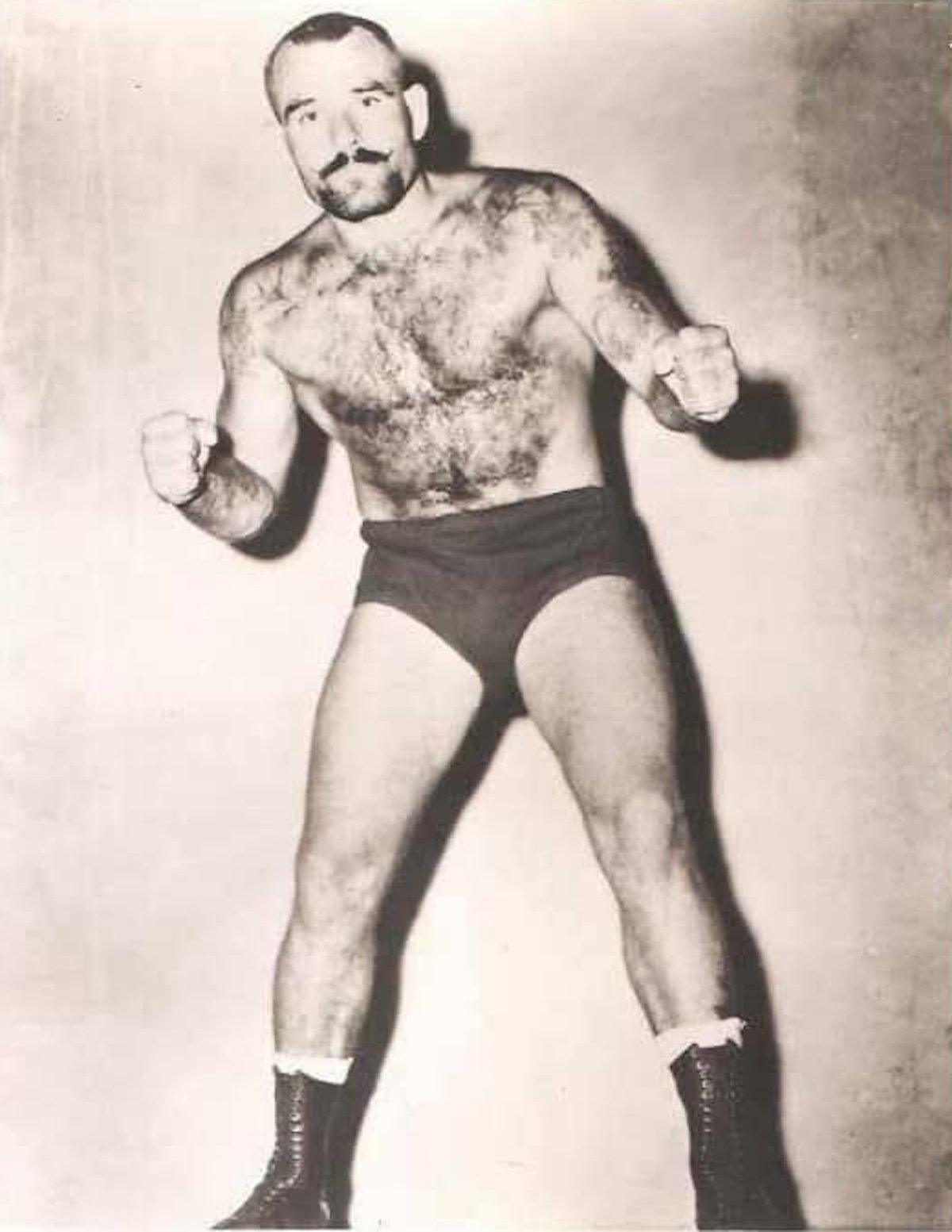
Karl Von Hess (Frank George Faketty), a U.S. Navy veteran who drew instant heat by portraying a goose stepping WWII era "stormtrooper" heel on early television, became a reliable villain on Vince McMahon Sr.’s Madison Square Garden circuit. Photo Credit: WWE.
Karl Von Hess came to the ring as a stormtrooper-type heel, covered in swastikas. He would goose step around the ring and insult the American people, presenting himself as a walking symbol of the enemy the country had just defeated in WWII.
Behind the character was Frank George Faketty, a Michigan-born wrestler who later legally changed his name to Karl Von Hess. The twist is that the man playing the role was not what the gimmick suggested. He was a US Navy veteran who served in the Pacific, then leaned into the most hated presentation imaginable because it guaranteed instant crowd reaction.
He was probably best known because he appeared on Vince McMahon Sr.’s Madison Square Garden television shows. Vince would book him around the country whenever a promoter was having a big show, and he was especially used as an opponent for Antonino Rocca and other patriotic babyfaces. The gimmick was pure heat generation. There was no nuance, no character development, just psychology designed to make the audience despise him on sight.
8. Two Hypnotists: The Gimmick That Brought Audience Participation to Wrestling
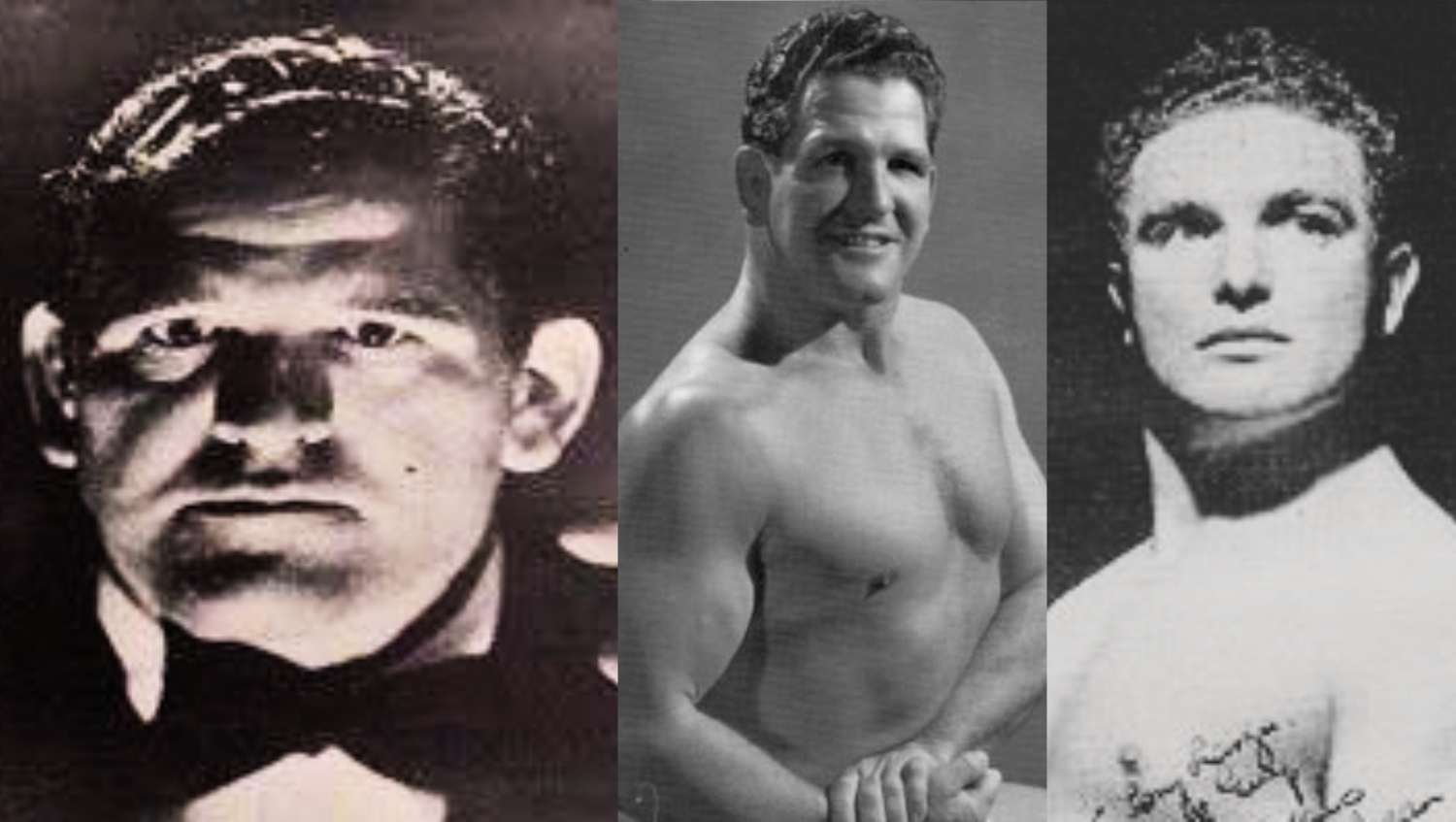
Dr. Lee Grable (Orville Lee Grabeel), shown performing his "hypnotist" act and a publicity wrestling photo, helped turn 1950s TV wrestling into interactive spectacle, while Dr. Timothy Geoghegan (right) brought a similar crowd-pulling, strongman hypnotist gimmick to East Coast audiences. Photo Credit: Libnan Ayoub / WrestlingData.com.
The 1950s also produced two hypnotists who helped bring audience participation into wrestling, especially on television.
On the West Coast, working the Hollywood Stadium TV shows, there was a wrestler billed as Dr. Lee Grable. His real name was Orville Lee Grabeel (you will also see the name spelled a few different ways in old records), and he was regularly promoted as a legit hypnotist, not just a guy doing a bit. One 1952 magazine profile even framed the entire gimmick around his "expert hypnotist" status and claimed he could put opponents under in the ring.
Promoters leaned into it hard. Card listings from the era repeatedly advertise that Dr. Grable would give a hypnosis demonstration as part of the show, and in some towns, it was treated like a featured attraction right alongside the matches. The wrestler did not just wrestle; he put on a ringside spectacle that made fans feel like anything could happen live.
On the East Coast, there was Dr. Timothy Geoghegan, who had a dual gimmick: a hypnotist and a strongman. Multiple sources describe him in exactly that lane: the Irish strongman type who was also billed as a hypnotist, making him a natural fit for the same kind of audience-involvement angle.
In both cases, the formula was simple and effective. They would single out spectators, pull them into the moment, and use the hypnosis act to create a novelty hook that played perfectly on television, because viewers at home could see the crowd reacting in real time and feel like they were missing something if they did not tune in next week.
9. Beat the Champ with Joe Pazandak: The Gambling Gimmick
Joe Pazandak, billed on KTLA as "The Champ," was the centerpiece of the Beat the Champ segment, an early 1950s-era TV hook that dangled real money, raised the jackpot each week, and turned the Long Beach Municipal Auditorium broadcasts into must-see viewing. Photo Credit: texomashomepage.com
One gimmick that never got as much attention as it deserved was “Beat the Champ,” built around Joe Pazandak, a tough Minnesota wrestler who was billed on TV simply as "The Champ." The concept was simple but brilliant: there was $1,000 for grabs, and you had to beat the champ to win it. If nobody managed to do it, the jackpot would climb each week, turning the segment into appointment viewing.
The original version of the gimmick kicked off on the KTLA Thursday night wrestling broadcasts from the Long Beach Municipal Auditorium in June 1951. The rules were straight to the point: a challenger had to pin Pazandak within 30 minutes to claim the jackpot, which started at $1,000 and then rose by $100 per week if he stayed unbeaten.
The longer Pazandak survived, the bigger the prize got, and the more viewers tuned in just to see if this was finally the week someone cashed him out. It became popular enough that when the pot hit $2,500, KTLA would roll it back and donate money to charity.
It was a popular gimmick that ran in Los Angeles for about ten years.
10. Frank Townsend: The Singing Wrestler Who Turned the Ring Into a Stage
"Farmer Boy" Frank Townsend warmed up 1950s wrestling crowd by serenading the arena in a rich baritone before the bell, turning his entrance into part performance, part wrestling gimmick in the early TV era. Photo Credit: onlineworldofwrestling.com.
Absolutely part of this story was a North Carolina wrestler named Frank Townsend, whose gimmick was as pure television as it gets.
“Farmer Boy” Frank Townsend would get in the ring and serenade the crowd before his match. Not a quick joke, not a throwaway entrance, but an actual performance meant to make the audience react before the first lock-up.
He had a pretty fair singing voice, and that alone explains why it worked. In an era when viewers were flipping channels and deciding in seconds what they would watch, a singing wrestler was different enough to keep eyes on the screen.
It is easy to laugh at this kind of act now, but it is exactly what the 1950s did to wrestling. Television rewarded anything that was clear, visual, memorable, and character-driven. Townsend understood that the "match" could start before the bell, and that is the kind of thinking that changed the business.
11. Chief Lone Eagle: From Mid-Card to Main Event With Native American Dancers
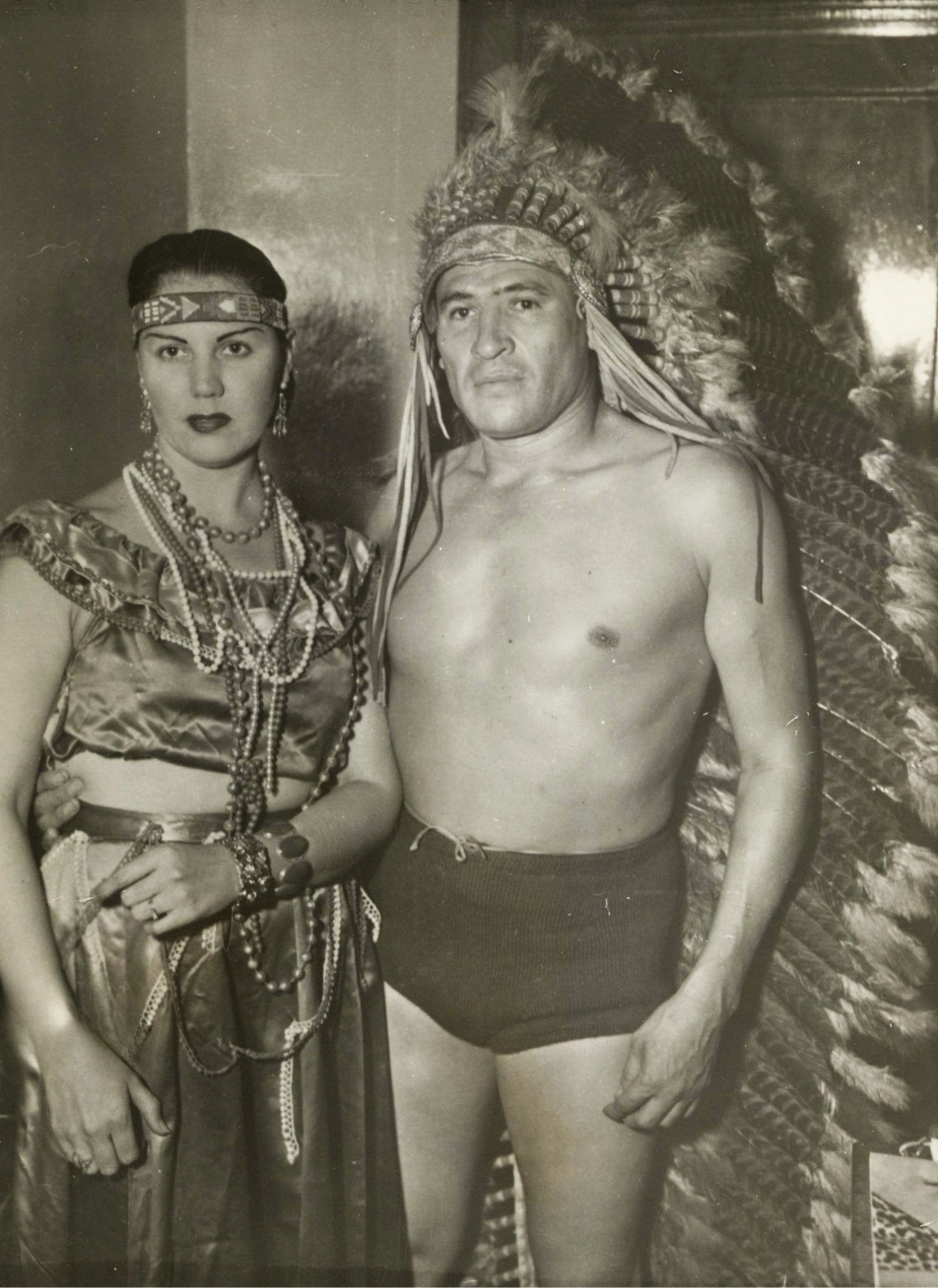
Chief Lone Eagle, accompanied by Princess Bonita White Dove, turned a mid-card act into a full spectacle by pairing his entrance with pageantry, drums, and dancers that made the crowd remember him before the match even started. Photo Credit: Scott George.
Chief Lone Eagle was a midcard performer who most fans did not talk about until he showed up with a full presentation. The man behind the name is most often identified as Jesús D. Vázquez, who also worked under names like Indio Yaqui.
The act took off once he arrived with his wife, a "princess" at his side, Bonita White Dove, who was billed as Princess Bonita (real name Bonita Vázquez).
From there, the entrance did a lot of the heavy lifting. He would come to the ring with drummers and dancers, then work in war dance style motions before and during the match, turning the whole thing into a spectacle instead of just another bout on the card. It was the kind of gimmick that could get a wrestler over with a crowd in a way his ring work alone never could, because fans remembered the pageantry and the noise as much as the finish.
12. Chief Don Eagle: The Legitimate Native American Who Adopted the Gimmick
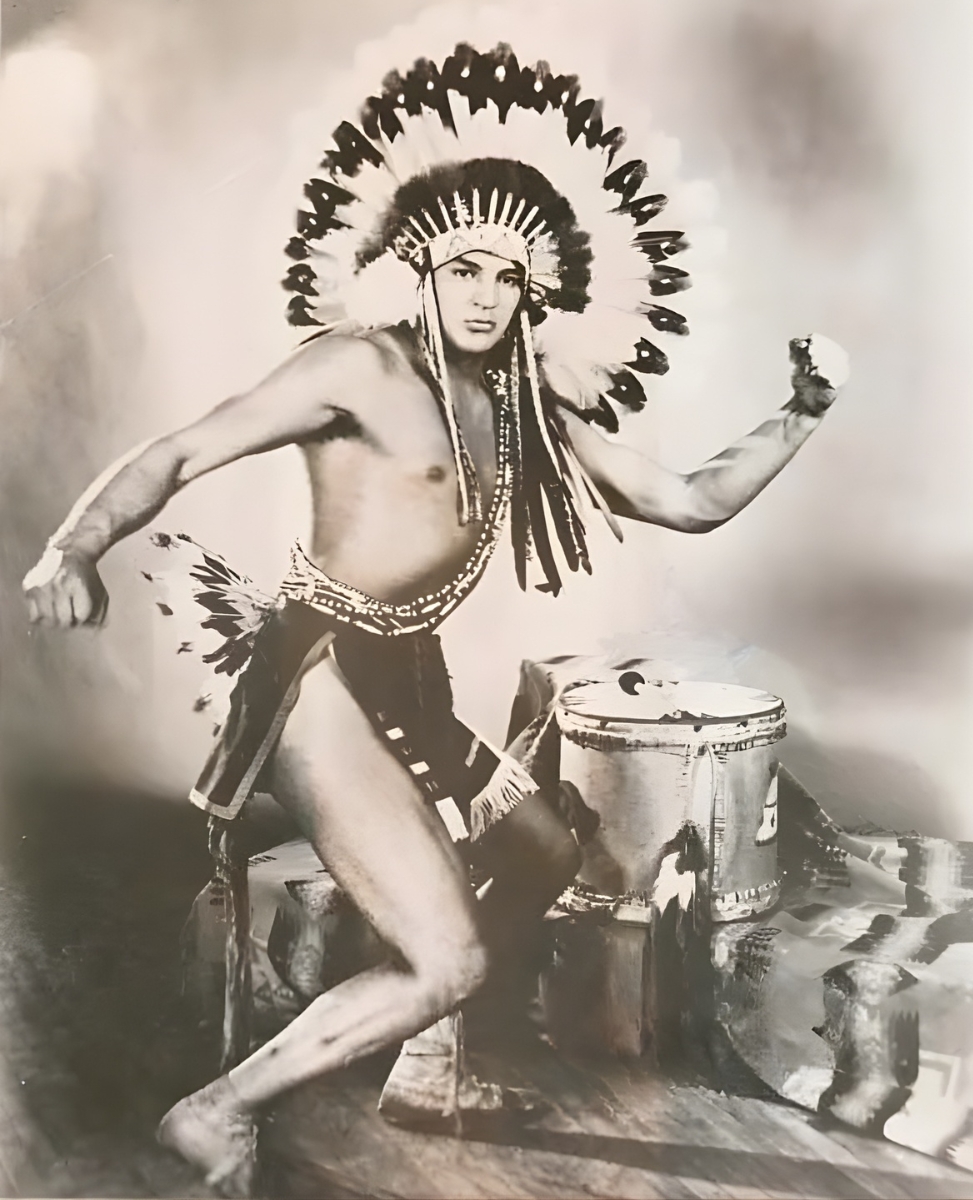
Chief Don Eagle, a legitimate Mohawk star, brought real credibility to the Native headliner presentation, using drums, dancers, and a ceremonial entrance to make his matches feel like an event before the bell ever rang. Photo Credit: mainstreetfinebooks.com.
Chief Don Eagle was the real deal, a legitimate Native performer who already had the look, the presence, and the credibility that other acts were trying to imitate. Behind the name was Carl Donald Bell, a Mohawk athlete from Kahnawake, Quebec, who crossed over from boxing into pro wrestling and became a major attraction in the early TV era.
When he saw how well Chief Lone Eagle’s presentation was working, he leaned into similar pageantry, using dancers, drums, and a ceremonial entrance to turn his matches into an event before the bell even rang. Accounts of the era describe this kind of ritualized performance as part of the appeal for Native headliners, and with Don Eagle, it read differently because he was not borrowing the image; he was embodying it.
Where Lone Eagle used the gimmick as a novelty, Chief Don Eagle added legitimacy to the act. And that extra layer of authenticity, combined with his real athletic background, is a big reason he is still remembered as one of the standout Native stars of wrestling’s television boom.
As a sad footnote, Chief Don Eagle’s story ended in tragedy. He died in 1966 under circumstances that have sparked questions and debate ever since. We dive deeper into the mystery in our full feature, "Chief Don Eagle: Haunting Secrets of Wrestler’s Mysterious Death.”
13. Antonino Rocca: The Second-Biggest Superstar of the Era
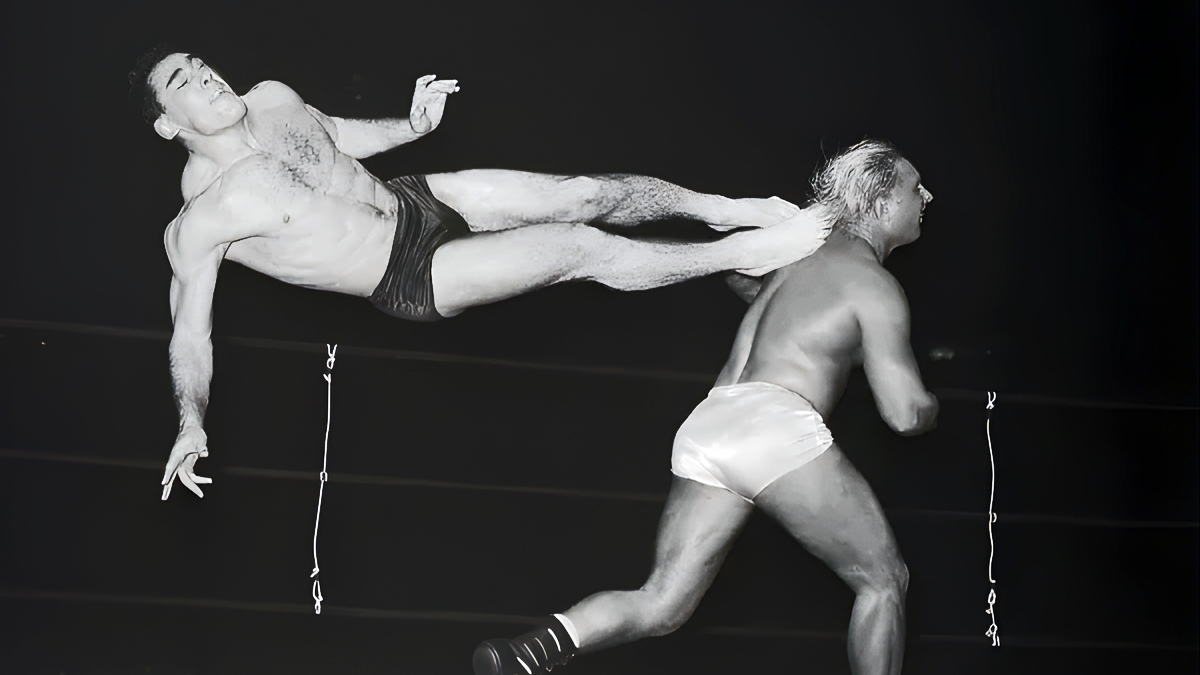
Antonino Rocca, one of the first professional wrestlers to own the air with aerial maneuvers, connects with a flying dropkick on Gene "Mr. America" Stanlee during a Madison Square Garden feature bout in New York City on December 12, 1949, a snapshot of the TV era athletic style that made Rocca a sensation. Photo Credit: Bettmann Archive.
Antonino Rocca was one of the biggest superstars of the early television era, right behind Gorgeous George. Billed from Argentina, Rocca was actually born in Italy as Antonino Biasetton, later living in Argentina and building a style that looked like it belonged on television.
He stood out because he did not wrestle like most of his peers. Rocca was acrobatic, springy, and constantly in motion, the kind of wrestler who made crowds react even before the first big moment landed. He became famous for his dropkicks in particular, which were treated as a real attraction in an era when few heavyweights were flying around the ring.
Rocca worked primarily for Vince McMahon Sr. at Madison Square Garden and in major cities like Philadelphia and Washington, D.C., as part of the Capitol Wrestling Corporation pipeline that later became the World Wide Wrestling Federation. He was also a major ethnic box-office draw in New York, especially among Italian- and Spanish-speaking fans, and his tag run with Miguel Pérez only strengthened that connection.
And he was not only a northeast attraction. Rocca made notable appearances for Fred Kohler in Chicago and later became entangled in the wider promoter chessboard of the era, including opposition moves supported by Jim Crockett.
Here is what truly set Rocca apart from most wrestlers of his time. Unlike the standard talent pool arrangement, Rocca worked on a cut of the gate. Sources from the era and later research consistently put that figure at around 15 percent, with his share often split through the New York office and Chicago interests. Promoters did not hand out a percentage like that unless they believed the wrestler would raise the house. Rocca did.
14. Gorgeous George: The Man Who Invented Modern Wrestling Psychology
Gorgeous George (George Wagner) turned the entrance into its own main event, arriving in robes and milking every second as the crowd boiled over, proving the match could start long before the first lock up. Photo Credit: Pro Wrestling Illustrated, WWE.
Gorgeous George, real name George Wagner, was a very slight person. They billed him at 210 pounds, but he did not look anything like a 210-pound man. And none of that mattered, because George had an absolute knack for angering the crowd, the referee, his opponent, everybody. He did not just wrestle matches. He staged emotional breakdowns in arenas.
It took him forever to get to the ring. Before he even marched down the aisle, he would send his butler into the ring first to "purify" it. The butler would spray all four corners with perfume, then spray the referee, then spray George’s opponent, as if the match itself was beneath him. George even had a line for it, one of those ridiculous quotes that somehow made the whole thing feel bigger: “No need to be half safe with Chanel Number Five, so I use Chanel Number Ten.”
Finally, George would arrive in his robes, with a hairstyle no one had ever seen in pro wrestling, and he would make sure the entrance became its own segment. He would spend minutes throwing "Georgie pins" to the women in the audience while the building got hotter and hotter. Then the referee would try to pat him down and check him, as was customary in those days, and George would protest like he had been personally insulted.
By the time the bell rang, the place was already going berserk. And then, of course, George would win by doing something cheap and humiliating, like tugging tights or grabbing the ropes, the kind of finish that made the crowd furious but also made them come back. You got your money’s worth every time, because George understood the real trick: the match started long before the first lock-up.
15. Verne Gagne: The All-American Boy Prototype
Verne Gagne, the University of Minnesota amateur standout who became wrestling’s clean-cut All-American prototype and later founded the AWA, looked like the kind of believable champion early television audiences trusted. Photo Credit: Minnesota Star Tribune.
Verne Gagne was not really known for a gimmick in the traditional sense, but he came across as the prototype for what would become the All-American Boy babyface. He looked like a clean-cut athlete, carried himself like a champion, and was marketed as a straight shooter who stood for truth, justice, and the American way.
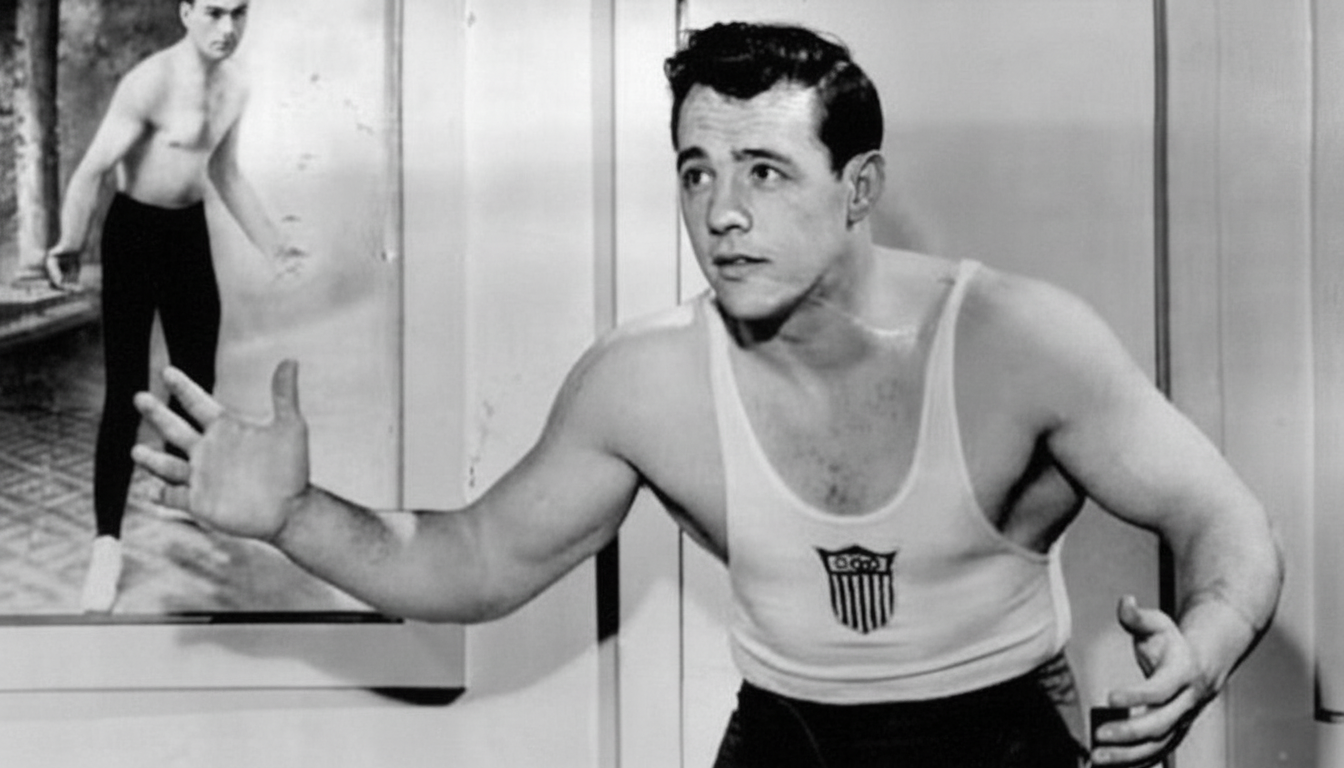
The key is that Verne had real credentials to back up the image. His real name was Laverne Clarence Gagne, and before pro wrestling, he was an elite amateur at the University of Minnesota, winning four Big Ten titles, two NCAA championships, and the 1949 AAU title. He was also part of the 1948 Olympic team picture as an alternate, after coming up just short in the trials against eventual gold medalist Henry Wittenberg, so the Olympics were part of his story even if he was not an Olympic champion.
That positioning mattered. In an era when so many characters were built on smoke and mirrors, Verne could be sold as the real thing, and fans bought it. It is also what eventually enabled him to form the American Wrestling Association in 1960 and go out on his own as a promoter and businessman, because he had the credibility to be both the face of the company and the man running it.
16. Gene "Mr. America" Stanlee: The Patriotic Babyface Before It Was a Template
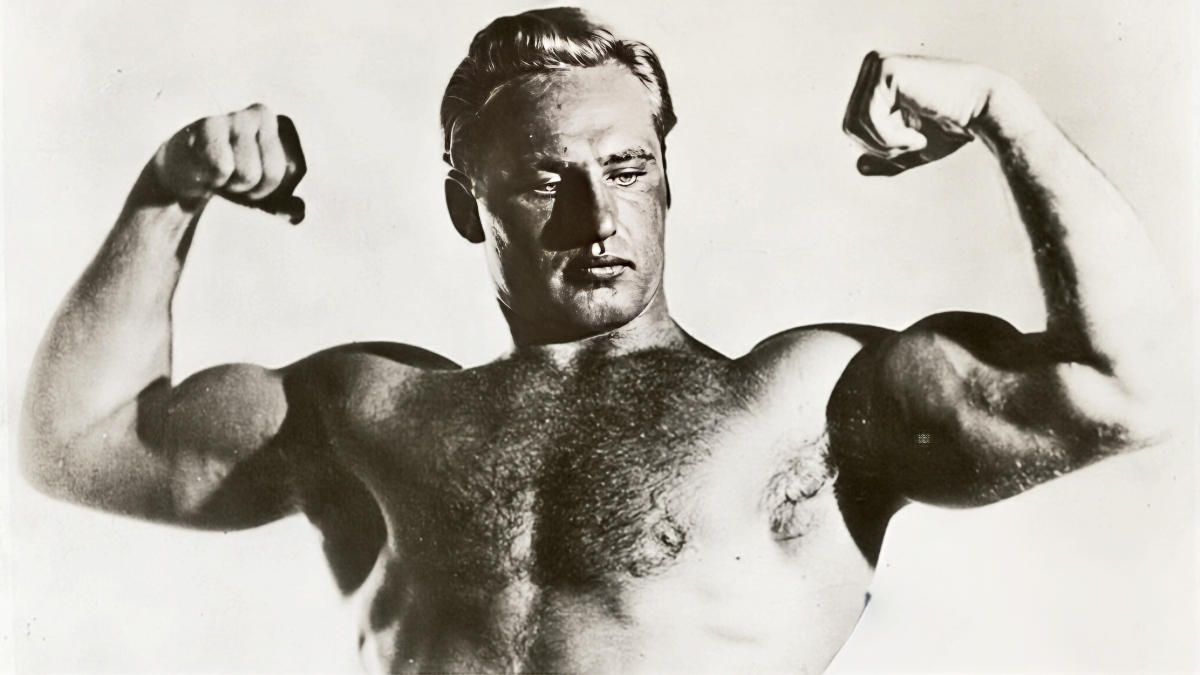
Gene "Mr. America" Stanlee was billed as the red, white, and blue personified, and in the 1950s, he was even hailed as "the world’s strongest and most perfectly developed man," a pure, patriotic TV-era babyface built to win the crowd at a glance. Photo Credit: RR Auction.
If Verne Gagne was the clean-cut athlete prototype, Gene "Mr. America" Stanlee was the straight patriotic presentation taken to its most literal form.
He was billed as Mr. America, "the world’s strongest and most perfectly developed man," and the entire appeal was that fans knew exactly what they were getting the moment they saw the name on a poster or heard it on television. This was not a complicated character. It was a human flag, a babyface designed to plug directly into the post-war crowd psychology that promoters leaned on constantly in that era. 
And that is why he belongs in this list. The 1950s were full of foreign villains and heat magnets, but those gimmicks only worked because the business also created reliable "our guy" heroes who could carry the moral side of the story. Mr. America was one of those simple, effective blueprints. No reinvention needed, just an identity that fit the moment and read clearly on television.
17. Mighty Atlas: The Carnival Strongman Comes to Wrestling
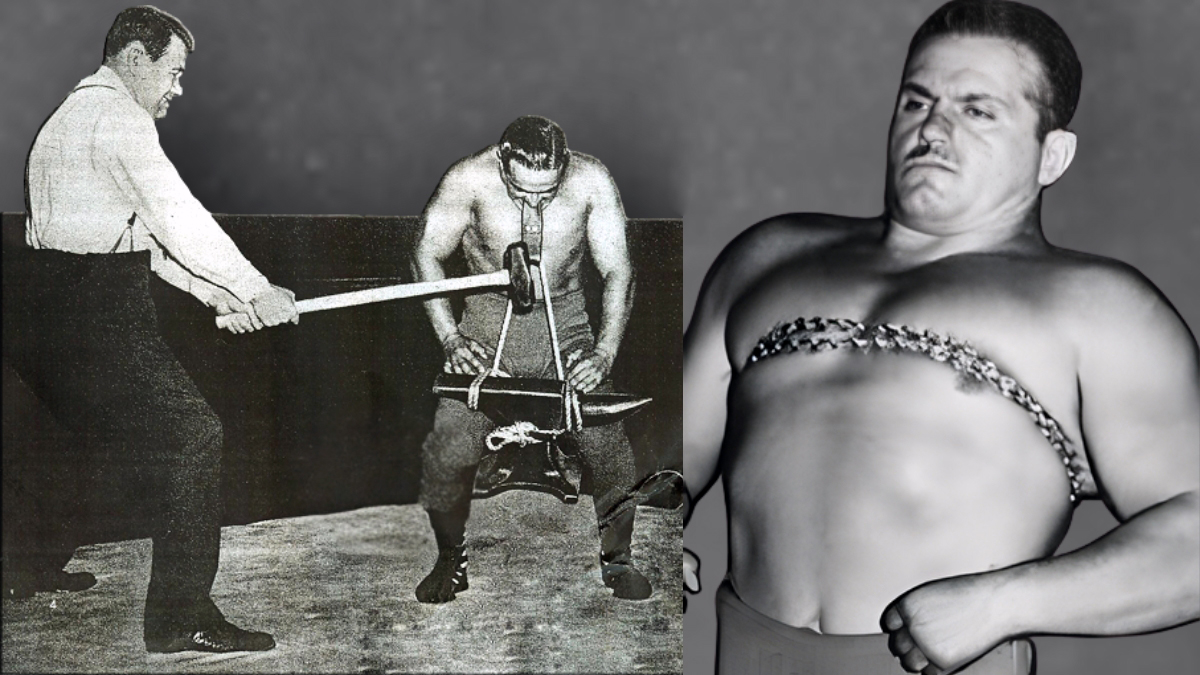
Mighty Atlas, the carnival strongman turned TV era attraction, would stun fans with feats of strength like hoisting an anvil with his teeth and wrapping steel chains around his chest, the kind of jaw-dropping stunts that made 1950s wrestling feel like anything could happen on live television. Photo Credit: oldtimestrongman.com, oklafan.com.
Mighty Atlas was billed around 220 pounds, but he was packed with muscle and looked exactly like an old-fashioned carnival strongman. Behind the gimmick was Morris Shapiro, a Brooklyn native who was sometimes billed as a Hollywood, California, resident, and he leaned into the kind of visual stunts made for early television.
His gimmicks were pure spectacle designed for TV audiences who had never seen anything like it.
One of his most famous stunts involved getting a crowd of men into the ring and daring them to break his grip. Atlas would lock his hands together, attach ropes to each arm, and have groups pull from both sides. They could not do it. The strength and the visual were the whole point, especially on television, where the camera could sell the disbelief.
But his most famous stunt was even wilder. Atlas would lie down, take a spike board on his chest, then an anvil placed on top, and let someone bring the hammer down on the anvil while he stayed underneath it. It was a classic strongman demonstration dropped into the middle of a match, and the crowd ate it up.
His finishing hold was called the Atlas Nelson, basically his own variation of a full nelson. Once he locked his hands, they were not coming apart, which made the hold feel like a trap as much as a move.
And Atlas did not limit himself to one trick. Newspapers from the era credited him with showy strength feats like snapping chains, breaking ropes, and even pulling heavy objects with his teeth, all part of the same carnival strongman image that translated perfectly to wrestling’s TV boom.
18. George Becker: Charlotte’s Number-One Good Guy
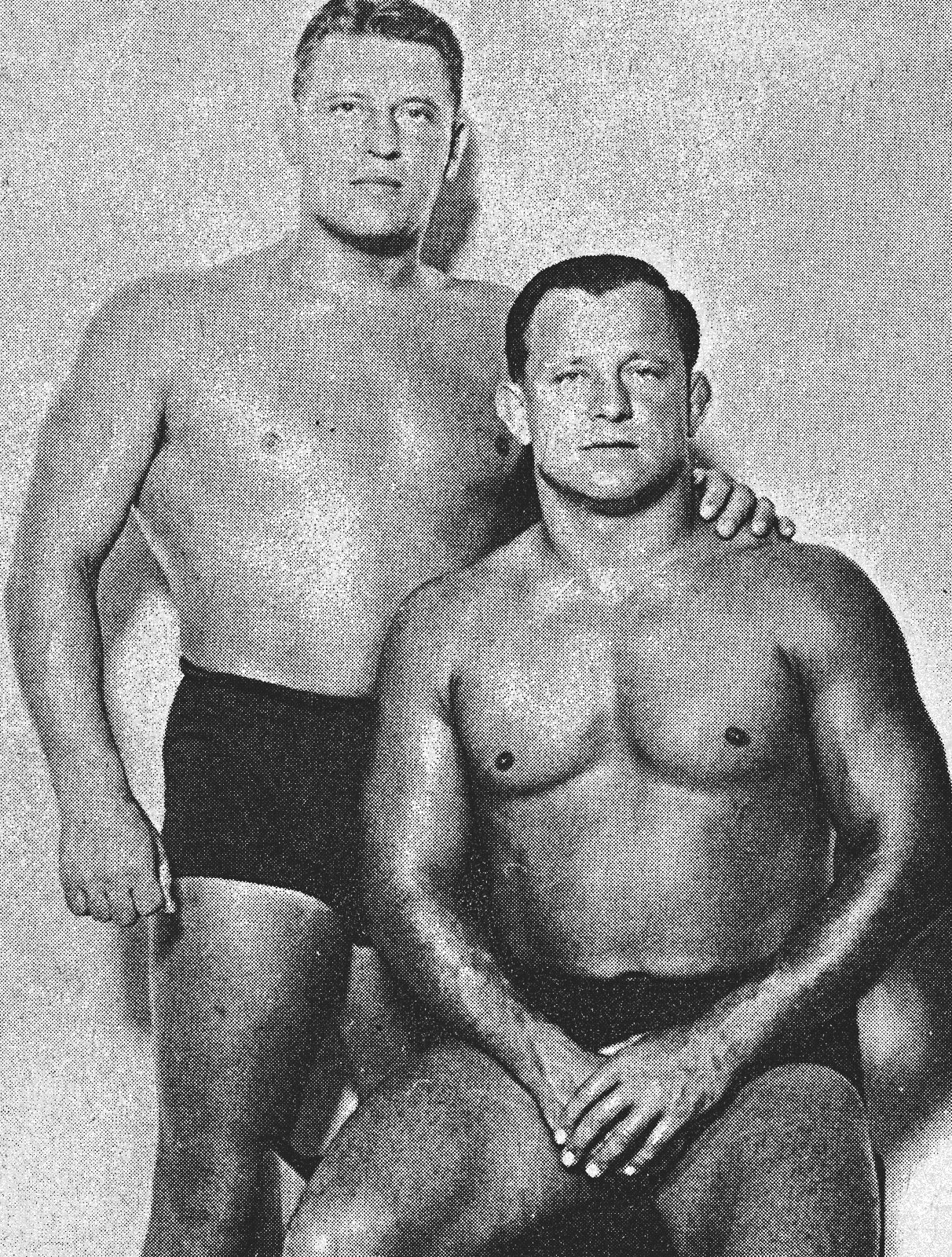
George Becker (right), Jim Crockett Sr.’s steady Charlotte fan-favorite, and his billed "brother" Bobby Becker (left) became an instant headline tag team in the early 1950s, a pairing that helped make tag team wrestling the heartbeat of the Carolinas. Photo Credit: Mid-Atlantic Wrestling.
As far as Charlotte is concerned, George Becker was the number one good guy for Jim Crockett Sr. for years, a steady fan favorite who could be plugged into the top of the card whenever the territory needed it.
He had already built a reputation long before the Carolinas run. He was billed around 215 pounds, worked a ton of major towns, and had been a regular on the Los Angeles television scene around the Olympic Auditorium and Hollywood Stadium era, so it was a big deal when he came to Charlotte in the early 1950s.
Becker brought his "brother" Bobby Becker with him, and they became a headline tag team almost immediately. (They were billed as brothers, but the record shows it was a worked relationship, with Bobby’s real name most commonly listed as John Emmerling.)
Then tragedy hit in 1954. Bobby became ill and died at just 36, most often reported as leukemia, with sources placing the date in late November 1954. With Bobby gone, his spot in the Southern Tag Team picture was filled by Jack Witzig, who was slotted in as Becker’s new partner.
And here is the bigger point. Becker’s success in Charlotte during those early years helped establish tag team wrestling as the primary draw in the Carolinas and throughout the South. It was not just about having a good match. It was about giving the crowd a team they could invest in, week after week, in a territory that would soon be built on hot tags, heated rivalries, and returning champions.
19. John and Al Smith: The Heel Team That Drew Heat in Early 1950s Charlotte
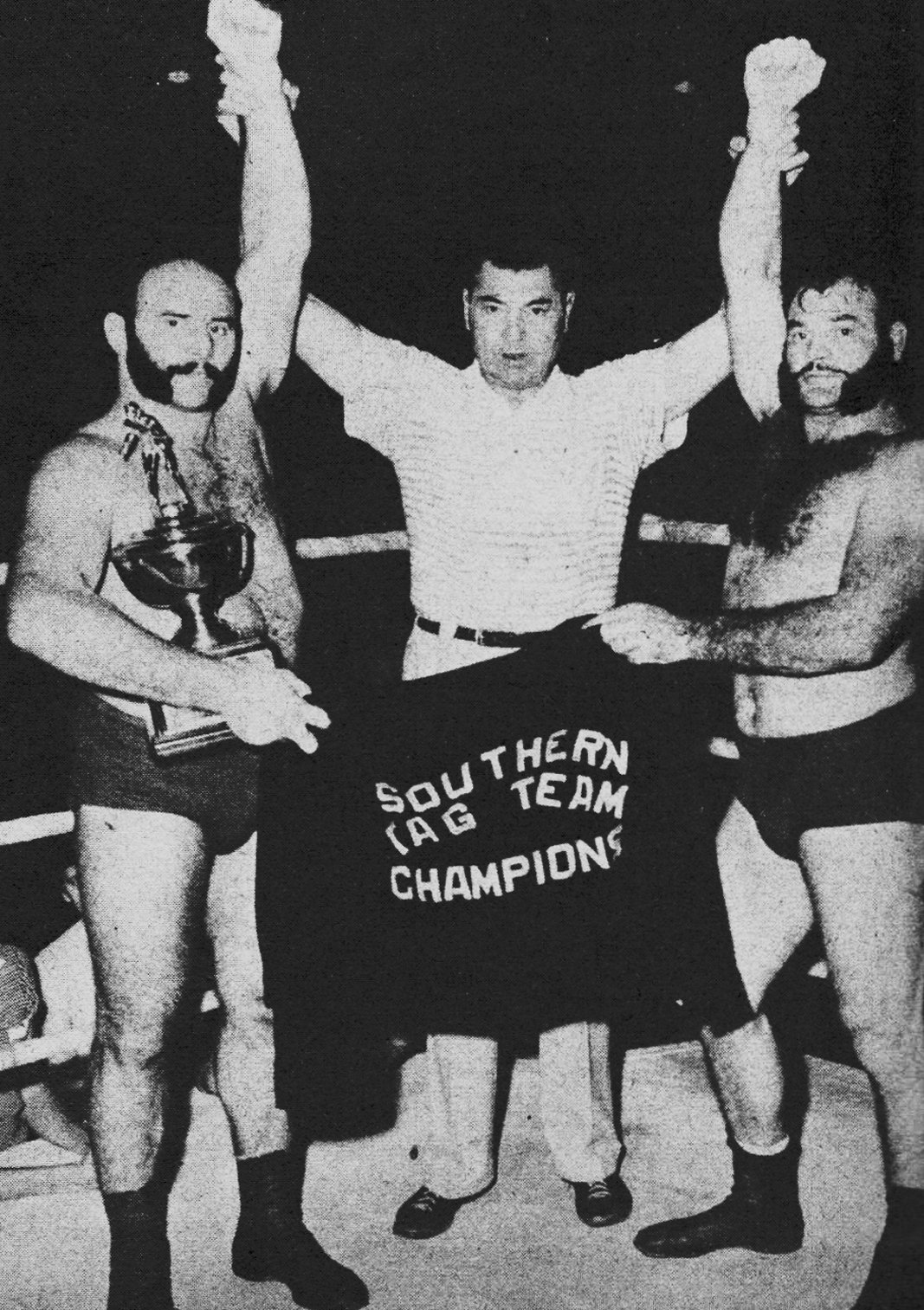
John and Al Smith, flanked by referee Jack Dempsey, posed with the Southern Tag Team trophy and their championship jackets after a title win in Nashville, Tennessee, on September 8, 1953, proof that Charlotte’s top heel brothers were not just drawing heat, they were taking home hardware. Photo Credit: Southern Wrestling Alliance.
The team of John and Al Smith was the number one heel tag team in Charlotte during the early 1950s. They were the kind of act promoters could drop into the main event picture and know the crowd would already be angry. They were billed as "brothers" and worked as The Smiths or The Smith Brothers, with match records showing them all over the Carolinas and Mid Atlantic towns in that period.
They battled George Becker and Bobby Becker for years, and that feud is right there in the results, long two-out-of-three falls matches, time limit draws, and repeated main event pairings across the territory.
They were not just "the bad guys," either. They were champions. One Jim Crockett Promotions card listing has The Smiths defeating George Becker and Mike Clancy to win the Southern tag belts in a best two out of three falls match. Even years later, old timers still talked about them as top-level heels from that era, the kind of team that helped define what "heat" looked like in the Carolinas.
20. Wild Bill Longson: The TV Heel Template and the Piledriver
Wild Bill Longson, one of the early TV era’s most aggravating villains and a three-time NWA World Heavyweight Champion, helped set the blueprint for the smug heel who could ruin your night before the bell, and he is widely credited with popularizing the piledriver as a match-ending weapon. Photo Credit: NWA.
One of the first truly prototypical TV bad guys in the 1950s was Wild Bill Longson, real name Willard Rowe Longson.
He was already a major name by the 1940s, a three-time NWA World Heavyweight Champion, and he had the kind of smug, aggravating presence that could sour a crowd before he even locked up.
Longson also has a major historical distinction. He is widely credited with inventing and popularizing the piledriver, one of wrestling’s most devastating and unforgettable finishing moves. It became the perfect weapon for a big bully heel on television, because it looked final, even to viewers who did not know a wristlock from a hammerlock.
21. Frederick Von Schacht: Kohler’s Monster Heel in Chicago
Frederick Von Schacht, billed at 6 feet 4 and around 255 pounds, was Fred Kohler’s Chicago-era "monster" heel, an imposing presence at Marigold Arena who proved that, in early television wrestling, size and menace could be a gimmick all on their own. Photo Credit: West Coast Wrestling News.
If Wild Bill Longson helped define the arrogant television villain, Frederick Von Schacht helped define the monster you could not ignore. Von Schacht was one of those early TV bad guys fans rarely talk about today, but promoters leaned on him because the look did half the job. He was billed at about 255 pounds and stood 6 feet 4, the kind of big, heavy presence that read as danger the moment he stepped into a ring.
Von Schacht worked heavily in Fred Kohler’s Chicago orbit, popping up on Marigold Arena cards during the exact window when television was changing the entire business model. Even on paper, you can see him right there in those Kohler-promoted lineups, slotted as a problem to be dealt with while the show built toward its bigger attractions.
Behind the name was Frank Sebastian Altinger, and Von Schacht was also billed at times as "Friedrich" or "Baron" Von Schacht, which suggests what the character was meant to feel like: not flashy, not complicated, just an imposing villain with an aura of menace.
22. Wild Bull Curry: The Brawling Wild Man Heel Fans Never Forgot
"Wild Bull" Curry batters Bobo Brazil in a scene that captured his entire appeal, a snarling, out-of-control brawler whose job was to make every comeback feel like it came at a real cost. Photo Credit: Gary Rowell.
Not every influential 1950s character was built on pageantry, props, or elaborate rituals. Sometimes the gimmick was the way a man carried himself, the way he moved, and the way the crowd felt when he walked into a building. That is where Wild Bull Curry fits.
Curry’s entire presentation was built around being a violent force of nature, a rough, brutal, unstoppable heel whose job was to make the audience believe the babyface was in real danger the moment the match turned ugly. 
This is another one of those early prototypes when television created the blueprint for what came later. The "wild man" brawler heel became a permanent archetype in pro wrestling because it worked as you could sell menace through presence alone. Curry was one of the names the old timers still bring up because the character landed, and once it lands, it stays. 
23. Wilbur Snyder: The Scientific Good Guy Blueprint
Wilbur Snyder, billed as "The World’s Most Scientific Wrestler," was the calm, credible TV era babyface who let sharp fundamentals and composure make the heel look even more unhinged. Photo Credit: NWA.
On the babyface side, one of the cleanest prototypes was Wilbur Snyder. He carried himself like a serious athlete, got over on timing and credibility, and was often billed as "The World’s Most Scientific Wrestler," which told the audience exactly what he was before the bell even rang.
Snyder is also a strong example of how the TV era rewarded a certain kind of good guy presentation. He could be the calm professional across from the loud heel, the guy who made the bad guy look even more ridiculous just by staying composed and outwrestling him.
24. Bobo Brazil: The First Black TV Era Superstar
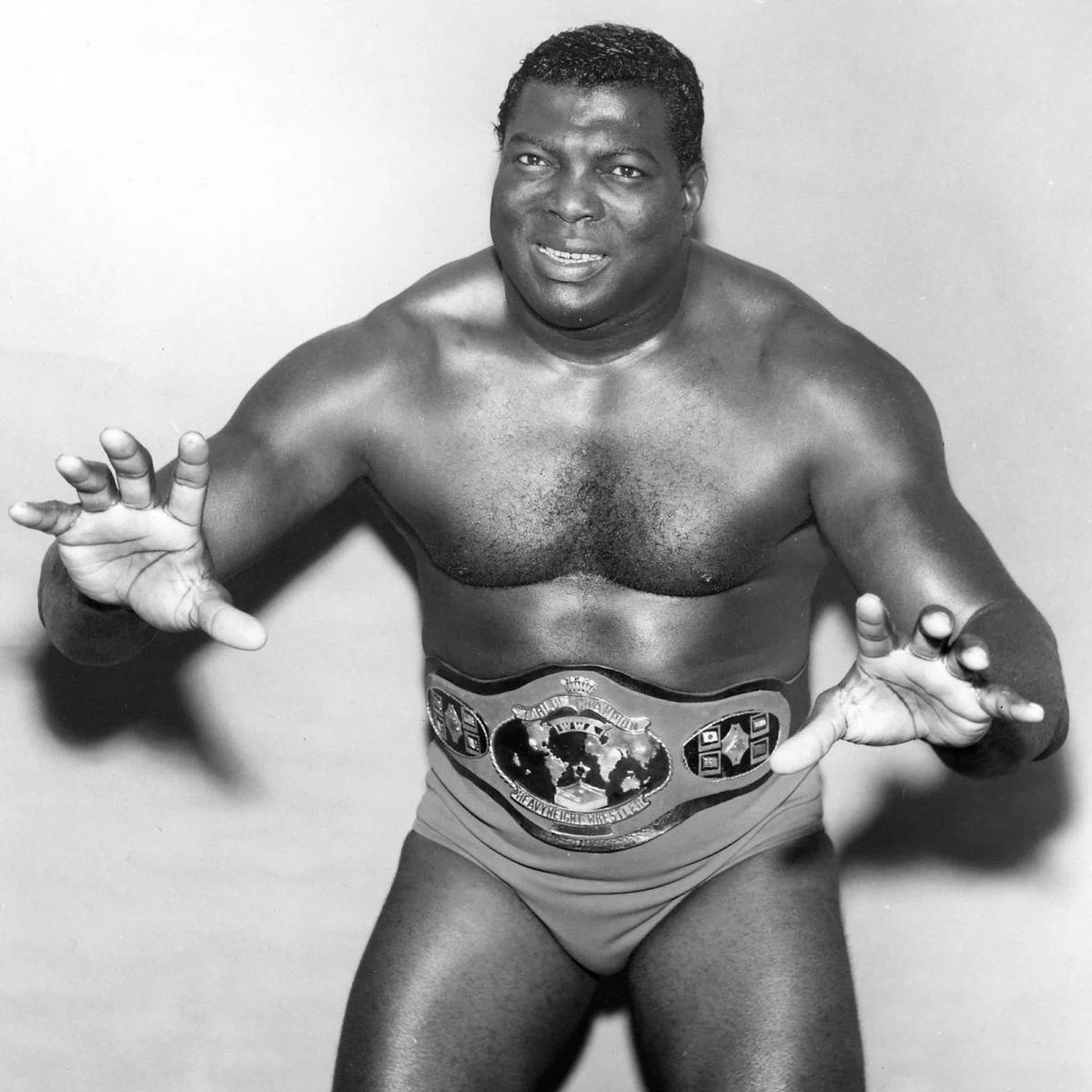
Bobo Brazil (Houston Harris) was one of the first Black wrestlers promoted as a true TV-era superstar, not a novelty, and his mainstream popularity helped force doors open in a segregated business. Photo Credit: Pro Wrestling Illustrated, WWE.
Bobo Brazil deserves his own lane in any conversation about early television era prototypes. Born as Houston Harris, Brazil is widely credited with breaking down segregation-era barriers in pro wrestling and becoming one of the first Black wrestlers to truly reach superstar, marquee status with mainstream crowds.
He was not presented as a novelty. He was presented as a star. That mattered. In an era when many promotions limited Black wrestlers to separate opponent pools, Brazil became so popular that promoters put business first, and audiences followed.
25. Crusher Lisowski and Art Neilson: The Bad Boy Tag Team Before Everyone Else
Chicago World Tag Team Champions Reggie Crusher Lisowski and Art Neilson, a bruising Fred Kohler-era pairing whose swagger and intimidation helped blueprint the "bad boy" heel tag team on early television. Photo Credit: Scott George.
The first prototypical bad-boy tag team, at least in terms of look, attitude, and heat-generating presence on television, can be traced back to Reggie Lisowski and Art Neilson, the duo fans would associate with Fred Kohler’s Chicago and the Marigold Arena scene.
They were an immediate success as a team, even capturing the Chicago area version of the NWA World Tag Team Championship at the Marigold Arena. Everything later fans praise about great heel teams, the swagger, the intimidation, the crowd control, the sense that they were always one cheap shot away from taking over the whole building, starts looking very familiar once you watch how this pairing was positioned.
Why This Era Matters: Understanding Wrestling’s Foundation
The 1950s marked the beginning of what we now know as professional wrestling. Television did not just give wrestling a bigger audience. It changed the entire shape of the business. It brought out the creativity of wrestlers who were never going to be top headliners, and it rewarded the guys who understood presentation, timing, and crowd control as much as they did holds.
And it is not just the characters that trace back to this decade. The economics do, too. Most wrestlers worked for the door. You were paid in cash nightly, based on where you sat on the card, and outside of a select few stars, there were no guaranteed deals. Then you had promoters like Fred Kohler in Chicago, who paid for television better than anyone else, and suddenly, even a first-match guy could walk out of Marigold Arena with money that sounded unreal for the time. That shift helped pull talent toward the TV towns and showed everyone what television could be worth.
The 1950s provided the prototype for everything that was to come. You can trace the branches back to a handful of trees: the monster TV heel, the scientific good guy, the first Black superstar, the tag team bruisers, the spectacle strongman, the aristocrats, the "foreign" villains, the masked marvels, the novelty acts that made the crowd feel like anything could happen.
These are not just old stories. They are the roots of the business. Once you see what wrestling looked like when television hit, you understand why so much of it still works the way it does, right down to the characters, the psychology, and the way promoters learned to make fans come back next week.
Pro Wrestling Stories is committed to accurate, unbiased wrestling content rigorously fact-checked and verified by our team of researchers and editors. Any inaccuracies are quickly corrected, with updates timestamped in the article's byline header.
Got a correction, tip, or story idea for Pro Wrestling Stories? Contact us! Learn about our editorial standards here. Ever wanted to learn more about the people behind Pro Wrestling Stories? Meet our authors! Want to write for us? Learn how to join the team.
Quick Tip for Facebook Readers
Many of our readers find us through
our Facebook page.
Meta's built in browser (which opens by default on mobile) can occasionally freeze mid article, a known issue unrelated to our site.
For uninterrupted reading: tap the three dots in the top right corner then select 'Open in external browser'.
That usually resolves the glitch. Thanks for your support and we want your wrestling stories to stay as smooth as a top rope hurricanrana!
ProWrestlingStories.com participates in affiliate marketing programs. This post may contain affiliate links, meaning we may earn commissions at no extra cost to our readers. This supports our mission to deliver free content for you to enjoy!
Ted Holland is a devoted researcher and historian who has spent over six decades collecting wrestling photographs, memorabilia, and oral histories from professional wrestling’s territorial golden age. He meticulously examines archives, from classic films and vintage television to rare publications and wrestling records, preserving stories that might otherwise fade from history. Currently, Ted writes political humor for Humor Times Magazine and contributes features on classic B Westerns to Wrangler’s Roost Magazine. His published books include The B Western Actors Encyclopedia and This Day in African American Music. His extensive Gene Gordon photography collection and firsthand accounts from wrestling personalities provide unique primary source documentation of wrestling’s most influential eras and unforgettable moments.
 Author: